Add it to your home screen and it opens full screen — no browser bars, one tap away, and everything stays signed in. Free, nothing to download from an app store.
- Tap the Share button in your browser
- Scroll down and choose “Add to Home Screen”
- Open GrowSomeFood from your home screen
- Open your browser’s menu
- Choose “Add to Home screen” or “Install app”
- Open GrowSomeFood from your home screen
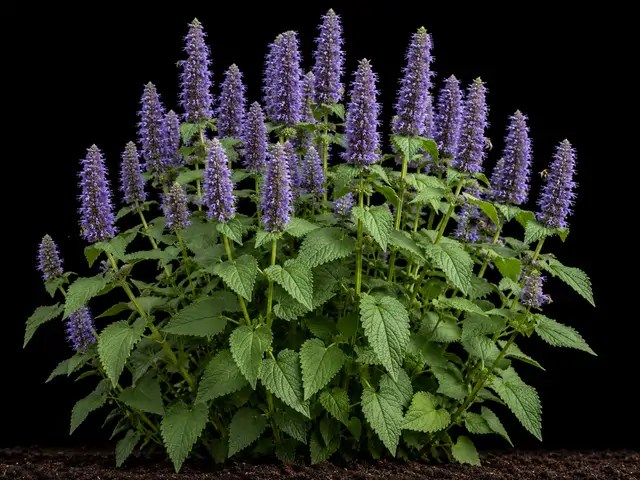
Anise Hyssop
Safe as food and tea. The leaves and flowers are edible with an anise-mint flavor, long used for a fragrant herbal tea. Concentrated essential oil is potent and not for internal use, and medicinal amounts are best avoided in pregnancy. Not the same plant as true hyssop (Hyssopus officinalis).
Overview
A native prairie herb that does three jobs at once: anise-scented leaves and flowers for tea, purple spikes that swarm with bees, and a tough, cold-hardy perennial that all but grows itself.
Anise hyssop (Agastache foeniculum) is a North American native that earns its place in any garden three times over. Crush a leaf and it smells of sweet anise and mint; steep the leaves and flowers and you get a fragrant, licorice-scented herbal tea that Indigenous peoples of the plains have used for generations. From mid to late summer it throws up soft purple flower spikes that are one of the very best pollinator plants you can grow - a magnet for bees, butterflies, and hummingbirds. And it's tough: a cold-hardy, drought-tolerant prairie perennial that thrives on neglect.
Despite the name it is neither anise nor true hyssop - it's a mint-family Agastache native to the north-central US and Great Plains. Give it full sun and well-drained soil and it needs almost nothing from you. Its one quirk is a tendency to be short-lived (three or four years) while self-sowing freely, so a happy patch renews itself from seedlings - a welcome habit rather than an invasive one.
At a glance
- Sun
- Full sun · Part sun
- Water
- Medium
- Spacing
- 12–24 in (typ. 18)
- Mature height
- 24–48 in (typ. 36)
- Start by
- Direct sow · Transplant · Cuttings · Division
- Frost
- Hardy
- Germination
- 7–30 days (typ. 14) @ 60–75 °F (typ. 70)
- Start indoors
- 6–10 wks (typ. 8) before transplant
When to plant
Zone 7a typical frost: last Apr 10 · first Oct 25
Life stages
- Establishing (year 1) day 0–90 from sowing
-
Water to establish, then ease offevery 5 dKeep new plants watered through the first weeks to root in. Once established, anise hyssop is quite drought-tolerant and prefers well-drained soil - it dislikes soggy ground, especially in winter.
-
Harvest lightly the first yearTake only a few sprigs the first season while the plant builds its root system and crown; it comes into full leaf and bloom from year two.
Crown or root rot in rich, wet soilSlow, uneven germination from seed (light and a cool-moist period help) -
Water to establish, then ease offevery 5 d
- Spring regrowth Apr, May, Jun (yearly)
-
Begin cutting sprigs once 6-8 inches tallevery 10 dSnip stem tips above a leaf pair; regular cutting keeps the plant bushy and delays flowering a little, extending the tender-leaf window.
-
Cut back old stems as new growth resumesShear away last year's dead flower stalks in early spring so fresh growth comes cleanly from the base.
Aphids on soft new growthPowdery mildew starting on crowded, shaded foliage -
Begin cutting sprigs once 6-8 inches tallevery 10 d
- Summer bloom & leaf harvest Jun, Jul, Aug, Sep (yearly)
-
Cut leaves and flower spikes for tea and the kitchenevery 7 dThe anise-mint aroma is strongest just before and during bloom. Cut leafy stems and flower spikes in the cool morning; use fresh or dry for tea. Leave plenty of spikes standing for the bees.
-
Enjoy the pollinator showThe purple flower spikes are one of the finest bee, butterfly, and hummingbird plants you can grow - a long summer buffet. Deadhead some spent spikes to prolong bloom, but leave others to feed pollinators and self-sow.
Powdery mildew in humid, crowded conditionsHeavy self-seeding from spent flower spikes (deadhead to control it) -
Cut leaves and flower spikes for tea and the kitchenevery 7 d
- Cut-back & winter Jan, Feb, Mar, Oct, Nov, Dec (yearly)
-
Leave the seed heads standing, then cut backDried flower spikes feed finches and give winter interest; leave them up and cut the plant back to a few inches in late winter before new growth. Some seed will drop and self-sow.
-
Keep the crown dry over winterAnise hyssop is very cold-hardy but can rot in wet winter soil. Sharp drainage matters more than cold protection; avoid heavy mulch that traps moisture over the crown.
Crown rot in wet winter soil (the real winter threat, not cold)A short-lived plant petering out after 3-4 years (let it self-sow, or divide to renew) -
Leave the seed heads standing, then cut back
Harvest
- Style
- Cut and come again
- Typical yield
- 30–120 sprigs (typ. 60)
- By weight
- 4–24 oz (typ. 12)
- First production
- 0–1 yrs (typ. 1)
- Leafy stems 6-8 inches long, ideally just before and during flowering when the aroma peaks
- Cut stem tips above a leaf pair to force branching
- Flower spikes fully colored for tea, cut flowers, and pollinators
Watch out for
Root Rot Disease MediumJan, Feb, Mar, Nov, Dec
Soil-borne rots that kill yarrow kept in wet, heavy, or poorly drained soil - the main way to lose an otherwise indestructible plant, since yarrow is adapted to dry, lean ground.
Watch for: Wilting, blackening, and collapse despite (or because of) moist soil; soft dark roots; sudden decline after a wet spell or in soggy winter ground.
Prevent: Sharp drainage is everything - lean gritty soil, full sun, minimal water, no rich amendments; raised beds or slopes in wet sites.
Treat: None once the roots rot - remove affected plants, take divisions from healthy outer growth, and replant into far sharper-draining conditions.
Winter wet, not cold, is the real hazard for this very hardy plant.
Powdery Mildew Disease MediumJul, Aug, Sep
The defining zinnia disease: a fungal white powdery coating that spreads over leaves in humid or crowded conditions, worst in late summer. Rarely kills but disfigures foliage and weakens the plant.
Watch for: White dusty film starting on lower leaves and climbing, leaves yellowing and dropping beneath the blooms.
Prevent: Wide spacing, base (never overhead) watering, full sun and airflow; grow resistant series (Profusion, Zahara) where it recurs every year.
Treat: Remove the worst leaves, improve airflow; potassium bicarbonate, neem, or sulfur sprays slow it. Cutting flowers off healthy upper growth keeps the display going regardless.
Full sun and spacing are the main controls; the flowers usually shine above any affected lower leaves.
Aphids Pest LowMay, Jun, Jul
Small soft-bodied sap-suckers clustering on tender tips and buds, excreting sticky honeydew.
Watch for: Colonies on new growth and flower buds, sticky residue, curling shoots, attending ants.
Prevent: Avoid excess nitrogen; encourage ladybugs and lacewings (zinnia flowers help feed them).
Treat: Hose off or use insecticidal soap. Rarely serious on vigorous zinnias.
Good & bad neighbors
Varieties · 4
The true native anise hyssop: soft purple flower spikes over anise-mint foliage on 2-4 foot plants, extremely cold-hardy and a top pollinator and tea herb. The one to grow for edible leaves and flowers and for a native prairie planting.
A hybrid Agastache with deep violet-blue, smoky flower spikes and a very long bloom season - a superb pollinator and cut-flower plant. Ornamental-leaning but aromatic; grow from division to keep it true.
A vigorous, long-blooming hybrid (A. foeniculum x A. rugosa) with soft powder-blue spikes and outstanding pollinator draw. Very tidy and clump-forming with little self-sowing - the choice where you want the pollinator show without volunteer seedlings. Best grown from division.
An All-America Selections winner grown for bright chartreuse-gold foliage that lights up the border, topped with the same purple spikes and anise scent. Fully edible and pollinator-friendly like the species, with extra ornamental punch; comes true from seed.
Grow
Plant in full sun and well-drained soil from a transplant, division, or surface-sown seed; it wants lean-to-average ground and sharp drainage, not rich wet soil.
Anise hyssop is easy from a transplant or division in spring, and easy from seed if you respect two things: the tiny seed needs light to germinate (surface-sow and barely cover it), and it germinates best after a cool-moist period - so start it indoors 6-10 weeks before last frost with a chill first, or simply fall-sow outdoors and let winter do the stratifying. Space plants 12-24 inches apart in full sun to part sun.
Soil is where people go wrong: this is a prairie plant that wants average-to-lean, well-drained ground, not rich, moist beds. Too much water or heavy soil - especially in winter - rots the crown. Water to establish, then let it fend for itself; it's genuinely drought-tolerant once rooted. It grows well in containers and mixed borders, and thrives without fertilizer.
Care
Almost carefree: harvest and deadhead through summer, cut back in late winter, and let it self-sow or divide every few years to keep the patch going.
Anise hyssop asks for very little. Through summer, harvest leafy stems and deadhead spent spikes to keep it blooming, but leave plenty of flowers standing for the pollinators - they are the point. Water only in real drought. Give it airflow and full sun to head off powdery mildew, its one common disease.
The plant is naturally short-lived, often fading after three or four years, so plan to renew it. The easiest route is to let it self-sow: leave a few seed heads standing over winter (they also feed finches), and volunteer seedlings will replace the parent. You can also divide the crown in spring to rejuvenate and multiply it. In late winter, cut the dead stems back to a few inches before new growth pushes from the base.
In the kitchen
A sweet anise-mint herb: leaves and flowers make a fragrant tea, flavor honey and baked goods, and garnish salads and drinks - use it where you'd want a licorice-mint note.
Anise hyssop's flavor is its selling point: sweet, aromatic, licorice-and-mint, milder and sweeter than tarragon or fennel. The classic use is a fragrant herbal tea from the fresh or dried leaves and flowers. Beyond that, the leaves flavor honey, jellies, baked goods, and custards, add a sweet-anise lift to fruit salads and cold summer drinks, and the individual purple florets make a beautiful edible garnish scattered over salads, cakes, and cocktails.
Use it as a sweet accent rather than a savory backbone - it shines in desserts, teas, and drinks more than in cooked savory dishes, where its licorice note can dominate. Because the aroma is in volatile oils, add it fresh and late, and dry the surplus gently to keep the scent for winter tea.
Nutrition
Used in tea and seasoning amounts rather than for calories; its real value is aromatic and ecological - a fragrant brew and one of the best pollinator plants you can grow.
Anise hyssop is an aromatic herb, used in the small amounts you'd use any tea or seasoning, so it isn't a source of meaningful calories or bulk nutrition. Its leaves carry aromatic oils - chiefly estragole and anethole-type compounds (the same family behind the scent of anise and tarragon) - plus antioxidant polyphenols, and they make a pleasant, caffeine-free tea.
Its larger value is ecological. As a nectar- and pollen-rich native, anise hyssop is a superb food source for bees, butterflies, and hummingbirds, supporting the pollinators that in turn support the whole food garden, and its seed heads feed finches into winter. Grow it for the tea, the fragrance, and the pollinators rather than for nutrition.
Medicine
Anise hyssop was an important medicinal plant to the Indigenous peoples of the Great Plains. Its anise-scented leaves and flowers were made into a tea or poultice for coughs, colds, chest congestion, and fevers, and used topically on burns and wounds. It makes a pleasant, safe herbal tea; its specific remedies are traditional rather than clinically proven. Educational only, not medical advice.
Anise hyssop (a native Agastache, not true anise or true hyssop) was valued as a medicine as well as a tea and sweetener by the Indigenous peoples of the northern plains and upper Midwest - the Cree, Chippewa, Lakota, and others.
Traditional uses: the aromatic, anise-scented leaves and flowers were brewed as a tea for coughs, colds, chest congestion, and fevers - its warming, aromatic character used as a diaphoretic to 'sweat out' a fever and to ease the chest - and made into poultices for burns and wounds. The plant's essential oils (anethole- and estragole-type compounds) give both its licorice scent and the mild antimicrobial and antifungal properties noted in folk use.
Honest caveats: anise hyssop makes a genuinely pleasant, soothing, caffeine-free tea that is safe in ordinary amounts, but its specific medicinal uses are traditional and not established by clinical trials. As with other anise-scented herbs, its leaves contain estragole, so it is best enjoyed as an everyday tea rather than in concentrated or constant medicinal doses, and medicinal-strength use is best avoided in pregnancy. Educational information, not medical advice.
History
A plains and prairie native long used by Indigenous peoples for tea, medicine, and sweetening, later embraced by beekeepers and native-plant gardeners.
Anise hyssop is a plant of the North American prairie, and its human history begins with the Indigenous peoples of the northern plains and upper Midwest - the Cree, Chippewa, Lakota and others - who used the aromatic leaves for a sweet tea, as a sweetener and flavoring, in medicine for coughs and fevers, and in ceremony. The genus name Agastache comes from Greek for 'many spikes,' and the species name foeniculum means 'fennel,' for the anise-fennel scent.
Beekeepers took to it early: it's an outstanding nectar plant and yields a fragrant, light honey, and it was long grown near hives. In the modern era it has become a fixture of native-plant, herb, and pollinator gardens, valued equally for its edible-aromatic leaves, its long-blooming purple spikes, and its toughness - a genuinely useful native that bridges the herb bed, the flower border, and the wild meadow.
Troubleshooting
White powdery leaves is powdery mildew; a plant that rots or fades is usually too-wet soil or old age; abundant seedlings are normal self-sowing, not a disease.
White powdery coating on the leaves: powdery mildew, worst in humidity, crowding, and shade - give full sun and airflow, space plants, and cut back affected growth; it disfigures more than it kills. Wilting, blackening, or rotting at the base, especially over winter: crown or root rot from wet, heavy soil - this is the plant's main killer; improve drainage, water less, and avoid mulch piled over the crown. Plant weakened or gone after a few years: anise hyssop is naturally short-lived - this is expected; let it self-sow or divide it to keep the patch going. Seedlings popping up all over: normal, welcome self-sowing (not invasive); deadhead spent spikes if you want fewer. Leggy, sparse, few flowers: too much shade or too-rich soil - move to full sun and grow it lean.
Growing across climates
A very cold-hardy prairie perennial for zones 4-8; drainage and airflow matter far more than cold protection, and humid heat brings mildew and shorter-lived plants.
Zones 4-5: right at home - a hardy prairie native that shrugs off cold to about -30°F; the main need is sharp drainage so the crown doesn't rot in wet, frozen soil. Zones 6-7: its easy heartland - full sun, average-to-lean soil, long summer bloom, and dependable self-sowing to renew the patch. Zones 8-9: grows well but faces more powdery mildew and shorter-lived crowns in humid heat - lean hard on full sun, wide spacing, airflow, and excellent drainage, and let it self-sow to replace fading plants. Zones 9-10: at the warm edge; plant in fall, grow it lean and dry, and treat humidity and winter wet - not cold - as the limiting factors. Everywhere, the mantra is full sun and sharp drainage.
Cook it
All 1 recipe →No grower tips for Anise Hyssop yet — yours could be the first.
Sign in to share what works in your garden.