Add it to your home screen and it opens full screen: no browser bars, one tap away, and everything stays signed in. Free, nothing to download from an app store.
- Tap the Share button in your browser
- Scroll down and choose “Add to Home Screen”
- Open GrowSomeFood from your home screen
- Open your browser’s menu
- Choose “Add to Home screen” or “Install app”
- Open GrowSomeFood from your home screen
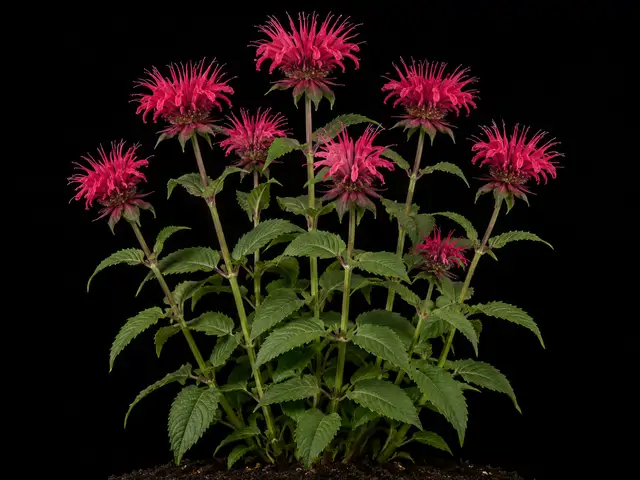
Bee Balm
Bee balm is a mint-family herb with edible leaves and flowers, long used for a minty-oregano herbal tea (Oswego tea) and as a mild seasoning. It's food-safe in normal culinary and tea amounts. The essential oil (thymol) is potent: external and aromatic use only, and medicinal use is folk tradition, not proven medicine. The growing plant is not considered toxic to dogs or cats; the concentrated oil is another matter - thymol-rich oils should not be applied to or diffused around cats.
Overview
A native pollinator powerhouse and edible herb in one: shaggy red, pink, or purple flowers that hummingbirds and bees swarm, minty-oregano leaves for real 'Oswego tea' - and one famous flaw, powdery mildew, that's beaten by choosing resistant varieties.
Bee balm (Monarda) is one of those rare garden plants that's a top-tier pollinator flower and a genuine culinary and medicinal herb. A North American native in the mint family, it sends up shaggy, tousled, tubular flowers — scarlet, pink, purple, or lavender — from mid to late summer, and they are a true magnet for hummingbirds, bees, butterflies, and hummingbird moths. Its aromatic leaves smell of mint and oregano and make the classic 'Oswego tea,' a fragrant herbal brew with real Native American roots.
It has one well-known weakness: powdery mildew, which whitens the foliage in humid, crowded, or drought-stressed conditions and is, frankly, the defining problem of the plant. The good news is that it's largely solvable — modern mildew-resistant varieties (Jacob Cline, Marshall's Delight, Raspberry Wine, Claire Grace) plus airflow and even moisture make the difference between a healthy plant and a shabby one. Bee balm also spreads by rhizomes, so give it room or plan to divide it — the trade-off for a plant that hums with life all summer.
At a glance
- Sun
- Full sun · Part sun
- Water
- Medium
- Spacing
- 18–30 in (typ. 24)
- Mature height
- 18–48 in (typ. 36)
- Start by
- Direct sow · Transplant · Division
- Frost
- Hardy
- Germination
- 10–21 days (typ. 15) @ 60–75 °F (typ. 70)
- Start indoors
- 6–10 wks (typ. 8) before transplant
- Spread
- 18–36 in (typ. 24)
- Soil
- Consistently moist
- Temperature
- Damaged below -35°F · struggles above 90°F
- Seed ready
- 110–150 days (typ. 130) (for saving)
- Self-sows
- Yes — expect volunteers
When to plant
Zone 7a typical frost: last Apr 10 · first Oct 25 (spring frost runs Mar 27–Apr 24 in a typical spread of years)
Life stages
- Year 1 - rooting in day 0–75 from transplant
-
Keep evenly moist while establishingevery 4 dUnlike many herbs, scarlet bee balm likes consistent moisture. Water regularly through the first season to build roots; it resents drying out and mildews worse when drought-stressed.
-
Water to establish, then ease offevery 7 dWild bergamot is a dry-prairie plant, not a moisture lover. Water weekly through the first season while the roots take hold, then let it fend for itself - established plants want water only in a real drought, and rich, constantly damp soil makes them flop.
-
Consider containing the spreading rootsBee balm spreads by underground rhizomes/stolons and can travel. If you want it to stay put, plant it in a bottomless container sunk in the bed, or plan to divide and pull back the runners each year.
Powdery mildew on lower leaves (the signature bee balm problem)Drought stress worsening mildewSpreading runners beyond where you want them -
Keep evenly moist while establishingevery 4 d
- Spring growth Apr, May, Jun (yearly)
-
Thin stems in spring for airflowWhen shoots are a few inches tall, thin out about a third of the stems from the center of a dense clump. Better airflow is the single most effective way to reduce powdery mildew - more than any spray.
-
Keep the soil moistevery 5 dWater in dry spells; even moisture keeps growth vigorous and reduces mildew, which is worst on drought-stressed plants.
-
Water only in a real droughtOnce established, wild bergamot handles lean, dry, and clay soils on its own - water only in an extended dry spell. It does not need the even moisture the scarlet types want, though it still repays airflow and thinning against mildew.
Powdery mildew starting on lower leavesAphids on new growthClump spreading vigorously (divide to contain and renew) -
Thin stems in spring for airflow
- Summer bloom Jun, Jul, Aug, Sep (yearly)
-
Deadhead for more bloom, and harvest leaves for teaevery 7 dSnip spent flowers to prolong the show. This is also prime time to harvest leaves and flowers for tea and garnish - just before and during bloom the aromatic oils are strongest. Leave plenty of flowers for the pollinators.
-
Enjoy the hummingbirds and beesThe shaggy tubular flowers are a top magnet for hummingbirds, bees, butterflies, and hummingbird moths - one of the best pollinator plants you can grow. Strip badly mildewed lower leaves as needed.
Powdery mildew whitening the foliage (choose resistant varieties)Aphids and spider mites in hot dry spellsHummingbirds and bees everywhere (a feature) -
Deadhead for more bloom, and harvest leaves for teaevery 7 d
- Cut-back & winter Jan, Feb, Mar, Oct, Nov, Dec (yearly)
-
Cut back after frost and clear mildewed debrisCut spent stems to a few inches after frost and REMOVE the mildewed foliage and debris (don't compost it) - clean fall sanitation reduces next year's powdery mildew. Some gardeners leave a few seed heads for birds and winter interest.
-
Divide every 2-3 years in springBee balm dies out in the center and spreads outward as it ages. Every 2-3 years, dig and divide the clump in spring, keep the vigorous outer pieces, discard the dead center, and replant - this renews it, controls its spread, and makes free plants.
Mildewed debris left over winter (harbors the disease - clear it)Center of an old clump dying out (time to divide) -
Cut back after frost and clear mildewed debris
Harvest
- Style
- Cut and come again
- First production
- 1–2 yrs (typ. 1)
- Blooms fully open for cutting and for pollinators
- For tea/herb: leaves and flowers just before and during bloom, when the aromatic oils are strongest
Watch out for
Powdery Mildew High
Powdery mildew is a fungal disease that coats leaves - and often stems, buds, and fruit - in a white-to-gray powder that looks like spilled talcum. It is not one fungus but a large family of them, each fairly specialised to its own group of plants, which is why mildew on one crop rarely jumps to an unrelated one beside it. Unlike most leaf diseases it does not need wet leaves: it thrives on warm dry days followed by humid nights, and it takes hold fastest where plants stand crowded in still air or in shade. The coating blocks light, so heavily covered leaves yellow, brown, and drop early. On many plants that is mostly disfiguring and arrives late enough not to matter; where it strips away the leaves a crop still needed to finish, it costs you size, sweetness, and quality.
Watch for: Round white powdery spots on the upper leaf surfaces that spread and merge until whole leaves look dusted. It usually starts on the oldest, lowest, most shaded leaves and works upward, so check there first. Look at the undersides too, and at stems, buds, and flower stalks, which get coated as it advances. Leaves that yellow, brown, curl, or go crisp and drop early under the coating. New growth that opens small, crumpled, or twisted where the fungus has reached the shoot tips. On plants where it gets onto the fruit, a dull gray film, russeted or scarred skin, and cracking. Late in the season, tiny dark specks scattered through the white felt - that is the fungus setting up to overwinter on the debris.
Prevent: Give plants room. Crowding and still air are the biggest single driver, so space at the full recommended distance, thin seedlings properly, and divide or prune out congested growth until air moves through the plant. Full sun and an open position help; deep shade and a still corner against a wall are where it always starts. Water at the base rather than overhead, and water early in the day so nothing stays damp overnight. Keep plants evenly watered - drought stress at the roots leaves them far more susceptible, even though the fungus itself likes dry air. Go easy on nitrogen, since soft lush growth is the most vulnerable. Where resistant varieties exist for what you are growing, choosing one is the single most effective thing you can do on a plant that mildews every year. Clear infected leaves and stems away at the end of the season rather than composting them.
Treat: Start early: sprays protect healthy tissue, they do not clean up leaves that are already coated. Pick off and bin the worst leaves as soon as you see them, and open the plant up by thinning or pruning so air moves through. On anything that regrows quickly, shearing the whole plant back forces a clean flush and beats spraying. If it keeps spreading, potassium bicarbonate, horticultural oil, or neem applied weekly will hold it - cover both leaf surfaces. Sulfur also works, but it burns the foliage of some plants, should never go on in heat, and must not be mixed with or applied close behind an oil spray. Whatever you use must be labeled for the plant you are treating: follow that label and observe its pre-harvest interval on anything you eat. Do not compost badly infected material. Late-season mildew on a plant that is finishing anyway is usually cosmetic; on a crop still filling out it is worth acting on.
Bee balm is one of the most mildew-prone garden perennials, and variety choice is the single most effective control: resistant cultivars such as Jacob Cline, Marshall's Delight, Raspberry Wine and Claire Grace stay clean where old susceptible ones are ruined every year. Drought at the roots makes it much worse, so keep the soil evenly moist. It disfigures rather than kills, and the flowers usually shine above the affected lower foliage.
Aphids Low
Aphids are small soft-bodied sap-suckers - green, black, gray, pink, or waxy white, and mostly wingless - that gather in dense colonies on the tenderest new growth: shoot tips, buds, and the undersides of young leaves. They breed extremely fast in mild weather, so a few can become hundreds inside a week. Their feeding curls and distorts soft growth, and the sticky honeydew they excrete coats everything below and turns black with sooty mold. Ants often farm and defend the colonies for that honeydew. A few aphids are normal on almost any plant and a healthy plant shrugs them off; only dense, persistent colonies do real damage, and some aphids also spread plant viruses as they feed.
Watch for: Dense clusters of tiny insects packed onto shoot tips, flower buds, and the undersides of young leaves. Curled, cupped, or distorted new growth that never opens properly. A sticky shine on the leaves - and on whatever sits under the plant - that later goes black with sooty mold. Tiny white cast skins left behind where a colony has been feeding. Ants running steadily up and down the stems, which is often the first thing you notice. Mottled, streaked, or misshapen leaves that do not grow out can mean a virus the aphids brought with them rather than the feeding itself.
Prevent: Go easy on nitrogen: the soft, lush growth that heavy feeding produces is exactly what aphids breed on. Check new growth once a week through spring and early summer so you catch colonies while they are still small, and rub the first few out with your fingers. Leave flowering plants nearby and skip broad-spectrum sprays - ladybugs, lacewings, hoverflies, and parasitic wasps do most of this work for free, and they only stay if there is something for them to eat. Keep ants off the plant where you can, since they protect aphids from those predators. Water steadily so plants are not stressed, and check any new plant over before you bring it home or move it indoors, since aphids usually arrive on something else.
Treat: Knock the colonies off with a hard jet of water and repeat every few days - on most plants that alone ends it. Pinch out or prune off the worst-infested tips rather than treating the whole plant. If colonies keep rebuilding, spray insecticidal soap or horticultural oil directly onto the insects, covering leaf undersides, and repeat weekly until they are gone; treat early or late in the day, and never spray a wilted or heat-stressed plant. Avoid broad-spectrum insecticides - they kill the ladybugs, lacewings, and parasitic wasps that were about to solve the problem for you, and aphid numbers usually come back worse afterward. Anything you spray must be labeled for the plant you are treating; follow that label and observe its pre-harvest interval. On anything you eat, wash leaves, heads, and buds well before use, since aphids hide down in crowns, folds, and tight growth.
Bee balm's own flowers recruit the lady beetles and lacewings that eat aphids, so colonies here rarely last long.
Spider Mites Low
Spider mites are not insects but tiny sap-feeding arachnids, smaller than a grain of salt, and you almost always notice the damage before you notice them. They live on the undersides of leaves and drain the cells one at a time, which is why the leaf goes finely stippled with pale dots before it bronzes and dries. They breed explosively in hot, dry, dusty, still air - a generation can pass in a week at high temperature - so a barely visible population becomes a webbed, bronzed plant within a fortnight. Drought-stressed plants and plants wintered indoors in dry heated air are the classic hosts. Broad-spectrum insecticides make matters worse rather than better, because they kill the predatory mites and lady beetles that normally hold mites in check.
Watch for: Fine pale stippling or speckling across the upper leaf surface, as though the color had been sandblasted out of it, and later a dull bronze or rusty cast over the whole leaf. Delicate webbing across leaf joints, shoot tips, and undersides - that comes with a heavy infestation and means you caught it late. Leaves that dry, curl, and drop early while the plant looks thirsty no matter how much you water it. Hold a leaf over a sheet of white paper and tap it: the specks that fall and then start walking are mites. With a hand lens, look on the undersides for the mites themselves, pale or reddish, and their round translucent eggs. Damage that shows up first on the hottest, dustiest, most sheltered side of a plant, or on a pot sitting near a radiator indoors.
Prevent: Do not let plants get drought-stressed - that is the single strongest trigger, and a plant watered steadily through heat is far less likely to have a mite problem at all. Hose the foliage down, undersides included, during hot dry spells: it knocks mites off, washes away the dust they thrive in, and raises the humidity around the plant for a while. Indoors and under cover, keep the air from going hot, dry, and stagnant, wipe or rinse the leaves occasionally, and keep pots away from radiators and heating vents. Inspect any plant carefully before you bring it indoors for winter or set it among others, since mites almost always arrive on something else. Avoid broad-spectrum insecticides: they wipe out the predatory mites, lacewings, and lady beetles that do most of this work for you, and reliably leave you with a worse outbreak than you started with.
Treat: Start with water. A strong jet aimed at the leaf undersides, repeated every few days for a couple of weeks, knocks populations down and breaks the cycle - on many plants that alone ends it. On anything that regrows quickly, shearing back badly infested growth resets the plant to clean foliage. If it keeps building, spray insecticidal soap or horticultural oil directly onto the undersides where the mites actually live, and repeat every five to seven days for three rounds: contact sprays do not kill the eggs, so a single application always fails. Anything you spray must be labeled for the plant you are treating - follow the label and observe its pre-harvest interval on anything you eat. Predatory mites are an effective release in a greenhouse or on an indoor plant. Above all, correct the heat, dust, and drought stress that caused it, or the mites simply come back.
Usually minor if the plant is well watered - and bee balm dislikes drought anyway, so the watering that keeps mites away is what the plant wants regardless.
Good & bad neighbors
Varieties · 8
Large bright scarlet flowers on vigorous, mildew-resistant 3-4 foot plants.
A classic mildew-resistant red bee balm with large bright scarlet flowers on vigorous 3-4 foot plants - a longtime favorite for hummingbirds and a healthy alternative to the old disease-prone reds.
Large brilliant scarlet-red shaggy flowers on tall 3-4 foot stems.
The benchmark red bee balm and a top mildew-resistant variety: huge, brilliant scarlet-red flowers on strong 4-foot stems, a hummingbird magnet, and one of the most disease-resistant Monardas available. The go-to for a big, healthy, red pollinator plant.
Deep raspberry-wine-red flowers on tall vigorous 3-4 foot stems.
A vigorous, mildew-resistant favorite with deep wine-red to raspberry flowers on strong 4-foot stems - richly colored, healthy, floriferous, and excellent for both pollinators and cutting.
Soft lavender-purple flowers over aromatic foliage on tough 3-4 foot plants.
A mildew-resistant selection of the native wild bergamot (Monarda fistulosa) with soft lavender-purple flowers on tough, adaptable 3-4 foot plants. Combines the hardiness and drought tolerance of the wild species with better disease resistance - a superb native-garden pollinator plant. Being fistulosa, it wants far less water than the scarlet types: establish it, then leave it be.
Soft lavender-lilac shaggy flowers over gray-green aromatic foliage on tough plants.
The lavender-flowered native wild bergamot: extremely tough, drought- and cold-tolerant (to zone 3), and adaptable to poor and clay soils where the scarlet types struggle. Soft lilac flowers, aromatic foliage, and a pollinator and native-habitat staple - the species to sow for a wild meadow planting.
Short 10-12 inch mounded plants covered in flowers in rose, purple, lilac, or pink.
A modern compact series (Balmy Rose, Purple, Lilac, Pink) of dwarf, mildew-resistant bee balm around 10-12 inches tall - tidy, non-spreading, floriferous plants in several colors, bred for containers, small gardens, and disease resistance.
Bright rose-pink shaggy flowers on healthy, disease-resistant 3-foot plants.
Rated the most mildew-resistant bee balm in a multi-year University of Vermont trial: clear rose-pink flowers on tidy 3-foot plants, healthy foliage all season, and a strong pollinator draw. A benchmark healthy pink Monarda.
Compact 12-15 inch plants with lavender-pink flowers and healthy foliage.
A compact, mildew-resistant dwarf bee balm just 12-15 inches tall, with lavender-pink flowers on sturdy, well-behaved plants that don't flop or spread aggressively. Ideal for the front of the border, small gardens, and containers.
Grow
Plant in full-to-part sun and moist, well-drained soil; give airflow and even moisture to fight mildew, and choose resistant varieties from the start. Native wild bergamot (M. fistulosa) is the dry-soil exception to the moisture rule.
Bee balm wants full sun to part sun and rich, evenly moist, well-drained soil — unusually for an herb, it likes consistent moisture and actually mildews worse when it dries out. That is Monarda didyma, the common garden bee balm; if you are growing the native wild bergamot (M. fistulosa), reverse the water advice — it is a dry-prairie plant that takes lean and clay soils, wants water only in a real drought, and flops in rich, damp ground. Set out transplants or divisions in spring, spacing them 18-30 inches apart for the airflow that is the plant's best defense against powdery mildew. The single most impactful choice you make is variety: start with a mildew-resistant type (Jacob Cline, Marshall's Delight, Raspberry Wine, Claire Grace, or the compact Petite Delight) rather than fighting an old susceptible one all season.
Because bee balm spreads by underground rhizomes, decide up front whether to let it roam (great for a wild pollinator patch) or contain it (sink a bottomless pot, or divide and pull back the runners each spring). It grows readily from seed too, but named cultivars won't come true — and cultivars are exactly where the mildew resistance lives — so transplants and divisions are usually the smarter start.
Care
The whole game is beating powdery mildew: airflow (thin stems), even moisture, resistant varieties, and clean fall cleanup - plus dividing every 2-3 years to renew and contain it.
Bee balm care is really mildew management. Do three things and the plant stays handsome: thin out about a third of the stems from the center of a dense clump in spring for airflow; keep the soil evenly moist (drought stress makes mildew worse); and cut back and remove the mildewed foliage in fall (don't compost it), since the spores overwinter on debris. Choosing a resistant variety in the first place does more than any spray.
The other routine job is division: bee balm dies out in the center and spreads outward by rhizomes, so every 2-3 years dig and split the clump in spring, keep the vigorous outer pieces, discard the woody dead center, and replant — this simultaneously renews the plant, controls its spread, and gives you free divisions. Deadhead spent flowers to prolong bloom, but leave plenty for the hummingbirds and bees, and harvest leaves for tea before and during bloom when the oils peak.
Harvest
Two harvests in one: aromatic leaves and flowers for tea, seasoning, and garnish (best just before and during bloom), and a lavish nectar harvest for pollinators.
Bee balm gives a genuine edible harvest on top of its flowers. Pick the leaves and flowers just before and during bloom, when their minty-oregano aromatic oils are strongest, in the cool morning. Use the leaves fresh or dried for Oswego tea (steep a handful for a fragrant, slightly citrusy-minty brew), as a mild seasoning where you'd use oregano or thyme, and the colorful petals as an edible garnish in salads and drinks. Cut some stems for the vase too — they're good, if short-lived, cut flowers.
The other 'harvest' is ecological and arguably the main event: bee balm in bloom is one of the finest pollinator and hummingbird plants you can grow, so leaving flowers standing feeds a parade of bees, butterflies, hummingbirds, and moths through mid-to-late summer. A good approach is to take what leaves and flowers you want for the kitchen and leave the rest humming for the wildlife.
Storage
Dry the leaves and flowers for tea and seasoning - they store airtight for a year; cut stems last a few days, and the plant persists by rhizome and self-sowing.
Bee balm's harvest stores well because it's an herb. Dry the leaves and flowers — hang small bundles or lay them on screens in a warm, airy, dark spot — then strip and store them airtight, out of light, where they hold their fragrance for tea and seasoning for a year or more. Fresh leaves can also be frozen. Cut flower stems last only a few days in the vase, so they're best enjoyed fresh or dried for the petals.
As a perennial, the plant 'stores' itself: it overwinters as a rhizome and often self-sows, so a planting persists on its own (indeed it may spread more than you'd like). Divisions lifted in spring should be replanted promptly. Keep dried bee balm labeled with the rest of your culinary herbs — it's food-safe and a lovely, underused kitchen herb.
Propagation & seed saving
Divide the spreading clump in spring (the reliable route for resistant cultivars), take cuttings, or sow the species from seed - a fast-multiplying, never-buy-it-again plant.
Bee balm multiplies eagerly. Division is the go-to method, especially for the mildew-resistant named cultivars (which won't come true from seed): every 2-3 years in spring, dig the spreading clump, split it into pieces with roots and shoots, discard the dead center, and replant — you'll get several plants and a renewed, contained clump. The plant's rhizomatous spread means it practically propagates itself; you can even lift and replant the outer runners.
Cuttings root easily too — take non-flowering stem tips in early summer and root them in moist medium. Growing the species (M. didyma, M. fistulosa) from seed works well (light aids germination, and seed-grown plants usually bloom their second year), and they'll self-sow, but seedlings vary and may not carry a cultivar's mildew resistance. For a healthy patch, propagate resistant cultivars by division or cuttings; sow seed for a wilder native stand.
Nutrition
Not eaten for nutrition but as an aromatic herb - its real value is a lavish pollinator/hummingbird resource and a fragrant, flavorful tea and seasoning.
Bee balm isn't a nutritional food crop — you use it as an aromatic herb, in the small amounts you'd use any tea or seasoning, not for calories or vitamins. Its leaves and flowers flavor teas and dishes and garnish plates; the point is fragrance and flavor (minty, citrusy, oregano-like), the same way you'd treat mint or thyme.
Its greater value is ecological and aromatic. As a nectar-rich native, bee balm is among the best plants you can grow for hummingbirds, bees, butterflies, and beneficial insects — it feeds the pollinators that in turn support the food garden. And its leaves carry the essential oil thymol (also found in thyme), the source of both its distinctive tea flavor and its antiseptic folk reputation. Grow it for the pollinators, the tea, and the fragrance rather than for nutrition.
Traditional & historical uses
A genuine Native American and folk medicinal with a real active compound (thymol), traditionally used for colds, sore throats, and digestion as a tea - honest tradition with antiseptic backing but limited modern clinical proof.
This section records how people have traditionally used this plant, and what is known about the risks. It is history and general information — not medical advice, and not a recommendation to treat anything. Plants are not dosed like medicines, some interact with prescriptions, and some are harmful in ways that are not obvious. Talk to a clinician before using any plant medicinally.
Bee balm has a real medicinal tradition, and unusually, a plausible active ingredient behind it. Native American peoples of eastern North America — among them the Haudenosaunee nations around Oswego, New York — used Monarda as a tea and poultice for colds, sore throats, fevers, headaches, and digestive upset, and the settlers who learned 'Oswego tea' from them adopted it, especially as a substitute for black tea after the Boston Tea Party. Herbalists have long valued it as a warming, antiseptic, digestion-soothing herb.
The honest science: bee balm's leaves are rich in thymol, the same aromatic compound found in thyme, which has genuine, well-documented antiseptic and antimicrobial properties — it's an ingredient in some commercial mouthwashes. That gives the traditional use as a throat-soothing, mildly antiseptic tea a real basis. But rigorous modern clinical trials on Monarda itself are limited, so this remains a well-founded folk medicine rather than a proven remedy. Use the mild leaf tea freely as a pleasant, traditional brew; treat the concentrated essential oil as a potent external/aromatic product, not something to take internally, and don't rely on it in place of medical care.
History
A native 'Oswego tea' learned from Indigenous peoples and brewed by colonists after the Boston Tea Party, named for a 16th-century Spanish botanist, now a native-garden and pollinator staple.
Bee balm is woven into American history. Indigenous peoples of eastern North America used Monarda widely for tea and medicine, and the people around Oswego, New York, gave the plant its enduring name, 'Oswego tea.' When colonists boycotted British tea after the Boston Tea Party of 1773, many turned to Oswego tea as a homegrown substitute — a small botanical footnote to the American Revolution. The genus honors Nicolás Monardes, a 16th-century Spanish physician and botanist who wrote about New World plants.
The common name 'bergamot' comes from the leaves' scent, reminiscent of the bergamot orange used to flavor Earl Grey tea (though it's an unrelated plant). Long a cottage-garden and herb-garden fixture, bee balm has surged in popularity with the native-plant and pollinator-gardening movements — both the scarlet M. didyma and the lavender wild bergamot M. fistulosa are now staples of habitat plantings, and breeders have focused on the mildew-resistant cultivars that make it easy to grow.
Troubleshooting
White powdery leaves is the near-inevitable powdery mildew - solved mostly by resistant varieties, airflow, and even moisture; leggy flopping means too much shade; a spreading clump needs dividing.
White powdery coating on the leaves (powdery mildew): the signature bee balm problem, worst in humidity, crowding, and drought stress — the fixes, in order of impact, are: grow a resistant variety (Jacob Cline, Marshall's Delight, Raspberry Wine, Claire Grace), thin stems for airflow, keep the soil evenly moist, and clear mildewed debris in fall. It rarely kills the plant, and the flowers usually shine above the affected lower leaves. Bee balm taking over the bed: it spreads by rhizomes — divide it every 2-3 years and pull back the runners, or contain it in a sunken pot. Tall, leggy, flopping, few flowers: too much shade or too rich/nitrogen-heavy soil — give more sun and lean out the feeding. Dead center in an old clump: it needs dividing — split in spring. Deformed greenish flowers: aster yellows — pull and destroy the plant. Wilting, poor bloom in drought: garden bee balm (M. didyma) wants moisture — water more, mulch to conserve it. Native wild bergamot (M. fistulosa) is the exception: it is a dry-prairie plant, so check that the wilting is not simply heat before you water it harder, and keep its soil on the lean, drier side.
Growing across climates
A cold-hardy native across zones 3-9; the constant everywhere is mildew pressure, worst in humid heat - manage it with resistant varieties, airflow, and moisture.
Zones 3-4: fully hardy and vigorous; the native wild bergamot (M. fistulosa) is especially tough and drought- and cold-tolerant here, and both species return reliably and spread. Zones 5-7: bee balm's heartland — long summer bloom, the widest cultivar choice, and dependable pollinator draw; mildew is present but manageable with airflow and resistant types. Zones 8-9 (hot, humid South): grows well but faces the heaviest powdery mildew pressure in the muggy heat — lean hard on resistant varieties, wide spacing, morning sun with afternoon relief, and even moisture; plant in fall for cool-season establishment. Zones 9-10: at the warm edge — wild bergamot and heat-tolerant selections do best; the lack of a hard winter and intense humidity make mildew the limiting factor. Everywhere, the message is the same: airflow and a resistant variety are what keep bee balm healthy, plus even moisture if you are growing M. didyma — wild bergamot is the dry-soil exception and wants water only in a real drought.
Grower tips
No grower tips for Bee Balm yet. Yours could be the first.
Sign in to share what works in your garden.