
Add it to your home screen and it opens full screen: no browser bars, one tap away, and everything stays signed in. Free, nothing to download from an app store.
- Tap the Share button in your browser
- Scroll down and choose “Add to Home Screen”
- Open GrowSomeFood from your home screen
- Open your browser’s menu
- Choose “Add to Home screen” or “Install app”
- Open GrowSomeFood from your home screen

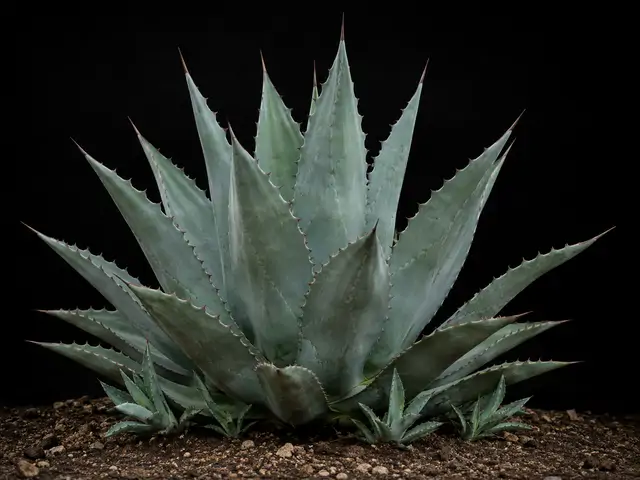
Agave
The bold, symmetrical succulent behind tequila and agave syrup - an architectural desert plant that grows slowly for years, blooms once in a spectacular 20-foot flower spike, and then dies, leaving offsets to carry on; drought-proof and sculptural, but armed with dangerous spines and irritating sap.
Safety notes An architectural ornamental with TWO hazards: (1) The leaves have needle-sharp terminal spines and saw-toothed edges that cause deep puncture and eye injuries - site it away from paths and cut the tip spines off plants near foot traffic. (2) The raw sap (calcium oxalate and saponins) causes painful contact dermatitis in many people - wear gloves and long sleeves when cutting it. Cooked agave makes tequila and agave syrup, but the RAW plant is not for eating and its sap irritates skin and eyes.
Overview
Agave is the sculptural backbone of the dry garden - a bold rosette of thick, stiff, often blue-gray leaves radiating in near-perfect symmetry, each tipped with a formidable spine. Native to the arid Southwest and Mexico (several species are native to Arizona, New Mexico, and Texas), it's about as drought-proof and low-maintenance as a plant gets, asking only for full sun and sharp drainage, and repaying it with year-round architectural presence in xeriscapes, containers, and modern landscapes worldwide.
Quick facts
- Height
- 48 inRange: 12–72 in
- Spread
- 60 inRange: 18–120 in
- Cold
- Killed by frostdamaged below 15°F
- Heat
- Struggles above 115°F
- Life cycle
- Perennial, lives about 20 years
- Soil
- Well-drained
- Water
- Low
- Plant spacing
- 60 inRange: 24–120 in
When to plant
Nothing is open today. Spring transplanting opens 6 months, Apr 24 to Jun 19.
- Transplant Apr 24 – Jun 19 Opens in 187 daysAbout 2 weeks after to 10 weeks after your last frost (Apr 10 here)In cold-winter regions, grow tender agaves in containers set out for summer and brought into a bright frost-free space for winter; cold-hardy species (A. parryi/ovatifolia/montana) can stay in the ground with sharp drainage and dry winters.
Frost here: last around Apr 10 (Mar 27 to Apr 24 most years), first around Oct 25. Zone averages, your own yard may run a week or two either way.
Life stages
Establish, grow, repeat
Getting established and returning each season are different parts of the story.
Stage 1 of 4 · Getting established
Year 1 - rooting in
Day 0 to 90 after transplanting
Care at this stage
-
Water lightly to establish, then almost never
Water a new agave or offset ('pup') sparingly to help it root the first season. After that it's one of the most drought-proof plants there is - established agaves in most climates want little or no supplemental water, and rot in wet soil.
-
Handle with gloves, long sleeves, and respect for the spines
Wear thick gloves and long sleeves - the sap causes skin burns/blistering in many people, and the terminal spines cause deep puncture wounds. Consider snipping the sharp tip off the terminal spine on plants near paths or where people pass.
Months are typical seasonal windows; climate, variety, and plant age can shift them.
Watch out for
3 to know. 2 are high-risk: Root Rot, Agave Snout Weevil. None are active in October.
Root RotSeverity High DiseaseSeason: Jan, Feb, Jun, Jul, Nov, DecWilting in the middle of the day on a plant whose soil is damp - the classic tell, and the reason people water a rotting plant and finish it off.
The main non-pest killer of agave: soft rot of the crown and roots in cold-plus-wet winters or from summer overwatering. Give it gritty fast-draining soil, raised berms or slopes, full sun and no winter water, and grow tender types in pots of cactus mix. If the crown is lost, start over from clean offsets.
Wilting in the middle of the day on a plant whose soil is damp - the classic tell, and the reason people water a rotting plant and finish it off. Leaves yellowing from the bottom up, dull off-color foliage, and growth that stalls for no visible reason. Whole shoots, or one side of the plant, collapsing while the rest still looks fine. Soft, dark, or mushy tissue at the base of the stem or at the crown, sometimes with a sour smell. Lift a failing plant and look at the roots: healthy ones are firm and pale, rotted ones are brown or black and slimy, and the outer layer slips off between your fingers leaving a thread of core behind. Seedlings that topple over at soil level are the same problem, called damping-off.
There is no cure for tissue that has already rotted, so act on the conditions rather than looking for a spray. Stop watering at once and fix the drainage - open up compacted soil, or move the plant to a raised, sharply drained position or a container. Lift a badly affected plant, cut away every soft dark root and rotted section with a clean blade back to firm pale tissue, and replant only the healthy parts into fresh free-draining soil or mix. Often the better move is to give up on the plant and save its offspring instead: cuttings, offsets, or divisions taken from firm healthy growth root readily and give you a clean start. Bin the rotted material rather than composting it, and correct the drainage before you replant, because the rot comes straight back in the same wet spot.
Drainage is the whole defense. Match the plant to the site first - something that wants sharp drainage will not survive heavy clay or a low, water-collecting spot however well you tend it. Where the ground is heavy, plant on a raised bed, berm, or slope, or grow in a container. Set plants at the depth they were already growing, since burying the crown or the root flare is a common cause of rot, and keep mulch pulled back a few inches from the stem base instead of piled against it. Water the soil rather than the calendar: check that the top inch or two is dry before watering again, cut back hard in cool weather and winter dormancy, and never leave a pot standing in a full saucer. Do not plant or dig in soggy ground, and go easy on rich amendments for plants that want it lean. Rotate annual crops, and start with clean healthy plants and fresh mix.
Root rot is not one organism but a group of soil fungi and water molds - Pythium, Phytophthora, Fusarium, Rhizoctonia and others - that sit harmlessly in most soils and only turn destructive when the ground stays saturated. Waterlogged soil drives the air out, the roots suffocate, and the weakened tissue is invaded and goes soft, brown, and stringy. Because the damage is underground you usually see it first as something that looks like drought: wilting, yellowing, stunting, a plant that does not respond to being watered. Overwatering, heavy compacted ground, a low spot that collects runoff, a pot with no drainage or a saucer left standing full, and cold wet soil in winter are the usual causes. Once roots have actually rotted there is no cure - this is a problem you prevent rather than treat.
Agave Snout WeevilSeverity High PestSeason: Apr–AugA large agave suddenly wilting, leaves loosening and folding down, the base soft and foul-smelling, the whole rosette collapsing or pulling loose from a rotted core; adult weevils or C-shaped grubs at the base.
A large agave suddenly wilting, leaves loosening and folding down, the base soft and foul-smelling, the whole rosette collapsing or pulling loose from a rotted core; adult weevils or C-shaped grubs at the base.
Little can save a heavily infested plant - remove and destroy it (and the grubs), and salvage any clean offsets. Protect nearby valued agaves preventively; the weevils move to new hosts as plants die.
Choose more resistant species (many stiff-leaved and smaller agaves are less susceptible), avoid stressing plants, remove and destroy infested plants promptly to stop the weevils spreading, and in high-pressure areas apply a soil systemic insecticide to valued specimens in spring.
The most serious agave pest, especially of Agave americana and other large soft-leaved species: a black weevil that lays eggs at the base of a mature rosette (often one nearing bloom), and whose grubs tunnel into the core, introducing rot that causes the whole plant to soften and collapse - frequently fatal and often noticed only when the plant is already falling apart.
Monocarpic Bloom & DeathSeverity Low DisorderSeason: May–JulA mature rosette rapidly sending up a giant flower stalk (feet per day in some species), then the parent rosette yellowing and dying back over the following months - this is normal and expected, not illness.
A mature rosette rapidly sending up a giant flower stalk (feet per day in some species), then the parent rosette yellowing and dying back over the following months - this is normal and expected, not illness.
None needed - enjoy the spectacular bloom (a boon to bees, bats, and hummingbirds), then remove the dead rosette and stalk afterward and replant the offsets that carry on the plant's line.
Nothing to prevent - it's the natural cycle. The 'prevention' that matters is foresight: propagate and keep offsets (pups) or collect stalk bulbils before the parent dies so the planting continues.
Not a disease but the plant's natural life cycle, and a frequent cause of alarm: an agave is monocarpic, growing for 10-30 years and then flowering ONCE - sending up a huge stalk - after which the entire rosette dies. Gardeners often mistake the towering bloom, or the parent's decline afterward, for a problem.
Good & bad neighbors
Plant nearby
-
The Old World counterpart to agave's New World form - similar rosette shape, identical love of sun and sharp drainage; the two are often grown together in dry gardens (aloe flowers freely, agave once).
-
A natural desert-garden pairing - both are sculptural, drought-proof succulents wanting full sun and sharp drainage, their bold contrasting forms anchoring a xeriscape.
-
Low stonecrops carpet the gritty ground around an agave's bold rosette, thriving in the same sharp drainage and sun and softening the base of the architectural plant.
- Traditional pairings, thin evidence
-
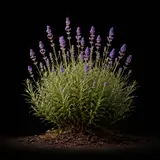
Shares full sun, lean soil, and sharp drainage; lavender's soft gray mounds and flowers contrast the agave's rigid rosette and add pollinator bloom to a Mediterranean-style dry planting.
Varieties · 6
You pick one when you add Agave to your garden. Its days to maturity set your harvest window.
Cold-hardy agaves 2 varieties
Parry's Agave (Agave parryi)
A genuinely native Southwestern agave (AZ/NM and into Mexico) and the one to choose if you are planting natives: a tidy, compact blue-gray rosette with an 'artichoke' look and neat dark spines, hardy to around zone 6-7 with sharp drainage.
Variety details for Parry's Agave (Agave parryi)
Compact, symmetrical powder-blue rosette with red-brown spine tips, artichoke-like.
nativecompactblue-grayartichoke-formOne of the best agaves for colder gardens and a handsome, manageable size. A. neomexicana is the other true US native.
Whale's Tongue Agave (Agave ovatifolia)
A superb, increasingly popular species: broad, cupped, powder-blue leaves like whales' tongues in a symmetrical rosette, cold-hardy to about zone 7 and largely solitary (few pups).
Variety details for Whale's Tongue Agave (Agave ovatifolia)
Rosette of very wide, cupped, powder-blue leaves with neat teeth and a bold form.
wide-leavesbluespecimensolitaryA bold, elegant specimen that handles more cold and even humidity better than many. Mexican, not a US native.
Tender agaves 3 varieties
Century Plant (Agave americana)
The iconic big agave: a massive blue-gray rosette 6+ feet across with saw-toothed, spine-tipped leaves, and the classic 20-30 foot bloom spike after 10-30 years.
Variety details for Century Plant (Agave americana)
Huge sculptural rosette of arching blue-gray toothed leaves, to 6+ feet wide.
largeblue-grayclassicnaturalizedNOT native to the United States - it is a Mexican species, naturalized across the warm Southwest and invasive in several warm regions abroad. Offsets freely. The 'century plant' of song and story - dramatic but large and well armed; site with care.
Agave americana 'Variegata' / 'Marginata'
The variegated century plant: the same bold form with dramatic creamy-yellow leaf margins (or yellow centers in 'Mediopicta Alba'), a striking specimen in the ground in warm zones or in a large pot elsewhere.
Variety details for Agave americana 'Variegata' / 'Marginata'
Large blue-green rosette with bright creamy-yellow striped or margined leaves.
variegatedyellow-edgelargeshowyAs big and armed as the plain form, and like it a naturalized Mexican species rather than a US native.
Blue Agave / Tequila Agave (Agave tequilana)
The famous blue agave of tequila: tall, narrow, blue-gray sword leaves in a large rosette, grown commercially in Jalisco, Mexico for the spirit.
Variety details for Blue Agave / Tequila Agave (Agave tequilana)
Upright rosette of narrow, sword-like, silvery-blue leaves.
tequila-sourcebluecommerciallargeTender (zone 9-11) and grown ornamentally as a blue specimen; included for its cultural fame - the tequila itself is made from the cooked, distilled heart, not the raw plant.
Spineless agaves 1 variety
Foxtail / Dragon-Tree Agave (Agave attenuata)
The unusual SPINELESS agave: soft, fleshy, pale blue-green leaves with no terminal spine or sharp teeth, and a curving 'foxtail' bloom - the safe agave for near paths and children.
Variety details for Foxtail / Dragon-Tree Agave (Agave attenuata)
Soft rounded rosette of spineless pale-green leaves; arching foxtail flower stalk.
soft-leavedtendercontainermild-climateThe most frost-tender of the group, damaged around 28-30F rather than the species-level 15F, so zone 9-11 in the ground and a container plant elsewhere. Sap can still irritate skin.
Grower tips
Notes from growers, tagged with the zone they grow in. A person reads every post before it appears.
Nobody has posted about Agave yet. The first one usually saves someone a season.
Free account. Your post shows your grower name and zone, never your email.