Add it to your home screen and it opens full screen — no browser bars, one tap away, and everything stays signed in. Free, nothing to download from an app store.
- Tap the Share button in your browser
- Scroll down and choose “Add to Home Screen”
- Open GrowSomeFood from your home screen
- Open your browser’s menu
- Choose “Add to Home screen” or “Install app”
- Open GrowSomeFood from your home screen
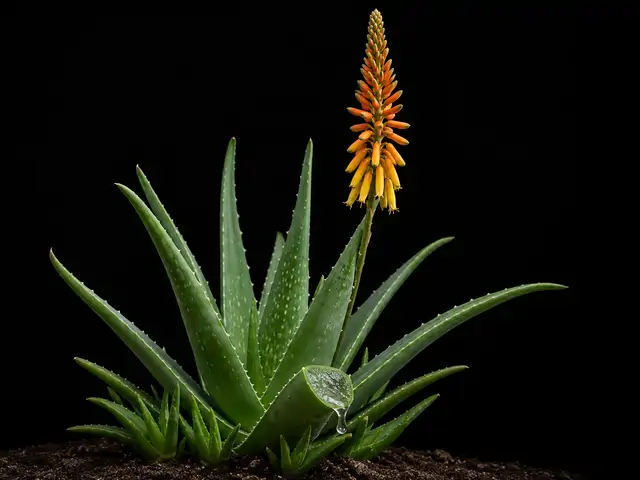
Aloe
Aloe vera's clear INNER gel is the useful part, soothing on minor burns and skin. Cautions: (1) Just under the skin is a bitter YELLOW LATEX (aloin), a strong laxative and irritant - drain/rinse it off and do NOT eat it; the rind isn't eaten either. (2) Ingesting aloe can cause cramping and diarrhea, and isn't advised in pregnancy or for children. (3) It is toxic to cats and dogs - keep pets away. (4) Don't confuse it with toxic look-alikes like Agave. Use the gel topically, not internally.
Overview
The world's favorite houseplant medicine chest: a tough, drought-proof succulent whose clear inner leaf gel soothes minor burns - nearly unkillable except by overwatering, an easy sunny-windowsill plant in cold climates and a landscape succulent where it never freezes.
Aloe vera is probably the most useful houseplant in the world — a rosette of thick, spiky, gray-green succulent leaves that doubles as a living first-aid kit. Snap or slice open a mature leaf and the clear inner gel soothes minor burns, sunburn, and scrapes, a folk remedy so widespread it made 'aloe' a household word and a staple of skincare and after-sun products. It's also one of the toughest, most forgiving plants you can grow: drought-proof, thriving on neglect, and famously hard to kill — except by the one thing people do wrong, which is overwatering.
How you grow it comes down to climate, and here's the honest edge: aloe is frost-tender. In frost-free zones 9-11 it's a carefree landscape and container succulent that will even send up tall spikes of tubular orange-yellow flowers loved by bees and hummingbirds. Everywhere colder — most of the country — it's grown as a potted houseplant: a bright windowsill all year, or outdoors for summer and back inside before the first frost. Either way, give it sharp drainage, bright light, and a dry-between-waterings routine, and a single aloe supplies household burn-gel for years while multiplying into free 'pup' plants. Just respect two things: the bitter yellow latex under the skin is a laxative to be drained off and not eaten, and the plant is toxic to cats and dogs.
At a glance
- Sun
- Full sun · Part sun
- Water
- Low
- Spacing
- 12–24 in (typ. 18)
- Mature height
- 8–24 in (typ. 18)
- Start by
- Transplant · Division
- Frost
- Tender
When to plant
Zone 7a typical frost: last Apr 10 · first Oct 25
Life stages
- Rooting in (pot or ground) day 0–45 from transplant
-
Pot in gritty cactus mix and water sparinglyPlant aloe in a well-drained cactus/succulent mix in a pot with drainage holes (or gritty ground in frost-free zones). Water lightly to establish; aloe stores water in its leaves and rots fast in soggy soil. Let the mix dry out between waterings from the start.
-
Give it bright lightAloe wants bright light - a sunny windowsill indoors, or full to part sun outside (acclimate gradually to avoid sunburn). Too little light makes it stretch, pale, and flop; it colors and stays compact in good light.
Overwatering / soggy mix (the #1 killer - causes rot)Stretching, pale, floppy growth in low light -
Pot in gritty cactus mix and water sparingly
- Leaf growth & offsets Mar, Apr, May, Jun, Jul, Aug, Sep (yearly)
-
Water only when the soil is dry - soak, then dry outevery 14 dWater thoroughly only when the top inch or two of mix is fully dry, letting excess drain away, then let it dry again before the next soak. Water much less in winter. More aloes die from overwatering than any other cause.
-
Pot up the offset 'pups'Healthy aloe produces offsets ('pups') around the base - the easy free way to multiply it. Let a pup grow a few inches with its own roots, then gently separate and pot it up in gritty mix. Removing pups also keeps the parent from crowding its container.
Mealybugs and scale in leaf axils (especially indoors)Soft, mushy, browning leaf bases (rot from overwatering)Crowded pot full of pups (divide/repot) -
Water only when the soil is dry - soak, then dry outevery 14 d
- Leaf (gel) harvest Apr, May, Jun, Jul, Aug, Sep, Oct (yearly)
-
Cut a thick OUTER leaf for gel - drain the yellow latex firstevery 30 dHarvest by cutting a mature, thick OUTER leaf at the base with a clean knife (take only outer leaves, and only a few at a time, so the plant keeps growing). Stand it cut-end-down to drain off the bitter yellow LATEX (aloin - laxative/irritant, not for eating), then rinse; slice open and scoop or fillet the clear inner GEL for topical use on minor burns and skin.
-
Harvest sparingly and let it recoverOnly take a few outer leaves at a time and let the plant regrow before harvesting again - stripping too many leaves weakens it. A healthy plant supplies household first-aid gel indefinitely from just its outer leaves.
Yellow latex (aloin) - drain and discard it, don't eat itOver-harvesting weakening a small plant -
Cut a thick OUTER leaf for gel - drain the yellow latex firstevery 30 d
- Cool-season rest / winter indoors Jan, Feb, Nov, Dec (yearly)
-
Bring it in before frost - aloe is tenderAloe vera is frost-tender: it's damaged below about 40F and killed by a hard freeze. In zones below 9-10 grow it in a pot and bring it indoors to a bright window before the first frost; it's one of the classic easy houseplants for exactly this reason.
-
Water very little in winterIn the cool, low-light months aloe rests - water sparingly, only when thoroughly dry. Cold plus wet soil is the fastest way to rot it. Ease off water and hold it drier through winter.
Frost/cold damage (mushy, translucent, browning leaves)Winter rot from too much water in cool low light -
Bring it in before frost - aloe is tender
Harvest
- Style
- Repeated picking
- First production
- 1–3 yrs (typ. 2)
- Mature, thick, plump outer leaves - large enough to spare a few for gel
- Take only outer leaves, a few at a time, and let the plant regrow between harvests
Watch out for
Root Rot Disease Highyear-round
Soil-borne rots that kill yarrow kept in wet, heavy, or poorly drained soil - the main way to lose an otherwise indestructible plant, since yarrow is adapted to dry, lean ground.
Watch for: Wilting, blackening, and collapse despite (or because of) moist soil; soft dark roots; sudden decline after a wet spell or in soggy winter ground.
Prevent: Sharp drainage is everything - lean gritty soil, full sun, minimal water, no rich amendments; raised beds or slopes in wet sites.
Treat: None once the roots rot - remove affected plants, take divisions from healthy outer growth, and replant into far sharper-draining conditions.
Mealybugs Pest Mediumyear-round
Small sap-sucking insects that hide as white cottony masses in the leaf axils and stem joints of sedums, especially on stressed or container plants, weakening growth and leaving sticky honeydew - a cosmetic nuisance more than a serious threat.
Watch for: White cottony tufts tucked into leaf joints and stem crotches, sticky honeydew and sooty mold, and attending ants.
Prevent: Inspect new plants, avoid overcrowding and overwatering, give full sun and airflow, and encourage ladybugs and lacewings.
Treat: Dab with alcohol, wash off, or use insecticidal soap/horticultural oil; repeat as needed. Rarely a major problem on garden sedum in the open.
Frost & Cold Damage Disorder MediumJan, Feb, Mar, Nov, Dec
Not a pest but a defining risk for a tender succulent: aloe vera is damaged below about 40F and killed by hard freezes, its water-filled leaves rupturing and turning mushy. In cold climates, leaving it outside too late in fall (or against a cold window) is a common, avoidable loss.
Watch for: Leaves turning mushy, translucent, water-soaked, or brown/black after a cold night; collapse following an unexpected frost or a chilly draft indoors.
Prevent: Treat aloe as frost-tender: bring potted plants indoors before the first fall frost, keep them above ~40F, away from freezing windowpanes and cold drafts, and in zones 9-11 avoid frost pockets and cold wet winter soil outdoors.
Treat: Trim off mushy, cold-killed leaves and keep the plant warm, bright, and on the dry side; a plant with an undamaged core often resprouts. Move it somewhere frost-free before further cold.
Good & bad neighbors
Varieties · 5
A small, hardy, ornamental aloe relative: tight rosettes of dark green leaves densely dotted white with soft lacy marginal teeth, and orange flowers. More cold-tolerant than aloe vera and an excellent compact windowsill and rock-garden succulent - grown for looks, not gel.
A popular compact hybrid aloe: tidy clumps of narrow blue-gray toothed leaves and long-lasting spikes of orange flowers that bloom for months and draw hummingbirds. Tough, small, and floriferous - a top low-water landscape and container aloe for warm zones.
A large South African tree aloe grown for drama and its own medicinal tradition: a single stout stem topped by a big rosette of thick spiny blue-green leaves and tall candelabras of orange-red flowers. The source of bitter aloe 'bitters,' and a bold architectural succulent for frost-free gardens.
A tough, showy ornamental aloe for warm-climate landscapes: broad triangular leaves boldly spotted, with striking branched heads of orange-red tubular flowers loved by hummingbirds. Hardier and more sun- and drought-proof than aloe vera; a xeriscape favorite in zones 8-11.
The true medicinal aloe and the one to grow for gel: thick, upright, gray-green leaves with soft marginal teeth, forming clumps of offsets. The species behind the skincare industry and the classic windowsill burn-plant. Blooms yellow in frost-free climates; grown as a houseplant elsewhere.
Grow
Gritty, sharply drained soil, bright light, and a strict dry-between-waterings routine - overwatering is the only reliable way to kill it. Frost-tender, so it's a landscape plant in zones 9-11 and a windowsill houseplant everywhere colder.
Aloe is easy if you remember it's a desert succulent that wants to be kept dry and bright. Pot it in a fast-draining cactus/succulent mix in a container with drainage holes (terracotta helps by wicking moisture), or plant it in gritty, sharply drained ground in frost-free zones. Give it bright light — a sunny window indoors, or full-to-part sun outside (acclimate gradually so it doesn't sunburn) — and water only when the soil has dried out, soaking thoroughly then letting it dry again. The cardinal rule: overwatering and soggy soil rot it, and far more aloes die from too much water than too little. When in doubt, don't water.
The other decision is set by your climate, because aloe is frost-tender (damaged below about 40°F, killed by a hard freeze). In zones 9-11 it grows outdoors year-round as a landscape or container succulent. In colder zones — most of the US — grow it as a houseplant: keep it on a bright sill, or move the pot outside for the warm season and bring it back indoors before fall frost. This tender, easy, container-friendly nature is exactly why aloe became one of the classic windowsill plants. Feed lightly at most (a dilute feeding once or twice in the growing season), repot when it fills its pot with pups, and otherwise let it be.
Care
Almost none - bright light, sparse water, dry winters, and frost protection. The real 'care' is not overwatering, potting up the pups it produces, and bringing it indoors before frost in cold climates.
Aloe care is minimal and mostly about not doing things. Don't overwater — water only when the mix is dry, and much less in winter's cool low light. Don't overfeed — a dilute feeding once or twice in the growing season is plenty, none is fine. Don't let it freeze — in cold climates bring the pot indoors before the first frost. And give it bright light so it stays compact and firm rather than stretching pale and floppy. That's essentially the whole routine for one of the lowest-maintenance plants you can own.
The active parts of care are pleasant ones. Aloe throws offsets ('pups') around its base; pot these up as free new plants, which also keeps the parent from overcrowding its container. Repot every couple of years or when the pot fills, into the next size up with fresh gritty mix. Wipe the occasional mealybug or scale (which hide in the leaf axils, especially on indoor plants) with alcohol or insecticidal soap. And harvest gel sparingly — take only outer leaves, a few at a time, and let the plant recover. Do those simple things and an aloe lives for many years, supplying burn-gel and pups indefinitely.
Harvest
Harvest by cutting a thick outer leaf, draining off the bitter yellow latex (aloin - a laxative, not for eating), then using the clear inner gel topically on minor burns and skin. Take only outer leaves, a few at a time.
Harvesting aloe is simple, with one important safety step. Choose a mature, thick outer leaf (the oldest, plumpest ones) and cut it off at the base with a clean knife — always take from the outside, and only a few leaves at a time, so the plant keeps growing. First, stand or lay the cut leaf so the bitter yellow latex that seeps from the cut end drains away, and rinse it off: this latex contains aloin, a strong laxative and skin irritant that is not part of the soothing remedy and should not be eaten. Then slice the leaf open lengthwise and scoop out (or fillet away the skin from) the clear inner gel.
That gel is the famous part — cool, slippery, and soothing, applied topically to minor burns, sunburn, and scrapes, which is aloe's genuine and time-honored use. A single leaf yields plenty; use fresh gel right away, or refrigerate the leftover for a few days. Be honest and cautious about internal use: while commercial 'aloe drinks' use carefully processed inner fillet, home-harvested aloe is risky to ingest (the latex causes cramping and diarrhea, whole-leaf preparations are not recommended, and it's unsafe in pregnancy and for children and pets) — so the safe, standard home harvest is topical gel. Take only what you need, keep it to outer leaves, and a healthy aloe is a renewable household first-aid supply.
Storage
Best used fresh - a cut leaf keeps a couple of weeks refrigerated and scooped gel a few days; the gel can be frozen in cubes, but the plant itself is the best 'storage,' supplying fresh gel on demand.
Aloe is best used fresh, straight from the leaf, but it keeps for a while. An intact cut leaf, wrapped, lasts a week or two in the refrigerator; scooped gel keeps only a few days chilled before it degrades and discolors. For longer storage, fresh gel can be frozen in ice-cube trays and thawed as needed for after-sun relief — a handy trick. Home aloe has no preservatives, so use refrigerated gel promptly and discard it if it turns brown or off.
Honestly, though, the plant itself is the best storage system: a healthy aloe holds gel in every leaf, on demand, indefinitely — so rather than stockpiling harvested gel, most people just keep the plant on the windowsill and cut a leaf when they need it. The plant 'stores' its own water and remedy in those thick succulent leaves, riding out drought for weeks between waterings. And because aloe multiplies so freely by pups, the real long-term 'storage' is simply keeping the plant (and its offspring) alive — a renewable, living supply that outlasts any jar of gel.
Propagation & seed saving
Almost always from offsets - pot up the 'pups' that appear around the base, an easy, near-guaranteed way to multiply it; seed is slow and rarely used, and leaf cuttings usually just rot.
Aloe propagates most easily by offsets ('pups') — the small clonal plantlets it sends up around the base of a healthy plant. This is the standard, near-foolproof method: let a pup grow to a few inches with a few roots of its own, then gently separate it from the parent (tease it free, or cut it away with a bit of root), let any cut surface callus for a day, and pot it in gritty succulent mix, watering sparingly until it establishes. A vigorous aloe produces a steady supply of pups, so one plant quickly becomes many free ones to keep or give away.
Note a common mistake: unlike many succulents, aloe generally does not grow from a leaf cutting — a severed leaf usually just rots rather than rooting — so don't try to propagate it that way; use pups instead. Seed is possible (aloe sets seed after flowering, mostly in frost-free climates where it blooms), but seedlings are slow and it's rarely worth it when pups are so easy and true to the parent. Division of a clumped, multi-rosette plant at repotting time works too. Between pups and division, aloe is one of the simplest plants to multiply — a definitive share-with-friends houseplant.
Medicine
A genuinely useful topical remedy for minor burns and skin - one of the better-supported traditional plant medicines - taught honestly: the clear gel soothes topically, the yellow latex is a harsh laxative to avoid, and internal use warrants real caution.
Aloe vera is that rare traditional remedy with real substance behind it — used medicinally for thousands of years across Egypt, Greece, the Middle East, and beyond, and still valued today. Its best-supported use is topical: the clear inner gel, applied to minor burns, sunburn, and small skin wounds, is soothing and moisturizing, and there's reasonable evidence it can help comfort and mild healing of superficial burns. That's why aloe gel is a mainstay of after-sun and skincare products and a genuine, sensible home first-aid use — keep a plant on the sill and reach for a leaf for the occasional kitchen burn.
The honest cautions matter as much as the benefits. Just under the leaf skin is a bitter yellow latex containing aloin, a powerful stimulant laxative and irritant — historically used as a purgative, but harsh, and not something to ingest casually; it must be drained off before using the gel. Internal use of aloe (drinking juice, eating whole leaf) can cause cramping and diarrhea, isn't recommended in pregnancy or for children, and whole-leaf extracts have raised safety concerns — so home use should stay topical unless guided by a professional. And aloe is toxic to cats and dogs. Treated sensibly — gel on the skin, latex avoided, internal use approached with real caution — aloe earns its reputation as one of the most useful medicinal plants a household can grow; it's just not a cure-all, and it deserves respect rather than hype.
History
One of the oldest documented medicinal plants - the 'plant of immortality' of ancient Egypt, carried along Arabian and Mediterranean trade routes and by legend followed into Aloe-rich lands by Alexander - now a global houseplant and multi-billion-dollar skincare crop.
Aloe vera has one of the longest medicinal pedigrees of any plant. It appears in ancient Egyptian records (the Ebers Papyrus, c. 1550 BC), where it was prized enough to be called the 'plant of immortality' and reputedly used by Egyptian royalty; Greek, Roman, Arab, Indian, and Chinese traditions all recorded it for burns, wounds, and digestion. Native to the arid Arabian Peninsula and northeast Africa, it spread early along trade routes around the Mediterranean and Middle East — there's even a legend that Alexander the Great was advised to secure the aloe-rich island of Socotra for its wound-healing plants to treat his soldiers.
Carried by traders and colonists, aloe naturalized across warm regions worldwide and became a fixture of the windowsill and cottage medicine chest, valued as the ever-ready 'burn plant.' In the modern era it grew into a major commercial crop: aloe gel and extracts anchor a multi-billion-dollar global industry in skincare, cosmetics, after-sun, and beverages, farmed in warm climates around the world. Through it all, its simplest use has never changed — a potted aloe by the kitchen window, a leaf snapped for a minor burn — making it perhaps the most widely grown medicinal plant on earth, as much a living tradition as a houseplant.
Troubleshooting
Nearly every aloe problem is water or light: mushy, browning leaves mean overwatering and rot; pale, stretched, floppy growth means too little light; brown crispy tips mean underwatering or sunburn; and cold damage means it got too close to frost.
Leaves going soft, mushy, translucent, brown at the base, the plant collapsing: overwatering and rot — by far the most common way to kill an aloe. Let the soil dry out completely, water far less, ensure the pot drains freely (empty the saucer), and if the base has rotted, cut above the rot and let a healthy top callus and re-root, or salvage clean pups. Pale, stretched, leggy, floppy leaves reaching and bending over: too little light — move it to a brighter window or more sun (acclimate gradually); good light keeps it compact, firm, and sometimes tinged red/bronze. Brown, crispy leaf tips or edges, leaves thin and curling: underwatering (the plant is drawing on its reserves) or sunburn from sudden intense sun — water a bit more regularly (still letting it dry between) and shade it from harsh midday sun until acclimated.
Mushy, translucent, or blackened leaves after a cold spell: frost or cold damage — aloe is tender; bring it indoors before frost and keep it above ~40°F. White cottony spots or bumps in the leaf axils: mealybugs or scale — dab with alcohol or use insecticidal soap, common on indoor plants. No flowers: aloe usually blooms only when mature and grown in bright light in frost-free conditions, so indoor windowsill plants rarely flower — not a problem, just the norm. Yellow liquid when I cut a leaf: that's the normal aloin latex — drain it off and don't eat it; use only the clear inner gel. Almost every aloe issue comes back to giving it drier soil, brighter light, and protection from frost.
Growing across climates
Frost-tender: a year-round outdoor succulent only in zones 9-11, and a container houseplant everywhere colder (the standard way most of the US grows it) - moved outside for summer and indoors before frost, always wanting warmth, bright light, and sharp drainage.
Aloe's climate story is short and honest: it's frost-tender, and that dictates everything. Zones 9-11 (frost-free warm regions — the Deep South, coastal and desert California, Arizona, south Texas, Florida): aloe grows outdoors year-round as an easy landscape and container succulent, thriving on heat and drought, forming clumps and blooming with tall orange-yellow flower spikes that draw bees and hummingbirds. Give it full-to-part sun and very sharp drainage; even here, cold snaps and wet winter soil can damage it, so avoid frost pockets and soggy ground.
Zones 8 and colder (most of the US): grow aloe as a potted houseplant — the standard approach. Keep it on a bright windowsill all year, or move the pot outdoors for the warm season (acclimating it to sun gradually) and bring it back inside before the first fall frost. This container life suits aloe perfectly and is exactly why it became a classic houseplant: it's happy in a pot, tolerant of dry indoor air, and forgiving of the neglect a windowsill invites — as long as you don't overwater it. Whatever the zone, the constants are warmth, bright light, sharp drainage, and dry-between-waterings; the only real variable is whether your winters let it stay outside (zones 9-11) or send it indoors (everywhere colder).
No grower tips for Aloe yet — yours could be the first.
Sign in to share what works in your garden.