
Add it to your home screen and it opens full screen: no browser bars, one tap away, and everything stays signed in. Free, nothing to download from an app store.
- Tap the Share button in your browser
- Scroll down and choose “Add to Home Screen”
- Open GrowSomeFood from your home screen
- Open your browser’s menu
- Choose “Add to Home screen” or “Install app”
- Open GrowSomeFood from your home screen

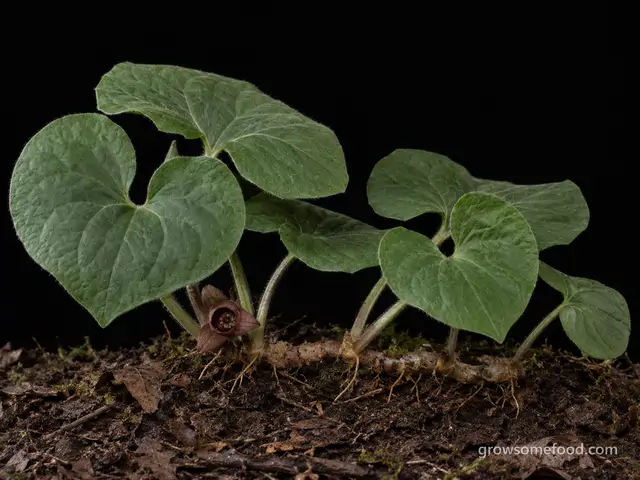
Wild Ginger
A native shade groundcover grown for its lush mat of bold heart-shaped leaves and hidden ground-level flowers - not the edible spice (and, importantly, not safe to eat), but one of the best foliage carpets for deep, moist shade.
Safety notes Despite the name and gingery scent, wild ginger is NOT true culinary ginger (Zingiber) and should not be eaten. Native Asarum and related Hexastylis contain aristolochic acid, linked to kidney damage and cancer, so the old use of the rhizome as a flavoring or medicine is now considered unsafe - do not eat any part. Grow it purely as an ornamental. The leaves can also cause mild skin irritation in sensitive people; wear gloves if prone to it. Not for pets to eat either.
Overview
Wild ginger (Asarum canadense and, in the Southeast, the evergreen Hexastylis species) is a woodland-floor native grown for one thing above all: foliage. It forms a low, dense mat of bold, glossy, heart- or kidney-shaped leaves that carpets deep, moist shade beautifully, giving structure and lushness to the darkest corners of the garden where little else thrives. Its flowers are a curiosity rather than a display - odd little maroon-brown, jug-shaped blooms hidden at ground level beneath the leaves, pollinated by crawling insects and often self-pollinating.
The one thing to knowWild ginger (Asarum canadense and, in the Southeast, the evergreen Hexastylis species) is a woodland-floor native grown for one thing above all: foliage.
Quick facts
- Sprouts in
- 300 daysRange: 90–450 days
- Soil temperature
- 65 °FRange: 55–70 °F
- Height
- 6 inRange: 4–8 in
- Spread
- 12 inRange: 8–18 in
- Cold
- Takes hard frostdamaged below -30°F
- Heat
- Struggles above 90°F
- Life cycle
- Perennial, lives about 12 years
- Save seeds
- About 90 days after plantingRange: 70–120 days
- Self-sows
- Yes, expect volunteers
- Soil
- Consistently moist
- Water
- Medium
- Plant spacing
- 12 inRange: 8–15 in
When to plant
Nothing is open today. Spring transplanting opens 5 months, Mar 27 to May 22.
- Transplant Mar 27 – May 22 Opens in 159 daysAbout 2 weeks before to 6 weeks after your last frost (Apr 10 here)Set out transplants or rhizome divisions in spring into moist, humusy, deep-shade soil; they establish slowly the first year, then spread into a mat. In zones 8-9 use the evergreen Hexastylis types, not deciduous A. canadense.
- Direct sow Jun 27 – Aug 6 Opens in 251 daysAbout 17 weeks before to 11 weeks before your first frost (Oct 25 here)Sow fresh seed as soon as it ripens in summer. It needs a warm summer then a full winter before it germinates, so expect nothing until the second spring - roughly a year. Division of the rhizome is far easier and the usual method.
- Transplant Aug 30 – Oct 4 Opens in 315 daysAbout 8 weeks before to 3 weeks before your first frost (Oct 25 here)Plant or divide in early fall so rhizome pieces root before winter; fall suits this cool-season woodland plant in milder zones, and in zones 8-9 it is the better of the two windows.
Frost here: last around Apr 10 (Mar 27 to Apr 24 most years), first around Oct 25. Zone averages, your own yard may run a week or two either way.
Life stages
Establish, grow, repeat
Getting established and returning each season are different parts of the story.
Stage 1 of 4 · Getting established
Rooting in
Day 0 to 75 after transplanting
Care at this stage
-
Keep evenly moist to establish
Wild ginger is a woodland-floor plant that wants moist, humusy, shaded soil. Water a new planting well to establish; it's slow to settle in the first year, then spreads steadily by rhizome into a lush mat.
-
Mulch with leaf litter
A woodland mulch of shredded leaves mimics its native forest floor, holds moisture, and feeds the shallow rhizomes. Don't bury the crowns deeply.
Months are typical seasonal windows; climate, variety, and plant age can shift them.
Watch out for
3 to know. None are high-risk for Wild Ginger. None are active in October.
Deer (browse resistance)Severity Low WildlifeSeason: Apr–SepGrowth cleanly missing overnight, with the plant browsed back to a level line about as high as a deer can comfortably reach.
Notably not a problem here: wild ginger's aromatic, aristolochic-acid-rich foliage makes it dependably deer-resistant, so it is a good groundcover choice where deer browse the other shade plants. Nothing is needed - deer typically leave it alone even in high-pressure areas.
Growth cleanly missing overnight, with the plant browsed back to a level line about as high as a deer can comfortably reach. Ragged, torn stem ends rather than the clean angled cut a rabbit leaves - the single most reliable identifier. Buds and flowers gone while the foliage below is untouched, since deer often take the best part first. Hoof prints and droppings in soft ground near the damage. Repeat visits, with fresh damage each morning once a planting has been found. On young trees, shredded and stripped bark and broken low branches in autumn - that is antler rubbing rather than feeding.
There is no chemical fix, only exclusion and recovery. Get physical protection up immediately after the first damage, because deer return to a known meal, and reinforce or rotate whatever you were relying on before. Most plants regrow from browsing if the crown and roots are intact - feed and water a grazed plant and protect the regrowth while it comes back. What does not recover in the same season is anything whose buds or flowers have been taken, and a young tree whose bark has been rubbed right around the trunk is usually lost. Where deer pressure is genuinely heavy, the honest answer is to fence properly or to grow the plants deer leave alone, rather than to keep replacing losses.
Fencing is the only thing that reliably works. Eight feet is the standard for excluding deer, or two parallel four-foot fences a few feet apart, which they will not jump because they cannot judge the landing. Short of that, cage individual plants: a sturdy wire cage or trunk guard around every young tree, left on until the trunk is thick and the canopy is above browse height, prevents both browsing and antler rubbing and is the single highest-value thing you can do for a young tree. Repellent sprays do help at moderate pressure, but they wash off and deer habituate, so reapply after rain and rotate between different types through the season. Motion-activated sprinklers, scent deterrents, and noise devices work for a while and then stop. Siting matters too: plants close to the house, in daily traffic, and screened behind other planting get browsed less than the same plant out at the boundary.
Deer are the largest garden problem across much of the country, and where pressure is high they set the limit on what you can grow at all. They browse at night and around dawn and dusk, taking tender shoots, leaves, buds, flowers, and fruit within about five feet of the ground, and they come back night after night to anything they have found and liked. Because they have no upper incisors they tear rather than cut, leaving ragged stem ends - that is how you tell deer damage from a rabbit's clean angled cut. In fall, bucks rub their antlers on young trunks and can strip the bark right around a stem, which kills a young tree outright. Palatability varies enormously between plants and between seasons: a herd short of food in late winter eats things it ignores in June, and no plant is truly deer-proof.
Slugs & SnailsSeverity Low PestSeason: Apr–JunIrregular ragged holes chewed out of the middle of leaves and along the edges - not the clean-edged cuts a caterpillar leaves.
Usually cosmetic on an established mat, and less of an issue on the leathery evergreen Hexastylis types than on the soft deciduous leaves.
Irregular ragged holes chewed out of the middle of leaves and along the edges - not the clean-edged cuts a caterpillar leaves. Seedlings that vanish overnight, or that are cut off at soil level with nothing left behind. Silvery dried slime trails across leaves, soil, pots, and paving in the morning: this is the giveaway that tells you it was mollusks rather than an insect. Chewed pits in ripe fruit, especially where it rests on the ground. Damage that shows up on the lowest, dampest leaves first and gets worse after rain or evening watering. Turn over a board, an upturned pot, or a clump of dense mulch during the day and look for the animals themselves sheltering in the cool underneath.
Hand-picking works and costs nothing: go out an hour after dark with a headlamp, drop what you find into soapy water, and repeat nightly for a week or two - persistence is what wins, not any single product. Shallow beer traps sunk to soil level catch them too, but need emptying and refilling daily to be worth anything. Iron-phosphate bait is the standard control and is far lower-risk around pets and wildlife than the old metaldehyde products, but it is not harmless: many formulations include EDTA, and a dog that eats a quantity of pellets can develop iron toxicosis. Scatter it thinly per the label, never in piles, and keep dogs off a baited bed. Clear fallen foliage and debris in autumn, where the eggs are laid. In a wet climate this is a population you manage each season rather than one you eradicate - and on most established plants light grazing is cosmetic and needs nothing at all.
Take away the daytime shelter first: lift boards and upturned pots, clear piles of debris, keep dense mulch pulled back from crowns and stems, and give crowded plantings enough airflow to dry out. Water in the morning rather than the evening so the surface is dry by the time they come out. Copper tape around containers and raised beds gives them a shock they will not cross, and it is the one barrier that reliably works. Get plants past the vulnerable stage quickly - start seedlings in pots and set them out at a decent size rather than direct-sowing into a cold wet bed, since most plants stop being worth defending once the leaves toughen. Leave the ground beetles, frogs, toads, and ground-feeding birds alone, because they eat mollusks all night for free and broad-spectrum slug pellets kill them too. Where thick-leaved or resistant varieties exist for what you are growing, they take far less damage.
Slugs and snails are nocturnal mollusks that rasp ragged holes in soft leaves, shear off seedlings at ground level, and chew into ripe fruit that touches the soil. They feed at night and in the early morning and spend the day hidden under boards, pots, dense mulch, leaf litter, and low foliage, becoming active in exactly the cool, damp, shaded conditions that suit young plants. Damage is heaviest in wet spells and on tender spring growth: a single wet week can erase a row of seedlings while an established, tough-leaved plant of the same species is barely marked. They lay clusters of small pearly eggs in damp soil and under debris, so a garden with plenty of cover carries a resident population year after year rather than being invaded from outside.
Leaf Scorch (sun & drought)Severity Low DisorderSeason: Jun–AugBrowning that starts at the leaf edges and tips and spreads inward, with a fairly sharp line between the crisp brown tissue and the green that is still healthy.
The soft deciduous Canadian wild ginger is especially prone in hot, dry conditions; the evergreen Hexastylis types hold up far better and are the ones to choose in hotter regions. Part-to-deep shade with consistently moist, humus-rich soil and a leaf-litter mulch.
Browning that starts at the leaf edges and tips and spreads inward, with a fairly sharp line between the crisp brown tissue and the green that is still healthy. Leaves and fronds going dry, papery, and crisp rather than soft, yellow, or spotted - that is what separates this from a fungal problem. Damage worst on the side of the plant facing the sun or the prevailing wind and on the most exposed upper leaves, while the shaded interior stays fine. Symptoms appearing sharply after a heat wave, a dry spell, or a bright windy week in winter. Whole leaves or fronds shed early as the plant cuts its losses.
Water deeply, mulch, and improve the shade - that is the whole treatment, because there is nothing here to kill. Leaves that are already scorched will not recover, so trim off badly browned foliage or fronds for appearance if you want to; the crown and roots are usually unharmed and push out fresh growth once conditions improve. On a plant that scorches badly every year the answer is to move it rather than to keep watering harder, because the siting is what is wrong. Some plants respond well to being cut back hard, which brings a clean flush of new foliage. And on plants that naturally die back or brown off late in the season, scorching at the end of a dry summer is normal and needs nothing at all.
Site the plant where it actually wants to be. This is a placement problem far more often than a watering problem, and a shade plant in hot afternoon sun will scorch every summer however much you water it. Give shade and woodland plants part-to-full shade and shelter from hot afternoon sun and drying wind. Keep the root zone consistently moist and mulch it well with leaf litter or another organic mulch, which holds water and keeps the roots cool - the single most useful routine step. Water deeply and thoroughly during dry spells rather than little and often, so moisture reaches the whole root zone. Pay particular attention through the first year after planting, when the root system is small and cannot keep up with the leaves. On evergreens in cold regions, make sure the plant goes into winter well watered, and keep it out of bright, windy, exposed positions.
Leaf scorch is not a disease and there is nothing to spray for it. It is what happens when a leaf loses water faster than the roots can replace it: the tissue farthest from the veins - the margins and the tips - dries out first and turns brown and papery, and the browning works inward while the rest of the leaf stays green. Hot sun, dry soil, drying wind, heat reflected off paving or a wall, a small or damaged root system, and a plant sited somewhere sunnier or drier than it wants are the usual causes, singly or together. It also happens in winter on evergreens, when bright sun and wind pull water out of the leaves while the ground is frozen and the roots cannot resupply. Shade and woodland plants, shallow-rooted plants, and anything recently planted scorch most easily.
Good & bad neighbors
Plant nearby
-
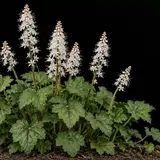
A classic native shade-groundcover pairing - wild ginger's bold heart-shaped leaves beside foamflower's marked foliage and foamy spring spikes, both low, moisture-loving woodland natives that weave into a rich understory carpet.
-
Native ferns and shade wildflowersFerns and woodland ephemerals share wild ginger's deep-shade, moist, humusy conditions, layering fine fern texture and spring blooms above its bold low foliage mat in a classic woodland understory.
-
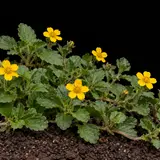
Wild ginger's bold foliage mat contrasts green-and-gold's low, golden-flowered carpet, both native shade groundcovers sharing moist, humusy, part-shade woodland conditions.
-
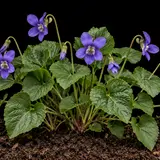
Two low native shade plants for moist, humusy soil - violet's spring flowers and edible foliage among wild ginger's bold leaves make a layered, low-care woodland groundcover blend.
- Traditional pairings, thin evidence
-
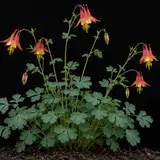
Columbine's airy spring flowers rise above a wild-ginger groundcover, both native part-shade woodland plants that share moist, humusy conditions in a shaded bed.
Varieties · 4
You pick one when you add Wild Ginger to your garden. Its days to maturity set your harvest window.
Deciduous wild ginger (Asarum canadense) 1 variety
Canadian Wild Ginger (Asarum canadense)
The classic northern species: large, soft, matte heart-shaped leaves forming a lush deciduous groundcover in moist shade, with hidden maroon flowers in spring.
Variety details for Canadian Wild Ginger (Asarum canadense)
Big, soft, matte green heart-shaped leaves in a low mat, with maroon jug flowers hidden beneath.
speciesnativelarge-leavescold-hardyThe most cold-hardy wild ginger and the go-to groundcover for northern and Appalachian woodland gardens - but not evergreen, and not safe to eat.
Evergreen wild ginger (Hexastylis, and A. europaeum) 3 varieties
Little Brown Jugs (Hexastylis arifolia)
A Southeastern evergreen wild ginger with leathery, arrow- to heart-shaped leaves held year-round and distinctive little brown jug-shaped flowers at ground level.
Variety details for Little Brown Jugs (Hexastylis arifolia)
Leathery evergreen arrowhead leaves over hidden brown jug-shaped flowers.
nativesoutheasternarrow-leavesjug-flowersA tough, evergreen shade groundcover for the Southeast where the deciduous Canadian type is less suited to the heat.
Mottled Wild Ginger (Hexastylis shuttleworthii 'Callaway')
A choice evergreen Southeastern wild ginger with rounded, leathery leaves beautifully marbled in silver over deep green - grown as much for its striking mottled foliage as for ground cover.
Variety details for Mottled Wild Ginger (Hexastylis shuttleworthii 'Callaway')
Rounded evergreen leaves marbled silver-white over dark green, in a low mat.
nativesilver-mottledornamental-foliagesoutheastern'Callaway' is a popular compact, heavily marked selection for shade.
European Wild Ginger (Asarum europaeum)
A non-native (European) wild ginger widely grown for its glossy, deep-green, kidney-shaped evergreen leaves that shine in the shade garden.
Variety details for European Wild Ginger (Asarum europaeum)
Glossy, dark green, kidney-shaped evergreen leaves forming a neat low mat.
non-nativeglossy-foliagecompactornamentalNot native, but a popular, well-behaved ornamental groundcover for cool shade - and, like the natives, not for eating.
Grower tips
Notes from growers, tagged with the zone they grow in. A person reads every post before it appears.
Nobody has posted about Wild Ginger yet. The first one usually saves someone a season.
Free account. Your post shows your grower name and zone, never your email.