
Add it to your home screen and it opens full screen: no browser bars, one tap away, and everything stays signed in. Free, nothing to download from an app store.
- Tap the Share button in your browser
- Scroll down and choose “Add to Home Screen”
- Open GrowSomeFood from your home screen
- Open your browser’s menu
- Choose “Add to Home screen” or “Install app”
- Open GrowSomeFood from your home screen
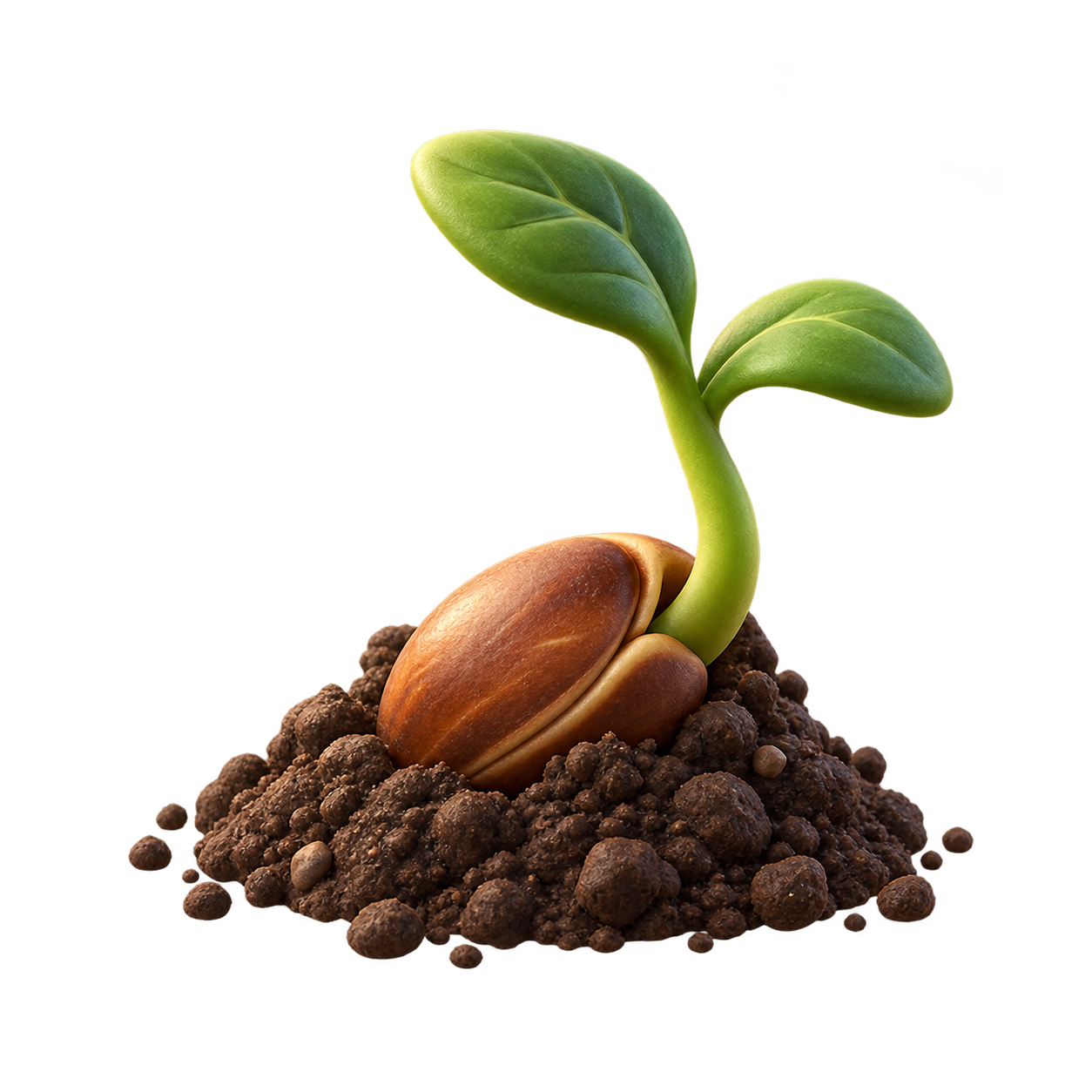
Wild Garlic
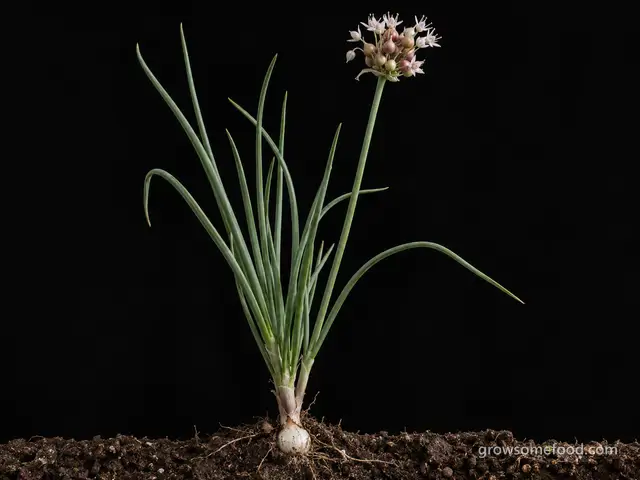
The native wild onion of lawns, meadows and open woods - a free garlicky seasoning of greens, bulbs and bulbils - carrying one absolute foraging rule: no onion smell, no eating.
Safety notes Meadow garlic itself is a safe edible allium - the slender leaves, small bulbs and bulbils are all edible with an onion-garlic flavor. But it has a DEADLY look-alike: death camas grows in the same meadows and lawns and can KILL. The rule is absolute - crush a leaf, and if it does NOT smell of onion or garlic, do not eat it. Leaf shape is NOT the test: death camas leaves are flat and solid, exactly like meadow garlic's. Alliums are also toxic to dogs and cats.
Overview
Wild garlic (Allium canadense), also called meadow garlic, is the clump of slender, grass-like green tops that stands taller than the lawn around it in spring and fall, smelling unmistakably of onion and garlic when you crush a leaf. It is native across eastern and central North America, and it is a genuine free seasoning: the greens snip like chives, the small underground bulbs work like a strong garlic, and even the little aerial bulbils atop the flower stalk are edible like tiny cloves.
Quick facts
- Height
- 16 inRange: 8–30 in
- Spread
- 6 inRange: 3–10 in
- Cold
- Takes hard frostdamaged below -30°F
- Heat
- Struggles above 95°F
- Life cycle
- Perennial, lives about 5 years
- Self-sows
- Yes, expect volunteers
- Soil
- Well-drained
- Water
- Medium
- Plant spacing
- 6 inRange: 3–10 in
When to plant
Fall planting is open for 5 more days. Next: spring, Mar 27 to May 8.
- Plant tubers Sep 13 – Oct 25 Closes in 5 daysAbout 6 weeks before to at your first frost (Oct 25 here)If growing on purpose, plant small bulbs in fall in a contained bed or pot, like a hardy perennial chive/allium; it also self-sows and spreads by bulbils. Far more often it simply volunteers in lawns and meadows.
- Plant tubers Mar 27 – May 8 Opens in 158 daysAbout 2 weeks before to 4 weeks after your last frost (Apr 10 here)Spring bulb planting also works; site it where you can manage its spread by offset bulbs and dropping bulbils.
Frost here: last around Apr 10 (Mar 27 to Apr 24 most years), first around Oct 25. Zone averages, your own yard may run a week or two either way.
Life stages
Establish, grow, repeat
Getting established and returning each season are different parts of the story.
Stage 1 of 4 · Getting established
Bulbs rooting in
Day 0 to 45 from planting
Care at this stage
-
Recognize the onion smell (the key test)
Meadow garlic sends up slender, FLAT, SOLID grass-like leaves from the base, over small underground bulbs. Leaf shape is NOT the safety test - death camas leaves are flat and solid too. Crush a leaf: it MUST smell strongly of onion or garlic. If there is no smell, it is NOT a wild allium and could be deadly death camas - leave it. It needs no care to establish.
-
Meadow garlic or introduced field garlic?
Roll a leaf between your fingers. Meadow garlic (Allium canadense), the native plant described here, has FLAT, SOLID leaves rising from the base. Introduced field garlic (Allium vineale) has ROUND, HOLLOW leaves rising partway up the stem and is a separate catalog entry - edible the same way, but an agricultural weed rather than a native. This tells you which allium you have; it never tells you whether a plant is safe to eat. Only the smell does that.
-
Contain it from the start
Meadow garlic spreads by offset bulbs, bulbils, and seed and can become weedy in lawns and beds. If growing it on purpose, plant it in a contained bed or a pot and site it where you can manage its spread.
Months are typical seasonal windows; climate, variety, and plant age can shift them.
Harvest
- Slender green tops standing above the lawn in spring and fall - snip like chives (confirm the onion smell)
- Small bulbs any time the tops are up; aerial bulbils in early summer
- Snip the green tops like chives; dig bulbs as needed · every 2 weeks
- A cool-season allium
Picking pick as they ripen
Cook with Wild Garlic
Watch out for
3 to know. 1 is high-risk: Deadly Look-Alike (Death Camas). 2 are active in October.
Deadly Look-Alike (Death Camas)Severity High DisordernowSeason: Mar, Apr, May, Jun, Sep, OctAny onion-like wild plant with grass-like leaves that has NO onion or garlic smell when crushed - that is not a wild allium and could be deadly death camas.
Meadow garlic's flat, solid leaves are the shape most often mistaken for death camas, which has flat solid leaves too - so shape offers this plant no protection at all. Confirm the onion smell on every clump, and never dig its bulbs once the tops have died back.
Any onion-like wild plant with grass-like leaves that has NO onion or garlic smell when crushed - that is not a wild allium and could be deadly death camas. Note that leaf shape is not a safety check: death camas leaves are flat and solid, exactly like those of native meadow garlic.
Do not harvest smell-less look-alikes; if death-camas ingestion is suspected, treat it as a medical emergency and call poison control / emergency services immediately.
The absolute rule: never eat any onion-like wild plant unless it clearly smells of onion or garlic when crushed. Confirm the smell on every plant, every time. When in doubt, do not eat it. The smell test only works plant by plant, on clean hands: once your fingers, scissors, or bag smell of onion, everything smells of onion - so check each plant before you pick it, not after it is in the bag, and discard the whole harvest if a smell-less plant got mixed in. Never dig a wild bulb outside the growing season, when there are no tops to smell.
The critical forager-safety hazard for every wild onion and wild garlic: death camas (Toxicoscordion / Zigadenus) has similar grass-like leaves, grows in the same lawns, meadows and grassy slopes, and is lethally poisonous in every part. Eating it causes severe poisoning and can kill.
Herbicide / Pollution ContaminationSeverity Medium DisordernowSeason: Mar, Apr, May, Sep, OctPlants growing in treated lawns, sprayed beds, pastures or croplands, along busy or polluted roadsides, or anywhere the ground around them looks suspiciously weed-free.
Meadow garlic often turns up in mown lawns and along field edges, which are exactly the places most likely to have been sprayed. A contained patch of your own removes the doubt.
Plants growing in treated lawns, sprayed beds, pastures or croplands, along busy or polluted roadsides, or anywhere the ground around them looks suspiciously weed-free. Yellowed, twisted or distorted growth on neighboring plants is a sign something has been sprayed recently.
Do not harvest a contaminated plant - there is no washing this off, and no way to tell by looking. The plant itself is fine, so the answer is simply to choose a different site.
Only forage from ground you know has not been treated with herbicides or pesticides, and stay well back from busy roadsides. Ask before harvesting on land you do not manage. If you are not sure, grow your own patch, or gather only from a clean site you have watched across a full season.
A risk to the forager rather than to the plant. This species grows in lawns, gardens, pastures, croplands, field margins, paths and roadsides - exactly the places that get sprayed with herbicides and lawn chemicals, or that collect road pollution and runoff. The plant itself is harmless; what can make it unsafe to eat is where it has been growing.
Aggressive Spread (bulbs, bulbils, seed)Severity Medium DisorderSeason: Apr–JulExpanding clumps in lawns and fields, dropped bulbils rooting into new plants, and a garlic taint in hay, milk, or meat where it invades pasture.
Expanding clumps in lawns and fields, dropped bulbils rooting into new plants, and a garlic taint in hay, milk, or meat where it invades pasture.
Persistent digging of bulbs and removal of bulbil heads over several seasons; keep livestock off infested pasture before harvest to avoid tainting milk and meat.
Grow it in a contained bed or pot; cut bulbil heads before they drop, dig out bulbs (get them all), and keep it out of pasture and hayfields.
Wild garlic's defining management issue: it multiplies fast by offset bulbs, dropping aerial bulbils, and seed, becoming a persistent lawn and pasture weed - and field garlic taints hay and milk when livestock graze it.
Good & bad neighbors
First rule: keep Death Camas apart. The deadly look-alike, and the reason the smell test exists.
Plant nearby
-
The introduced European sibling this plant is constantly confused with, often in the same patch of ground. Field garlic (Allium vineale) has round, hollow leaves rising partway up the stem; meadow garlic has flat, solid leaves from the base. Both are edible and foraged identically under the same absolute smell test - but meadow garlic is native and welcome, while field garlic is a lawn, pasture and grain weed you gather rather than plant.
- Traditional pairings, thin evidence
-
Wild garlic is essentially a wild perennial allium foraged and used exactly like chives; growing chives nearby is a good way to learn the onion-family flavor and habit that the wild plant shares (and to have a safe, unmistakable allium on hand).
-
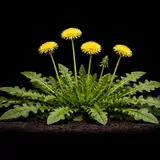
Two of the most common cool-season lawn foods - dandelion for bitter greens, wild garlic for a garlicky seasoning - often growing in the same lawn and foraged together (each with its own ID check).
-
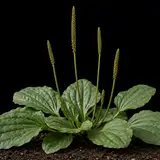
Another edible lawn plant that shares wild garlic's turf; a diverse, low-input lawn foraged for greens and seasoning supports more life and more free food than plain turfgrass.
Keep apart
-
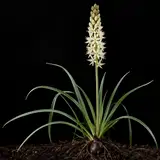
The deadly look-alike, and the reason the smell test exists. Death camas grows in the same lawns, meadows and grassy slopes, comes up grass-like in the same season, and has NO onion or garlic smell. Crush a leaf before anything else: no smell, no eating. Leaf shape will not protect you - death camas leaves are flat and solid, exactly like meadow garlic's.
Varieties · 2
You pick one when you add Wild Garlic to your garden. Its days to maturity set your harvest window.
Meadow Garlic (Allium canadense var. canadense)
The common native wild garlic of eastern and central North America: clumps of slender FLAT, SOLID leaves from small bulbs, with pink-white flowers often mixed with or replaced by clusters of edible aerial bulbils.
Variety details for Meadow Garlic (Allium canadense var. canadense)
Grass-like clumps standing above the lawn, with rounded heads of small pink-white flowers and/or aerial bulbils.
speciesnativeediblewild-onionA mild-to-oniony free seasoning - greens, bulbs, and bulbils all edible once the onion smell is confirmed. Flat solid leaves separate it from introduced field garlic, whose leaves are round and hollow; they do NOT separate it from death camas, whose leaves are flat and solid too, so the smell test still decides safety.
Southern Meadow Garlic (Allium canadense var. mobilense)
The southern form of native meadow garlic, common from the Gulf states through the lower Midwest.
Variety details for Southern Meadow Garlic (Allium canadense var. mobilense)
Slender flat-leaved clumps topped by an open umbel of pink to rose-lavender star flowers, with few or no bulbils.
speciesnativeediblewild-onionIt makes a proper umbel of pink to rose-lavender star flowers rather than a head of bulbils, which makes it the prettier plant in a meadow planting and a genuine early-season nectar source. Foraged exactly like the type - flat solid leaves, small bulbs, the same absolute onion-smell test before anything is eaten.
Grower tips
Notes from growers, tagged with the zone they grow in. A person reads every post before it appears.
Nobody has posted about Wild Garlic yet. The first one usually saves someone a season.
Free account. Your post shows your grower name and zone, never your email.