Add it to your home screen and it opens full screen: no browser bars, one tap away, and everything stays signed in. Free, nothing to download from an app store.
- Tap the Share button in your browser
- Scroll down and choose “Add to Home Screen”
- Open GrowSomeFood from your home screen
- Open your browser’s menu
- Choose “Add to Home screen” or “Install app”
- Open GrowSomeFood from your home screen
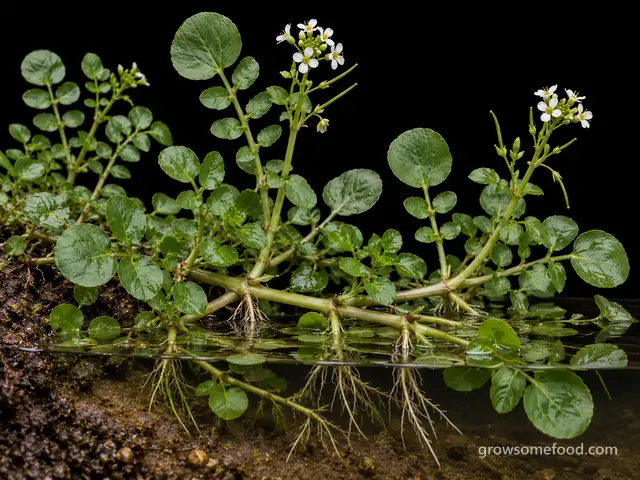
Watercress
A peppery aquatic perennial that grows happily in a tub of clean water on a patio - and the one plant in this catalog where the water it grew in matters as much as how you grew it.
Home-grown watercress in clean water is a safe raw salad green. WILD watercress is a different matter: water downstream of grazing cattle or sheep can carry liver fluke cysts stuck to the leaves, and washing does not reliably remove them - cooking does. Treat wild cress from water you cannot vouch for as a cooked vegetable, and never gather from water taking farm or road runoff. Check what you are picking, too: water hemlock and other deadly carrot-family plants grow in the same ditches.
Overview
The one thing to knowIt makes a low sprawling mat of hollow succulent stems and dark round leaves that root wherever they touch wet ground, and it is cut-and-come-again at speed - a well-run container crops for months.
Watercress (Nasturtium officinale) is a fast, peppery, cool-season perennial of cold springs and running streams, and one of the oldest cultivated salad greens in Europe. It makes a low sprawling mat of hollow succulent stems and dark round leaves that root wherever they touch wet ground, and it is cut-and-come-again at speed - a well-run container crops for months. The flavor is a clean mustard heat, sharper than arugula, that mellows completely with cooking.
You do not need a stream. A pot of soil standing in a tray or tub of clean water, refreshed a couple of times a week, grows excellent watercress on a patio or windowsill, and that arrangement solves two problems at once. It keeps the plant contained - every fragment roots, and escaped watercress has choked spring-fed waterways well outside its native range - and it lets you control the water, which is the whole safety story here. Cress grown in clean water is a raw salad green with no caveats. Cress pulled from an unknown stream is a different proposition, and the liver-fluke warning under Harvest is not folklore. Note also that the garden nasturtium of hanging baskets is Tropaeolum, an unrelated plant that borrowed this one's genus name for its peppery leaves.
Quick facts
- Sprouts in
- 8 days4 to 14
- Soil to sprout
- 60 °F45 to 70
- Life cycle
- Perennial, lives about 5 years
- Seed to save
- About 130 days after planting100 to 160
- Height
- 8 in4 to 20
- Spread
- 18 in8 to 48
- Cold
- Takes hard frostdamaged below 15°F
- Heat
- Struggles above 85°F
- Self-sows
- Yes, expect volunteers
Full sun or part sun or part shade · high water · tolerates wet soil soil · 8 in apart (4 to 12) · direct sow or transplant or cuttings
When to plant
Fall sowing is open for 56 more days. Next: winter, Jan 15 to Mar 16.
- Direct sow Sep 1 – Nov 16 Open now · 56 days leftIn the warm South, watercress is a fall-through-spring crop. Summer sowings bolt and turn bitter almost immediately.
- Direct sow Jan 15 – Mar 16 Opens in 116 daysLate-winter sowings give a spring cutting season before the heat ends it.
- Transplant Mar 27 – Jun 9 Opens in 187 daysAbout 2 weeks before to 9 weeks after your last frost (Apr 10 here)The fastest route: root cuttings in a jar of water and transplant the rooted sprigs into the container. A supermarket bunch with stems intact roots in about a week.
Frost here: last around Apr 10 (Mar 27 to Apr 24 most years), first around Oct 25. Zone averages, your own yard may run a week or two either way.
Life stages
Five stages to settle in, then one that repeat each year. Windows are typical; your zone and weather move them.
Sprouting
Day 0 to 10 from sowing- DoSurface-sow onto wet mix and do not bury the seedWatercress seed is tiny and needs light to germinate. Press it onto the surface of a wet, peat-based mix, cover with a plastic dome or bag to hold humidity, and keep it at 50-70°F. It rots in warm, still, muddy conditions, so keep the surface wet but not sludgy.
- WaterKeep the mix soaked from belowevery 2 daysStand the pot in a saucer or tray with an inch of water so it wicks up rather than washing the seed around. Refresh that water every couple of days.
Watch for- Seed washing away under overhead watering
- Surface drying out for even a few hours
- Stagnant, smelly water in the tray
First true leaves
Day 14 to 35 from sowing- ThinThin to about 8 inches apartWatercress spreads sideways and roots as it goes, so a few well-spaced plants fill a container far better than a crowded mat. Thin to roughly 8 inches, and eat the thinnings.
- WaterChange the standing water twice a weekevery 3 daysFresh water is the whole trick to growing cress in a container. Wild watercress lives in cold moving springs; a tub of warm stagnant water grows algae and rot instead. Tip and refill, or set the pot in a slowly overflowing tray.
Watch for- Algae and slime in still water
- Yellowing seedlings (water too warm, or too little light)
- Flea beetles shot-holing the first leaves
Spreading growth
Day 35 to 90 from sowing- WaterKeep it cool and constantly wetevery 3 daysWatercress wants its roots in 1-3 inches of clean, cool water and a temperature around 50-75°F. In summer move the container into afternoon shade and refresh the water more often; warm water is what turns a good stand bitter and stringy.
- FertilizeFeed very lightly if leaves paleWatercress is a heavy feeder for its size but sits in water, so use a dilute balanced liquid feed at quarter strength every few weeks rather than granules, which dissolve into a nutrient soup and feed algae.
- PrunePinch the growing tips to bush it outPinching the tips early makes a dense, branching mat instead of a few long trailing stems, and every pinched tip is a salad. It also delays flowering.
Watch for- Bitter, tough leaves (water or air too warm)
- Aphids sheltering in the crowded stem base
- Water going green or smelly
Cutting sprigs
Day 45 to 70 to the first pull from sowing, picking to about day 220- HarvestCut sprigs from the top, never pull the plantevery 10 daysSnip the top 3-4 inches of each stem with scissors, taking no more than about a third of the stand at once. It regrows from the leaves below the cut in a week or two, and a well-managed container crops for months.
- PrunePinch out flower buds as they appearSmall white four-petalled flowers signal the end of good eating: the leaves turn hot, bitter and stringy. Pinch buds out to keep the stand in leaf, and expect to lose the battle in a hot summer or in the plant's second spring.
- InspectWash the cut sprigs in clean waterContainer-grown cress in clean water is safe raw; still rinse it, since the crowded stems collect grit, aphids and the odd small snail.
Watch for- Flower buds forming (flavor turns bitter)
- Yellowing lower leaves in a crowded mat
- Snails and aphids hiding at the stem bases
Bolting
Day 150 to 200 from sowing- DoLet a corner flower for seed, or start againOnce it blooms in earnest the flavor is gone for the season. Either let a few stems set the long narrow seed pods for next year's sowing, or take clean cuttings from the best stems, root them in a jar of water, and restart the container with fresh growth.
Watch for- Bees working the small white flowers
- Seed pods drying and scattering seed
- Stems going hollow and tough
Winter
Nov to Feb, every year- ProtectKeep the water from freezing solidWatercress is genuinely hardy and stays green through mild winters, but a small container that freezes into a block kills the crowns. Sink the pot into the ground, move it to a cold frame or an unheated porch, or grow it on a bright cool windowsill through the coldest weeks.
- HarvestKeep picking lightly through mild spellsevery 3 weeksGrowth is slow but a sheltered container gives salad through much of the winter in zones 7 and warmer - one of the very few fresh greens available then.
Watch for- Container freezing right through
- Crowns rotting in cold stagnant water
- Slugs sheltering under the pot
Harvest
- Stems 4-6 inches long with dark, glossy, well-formed leaves
- Cut before any flower buds show - buds mean the flavor is turning hot and bitter
- Growth crisp and succulent rather than stringy, which means the water has stayed cool
- Cut sprigs from the top, never pull the plant · every 10 days
- Pinch out flower buds as they appear
- Wash the cut sprigs in clean water
Per plant 4 to 48 ozPicking cut and it regrows
Cook with watercress
Watch out for
6 to know. 2 are high-risk: Liver Fluke from Wild Watercress, Deadly Look-alikes in Wet Ground. 4 are active in September.
Liver Fluke from Wild WatercressSeverity High DisordernowThis is the whole reason watercress needs a safety note at all.
Home-grown in clean water: eat it raw and enjoy it. Wild from unknown water: cook it. There is no third option worth taking.
Nothing on the plant itself - this is the point, and why the rule is about the WATER rather than the leaves. Assess the source instead: livestock, pasture, farmyards, manured fields or a septic field anywhere upstream; standing or slow-moving water rather than a clean cold spring; abundant small aquatic snails; road, ditch or storm-drain runoff entering above the patch. Any unknown or unassessable water source is by definition in this category.
COOK any wild-gathered watercress from water you cannot vouch for - a minute in boiling water, a stir-fry, or straight into soup destroys the cysts, and cooked watercress is excellent anyway. Do not rely on washing, soaking in vinegar or salt water, or a salad spinner. If you have eaten raw wild cress and later develop unexplained fever, right-sided abdominal pain or jaundice, tell a doctor specifically that you ate wild watercress: fascioliasis is treatable but easily missed without that history.
Grow your own in a container filled with mains or well water and you remove the risk entirely - this is the single reason home-grown watercress is a raw salad green with no caveats. For wild cress, look upstream before you pick: never gather below pasture, farmyards, manure, septic systems or road runoff. Rooting cuttings taken from a wild stand and growing them on in clean water gives you the same plant with none of the exposure, and is the standard forager's workaround.
The classic hazard of foraged watercress, and a documented human parasitic infection rather than a folk caution. Sheep and cattle grazing near water pass the eggs of the liver fluke Fasciola hepatica in their dung; the parasite develops through aquatic snails and then encysts on the surfaces of plants growing in that water. Watercress, which grows submerged in exactly the slow, snail-rich water below pasture, is the classic vehicle - human fascioliasis has been reported from wild watercress across Europe, South America, the Middle East and, less commonly, the United States. Infection causes fever, abdominal pain and liver damage that can appear weeks or months after the meal. The cysts are not visibly obvious and are not reliably removed by washing, salad spinners, vinegar or lemon juice. Heat destroys them. The same wild water can also carry E. coli, Giardia, agricultural nitrates and heavy metals from road runoff.
Deadly Look-alikes in Wet GroundSeverity High DisordernowThis risk belongs entirely to wild gathering.
A container of watercress you sowed yourself contains only watercress, which is the strongest practical argument for growing it rather than foraging it.
Any plant in the patch with FERNY, divided, carrot-like or parsley-like leaves rather than watercress's simple rounded leaflets along a hollow stem. Umbrella-shaped clusters of tiny white flowers - watercress has small four-petalled white flowers in a loose spike, not a flat umbel. Purple blotches or streaks on a stem, and a chambered rootstock that oozes yellow oily liquid when cut: those are water hemlock, and it is lethal. Any smell of parsnip, parsley or carrot when a leaf is crushed - watercress smells of mustard and pepper.
There is no treating a misidentification after the fact - if you are not certain, do not pick it, and if a gathered batch might contain anything else, discard the whole lot rather than sorting it. If someone has eaten a suspected hemlock, call poison control or emergency services IMMEDIATELY: water hemlock poisoning progresses to seizures very quickly and is a medical emergency, not a wait-and-see.
Pick from a patch you can see clearly, in daylight, and look at each handful rather than raking through a stand. Learn the two shapes: watercress has a hollow, succulent stem with rounded leaflets in pairs along it and a terminal round leaflet, and it roots at the nodes; hemlocks have upright hollow stems with finely divided lacy foliage and flat-topped white flower umbels. Better still, sidestep the problem: take cuttings from a stand you have positively identified and grow them in a container at home, where you know exactly what is in the pot.
Watercress grows in the same ditches, springs, streambanks and marshy ground as several members of the carrot family, some of which are among the most poisonous plants in North America. Water hemlock (Cicuta species) is the most dangerous: its cicutoxin causes violent seizures and death, sometimes within an hour, and the roots are the deadliest part. Poison hemlock (Conium maculatum) favors damp roadsides and ditch edges nearby. Lesser water-parsnip and fool's watercress grow tangled through cress stands in some regions and are commonly mistaken for it. The genuine risk is not usually confusing a whole plant but grabbing a handful of mixed greens from a wet patch and not looking closely at what came up in it.
Slugs & SnailsSeverity Medium PestnowA permanently wet container is ideal slug and snail habitat, and small aquatic snails also colonize standing water.
Copper tape around the rim of the tub is unusually effective here, and rinsing cut sprigs matters because small snails hide in the crowded stem bases.
Irregular ragged holes chewed out of the middle of leaves and along the edges - not the clean-edged cuts a caterpillar leaves. Seedlings that vanish overnight, or that are cut off at soil level with nothing left behind. Silvery dried slime trails across leaves, soil, pots, and paving in the morning: this is the giveaway that tells you it was mollusks rather than an insect. Chewed pits in ripe fruit, especially where it rests on the ground. Damage that shows up on the lowest, dampest leaves first and gets worse after rain or evening watering. Turn over a board, an upturned pot, or a clump of dense mulch during the day and look for the animals themselves sheltering in the cool underneath.
Hand-picking works and costs nothing: go out an hour after dark with a headlamp, drop what you find into soapy water, and repeat nightly for a week or two - persistence is what wins, not any single product. Shallow beer traps sunk to soil level catch them too, but need emptying and refilling daily to be worth anything. Iron-phosphate bait is the standard control and is far lower-risk around pets and wildlife than the old metaldehyde products, but it is not harmless: many formulations include EDTA, and a dog that eats a quantity of pellets can develop iron toxicosis. Scatter it thinly per the label, never in piles, and keep dogs off a baited bed. Clear fallen foliage and debris in autumn, where the eggs are laid. In a wet climate this is a population you manage each season rather than one you eradicate - and on most established plants light grazing is cosmetic and needs nothing at all.
Take away the daytime shelter first: lift boards and upturned pots, clear piles of debris, keep dense mulch pulled back from crowns and stems, and give crowded plantings enough airflow to dry out. Water in the morning rather than the evening so the surface is dry by the time they come out. Copper tape around containers and raised beds gives them a shock they will not cross, and it is the one barrier that reliably works. Get plants past the vulnerable stage quickly - start seedlings in pots and set them out at a decent size rather than direct-sowing into a cold wet bed, since most plants stop being worth defending once the leaves toughen. Leave the ground beetles, frogs, toads, and ground-feeding birds alone, because they eat mollusks all night for free and broad-spectrum slug pellets kill them too. Where thick-leaved or resistant varieties exist for what you are growing, they take far less damage.
Slugs and snails are nocturnal mollusks that rasp ragged holes in soft leaves, shear off seedlings at ground level, and chew into ripe fruit that touches the soil. They feed at night and in the early morning and spend the day hidden under boards, pots, dense mulch, leaf litter, and low foliage, becoming active in exactly the cool, damp, shaded conditions that suit young plants. Damage is heaviest in wet spells and on tender spring growth: a single wet week can erase a row of seedlings while an established, tough-leaved plant of the same species is barely marked. They lay clusters of small pearly eggs in damp soil and under debris, so a garden with plenty of cover carries a resident population year after year rather than being invaded from outside.
AphidsSeverity Medium PestnowWatercress is picked whole and eaten raw, so aphids sheltering deep in the crowded stem bases are as much a washing problem as a plant-health one - rinse cut sprigs thoroughly.
A hard rinse of the whole stand with clean water usually clears a colony, and cutting the crop back hard removes the rest.
Dense clusters of tiny insects packed onto shoot tips, flower buds, and the undersides of young leaves. Curled, cupped, or distorted new growth that never opens properly. A sticky shine on the leaves - and on whatever sits under the plant - that later goes black with sooty mold. Tiny white cast skins left behind where a colony has been feeding. Ants running steadily up and down the stems, which is often the first thing you notice. Mottled, streaked, or misshapen leaves that do not grow out can mean a virus the aphids brought with them rather than the feeding itself.
Knock the colonies off with a hard jet of water and repeat every few days - on most plants that alone ends it. Pinch out or prune off the worst-infested tips rather than treating the whole plant. If colonies keep rebuilding, spray insecticidal soap or horticultural oil directly onto the insects, covering leaf undersides, and repeat weekly until they are gone; treat early or late in the day, and never spray a wilted or heat-stressed plant. Avoid broad-spectrum insecticides - they kill the ladybugs, lacewings, and parasitic wasps that were about to solve the problem for you, and aphid numbers usually come back worse afterward. Anything you spray must be labeled for the plant you are treating; follow that label and observe its pre-harvest interval. On anything you eat, wash leaves, heads, and buds well before use, since aphids hide down in crowns, folds, and tight growth.
Go easy on nitrogen: the soft, lush growth that heavy feeding produces is exactly what aphids breed on. Check new growth once a week through spring and early summer so you catch colonies while they are still small, and rub the first few out with your fingers. Leave flowering plants nearby and skip broad-spectrum sprays - ladybugs, lacewings, hoverflies, and parasitic wasps do most of this work for free, and they only stay if there is something for them to eat. Keep ants off the plant where you can, since they protect aphids from those predators. Water steadily so plants are not stressed, and check any new plant over before you bring it home or move it indoors, since aphids usually arrive on something else.
Aphids are small soft-bodied sap-suckers - green, black, gray, pink, or waxy white, and mostly wingless - that gather in dense colonies on the tenderest new growth: shoot tips, buds, and the undersides of young leaves. They breed extremely fast in mild weather, so a few can become hundreds inside a week. Their feeding curls and distorts soft growth, and the sticky honeydew they excrete coats everything below and turns black with sooty mold. Ants often farm and defend the colonies for that honeydew. A few aphids are normal on almost any plant and a healthy plant shrugs them off; only dense, persistent colonies do real damage, and some aphids also spread plant viruses as they feed.
Crook Root DiseaseSeverity Medium DiseaseRare in a small container run on fresh mains water and changed regularly, which is another reason to keep tipping and refilling.
Most cases in home culture trace back to using pond or stream water.
Roots that are short, swollen, brown and bent rather than white and straight - lift a plant and look. Stunted growth and small leaves with yellow or reddish-purple tints, particularly in cool weather. A stand that stops regrowing after cutting. Symptoms spreading through a container from one area outward.
There is no home cure for an infected stand. Discard the affected plants and the water, scrub and dry the container, and start again from seed or from cuttings taken off a clean plant. Since the organism travels in water and debris, sanitation between crops is the whole control.
Use clean water from a mains or well source rather than pond, ditch or stream water, and do not reuse water from an affected container. Start with clean seed or cuttings from a healthy plant, not material from a wild stand or an ailing pot. Wash out containers and trays between crops. Keep water moving and refreshed rather than stagnant, and avoid crowding.
The characteristic disease of watercress grown in standing or recirculating water, caused by the soil-borne organism Spongospora subterranea f. sp. nasturtii, which also carries a virus that worsens the symptoms. It infects the roots, which swell, twist and turn crooked and brown instead of running white and straight, so the plant cannot take up water and nutrients properly. Growth stalls, leaves yellow and redden, and stands thin out. It is favored by cool water, which is why it is mainly a winter and early-spring problem, and it persists in contaminated water, containers and old plant material.
Flea BeetlesSeverity Medium PestThe leaf is the crop here, so shot-holes are a real loss rather than a cosmetic one.
A fine mesh cover over the container from sowing is the practical answer, and it also keeps cabbage whites off; damage is worst on a container sitting in a warm dry spot, which is the wrong place for watercress anyway.
Dozens of pinhead-sized round holes peppered across the leaves, thickest on the youngest, most tender growth. Tiny beetles that spring away as you brush the plants or lean in for a closer look - that jump is the identification. Seedlings that go lacy and stop growing, and transplants that sit and sulk instead of taking off. Damage heaviest in warm, dry weather and along the edge of a bed nearest weedy ground or last year's crop debris. On root crops, shallow narrow grooves or channels scarring the skin at harvest, from larvae feeding underground.
Row cover and healthy fast growth carry most crops through, and on an established plant the damage is usually cosmetic and needs nothing at all. Where a young planting is genuinely being stripped, kaolin clay coats the leaves and deters feeding, and spinosad will knock the beetles back. Spinosad is acutely toxic to bees while the spray is still wet - apply it at dusk when bees are not flying, never onto plants in flower, and follow the product label. Anything you spray must be labeled for the plant you are treating, and you must observe its pre-harvest interval on a crop you are picking. Yellow sticky traps are useful for telling you when the beetles have arrived. Where the damage falls on the part you eat, harvesting young often beats them outright; where you are growing for a root or a fruit, leaf damage can simply be tolerated. Larvae feeding underground cannot be reached by a foliar spray, so rotation and clean beds are what work against those.
Floating row cover or fine insect mesh, laid over the bed from the day of sowing or transplanting and sealed at the edges so nothing can walk in underneath, is the single best defense - and on the crops they favor it is close to essential. Leave it on until plants are large and growing strongly, or until flowering on anything that needs pollinating. Push growth: a well-watered, unchecked plant outgrows the damage, so the whole game is getting seedlings through their vulnerable weeks fast. Keep beds weed-free, since related weeds host the beetles alongside your crop, and clear crop debris at the end of the season where the adults overwinter. Rotate away from a bed that grew a related crop last year. Where you can, shift sowing dates - cooler-season and fall plantings often miss the peak of adult feeding entirely.
Flea beetles are tiny dark beetles - often shiny black or bronze, rarely more than a couple of millimeters long - with enlarged back legs that let them spring away like fleas the moment you lean in. The adults chew countless small round pits and shot-holes through leaves, giving the foliage a peppered, buckshot-riddled look. They overwinter as adults in leaf litter, hedgerows, and crop debris, emerge hungry in spring, and are worst in warm dry spells. The damage is mostly a seedling and transplant problem: a small plant with a few leaves can be checked, stunted, or killed outright, while the same plant shrugs them off once it is large and growing strongly. Different species specialize on different plant families, so the beetles hammering your brassicas are not the ones on your nightshades. Some species also have larvae that feed on roots and tubers underground.
Good & bad neighbors
First rule: keep Water hemlock apart. Not a planting conflict - an identification hazard.
Plant nearby
- Traditional pairings, thin evidence
-
Not a bed-mate but a season-mate: both are cool-season salad crops that bolt in the same heat, so they start, crop and finish together and a spring or fall salad plan handles them as one. Keep the watercress in its own water container beside the lettuce bed.
Keep apart
-
Not a planting conflict - an identification hazard. Water hemlock is among the most lethal plants in North America and grows in exactly the wet ditches, streambanks and springs where wild watercress does. Never gather cress from a patch with a carrot-family plant growing through it, and never plant watercress into wild wet ground where the two can mix.
-
Mint loves exactly the permanently wet ground a watercress container provides and will root straight through it, and separating two mats of running stems without wrecking both is close to impossible. Give each its own container.
- Traditional pairings, thin evidence
-
Stands in for the brassicas generally: same family, same flea beetles, cabbage worms and aphids, so stacking peppery greens next to each other concentrates the pest pressure. Rotate and separate them instead.
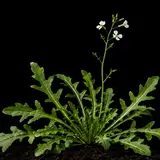
Varieties · 4
You pick one when you add Watercress to your garden. Its days to maturity set your harvest window.
Improved Broad Leaf
Broad, rounded, dark-green leaves on thick hollow stems.
standardlarge-leafvigorousThe standard seed strain sold for home and market growing: larger, rounder leaves and thicker stems than the wild type, vigorous and quick to fill a container. This is what you get when a packet just says watercress, and it is the right default.
Wild watercress (Nasturtium officinale)
Smaller, darker leaves on trailing stems rooting at every node in shallow running water.
wild-typesmall-leafforagedThe unimproved wild plant, found in streams and springs across the whole country. Smaller-leaved and often more sharply peppery than the cultivated strain, and identical in the kitchen. The distinction that matters is not flavor but water: wild cress from a stream you cannot vouch for should be cooked rather than eaten raw, because of liver fluke. Cuttings from a clean wild stand root and grow perfectly in a container, which is the safe way to use it.
Upland cress (Barbarea verna) - dry-land substitute
A rosette of dark-green, deeply lobed leaves grown in soil, not water.
substitutedifferent-speciessoil-growncool-seasonA different plant, often sold as upland cress, creasy greens or land cress, and the practical answer for anyone who wants the flavor without a water container. It grows in ordinary garden soil like a lettuce, is very cold-hardy, and tastes strikingly similar to watercress. Because it is not aquatic it carries none of the liver-fluke concern. Listed here because seed racks shelve it beside watercress and the two are constantly confused.
Garden cress (Lepidium sativum) - not the same plant
Fine, feathery seedlings a few inches tall, cut young as a microgreen.
different-speciesmicrogreenvery-fastThe fine, fast cress of egg-and-cress sandwiches and school windowsills, grown as a microgreen on damp paper or soil and cut in about two weeks. Peppery like watercress and completely unrelated to it. Included so the names do not get tangled: if a recipe wants watercress, this is not it, though it makes a decent quick garnish.
Grower tips
Notes from growers, tagged with the zone they grow in. A person reads every post before it appears.
Nobody has posted about Watercress yet. The first one usually saves someone a season.
Free account. Your post shows your grower name and zone, never your email.