Add it to your home screen and it opens full screen: no browser bars, one tap away, and everything stays signed in. Free, nothing to download from an app store.
- Tap the Share button in your browser
- Scroll down and choose “Add to Home Screen”
- Open GrowSomeFood from your home screen
- Open your browser’s menu
- Choose “Add to Home screen” or “Install app”
- Open GrowSomeFood from your home screen
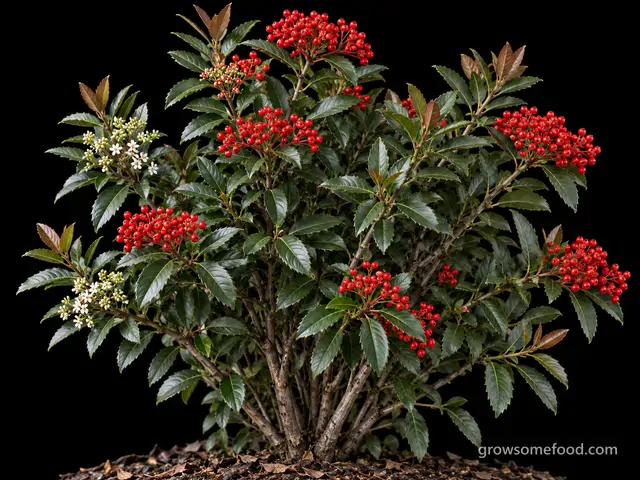
Toyon
California's Christmas berry: a tough evergreen chaparral shrub with flat white summer flowers that native bees swarm and bright red berry clusters that hold through winter until a flock strips them. The forgiving one of the chaparral trio - it takes shade, clay and pruning.
Toyon berries are a traditional food but they must be cooked. Like other rose-family plants it carries cyanogenic glycosides, concentrated in the seeds and leaves, which is why raw berries are so bitter and astringent - eaten raw in quantity they are genuinely risky, particularly for children. Roasting, boiling or long drying drives the compounds off and sweetens the fruit, as the traditional preparations do. Cook them, never serve them raw, and do not let children graze the shrub.
Overview
Toyon (Heteromeles arbutifolia) is the shrub that gives the California hills their red winter colour. Broad flat clusters of small white flowers open in early summer, when a dry-summer garden has almost nothing else in bloom and native bees arrive in numbers to prove it, and by November those clusters have become dense bunches of bright red berries that hang on through the winter until a flock of cedar waxwings or robins finds them and clears the shrub in a day.
It is the only species in its genus, and it is the forgiving one of the three great chaparral shrubs. Where ceanothus and manzanita demand sharp drainage, no summer water and no serious pruning, toyon takes ordinary garden clay, part shade, a monthly soak in an inland summer, and hard cutting back - it resprouts from old wood and from a basal burl, which is how it survives fire. You can hedge it, screen with it, or limb it up into a handsome small tree. If you want one California native shrub and only have one difficult spot, this is the one to try.
The berries are a genuine traditional food and they come with a genuine rule: they must be cooked. Raw, they are harshly astringent and carry cyanogenic compounds concentrated in the seeds. Roasted, boiled or dried, as Chumash, Tongva and other California peoples prepared them for millennia, they turn mildly sweet.
Quick facts
- Sprouts in
- 40 days21 to 90
- Soil to sprout
- 60 °F50 to 70
- Life cycle
- Perennial, lives about 100 years
- Seed to save
- About 180 days after planting150 to 210
- Height
- 12 ft6 to 30
- Spread
- 10 ft5 to 20
- Cold
- Takes light frostdamaged below 10°F
- Heat
- Struggles above 110°F
- Self-sows
- Yes, expect volunteers
Full sun or part sun or part shade · low water · well-drained soil · 10 ft apart (6 to 15) · direct sow or transplant or cuttings
When to plant
No planting window on record for this zone. Nearest zone with one: 8a.
Frost here: last around Apr 10 (Mar 27 to Apr 24 most years), first around Oct 25. Zone averages, your own yard may run a week or two either way.
Life stages
One stage to settle in, then three that repeat each year. Windows are typical; your zone and weather move them.
Years 1-2 - rooting in
The first year after planting- WaterWater through the first two dry summers, then taper offevery 2 weeksGive a new toyon a deep soaking every couple of weeks through its first two dry summers while the roots go down, then reduce to occasional deep waterings and eventually none. Toyon is the most forgiving of the chaparral shrubs about water, but frequent shallow watering in warm soil still rots it.
- ProtectPlant in fall, and give it more room than you thinkSet out a small plant in autumn so winter rain establishes it. Toyon reaches 8-15 feet in most gardens and occasionally 25 or more, so allow it that space or plan to prune from the start. Cage a young plant where deer are active - established shrubs cope, but young ones get browsed to a stub.
- MulchMulch the root zone, keep it off the trunkA few inches of coarse chips or the shrub's own leaf litter conserves moisture and keeps the roots cool. Pull it back a hand's width from the stem. Toyon takes ordinary garden soil and clay far better than ceanothus or manzanita, but it still wants the crown sitting proud of the surface.
Watch for- Deer browsing a young plant hard
- Sprinkler patterns soaking the crown daily
- Slow first-year growth above ground while roots develop
Spring growth and the pruning window
Feb to May, every year- PrunePrune now - and unlike its neighbours, toyon takes itLate winter to early spring, once the birds have finished the berries and before growth starts, is the time to cut. Toyon resprouts readily from old wood and from the base, so you can shape it, hold it as a hedge, or limb it up into a small multi-trunked tree. Prune before flowering and you lose that year's berries, so on a mature plant take out only what you need.
- InspectEnjoy the bronze new growth, and ignore the curled leavesNew leaves flush coppery bronze before hardening to glossy dark green. This is also when toyon thrips fold and thicken some of the new leaves - permanently distorted, mostly cosmetic, and not worth spraying for.
Watch for- Tightly curled, thickened new leaves (toyon thrips - cosmetic)
- Blackened shoot tips hooked over after warm wet weather (fire blight)
- Suckers from the base if you want a single-trunk form
Early summer bloom
Jun to Aug, every year- InspectLeave the flowers standing - this is the pollinator peakToyon opens broad flat clusters of small white flowers in early summer, at the point in a dry-summer year when little else is blooming. They draw enormous numbers of native bees, hoverflies, small butterflies and beetles. Do not deadhead or shear now: every flower cluster is a future bunch of winter berries.
- WaterWater deeply and rarely, if at allAn established toyon needs no summer water in most coastal gardens. Inland, or on a young plant, one deep soak a month is plenty and will improve the berry set. Deep and infrequent is the rule; frequent shallow watering in warm soil is what causes root rot.
Watch for- Heavy native bee activity (the point of the bloom)
- Fire blight strikes in a warm humid early summer
- Wilting on damp soil - root rot, not thirst
Berries and the bird show
Oct to Jan, every year- HarvestPick berries fully red - and cook them, alwaysevery 10 daysBerries colour from green through orange to bright red from late autumn. Pick full-red clusters, strip the berries, and roast, boil, or dry them before eating. Raw toyon berries are harshly astringent and carry cyanogenic glycosides concentrated in the seeds; cooking drives them off and turns the fruit mildly sweet. Never eat them raw, and keep children from grazing the shrub.
- InspectWatch the flock arrive and leave most of the cropToyon holds its berries for months and then a flock of cedar waxwings, robins or mockingbirds strips it in a day or two. That mid-winter fruit is a critical resource when almost nothing else is available. Take a bowlful and leave the rest; the show is worth more than the jelly.
Watch for- Berries reddening unevenly across the shrub
- A flock stripping the whole crop in a day or two (expected)
- The urge to cut branches from a wild plant - see the harvest notes
Harvest
- Berry clusters fully bright red and slightly soft, from late November into January
- Berries release easily from the cluster
- Ready to eat only after roasting, boiling or long drying - raw toyon berries are astringent and are not safe in quantity
- Pick berries fully red - and cook them, always · every 10 days
- Watch the flock arrive and leave most of the crop
Per plant 1 to 15 lbPicking pick as they ripen
Watch out for
4 to know. None are high-risk for Toyon. 2 are active in September.
Deer (browse resistance)Severity Medium WildlifenowDeer browse toyon but rarely destroy it: the shrub resprouts strongly from old wood and from a basal burl, which is how it survives fire, so an established plant simply grows back above the browse line.
Young plants are the vulnerable ones and want a cage for two or three years. Under heavy pressure expect a browse line about five feet up and a bare-legged shrub - which is often the moment to give in and limb it up deliberately into a small tree.
Growth cleanly missing overnight, with the plant browsed back to a level line about as high as a deer can comfortably reach. Ragged, torn stem ends rather than the clean angled cut a rabbit leaves - the single most reliable identifier. Buds and flowers gone while the foliage below is untouched, since deer often take the best part first. Hoof prints and droppings in soft ground near the damage. Repeat visits, with fresh damage each morning once a planting has been found. On young trees, shredded and stripped bark and broken low branches in autumn - that is antler rubbing rather than feeding.
There is no chemical fix, only exclusion and recovery. Get physical protection up immediately after the first damage, because deer return to a known meal, and reinforce or rotate whatever you were relying on before. Most plants regrow from browsing if the crown and roots are intact - feed and water a grazed plant and protect the regrowth while it comes back. What does not recover in the same season is anything whose buds or flowers have been taken, and a young tree whose bark has been rubbed right around the trunk is usually lost. Where deer pressure is genuinely heavy, the honest answer is to fence properly or to grow the plants deer leave alone, rather than to keep replacing losses.
Fencing is the only thing that reliably works. Eight feet is the standard for excluding deer, or two parallel four-foot fences a few feet apart, which they will not jump because they cannot judge the landing. Short of that, cage individual plants: a sturdy wire cage or trunk guard around every young tree, left on until the trunk is thick and the canopy is above browse height, prevents both browsing and antler rubbing and is the single highest-value thing you can do for a young tree. Repellent sprays do help at moderate pressure, but they wash off and deer habituate, so reapply after rain and rotate between different types through the season. Motion-activated sprinklers, scent deterrents, and noise devices work for a while and then stop. Siting matters too: plants close to the house, in daily traffic, and screened behind other planting get browsed less than the same plant out at the boundary.
Deer are the largest garden problem across much of the country, and where pressure is high they set the limit on what you can grow at all. They browse at night and around dawn and dusk, taking tender shoots, leaves, buds, flowers, and fruit within about five feet of the ground, and they come back night after night to anything they have found and liked. Because they have no upper incisors they tear rather than cut, leaving ragged stem ends - that is how you tell deer damage from a rabbit's clean angled cut. In fall, bucks rub their antlers on young trunks and can strip the bark right around a stem, which kills a young tree outright. Palatability varies enormously between plants and between seasons: a herd short of food in late winter eats things it ignores in June, and no plant is truly deer-proof.
Root RotSeverity Medium DiseasenowToyon is much more forgiving here than ceanothus or manzanita - it takes ordinary garden clay, part shade and a monthly deep summer soak without complaint - but it is not immune.
What still kills it is frequent shallow watering in warm soil, a daily lawn sprinkler pattern, or a low spot that ponds through winter. Water deeply and rarely, keep the crown proud of the soil, and plant on a slope or slight mound in heavy ground.
Wilting in the middle of the day on a plant whose soil is damp - the classic tell, and the reason people water a rotting plant and finish it off. Leaves yellowing from the bottom up, dull off-color foliage, and growth that stalls for no visible reason. Whole shoots, or one side of the plant, collapsing while the rest still looks fine. Soft, dark, or mushy tissue at the base of the stem or at the crown, sometimes with a sour smell. Lift a failing plant and look at the roots: healthy ones are firm and pale, rotted ones are brown or black and slimy, and the outer layer slips off between your fingers leaving a thread of core behind. Seedlings that topple over at soil level are the same problem, called damping-off.
There is no cure for tissue that has already rotted, so act on the conditions rather than looking for a spray. Stop watering at once and fix the drainage - open up compacted soil, or move the plant to a raised, sharply drained position or a container. Lift a badly affected plant, cut away every soft dark root and rotted section with a clean blade back to firm pale tissue, and replant only the healthy parts into fresh free-draining soil or mix. Often the better move is to give up on the plant and save its offspring instead: cuttings, offsets, or divisions taken from firm healthy growth root readily and give you a clean start. Bin the rotted material rather than composting it, and correct the drainage before you replant, because the rot comes straight back in the same wet spot.
Drainage is the whole defense. Match the plant to the site first - something that wants sharp drainage will not survive heavy clay or a low, water-collecting spot however well you tend it. Where the ground is heavy, plant on a raised bed, berm, or slope, or grow in a container. Set plants at the depth they were already growing, since burying the crown or the root flare is a common cause of rot, and keep mulch pulled back a few inches from the stem base instead of piled against it. Water the soil rather than the calendar: check that the top inch or two is dry before watering again, cut back hard in cool weather and winter dormancy, and never leave a pot standing in a full saucer. Do not plant or dig in soggy ground, and go easy on rich amendments for plants that want it lean. Rotate annual crops, and start with clean healthy plants and fresh mix.
Root rot is not one organism but a group of soil fungi and water molds - Pythium, Phytophthora, Fusarium, Rhizoctonia and others - that sit harmlessly in most soils and only turn destructive when the ground stays saturated. Waterlogged soil drives the air out, the roots suffocate, and the weakened tissue is invaded and goes soft, brown, and stringy. Because the damage is underground you usually see it first as something that looks like drought: wilting, yellowing, stunting, a plant that does not respond to being watered. Overwatering, heavy compacted ground, a low spot that collects runoff, a pot with no drainage or a saucer left standing full, and cold wet soil in winter are the usual causes. Once roots have actually rotted there is no cure - this is a problem you prevent rather than treat.
Fire BlightSeverity Medium DiseaseToyon is a rose-family plant and gets fire blight like its apple and pear relatives, though usually less severely and rarely fatally on an established shrub.
It shows up after a warm, wet early summer as blackened flower clusters and hooked shoot tips. Cut well below the damage in dry weather, sterilizing between cuts. It is also the reason not to plant toyon hard against an apple, pear or quince where blight is common.
Sudden wilting and blackening of blossoms and shoot tips that look burned rather than diseased, shoots bent over into a hook, dark sunken cankers on limbs, and amber bacterial ooze on the bark in warm humid weather.
Cut strikes out at least 8 to 12 inches below the visible damage, sterilizing the saw or pruners between every single cut, and remove and destroy the prunings rather than leaving them lying. Cut cankers out in dry dormant weather. Copper or biological sprays at bloom help in high-pressure areas - use only a product labeled for the crop you are treating, follow the label exactly, and observe the pre-harvest interval before you pick.
Where a resistant option exists for your crop, variety choice matters more than any spray - check before you buy. Avoid heavy nitrogen and hard pruning, both of which force the soft succulent growth the bacteria enter through, and never prune or work the plant in wet weather. Keep susceptible hosts spaced apart rather than planted hard against each other, and do not prune two of them in the same wet spell.
A fast, destructive bacterial disease (Erwinia amylovora) of the rose family. It enters through open blossoms and soft shoot tips in warm, humid weather, then runs back down the shoot, blackening leaves and wood as though scorched and bending the tip into a telltale 'shepherd's crook'. From there it moves into limbs as dark sunken cankers, and it can kill a young tree in a single season. Apple, pear, quince, loquat, hawthorn, serviceberry and toyon are all hosts, and susceptibility varies enormously between species and between varieties.
Toyon ThripsSeverity Low PestVery common on garden toyon and almost always cosmetic - the distorted leaves stay distorted, but flowering and the winter berry crop are unaffected.
Worst in hot inland gardens and on clipped hedges. This is a look-at-it problem, not a spray-it problem.
New spring leaves folded lengthwise or rolled tightly along the midrib, thickened and browning at the fold. Open a curled leaf and you will see tiny dark slender insects and specks of black frass. Damage is concentrated on the newest growth, and is worst on shrubs in hot, dry, crowded positions and on sheared hedges pushing constant soft growth.
Usually none at all. If the look bothers you, prune out the badly curled shoots at the normal late-winter pruning time and bin them. Sprays reach thrips poorly once the insects are sealed inside a rolled leaf, and a native shrub carrying a seasonal thrips population is doing no worse than its wild neighbours.
Keep the plant reasonably vigorous and not badly drought-stressed in its early years, since stressed shrubs take the worst of it. Avoid heavy nitrogen, which forces the soft new growth thrips prefer, and give the shrub room and air movement rather than squeezing it into a tight clipped hedge.
Toyon thrips (Rhynchothrips ilex) are tiny slender insects that feed inside expanding leaves in spring, making them fold, roll tightly along the midrib, and thicken. Affected leaves stay permanently distorted and often brown along the crease, so a badly hit shrub can look scorched from a distance - but the plant itself is not seriously harmed, flowers and fruits normally, and pushes clean growth once the spring flush hardens off.
Good & bad neighbors
Plant nearby
-
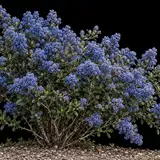
Part of the classic chaparral trio and a good season partner: ceanothus carries the pollinators through early spring, toyon takes over in early summer, and the two share full sun and lean unfertilized soil. Toyon tolerates the shadier, heavier corners ceanothus refuses.
-
Coast live oakToyon's natural place in the wild is the understory and edge of oak woodland, and it is one of the few good berrying shrubs that will grow in the dry shade under an established oak - where, importantly, it needs no summer water that would endanger the oak's roots.
-
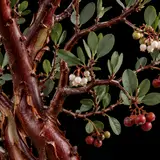
Completes the trio and covers the other end of the year - manzanita flowers in midwinter and fruits in late summer, toyon flowers in early summer and fruits in winter, so between them a garden has nectar or fruit in nearly every month.
-
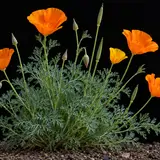
An easy underplanting on the same lean, dry, unfertilized regime; the poppies finish and go dormant just as toyon comes into flower in early summer.
Keep apart
-
Toyon is in the rose family and shares fire blight with apples, pears, quinces and their relatives, so the bacterium moves freely between them. It is not a reason to avoid toyon, but do not plant it hard against a fruit tree in a region where fire blight is a regular problem, and never prune the two in the same wet spell without sterilizing between.
Varieties · 3
You pick one when you add Toyon to your garden. Its days to maturity set your harvest window.
Toyon (Heteromeles arbutifolia)
Upright evergreen shrub with dark toothed leaves, flat white summer flower clusters, and dense bunches of scarlet winter berries.
speciesnativeevergreenred-berriesThe wild species and the only one most gardeners need: a dense evergreen shrub of 8-15 feet, occasionally a 25-foot tree, with glossy sharply toothed leaves, flat white flower heads in early summer and heavy clusters of bright red berries from November. Tolerates sun or part shade, clay, coastal wind and hard pruning, and resprouts from a basal burl after fire.
Davis Gold
Standard toyon foliage and form carrying clusters of bright golden-yellow berries in winter.
cultivaryellow-berriesselectionunusualA selection with clear golden-yellow berries instead of red, otherwise the same tough plant. Striking against the dark foliage and a talking point in a winter garden; birds take the yellow fruit more slowly than the red, so the display often lasts longer. Must be propagated from cuttings to come true.
Island Toyon (Heteromeles arbutifolia var. macrocarpa)
Open evergreen shrub with broad leaves and loose clusters of unusually large red berries.
varietynativechannel-islandslarger-berriesThe Channel Islands form, with noticeably larger berries in looser clusters and a slightly more open habit. Well suited to coastal and southern California gardens and a good choice where the berry display is the whole reason for planting, though it is a little less cold-tolerant than mainland plants.
Grower tips
Notes from growers, tagged with the zone they grow in. A person reads every post before it appears.
Nobody has posted about Toyon yet. The first one usually saves someone a season.
Free account. Your post shows your grower name and zone, never your email.