
Add it to your home screen and it opens full screen: no browser bars, one tap away, and everything stays signed in. Free, nothing to download from an app store.
- Tap the Share button in your browser
- Scroll down and choose “Add to Home Screen”
- Open GrowSomeFood from your home screen
- Open your browser’s menu
- Choose “Add to Home screen” or “Install app”
- Open GrowSomeFood from your home screen

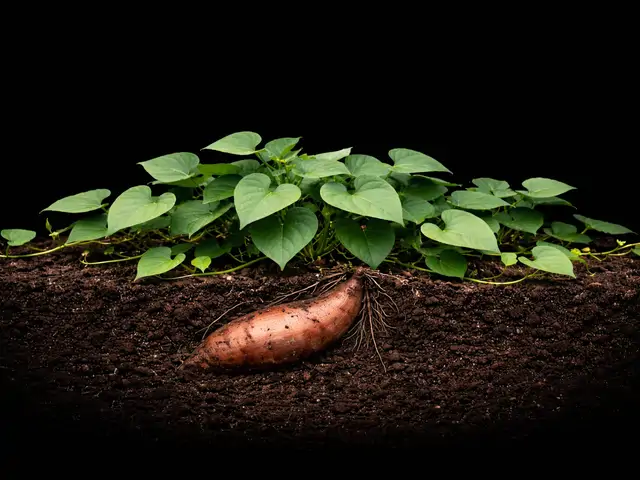
Sweet Potato
A heat-loving tropical vine grown from slips for its sweet storage roots - one of the most productive, nutritious, and low-maintenance crops for warm gardens.
Safety notes Roots, cooked leaves, and tender shoots are all edible and nutritious - despite the name, sweet potato is in the morning-glory family, not a nightshade. Eat the roots cooked (raw is hard to digest) and cook the greens. One rule: throw out any root that is rotting, moldy, or bitter. Damaged roots make bitter toxins that spread well past the visible bad spot, and cooking does not make them safe - discard the whole root rather than trimming, and never feed spoiled roots or peelings to livestock.
Overview
The sweet potato is a sprawling tropical vine in the morning-glory family (not related to the potato, and not a yam despite the grocery-store label), grown as a warm-season annual for the sweet, dense storage roots it swells underground. Where summers are long and hot, few crops match it: a handful of plants blanket the ground in vigorous vines and hand you a heavy harvest of roots that store for months, all with very little care.
The one thing to knowIt's started in an unusual way - not from seed but from slips, the leafy shoots sprouted from a mature root.
Quick facts
- Height
- 12 inRange: 8–18 in
- Spread
- 5 ftRange: 3–10 ft
- Cold
- Killed by frostdamaged below 32°F
- Heat
- Struggles above 100°F
- Life cycle
- Grown as an annualBotanically a perennial
- Soil
- Well-drained
- Water
- Medium
- Plant spacing
- 15 inRange: 12–18 in
When to plant
Nothing is open today. Summer planting opens 6 months, Apr 24 to May 22.
- Plant slips Apr 24 – May 22 Opens in 187 daysAbout 2 weeks after to 6 weeks after your last frost (Apr 10 here)Plant slips 2-4 weeks after last frost, once soil holds 65-70°F and nights stay above 55°F. Sweet potato needs 90-120 warm, frost-free days.
Frost here: last around Apr 10 (Mar 27 to Apr 24 most years), first around Oct 25. Zone averages, your own yard may run a week or two either way.
Life stages
From the first start to harvest
Follow the growing sequence. Choose a stage to see its care and signs to watch for.
Stage 1 of 4 · The growing sequence
Rooting in (slips)
Day 0 to 18 from planting
Care at this stage
-
Water slips in daily until they perk up
Freshly planted slips wilt dramatically for the first several days - that's normal. Keep them watered daily (and lightly shaded in extreme heat) until new growth signals they've rooted.
-
Plant only into warm soil (65°F+)
Slips stall or rot in cool ground; wait until soil is truly warm, 2-4 weeks after last frost, and don't let temps dip below 55°F.
Stages can overlap; weather, variety, and growing conditions change the pace.
Harvest
- 90-120 days from planting slips (variety-dependent)
- Roots have reached usable size when you dig a test plant
- Before the first frost - never let frost reach the roots
- Dig gently before frost, around 90-120 days · weekly
- CURE at 80-85°F and high humidity for 10-14 days
Per plant 3 to 10 roots, 1 to 5 lbPicking pull once
Cook with Sweet Potato
Watch out for
7 to know. 2 are high-risk: Sweet Potato Weevil, Root-Knot Nematodes. 2 are active in October.
Sweet Potato WeevilSeverity High PestnowSeason: May–OctSmall entry holes and winding dark tunnels in roots and stems, wilting or stunted vines, and a bitter taste in damaged roots (a plant defense response).
Chiefly a problem in the Gulf South and warm coastal zones where it overwinters; cooler-climate gardens rarely see it.
Small entry holes and winding dark tunnels in roots and stems, wilting or stunted vines, and a bitter taste in damaged roots (a plant defense response).
No rescue for infested roots - remove and destroy them; strict sanitation, rotation, and clean slips are the entire defense. Pheromone traps help monitor.
Plant only clean, certified weevil-free slips; rotate far from last year's crop and any volunteer sweet potatoes; hill soil so roots don't crack open to the surface; destroy crop debris after harvest. Several Southern and Western states regulate sweet potato planting stock because of this weevil - check your state department of agriculture before sprouting your own slips, moving roots or slips across a state line, or sharing slips with other gardeners.
The most serious sweet potato pest, especially in the warm South: a slender ant-like weevil whose larvae tunnel through roots and vines, making them bitter and inedible and spoiling storage.
Root-Knot NematodesSeverity High PestSeason: Jun–SepStunted, yellowing, unthrifty plants that wilt in the heat even though the soil is moist, and poor yields for no obvious reason.
The storage root is the crop, so galling shows up as cracking, bumps and knots that spoil it outright. Covington, Vardaman and Evangeline list resistance. Sandy, warm soils are the classic hotspot, and nematode wounds open the door to fusarium wilt, so manage the two together.
Stunted, yellowing, unthrifty plants that wilt in the heat even though the soil is moist, and poor yields for no obvious reason. Confirm by digging: beady swellings strung along the roots and side rootlets, and root crops that are forked, branched, cracked or knotted rather than clean.
There is no in-season cure. Pull and destroy affected plants rather than composting them, and bring that ground back over several seasons with rotation, resistant varieties and marigold cover crops. Where a crop can be grown in a container of fresh mix, that sidesteps the problem entirely.
Rotate to non-hosts, and grow resistant varieties where they exist for your crop. A French marigold cover crop grown thickly the season before and turned in genuinely lowers populations. Build organic matter and mulch heavily, which feeds the soil life that suppresses them. Plant only clean stock, never move soil from an infested bed around the garden, and solarize badly infested ground through the hottest part of summer.
Microscopic soil roundworms (Meloidogyne species) that invade roots and force them to swell into beady galls. A galled root cannot take up water and nutrients properly, so the plant stunts, yellows, wilts in heat despite watering, and yields poorly, and root and tuber crops come up forked, knobbly, hairy or cracked instead of clean. They are worst in warm, sandy soils and build up steadily wherever a susceptible crop is grown in the same ground year after year. The wounds they leave also open the way for fusarium wilt and rots.
Black RotSeverity Medium DiseasenowSeason: Jul–OctFirm, dark, sunken circular lesions on roots (especially after digging and in storage), and blackened stem bases with yellowing vines.
A major cause of storage losses; careful handling, proper curing, and clean slips prevent most of it.
Firm, dark, sunken circular lesions on roots (especially after digging and in storage), and blackened stem bases with yellowing vines.
No cure - discard affected roots whole (don't store them, as it spreads in storage). Don't trim out the bad spots and eat the rest, and don't feed culls or peelings to livestock or poultry: a rotting root makes bitter toxins that spread past the visible lesion, and cooking does not make them safe. Start clean next season with certified slips and fresh ground.
Use clean certified slips, rotate 3-4 years away from sweet potato, handle roots gently at harvest to avoid wounds, cure properly, and sanitize storage areas and tools.
A fungal disease (Ceratocystis) causing sunken, dark, greenish-black circular spots on roots and dark cankers on stems, worsening in storage and making roots bitter and inedible.
Flea BeetlesSeverity Medium PestSeason: May–JulDozens of pinhead-sized round holes peppered across the leaves, thickest on the youngest, most tender growth.
Leaf damage is usually cosmetic, but the sweet potato flea beetle's larvae also scar the roots with narrow grooves, which downgrades the crop's appearance - a bigger deal for market growers than home cooks. The larvae cannot be reached by a foliar spray, so rotation and clean beds matter most.
Dozens of pinhead-sized round holes peppered across the leaves, thickest on the youngest, most tender growth. Tiny beetles that spring away as you brush the plants or lean in for a closer look - that jump is the identification. Seedlings that go lacy and stop growing, and transplants that sit and sulk instead of taking off. Damage heaviest in warm, dry weather and along the edge of a bed nearest weedy ground or last year's crop debris. On root crops, shallow narrow grooves or channels scarring the skin at harvest, from larvae feeding underground.
Row cover and healthy fast growth carry most crops through, and on an established plant the damage is usually cosmetic and needs nothing at all. Where a young planting is genuinely being stripped, kaolin clay coats the leaves and deters feeding, and spinosad will knock the beetles back. Spinosad is acutely toxic to bees while the spray is still wet - apply it at dusk when bees are not flying, never onto plants in flower, and follow the product label. Anything you spray must be labeled for the plant you are treating, and you must observe its pre-harvest interval on a crop you are picking. Yellow sticky traps are useful for telling you when the beetles have arrived. Where the damage falls on the part you eat, harvesting young often beats them outright; where you are growing for a root or a fruit, leaf damage can simply be tolerated. Larvae feeding underground cannot be reached by a foliar spray, so rotation and clean beds are what work against those.
Floating row cover or fine insect mesh, laid over the bed from the day of sowing or transplanting and sealed at the edges so nothing can walk in underneath, is the single best defense - and on the crops they favor it is close to essential. Leave it on until plants are large and growing strongly, or until flowering on anything that needs pollinating. Push growth: a well-watered, unchecked plant outgrows the damage, so the whole game is getting seedlings through their vulnerable weeks fast. Keep beds weed-free, since related weeds host the beetles alongside your crop, and clear crop debris at the end of the season where the adults overwinter. Rotate away from a bed that grew a related crop last year. Where you can, shift sowing dates - cooler-season and fall plantings often miss the peak of adult feeding entirely.
Flea beetles are tiny dark beetles - often shiny black or bronze, rarely more than a couple of millimeters long - with enlarged back legs that let them spring away like fleas the moment you lean in. The adults chew countless small round pits and shot-holes through leaves, giving the foliage a peppered, buckshot-riddled look. They overwinter as adults in leaf litter, hedgerows, and crop debris, emerge hungry in spring, and are worst in warm dry spells. The damage is mostly a seedling and transplant problem: a small plant with a few leaves can be checked, stunted, or killed outright, while the same plant shrugs them off once it is large and growing strongly. Different species specialize on different plant families, so the beetles hammering your brassicas are not the ones on your nightshades. Some species also have larvae that feed on roots and tubers underground.
WirewormSeverity Medium PestSeason: May–SepThin, clean holes and shallow tunnels in roots at harvest, and stiff orange-brown 'worms' in the soil - worst in beds recently converted from lawn or sod.
Damage is cosmetic tunneling that opens roots to rot; new gardens broken from lawn are the classic trouble spot.
Thin, clean holes and shallow tunnels in roots at harvest, and stiff orange-brown 'worms' in the soil - worst in beds recently converted from lawn or sod.
No rescue for holed tubers - trim and eat them soon (they don't store); trap with buried potato or carrot pieces before planting to gauge and reduce numbers.
Avoid planting potatoes into ground that was grass/sod the year before; rotate; cultivate the soil to expose larvae to birds; bait with buried potato chunks and remove them with their feeders.
The tough, wiry, orange-brown larvae of click beetles, which live in soil for years and bore narrow holes and tunnels through storage roots.
Deer (browse resistance)Severity Medium WildlifeSeason: Jun–SepGrowth cleanly missing overnight, with the plant browsed back to a level line about as high as a deer can comfortably reach.
Sweet potato greens are genuinely palatable to deer and rabbits, so in deer country the foliage needs protecting even though the crop is underground. Vines usually regrow if the roots are undisturbed, but heavy repeated browsing cuts the harvest.
Growth cleanly missing overnight, with the plant browsed back to a level line about as high as a deer can comfortably reach. Ragged, torn stem ends rather than the clean angled cut a rabbit leaves - the single most reliable identifier. Buds and flowers gone while the foliage below is untouched, since deer often take the best part first. Hoof prints and droppings in soft ground near the damage. Repeat visits, with fresh damage each morning once a planting has been found. On young trees, shredded and stripped bark and broken low branches in autumn - that is antler rubbing rather than feeding.
There is no chemical fix, only exclusion and recovery. Get physical protection up immediately after the first damage, because deer return to a known meal, and reinforce or rotate whatever you were relying on before. Most plants regrow from browsing if the crown and roots are intact - feed and water a grazed plant and protect the regrowth while it comes back. What does not recover in the same season is anything whose buds or flowers have been taken, and a young tree whose bark has been rubbed right around the trunk is usually lost. Where deer pressure is genuinely heavy, the honest answer is to fence properly or to grow the plants deer leave alone, rather than to keep replacing losses.
Fencing is the only thing that reliably works. Eight feet is the standard for excluding deer, or two parallel four-foot fences a few feet apart, which they will not jump because they cannot judge the landing. Short of that, cage individual plants: a sturdy wire cage or trunk guard around every young tree, left on until the trunk is thick and the canopy is above browse height, prevents both browsing and antler rubbing and is the single highest-value thing you can do for a young tree. Repellent sprays do help at moderate pressure, but they wash off and deer habituate, so reapply after rain and rotate between different types through the season. Motion-activated sprinklers, scent deterrents, and noise devices work for a while and then stop. Siting matters too: plants close to the house, in daily traffic, and screened behind other planting get browsed less than the same plant out at the boundary.
Deer are the largest garden problem across much of the country, and where pressure is high they set the limit on what you can grow at all. They browse at night and around dawn and dusk, taking tender shoots, leaves, buds, flowers, and fruit within about five feet of the ground, and they come back night after night to anything they have found and liked. Because they have no upper incisors they tear rather than cut, leaving ragged stem ends - that is how you tell deer damage from a rabbit's clean angled cut. In fall, bucks rub their antlers on young trunks and can strip the bark right around a stem, which kills a young tree outright. Palatability varies enormously between plants and between seasons: a herd short of food in late winter eats things it ignores in June, and no plant is truly deer-proof.
Fusarium Wilt & Stem RotSeverity Medium DiseaseSeason: Jun–AugLower leaves yellowing and wilting, stunting, and brown-streaked, rotted stem bases; whole plants may collapse in heat.
Clean, certified slips are the front-line defense, since the fungus rides in on infected planting stock.
Lower leaves yellowing and wilting, stunting, and brown-streaked, rotted stem bases; whole plants may collapse in heat.
No cure once infected - remove and destroy affected plants and rotate the bed.
Grow resistant varieties (many sweet potatoes list fusarium resistance), plant clean slips, rotate away from sweet potato, and ensure good drainage.
Soil-borne fungus that plugs the plant's water vessels, causing yellowing, wilting, and stem rot, often persisting for years in soil; spread on infected slips.
Good & bad neighbors
Plant nearby
-
French marigolds suppress root-knot nematodes, a real sweet-potato problem in warm sandy soils - a genuinely useful interplant.
-
Legumes fix nitrogen that the roots use late in the season, and their upright habit shares ground with the low sweet-potato vines without much conflict.
- Traditional pairings, thin evidence
-
Traditional pairing where the tall corn and low sweet-potato ground cover use different layers; keep it from shading the vines too heavily.



Keep apart
- Traditional pairings, thin evidence
-
Sunflowers are allelopathic and strong competitors that can shade and crowd the sun-hungry vines; give sweet potato its own open, sunny ground.
-
Two sprawling, heavy vines competing for the same ground and sun; they tangle and shade each other rather than cooperate.

Varieties · 13
You pick one when you add Sweet Potato to your garden. Its days to maturity set your harvest window.
Beauregard
The most widely grown home and market variety in the US: fast, heavy-yielding, and adaptable, with rose-red skin and moist deep-orange flesh that bakes and mashes beautifully.
Variety details for Beauregard
Reddish-purple skin over moist, deep-orange flesh; uniform, plump roots.
orange-fleshearlyhigh-yieldclassicResists Soil Rot
Its relatively early maturity makes it a top choice for shorter-season gardens.
Covington
A North Carolina State University release that's become a commercial standard: uniform, rose-skinned roots with sweet, moist orange flesh, high yields, and strong disease resistance.
Variety details for Covington
Rose-colored skin and moist orange flesh; smooth, uniform roots.
orange-fleshhigh-yielduniformResists Fusarium Wilt, Root-Knot Nematode
Dependable and consistent in shape and size.
Jewel
A long-standing orange-fleshed favorite prized for high yields, excellent flavor, and outstanding storage life.
Variety details for Jewel
Copper-orange skin and deep-orange flesh; uniform, elongated roots.
orange-fleshstorageclassicResists Fusarium Wilt, Soil Rot
Needs a full long season; the copper-skinned, deep-orange roots are the classic Southern baking-and-pie sweet potato.
Georgia Jet
One of the fastest sweet potatoes, bred to size up quickly and even in cooler climates - the go-to for Northern and short-season growers.
Variety details for Georgia Jet
Reddish-purple skin and moist orange flesh; ready notably early.
orange-fleshvery-earlycool-tolerantMoist orange flesh and reliable heavy yields well before most varieties finish.
Evangeline
An LSU release famous for exceptional sweetness and high sugar content, with smooth copper skin and vivid orange flesh that turns dessert-sweet when baked.
Variety details for Evangeline
Smooth copper skin and deep-orange flesh; notably sweet.
orange-fleshextra-sweetResists Root-Knot Nematode
A favorite where flavor is the priority.
Hernandez
A high-yielding orange variety with rich, deep-orange, high-beta-carotene flesh and good storage, popular in commercial production.
Variety details for Hernandez
Reddish-brown skin over deep-orange, carotene-rich flesh.
orange-fleshhigh-carotenestorageResists Fusarium Wilt
Wants a longer season to reach its full, uniform crop.
Grower tips
Notes from growers, tagged with the zone they grow in. A person reads every post before it appears.
Nobody has posted about Sweet Potato yet. The first one usually saves someone a season.
Free account. Your post shows your grower name and zone, never your email.