
Add it to your home screen and it opens full screen: no browser bars, one tap away, and everything stays signed in. Free, nothing to download from an app store.
- Tap the Share button in your browser
- Scroll down and choose “Add to Home Screen”
- Open GrowSomeFood from your home screen
- Open your browser’s menu
- Choose “Add to Home screen” or “Install app”
- Open GrowSomeFood from your home screen
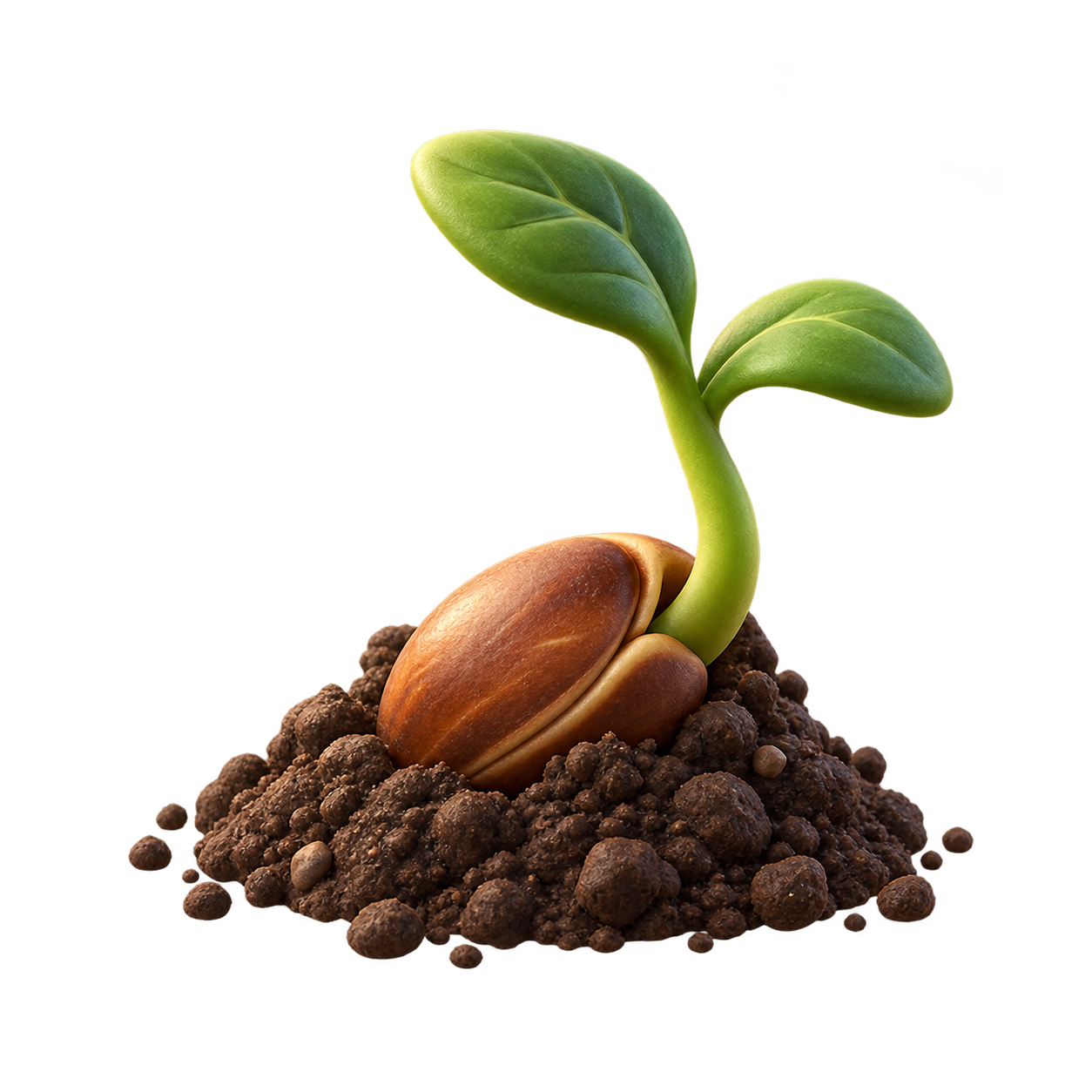
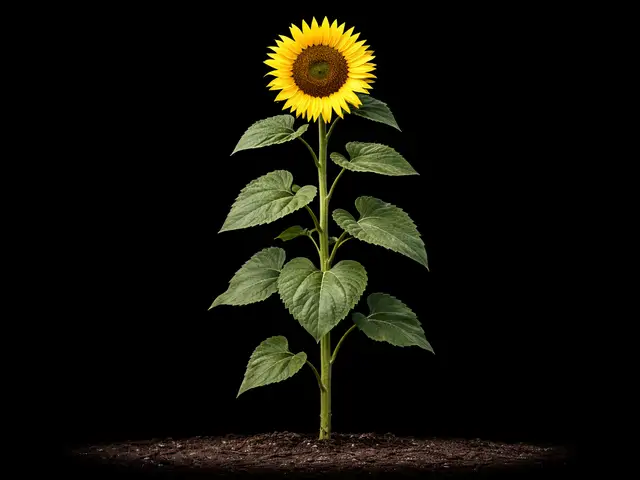
Sunflower
The garden's cheerful giant, grown two ways at once: a fast, easy ornamental and pollinator magnet that also hands you a real crop of edible, oil-rich seeds.
Safety notes Seeds, petals, and young buds are edible; there are no toxic parts. Sunflower is a common seed/nut-adjacent allergen for some, and the leaves and stems can cause contact dermatitis in sensitive people - wear gloves and sleeves when handling large plants.
Overview
The sunflower is one of the few plants that's genuinely both an ornamental and a food crop, which is why it earns a spot in almost any garden. A fast, tough North American annual, it rockets from seed to towering bloom in a single summer, faces its golden head to the sun (young buds famously track it east-to-west), and buzzes with bees and butterflies - then ripens a head packed with edible, oil-rich seeds. Few plants give so much for so little effort.
The one thing to knowSeed and oilseed types (Mammoth Grey Stripe, Mammoth Russian) grow tall with one huge head of snacking or oil seeds.
Quick facts
- Sprouts in
- 10 daysRange: 7–14 days
- Soil temperature
- 75 °FRange: 50–90 °F
- Height
- 72 inRange: 24–144 in
- Spread
- 24 inRange: 12–36 in
- Cold
- Killed by frostdamaged below 32°F
- Heat
- Struggles above 100°F
- Life cycle
- Annual
- Save seeds
- About 100 days after plantingRange: 80–120 days
- Self-sows
- Yes, expect volunteers
- Soil
- Well-drained
- Water
- Medium
- Plant spacing
- 12 inRange: 6–24 in
When to plant
Nothing is open today. Spring sowing opens 6 months, Apr 10 to May 8.
- Direct sow Apr 10 – May 8 Opens in 172 daysAbout at to 4 weeks after your last frost (Apr 10 here)Direct sow after last frost once soil warms to 50°F. Succession-sow every 2 weeks through early summer for continuous cut flowers.
Frost here: last around Apr 10 (Mar 27 to Apr 24 most years), first around Oct 25. Zone averages, your own yard may run a week or two either way.
Life stages
From the first start to harvest
Follow the growing sequence. Choose a stage to see its care and signs to watch for.
Stage 1 of 6 · The growing sequence
Germination
Day 0 to 10 from sowing
Care at this stage
-
Keep soil moist until sprouts appear
Sunflowers germinate fast in warm soil (50°F+); keep the seedbed evenly moist for the week or so to emergence.
-
Shield the sown seed from birds and rodents
Birds, squirrels, and mice dig up big sunflower seeds as they sprout - cover rows with netting or a light cloche until seedlings are up.
Stages can overlap; weather, variety, and growing conditions change the pace.
Harvest
- Back of the flower head has turned from green to yellow-brown
- Petals have dried and dropped, and the head droops
- Seeds are plump, firm, and loosening in their shells
- Cut the head when the back is brown and seeds are plump
- Rub the seeds free once fully dry
Per plant 1 to 8 heads, 2 to 16 ozPicking pull once
Cook with Sunflower
Watch out for
8 to know. 2 are high-risk: Birds & Wildlife, Sunflower Moth. 2 are active in October.
Birds & WildlifeSeverity High WildlifenowSeason: Aug–OctFruit disappearing from the outermost, most exposed parts of the plant first, and from the top of a tree where you cannot reach anyway.
Sunflowers are a wildlife magnet by design. If you want the seeds yourself, tie cheesecloth, fine mesh, or paper bags over the heads as the seeds plump, or cut and dry the heads indoors once the backs start to brown. If you love birds, leave the heads standing as a natural feeder.
Fruit disappearing from the outermost, most exposed parts of the plant first, and from the top of a tree where you cannot reach anyway. Single neat pecks and gouges in ripening fruit, with several fruits sampled rather than one eaten through - the classic sign that it was birds rather than an animal. Heads of grain or seed going visibly lighter and emptier as they ripen, with hulls and chaff scattered underneath. Freshly sown seed vanishing off the surface of a bed before it germinates. Bird traffic in and out of the plant picking up as the crop colors, and birds waiting on nearby wires and branches. Wasps arriving at the pecked and split fruit shortly afterward.
There is no treatment once a crop is being taken - only protection and timing, so the answer is to get netting on and to pick what is ready. Reflective tape, flash ribbon, spinners, and decoy predators do work, but only for a few days at a time: birds habituate fast, so move and rotate them and never rely on them as the main defense for a crop you care about. Cut and gather grain or seed heads a little early, at firm dough, and finish drying them under cover instead of leaving them standing for the flocks. Plant a little extra, or a decoy crop the birds prefer, and accept sharing anything that crops heavily. On a wild or foraged patch, fruit going to birds and small mammals is the point of the plant rather than a problem to solve.
Net, and net early. Bird netting draped over a frame or hoops so it stands off the fruit, with the edges closed at ground level, is the only thing that reliably works at harvest scale - and it has to go on before the crop starts to color, because once birds have found the food they are far harder to displace. Keep fruit trees small enough that netting them is actually feasible; that decision gets made years earlier, at planting. Bags of mesh, organza, or paper slipped over individual heads, clusters, or prize fruit protect a small crop without netting the whole plant. Then shorten the exposure: pick promptly and completely rather than leaving ripe fruit hanging as a lure, clear split and dropped fruit that draws birds and wasps alike, and where a crop can finish off the plant, harvest a little early and ripen or dry it under cover. Rake in or cover broadcast seed so it is not lying in plain view.
Birds find ripening fruit and seed before you do. Robins, waxwings, starlings, catbirds, jays, sparrows, finches, blackbirds, and doves all work a garden, and the pressure arrives in a narrow window - the last days before harvest, when sugar rises, color changes, and the crop softens or the grain hardens. A flock can strip a small planting in a day or two, and birds that only peck rather than take whole fruit still leave wounds that rot or draw wasps. Squirrels, chipmunks, and other wildlife usually turn up on the same crop at the same time. This is competition rather than disease: the birds are not harming the plant, and a big tree or a heavy-cropping bush often has enough for everyone - but on a small planting it can be the difference between a harvest and none.
Sunflower MothSeverity High PestSeason: Jun–AugSilk webbing across the face of the flower head, frass (sawdust-like droppings) among the seeds, and hollowed or tunneled developing seeds.
The most damaging pest if you're growing sunflowers for seed - timing the bloom to dodge the moth flight is the best home defense.
Silk webbing across the face of the flower head, frass (sawdust-like droppings) among the seeds, and hollowed or tunneled developing seeds.
Bt (Bacillus thuringiensis) or spinosad applied to the flower head as it opens catches young larvae before they bore in; remove and destroy badly infested heads.
Plant early to bloom before peak moth flight, encourage natural predators and parasitic wasps, and check heads as they flower.
A moth whose larvae are the main seed pest of sunflowers: they web and tunnel through the flower head, feeding on developing seeds and opening the head to rot.
Squirrels & RodentsSeverity Medium WildlifenowSeason: Aug–OctChewed husks, shells or hulls scattered under the plant, fruit and nuts vanishing as they ripen, and gnawed or half-eaten windfalls.
Rodents raid at both ends of the season - sprouting seed in spring and ripe seed in fall - so protect the crop at planting and again at maturity. Cutting the heads and drying them somewhere rodent-safe is the surest way to save the seed.
Chewed husks, shells or hulls scattered under the plant, fruit and nuts vanishing as they ripen, and gnawed or half-eaten windfalls. On new plantings: freshly dug holes and scattered soil, bulbs missing or gnawed, dug-up seed rows, vole runways under the mulch, and gaps in spring where you know you planted.
There is no rescue for what has already been eaten, so this is a prevention problem. Re-cover disturbed plantings with mesh promptly, replant losses inside cages, and trap or exclude persistent diggers where that is legal locally. On a large tree, accept that you will share the crop and concentrate on gathering promptly.
For a crop on the plant, timely and frequent harvest is the real defense - gather daily through the ripening window rather than leaving anything to hang, and pick slightly early to finish indoors where the crop allows it. Net or bag what you can reach. For bulbs and sown seed, lay wire mesh or hardware cloth over the planting, plant deeper, use buried wire baskets, and clear away the papery tunics and debris that advertise a fresh planting. Trunk baffles slow climbers on isolated trees, clearing jumping routes from nearby trees and roofs helps, and removing brush cover reduces the rodents sheltering nearby.
Squirrels, chipmunks, voles and mice are the wildlife that competes with you most directly for a crop. They take ripening nuts, seed and fruit off the plant, usually before you judge it ready, and cache what they do not eat. They also dig up freshly planted bulbs and sown seed, and voles tunnel in to gnaw bulbs and roots underground through winter. They climb anything, they know exactly when a crop is ripe, and a determined pair can clear a small tree or a new planting in a few days.
Downy Mildew (Sunflower)Severity Medium DiseaseSeason: May–JulStunted, pale, thickened seedlings, yellow blotches on upper leaf surfaces with white fuzzy growth beneath, and sometimes downward-cupped leaves.
Most damaging to young seedlings in cool, wet springs; established plants that escape early infection usually grow through it.
Stunted, pale, thickened seedlings, yellow blotches on upper leaf surfaces with white fuzzy growth beneath, and sometimes downward-cupped leaves.
No cure for infected plants - remove and destroy them; the pathogen persists in soil, so rotation and resistant seed are the defense.
Plant resistant varieties and clean seed, ensure good drainage, avoid overwatering young plants, and rotate away from sunflowers.
A soil- and seed-borne water mold (Plasmopara halstedii) that stunts and yellows seedlings and young plants, with white downy growth on leaf undersides in cool, wet conditions.
Sunflower BeetleSeverity Medium PestSeason: May–JulChewed and skeletonized leaves, and small cream-and-brown striped beetles (or humpbacked greenish larvae) feeding on the foliage.
Mostly a threat to seedlings and young plants; a full-grown sunflower shrugs off the leaf damage.
Chewed and skeletonized leaves, and small cream-and-brown striped beetles (or humpbacked greenish larvae) feeding on the foliage.
Hand-pick beetles and larvae; spot-treat heavy infestations on young plants with spinosad or neem if defoliation is severe.
Rotate plantings, clean up debris, and encourage natural enemies; vigorous established plants outgrow light feeding.
A striped beetle (and its larvae) that chews sunflower foliage, defoliating young plants when numerous, though established plants usually tolerate the damage.
Sunflower RustSeverity Medium DiseaseSeason: Jul–SepSmall rusty-orange to reddish-brown raised pustules scattered on the leaves (mostly undersides), which rub off as powder; heavy infection yellows and kills leaves.
Usually cosmetic on a healthy plant, but heavy rust late in the season can shrink seed heads.
Small rusty-orange to reddish-brown raised pustules scattered on the leaves (mostly undersides), which rub off as powder; heavy infection yellows and kills leaves.
Remove badly affected lower leaves; fungicides are rarely needed in home gardens on plants maturing before rust peaks.
Grow resistant varieties, space for airflow, avoid overhead watering, rotate, and remove crop debris where spores overwinter.
A fungal disease (Puccinia helianthi) producing cinnamon-brown pustules on leaves that reduce photosynthesis and vigor in warm, humid weather.
Verticillium WiltSeverity Medium DiseaseSeason: Jul–SepOne branch, one limb or one side of a plant wilting, yellowing and browning in summer while the rest carries on normally - the lopsided pattern is the tell - and leaves that wilt and then hang on rather than dropping cleanly.
Sunflower is fairly tolerant and often still produces despite infection, but badly affected plants stunt and wilt in summer heat, and the wilting leaves are mottled yellow and green between the veins.
One branch, one limb or one side of a plant wilting, yellowing and browning in summer while the rest carries on normally - the lopsided pattern is the tell - and leaves that wilt and then hang on rather than dropping cleanly. Cut into affected wood and look for olive-green, grey or brown streaking along the grain; in a cut vegetable stem it shows as a ring of discolored dots. On vegetables, lower leaves yellow in a wedge from the margin inward, and the plant wilts at midday but recovers overnight in the early stages.
There is no cure and nothing to spray. On a tree or shrub the aim is to keep it alive long enough to compartmentalize the fungus, which many plants manage for years: prune out dead and wilting branches well below the discolored wood, sanitize the pruners between cuts, water deeply through dry spells, mulch, and feed lightly rather than pushing it with a heavy feed. On vegetables, pull and bin affected plants rather than composting them, and move that crop to clean ground or to containers of fresh mix. Do not replant the same species where one has died.
There is no way to sterilize garden soil of it, so prevention is plant choice and plant vigor. Do not replant a susceptible species where one has already died of it. Grasses, conifers, ginkgo, hawthorn, hornbeam, honeylocust, oak and beech do not get it, and many vegetable varieties carry bred-in resistance - the V in a VFN code on the seed packet. Rotate susceptible vegetables on a long cycle and keep them off ground where the disease has shown. Buy clean stock, avoid wounding roots with spades and machinery, and keep woody plants steadily watered, mulched and only lightly fed, because a vigorous plant walls the fungus off far better than a stressed one.
A soil fungus (Verticillium dahliae and relatives) that enters through the roots and grows upward inside the water-conducting tissue, plugging it from within. The plant is not being eaten or rotted, it is being cut off from its own water supply, which is why the signature symptom is one branch or one side wilting and browning while the rest looks perfectly healthy. Cut into affected wood or stem and the tissue is streaked olive-green, grey or brown. The host range is enormous - maples, redbud, olive, tomato, potato, pepper, eggplant, strawberry and many more - and the fungus survives in soil for years as tough resting structures, so infected ground stays infected. Grasses and conifers do not get it.
1 more, low risk
AphidsSeverity Low PestSeason: May–AugDense clusters of tiny insects packed onto shoot tips, flower buds, and the undersides of young leaves.
Sunflowers draw a lot of beneficial insects, so aphid outbreaks are usually kept in check naturally; heavy honeydew is the main nuisance.
Dense clusters of tiny insects packed onto shoot tips, flower buds, and the undersides of young leaves. Curled, cupped, or distorted new growth that never opens properly. A sticky shine on the leaves - and on whatever sits under the plant - that later goes black with sooty mold. Tiny white cast skins left behind where a colony has been feeding. Ants running steadily up and down the stems, which is often the first thing you notice. Mottled, streaked, or misshapen leaves that do not grow out can mean a virus the aphids brought with them rather than the feeding itself.
Knock the colonies off with a hard jet of water and repeat every few days - on most plants that alone ends it. Pinch out or prune off the worst-infested tips rather than treating the whole plant. If colonies keep rebuilding, spray insecticidal soap or horticultural oil directly onto the insects, covering leaf undersides, and repeat weekly until they are gone; treat early or late in the day, and never spray a wilted or heat-stressed plant. Avoid broad-spectrum insecticides - they kill the ladybugs, lacewings, and parasitic wasps that were about to solve the problem for you, and aphid numbers usually come back worse afterward. Anything you spray must be labeled for the plant you are treating; follow that label and observe its pre-harvest interval. On anything you eat, wash leaves, heads, and buds well before use, since aphids hide down in crowns, folds, and tight growth.
Go easy on nitrogen: the soft, lush growth that heavy feeding produces is exactly what aphids breed on. Check new growth once a week through spring and early summer so you catch colonies while they are still small, and rub the first few out with your fingers. Leave flowering plants nearby and skip broad-spectrum sprays - ladybugs, lacewings, hoverflies, and parasitic wasps do most of this work for free, and they only stay if there is something for them to eat. Keep ants off the plant where you can, since they protect aphids from those predators. Water steadily so plants are not stressed, and check any new plant over before you bring it home or move it indoors, since aphids usually arrive on something else.
Aphids are small soft-bodied sap-suckers - green, black, gray, pink, or waxy white, and mostly wingless - that gather in dense colonies on the tenderest new growth: shoot tips, buds, and the undersides of young leaves. They breed extremely fast in mild weather, so a few can become hundreds inside a week. Their feeding curls and distorts soft growth, and the sticky honeydew they excrete coats everything below and turns black with sooty mold. Ants often farm and defend the colonies for that honeydew. A few aphids are normal on almost any plant and a healthy plant shrugs them off; only dense, persistent colonies do real damage, and some aphids also spread plant viruses as they feed.
Good & bad neighbors
Plant nearby
- Traditional pairings, thin evidence
-
Sturdy sunflower stalks can act as a living trellis for cucumbers, and the blooms draw pollinators that improve cucumber fruit set.
-
Sunflowers pull in bees and other pollinators that squash depends on; give the squash room so the sunflowers don't shade it out.
-
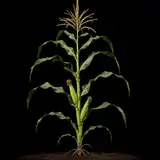
Traditionally grown at corn's edge to draw pollinators and birds; both are tall and compete, so plant at the margins rather than interspersed.
Keep apart
-
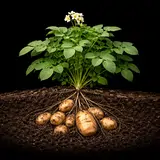
Sunflowers are allelopathic and heavy competitors; potatoes reportedly grow poorly in their root zone and shadow.
- Traditional pairings, thin evidence
-
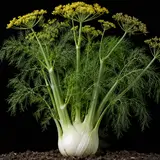
Fennel's allelopathic roots inhibit many neighbors; keep it in its own corner.
-
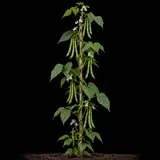
Sunflower root chemistry can inhibit beans, and vigorous beans may also overwhelm the stalks - keep them apart despite the trellis temptation.
Varieties · 19
You pick one when you add Sunflower to your garden. Its days to maturity set your harvest window.
Seed / Confection 3 varieties
Mammoth Grey Stripe
The classic snacking-seed sunflower: towering 8-12 foot plants topped by one enormous head (up to a foot across) of large, grey-and-white striped 'confection' seeds perfect for roasting and for birds.
Variety details for Mammoth Grey Stripe
Single giant golden head to 12 inches wide, packed with large grey-striped seeds.
giantseed-typeedibleconfectionThe go-to variety if you're growing sunflowers to eat.
Mammoth Russian
The historic Russian-bred giant that made sunflower a world seed-and-oil crop: 9-12 foot plants with one huge head of tasty seeds.
Variety details for Mammoth Russian
Towering plant with one large yellow head and a big round seed disk.
giantseed-typeedibleheirloomA dependable, seed-saving heirloom and a favorite for children's gardens and tallest-plant contests.
Mongolian Giant
One of the tallest sunflowers of all, reaching 12-14 feet, with a huge head of unusually large, long seeds prized for snacking.
Variety details for Mongolian Giant
Single enormous head atop a 12-14 foot plant, with big elongated seeds.
giantseed-typeediblelarge-seedA show-stopper and a heavy seed producer for a long season.
Cut-flower / Ornamental 12 varieties
Skyscraper
A towering variety to 12 feet with very large bright-yellow blooms up to 14 inches across - grown chiefly for dramatic height and huge flowers, and it sets edible seed too.
Variety details for Skyscraper
Very tall plant with large golden blooms and a dark center.
gianttalllarge-bloomsingle-stemAutumn Beauty
A branching ornamental that blooms in a warm mix of yellow, bronze, rust, and deep red - often several shades on one plant - over a long season.
Variety details for Autumn Beauty
Multi-branched plant with 6-inch blooms in yellow, bronze, and red tones.
branchingmulticolorornamentalMany 6-inch flowers per plant make it a top cutting and pollinator variety.
Lemon Queen
A tall, branching heirloom with soft lemon-yellow blooms and dark centers, famous as a pollinator favorite - it's the designated variety of the Great Sunflower Project bee-count.
Variety details for Lemon Queen
Many pale lemon-yellow flowers with brown centers on a 5-7 foot branching plant.
branchingpale-yellowpollinatorornamentalFeeds bees generously and sets seed for the birds.
Dwarf / Container 4 varieties
Teddy Bear
A beloved dwarf novelty with fluffy, fully double, pompom-like golden blooms that look like a teddy bear's fur, on compact 2-3 foot plants.
Variety details for Teddy Bear
Fluffy double bright-yellow pompom blooms on a short 2-3 foot plant.
doubleornamentalcontainerPerfect for containers, borders, and children's gardens.
Sunspot
A dwarf with an outsized payoff: full-size 10-inch golden blooms on tiny 2-foot plants, and it sets edible seed too.
Variety details for Sunspot
Large golden blooms with dark centers on a compact 2-foot plant.
large-bloomediblecontainerIdeal for containers and small beds where you still want big flowers and a snack.
Short Stuff
A quick, compact dwarf for pots and small gardens, reaching just 2-3 feet but producing bright, full-size blooms.
Variety details for Short Stuff
Bright yellow blooms with dark centers on a 2-3 foot plant.
earlycontainerornamentalFast and tidy - a good choice for tight spaces and impatient gardeners.
Grower tips
Notes from growers, tagged with the zone they grow in. A person reads every post before it appears.
Nobody has posted about Sunflower yet. The first one usually saves someone a season.
Free account. Your post shows your grower name and zone, never your email.