
Add it to your home screen and it opens full screen: no browser bars, one tap away, and everything stays signed in. Free, nothing to download from an app store.
- Tap the Share button in your browser
- Scroll down and choose “Add to Home Screen”
- Open GrowSomeFood from your home screen
- Open your browser’s menu
- Choose “Add to Home screen” or “Install app”
- Open GrowSomeFood from your home screen
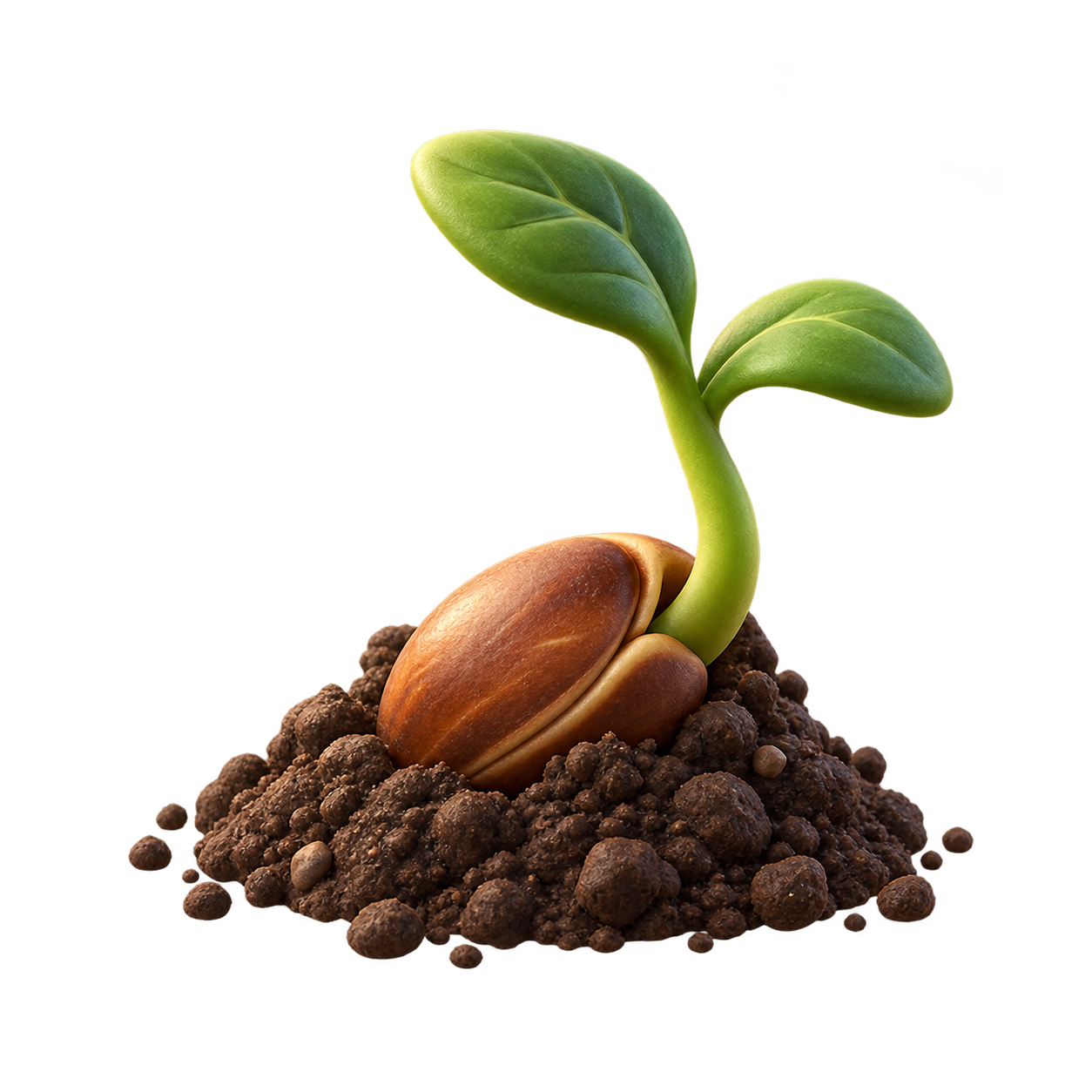
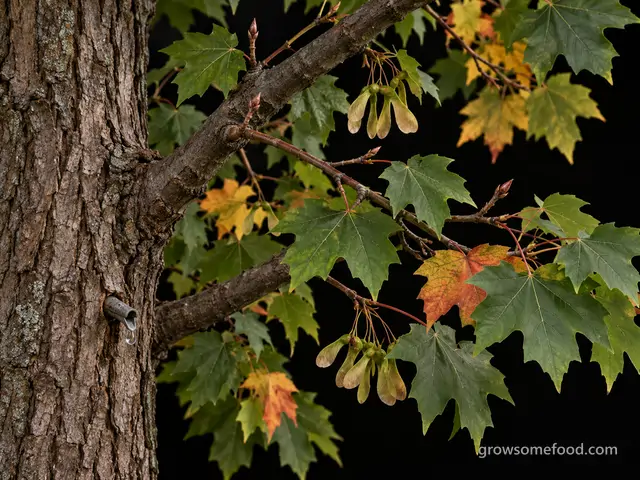
Sugar Maple
The tree behind maple syrup and New England's fiery fall color - a stately, long-lived native shade tree that, decades on, you can tap each late winter for your own syrup.
Safety notes Sugar maple sap and the syrup made from it are safe and delicious. The one real caution is unrelated: maple leaves (especially wilted red maple leaves) are toxic to HORSES, so keep prunings and fallen leaves away from horse pasture. The tree itself is safe to grow and handle, and tapping done correctly does not harm a healthy mature tree.
Overview
Sugar maple (Acer saccharum) is one of the most beloved and useful native trees in North America. It's the source of maple syrup, tapped each late winter across the Northeast and Great Lakes, and the star of the region's legendary fall color, turning brilliant yellow, orange, and fiery red. A large, stately, long-lived shade tree (easily 200+ years and 60-90 feet tall), it also yields prized 'hard maple' timber and supports a wealth of wildlife.
The one thing to knowIt's the source of maple syrup, tapped each late winter across the Northeast and Great Lakes, and the star of the region's legendary fall color, turning brilliant yellow, orange, and fiery red.
Quick facts
- Sprouts in
- 25 daysRange: 14–40 days
- Soil temperature
- 40 °FRange: 34–50 °F
- Height
- 75 ftRange: 60–110 ft
- Spread
- 50 ftRange: 40–60 ft
- Cold
- Takes hard frostdamaged below -45°F
- Heat
- Struggles above 90°F
- Life cycle
- Perennial, lives about 200 years
- Save seeds
- About 150 days after plantingRange: 120–180 days
- Self-sows
- Yes, expect volunteers
- Soil
- Well-drained
- Water
- Medium
- Plant spacing
- 40 ftRange: 30–60 ft
When to plant
Fall sowing is open for 27 more days. Next: spring, Mar 27 to May 22.
- Direct sow Oct 11 – Nov 15 Open now · 27 days leftAbout 2 weeks before to 3 weeks after your first frost (Oct 25 here)Sow fresh seed in fall outdoors; sugar maple seed needs a long cold-moist stratification and germinates the following spring. Seedlings are slow - transplants are far faster to a usable tree.
- Transplant Mar 27 – May 22 Opens in 159 daysAbout 2 weeks before to 6 weeks after your last frost (Apr 10 here)Plant balled-and-burlapped or container trees in early spring into deep, moist, well-drained soil with room to grow; spring planting lets the shallow roots establish before summer heat.
- Transplant Aug 16 – Sep 27 Opens in 301 daysAbout 10 weeks before to 4 weeks before your first frost (Oct 25 here)Fall planting works in cooler zones if done early enough for roots to establish before the ground freezes; water well until dormancy.
Frost here: last around Apr 10 (Mar 27 to Apr 24 most years), first around Oct 25. Zone averages, your own yard may run a week or two either way.
Life stages
Establish, grow, repeat
Getting established and returning each season are different parts of the story.
Stage 1 of 4 · Getting established
Years 1-3 - young tree
About the first 3 years after planting
Care at this stage
-
Water deeply while establishing
Water a young sugar maple deeply and regularly for its first 2-3 years, especially in dry spells - its shallow, wide roots need consistent moisture to establish. Once established it's fairly self-sufficient in decent soil.
-
Mulch the root zone (not the trunk)
A wide ring of mulch keeps the shallow roots cool and moist and protects the trunk from mowers - but keep mulch a few inches back from the bark to prevent rot.
-
Site it with room and away from pavement
Sugar maple is sensitive to road salt, compaction, drought, and reflected heat. Give it a big, open, well-drained spot away from pavement and de-iced roads - it's a forest tree, not a street tree for harsh sites.
Months are typical seasonal windows; climate, variety, and plant age can shift them.
Harvest
- Trunk at least ~10-12 inches in diameter (tappable size), reached at roughly 30-40+ years
- Freeze-thaw weather: nights below freezing, days above 40°F, in late winter - the sap is running
- Clear, faintly sweet sap; stop when it turns cloudy or off-flavored as buds swell
- Tap for sap during the freeze-thaw window · daily
- Tap responsibly to protect the tree
Picking pick as they ripen
Cook with Sugar Maple
Watch out for
4 to know. 1 is high-risk: Asian Longhorned Beetle. 1 is active in October.
Asian Longhorned BeetleSeverity High PestnowSeason: Jun–OctPerfectly round exit holes about 3/8 inch across (wide enough to take a pencil) in the trunk and larger branches; shallow oval egg-laying pits chewed into the bark; coarse sawdust-like frass piled at branch unions, in bark crevices, and at the base of the tree; sap weeping from wounds; dead limbs high in an otherwise healthy canopy.
Acer is this beetle's preferred host genus. Quarantines have been active around Worcester MA, parts of Long Island NY, Clermont County OH, and Charleston SC - check the current APHIS boundaries before moving any maple wood, and treat this as the reason not to haul maple firewood anywhere.
Perfectly round exit holes about 3/8 inch across (wide enough to take a pencil) in the trunk and larger branches; shallow oval egg-laying pits chewed into the bark; coarse sawdust-like frass piled at branch unions, in bark crevices, and at the base of the tree; sap weeping from wounds; dead limbs high in an otherwise healthy canopy. The adult is 1 to 1.5 inches long, glossy black with white spots and very long black-and-white banded antennae, and is out from summer into fall.
Nothing you can do to save the tree - an infested maple is removed and chipped or burned under official direction. If you suspect it, do NOT cut, prune, or move the wood: photograph the beetle or the exit holes and report it to USDA APHIS or your state department of agriculture, which is required for a reportable pest, and let them confirm.
Do not move firewood - buy it where you burn it. Never move maple wood, logs, limbs, nursery stock, or firewood out of an area under quarantine; that is how every US outbreak has spread, and it is against federal and state law. Buy nursery maples from reputable local sources, and look over the trunk and large limbs each summer.
A large black-and-white invasive wood-borer whose preferred host genus is Acer - maple is its first choice, which makes a sugar maple a front-line tree. The larvae tunnel through the heartwood, killing limbs and then the tree. There is no rescue for an infested tree: it is cut down and destroyed. It is a federally reportable pest, and quarantines around known outbreaks make it unlawful to move maple wood, nursery stock, or firewood out of a regulated area.
Verticillium WiltSeverity Medium DiseaseSeason: May–AugOne branch, one limb or one side of a plant wilting, yellowing and browning in summer while the rest carries on normally - the lopsided pattern is the tell - and leaves that wilt and then hang on rather than dropping cleanly.
Sugar maple is a common host, and a tree already stressed by heat, drought or compacted soil goes down fastest. Never replant a maple in the spot where one died of this.
One branch, one limb or one side of a plant wilting, yellowing and browning in summer while the rest carries on normally - the lopsided pattern is the tell - and leaves that wilt and then hang on rather than dropping cleanly. Cut into affected wood and look for olive-green, grey or brown streaking along the grain; in a cut vegetable stem it shows as a ring of discolored dots. On vegetables, lower leaves yellow in a wedge from the margin inward, and the plant wilts at midday but recovers overnight in the early stages.
There is no cure and nothing to spray. On a tree or shrub the aim is to keep it alive long enough to compartmentalize the fungus, which many plants manage for years: prune out dead and wilting branches well below the discolored wood, sanitize the pruners between cuts, water deeply through dry spells, mulch, and feed lightly rather than pushing it with a heavy feed. On vegetables, pull and bin affected plants rather than composting them, and move that crop to clean ground or to containers of fresh mix. Do not replant the same species where one has died.
There is no way to sterilize garden soil of it, so prevention is plant choice and plant vigor. Do not replant a susceptible species where one has already died of it. Grasses, conifers, ginkgo, hawthorn, hornbeam, honeylocust, oak and beech do not get it, and many vegetable varieties carry bred-in resistance - the V in a VFN code on the seed packet. Rotate susceptible vegetables on a long cycle and keep them off ground where the disease has shown. Buy clean stock, avoid wounding roots with spades and machinery, and keep woody plants steadily watered, mulched and only lightly fed, because a vigorous plant walls the fungus off far better than a stressed one.
A soil fungus (Verticillium dahliae and relatives) that enters through the roots and grows upward inside the water-conducting tissue, plugging it from within. The plant is not being eaten or rotted, it is being cut off from its own water supply, which is why the signature symptom is one branch or one side wilting and browning while the rest looks perfectly healthy. Cut into affected wood or stem and the tissue is streaked olive-green, grey or brown. The host range is enormous - maples, redbud, olive, tomato, potato, pepper, eggplant, strawberry and many more - and the fungus survives in soil for years as tough resting structures, so infected ground stays infected. Grasses and conifers do not get it.
Leaf Scorch (Site Stress)Severity Medium DisorderSeason: Jun–AugBrown, dry leaf edges and between-vein browning, especially on the sunny/road side, worsening in heat and drought and over years of urban stress.
Brown, dry leaf edges and between-vein browning, especially on the sunny/road side, worsening in heat and drought and over years of urban stress.
Deep watering and mulch relieve drought scorch; salt- and compaction-caused decline is hard to reverse - improve the root zone and avoid further stress.
Site in cool, moist, deep, uncompacted soil away from pavement and de-icing salt; water deeply in drought and mulch the root zone.
The defining sugar maple problem: browning, crisping leaf margins and early leaf drop caused by drought, heat, reflected heat, compacted soil, or road salt - the tree is intolerant of these stresses.
Tar SpotSeverity Low DiseaseSeason: Jul–SepShiny raised black spots (like drops of tar) on the leaves, sometimes with yellow halos, appearing in late summer.
Shiny raised black spots (like drops of tar) on the leaves, sometimes with yellow halos, appearing in late summer.
None needed - it's cosmetic; leaf sanitation reduces it over time. Fungicides are not warranted for a shade tree.
Rake and remove or compost fallen leaves in fall to reduce next year's spore load; ensure good airflow.
A fungal disease that makes conspicuous raised black, tar-like spots on maple leaves in late summer - dramatic-looking but essentially harmless to the tree.
Good & bad neighbors
Plant nearby
-
A shade-tolerant native understory tree that blooms beneath the maple's high canopy, echoing the natural structure of an eastern hardwood forest.
-
A native understory small tree that flowers and fruits in the dappled shade beneath a maple's canopy - a natural layered woodland-edge combination.
-
A classic northern-hardwood-forest pairing: two keystone, long-lived native shade trees that together anchor a woodland canopy and support enormous wildlife diversity - give each plenty of room.
-
Woodland wildflowers (trillium, ferns, bloodroot)The spring ephemerals and ferns of the maple forest floor thrive in the humus and shade beneath a sugar maple - underplant for a true woodland-garden effect.
Varieties · 4
You pick one when you add Sugar Maple to your garden. Its days to maturity set your harvest window.
Sugar Maple (Acer saccharum)
The wild species: a large, stately 60-90 foot shade tree with dense green summer foliage, brilliant yellow-orange-red fall color, and the classic tappable sap.
Variety details for Sugar Maple (Acer saccharum)
Broad oval canopy of five-lobed leaves, green in summer, blazing yellow to red in fall.
speciesnativesyrupfall-colorThe foundation of the maple-syrup and fall-foliage traditions.
Green Mountain
A tough, heat- and drought-tolerant sugar maple selection with a dense oval crown, dark leathery foliage that resists scorch, and reliable orange-red fall color - a better choice for warmer or drier sites than the wild type.
Variety details for Green Mountain
Dense oval crown of dark leathery leaves turning orange-red in fall.
cultivarheat-tolerantdrought-tolerantfall-colorLegacy
A vigorous, sturdy selection with thick, scorch- and drought-resistant leaves, strong branch structure, and long-lasting red-orange fall color - one of the best cultivars for tougher conditions.
Variety details for Legacy
Broad dense crown of glossy thick leaves with rich red-orange fall color.
cultivarscorch-resistantdrought-tolerantfall-colorSouthern Sugar Maple (Acer floridanum)
A closely related southern native species (sometimes considered a variety) that tolerates the heat and humidity of the Southeast far better than true sugar maple, with similar form and good yellow-orange fall color - the right 'sugar maple' for the South.
Variety details for Southern Sugar Maple (Acer floridanum)
Smaller sugar-maple-like tree with fuzzy-backed leaves and yellow-orange fall color.
speciesnativeheat-tolerantsouthern
Grower tips
Notes from growers, tagged with the zone they grow in. A person reads every post before it appears.
Nobody has posted about Sugar Maple yet. The first one usually saves someone a season.
Free account. Your post shows your grower name and zone, never your email.