Add it to your home screen and it opens full screen: no browser bars, one tap away, and everything stays signed in. Free, nothing to download from an app store.
- Tap the Share button in your browser
- Scroll down and choose “Add to Home Screen”
- Open GrowSomeFood from your home screen
- Open your browser’s menu
- Choose “Add to Home screen” or “Install app”
- Open GrowSomeFood from your home screen
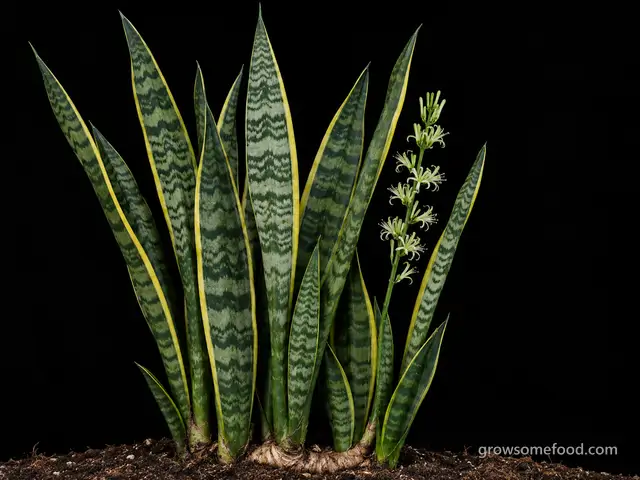
Snake Plant
The hardest houseplant in the world to kill, as long as you stop watering it - stiff upright leaves, real tolerance of dim rooms, and a mild toxicity that is nothing like a true lily's.
Mildly toxic to cats and dogs. All parts contain saponins, so an animal that chews a leaf usually drools, vomits or has loose stools for a day; serious poisoning is rare. Call your vet or an animal poison line anyway - but know this is NOT a true lily, and nothing like the kidney failure a Lilium causes in cats. The sap can irritate skin and eyes, so wash after cutting. Never use a snake plant leaf on a burn: it is dry fibre inside, not aloe gel.
Overview
The one thing to knowSnake plants use CAM photosynthesis - the desert-succulent strategy of opening their pores at night to lose less water - and store water in thick rhizomes underground.
The snake plant (Dracaena trifasciata, sold for decades as Sansevieria trifasciata) is the plant people give to someone who says they kill everything. Stiff, upright, banded grey-green leaves rise straight out of the pot, hold their shape for years, and ask for almost nothing: it tolerates dim corners, dry air, being forgotten, and being left in the same pot until it cracks it.
That toughness has a mechanism. Snake plants use CAM photosynthesis - the desert-succulent strategy of opening their pores at night to lose less water - and store water in thick rhizomes underground. So a plant that has gone six weeks without a drink is fine, while a plant watered every Sunday is quietly rotting from the base. Overwatering is the only common way to kill one, and everything in this guide follows from that.
On safety, the honest calibration matters. All parts contain saponins; a cat or dog that chews a leaf usually drools, vomits, or has loose stools for a day and recovers. That is worth a call to your vet, but it is not the emergency a true lily (Lilium) is - those cause fatal kidney failure in cats, and a snake plant is not remotely related despite the old lily-family filing. If you keep houseplants because a cat rules the house, this is one of the safer things on the shelf.
Quick facts
- Life cycle
- Perennial, lives about 20 years
- Height
- 30 in6 to 48
- Spread
- 14 in6 to 24
- Cold
- Killed by frostdamaged below 50°F
- Heat
- Struggles above 100°F
Part sun or part shade or shade · low water · well-drained soil · 14 in apart (8 to 24) · cuttings or division
When to plant
Nothing is open today. Spring transplanting opens 6 months, Mar 11 to Aug 8.
- Transplant Mar 11 – Aug 8 Opens in 171 daysAbout 4 weeks before to 17 weeks after your last frost (Apr 10 here)The way most of the country grows it: a year-round indoor plant. Pot up or divide in spring and early summer, when growth restarts and a disturbed root ball dries out quickly.
- Transplant May 1 – Jun 24 Opens in 222 daysAbout 3 weeks after to 11 weeks after your last frost (Apr 10 here)Optional summer holiday: move the pot outside into shade once nights stay above 55°F, acclimatizing it out of direct sun. Bring it back indoors in early autumn, well ahead of the first frost.
Frost here: last around Apr 10 (Mar 27 to Apr 24 most years), first around Oct 25. Zone averages, your own yard may run a week or two either way.
Life stages
One stage to settle in, then three that repeat each year. Windows are typical; your zone and weather move them.
Potting up & rooting in
Day 0 to 60- WaterPot it tight, in gritty mix, and wait a week before wateringUse a pot barely wider than the root ball, with a drainage hole - a snake plant in a big pot sits in wet soil it cannot use, and that is what rots it. Fill with cactus or succulent mix, or ordinary potting soil cut with a third perlite or coarse sand. Water once to settle it, then leave it alone until the mix is dry right through.
- InspectAny light from a dim corner to a bright windowThis is the one plant that genuinely lives in low light - a north window, an interior corner, an office with no window at all. It grows faster and colours better in bright indirect light, and will take a few hours of direct sun if you move it there gradually. What it will not take is a cold windowsill in winter.
Watch for- An oversized pot holding wet mix
- Soft or wrinkled leaf bases in the first weeks (rot from the old pot)
Leaf growth & new spears
Mar to Oct, every year- WaterWater only when the pot is bone dry, then soak itevery 3 weeksPush a finger two inches into the mix - if you feel any moisture, wait. When it is dry through, water until it runs from the drainage hole, then empty the saucer. That is roughly every two to four weeks in summer for most homes. Underwatering a snake plant is nearly harmless; overwatering it is the only reliable way to kill one.
- FertilizeFeed twice a year at mostA half-strength balanced houseplant feed once in late spring and once in midsummer is plenty. Snake plants grow slowly by nature and heavy feeding produces soft, floppy leaves rather than more of them.
- InspectWipe the leaves and check the axilsDust settles heavily on those broad flat leaves and dulls them. Wipe both sides with a damp cloth every month or two, and while you are there look down into the tight axils where new spears emerge - that is where mealybugs hide as small white cottony tufts.
- PruneRemove a damaged leaf at the base, never at the tipA cut leaf does not heal or regrow its point; trimming a browned tip leaves you with a blunt-ended leaf for years. If a leaf is damaged, cut the whole thing off at soil level with a clean knife and let a new spear take its place.
Watch for- White cottony mealybugs tucked into the leaf axils
- Leaves flopping outward from a soft base (rot)
- Fine webbing between leaves in dry heat (spider mites)
Occasional bloom & sticky nectar
Apr to Jul, every year- InspectThe sticky drops are nectar, not a leak or a pestA mature, slightly pot-bound snake plant sometimes throws a slim spike of greenish-white tubular flowers, strongly scented at night. It drips clear sticky nectar onto the leaves and the floor below, and every year people mistake this for scale honeydew or a burst leaf. Wipe it up; nothing is wrong. Cut the spent spike off at the base when the flowers brown.
- ProtectIf berries form, take them offFlowers occasionally set small orange berries. They carry the same saponins as the leaves and they are exactly the size and colour a toddler or a cat will go for. Snip the whole stalk off and bin it rather than leaving fallen berries on the floor.
Watch for- Clear sticky drops on leaves and floor (nectar, harmless)
- Orange berries within reach of children or pets
Winter rest
Nov to Feb, every year- WaterAlmost stop wateringIn the short cool days a snake plant barely grows and barely drinks. Stretch watering to every six to eight weeks, or skip it entirely in a cold room. Cold soil plus water is the classic winter kill - far more plants are lost in January than in July.
- ProtectKeep it off the cold glassLeaves are damaged below about 50°F and killed by frost. Move pots back from windowpanes that get icy, away from draughty doors, and bring any summering outdoors well before the first frost - not on the night of it.
Watch for- Mushy, water-soaked patches after a cold night
- Wet mix that has not dried for weeks
Watch out for
5 to know. 1 is high-risk: Rhizome & Root Rot from Overwatering. 3 are active in September.
Rhizome & Root Rot from OverwateringSeverity High DiseasenowLeaves flopping outward instead of standing upright; a soft, brown, water-soaked or foul-smelling leaf base that pulls away with a tug; yellowing that starts at the bottom of the leaf rather than the tip.
Leaves flopping outward instead of standing upright; a soft, brown, water-soaked or foul-smelling leaf base that pulls away with a tug; yellowing that starts at the bottom of the leaf rather than the tip.
Unpot and cut away every soft rhizome and root back to firm white tissue with a clean blade. Let the cuts dry for a day, repot the sound pieces in fresh dry mix, and do not water for a week. If the base is entirely rotten, take clean upper sections of undamaged leaves as cuttings and start the plant again.
Pot tight, in gritty free-draining mix, in a container with a drainage hole; empty the saucer after every watering; and water only when the mix is dry two inches down - every six to eight weeks through winter is normal.
The one thing that kills snake plants. The water-storing rhizomes under the soil rot in mix that stays wet, and because the damage starts underground the plant looks fine until whole leaves let go at the base and fall outward. Worst in winter, in oversized pots, and in pots without a drainage hole.
MealybugsSeverity Medium PestnowOn a snake plant they hide deep in the tight axils where new spears emerge - check there specifically, because the flat leaf faces usually look clean.
White cottony masses tucked into leaf axils, crevices and stem joints, which smear rather than brush off. A sticky shine on the leaves and on the surface beneath the plant, later blackened with sooty mold. Ants running steadily up and down the stems - often the first thing anyone notices. Yellowing, stunted or distorted growth with no other obvious cause. On a plant that has been treated repeatedly and keeps declining, check the roots, because root-dwelling mealybugs are easy to miss entirely.
Deal with small colonies mechanically: dab them with a cotton bud dipped in rubbing alcohol, wipe them off with a damp cloth, or wash the plant down with a firm jet of water aimed into the crevices where they hide. For anything larger, spray insecticidal soap or horticultural oil directly onto the insects, which means getting into the axils and undersides where they actually live, and repeat every seven to ten days for at least three rounds, because the waxy coat protects them and contact sprays do not kill the eggs. Cut out badly infested growth rather than nursing it, deal with the ants at the same time or the colony rebuilds, and test any oil first, since it can burn foliage in heat.
Inspect new plants thoroughly before you buy, and quarantine anything you bring indoors for a few weeks - mealybugs almost always arrive on another plant rather than flying in. Check leaf axils and crevices every few weeks on anything grown under cover, since a colony found early is trivially dealt with. Control the ants that protect and spread them; a sticky barrier on a pot rim or a stem does a lot of work. Keep plants unstressed, avoid heavy nitrogen feeding, and do not leave them standing in hot, dry, stagnant air.
Soft, slow-moving sap-suckers that coat themselves and their egg masses in a white waxy fluff, so a colony looks like scattered specks of cotton wool rather than like insects. They wedge into the places hardest to see and hardest to spray - leaf axils, crevices, stem joints, leaf undersides, the base of the plant, and sometimes the roots - and feed there for weeks, weakening growth and excreting sticky honeydew that blackens with sooty mold. Ants farm them for that honeydew, carry them from plant to plant, and drive off the predators that would otherwise control them. Populations explode in warm, dry, still air, which is why indoor and greenhouse plants suffer worst.
Cold DamageSeverity Medium DisorderMushy, translucent or water-soaked patches appearing a day or two after a cold night, often only on the side that touched the glass; whole leaves collapsing at once.
Mushy, translucent or water-soaked patches appearing a day or two after a cold night, often only on the side that touched the glass; whole leaves collapsing at once.
Cut damaged leaves off at soil level, move the plant somewhere warm and bright, and keep it dry - cold plus wet soil is what turns cold damage into rot. A plant with a sound rhizome usually pushes new spears in spring.
Keep the plant above 50°F, pull pots back from cold glass and draughty doorways in winter, and bring any summering plants indoors in early autumn rather than on the night of the first frost warning.
A tropical plant with water-filled leaves: below about 50°F the tissue is damaged, and a frost bursts it. The usual losses are a pot left on a porch one night too long in autumn, or leaves resting against freezing windowpane glass all winter.
Saponin Poisoning (pets & children)Severity Low DisordernowCalibration matters here: this is an irritant, not a killer, and it is not related to the true lilies (Lilium) that cause fatal kidney failure in cats.
Chewed leaf edges at pet height, drooling, vomiting, diarrhoea or loss of appetite in a cat or dog; a child with plant material or a berry in their mouth.
Call your veterinarian or an animal poison line and describe what was eaten - do not wait to see whether it worsens. For a child, call poison control immediately. Rinse the mouth and offer water; keep a piece of the plant to show whoever you speak to.
Set the pot where a determined cat cannot reach it, cut off flower stalks before berries form, and pick up fallen leaf pieces. Cats that chew houseplants out of boredom are usually diverted by a pot of cat grass.
All parts contain saponins, which irritate the mouth and gut. A cat or dog that chews a leaf typically drools and then vomits or has loose stools for a day; recovery is the normal outcome and serious poisoning is rare. The occasional orange berries carry the same compounds and are the part small children pick up.
Spider MitesSeverity Low PestUncommon on snake plants and almost always a winter problem, when a radiator under a pot dries the air around it.
Wipe or shower the foliage, then treat and repeat on a five-to-seven-day cycle to break the life cycle.
Fine pale stippling or speckling across the upper leaf surface, as though the color had been sandblasted out of it, and later a dull bronze or rusty cast over the whole leaf. Delicate webbing across leaf joints, shoot tips, and undersides - that comes with a heavy infestation and means you caught it late. Leaves that dry, curl, and drop early while the plant looks thirsty no matter how much you water it. Hold a leaf over a sheet of white paper and tap it: the specks that fall and then start walking are mites. With a hand lens, look on the undersides for the mites themselves, pale or reddish, and their round translucent eggs. Damage that shows up first on the hottest, dustiest, most sheltered side of a plant, or on a pot sitting near a radiator indoors.
Start with water. A strong jet aimed at the leaf undersides, repeated every few days for a couple of weeks, knocks populations down and breaks the cycle - on many plants that alone ends it. On anything that regrows quickly, shearing back badly infested growth resets the plant to clean foliage. If it keeps building, spray insecticidal soap or horticultural oil directly onto the undersides where the mites actually live, and repeat every five to seven days for three rounds: contact sprays do not kill the eggs, so a single application always fails. Anything you spray must be labeled for the plant you are treating - follow the label and observe its pre-harvest interval on anything you eat. Predatory mites are an effective release in a greenhouse or on an indoor plant. Above all, correct the heat, dust, and drought stress that caused it, or the mites simply come back.
Do not let plants get drought-stressed - that is the single strongest trigger, and a plant watered steadily through heat is far less likely to have a mite problem at all. Hose the foliage down, undersides included, during hot dry spells: it knocks mites off, washes away the dust they thrive in, and raises the humidity around the plant for a while. Indoors and under cover, keep the air from going hot, dry, and stagnant, wipe or rinse the leaves occasionally, and keep pots away from radiators and heating vents. Inspect any plant carefully before you bring it indoors for winter or set it among others, since mites almost always arrive on something else. Avoid broad-spectrum insecticides: they wipe out the predatory mites, lacewings, and lady beetles that do most of this work for you, and reliably leave you with a worse outbreak than you started with.
Spider mites are not insects but tiny sap-feeding arachnids, smaller than a grain of salt, and you almost always notice the damage before you notice them. They live on the undersides of leaves and drain the cells one at a time, which is why the leaf goes finely stippled with pale dots before it bronzes and dries. They breed explosively in hot, dry, dusty, still air - a generation can pass in a week at high temperature - so a barely visible population becomes a webbed, bronzed plant within a fortnight. Drought-stressed plants and plants wintered indoors in dry heated air are the classic hosts. Broad-spectrum insecticides make matters worse rather than better, because they kill the predatory mites and lady beetles that normally hold mites in check.
Good & bad neighbors
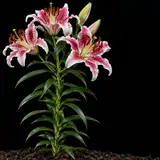
First rule: keep True Lily (Lilium) apart. Not a growing conflict - a cross-reference for cat owners.
Plant nearby
-
The same routine suits both - bright light, gritty mix, water only when bone dry - so they share a sill happily. Worth knowing which is which, though: aloe leaves are plump and triangular in section with soft teeth on the edge and clear gel inside, snake plant leaves are flat, stiff, smooth-edged and full of dry fibre. Only the aloe is any use on a burn.
-
The other genuinely unkillable low-light plant, on the same drought-tolerant watering schedule. Different mild toxicities: a chewed snake plant leaf upsets a pet's stomach (saponins), a chewed ZZ leaf burns its mouth immediately (calcium oxalate).
- Traditional pairings, thin evidence
-
A trailing plant to set beside an upright one, tolerant of the same low light. Pothos wants noticeably more water than a snake plant, so keep them in separate pots and water each on its own schedule rather than together.
Keep apart
-
Not a growing conflict - a cross-reference for cat owners. Snake plant was once filed in the lily family and people still ask whether it is dangerous to cats like a lily. It is not: this one causes a day of stomach upset, while a true Lilium causes fatal kidney failure and should not come into a cat's house at all, cut flowers included.
Varieties · 6
You pick one when you add Snake Plant to your garden. Its days to maturity set your harvest window.
Laurentii
Upright sword leaves, mottled grey-green across the blade with a broad yellow edge, to about 3 ft.
variegatedtallclassicThe plant most people picture: tall dark leaves banded in grey-green with a clean bright yellow margin. Divide it to propagate - leaf cuttings from 'Laurentii' come up plain green, because the yellow edge is a chimera carried in a single cell layer.
Zeylanica
Upright leaves with wavy horizontal bands of dark and pale green, to about 3 ft.
greentalltoughThe plain-green form, banded in light and dark grey-green with no yellow edge. Slightly tougher in low light than the variegated types and unfussy about propagation, since there is no variegation to lose.
Hahnii (Bird's Nest)
Low nest-like rosette of short broad banded leaves, 6-10 inches tall.
dwarfrosettedesk-plantA dwarf rosette form only 6-10 inches tall, spreading into a low funnel of short leaves. The one to use where a full-height plant will not fit - a desk, a shelf, a bathroom windowsill. Golden and silver forms exist and lose their variegation from leaf cuttings like the tall ones.
Moonshine
Wide, flat, silvery grey-green leaves with a fine dark margin, to about 2 ft.
silverlight-sensitiveBroad leaves of pale silvery grey-green with a thin dark edge. The colour is light-dependent: in a dim corner it darkens towards ordinary green, so give this one the brightest indirect spot you have if you want it to stay silver.
Cylindrica (African Spear)
Rigid cylindrical grey-green spears, pointed at the tip, 1-3 ft tall.
cylindricaldistinct-speciesA different species - Dracaena angolensis - sold alongside the flat-leaved ones: stiff round spears, often braided or fanned in the shop. Same care and the same mild saponin toxicity. The braiding is done with wire at the nursery and does not need maintaining; new spears simply grow up through it.
Black Coral
Near-black narrow upright leaves with subtle darker banding, to about 2 ft.
darkcompactVery dark, almost black-green leaves with faint deep-green banding and no yellow edge, staying a little shorter and narrower than 'Zeylanica'. Handsome against pale walls and forgiving of low light.
Grower tips
Notes from growers, tagged with the zone they grow in. A person reads every post before it appears.
Nobody has posted about Snake Plant yet. The first one usually saves someone a season.
Free account. Your post shows your grower name and zone, never your email.