
Add it to your home screen and it opens full screen: no browser bars, one tap away, and everything stays signed in. Free, nothing to download from an app store.
- Tap the Share button in your browser
- Scroll down and choose “Add to Home Screen”
- Open GrowSomeFood from your home screen
- Open your browser’s menu
- Choose “Add to Home screen” or “Install app”
- Open GrowSomeFood from your home screen
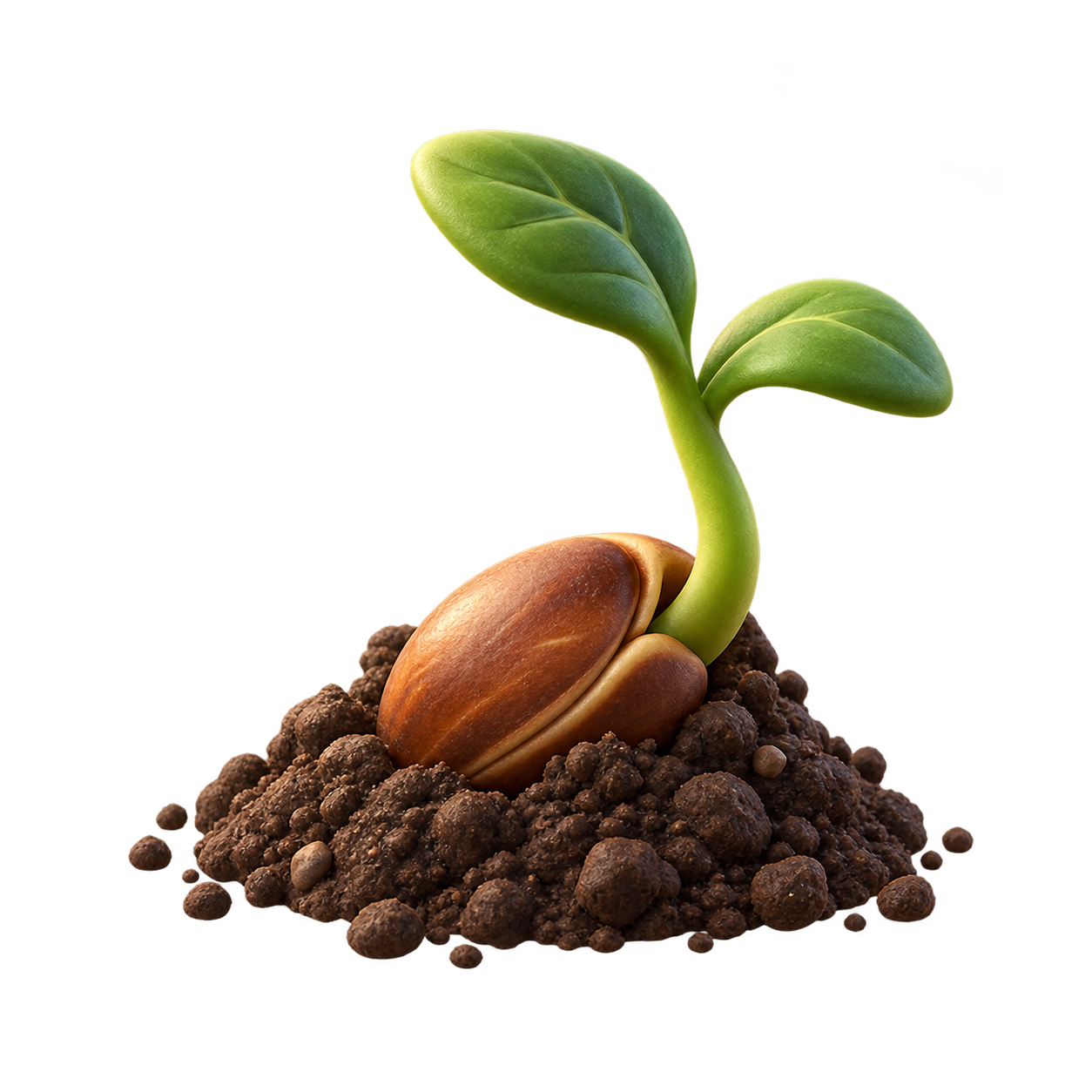
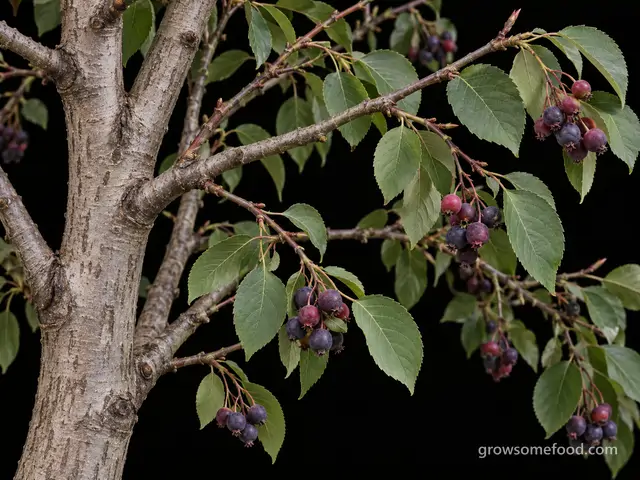
Serviceberry
A four-season native small tree that does everything - clouds of early-spring flowers, delicious June berries, blazing fall color, and handsome bark - beloved by people, pollinators, and birds alike.
Safety notes Serviceberries are delicious and safe to eat raw or cooked - one of the best edible native fruits. Like other members of the rose family (apples, cherries), the small seeds contain trace cyanogenic compounds, so don't deliberately crush and eat large quantities of the seeds; the flesh and whole berries are perfectly safe. That's the only caution - it's an excellent, wholesome fruit.
Overview
Serviceberry (Amelanchier) may be the most well-rounded native small tree there is - a plant that earns its place four seasons a year. This page covers the genus rather than one species, because the plants sold as serviceberry, Juneberry, shadbush, and Saskatoon are several different Amelanchier species with genuinely different sizes, hardiness, and native ranges - the native-state list here is the genus's, not any one species'. In early spring it's smothered in delicate white flowers, among the first blooms of the year (its name 'shadbush' comes from blooming when the shad run upriver). In June it ripens sweet, purple-blue berries - one of the finest edible native fruits, tasting of blueberry with a hint of almond. In fall it blazes orange, red, and gold, and in winter its smooth silvery bark stands out.
Quick facts
- Sprouts in
- 60 daysRange: 30–120 days
- Soil temperature
- 68 °FRange: 60–72 °F
- Height
- 25 ftRange: 6–40 ft
- Spread
- 20 ftRange: 10–30 ft
- Cold
- Takes hard frostdamaged below -40°F
- Heat
- Struggles above 95°F
- Life cycle
- Perennial, lives about 40 years
- Save seeds
- About 75 days after plantingRange: 60–90 days
- Self-sows
- Yes, expect volunteers
- Soil
- Well-drained
- Water
- Medium
- Plant spacing
- 15 ftRange: 8–25 ft
When to plant
Fall sowing is open for 20 more days. Next: spring, Mar 27 to May 22.
- Direct sow Oct 11 – Nov 8 Open now · 20 days leftAbout 2 weeks before to 2 weeks after your first frost (Oct 25 here)Fall-sow cleaned seed outdoors; it needs a long cold-moist stratification and germinates in spring, but is slow - transplants fruit far sooner.
- Transplant Mar 27 – May 22 Opens in 159 daysAbout 2 weeks before to 6 weeks after your last frost (Apr 10 here)Plant container or B&B serviceberry in early spring into moist, well-drained soil in full sun to part shade; it establishes quickly and may fruit within 2-3 years.
- Transplant Aug 16 – Sep 27 Opens in 301 daysAbout 10 weeks before to 4 weeks before your first frost (Oct 25 here)Fall planting works well in cooler zones - plant early enough for roots to establish before hard freeze, and water until dormancy.
Frost here: last around Apr 10 (Mar 27 to Apr 24 most years), first around Oct 25. Zone averages, your own yard may run a week or two either way.
Life stages
Establish, grow, repeat
Getting established and returning each season are different parts of the story.
Stage 1 of 4 · Getting established
Years 1-2 - young tree
About the first 1.5 years after planting
Care at this stage
-
Water regularly while establishing
Keep a new serviceberry evenly watered through its first two years, especially in dry spells. It likes moist, well-drained soil and roots in fairly quickly for a woody plant.
-
Mulch the root zone
A ring of mulch conserves moisture and keeps mowers away; keep it back from the stems. Decide early whether to grow it as a multi-stemmed shrub or prune to a single-trunk small tree.
Months are typical seasonal windows; climate, variety, and plant age can shift them.
Harvest
- Berries deep purple-blue and soft, in early summer (June in most areas)
- Fully colored berries pull off easily and taste sweet, not red and firm
- Pick the berries as they turn deep purple · every 2 days
- Net the tree if you want the crop
Per plant 2 to 30 lbPicking pick as they ripen
Cook with Serviceberry
Watch out for
4 to know. None are high-risk for Serviceberry. None are active in October.
Cedar-Serviceberry RustSeverity Medium DiseaseSeason: May–JulBright orange-yellow spots on leaves, and - the damaging form - swollen, deformed, hard berries with orange fungal growth, worst in wet springs where junipers grow within a few hundred yards.
Severity is Medium for a planting grown for FRUIT and Low for one grown purely as an ornamental - the leaf spots are cosmetic, the fruit infection is a genuine crop loss.
Bright orange-yellow spots on leaves, and - the damaging form - swollen, deformed, hard berries with orange fungal growth, worst in wet springs where junipers grow within a few hundred yards.
There is no cure for an infected berry: pick off and destroy affected fruit and leaves to reduce next year's inoculum. On a landscape tree grown for looks the leaf spotting can be ignored; where you want a crop, siting away from junipers is the real control.
Site serviceberry well away from junipers and red cedars (a few hundred yards where you can), choose more resistant cultivars, and give the plant good airflow.
A group of rose-family rust fungi (Gymnosporangium, including quince rust - relatives of cedar-apple rust) that need nearby junipers or red cedars to complete their life cycle. On the LEAVES the orange spotting is cosmetic. On the FRUIT it is not: infected berries swell, distort, and are ruined, and it is the main disease constraint in commercial Saskatoon production.
Bird Fruit LossSeverity Medium WildlifeSeason: Jun–JulRipening berries disappearing fast, birds swarming the tree as fruit colors, half-eaten berries and droppings.
Ripening berries disappearing fast, birds swarming the tree as fruit colors, half-eaten berries and droppings.
Net promptly; otherwise accept it as feeding wildlife - which is itself a valid and valuable use of the plant.
Drape bird netting over the tree as the berries begin to color, or plant enough to share; a single small unnetted tree rarely leaves fruit for people.
Birds do eat chokeberries, but because the fruit is astringent they usually take it later than sweeter berries, so competition for a human harvest is far milder than with serviceberry or blueberry.
Fire BlightSeverity Low DiseaseSeason: Apr–JunSudden wilting and blackening of blossoms and shoot tips that look burned rather than diseased, shoots bent over into a hook, dark sunken cankers on limbs, and amber bacterial ooze on the bark in warm humid weather.
Uncommon on serviceberry but it is a rose-family host, and this is the one disease here that kills wood rather than just spotting leaves - so the shepherd's-crook shoot tip is worth recognizing. Never prune it in wet weather with unsterilised tools.
Sudden wilting and blackening of blossoms and shoot tips that look burned rather than diseased, shoots bent over into a hook, dark sunken cankers on limbs, and amber bacterial ooze on the bark in warm humid weather.
Cut strikes out at least 8 to 12 inches below the visible damage, sterilizing the saw or pruners between every single cut, and remove and destroy the prunings rather than leaving them lying. Cut cankers out in dry dormant weather. Copper or biological sprays at bloom help in high-pressure areas - use only a product labeled for the crop you are treating, follow the label exactly, and observe the pre-harvest interval before you pick.
Where a resistant option exists for your crop, variety choice matters more than any spray - check before you buy. Avoid heavy nitrogen and hard pruning, both of which force the soft succulent growth the bacteria enter through, and never prune or work the plant in wet weather. Keep susceptible hosts spaced apart rather than planted hard against each other, and do not prune two of them in the same wet spell.
A fast, destructive bacterial disease (Erwinia amylovora) of the rose family. It enters through open blossoms and soft shoot tips in warm, humid weather, then runs back down the shoot, blackening leaves and wood as though scorched and bending the tip into a telltale 'shepherd's crook'. From there it moves into limbs as dark sunken cankers, and it can kill a young tree in a single season. Apple, pear, quince, loquat, hawthorn, serviceberry and toyon are all hosts, and susceptibility varies enormously between species and between varieties.
Powdery MildewSeverity Low DiseaseSeason: Jun–AugRound white powdery spots on the upper leaf surfaces that spread and merge until whole leaves look dusted.
Serviceberry also gets minor rose-family leaf spots in the same humid, crowded or shady conditions, and both are more common in the muggy South. Usually cosmetic on a healthy tree: site it in sun with airflow, rake fallen leaves, and choose resistant cultivars.
Round white powdery spots on the upper leaf surfaces that spread and merge until whole leaves look dusted. It usually starts on the oldest, lowest, most shaded leaves and works upward, so check there first. Look at the undersides too, and at stems, buds, and flower stalks, which get coated as it advances. Leaves that yellow, brown, curl, or go crisp and drop early under the coating. New growth that opens small, crumpled, or twisted where the fungus has reached the shoot tips. On plants where it gets onto the fruit, a dull gray film, russeted or scarred skin, and cracking. Late in the season, tiny dark specks scattered through the white felt - that is the fungus setting up to overwinter on the debris.
Start early: sprays protect healthy tissue, they do not clean up leaves that are already coated. Pick off and bin the worst leaves as soon as you see them, and open the plant up by thinning or pruning so air moves through. On anything that regrows quickly, shearing the whole plant back forces a clean flush and beats spraying. If it keeps spreading, potassium bicarbonate, horticultural oil, or neem applied weekly will hold it - cover both leaf surfaces. Sulfur also works, but it burns the foliage of some plants, should never go on in heat, and must not be mixed with or applied close behind an oil spray. Whatever you use must be labeled for the plant you are treating: follow that label and observe its pre-harvest interval on anything you eat. Do not compost badly infected material. Late-season mildew on a plant that is finishing anyway is usually cosmetic; on a crop still filling out it is worth acting on.
Give plants room. Crowding and still air are the biggest single driver, so space at the full recommended distance, thin seedlings properly, and divide or prune out congested growth until air moves through the plant. Full sun and an open position help; deep shade and a still corner against a wall are where it always starts. Water at the base rather than overhead, and water early in the day so nothing stays damp overnight. Keep plants evenly watered - drought stress at the roots leaves them far more susceptible, even though the fungus itself likes dry air. Go easy on nitrogen, since soft lush growth is the most vulnerable. Where resistant varieties exist for what you are growing, choosing one is the single most effective thing you can do on a plant that mildews every year. Clear infected leaves and stems away at the end of the season rather than composting them.
Powdery mildew is a fungal disease that coats leaves - and often stems, buds, and fruit - in a white-to-gray powder that looks like spilled talcum. It is not one fungus but a large family of them, each fairly specialised to its own group of plants, which is why mildew on one crop rarely jumps to an unrelated one beside it. Unlike most leaf diseases it does not need wet leaves: it thrives on warm dry days followed by humid nights, and it takes hold fastest where plants stand crowded in still air or in shade. The coating blocks light, so heavily covered leaves yellow, brown, and drop early. On many plants that is mostly disfiguring and arrives late enough not to matter; where it strips away the leaves a crop still needed to finish, it costs you size, sweetness, and quality.
Good & bad neighbors
Plant nearby
-
A native edible-fruit pairing with overlapping season and similar taste; both feed pollinators and birds, though blueberry needs acidic soil, so site accordingly.
-
A part-shade native that blooms at the same early season beneath a serviceberry, both feeding early pollinators in a woodland-edge planting.
-
Native ferns and woodland wildflowersUnderplanting serviceberry with native ferns, wild ginger, and spring ephemerals completes a naturalistic woodland-edge layer and supports its caterpillars' ground-dwelling stages.
-
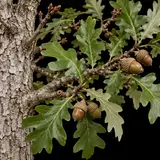
A natural woodland layering: serviceberry flowers and fruits as a small understory tree at the sunny edge of a large oak or maple, mirroring a real eastern forest and stacking wildlife value.
Varieties · 4
You pick one when you add Serviceberry to your garden. Its days to maturity set your harvest window.
Saskatoon - Amelanchier alnifolia 1 variety
Saskatoon (Amelanchier alnifolia)
The commercial fruiting serviceberry of the northern plains - a hardy suckering shrub grown for its large, sweet, abundant berries.
Variety details for Saskatoon (Amelanchier alnifolia)
Suckering shrub 6-12 feet tall with heavy crops of large blue-purple berries.
speciesnativefruit-cropcold-hardyThe best choice where fruit yield is the goal, especially in cold, dry climates; named fruiting varieties like 'Regent' and 'Smoky' exist.
Eastern tree serviceberries 3 varieties
Autumn Brilliance (Amelanchier x grandiflora)
The most popular serviceberry cultivar: a vigorous hybrid with abundant white spring flowers, good June berries, and outstanding fiery-red fall color, typically grown as a multi-stem or single-trunk small tree with better disease resistance than average.
Variety details for Autumn Brilliance (Amelanchier x grandiflora)
Small tree with clouds of white flowers, purple berries, and brilliant orange-red fall foliage.
cultivarbrilliant-fall-colordisease-resistanttree-formDowny Serviceberry (Amelanchier arborea)
A tall (15-25 foot) tree-form native serviceberry of eastern woodlands, more heat-tolerant and a good understory or specimen tree, with white spring flowers, edible June fruit, and good fall color.
Variety details for Downy Serviceberry (Amelanchier arborea)
Upright small tree with smooth gray bark, white flowers, and orange-red fall color.
speciesnativetree-formtallAllegheny Serviceberry (Amelanchier laevis)
An eastern native prized for especially sweet, flavorful berries and bronze-purple new spring growth behind its white flowers - one of the best-tasting serviceberries and a graceful woodland-edge small tree.
Variety details for Allegheny Serviceberry (Amelanchier laevis)
Small tree with white flowers, purple-tinged new leaves, and sweet dark berries.
speciesnativesweet-fruitpurple-new-growth
Grower tips
Notes from growers, tagged with the zone they grow in. A person reads every post before it appears.
Nobody has posted about Serviceberry yet. The first one usually saves someone a season.
Free account. Your post shows your grower name and zone, never your email.