
Add it to your home screen and it opens full screen: no browser bars, one tap away, and everything stays signed in. Free, nothing to download from an app store.
- Tap the Share button in your browser
- Scroll down and choose “Add to Home Screen”
- Open GrowSomeFood from your home screen
- Open your browser’s menu
- Choose “Add to Home screen” or “Install app”
- Open GrowSomeFood from your home screen

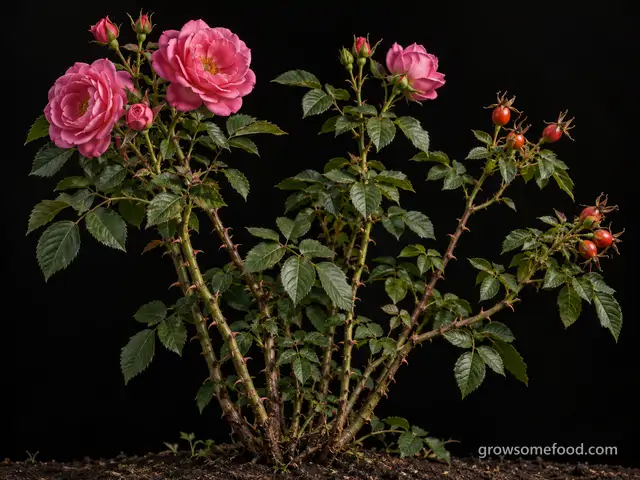
Rose
The world's favorite flower, and far easier than its reputation: modern shrub roses bloom for months on tough, disease-resistant plants, old roses carry the fragrance, and unsprayed bushes throw in edible petals and vitamin-C-rich hips.
Safety notes Roses are non-toxic to people and pets - the real hazards are thorns (wear sturdy gloves and eye protection when pruning) and sprays. Only eat petals or hips from plants that have NEVER been treated with systemic insecticides or fungicides. When using hips, split them and scrape out the seeds and their fine hairs, which irritate skin, mouth, and throat.
Overview
No plant carries more baggage - or more rewards - than the rose. The old caricature of a fussy, spray-dependent diva belongs to one narrow group (exhibition hybrid teas); the modern reality is that landscape and shrub roses like the Knock Out family bloom from spring to frost on tough, disease-resistant bushes that ask little more than sun and an annual haircut. Between the two poles lies an enormous family: fragrant old garden roses, elegant hybrid teas, cluster-flowered floribundas, climbers for arch and fence, and the nearly indestructible rugosas.
Quick facts
- Height
- 48 inRange: 24–144 in
- Spread
- 36 inRange: 24–72 in
- Support
- Grows better on a trellis or stake
- Cold
- Takes hard frostdamaged below -20°F
- Heat
- Struggles above 100°F
- Life cycle
- Perennial, lives about 35 years
- Soil
- Well-drained
- Water
- Medium
- Plant spacing
- 36 inRange: 24–60 in
When to plant
Nothing is open today. Spring transplanting opens 5 months, Mar 13 to May 8.
- Transplant Mar 13 – May 8 Opens in 145 daysAbout 4 weeks before to 4 weeks after your last frost (Apr 10 here)Plant bare-root roses while still dormant, from about 4 weeks before last frost; container roses go in any time after frost. Full sun (6+ hours) and rich, well-drained soil. In cold zones, set a grafted rose's bud union 2-4 inches below grade.
- Transplant Aug 30 – Oct 4 Opens in 315 daysAbout 8 weeks before to 3 weeks before your first frost (Oct 25 here)In milder-winter regions, fall planting lets roots establish over the cool season for a stronger first summer. Water until dormancy and mulch well.
Frost here: last around Apr 10 (Mar 27 to Apr 24 most years), first around Oct 25. Zone averages, your own yard may run a week or two either way.
Life stages
Establish, grow, repeat
Getting established and returning each season are different parts of the story.
Stage 1 of 4 · Getting established
Year 1 - rooting in
Day 0 to 90 after transplanting
Care at this stage
-
Water deeply at the base, not on the leaves
Water a new rose deeply once or twice a week its first season - at the soil, never overhead. Wet foliage is the express lane to black spot, the defining rose disease. A soaker hose or morning watering at the base keeps leaves dry.
-
Mulch 2-3 inches, keeping it off the canes
A mulch ring conserves moisture, suppresses weeds, and blocks black spot spores from splashing up off the soil - one of the cheapest disease controls there is. Keep mulch a few inches back from the base of the canes.
Months are typical seasonal windows; climate, variety, and plant age can shift them.
Harvest
- For the vase: buds fully colored and one-third to one-half open, cut in the cool morning
- For petals: flowers just fully open, from unsprayed plants
- For hips: fruits fully colored red-orange in fall, sweetest after the first light frost
- Cut flowers and deadhead to keep repeat bloomers blooming · weekly
- Stop deadheading in late summer to grow hips
- Patrol for black spot and Japanese beetles · weekly
Picking pick as they ripen
Watch out for
6 to know. 3 are high-risk: Black Spot, Rose Rosette Disease, Japanese Beetles. 2 are active in October.
Black SpotSeverity High DiseaseSeason: May–SepBlack spots with feathery margins on upper leaf surfaces, yellowing around the spots, and progressive defoliation starting low on the plant - accelerating in warm, wet, humid spells.
Rugosas and modern landscape roses (Knock Out family) are strongly resistant; classic hybrid teas are the most susceptible.
Black spots with feathery margins on upper leaf surfaces, yellowing around the spots, and progressive defoliation starting low on the plant - accelerating in warm, wet, humid spells.
Pick off and destroy infected leaves at first sight; preventive fungicides (chlorothalonil, myclobutanil, or sulfur/neem rotations) protect new growth in bad climates but cannot cure existing spots. Long-term, replace chronic victims with resistant cultivars - genetics beats spraying.
Choose resistant varieties (the #1 control), water at the base and in the morning, space and prune for airflow, mulch to stop soil splash, and remove every fallen leaf in fall - never compost rose foliage.
The defining rose disease: a fungus (Diplocarpon rosae) causing round black spots with fringed edges on leaves, which yellow and drop from the bottom of the plant upward, weakening the bush year after year. It needs several hours of leaf wetness to infect, which is why humid-summer climates suffer most, and it overwinters on fallen leaves and infected canes.
Rose Rosette DiseaseSeverity High DiseaseSeason: May–SepBunched, distorted, hyper-thorny growth; shoots that stay unnaturally red instead of maturing green; thickened stems; flowers that ball or distort.
Bunched, distorted, hyper-thorny growth; shoots that stay unnaturally red instead of maturing green; thickened stems; flowers that ball or distort. Distinguish from harmless new growth, which is also red but matures normally.
None - dig out the entire plant including roots, bag it, and discard (don't compost). The soil is safe to replant after remaining roots are removed; it's the mites and living tissue that carry the virus.
Inspect new plants before buying, space roses so canes don't touch, remove any wild multiflora rose nearby, and avoid overhead high-pressure blowing that spreads the mites.
A fatal virus spread by a tiny wind-blown eriophyid mite, producing distorted 'witches'-broom' clusters of growth, excessive thorniness, and persistent bright-red shoots. There is no cure, and an infected plant is a reservoir that infects every rose downwind. Multiflora rose hedgerows are the wild reservoir, so it's worst in the central and eastern US.
Japanese BeetlesSeverity High PestSeason: Jun–AugClusters of shiny metallic beetles massed together on the upper, sunniest foliage and down inside open blooms, heaviest on warm sunny afternoons from around late June.
Roses are one of the beetles' favorite hosts, so expect the full six-to-eight-week wave. In peak weeks some gardeners simply shear the blooms off for a fortnight and let the bush rebloom once it passes - that removes the lure as well as the damage.
Clusters of shiny metallic beetles massed together on the upper, sunniest foliage and down inside open blooms, heaviest on warm sunny afternoons from around late June. Leaves reduced to lace, with the veins left intact and the tissue between them gone - unmistakable, and quite different from the ragged chewing of a caterpillar. Ragged, chewed petals and blooms that never open properly. Beetles that let go and drop straight to the ground when you disturb the plant. Feeding damage on ripening fruit, on the plants they also take fruit from. Whole branches going brown and lacy at the top of a plant while the shaded lower growth stays untouched.
Persistent morning hand-picking into soapy water is the most effective home control there is, and on a vigorous established plant the damage is usually cosmetic and needs nothing else. Neem deters feeding rather than killing, and has to be reapplied. For heavy pressure, spinosad or a targeted insecticide labeled for the plant will work - but time any spray away from bloom and apply it at dusk to protect bees, and observe the pre-harvest interval on anything you eat. On flowering plants, some gardeners simply shear the blooms off for a couple of weeks and let the plant rebloom once the wave has passed, which removes the lure as well as the damage. Young plants and young trees are the ones worth defending: a mature tree or an established vine tolerates several weeks of leaf loss without lasting harm.
Hand-picking is genuinely the main defense in a home garden. Go out in the cool of the morning while the beetles are sluggish, hold a tub of soapy water underneath, and knock them in - they drop when disturbed, so most fall straight into it. Do it daily through the flight: because the beetles call each other in, taking them off early stops a plant becoming a beacon. Do not put pheromone or lure traps anywhere near the garden - they demonstrably pull in far more beetles than they catch. And do not count on lawn grub control: milky spore has performed poorly and inconsistently in field trials across most of the US, and treating your own turf does not reduce the adults feeding on your plants, because they fly in from surrounding properties. Where it is practical, row cover or netting through the peak flight excludes them outright. Otherwise riding out the six-to-eight-week wave is a legitimate strategy, since most established plants absorb the damage.
Japanese beetles are metallic green-and-copper beetles about half an inch long that emerge in early summer and feed for six to eight weeks. They feed in aggregating masses - one beetle's feeding releases a scent that draws in more - so a plant goes from untouched to covered in a couple of days. They chew the soft tissue between the leaf veins and leave the veins standing, so the leaf ends up as a brown lace skeleton, and they shred open flowers and sometimes ripening fruit as well. They work the sunniest upper parts of a plant on warm afternoons. The white C-shaped grubs spend the rest of the year in turf and pasture soil eating grass roots, and the adults then fly in from wherever they hatched, which can be some distance away.
Deer (browse resistance)Severity Medium WildlifenowSeason: Apr–NovGrowth cleanly missing overnight, with the plant browsed back to a level line about as high as a deer can comfortably reach.
Thorns are no defense: deer browse rose buds, blooms, and new shoots eagerly, will prune a rose garden to stubs overnight in high-pressure areas, and nibble the dormant canes in winter. A browsed rose almost always regrows, but in serious deer country an unfenced rose is a donation.
Growth cleanly missing overnight, with the plant browsed back to a level line about as high as a deer can comfortably reach. Ragged, torn stem ends rather than the clean angled cut a rabbit leaves - the single most reliable identifier. Buds and flowers gone while the foliage below is untouched, since deer often take the best part first. Hoof prints and droppings in soft ground near the damage. Repeat visits, with fresh damage each morning once a planting has been found. On young trees, shredded and stripped bark and broken low branches in autumn - that is antler rubbing rather than feeding.
There is no chemical fix, only exclusion and recovery. Get physical protection up immediately after the first damage, because deer return to a known meal, and reinforce or rotate whatever you were relying on before. Most plants regrow from browsing if the crown and roots are intact - feed and water a grazed plant and protect the regrowth while it comes back. What does not recover in the same season is anything whose buds or flowers have been taken, and a young tree whose bark has been rubbed right around the trunk is usually lost. Where deer pressure is genuinely heavy, the honest answer is to fence properly or to grow the plants deer leave alone, rather than to keep replacing losses.
Fencing is the only thing that reliably works. Eight feet is the standard for excluding deer, or two parallel four-foot fences a few feet apart, which they will not jump because they cannot judge the landing. Short of that, cage individual plants: a sturdy wire cage or trunk guard around every young tree, left on until the trunk is thick and the canopy is above browse height, prevents both browsing and antler rubbing and is the single highest-value thing you can do for a young tree. Repellent sprays do help at moderate pressure, but they wash off and deer habituate, so reapply after rain and rotate between different types through the season. Motion-activated sprinklers, scent deterrents, and noise devices work for a while and then stop. Siting matters too: plants close to the house, in daily traffic, and screened behind other planting get browsed less than the same plant out at the boundary.
Deer are the largest garden problem across much of the country, and where pressure is high they set the limit on what you can grow at all. They browse at night and around dawn and dusk, taking tender shoots, leaves, buds, flowers, and fruit within about five feet of the ground, and they come back night after night to anything they have found and liked. Because they have no upper incisors they tear rather than cut, leaving ragged stem ends - that is how you tell deer damage from a rabbit's clean angled cut. In fall, bucks rub their antlers on young trunks and can strip the bark right around a stem, which kills a young tree outright. Palatability varies enormously between plants and between seasons: a herd short of food in late winter eats things it ignores in June, and no plant is truly deer-proof.
Powdery MildewSeverity Medium DiseasenowSeason: May, Jun, Sep, OctRound white powdery spots on the upper leaf surfaces that spread and merge until whole leaves look dusted.
On roses it hits the young leaves, shoots and buds and crumples the new growth, so it shows up in spring and fall rather than high summer, and worst on crowded plants against a wall. Unlike black spot it is disrupted by a hard morning hosing, which washes spores off before they establish. Rarely fatal - mostly a disfigurement of new growth and buds.
Round white powdery spots on the upper leaf surfaces that spread and merge until whole leaves look dusted. It usually starts on the oldest, lowest, most shaded leaves and works upward, so check there first. Look at the undersides too, and at stems, buds, and flower stalks, which get coated as it advances. Leaves that yellow, brown, curl, or go crisp and drop early under the coating. New growth that opens small, crumpled, or twisted where the fungus has reached the shoot tips. On plants where it gets onto the fruit, a dull gray film, russeted or scarred skin, and cracking. Late in the season, tiny dark specks scattered through the white felt - that is the fungus setting up to overwinter on the debris.
Start early: sprays protect healthy tissue, they do not clean up leaves that are already coated. Pick off and bin the worst leaves as soon as you see them, and open the plant up by thinning or pruning so air moves through. On anything that regrows quickly, shearing the whole plant back forces a clean flush and beats spraying. If it keeps spreading, potassium bicarbonate, horticultural oil, or neem applied weekly will hold it - cover both leaf surfaces. Sulfur also works, but it burns the foliage of some plants, should never go on in heat, and must not be mixed with or applied close behind an oil spray. Whatever you use must be labeled for the plant you are treating: follow that label and observe its pre-harvest interval on anything you eat. Do not compost badly infected material. Late-season mildew on a plant that is finishing anyway is usually cosmetic; on a crop still filling out it is worth acting on.
Give plants room. Crowding and still air are the biggest single driver, so space at the full recommended distance, thin seedlings properly, and divide or prune out congested growth until air moves through the plant. Full sun and an open position help; deep shade and a still corner against a wall are where it always starts. Water at the base rather than overhead, and water early in the day so nothing stays damp overnight. Keep plants evenly watered - drought stress at the roots leaves them far more susceptible, even though the fungus itself likes dry air. Go easy on nitrogen, since soft lush growth is the most vulnerable. Where resistant varieties exist for what you are growing, choosing one is the single most effective thing you can do on a plant that mildews every year. Clear infected leaves and stems away at the end of the season rather than composting them.
Powdery mildew is a fungal disease that coats leaves - and often stems, buds, and fruit - in a white-to-gray powder that looks like spilled talcum. It is not one fungus but a large family of them, each fairly specialised to its own group of plants, which is why mildew on one crop rarely jumps to an unrelated one beside it. Unlike most leaf diseases it does not need wet leaves: it thrives on warm dry days followed by humid nights, and it takes hold fastest where plants stand crowded in still air or in shade. The coating blocks light, so heavily covered leaves yellow, brown, and drop early. On many plants that is mostly disfiguring and arrives late enough not to matter; where it strips away the leaves a crop still needed to finish, it costs you size, sweetness, and quality.
AphidsSeverity Medium PestSeason: Apr–JunDense clusters of tiny insects packed onto shoot tips, flower buds, and the undersides of young leaves.
The rose aphid is the classic one: dense green or pink colonies on new shoots and buds in spring. Beneficials usually collapse the population by early summer, which is exactly why broad insecticides make roses worse rather than better.
Dense clusters of tiny insects packed onto shoot tips, flower buds, and the undersides of young leaves. Curled, cupped, or distorted new growth that never opens properly. A sticky shine on the leaves - and on whatever sits under the plant - that later goes black with sooty mold. Tiny white cast skins left behind where a colony has been feeding. Ants running steadily up and down the stems, which is often the first thing you notice. Mottled, streaked, or misshapen leaves that do not grow out can mean a virus the aphids brought with them rather than the feeding itself.
Knock the colonies off with a hard jet of water and repeat every few days - on most plants that alone ends it. Pinch out or prune off the worst-infested tips rather than treating the whole plant. If colonies keep rebuilding, spray insecticidal soap or horticultural oil directly onto the insects, covering leaf undersides, and repeat weekly until they are gone; treat early or late in the day, and never spray a wilted or heat-stressed plant. Avoid broad-spectrum insecticides - they kill the ladybugs, lacewings, and parasitic wasps that were about to solve the problem for you, and aphid numbers usually come back worse afterward. Anything you spray must be labeled for the plant you are treating; follow that label and observe its pre-harvest interval. On anything you eat, wash leaves, heads, and buds well before use, since aphids hide down in crowns, folds, and tight growth.
Go easy on nitrogen: the soft, lush growth that heavy feeding produces is exactly what aphids breed on. Check new growth once a week through spring and early summer so you catch colonies while they are still small, and rub the first few out with your fingers. Leave flowering plants nearby and skip broad-spectrum sprays - ladybugs, lacewings, hoverflies, and parasitic wasps do most of this work for free, and they only stay if there is something for them to eat. Keep ants off the plant where you can, since they protect aphids from those predators. Water steadily so plants are not stressed, and check any new plant over before you bring it home or move it indoors, since aphids usually arrive on something else.
Aphids are small soft-bodied sap-suckers - green, black, gray, pink, or waxy white, and mostly wingless - that gather in dense colonies on the tenderest new growth: shoot tips, buds, and the undersides of young leaves. They breed extremely fast in mild weather, so a few can become hundreds inside a week. Their feeding curls and distorts soft growth, and the sticky honeydew they excrete coats everything below and turns black with sooty mold. Ants often farm and defend the colonies for that honeydew. A few aphids are normal on almost any plant and a healthy plant shrugs them off; only dense, persistent colonies do real damage, and some aphids also spread plant viruses as they feed.
Good & bad neighbors
Plant nearby
-
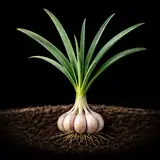
The classic rose companion: garlic underplanted around roses is traditionally held to deter aphids, and the pairing costs nothing - the alliums enjoy the same sun and drainage.
-
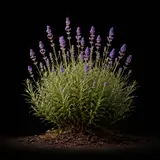
The storybook pairing that actually works horticulturally - both want full sun and sharp drainage, lavender's silver softens the rose's legs, and its bloom bridges rose flushes. Keep the lavender at the dry edge of the rose's watering zone.
- Traditional pairings, thin evidence
-
Low sweet alyssum carpets the bare ankles roses are famous for and draws hoverflies and other beneficials that eat rose aphids.
-
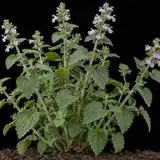
A traditional aphid-deterrent skirt for roses with real repellent chemistry (nepetalactone), and its haze of blue flowers is the classic rose underplanting look. Shear after first bloom to keep it tidy.
-
Same allium logic as garlic with a prettier face - clumps of chives at the rose's feet are traditionally credited with discouraging aphids and black spot, and their purple pompons flatter early roses.
-
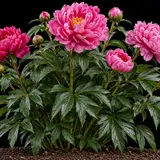
The quintessential romantic border pairing - peonies hand off to the first big rose flush in early summer, and both want full sun and rich, well-drained soil.


Varieties · 9
You pick one when you add Rose to your garden. Its days to maturity set your harvest window.
Landscape & Shrub 2 varieties
Knock Out
The rose that resold America on roses (2000): cherry-red single-to-semi-double blooms nonstop from spring to frost on a self-cleaning, black-spot-resistant 3-4 foot shrub that needs no spraying and only a spring haircut.
Variety details for Knock Out
Cherry-red semi-double flowers blanketing a rounded, glossy-leaved 3-4 foot shrub.
landscape-shrubdisease-resistantrepeat-bloomlow-maintenanceThe whole family (Double, Pink, Sunny) shares the bombproof habit. Not fragrant - the trade-off for the toughness.
Graham Thomas (David Austin)
The flagship English rose: rich butter-yellow, deeply cupped old-fashioned blooms with a fresh tea fragrance, repeating on a tall shrub.
Variety details for Graham Thomas (David Austin)
Cupped, many-petaled golden-yellow blooms of old-fashioned form on tall arching growth.
english-roseyellowfragrantcuppedAustin's English roses marry old-rose form and perfume with modern repeat bloom - Graham Thomas was voted the world's favorite rose in 2009.
Hybrid Tea & Grandiflora 2 varieties
Peace
The most famous rose of the 20th century: huge, high-centered blooms of soft yellow edged and blushed pink, on a vigorous hybrid tea.
Variety details for Peace
Very large pale-gold blooms brushed with pink at the ruffled petal edges.
hybrid-teayellow-pinkhistoriclarge-floweredBud wood was flown out of France ahead of the 1940 invasion, and the rose was christened 'Peace' in 1945. Moderate fragrance; needs standard hybrid tea care and disease vigilance in humid climates.
Mister Lincoln
The benchmark fragrant red: velvety deep-red high-centered blooms on long cutting stems with a knock-you-over damask perfume.
Variety details for Mister Lincoln
Velvety dark-red classic hybrid tea blooms on long, straight stems.
hybrid-tearedvery-fragrantcut-flowerA classic hybrid tea - superb vase rose, but expect to manage black spot in humid regions.
Floribunda 1 variety
Iceberg
The world's favorite white floribunda (1958): clusters of clean white semi-double blooms produced in astonishing quantity on a graceful, nearly thornless bush; also available as a climber.
Variety details for Iceberg
Clusters of pure-white semi-double blooms on an airy, light-green-leaved bush.
whiteprolificlandscapeclassicLight honey scent, good disease resistance for its era, and a landscape workhorse - especially loved in mild-summer climates.
Climber 2 varieties
New Dawn
The classic easy climber (1930, and the first plant ever patented): silvery blush-pink blooms with a fresh apple scent, repeating all season on a vigorous 15-20 foot plant that tolerates less-than-perfect sun and neglect better than nearly any climber.
Variety details for New Dawn
Soft shell-pink 3-inch blooms against glossy dark foliage on long arching canes.
pale-pinkrepeat-bloomshade-tolerantheirloomBlooms on both old and new wood, so pruning mistakes are forgiven.
Zephirine Drouhin
The famous thornless rose (1868): a Bourbon climber with cerise-pink, intensely raspberry-scented blooms on completely smooth canes - the one to plant beside a doorway or path where thorns would be a menace.
Variety details for Zephirine Drouhin
Vivid cerise-pink loosely double blooms on smooth, thornless purplish canes.
bourbonthornlessvery-fragrantheirloomTolerates part shade; black spot needs watching in humid areas.
Rugosa & Wild Roses 2 varieties
Rugosa Rose (Rosa rugosa)
The iron rose: crinkled disease-proof foliage, clove-scented single magenta or white blooms all season, and the biggest, best hips of any rose - cherry-tomato-sized and superb for syrup and tea.
Variety details for Rugosa Rose (Rosa rugosa)
Single, silky magenta-pink or white blooms over wrinkled apple-green leaves; large orange-red hips.
speciesruggedfragrantbest-hipsSurvives zone 3 winters, salt spray, sand, and total neglect; never spray it (the foliage resents chemicals it doesn't need). Suckers into thickets, and has naturalized on some northeastern coasts - give it room and keep it out of wild dunes.
Carolina Rose (Rosa carolina)
A native American wild rose of the East: single, fragrant clear-pink flowers with golden stamens in early summer, followed by small red hips beloved by birds.
Variety details for Carolina Rose (Rosa carolina)
Simple five-petaled pink flowers with golden centers on a low, suckering native shrub.
speciesnativesinglepinkA tough, low, suckering shrub for naturalized plantings and native gardens - proof the rose genus is American too. Rosa virginiana and R. woodsii fill the same role regionally.
Grower tips
Notes from growers, tagged with the zone they grow in. A person reads every post before it appears.
Nobody has posted about Rose yet. The first one usually saves someone a season.
Free account. Your post shows your grower name and zone, never your email.