Add it to your home screen and it opens full screen: no browser bars, one tap away, and everything stays signed in. Free, nothing to download from an app store.
- Tap the Share button in your browser
- Scroll down and choose “Add to Home Screen”
- Open GrowSomeFood from your home screen
- Open your browser’s menu
- Choose “Add to Home screen” or “Install app”
- Open GrowSomeFood from your home screen
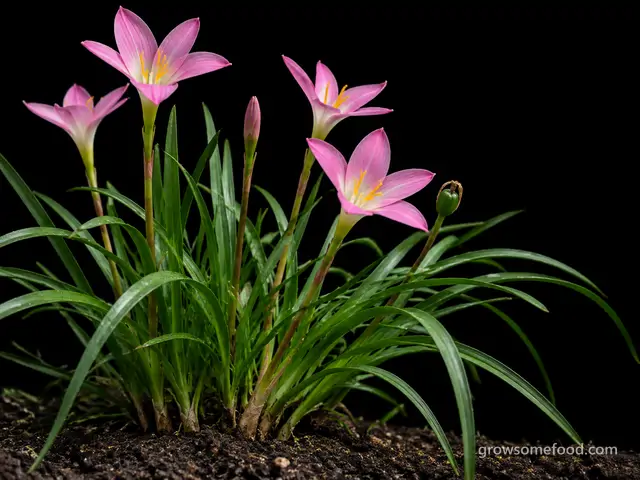
Garden Rain Lily
The rain lilies of the bulb catalog: Mexican, Central and South American Zephyranthes and Habranthus that flush pink, white, yellow or copper flowers a few days after a summer storm. Easy, tender, naturalizing - and toxic in every part, with bulbs that look like shallots.
Every part of these rain lilies - bulb, leaves, flowers, seed - carries amaryllis-family alkaloids, so nothing on the plant is food. The bulbs look like small onions or shallots and have been eaten by mistake; never store or plant them near edible bulbs. Zephyranthes is on the ASPCA toxic list for dogs, cats and horses, and the foliage causes 'staggers' in grazing stock. This is NOT the florist's Easter lily (Lilium longiflorum), a true lily whose pollen causes fatal kidney failure in cats.
Overview
The one thing to knowThey are Zephyranthes and Habranthus species from Mexico, Central America and South America - rosy Z.
Most rain lilies sold as bulbs are not the Southeastern native. They are Zephyranthes and Habranthus species from Mexico, Central America and South America - rosy Z. carinata (long sold as Z. grandiflora), crisp white Z. candida from the Río de la Plata, yellow Z. citrina, the angled pink trumpets of Habranthus robustus, and a run of garden hybrids - and they all share the trick that names the group: three to five days after a soaking rain, a plain tuft of grassy leaves throws up a flush of upfacing funnel flowers on short stems, and a week or two later does it again after the next storm.
They are about as easy as a bulb gets in a warm climate. Plant them shallow in free-draining soil in spring, water deeply and let them dry between soaks, and they multiply into clumps, self-sow where they are happy, and flower on and off from early summer into autumn. They are excellent in pots, along paths, and at the front of a sunny bed, and north of roughly zone 8 they are simply grown as pot bulbs and brought in for the winter. Two things to be clear about: they are not a native planting despite the shared common names - that is Zephyranthes atamasco, which has its own page - and like their daffodil and amaryllis relatives every part of them is toxic, with bulbs that look enough like shallots to have been eaten by mistake.
Quick facts
- Sprouts in
- 21 days14 to 45
- Soil to sprout
- 78 °F68 to 88
- Life cycle
- Perennial, lives about 15 years
- Seed to save
- About 35 days after planting25 to 50
- Height
- 10 in6 to 14
- Spread
- 6 in4 to 10
- Cold
- Killed by frostdamaged below 15°F
- Heat
- Struggles above 105°F
- Self-sows
- Yes, expect volunteers
Full sun or part sun · medium water · well-drained soil · 4 in apart (3 to 6) · direct sow or division or bulbs/cloves
When to plant
Nothing is open today. Spring planting opens 7 months, Apr 10 to May 25.
- Plant tubers Apr 10 – May 25 Opens in 201 daysAbout at to 6 weeks after your last frost (Apr 10 here)The cold edge, and it depends on the species: Z. candida and Habranthus robustus usually come through zone 7 with sharp drainage and a winter mulch, while Z. carinata, Z. citrina and most hybrids should be grown in pots and overwintered frost-free.
Frost here: last around Apr 10 (Mar 27 to Apr 24 most years), first around Oct 25. Zone averages, your own yard may run a week or two either way.
Life stages
One stage to settle in, then three that repeat each year. Windows are typical; your zone and weather move them.
Bulbs rooting in
Day 0 to 60- WaterPlant the bulbs shallow and water them inSet the bulbs one to two inches deep and three to four inches apart in free-draining soil or a gritty potting mix, necks just under the surface, once the ground has warmed in spring. Water them in well, then let the surface dry before watering again. These are warm-season bulbs - nothing much happens until the soil is warm.
- InspectExpect grassy leaves before any flowersNarrow, glossy, grass-like leaves come first and a clump can look like nothing but a tuft of grass for weeks. Bulbs bought at flowering size often bloom their first summer after a good soaking; smaller offsets spend a season building up before they flower.
Watch for- Grassy leaves emerging as bulbs root in
- Nothing showing until the soil warms (normal for a warm-season bulb)
- Soft or mouldy bulbs at planting - discard rather than plant them
Grassy foliage
Mar to Jun, every year- InspectLet the leaves build the bulbNarrow, glossy, grass-like leaves fill out through spring - dark and rush-like on Zephyranthes candida, broader and softer on the pink and yellow species. The foliage feeds the bulb for the season's flowers, so never mow or shear it while it is green, and mark the clump so nobody weeds it out as grass.
- WaterWater deeply, then let it drySoak the ground, let the top inch or two dry out, then soak again. Rain lilies flower on the swing between dry and wet, so a plant kept evenly damp all season makes leaves and few flowers. A light feed of a balanced fertilizer every few weeks helps a container clump keep flushing.
Watch for- Grassy foliage easily mistaken for a weed grass (mark it)
- Leaves cut or mown while still green (they feed the bulb)
- Clumps offsetting into tight clusters
Flushes after summer rain
Jun to Oct, every year- InspectWatch for a flush three to five days after a soakingThis is the whole point of the plant: a deep rain or a thorough drenching after a dry spell brings a crop of buds up together, and they open three to five days later. Each flower lasts a day or two; the flush lasts about a week, and the next storm starts another. Z. candida and the copper Habranthus carry the display latest, into autumn.
- DoDeadhead for tidiness or leave the pods to seedSnap off spent flowers if you want the clump neat, or leave them and collect the flat black seeds as the pods turn papery. Z. candida, Z. citrina and Habranthus seed freely and often self-sow into the surrounding ground; many pink Z. carinata plants are sterile and never set a pod.
Watch for- Buds appearing together a few days after a heavy soaking
- Small bees working the open flowers
- Three-parted seed pods swelling after the flush (leave or remove)
Winter rest
Nov to Feb, every year- ProtectMulch at the cold edge, lift or pot beyond itIn zone 8 a loose winter mulch of leaves or pine straw over the bulbs is usually enough, pulled back as growth starts. In zone 7 only Z. candida and Habranthus robustus are dependable, and only with sharp drainage. Colder than that, grow them in pots moved somewhere frost-free, or lift the bulbs and store them dry.
- WaterKeep them dry while they restCut watering right back once the foliage yellows. A resting bulb draws almost nothing, and cold wet soil in winter kills far more rain lilies than cold alone. Pots overwintering indoors want barely a splash until spring. Z. candida stays nearly evergreen in frost-free areas and simply carries on.
Watch for- Foliage yellowing and dying back (let it finish)
- Waterlogged soil over resting bulbs - the main winter killer
- Evergreen Z. candida foliage burned off by a hard freeze (it returns)
Watch out for
4 to know. 3 are high-risk: Bulbs Mistaken for Onions, Bulb Rot (Summer Waterlogging), Winter Cold Damage. 1 is active in September.
Bulbs Mistaken for OnionsSeverity High DisordernowThe reason this page keeps repeating that the bulbs are not shallots.
These are sold loose and cheaply, they multiply into spare bulbs you set aside, and the spares are exactly what ends up unlabelled in a drawer. Label them the day you lift them.
Unlabelled bulbs anywhere near where food is stored or prepared. Bulbs bought loose, swapped, or dug up and set aside for replanting with nothing on them to say what they are. Children pulling and chewing the grassy leaves or the flowers. Dogs digging in a fresh bulb planting - amaryllid bulbs are a common veterinary poisoning. Horses or livestock with access to the foliage, which causes staggering, tremors and collapse in grazing animals. Anyone gathering wild onions or garlic where these have naturalized into lawns and rough grass.
If any part has been eaten, contact poison control / emergency services (or a vet for an animal) immediately and take a piece of the plant with you rather than guessing at the name; do not wait to see whether symptoms develop. Expect vomiting, drooling, abdominal pain and diarrhoea from a small amount, and worse from a bulb, where the alkaloids concentrate. There is no home remedy, and no amount of cooking, drying or soaking makes any part of the plant safe to eat.
Keep the bulbs out of the kitchen entirely - store and pot them in the shed or garage, never in a drawer, basket or bag where food bulbs live - and label every container the moment you fill it. Crush a leaf before trusting anything grassy: onions and garlic smell powerfully of onion, and rain lilies have no smell at all. Plant them well away from the onion, garlic, shallot and leek beds so nothing can be lifted by mistake. Fence them off from horses and livestock, and site them away from where a dog digs or a small child plays.
Rain-lily bulbs are small, rounded, brown-skinned and necked - they look like shallots or spring-onion bulbs, and the family they belong to, Amaryllidaceae, is the onion and garlic family, so the resemblance is real rather than superficial. Every part of the plant carries lycorine and related alkaloids, and the bulb carries the most. Poisonings happen the ordinary way: loose bulbs left in a kitchen drawer or a paper bag beside real onions, an unlabelled bag from a plant swap, a child pulling something small and grassy. The one test people trust is the right one - crush it, and a true onion or garlic smells unmistakably of onion while a rain lily smells of nothing at all.
Bulb Rot (Summer Waterlogging)Severity High DiseaseThe single most common way these bulbs are lost, and it is nearly always winter rather than summer wet.
They come from climates with a dry season, so plant them in gritty, free-draining ground or a pot, keep them almost dry once the foliage yellows, and never leave an overwintering pot outside where rain fills it.
A planting that fails to reappear at all in its season - the commonest symptom and the last one noticed. Shoots that emerge thin, yellow and stunted, or start up and then collapse. Clumps thinning year on year in the low, wet corner of a bed while the same bulbs thrive on higher ground. Lift a suspect bulb and look: a healthy one is firm and heavy with clean pale scales, a rotting one is soft, brown or blackened, often slimy between the scales, and smells sour. Roots gone brown and stringy rather than firm and pale. Standing water, or a dark permanently damp patch of soil, over the planting after rain.
Nothing brings rotted tissue back, so the work is triage and drainage. Lift the planting, sort the bulbs, and bin every one that is soft, discoloured or foul-smelling rather than composting it. Keep only bulbs that are firm all through, trim any small damaged patch back to clean tissue, let the cut surfaces dry in the air for a day, and replant into free-draining ground or fresh mix somewhere the water moves away. If the same spot rots bulbs every year, do not replant it - raise the bed, open up the soil, or move the planting and grow something else there.
Drainage does nearly all the work. Plant bulbs in ground that drains freely and never stands in water, and where the soil is heavy plant on a raised bed, a berm or a slope, or grow them in containers - a pot needs an open hole and must never be left standing in a full saucer. Set bulbs at the depth the plant actually wants rather than deeper, and keep mulch pulled back from the neck. Water the soil rather than the calendar, and cut watering right back through dormancy when the bulb is not drawing. Never plant a bulb that is already soft, bruised or mouldy, and do not dig or plant in soggy ground.
Bulb rot is not one organism but a group of soil fungi and water molds - Fusarium, Rhizoctonia, Pythium, Phytophthora and others - that live harmlessly in most soils and turn destructive only when the ground stays saturated. A bulb is a swollen food store with no way to shed water, so once the soil around it is airless the scales suffocate, soften and are invaded, and the whole bulb goes brown, mushy and sour-smelling. Dormancy is the dangerous season: a resting bulb draws almost nothing, so it can sit in cold or hot wet ground for weeks with nothing drying it out. The damage is underground and invisible, so the first sign is usually a clump that simply never comes up.
Winter Cold DamageSeverity High DisorderThe hardiness spread inside this group is wide enough to matter: Z.
candida and Habranthus robustus usually hold in zone 7b, most of the pinks and yellows want zone 8, and Z. rosea wants zone 9. Buy by species, mulch at the edge, and keep a few bulbs in a pot as insurance the first winter.
Bulbs that never reappear after a severe winter, while the same planting under mulch, against a wall, or in a warm corner comes up untouched. Foliage blackened or turned to mush by a hard freeze on evergreen and semi-evergreen types. Containers left outdoors that come up empty in spring. Clumps thinning from the exposed edge inward. A season where the plant sends up leaves late and weakly and never flowers - a bulb that survived but was damaged.
Wait before you dig. A bulb whose leaves were blackened by frost is often alive underground and will send up new growth once the cold passes, so cut off the damaged foliage and give it the rest of the season before writing it off. If nothing appears, lift and check at the end of the season: firm bulbs can be replanted somewhere warmer or potted, soft ones go in the bin. There is no treatment for a bulb that actually froze through - the fix is a different site, a mulch, or a pot that comes indoors, and it has to be in place before the next winter.
Know the actual cold-hardiness of what you planted rather than the range printed for the genus, and match it to your zone. In the ground, plant a little deeper than the minimum and put a loose, airy winter mulch of leaves, straw or pine needles over the bulbs at the cold edge of their range, pulling it back as growth starts. Give borderline plantings a sheltered site - a south wall, a raised sunny bed, ground that drains hard so it is never frozen wet. Beyond their hardiness, grow them in containers moved somewhere frost-free and barely watered for the winter, or lift the bulbs and store them dry.
Cold, not heat or drought or any pest, is what sets the northern limit for a tender or semi-hardy bulb. Hardiness varies by species and even by clone, so a planting can sail through mild winters for years and then be lost to one hard freeze - especially where bulbs sit shallow and unmulched in an exposed bed, or in a container, whose rootball freezes from every side at once and offers none of the buffering that open ground gives. Wet cold is far worse than dry cold: saturated soil carries the freeze down to the bulbs and rots whatever the ice did not kill outright.
Mistaken WeedingSeverity Low DisorderWorse here than on most bulbs, because these are usually planted into lawns, path edges and the front of beds - exactly where the mower and the tidy-up go.
A clump is bare grassy leaves for most of the year and only announces itself for a few days after rain.
Tufts of narrow grass-like leaves in beds, borders, lawns or meadows where you know something was planted but can no longer tell what. Grassy clumps in the path of a mower, strimmer, or spring tidy-up. Seedlings you cannot identify appearing near a known clump. A planting that made leaves last year and no flowers this one, or one that is quietly getting smaller each season. Foliage being cut down green rather than left to yellow off in its own time.
There is no fix for what has already been pulled or cut, which is why this is a labelling problem rather than a gardening one. If a clump was sheared rather than dug out, stop cutting it, let the foliage regrow and die back on its own, and expect it to skip a season while it rebuilds. Replant or divide from whatever part of the planting survived, put a marker in before you walk away, and treat the area as no-mow until the leaves have yellowed naturally.
Mark and label the planting, and keep the label legible - that is the whole fix. Learn what the foliage looks like out of bloom so you can tell it from the grasses around it, and photograph the clump while it is flowering to remind yourself where it is. Tell anyone who mows, strims, weeds or tidies for you where it grows, and edge or rope the area if that is what it takes. Leave the leaves alone while they are green, because they are feeding next season's flowers, and flag self-sown volunteers until they are big enough to identify.
Not a pest but one of the commonest ways a small grassy-leaved plant is lost: out of flower its foliage looks exactly like a tuft of weed grass or a sedge, so it gets pulled, hoed, strimmed or mown off by whoever is tidying - often the gardener who planted it, and more often still a helper who has no idea it is there. Each cut costs the plant the leaves it feeds on, and a planting cleared repeatedly simply fades away without ever flowering again. Self-sown seedlings are easier still to lose, since they look like grass seedlings for their first year or two.
Good & bad neighbors
First rule: keep Onion apart. Not a growth conflict but a safety one.
Plant nearby
-
The native cousin, and the reason this page exists. Zephyranthes atamasco is a genuine Southeastern native that flowers white in spring and rests through winter; everything on this page is a Mexican or South American species that flowers in flushes from summer into autumn and is far less cold-hardy. They grow well side by side and extend the rain-lily season from spring to frost - just do not count the ones on this page towards a native planting.
- Traditional pairings, thin evidence
-
A natural partner in a warm-climate bed - both are strappy-leaved, tough and undemanding, and low rain lilies flush around the daylily's feet after each storm. Worth knowing the difference, though: daylily buds and flowers are eaten, and nothing on a rain lily is. Keep them labelled if anyone in the household picks from the garden.
-
A good structural partner for hot, dry, sunny beds. Lantana carries constant colour through the heat while the rain lilies below it are bare between flushes, and both are happy with the same deep-soak-then-dry watering.
-
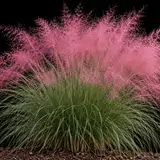
A Gulf-Coast pairing that works: the rain lilies edge the front of the planting and the muhly's autumn haze rises behind them, and both want full sun and sharp drainage. The grassy rain-lily foliage reads as part of the grass planting between flushes.
-
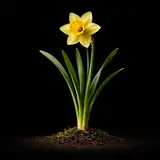
Fellow amaryllis-family bulbs, and also toxic in every part. The two divide the year neatly - daffodils in late winter and spring, rain lilies from midsummer to frost - so a bed can carry bulbs almost all year. Daffodils want the drier summer rest that suits these rain lilies too.
Keep apart
-
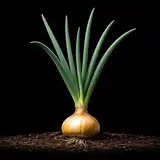
Not a growth conflict but a safety one. Rain-lily bulbs are small, round, brown-skinned and necked, and they belong to the same family as onions and garlic - the resemblance is real, and people have eaten them by mistake. Keep them out of the onion, garlic, shallot and leek beds so nothing gets lifted or stored with food bulbs, and label anything you dig. Crush a leaf if you are unsure: an onion smells like one, a rain lily smells of nothing.
Varieties · 8
You pick one when you add Garden Rain Lily to your garden. Its days to maturity set your harvest window.
Pink summer rain lilies (Zephyranthes carinata) 2 varieties
Pink Rain Lily (Zephyranthes carinata)
Rosy-pink upfacing funnel flowers two to three inches across on short stems above broad grassy leaves.
speciesnon-nativesummer-bloomingrain-triggeredThe familiar pink rain lily, from Mexico and Central America, and the one most often sold - usually under its old name Zephyranthes grandiflora. Rosy-pink upfacing funnel flowers two to three inches across, in flushes a few days after each summer soaking, over broad grassy leaves about ten inches tall. Vigorous, quick to clump, and naturalized in warm regions worldwide. The least cold-hardy of the common rain lilies, wanting zone 8 or warmer in the ground; many plants in commerce are sterile and set no seed, so increase it by offsets. Not a US native and not the Southeastern Atamasco lily. Every part is toxic.
Cuban Zephyr Lily (Zephyranthes rosea)
Small rose-pink upfacing flowers about an inch and a half across, on short stems in autumn.
speciesnon-nativefall-bloomingtenderA smaller, neater pink rain lily from Guatemala and the West Indies, with rose-pink flowers about an inch and a half across in autumn - later and daintier than Z. carinata, which it is constantly confused with in the trade. Tender, wanting zone 9 or warmer in the ground, and a fine pot plant anywhere colder. If a label says 'Zephyranthes rosea' and the flowers are large and early, you almost certainly have Z. carinata instead. Not a US native. Every part is toxic.
White autumn rain lily (Zephyranthes candida) 1 variety
White Rain Lily (Zephyranthes candida)
Crisp white crocus-like flowers over dark, glossy, rush-like evergreen foliage, blooming late summer into autumn.
speciesnon-nativefall-bloomingevergreen-ishThe autumn zephyr lily, from the grasslands of Argentina and Uruguay, and the toughest and most widely planted of the group. Crisp white crocus-like flowers, sometimes flushed pink on the outside, from late summer into autumn, over dark, glossy, rush-like foliage that stays green almost year-round in mild climates. The hardiest rain lily commonly sold - it usually comes through zone 7 with sharp drainage - and the one that seeds and self-sows most freely, which is why it turns up naturalized in old Gulf-Coast lawns. Not a US native. Every part is toxic.
Yellow rain lilies (Zephyranthes citrina) 1 variety
Yellow Rain Lily (Zephyranthes citrina)
Bright lemon-yellow upfacing flowers on short stems above narrow grassy leaves, in late summer and autumn.
speciesnon-nativefall-bloomingrain-triggeredThe yellow rain lily: bright lemon to golden upfacing flowers on short stems, flushing after late-summer and autumn rains. A South American species long naturalized in Mexico and the Yucatan and widely grown across the Gulf South, where it seeds itself about generously. Wants zone 8 or warmer to stay in the ground, and is excellent in pots elsewhere. One of the parents of the pale yellow hybrid 'Ajax'. Not a US native. Every part is toxic.
Habranthus - the angled-flower rain lilies 2 varieties
Habranthus robustus
Large soft-pink funnel flowers held at an angle on short stems, paling towards the throat, over grassy leaves.
speciesnon-nativepinksummer-bloomingThe big pink rain lily of Argentina, Brazil and Uruguay, and a different genus from Zephyranthes though grown identically. Its flowers are the largest of the common rain lilies - soft pink, paling to near-white in the throat - and they are held at an angle rather than straight up, with stamens of four different lengths, which is how Habranthus is told from Zephyranthes. Flushes after summer storms, seeds freely and self-sows, and is among the hardier rain lilies, usually holding in zone 7b with drainage. Not a US native. Every part is toxic.
Copper Lily (Habranthus tubispathus)
Small coppery-orange flowers with a yellow throat, bronzed outside, held at an angle on short stems.
speciesnon-nativecopperfall-bloomingThe little copper lily: coppery-orange to bronze flowers with a yellow throat, bronzed on the outside, held at an angle on short stems after late-summer and autumn rains. A South American species from Argentina, Uruguay and Chile that has been naturalized around the Gulf for so long - the long-established Texas population is sometimes treated as var. texensis - that whether any of it is truly native remains disputed, so it is listed here as an introduced garden bulb rather than as a native planting. Tough, seeds freely, and hardy to about zone 7b with drainage. Every part is toxic.
Named garden hybrids 2 varieties
Ajax
Pale primrose-yellow upfacing flowers on short stems above dark, narrow, rush-like foliage.
hybridnon-nativeyellowsummer-bloomingAn old and very good hybrid of Zephyranthes candida and Z. citrina: pale primrose-yellow flowers, softer than citrina's gold, over the dark narrow foliage it gets from candida. Vigorous, free-flowering through summer and autumn, and hardier than most of the yellow rain lilies thanks to its candida parent, holding in about zone 7b with drainage. Sterile or near-sterile like most of these crosses, so it is increased only by offsets. Not a US native. Every part is toxic.
Labuffarosea
Unusually large deep-pink upfacing funnel flowers, up to three inches across, held clear of the foliage.
hybridnon-nativepinksummer-bloomingA large-flowered pink selection of Zephyranthes carinata affinity, collected in northern Mexico and widely grown in the Gulf South, where its size makes it the showiest of the pinks - flowers can reach three inches across on stems held clear of the leaves. Sometimes sold as 'La Bufa Rosa'. Vigorous and quick to clump, but tender like its Mexican parentage suggests: give it zone 8 or warmer in the ground, or a pot. Increased by offsets. Not a US native. Every part is toxic.
Grower tips
Notes from growers, tagged with the zone they grow in. A person reads every post before it appears.
Nobody has posted about Garden Rain Lily yet. The first one usually saves someone a season.
Free account. Your post shows your grower name and zone, never your email.