
Add it to your home screen and it opens full screen: no browser bars, one tap away, and everything stays signed in. Free, nothing to download from an app store.
- Tap the Share button in your browser
- Scroll down and choose “Add to Home Screen”
- Open GrowSomeFood from your home screen
- Open your browser’s menu
- Choose “Add to Home screen” or “Install app”
- Open GrowSomeFood from your home screen

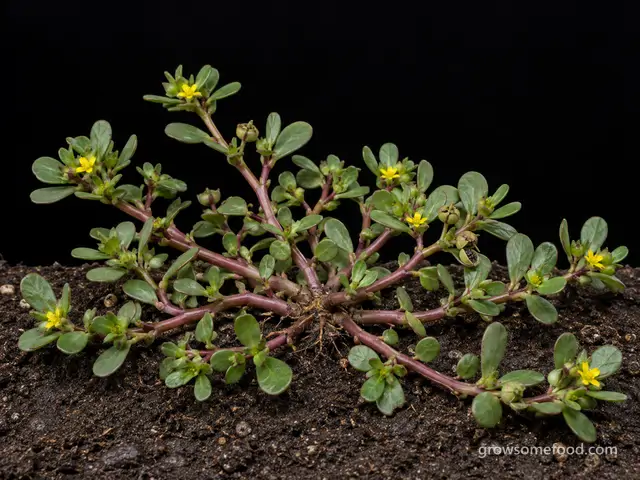
Purslane
A humble sidewalk-crack weed that happens to be the richest source of omega-3s among leafy green vegetables - a crunchy, lemony, heat-proof succulent green eaten as a delicacy around the world.
Safety notes Purslane is a safe, edible succulent - the fleshy leaves and stems are eaten raw or cooked, and are rich in omega-3s. Two notes: (1) It is high in OXALATES, so eat in normal amounts and moderate if prone to kidney stones. (2) Identify it correctly - true purslane has smooth, fleshy, red-tinged stems, paddle-shaped leaves, and NO milky sap. Do NOT confuse it with prostrate SPURGE, a flat look-alike whose thin stems ooze MILKY SAP when broken (spurge is toxic). The milky-sap test is decisive.
Overview
Purslane (Portulaca oleracea) is the ultimate 'weed that's actually a superfood.' You'll find this low, sprawling succulent in sidewalk cracks, driveways, and hot dry garden soil all summer, and most Americans yank it out - while much of the rest of the world grows and cherishes it. It's a genuine delicacy: the plump, fleshy leaves and reddish stems are crunchy and pleasantly lemony-tangy, delicious raw in salads or cooked and pickled, and it's a traditional vegetable across Mexico ('verdolaga'), the Mediterranean, the Middle East, and Asia.
The one thing to know' You'll find this low, sprawling succulent in sidewalk cracks, driveways, and hot dry garden soil all summer, and most Americans yank it out - while much of the rest of the world grows and cherishes it.
Quick facts
- Sprouts in
- 10 daysRange: 5–18 days
- Soil temperature
- 80 °FRange: 70–90 °F
- Height
- 5 inRange: 2–9 in
- Spread
- 16 inRange: 8–24 in
- Cold
- Killed by frostdamaged below 32°F
- Heat
- Struggles above 110°F
- Life cycle
- Annual
- Save seeds
- About 55 days after plantingRange: 40–75 days
- Self-sows
- Yes, expect volunteers
- Soil
- Well-drained
- Water
- Low
- Plant spacing
- 10 inRange: 6–16 in
When to plant
Nothing is open today. Summer sowing opens 6 months, Apr 24 to Jun 19.
- Direct sow Apr 24 – Jun 19 Opens in 186 daysAbout 2 weeks after to 10 weeks after your last frost (Apr 10 here)If growing on purpose, sow in warm soil (70F+) well after last frost in full sun; it needs heat to germinate. Far more often it volunteers abundantly in summer and needs no sowing. Improved large-leaved culinary strains ('golden purslane') are sold as a crop.
Frost here: last around Apr 10 (Mar 27 to Apr 24 most years), first around Oct 25. Zone averages, your own yard may run a week or two either way.
Life stages
From the first start to harvest
Follow the growing sequence. Choose a stage to see its care and signs to watch for.
Stage 1 of 3 · The growing sequence
Warm-season sprouting
Day 0 to 25 from sowing
Care at this stage
-
Recognize the succulent seedling
Purslane germinates only in warm soil (it's a heat lover), forming small fleshy paddle-shaped leaves on smooth, often reddish stems. Confirm NO milky sap (that would be toxic spurge). It needs no care - it thrives on heat and neglect.
Stages can overlap; weather, variety, and growing conditions change the pace.
Harvest
- Plump, tender fleshy stems and leaves in the heat of summer - the prime eating stage
- For seed: ripe seed capsules in late summer
- Snip fleshy stems and leaves for eating · every 10 days
- A heat-proof succulent green
Picking cut and it regrows
Cook with Purslane
Watch out for
3 to know. None are high-risk for Purslane. None are active in October.
Confusion with SpurgeSeverity Medium DisorderSeason: Jun–SepA flat purslane look-alike with THIN, HAIRY stems that ooze MILKY WHITE SAP when broken - that's toxic spurge, not purslane.
A flat purslane look-alike with THIN, HAIRY stems that ooze MILKY WHITE SAP when broken - that's toxic spurge, not purslane.
Don't harvest misidentified plants; learn the sap test before foraging purslane. (Spurge sap can also irritate skin and eyes.)
Use the milky-sap test: purslane has smooth, fleshy, sap-free stems and plump leaves; spurge is thin, hairy, and bleeds white. Never eat a milky-sapped plant.
Not a threat to the plant but a forager safety issue: purslane is easily confused by beginners with prostrate spurge (Euphorbia), a similar flat summer weed that is TOXIC and has irritating milky sap.
Fragment Regrowth & Self-SeedingSeverity Medium DisorderSeason: Jun–SepCut or hoed pieces re-rooting into new plants, and heavy volunteer seedlings each summer.
Cut or hoed pieces re-rooting into new plants, and heavy volunteer seedlings each summer.
Pull and fully remove plants and pieces, ideally before seeding; solarizing or dense planting reduces the summer seed-bank flush.
Remove WHOLE plants and fragments (don't leave pieces) before they seed; harvest and eat rather than fight it.
Not a pest but the defining weed trait: purslane re-roots from broken stem pieces and self-sows tens of thousands of long-lived seeds, so hoeing and leaving fragments actually spreads it.
Oxalic Acid ContentSeverity Low DisorderSeason: Jun–AugN/A - a dietary consideration; the sour, lemony taste itself signals the oxalic acid, which is stronger in older and bolted leaves.
N/A - a dietary consideration; the sour, lemony taste itself signals the oxalic acid, which is stronger in older and bolted leaves.
Cook rather than eat large amounts raw; otherwise no action needed - dock is a healthful tangy green in sensible portions.
Favor young leaves, eat in moderation, and cook older leaves (changing the cooking water) to reduce oxalates; moderate it if prone to kidney stones or kidney issues.
A food-safety note rather than a plant problem: curly dock's lemony sourness is oxalic acid, so the leaves are eaten in moderation (like spinach, rhubarb, and sorrel), not as a bulk green.
Good & bad neighbors
All of these are traditional pairings. The evidence is thin, so treat them as a nudge, not a rule.
Plant nearby
-
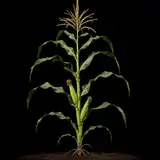
A classic warm-season garden volunteer among corn and other summer crops; its low succulent mats even act as a living mulch (a traditional 'three-sisters'-adjacent green), harvested young for free food.
-
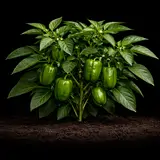
Both love heat and full sun; purslane's low succulent growth shades soil around heat-loving crops like peppers and is harvested as a bonus green (kept from crowding seedlings).
-
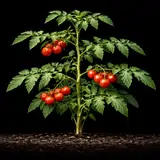
A summer-heat volunteer that thrives in the same warm, sunny beds; harvested young it's free omega-3-rich greens alongside the tomatoes, though it should be kept in check so it doesn't compete.
Varieties · 2
You pick one when you add Purslane to your garden. Its days to maturity set your harvest window.
Common Purslane (Portulaca oleracea)
The wild sprawling purslane: low, mat-forming succulent with smooth reddish stems, plump paddle leaves, and tiny yellow flowers.
Variety details for Common Purslane (Portulaca oleracea)
Low sprawling mats of fleshy paddle-shaped leaves on smooth red-tinged stems.
speciesannualsucculentwildThe ubiquitous summer 'weed' that's a crunchy, tangy, omega-3-rich edible green.
Golden / Culinary Purslane (P. oleracea var. sativa)
Improved culinary strains ('golden purslane,' upright/large-leaved types) grown deliberately as a warm-season salad crop - bigger, more tender, and more upright than the wild weed, and easier to harvest.
Variety details for Golden / Culinary Purslane (P. oleracea var. sativa)
More upright plants with larger, sometimes golden-green fleshy leaves.
cultivateduprightlarge-leavedgolden
Grower tips
Notes from growers, tagged with the zone they grow in. A person reads every post before it appears.
Nobody has posted about Purslane yet. The first one usually saves someone a season.
Free account. Your post shows your grower name and zone, never your email.