Add it to your home screen and it opens full screen: no browser bars, one tap away, and everything stays signed in. Free, nothing to download from an app store.
- Tap the Share button in your browser
- Scroll down and choose “Add to Home Screen”
- Open GrowSomeFood from your home screen
- Open your browser’s menu
- Choose “Add to Home screen” or “Install app”
- Open GrowSomeFood from your home screen
Prickly Pear
Prickly pear is a valuable edible; the hazard is physical, not chemical. Every areole carries obvious spines plus tiny, near-invisible barbed GLOCHIDS that detach at a touch and lodge in skin, lips, and throat - always handle with tongs or thick gloves, and burn, scrub, or thickly peel off every glochid before eating. Biting an unpeeled fruit is the classic painful mistake. The tuna seeds are hard and pass undigested, so eat the fruit in moderation and strain or spit the seeds.
Overview
A tough, spiny, all-American cactus that's also a genuine two-in-one food crop - young pads as the vegetable 'nopales,' jewel-toned fruit as the sweet 'tuna' - hardy enough to grow well beyond the desert, and asking almost nothing but sun, sharp drainage, and respect for its near-invisible glochids.
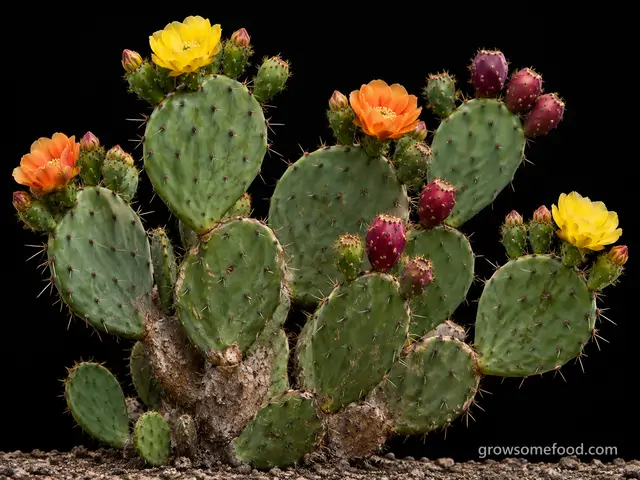
Prickly pear (Opuntia) is the cactus most gardeners can actually grow — and eat. Its flat, paddle-shaped green pads and jewel-toned fruit are icons of the Southwest, but the genus is astonishingly widespread: species are native across most of the United States, and the eastern prickly pear (O. humifusa) grows wild from the Great Plains through the Midwest and East into the Southeast, tolerating hard winters that would seem impossible for a cactus. It's about as tough and drought-proof as a plant gets, thriving on heat, poor rocky soil, and total neglect.
It's also a real two-in-one food crop with deep roots in Mexican and Southwestern cooking. The young spring pads — nopales — are a mild, tangy, okra-like vegetable, and the ripe fruit — tuna — is sweet and vivid, eaten fresh or made into juice, syrup, and magenta jelly. Both come with one non-negotiable rule: the plant defends itself not just with obvious spines but with tiny, near-invisible barbed hairs called glochids that detach at a touch and lodge maddeningly in skin. Handle everything with tongs and thick gloves, and always burn or scrub off the glochids before eating. Master that, give it sun and sharp drainage, and prickly pear is a striking, edible, nearly indestructible native.
At a glance
- Sun
- Full sun
- Water
- Low
- Spacing
- 24–96 in (typ. 48)
- Mature height
- 6–84 in (typ. 24)
- Start by
- Direct sow · Transplant · Cuttings
- Frost
- Hardy
- Germination
- 14–120 days (typ. 40) @ 70–90 °F (typ. 80)
- Spread
- 18–120 in (typ. 48)
- Soil
- Well-drained
- Temperature
- Damaged below -20°F · struggles above 115°F
- Seed ready
- 90–150 days (typ. 120) (for saving)
- Self-sows
- Yes — expect volunteers
When to plant
Zone 7a typical frost: last Apr 10 · first Oct 25 (spring frost runs Mar 27–Apr 24 in a typical spread of years)
Life stages
- Rooting a pad cutting day 0–45 from transplant
-
Callus a cut pad, then plant it dryThe classic way to start prickly pear: cut a mature pad, let the cut end dry and callus for 1-2 weeks in shade (this prevents rot), then set the calloused end an inch or two into gritty, well-drained soil. Handle with tongs/thick gloves - glochids.
-
Water sparingly - dry is safer than wetGive a rooting pad only a little water; too much rots it before it roots. Once roots form (a month or so), it's extraordinarily drought-tolerant. Overwatering and wet soil are the only reliable ways to kill a prickly pear.
Rot at the base from overwatering or planting a fresh (un-calloused) cutPad falling over before it roots (prop it upright) -
Callus a cut pad, then plant it dry
- Pad growth (spring/summer) Apr, May, Jun, Jul (yearly)
-
Harvest young pads (nopales) in springevery 14 dNew pads in spring, while young, tender, and bright green (about hand-sized, before they toughen), are the edible 'nopales.' Cut them off at the joint with tongs in the cool morning when they're least mucilaginous, then de-spine and de-glochid before cooking. Taking pads also shapes the plant.
-
Little maintenance - just watch drainageEstablished prickly pear needs almost no care through the growing season - no feeding, essentially no watering in most climates. Just make sure it never sits in wet soil.
Cochineal scale (white cottony masses on the pads)Soft, yellowing, or shriveling pads (usually rot from wet soil) -
Harvest young pads (nopales) in springevery 14 d
- Summer bloom May, Jun, Jul (yearly)
-
Big waxy flowers for pollinators (and future fruit)Showy waxy yellow, orange, or pink flowers open along the pad edges in early summer, drawing bees and other pollinators. These become the fruit; enjoy the bloom and let the pollinators do their work.
-
Petals are edible tooThe flower petals are edible and can be added to salads or dried for tea - a minor bonus harvest that still leaves plenty of flowers to set fruit.
Bees and native pollinators working the flowersPoor fruit set if flowers are damaged or the season is very dry -
Big waxy flowers for pollinators (and future fruit)
- Fruit ripening (late summer-fall) Aug, Sep, Oct (yearly)
-
Pick ripe 'tuna' fruit - carefullyevery 7 dThe egg-shaped fruits ('tunas') ripen from green to deep red, purple, or yellow-orange in late summer and fall. Twist them off with tongs when fully colored and slightly soft. CRITICAL: they're covered in glochids - never touch bare-handed. Burn, scrub, or thickly peel off all glochids before eating.
-
De-glochid everything before useWhether harvesting pads or fruit, removing the glochids is the essential step - singe over a flame, scrub under running water with a brush, or peel thickly. Skipping this is the classic painful prickly-pear mistake.
Glochids on hands and lips (handle only with tongs/gloves)Birds and wildlife taking ripe fruit firstFruit dropping and self-sowing seedlings -
Pick ripe 'tuna' fruit - carefullyevery 7 d
- Winter rest Jan, Feb, Mar, Nov, Dec (yearly)
-
Keep it dry over winter - cold-hardy types shrivel and rehydrateHardy prickly pears (like O. humifusa) survive hard winters by dehydrating - the pads go limp, wrinkled, purplish, and lie flat, looking dead. This is NORMAL winter behavior; they plump back up in spring. Keep the soil dry; wet + cold is what kills them, not cold alone.
-
Do NOT water in winterDry, cold-dormant prickly pear is very hardy; the same plant sitting in cold wet soil rots. Withhold water entirely in winter, especially for the cold-hardy eastern and plains species.
Shriveled, flat, purplish winter pads (normal - not dead)Rot from wet winter soil (the real danger, not the cold) -
Keep it dry over winter - cold-hardy types shrivel and rehydrate
Harvest
- Style
- Repeated picking
- First production
- 1–3 yrs (typ. 2)
- Nopales (pads): new pads young, tender, and bright green, hand-sized, in spring before they toughen
- Tuna (fruit): fully colored (red, purple, or yellow-orange), slightly soft, easily twisted off - in late summer/fall
- Glochids removed from everything before eating
Watch out for
Root Rot High
Root rot is not one organism but a group of soil fungi and water molds - Pythium, Phytophthora, Fusarium, Rhizoctonia and others - that sit harmlessly in most soils and only turn destructive when the ground stays saturated. Waterlogged soil drives the air out, the roots suffocate, and the weakened tissue is invaded and goes soft, brown, and stringy. Because the damage is underground you usually see it first as something that looks like drought: wilting, yellowing, stunting, a plant that does not respond to being watered. Overwatering, heavy compacted ground, a low spot that collects runoff, a pot with no drainage or a saucer left standing full, and cold wet soil in winter are the usual causes. Once roots have actually rotted there is no cure - this is a problem you prevent rather than treat.
Watch for: Wilting in the middle of the day on a plant whose soil is damp - the classic tell, and the reason people water a rotting plant and finish it off. Leaves yellowing from the bottom up, dull off-color foliage, and growth that stalls for no visible reason. Whole shoots, or one side of the plant, collapsing while the rest still looks fine. Soft, dark, or mushy tissue at the base of the stem or at the crown, sometimes with a sour smell. Lift a failing plant and look at the roots: healthy ones are firm and pale, rotted ones are brown or black and slimy, and the outer layer slips off between your fingers leaving a thread of core behind. Seedlings that topple over at soil level are the same problem, called damping-off.
Prevent: Drainage is the whole defense. Match the plant to the site first - something that wants sharp drainage will not survive heavy clay or a low, water-collecting spot however well you tend it. Where the ground is heavy, plant on a raised bed, berm, or slope, or grow in a container. Set plants at the depth they were already growing, since burying the crown or the root flare is a common cause of rot, and keep mulch pulled back a few inches from the stem base instead of piled against it. Water the soil rather than the calendar: check that the top inch or two is dry before watering again, cut back hard in cool weather and winter dormancy, and never leave a pot standing in a full saucer. Do not plant or dig in soggy ground, and go easy on rich amendments for plants that want it lean. Rotate annual crops, and start with clean healthy plants and fresh mix.
Treat: There is no cure for tissue that has already rotted, so act on the conditions rather than looking for a spray. Stop watering at once and fix the drainage - open up compacted soil, or move the plant to a raised, sharply drained position or a container. Lift a badly affected plant, cut away every soft dark root and rotted section with a clean blade back to firm pale tissue, and replant only the healthy parts into fresh free-draining soil or mix. Often the better move is to give up on the plant and save its offspring instead: cuttings, offsets, or divisions taken from firm healthy growth root readily and give you a clean start. Bin the rotted material rather than composting it, and correct the drainage before you replant, because the rot comes straight back in the same wet spot.
The number-one killer of prickly pear: the pads and roots rot in wet, poorly drained ground, especially in cold-plus-wet winters. No winter water at all. If the base is gone, start over from a healthy upper pad - callus it first, then replant in dry gritty soil.
Cochineal Scale & Mealybugs Medium
The famous dye insect: a scale that lives on prickly pear pads under a protective white cottony wax, sucking sap. Light infestations are cosmetic, but heavy ones weaken and disfigure pads. Crushing the white masses releases the deep crimson dye that made cochineal historically valuable.
Watch for: Fluffy white cottony masses clustered on the pads (crimson-red liquid when crushed), yellowing or weakening of heavily infested pads.
Prevent: Inspect new plants, give good airflow and full sun, and knock small infestations off early before they build.
Treat: Blast off with a strong jet of water (the simplest control), or use insecticidal soap or horticultural oil on heavy infestations; remove badly infested pads.
Glochids (Handling Hazard) Medium
Not a threat to the plant but the defining hazard to the GARDENER: the tiny, barbed, near-invisible hair-like glochids clustered at every areole detach at the lightest touch and lodge in skin, lips, and throat, where they're painful and hard to remove. The classic prickly-pear injury, and the reason handling and eating both require care.
Watch for: Fine irritating hairs embedded in skin after brushing a pad or handling fruit bare-handed; stinging or itching that lingers; glochids in the mouth from biting unpeeled fruit.
Prevent: ALWAYS handle with tongs and thick gloves; never touch pads or fruit bare-handed; burn, scrub, or thickly peel off all glochids before eating anything from the plant; site the cactus away from paths and play areas.
Treat: Remove embedded glochids with tweezers, or lay tape or a thin layer of dried white glue over the area and peel it off to lift the barbed hairs; wash the area. Prevention (gloves, tongs, de-glochiding food) is far better than removal.
Good & bad neighbors
Varieties · 5
Low mats of flat green pads with bright yellow flowers and reddish fruit.
The widespread cold-hardy native of the East, Midwest, and Plains: a low, sprawling, ground-hugging cactus with yellow flowers (often red-centered) and reddish-purple edible fruit, hardy into zone 4-5. Nearly spineless on the surface but well armed with glochids. The prickly pear most gardeners outside the desert should grow.
Clumping pads with prominent spines and large yellow-to-pink flowers.
The classic prickly pear of the Great Plains and Rocky Mountain foothills: cold-hardy, extremely drought-proof, with showy yellow (sometimes pink-tinged) flowers and edible fruit. Well armed with spines and glochids. A tough native for cold, dry regions.
Tall, large-padded cactus with big flat pads and large red, orange, or green fruit.
The main commercial food cactus of Mexico: a large, tree-like Opuntia (to 10+ feet) with big pads for nopales and large sweet tunas, grown in near-spineless selections (Burbank's 'spineless' types) for easier handling - though glochids remain. Tender - zone 9-11; damaged below about 25°F and killed near 20°F. Marginal in a warm, protected zone 8b microclimate only.
Flat blue-gray spineless-looking pads with vivid magenta-pink flowers.
A handsome desert species with soft-looking blue-gray flat pads (no long spines, but plenty of glochids) and brilliant magenta-pink flowers. A favorite ornamental prickly pear for warm, dry Southwestern gardens; fruit edible but modest.
Rounded blue-green pads that turn vivid purple under stress, with yellow blooms.
Grown as much for looks as food: a Southwestern species whose blue-green pads flush striking lavender-purple in cold or drought, with yellow flowers. A dramatic xeriscape ornamental for warm dry zones (8-11); fruit is edible but it's chosen mainly for the purple pads.
Grow
Full sun and sharp drainage are everything - it rots in wet soil, not from cold. Start from a calloused pad cutting, water sparingly, and choose a cold-hardy species (like O. humifusa) to grow it well outside the desert.
Growing prickly pear is mostly about giving it sun and sharp drainage and then leaving it alone. Plant it in full sun in gritty, fast-draining soil (sandy or rocky ground, a raised bed, or amended with grit) — the one thing it cannot tolerate is wet feet. Counterintuitively for a cactus, cold isn't the main threat; wet is: hardy species survive brutal winters when dry, but rot quickly in cold, soggy soil.
The easy way to start is from a pad cutting: cut a mature pad, let the cut end dry and callus for a week or two (so it won't rot), then set it upright an inch or two into the soil and water only lightly until it roots. Choose your species for your climate: O. humifusa and other cold-hardy plains and eastern species grow well into zone 4-5 and are the ones to plant outside the desert, while the big O. ficus-indica (the main commercial nopal/tuna cactus) wants zone 9+ and mild winters — it is damaged below about 25°F and killed near 20°F. Once established, water rarely if ever (only in extreme drought in the hottest climates), skip fertilizer, and simply keep it from sitting in water. Site it thoughtfully — the spines and glochids make it a poor choice beside paths or where children and pets brush past. And start from a pad off your own plant or a nursery rather than a wild or roadside one: collecting cacti or cactus pads from land you do not own is illegal in Arizona and regulated across the rest of the Southwest.
Care
Almost none - no feeding, little or no water, just sharp drainage and dry winters. The main 'care' is safe handling (tongs, gloves) and managing its spread, since dropped pads root wherever they land.
Prickly pear is one of the lowest-maintenance plants imaginable. Established plants need no fertilizer, and little to no water — in most climates rainfall is plenty, and watering is only occasionally warranted in extreme heat and drought. The single ongoing requirement is keeping it dry-footed, especially in winter: withhold water entirely in the cold months, because cold-plus-wet is what rots it, while cold-and-dry it shrugs off (hardy pads even shrivel and lie flat over winter, which is normal — they re-plump in spring).
The real 'care,' honestly, is about handling and containment. Any time you touch the plant — to harvest, prune, or move it — use tongs and thick gloves, because the glochids get everywhere. And manage its spread: prickly pear multiplies enthusiastically because any pad that falls or breaks off will root where it lands, so a clump expands over time and stray pads start new plants. Remove unwanted pads (carefully), and note that in some warm regions Opuntia can become weedy or invasive where it isn't native (it's a notorious invader in Australia and parts of Africa and the Mediterranean) — so keep it contained and don't dump pads in wild areas.
Harvest
Two harvests: young tender pads (nopales) in spring, and ripe jewel-toned fruit (tuna) in late summer-fall - both requiring careful glochid removal by singeing, scrubbing, or thick peeling before you eat a bite.
Prickly pear gives two distinct harvests, both after the same critical safety step. In spring, cut the young pads (nopales) while they're small, tender, and bright green — about hand-sized, before they toughen — slicing them off at the joint with tongs in the cool morning (when they're least slimy). In late summer and fall, harvest the fruit (tuna) once it's fully colored deep red, purple, or yellow-orange and slightly soft, twisting each fruit off with tongs. The waxy flower petals are an edible bonus earlier in summer.
Everything hinges on removing the glochids — the tiny barbed hairs that make an unprepared prickly pear miserable to eat. Three reliable methods: singe them off over an open flame (rolling pads or fruit through the flame burns the glochids away), scrub under running water with a stiff brush, or thickly peel. Then de-spine pads by trimming the areoles, and peel fruit before eating. The inside is full of hard seeds that are edible but pass whole and undigested — fine in a fruit or two, but strain or spit them if you are eating a bowlful, and take particular care with children, older adults, and anyone prone to slow digestion or bowel obstruction. Never harvest or handle bare-handed, and never bite into an unpeeled fruit — the glochids in the lips and throat are the classic, painful beginner's mistake. Cleaned, nopales are a tangy okra-like vegetable and tuna a sweet, refreshing fruit.
Storage
Cleaned pads keep a week or two refrigerated; fruit keeps days fresh and freezes or cooks into long-keeping juice, syrup, and jelly - and the plant itself banks water in its pads, needing none stored.
Once cleaned, prickly pear keeps reasonably well. De-spined, de-glochided pads (nopales) hold one to two weeks in the refrigerator (whole or sliced), and can be blanched and frozen or pickled for longer keeping. Ripe fruit (tuna) lasts several days to a couple of weeks refrigerated once the glochids are removed; the flesh and juice freeze well, and the classic long-term forms are cooked products — strained juice, syrup, and the vivid magenta jelly — which keep for months to a year canned or refrigerated. The fruit is also fermented into prickly-pear wine and cooked into candy and sauces.
The plant itself is a master of water storage: those thick pads are essentially water tanks, which is how a prickly pear rides out months of drought — so there's nothing you need to 'store' to keep the plant going. A note for seed-savers: tuna seeds are hard-coated and viable, but seed-grown plants are slow, so the practical way to 'store' and multiply a good plant is to keep a calloused pad or two, which root readily whenever you plant them.
Propagation & seed saving
Ridiculously easy from pads - callus a cut pad and plant it, and it roots into a new plant; that same trait (any dropped pad roots) is why it spreads. Seed works but is slow and best left to patience.
Prickly pear is one of the easiest plants on earth to propagate, thanks to its pads. To make a new plant, simply cut a mature pad at the joint, let the cut end dry and callus for one to two weeks in shade (this is the key step — planting a fresh wet cut invites rot), then set the calloused end an inch or two into gritty soil and water sparingly. Roots form in a few weeks to a couple of months, and you have a clone of the parent. It's so effortless that any pad which breaks off and falls will root where it lands — the same trait that lets the plant spread and colonize, so handle and dispose of stray pads with care.
One rule about where the pad comes from: take pads only from your own plants, from a friend's, or from a nursery. Removing a cactus or a cactus pad from public land, a roadside, or someone else's property is a criminal offence under the Arizona Native Plant Law and is regulated in New Mexico, Texas, and elsewhere in the Southwest; every cactus is listed on CITES Appendix II, which governs moving plants across borders; and eastern prickly pear is state-protected in parts of its northern range. A pad is easy to come by legally — there is no reason to take a wild one.
Seed is also possible but far less practical: the seeds are hard-coated and germinate slowly and erratically over weeks to months, and seedlings take several years to reach fruiting size. It's a fine method for the patient or for growing out new variation, but for reproducing a known good plant, a pad cutting is faster, easier, and true to type. Between effortless pad-rooting and self-sown seedlings from dropped fruit, prickly pear rarely needs any help to multiply.
Nutrition
A genuinely healthful native food: pads (nopales) are low-calorie, high-fiber, and rich in antioxidants with real blood-sugar research behind them, while the fruit delivers vitamin C, magnesium, and the antioxidant betalain pigments that give it its color.
Prickly pear is one of those wild-and-native foods that turns out to be genuinely nutritious. The pads (nopales) are low in calories and high in dietary fiber (including the soluble mucilage), plus vitamin C, calcium, magnesium, and antioxidants. They have a real research profile around blood sugar: the fiber and mucilage can blunt post-meal glucose spikes, and nopales are a traditional and studied food for managing type 2 diabetes — a legitimate, if not miracle, benefit. As a vegetable they're mild, tangy, and versatile.
The fruit (tuna) brings its own nutrition: vitamin C, magnesium, potassium, and especially the betalain pigments (the same class that colors beets) that give the red and purple fruit both its vivid color and a strong antioxidant capacity, along with hydrating water content and hard seeds that add fiber but pass whole and undigested, so strain or spit them when you are eating a lot of fruit. Across cultures the plant also has a long traditional-medicine reputation — for inflammation, wounds, and digestion — some of which modern study supports in a modest way. Bottom line: cleaned of its glochids, prickly pear is a nutrient-dense, high-fiber, antioxidant-rich food with real substance behind its health reputation, and a rare case of a striking ornamental that's also seriously worth eating.
Traditional & historical uses
Nopal (prickly pear pads) has a genuine folk-medicine tradition in Mexico and the Southwest, taken for blood sugar, inflammation, digestion, and hangover, with real modern research behind the fiber-and-mucilage blood-sugar effect. The fruit is antioxidant-rich. Effects are modest and food-based, not a diabetes treatment - educational only, and no substitute for medical care.
This section records how people have traditionally used this plant, and what is known about the risks. It is history and general information — not medical advice, and not a recommendation to treat anything. Plants are not dosed like medicines, some interact with prescriptions, and some are harmful in ways that are not obvious. Talk to a clinician before using any plant medicinally.
Among edible cacti, prickly pear has one of the better-supported folk-medicine reputations. In Mexican and Southwestern traditional medicine the pads (nopal) are eaten or juiced for blood sugar, high cholesterol, inflammation, digestive upset, and hangover, and a split pad has long been used as a cooling poultice on burns, wounds, and swellings. Unusually for a folk remedy, part of this has real research behind it: the soluble fiber and mucilage in nopal can blunt post-meal blood-sugar spikes, and nopal is a studied traditional food in managing type 2 diabetes — a genuine, if modest, effect.
The fruit (tuna) adds its own story, rich in vitamin C and the betalain antioxidant pigments that color it, with preliminary research on inflammation and hangover symptoms. Keep expectations honest: these are supportive, food-based effects, not a cure or a replacement for diabetes medication, and anyone managing blood sugar should treat nopal as a healthy food within their plan and coordinate with their clinician, since it may add to the effect of glucose-lowering drugs. Prepared simply as a de-glochided vegetable and fruit, prickly pear is a nutritious native food with a legitimate, research-touched health tradition. Educational information only, not medical advice.
History
A cornerstone food of the pre-Columbian Americas at the heart of Mexican identity (nopales, tuna, and the Aztec cochineal dye), carried worldwide after 1492 as food and hedging - and, tragically, one of history's most notorious invasive plants abroad.
Prickly pear is woven into the history of the Americas. Indigenous peoples across Mexico, the Southwest, and beyond ate nopales and tuna for millennia, and the plant sits at the symbolic heart of Mexico itself: the national emblem shows an eagle perched on a prickly pear. Opuntia also hosted the cochineal insect, from which the Aztecs and later the Spanish produced a brilliant red dye that became one of the most valuable trade goods of the colonial world. Pads and fruit were staple, drought-proof food and the cactus a living fence.
After 1492, prickly pear traveled the globe with Spanish and Portuguese ships as food, fodder, and hedging, naturalizing around the Mediterranean, Africa, the Middle East, India, and Australia — and there its toughness turned catastrophic. In Australia, introduced prickly pear exploded across tens of millions of acres of farmland in the early 1900s in one of history's worst plant invasions, ultimately controlled only by importing the Cactoblastis moth in a landmark case of biological control. That dual legacy — treasured native food and crop at home, notorious invader abroad — is exactly why a gardener should grow it where it belongs, keep it contained, and never release it into the wild. Today O. ficus-indica is farmed commercially for nopales and tuna in Mexico and beyond, and cold-hardy native species are increasingly grown as edible, drought-proof ornamentals across the US.
Troubleshooting
Nearly every problem is water: rot from wet soil is the top killer, and shriveled winter pads are normal, not death. The other issues are cochineal scale, handling glochids, and a tendency to spread from dropped pads.
Pads turning soft, yellow, mushy, or the plant collapsing: rot from too much water and poor drainage — the number-one way to kill a prickly pear. Improve drainage, stop watering, and start over from a healthy calloused pad if the base is rotten. Pads shriveled, wrinkled, flat, and purplish in winter — is it dead? Almost certainly not — cold-hardy prickly pears dehydrate and go limp on purpose to survive winter and plump back up in spring; keep them dry and wait. White cottony masses on the pads: cochineal scale insects (the historic dye source) — blast them off with a strong water jet, or use insecticidal soap/horticultural oil for heavy infestations. No fruit: too young (1-3 years to first fruit), too shaded (needs full sun), a poor pollination or very dry season, or simply a young plant still building up — be patient and ensure sun.
Glochids stuck in your skin: the universal prickly pear injury — remove with tweezers, or press and peel off tape or a thin layer of white glue over the area to lift the tiny barbed hairs; prevent it by always using tongs and thick gloves. It's spreading / stray pads rooting everywhere: normal for Opuntia (any dropped pad roots) — remove unwanted pads carefully and don't discard them in wild areas, since prickly pear is invasive outside its native range. Nearly all real prickly-pear trouble comes down to keeping it dry, handling it safely, and keeping it in bounds.
Growing across climates
Far more cold-hardy than its desert image - hardy species grow into zone 4-5 if kept dry in winter - it thrives on heat, drought, and poor soil everywhere; the true limit is not cold but wet, humid, poorly drained conditions.
Prickly pear's climate range surprises people: it's far from a desert-only plant. Cold-hardy species like O. humifusa, O. macrorhiza, and O. fragilis grow well into zones 4-5 (some even colder), surviving hard winters and snow by dehydrating to a dry, cold-tolerant state — so a gardener in the Midwest, Northeast, or Plains can grow a hardy prickly pear outdoors as an edible, drought-proof native. The catch everywhere is the same: cold is survivable, cold-plus-wet is not, so winter drainage and a dry, sunny site are essential outside the arid West.
Hot, dry regions (zones 7-11, the Southwest and West): prickly pear's home turf — it excels on heat, drought, poor rocky soil, and reflected sun, a star of xeriscape and edible desert gardens; the big O. ficus-indica nopal/tuna cactus flourishes in mild-winter zones 9-11 (and only in a warm, protected pocket of 8b). Hot, HUMID regions (the Southeast): workable — the native eastern prickly pear grows there naturally — but sharp drainage matters even more in wet-summer humidity to prevent rot, so plant it high, gritty, and sunny. The one climate prickly pear genuinely dislikes is cool, wet, cloudy, poorly drained ground. Match the species to your winters, guarantee drainage, give it full sun, and this all-American cactus adapts to a remarkable share of the country.
Cook it
All 2 recipes →Grower tips
No grower tips for Prickly Pear yet. Yours could be the first.
Sign in to share what works in your garden.