Add it to your home screen and it opens full screen — no browser bars, one tap away, and everything stays signed in. Free, nothing to download from an app store.
- Tap the Share button in your browser
- Scroll down and choose “Add to Home Screen”
- Open GrowSomeFood from your home screen
- Open your browser’s menu
- Choose “Add to Home screen” or “Install app”
- Open GrowSomeFood from your home screen
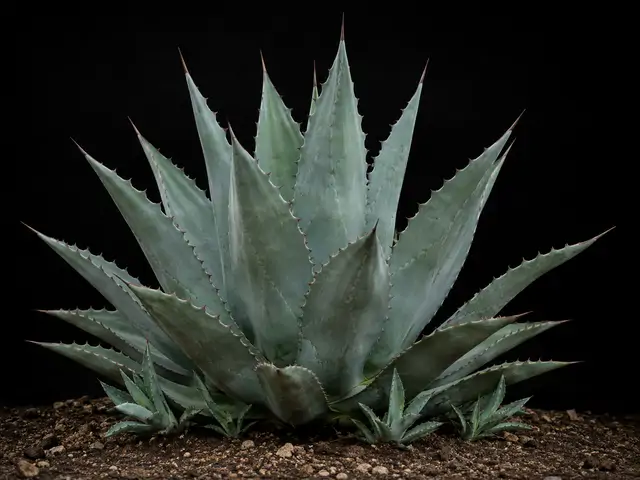
Agave
An architectural ornamental with TWO hazards: (1) The leaves have needle-sharp terminal spines and saw-toothed edges that cause deep puncture and eye injuries - site it away from paths and cut the tip spines off plants near foot traffic. (2) The raw sap (calcium oxalate and saponins) causes painful contact dermatitis in many people - wear gloves and long sleeves when cutting it. Cooked agave makes tequila and agave syrup, but the RAW plant is not for eating and its sap irritates skin and eyes.
Overview
The bold, symmetrical succulent behind tequila and agave syrup - an architectural desert plant that grows slowly for years, blooms once in a spectacular 20-foot flower spike, and then dies, leaving offsets to carry on; drought-proof and sculptural, but armed with dangerous spines and irritating sap.
Agave is the sculptural backbone of the dry garden — a bold rosette of thick, stiff, often blue-gray leaves radiating in near-perfect symmetry, each tipped with a formidable spine. Native to the arid Southwest and Mexico (several species are native to Arizona, New Mexico, and Texas), it's about as drought-proof and low-maintenance as a plant gets, asking only for full sun and sharp drainage, and repaying it with year-round architectural presence in xeriscapes, containers, and modern landscapes worldwide.
Its life story is unforgettable. The nickname 'century plant' overstates it — agaves bloom after 10 to 30 years, not 100 — but the event is spectacular and final: a mature agave sends up a giant, fast-growing flower stalk, often 15 to 30 feet tall, feeds a rush of bees, bats, and hummingbirds, and then, being monocarpic, dies — leaving behind offset 'pups' and stalk plantlets to continue. Agave is also the plant behind tequila, mezcal, and agave syrup, all made from the cooked, processed heart or sap. But the raw plant is strictly ornamental here: its terminal spines cause serious puncture wounds, and its sap causes painful skin burns, so it's a plant to admire, site carefully, and handle with gloves — not to eat or brush past.
At a glance
- Sun
- Full sun
- Water
- Low
- Spacing
- 24–120 in (typ. 60)
- Mature height
- 12–72 in (typ. 48)
- Start by
- Transplant · Division
- Frost
- Tender
When to plant
Zone 7a typical frost: last Apr 10 · first Oct 25
Life stages
- Year 1 - rooting in day 0–90 from transplant
-
Water lightly to establish, then almost neverevery 14 dWater a new agave or offset ('pup') sparingly to help it root the first season. After that it's one of the most drought-proof plants there is - established agaves in most climates want little or no supplemental water, and rot in wet soil.
-
Handle with gloves, long sleeves, and respect for the spinesWear thick gloves and long sleeves - the sap causes skin burns/blistering in many people, and the terminal spines cause deep puncture wounds. Consider snipping the sharp tip off the terminal spine on plants near paths or where people pass.
Rot at the base from overwatering or heavy wet soilSap dermatitis on skin (wear protection) -
Water lightly to establish, then almost neverevery 14 d
- Slow rosette growth (years) Apr, May, Jun, Jul, Aug, Sep (yearly)
-
Watch it build its architectural rosette - slowlyAgave grows as a symmetrical rosette of thick, stiff leaves over many years. It's grown for this bold, sculptural form. Growth is slow and needs no feeding; just keep it in full sun and sharp drainage.
-
Remove offset 'pups' to control spread (optional)Many agaves send up offsets (pups) around the base. Leave them for a clump, or dig and pot them up as free new plants - useful, since after an agave blooms it dies, and pups are how the planting continues.
Agave snout weevil (sudden collapse, especially in A. americana)Soft, mushy, or toppling rosette (rot from wet soil)Offsets crowding the planting -
Watch it build its architectural rosette - slowly
- Once-in-a-lifetime bloom (then death)
-
The spectacular monocarpic bloom - the plant's grand finaleAfter many years (10-30, NOT 100 despite the 'century plant' name), a mature agave sends up a giant, fast-growing flower stalk - sometimes 15-30+ feet - laden with flowers that feed bees, bats, and hummingbirds. This is monocarpic: the plant blooms ONCE, then dies. Enjoy the show and make sure you have pups to carry on.
-
Collect offsets and bulbils before/after the parent diesAs the parent declines after blooming, secure its legacy: pot up the basal pups, and collect the little plantlets ('bulbils') that form on the flower stalk of some species. These replace the dying parent.
The single lifetime bloom = the parent rosette will die afterward (normal)A towering bloom stalk needing space and clearance -
The spectacular monocarpic bloom - the plant's grand finale
- Cool-season rest Jan, Feb, Nov, Dec (yearly)
-
Protect from cold and, above all, winter wetMost agaves are tender (frost-sensitive); cold-hardy species (A. parryi, A. ovatifolia, A. montana) take more cold. Everywhere, cold-plus-wet is the killer - keep the soil dry in winter. In cold climates grow tender agaves in pots and move them into a bright frost-free spot.
-
Withhold water in winterDry, cool-dormant agave is far hardier than a wet one. Stop watering in the cool months, especially in any climate with winter rain or freezes.
Frost damage on tender species (mushy, translucent leaves after a freeze)Winter rot in wet, cold soil -
Protect from cold and, above all, winter wet
Watch out for
Root Rot Disease HighJan, Feb, Jun, Jul, Nov, Dec
Soil-borne rots that kill yarrow kept in wet, heavy, or poorly drained soil - the main way to lose an otherwise indestructible plant, since yarrow is adapted to dry, lean ground.
Watch for: Wilting, blackening, and collapse despite (or because of) moist soil; soft dark roots; sudden decline after a wet spell or in soggy winter ground.
Prevent: Sharp drainage is everything - lean gritty soil, full sun, minimal water, no rich amendments; raised beds or slopes in wet sites.
Treat: None once the roots rot - remove affected plants, take divisions from healthy outer growth, and replant into far sharper-draining conditions.
Agave Snout Weevil Pest HighApr, May, Jun, Jul, Aug
The most serious agave pest, especially of Agave americana and other large soft-leaved species: a black weevil that lays eggs at the base of a mature rosette (often one nearing bloom), and whose grubs tunnel into the core, introducing rot that causes the whole plant to soften and collapse - frequently fatal and often noticed only when the plant is already falling apart.
Watch for: A large agave suddenly wilting, leaves loosening and folding down, the base soft and foul-smelling, the whole rosette collapsing or pulling loose from a rotted core; adult weevils or C-shaped grubs at the base.
Prevent: Choose more resistant species (many stiff-leaved and smaller agaves are less susceptible), avoid stressing plants, remove and destroy infested plants promptly to stop the weevils spreading, and in high-pressure areas apply a soil systemic insecticide to valued specimens in spring.
Treat: Little can save a heavily infested plant - remove and destroy it (and the grubs), and salvage any clean offsets. Protect nearby valued agaves preventively; the weevils move to new hosts as plants die.
Monocarpic Bloom & Death Disorder LowMay, Jun, Jul
Not a disease but the plant's natural life cycle, and a frequent cause of alarm: an agave is monocarpic, growing for 10-30 years and then flowering ONCE - sending up a huge stalk - after which the entire rosette dies. Gardeners often mistake the towering bloom, or the parent's decline afterward, for a problem.
Watch for: A mature rosette rapidly sending up a giant flower stalk (feet per day in some species), then the parent rosette yellowing and dying back over the following months - this is normal and expected, not illness.
Prevent: Nothing to prevent - it's the natural cycle. The 'prevention' that matters is foresight: propagate and keep offsets (pups) or collect stalk bulbils before the parent dies so the planting continues.
Treat: None needed - enjoy the spectacular bloom (a boon to bees, bats, and hummingbirds), then remove the dead rosette and stalk afterward and replant the offsets that carry on the plant's line.
Good & bad neighbors
Varieties · 6
The variegated century plant: the same bold form with dramatic creamy-yellow leaf margins (or yellow centers in 'Mediopicta Alba'), a striking specimen in the ground in warm zones or in a large pot elsewhere. As big and armed as the plain form.
The famous blue agave of tequila: tall, narrow, blue-gray sword leaves in a large rosette, grown commercially in Jalisco, Mexico for the spirit. Tender (zone 9-11) and grown ornamentally as a blue specimen; included for its cultural fame - the tequila itself is made from the cooked, distilled heart, not the raw plant.
The iconic big agave: a massive blue-gray rosette 6+ feet across with saw-toothed, spine-tipped leaves, and the classic 20-30 foot bloom spike after 10-30 years. Widely naturalized (and invasive in some warm regions abroad). Offsets freely. The 'century plant' of song and story - dramatic but large and well armed; site with care.
The unusual SPINELESS agave: soft, fleshy, pale blue-green leaves with no terminal spine or sharp teeth, and a curving 'foxtail' bloom - the safe agave for near paths and children. Tender (zone 9-11, no frost) and a favorite mild-climate and container plant. Sap can still irritate skin.
A cold-hardy Southwestern native (AZ/NM and into Mexico): a tidy, compact blue-gray rosette with an 'artichoke' look and neat dark spines, hardy to around zone 6-7 with sharp drainage. One of the best agaves for colder gardens and a handsome, manageable size.
A superb, increasingly popular species: broad, cupped, powder-blue leaves like whales' tongues in a symmetrical rosette, cold-hardy to about zone 7 and largely solitary (few pups). A bold, elegant specimen that handles more cold and even humidity better than many.
Grow
Full sun and sharp drainage, and almost nothing else - it thrives on heat, drought, and neglect and rots in wet soil. Match hardiness to your winters (most are tender; a few take real cold), and site it well away from where people pass.
Agave is gloriously easy where it's hardy, and it comes down to full sun and sharp drainage. Plant it in gritty, fast-draining soil (sandy, rocky, or a raised bed/berm), water lightly only to establish, and then essentially leave it alone — no feeding, little or no water, thriving on heat and drought. As with all succulents, wet soil is the enemy: agave rots in soggy or poorly drained ground, and cold-plus-wet in winter is the classic killer.
Two decisions matter. First, hardiness: most agaves are tender (frost-sensitive), hardy in the ground only in mild-winter zones 8-11 — but a set of cold-hardy species (A. parryi, A. ovatifolia, A. montana, A. neomexicana) survive into zone 6-7 with sharp drainage and dry winters, and any agave can be grown as a container plant moved indoors for winter in cold climates. Second, siting for safety: those needle-sharp terminal spines and saw-toothed leaf edges cause real injuries, so plant agave well back from paths, doorways, and play areas, and cut the sharp tip off the terminal spine on any plant near foot traffic. Give it room to reach its full mature spread, plan for the eventual towering bloom, and handle it only with gloves and long sleeves.
Care
Essentially none - no feeding, little or no water, dry winters, and sharp drainage. The real care is handling it safely and managing offsets, plus knowing the plant will bloom once and die, so keeping pups is the way to carry on.
Agave care is close to zero. Established plants need no fertilizer and little or no water — overwatering does far more harm than drought — and the main ongoing rule is to keep them dry, especially in winter, since cold wet soil rots them. In containers, use a fast-draining cactus/succulent mix, water only when the soil is thoroughly dry, and never let the pot sit in a saucer of water.
The real 'care' is about safety and succession. Handle agave only with thick gloves and long sleeves (the sap burns skin, the spines puncture), and keep the terminal spines blunted near where people pass. Manage the offsets ('pups') that many species throw around the base — leave them for a clump or dig and pot them up as free plants. And keep in mind the plant's defining trait: agave is monocarpic, so when a mature rosette finally sends up its giant bloom spike, that rosette is at the end of its life and will die afterward — this is normal, not a failure. The way to keep an agave planting going is to have propagated pups or bulbils before the parent bows out. Beyond that, cut off dead lower leaves for tidiness (carefully), and otherwise simply enjoy a plant that thrives on neglect.
Harvest
As grown here, there's no harvest - agave is an architectural ornamental, and its irritant sap makes the raw plant unsafe to eat. Tequila, mezcal, and agave syrup all come from cooked, industrially processed hearts and sap, not home harvesting.
In this catalog agave is a NonHarvest ornamental — grown for its bold, sculptural, evergreen rosette, which is a year-round visual 'harvest' but nothing you cut or eat. The raw plant is genuinely unsafe to casually harvest: the sap contains irritating calcium oxalate and saponins that burn and blister skin, and the leaves are dangerously spined.
It's worth being clear about the famous agave products, because they invite misunderstanding. Tequila and mezcal are made by harvesting the huge underground heart (piña) of a mature agave — a labor-intensive traditional craft — then roasting or steaming it to convert its starches to fermentable sugars, and fermenting and distilling the result; agave syrup/nectar is the sap similarly processed and filtered. Historically, indigenous peoples also cooked agave hearts for days in earth ovens as a sweet food and fermented the sap into pulque. Every one of these involves cooking and processing that neutralizes the irritants — none is something to attempt with a raw garden plant. So enjoy your agave as the striking, drought-proof ornamental it is, appreciate its extraordinary cultural and culinary legacy from a distance, and leave the tequila to the distillers.
Storage
Nothing to store - agave is a permanent architectural plant that banks its own water in its leaves; the only 'keeping' is holding rooted offsets, which sit happily out of soil for weeks before replanting.
There's essentially nothing to store with an ornamental agave. The plant is a permanent, evergreen specimen that stores its own water in those thick succulent leaves — the very reason it survives long droughts — so it neither needs nor produces anything to be put by. It simply persists in the ground or pot for years until its single bloom.
The one thing you might 'hold' is offsets. Agave pups and stalk bulbils are extraordinarily forgiving: a detached, lightly rooted pup can sit dry in shade for days or even weeks (letting the cut callus, exactly as with cactus pads) before you pot it up, and it will still root and grow. This makes them easy to share, mail, or stockpile as replacement plants against the day the parent blooms and dies. Keep any held offsets cool, dry, and out of direct sun until you plant them into gritty, sharply drained mix. For a plant this self-sufficient, 'storage' really just means keeping a pup or two in reserve.
Propagation & seed saving
Almost always from offsets - dig and pot the basal 'pups' or collect the plantlets ('bulbils') on the bloom stalk; these carry the planting on after the monocarpic parent dies. Seed works but is slow.
Agave propagation is easy and, given its once-and-done life cycle, essential. Most species produce offsets ('pups') — small clonal plantlets around the base of the parent, sometimes on short underground runners. Simply dig a pup with a bit of root (or even rootless), let any cut end callus for a few days, and pot it up in gritty, well-drained mix, watering sparingly until it roots. A single agave supplies a steady stream of free plants this way, and it's how you ensure the planting survives the parent's death after blooming.
Some species also form tiny plantlets called bulbils directly on the giant flower stalk — as the monocarpic parent finishes blooming and dies, you can collect these bulbils and root them, a poignant way the plant seeds its own replacements from its final act. Seed is the third route: agaves set abundant seed after flowering, and it germinates readily in warm gritty mix, but seedlings grow slowly over years to reach size. For reproducing a known plant and continuing a planting, offsets and bulbils are faster, easier, and the practical standard; seed is mostly for species and variation. Either way, the monocarpic parent obliges by leaving plenty of descendants.
History
A cornerstone plant of Mesoamerica for thousands of years - food, fiber, needle-and-thread, medicine, and fermented pulque from the 'maguey' - and the source of tequila and mezcal, carried around the world as an ornamental and, in places, an invasive.
Few plants have served people as many ways as agave. Across Mesoamerica the maguey was a cornerstone of life for thousands of years: its cooked hearts were a sweet food, its sap was fermented into pulque (a sacred, ancient alcoholic drink), its tough leaf fibers made rope, cloth, nets, and sandals (the fiber called sisal/henequen became a major crop), and the sharp terminal spine with its attached fibers served as a ready-made needle and thread. It featured in Aztec religion and economy alike, and remains deeply woven into Mexican identity.
From the same genus came the great distilled spirits. After the Spanish introduced distillation, agave hearts were roasted, fermented, and distilled into mezcal and, from blue agave (A. tequilana) in a specific region, tequila — now globally famous industries, joined more recently by agave syrup as a sweetener. Meanwhile the plant's dramatic form made it a prized ornamental: Agave americana especially was carried to the Mediterranean, Africa, Asia, and Australia, where it naturalized so thoroughly along dry coasts and hillsides that it's now considered invasive in several such regions. That history — revered multipurpose native and staple at home, escaped ornamental abroad — is a reason to enjoy agave where it belongs and not release it into the wild.
Troubleshooting
Rot from wet soil and cold-plus-wet winters is the main killer; sudden collapse of a big A. americana is usually the snout weevil; and a plant sending up a giant flower spike isn't sick - it's blooming, which means the rosette will die (keep the pups).
Leaves going soft, mushy, translucent, or the whole rosette collapsing: rot from wet soil — overwatering, poor drainage, or cold-plus-wet winter conditions, the classic way to kill an agave. Improve drainage, stop watering, and salvage healthy offsets if the center is gone. A large agave (especially A. americana) suddenly wilting and toppling, base soft and foul: the agave snout weevil, whose grubs bore into the core — often fatal once advanced; remove and destroy affected plants, and consider resistant species where the weevil is common. Mushy, blackened, translucent leaves after a freeze: frost damage on a tender species — grow hardy species in the ground and tender ones in pots you can shelter; damaged leaves won't recover but the plant may resprout from an undamaged core.
My agave is sending up a giant stalk — what's wrong? Nothing — it's blooming, the once-in-a-lifetime monocarpic event; enjoy the spectacular flower spike, but understand the rosette will die afterward and make sure you've saved pups or bulbils to carry on. This surprises people expecting a '100-year' wait — agaves actually bloom at 10-30 years. Skin burning/blistering after handling: sap dermatitis — wash the area, and always wear gloves and long sleeves. Puncture wound from the spines: a genuine hazard — clean it well, watch for infection, and blunt the terminal spines on plants near paths. Most agave 'problems' are really water, cold, the weevil, or a misunderstanding of its natural bloom-and-die cycle.
Growing across climates
A warm, arid-climate plant hardy in the ground in zones 8-11 (a few species to zone 6-7), superb in heat, drought, and sharp-drained soil - grown as a shelter-indoors container plant in cold regions, and limited everywhere by wet, humid, poorly drained conditions.
Agave is a creature of warm, dry climates, and hardiness is the main variable. Zones 8-11 (Southwest, warm West, Gulf, warm Southeast): agave's home range — most species thrive in the ground, revelling in heat, drought, poor rocky soil, and reflected sun; the classic xeriscape and desert-garden structure plant. Zones 6-7: possible with cold-hardy species (A. parryi, A. ovatifolia, A. montana, A. neomexicana) given very sharp drainage and dry winters — the recurring rule that cold is survivable but cold-plus-wet is not. Zones 5 and colder: grow agaves as container specimens, outdoors for summer and moved into a bright, frost-free space for winter — the standard way northern gardeners keep them.
The climate agave genuinely dislikes is wet, humid, cloudy, poorly drained ground. In humid regions (like the Southeast) it can be grown but demands extreme drainage — gritty raised berms, full sun, and no winter wet — to avoid rot, and it will never be as trouble-free as in the arid West. Everywhere, the formula is the same: full sun, sharp drainage, minimal water, and dry winters, with the hardiness of your chosen species matched to your coldest weather. Get that right and agave brings bold, drought-proof, sculptural permanence to a remarkably wide range of gardens — even, in pots, to the snowy North.
No grower tips for Agave yet — yours could be the first.
Sign in to share what works in your garden.