Add it to your home screen and it opens full screen: no browser bars, one tap away, and everything stays signed in. Free, nothing to download from an app store.
- Tap the Share button in your browser
- Scroll down and choose “Add to Home Screen”
- Open GrowSomeFood from your home screen
- Open your browser’s menu
- Choose “Add to Home screen” or “Install app”
- Open GrowSomeFood from your home screen
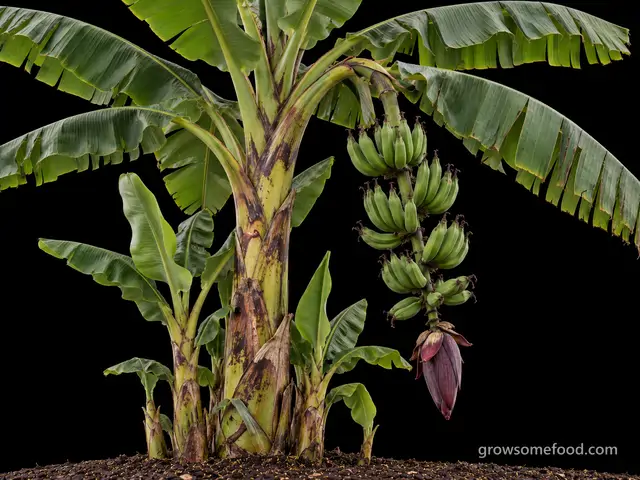
Plantain (Cooking Banana)
The starchy cooking banana - fried, boiled, and mashed as a staple rather than eaten as a snack. Nothing to do with the lawn weed of the same name. It needs more heat, more water, and a longer frost-free season than a dessert banana, so it belongs in zones 10-11.
Plantains are eaten cooked, never raw: green fruit is starchy, tannic and astringent, and while it is not toxic it is unpleasant and hard to digest until boiled, fried or roasted. Bananas and plantains belong to latex-fruit syndrome, so people allergic to natural rubber latex, avocado, kiwi or chestnut may react. The sap stains clothing a stubborn brown, and a full bunch is heavy enough that lowering it needs two people and a plan.
Overview
First, the name. This page is about the plantain banana - the large, starchy, thick-skinned cooking banana of Caribbean, West African, and Latin American kitchens. It has nothing whatever to do with broadleaf plantain (Plantago major), the flat rosette weed of lawns and paths that is used as a poultice for stings. Two entirely unrelated plants, one shared English name, and a great deal of confusion. If you were looking for the weed, that is a separate entry in this catalog.
A plantain is a banana: same genus, same giant herbaceous plant, same life cycle. What looks like a trunk is a pseudostem of packed leaf bases growing from an underground corm; each pseudostem flowers, fruits once, and dies, while pups from the corm carry the clump on indefinitely. The fruit sets without pollination, so one plant is all you need. If you have read the banana entry, you already know how to grow this - with three differences that matter.
It is cooked, not eaten raw. A plantain is a starch crop, closer to a potato than to a dessert banana: green and firm it is fried into tostones and chips, boiled, roasted, and mashed; ripened to near-black it is sweet and fried into maduros. Raw green plantain is astringent and unpleasant, and cooking is what makes it food.
It needs a longer, hotter season. Plantains take 12-18 continuous frost-free months from planting to a bunch, and 3-4 months just to fill the fruit after flowering, so the marginal-zone tricks that let a Raja Puri banana squeeze out a crop in zone 9 generally do not work here. Zones 10-11 are plantain country. In zone 9, a tough ABB cooking type (Orinoco, Bluggoe, Saba) is the pragmatic choice, and a container that overwinters under cover is the reliable one.
And the bunch is heavy. Forty to eighty pounds of fruit on a hollow, top-heavy stem - it needs propping, and cutting it down is a two-person job.
Quick facts
- Life cycle
- Perennial, lives about 15 years
- Height
- 18 ft7 to 33.3
- Spread
- 9 ft5 to 13
- Cold
- Killed by frostdamaged below 30°F
- Heat
- Struggles above 105°F
Full sun · high water · consistently moist soil · 10 ft apart (7 to 15) · transplant or division
When to plant
No planting window on record for this zone. Nearest zone with one: 9a.
Frost here: last around Apr 10 (Mar 27 to Apr 24 most years), first around Oct 25. Zone averages, your own yard may run a week or two either way.
Life stages
One stage to settle in, then five that repeat each year. Windows are typical; your zone and weather move them.
Establishment from a pup
Day 0 to 180- WaterWater heavily and constantlyevery 2 daysPlantains are among the thirstiest food plants and need more water than dessert bananas to fill their heavier fruit. Keep the soil consistently moist - never soggy, never dry - watering deeply and often through warm weather. Any drought check stalls the plant and costs you weeks off the end of the season, which is exactly what a plantain does not have to spare.
- FertilizeFeed generously, especially potassiummonthlyA plantain builds an enormous plant and a very heavy bunch in a single season, and it runs hungry. Feed monthly through the warm season with a balanced fertilizer high in potassium, plus nitrogen for the leaves, and plant into rich compost-heavy ground to start with.
- ProtectSite for heat and shelter from windChoose the hottest, most wind-sheltered spot you have - a south-facing wall, a courtyard, the lee of a building. Plantains need more heat and a longer frost-free stretch than dessert bananas, and wind shreds the leaves that drive the whole crop.
- MulchMulch thicklyA deep organic mulch holds the constant moisture plantains need, feeds the clump as it breaks down, and insulates the corm. Chopped-up spent pseudostems from a previous harvest are the traditional mulch and go straight back around the clump.
Watch for- Wind shredding the leaves
- Drought checks stalling growth
- Pups crowding the clump from the start
- Weevil damage at the base of a newly planted pup
Building the pseudostem
Mar to Sep, every year- ThinKeep the fruiting stem plus one or two followersevery 3 weeksThe clump constantly throws pups from the corm. For fruit, keep the main fruiting pseudostem and one or two successors and cut the rest off at ground level - a crowded plantain clump makes small bunches. Removed pups are your planting stock for elsewhere.
- WaterNever let it checkevery 2 daysThrough the fast growth phase the plant is building the pseudostem that will carry a bunch weighing tens of pounds. Constant abundant moisture is what makes that possible; a plantain that dries out simply makes a smaller bunch, months later.
- InspectCheck the base for corm weevilLook at the base of the pseudostem and the soil line for the dark tunnels and oozing frass of banana corm weevil. Removing and destroying old cut pseudostems, rather than leaving them lying, is the main control - they are where the weevils breed.
Watch for- Too many pups crowding the clump
- Yellow streaks and dark spots spreading up the leaves (sigatoka)
- Progressively smaller, narrow, bunched, upright leaves with dark dot-dash streaks (bunchy top virus)
- Tunnels and frass at the base of the pseudostem (corm weevil)
Flowering
Jun to Oct, every year- PollinateNo pollination needed - the fruit is parthenocarpicPlantains set fruit without pollination, so no second plant and no pollinator is required. The purple flower bud emerges from the top of the pseudostem and arcs downward, and the hands of fruit form behind it as it goes.
- PruneCut the male bud once the last hand has setOn a true plantain the male bud at the tip can be removed a hand or two past the last fruit. It stops the plant spending energy on flowers that will set nothing, and the bud itself is a vegetable. French plantains hold a persistent male bud; horn types often shed it on their own.
- WaterKeep water and feed steady through floweringevery 2 daysThe bunch is being built now. Steady heavy watering and feeding through flowering and bunch fill is what determines fruit size, and a plantain bunch is a large demand on the plant.
Watch for- The purple bud emerging and arcing over
- Far fewer, far larger hands than a dessert banana carries
- The plant racing the first frost in a marginal zone
Bunch fill
Sep to Jan, every year- SupportProp the bunch - this is not optionalA plantain bunch can weigh 40-80 lb on a tall, top-heavy, hollow pseudostem, and a loaded plant that goes over in a squall takes the whole crop with it. Brace the stem with a forked pole or guy it in two directions as soon as the bunch has weight.
- WaterKeep watering hard as the fruit fillsevery 3 daysFruit takes roughly 3-4 months to fill after flowering - longer than a dessert banana - and the plant needs abundant water and feeding through all of it. This long fill is exactly why plantains need a longer frost-free season than bananas do.
- ProtectWatch the calendar against first frostIf cold threatens before the bunch is mature, cut it anyway - a nearly-full bunch ripens off the plant far better than a frozen one does. In a marginal zone this decision arrives most years.
Watch for- Fingers plumping and their sharp ridges beginning to round
- A heavy bunch bending or toppling the pseudostem
- Cold blackening the leaves before the bunch is ready
- Rats, birds, and raccoons working the bunch
Harvest and cut down
Nov to Mar, every year- HarvestCut the whole bunch full-sized and dark greenPlantains are cut when the fingers are full-sized and the ridges have started to round out, while the fruit is still dark green - that is the stage for tostones and frying. Cutting the stalk is a two-person job on a big bunch: one lowers the bunch while the other cuts. Wear old clothes; the sap stains brown and does not come out.
- PruneCut the spent pseudostem down and chop it upEach pseudostem fruits once and dies. Cut it to the ground after harvest and chop it into pieces as mulch around the clump - leaving whole cut stems lying is how corm weevil populations build. A follower pup becomes next season's fruiting stem.
- HarvestRipen part of the bunch for madurosLeave some of the cut bunch to yellow and go nearly black off the plant, over two or three weeks. Black-skinned plantains are sweet and soft and are what maduros are made from - the same fruit at a completely different stage.
Watch for- The pseudostem dying after fruiting - normal
- Uneven ripening across a very large bunch
- Sap stains on hands, tools, and clothing
- Fruit going soft in storage faster once it starts to turn
Overwintering in marginal zones
Nov to Feb, every year- ProtectMulch the corm deeply, or bring the pot inIn zone 9 the top freezes and the plant survives as the underground corm if you mound a thick straw or leaf mulch over the crown before winter. It will resprout - but it starts over from nothing, which is why plantains so rarely fruit there. A container plant moved into a garage or greenhouse keeps its accumulated growth and has a far better chance.
- WaterKeep the corm barely moist while coldA dormant or cold corm rots in wet soil. Water sparingly through cold weather - just enough that it does not dry out completely - and resume heavy watering when warmth returns.
Watch for- Corm rot in cold wet soil
- Top growth freezing - normal in zone 9, and the reason the clock resets
- Resprouting from the corm in spring
Harvest
- The fingers are full-sized and their sharp angular ridges have begun to round out
- The fruit is still dark green - that is the stage cooking types are cut at
- The last hand has filled and the remaining flower parts have dried
- Roughly 3-4 months have passed since the flower bud emerged
- For sweet maduros, cut the bunch at the same stage and let it yellow and blacken off the plant
- Cut the whole bunch full-sized and dark green
- Cut the spent pseudostem down and chop it up
- Ripen part of the bunch for maduros
Per plant 20 to 150 plantains, 20 to 100 lbPicking pull once
Cook with plantains
Watch out for
6 to know. 2 are high-risk: Banana Bunchy Top Virus, Sigatoka Leaf Spot (Black & Yellow). 3 are active in September.
Banana Bunchy Top VirusSeverity High DiseasenowThe single strongest argument for buying clean tissue-cultured planting stock rather than accepting a pup from an unknown garden.
The bunched, narrow, upright leaves with dark dot-dash streaks in the midrib are unmistakable once you have seen them.
Each new leaf emerging narrower, shorter, and more upright than the last, until the top of the plant is a stiff bunched rosette - the symptom that names the disease. Dark green dot-and-dash streaks in the leaf midrib, petiole, and along the veins, best seen against the light; this is the diagnostic sign. Leaf margins that roll upward and go yellow and brittle. Severe stunting, and plants that simply stop growing. Banana aphids - small, dark, shiny - clustered in the leaf bases and around the emerging cigar leaf.
There is no cure and no spray that saves an infected plant. Report a suspected case to your state agriculture department or extension office and follow their instructions - in regulated areas there is an established protocol. The standard response is to kill the aphids on the plant first (so they do not disperse when it is disturbed), then destroy the entire mat including the corm, and not replant bananas in that spot until the material is fully removed. Never pass on pups from an affected clump.
Planting material is everything: take pups only from clumps you have inspected and know to be healthy, and buy tissue-cultured plants where you can. Do not accept or move banana or plantain plants out of an area where the virus is present, and check with your state agriculture department before carrying one across a state line - Hawaii and some other states restrict this specifically because of bunchy top. Control banana aphids and the ants that tend them, and inspect new growth regularly so an infected plant is found early rather than after it has been a source for a season.
An incurable virus of bananas and plantains, spread by the banana aphid and carried in infected pups and planting material. Infected plants produce progressively narrower, shorter, stiffer leaves bunched upright in a rosette at the top of the plant, stop growing, and never fruit again; a plant infected young never produces at all. Because it moves in planting material, it travels between gardens and islands with shared pups. It is present in Hawaii, where it has been the subject of eradication and quarantine programs, and in parts of the Pacific and elsewhere - which is why moving banana plants is regulated in some states.
Sigatoka Leaf Spot (Black & Yellow)Severity High DiseasenowThe reason plantains crop poorly in humid Florida and Hawaii gardens even when they grow well: the plant fills its bunch from its leaves, and sigatoka takes the leaves.
Thinning the clump and stripping infected leaves is the highest-value routine job on a plantain in a wet climate.
Narrow yellow or rust-colored streaks running parallel to the veins on the underside of younger leaves, which widen into brown then black spindle-shaped spots with pale gray centers and yellow halos. Spots merging into large dead patches so that whole leaves collapse, dry, and hang down. Leaf loss working steadily up the plant so that a flowering plant has only a few functional leaves left. Fruit on a defoliated plant filling poorly and turning yellow on the plant weeks early.
Removing infected leaves promptly and improving airflow is the practical home control; there is no home spray program that matches commercial fungicide schedules, and repeated fungicide use has driven resistance in this fungus worldwide. Feed and water well to push new clean leaves faster than the disease removes old ones. Accept that in a wet tropical summer the plant will always carry some infection - the goal is keeping enough functional leaves to fill the bunch, not eradication.
Space plants properly and thin the clump to two or three pseudostems so air moves through and leaves dry quickly - crowding is the single biggest driver in a home planting. Cut off and remove infected leaves as they appear, and take them away rather than dropping them at the base, since fallen leaves are the spore source. Do not water overhead. Keep the plant well fed and watered, since a vigorous plant outgrows the disease better than a stressed one. Where the choice exists, plant a more tolerant type - the ABB cooking bananas generally hold up better than true AAB plantains.
The most serious leaf disease of bananas and plantains worldwide, caused by Pseudocercospora fungi - black sigatoka being far the more damaging of the two forms. It kills leaf tissue progressively from the tips and margins inward, and because the plant fills its bunch entirely from the leaves it has, losing them means small fruit, fruit that ripens prematurely and unevenly on the plant, and in bad cases no usable crop at all. It spreads by spores in warm, wet, humid weather and on infected leaves, and plantains are markedly more susceptible than dessert bananas. It is established in Florida, Hawaii, Puerto Rico, and the Caribbean.
Banana Corm Weevil (Banana Root Borer)Severity Medium PestnowThe single most useful habit is chopping up the spent pseudostem after harvest instead of leaving it whole beside the clump - it is both the plant's own mulch and the weevil's nursery, depending on what you do with it.
Dark tunnels riddling the corm and the base of the pseudostem when you cut or dig, sometimes with a wet ooze or frass at the soil line. Plants that grow slowly and produce undersized bunches for no obvious reason. A plant toppling at the base while the corm below is soft and holed. Adult weevils - dull black, about half an inch long - found under debris and cut stems near the clump at night. Newly planted pups that never establish and rot at the base.
Split pieces of cut pseudostem laid cut-side-down near the clump make effective traps - check them every few days and destroy the adults sheltering underneath. Dig out and destroy badly tunneled corms rather than trying to save them, and replant clean pared pups in fresh ground. There is no easy chemical answer for a home garden, and sanitation genuinely works, so the trap-and-clean-up routine is the control.
Start clean: pare the outer surface off a pup's corm before planting and discard any piece showing tunnels, since infested planting material is the main way the weevil arrives. Then remove its breeding sites - after harvest, chop cut pseudostems into pieces and spread them as mulch rather than leaving whole stems lying, and clear old corm debris. Keep the clump thinned rather than letting it become a dense mat, keep plants vigorous with steady water and feeding, and keep mulch pulled back a little from the pseudostem base so the area is not permanently damp and sheltered.
Cosmopolites sordidus, a black nocturnal weevil whose grubs tunnel through the corm and the base of the pseudostem, destroying the tissue that anchors and feeds the plant. Damage builds quietly over a season or two: plants grow slowly, make smaller bunches, and then topple over - often just as a heavy bunch is filling, which is when the weakened base finally fails. The weevil moves mainly in infested planting material, and it breeds in the cut pseudostems and corm debris left lying around a clump after harvest.
Phytophthora Root & Crown RotSeverity Medium DiseaseFor plantains this is a marginal-zone problem specifically: the corm sits through a cold wet winter after the top has frozen, and a corm that rots is the whole plant.
Mulch deeply for insulation but keep the ground draining, and hold water back through cold weather.
Wilting, yellowing and stunting that does not improve with watering, a thinning canopy of small pale leaves, and dieback from the shoot tips. Dig and the feeder roots are dark, soft or brittle rather than white and firm, and on many plants the tissue at the base of the stem is discolored under the bark. Worst in low spots, and wherever a downspout, driveway or compacted path drains into the bed.
Very hard to reverse once established. Improve the drainage immediately, cut watering back, and mulch with coarse material rather than fine, which stays sodden. Remove severely affected plants and correct the site before replanting - and do not put another susceptible plant back into the same wet spot. Phosphonate (phosphite) treatments can suppress it in a valuable specimen, but drainage and siting do far more.
Drainage is the whole defense. Plant on a mound, berm or raised bed in heavy soil, and never in a hollow that holds winter water. Redirect roof and hard-surface runoff away from the planting, water deeply but infrequently so the surface dries between waterings, do not pile mulch against stems, and do not overwater in cold weather when the plant is using little. Use resistant rootstocks or tolerant varieties where they exist for the crop, and never move soil from an infected area.
A soil-borne water mold (Phytophthora species) that rots feeder roots and, on many plants, the crown at the soil line whenever the ground stays saturated. Rotted roots cannot take up water, so the plant looks drought-stressed even in wet soil: the canopy thins, leaves go small and pale, growth stalls, and dieback works in from the tips over months or years. It is the commonest cause of death in plants that want moisture but cannot tolerate standing water, and it travels in surface water and on tools, boots and moved soil.
AphidsSeverity Medium PestAphids do little direct damage to a plantain, but the banana aphid is the vector of banana bunchy top virus, which is incurable and regulated - so on this crop the aphids matter for what they carry rather than what they eat.
They cluster in the leaf bases and around the emerging cigar leaf, usually with ants in attendance.
Dense clusters of tiny insects packed onto shoot tips, flower buds, and the undersides of young leaves. Curled, cupped, or distorted new growth that never opens properly. A sticky shine on the leaves - and on whatever sits under the plant - that later goes black with sooty mold. Tiny white cast skins left behind where a colony has been feeding. Ants running steadily up and down the stems, which is often the first thing you notice. Mottled, streaked, or misshapen leaves that do not grow out can mean a virus the aphids brought with them rather than the feeding itself.
Knock the colonies off with a hard jet of water and repeat every few days - on most plants that alone ends it. Pinch out or prune off the worst-infested tips rather than treating the whole plant. If colonies keep rebuilding, spray insecticidal soap or horticultural oil directly onto the insects, covering leaf undersides, and repeat weekly until they are gone; treat early or late in the day, and never spray a wilted or heat-stressed plant. Avoid broad-spectrum insecticides - they kill the ladybugs, lacewings, and parasitic wasps that were about to solve the problem for you, and aphid numbers usually come back worse afterward. Anything you spray must be labeled for the plant you are treating; follow that label and observe its pre-harvest interval. On anything you eat, wash leaves, heads, and buds well before use, since aphids hide down in crowns, folds, and tight growth.
Go easy on nitrogen: the soft, lush growth that heavy feeding produces is exactly what aphids breed on. Check new growth once a week through spring and early summer so you catch colonies while they are still small, and rub the first few out with your fingers. Leave flowering plants nearby and skip broad-spectrum sprays - ladybugs, lacewings, hoverflies, and parasitic wasps do most of this work for free, and they only stay if there is something for them to eat. Keep ants off the plant where you can, since they protect aphids from those predators. Water steadily so plants are not stressed, and check any new plant over before you bring it home or move it indoors, since aphids usually arrive on something else.
Aphids are small soft-bodied sap-suckers - green, black, gray, pink, or waxy white, and mostly wingless - that gather in dense colonies on the tenderest new growth: shoot tips, buds, and the undersides of young leaves. They breed extremely fast in mild weather, so a few can become hundreds inside a week. Their feeding curls and distorts soft growth, and the sticky honeydew they excrete coats everything below and turns black with sooty mold. Ants often farm and defend the colonies for that honeydew. A few aphids are normal on almost any plant and a healthy plant shrugs them off; only dense, persistent colonies do real damage, and some aphids also spread plant viruses as they feed.
Root RotSeverity Low DiseaseOn a plantain the distinction that matters is warm-season thirst versus cold-season rot: water it as hard as you like while it is growing, and keep the corm on the dry side whenever the soil is cold.
Container plants brought under cover for winter are the usual casualties, from being watered on a summer schedule in a cold garage.
Wilting in the middle of the day on a plant whose soil is damp - the classic tell, and the reason people water a rotting plant and finish it off. Leaves yellowing from the bottom up, dull off-color foliage, and growth that stalls for no visible reason. Whole shoots, or one side of the plant, collapsing while the rest still looks fine. Soft, dark, or mushy tissue at the base of the stem or at the crown, sometimes with a sour smell. Lift a failing plant and look at the roots: healthy ones are firm and pale, rotted ones are brown or black and slimy, and the outer layer slips off between your fingers leaving a thread of core behind. Seedlings that topple over at soil level are the same problem, called damping-off.
There is no cure for tissue that has already rotted, so act on the conditions rather than looking for a spray. Stop watering at once and fix the drainage - open up compacted soil, or move the plant to a raised, sharply drained position or a container. Lift a badly affected plant, cut away every soft dark root and rotted section with a clean blade back to firm pale tissue, and replant only the healthy parts into fresh free-draining soil or mix. Often the better move is to give up on the plant and save its offspring instead: cuttings, offsets, or divisions taken from firm healthy growth root readily and give you a clean start. Bin the rotted material rather than composting it, and correct the drainage before you replant, because the rot comes straight back in the same wet spot.
Drainage is the whole defense. Match the plant to the site first - something that wants sharp drainage will not survive heavy clay or a low, water-collecting spot however well you tend it. Where the ground is heavy, plant on a raised bed, berm, or slope, or grow in a container. Set plants at the depth they were already growing, since burying the crown or the root flare is a common cause of rot, and keep mulch pulled back a few inches from the stem base instead of piled against it. Water the soil rather than the calendar: check that the top inch or two is dry before watering again, cut back hard in cool weather and winter dormancy, and never leave a pot standing in a full saucer. Do not plant or dig in soggy ground, and go easy on rich amendments for plants that want it lean. Rotate annual crops, and start with clean healthy plants and fresh mix.
Root rot is not one organism but a group of soil fungi and water molds - Pythium, Phytophthora, Fusarium, Rhizoctonia and others - that sit harmlessly in most soils and only turn destructive when the ground stays saturated. Waterlogged soil drives the air out, the roots suffocate, and the weakened tissue is invaded and goes soft, brown, and stringy. Because the damage is underground you usually see it first as something that looks like drought: wilting, yellowing, stunting, a plant that does not respond to being watered. Overwatering, heavy compacted ground, a low spot that collects runoff, a pot with no drainage or a saucer left standing full, and cold wet soil in winter are the usual causes. Once roots have actually rotted there is no cure - this is a problem you prevent rather than treat.
Good & bad neighbors
All of these are traditional pairings. The evidence is thin, so treat them as a nudge, not a rule.
Plant nearby
-
A living clover understory fixes nitrogen for a very hungry plant and holds soil moisture. Keep it from crowding the base of the clump so you can still see the pups and the corm.
-
The classic tropical polyculture at the foot of a plantain: a sprawling groundcover that shades and cools the soil, holds the moisture plantains crave, and suppresses weeds. Keep it clear of the pups you intend to keep.
-
A tough clumping edge planting for the same climate and water regime that keeps mowers and trimmers away from the pseudostem base, which is where corm weevil damage starts.
-
Suppresses root-knot nematodes, which trouble bananas and plantains on sandy soils, and draws beneficial insects. Harmless around a young clump.
-
An edible sprawling groundcover that shades the soil and draws beneficials around the clump. Pretty and harmless, though it will want cutting back as the plantain's own shade deepens.

Varieties · 8
You pick one when you add Plantain (Cooking Banana) to your garden. Its days to maturity set your harvest window.
True plantain (AAB) 4 varieties
Maricongo (Horn Plantain)
Tall plant carrying a small bunch of a few very large, sharply curved, thick-skinned green fruit.
horn-plantainvery-large-fruittalllong-seasonThe classic Puerto Rican horn plantain and the standard commercial type in the Caribbean: a small bunch of a few very large, thick-skinned, sharply curved fruit, cut dark green for tostones or ripened to black for maduros. It needs a long, hot, frost-free season to fill the bunch, so it belongs in zones 10-11 rather than a marginal garden.
Dwarf Puerto Rican
Short, stocky plant with a compact bunch of full-sized angular green plantains.
dwarftrue-plantainwind-resistantcontainer-friendlyA compact plantain, often only 6-9 ft, carrying full-sized plantain fruit on a plant short enough to be wind-resistant, easy to prop, and practical in a large container. The usual recommendation for a home grower who wants true plantains without a 15 ft plant, and the best true plantain to try under cover in a marginal zone.
Harton (Dominico-Harton)
Tall vigorous plant with a moderate bunch of large, thick-skinned, angular green fruit.
false-hornlarge-fruitproductivelatin-american-standardThe workhorse plantain of Colombia, Venezuela, and Ecuador: a false-horn type carrying more hands than Maricongo but still very large fruit, vigorous and productive in hot lowland conditions. A good choice where you have the heat and want volume rather than novelty.
ABB cooking banana 4 varieties
Orinoco (Burro)
Sturdy plant with short, thick, squared-off fruit, deep green ripening to yellow.
dual-purposecold-hardywind-resistantbeginner-friendlyResists Cold (relatively hardy), Wind
The most forgiving cooking banana for a home garden and the best bet in a marginal zone: a tough, wind-resistant plant with short, thick, blunt-ended fruit. Cut green it is firm and starchy for frying, boiling, and mashing; ripened off the plant it turns sweet with a faint lemon note and can simply be eaten. Sold as Orinoco, Burro, or Horse banana.
Bluggoe
Sparse bunch of large, straight, blunt-tipped fruit with thick pale-green skin.
cookinghardylarge-fruitboilingA classic ABB cooking banana grown across the Caribbean and the Pacific: widely spaced, large, blunt, angular fruit on a tough, tolerant plant. Boiled, roasted, and mashed more often than fried, and notably more forgiving of poor soil and cooler conditions than a true plantain.
Saba
Very sturdy plant with a heavy, dense bunch of short, blocky, three-sided green fruit.
philippinevery-toughboilingheavy-bunchResists Wind, Drought (relatively tolerant)
The Philippine cooking banana: stocky, blocky, angular fruit in dense heavy bunches on an exceptionally tough, wind- and drought-tolerant plant. Boiled, steamed, and fried into banana cue and turon rather than eaten raw. One of the hardiest and most reliable cooking types, though it needs a long season to fill its very heavy bunch.
Grower tips
Notes from growers, tagged with the zone they grow in. A person reads every post before it appears.
Nobody has posted about Plantain (Cooking Banana) yet. The first one usually saves someone a season.
Free account. Your post shows your grower name and zone, never your email.