Add it to your home screen and it opens full screen: no browser bars, one tap away, and everything stays signed in. Free, nothing to download from an app store.
- Tap the Share button in your browser
- Scroll down and choose “Add to Home Screen”
- Open GrowSomeFood from your home screen
- Open your browser’s menu
- Choose “Add to Home screen” or “Install app”
- Open GrowSomeFood from your home screen
Ostrich Fern
The one fern in this catalog you can actually eat - and the reason every other fern page says do not eat fiddleheads. A handsome shuttlecock of a plant with a two-week spring crop that must be boiled, not sauteed.
COOK THEM PROPERLY - this is not optional. Raw, lightly sauteed or briefly blanched fiddleheads cause outbreaks of severe nausea, vomiting, cramps and diarrhoea within hours. BOIL them in plenty of water for 15 minutes, or steam 10 to 12, and THROW THE WATER AWAY - then saute or pickle if you like. Eat only ostrich fern: smooth stalk with a deep U-shaped groove and papery brown scales that rub off. Never eat a woolly or fuzzy fiddlehead.
Overview
The one thing to knowOstrich fern (Matteuccia struthiopteris) is the fern behind the word fiddlehead.
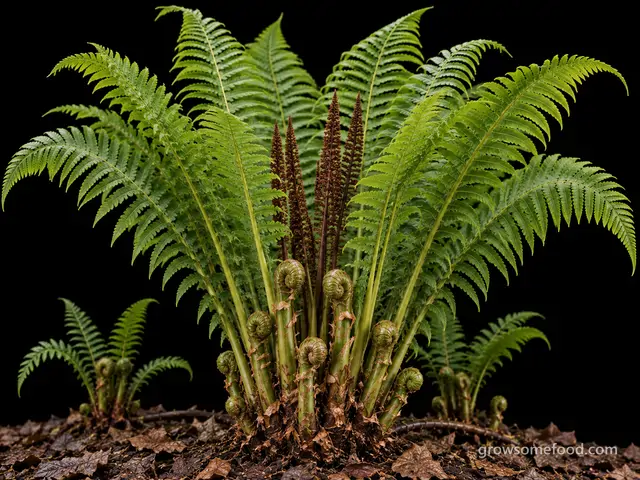
Ostrich fern (Matteuccia struthiopteris) is the fern behind the word fiddlehead. Every spring each crown throws up a ring of tightly wound croziers that unroll into a vase-shaped rosette of arching fronds, 3 to 6 feet tall, shaped like the shuttlecock the plant is also named for. It is one of the finest native ferns for moist shade, and it is a genuine perennial vegetable - a commercial spring crop in Maine, Quebec, New Brunswick and the upper Midwest, and the only fern this catalog treats as food.
That last point is worth stating plainly, because five other fern entries here carry a blanket do not eat fern fiddleheads, and this is the exception they are all referring to. Ferns are not a foraging category. Bracken is carcinogenic; most others are simply untested or unpleasant. Ostrich fern is the one with a long food tradition and a clear identification.
It comes with one rule that is not negotiable and that exists nowhere else in this catalog: ostrich-fern fiddleheads must be boiled for a full 15 minutes, with the water thrown away, before they are eaten - not sauteed, not quickly blanched, not eaten raw in a salad. Undercooked fiddleheads have caused documented outbreaks of violent stomach illness, and that is where the rule came from. Cook them properly and they are excellent: green, grassy, somewhere between asparagus and a young green bean.
Quick facts
- Life cycle
- Perennial, lives about 25 years
- Height
- 4.5 ft3 to 6
- Spread
- 36 in24 to 48
- Cold
- Takes hard frostdamaged below -40°F
- Heat
- Struggles above 85°F
Part sun or part shade or shade · high water · consistently moist soil · 36 in apart (24 to 48) · transplant or division
When to plant
Fall transplanting is open for 20 more days. Next: spring, Mar 20 to May 22.
- Transplant Aug 30 – Oct 11 Open now · 20 days leftAbout 8 weeks before to 2 weeks before your first frost (Oct 25 here)Autumn planting works well in cool climates - the crown roots in over winter and comes away strongly in spring. Mulch after planting.
- Transplant Mar 20 – May 22 Opens in 180 daysAbout 3 weeks before to 6 weeks after your last frost (Apr 10 here)Set out nursery crowns or spring divisions into rich, moisture-retentive soil in part to full shade as the ground thaws, and keep them watered right through the first summer.
Frost here: last around Apr 10 (Mar 27 to Apr 24 most years), first around Oct 25. Zone averages, your own yard may run a week or two either way.
Life stages
One stage to settle in, then three that repeat each year. Windows are typical; your zone and weather move them.
Year 1 - rooting in (no harvest yet)
Day 0 to 120- WaterKeep it evenly moist while it rootsevery 4 daysOstrich fern is a floodplain plant - it wants rich, moisture-retentive soil in part to full shade and will not settle in ground that dries. Water a new crown or division through its first season whenever the top inch of soil goes dry, and shade it from hot afternoon sun.
- MulchMulch with leaf litter, but keep the crown clearA few inches of shredded leaves or compost holds the moisture this fern lives on and mimics the leaf mould of its native river bottoms. Pull the mulch back from the raised crown itself so the fiddleheads can push through cleanly in spring.
- DoDo not pick fiddleheads for the first two or three springsA young crown has very few croziers and needs all of them to build the root reserves that produce a picking-sized clump. Leave it entirely alone until it is throwing at least five or six strong fiddleheads a year - usually the third spring, sometimes the fourth.
Watch for- Any drying out - the fastest way to lose a new crown
- Hot afternoon sun without matching moisture (fronds scorch)
- The urge to pick from a first-year plant
Fiddlehead harvest (a two-week spring window)
Apr to Jun, every year- InspectConfirm it is ostrich fern before you cut - the groove and the scalesevery 3 daysFour marks together, and all four should agree. The stalk is SMOOTH with a deep U-shaped groove down its inner face, like a stick of celery. The coil wears thin PAPERY BROWN SCALES that rub off between your fingers - never wool or fuzz that will not come away. The croziers rise in a tight circle from ONE raised crown, shuttlecock fashion. And last year's stiff, dark-brown, upright fertile fronds are usually still standing in the middle of that crown.
- HarvestCut them tightly coiled, with an inch or two of stemevery 3 daysPick while the coil is still tight and the stem short - about an inch or two of stalk below the fist-tight crozier, and before the tip begins to unroll. Snap or cut cleanly at the base of that stem. Once a frond starts opening it turns bitter and tough, and the window on any one crown is only about a week or two.
- DoTake no more than half a crown, and never strip oneEvery fiddlehead you cut is a whole frond the plant will not grow this year, and a crown stripped bare will often be weak the next spring or die outright. Take at most half the croziers from any one crown, skip crowns carrying fewer than five, and leave the rest to open and feed the plant all summer.
- DoBoil 15 minutes and pour the water away - alwaysRub off the papery scales, trim the ends, and wash in several changes of cold water. Then BOIL them in plenty of water for 15 minutes, or steam for 10 to 12, and DISCARD the cooking water. Only after that do you saute, dress or pickle them. Raw, quick-blanched and pan-only fiddleheads have caused documented outbreaks of violent stomach illness - this step is the whole safety of the crop.
Watch for- Coils beginning to unroll - the window is closing
- Woolly or fuzzy croziers nearby (a different fern - do not pick them)
- Crowns picked over already this spring
Summer shuttlecock
Jun to Sep, every year- WaterWater in dry spells or it shuts down earlyevery 5 daysThe fronds open into a vase-shaped rosette 3 to 6 feet tall. In a dry August the plant simply browns off and goes dormant early, which costs you next spring's fiddleheads. Water deeply in dry weather and keep the leaf mulch topped up.
- WeedDecide where the colony is allowed to goOstrich fern spreads by underground runners and will march several feet a year in ground it likes, coming up through neighbouring plants. That is a virtue in a wild wet corner and a nuisance in a small border. Edge the patch with a spade each spring, or plant it where it can run - and count new crowns as future harvest.
Watch for- Fronds browning off in July or August (drought - water deeply)
- New crowns appearing well outside the original clump
Fertile fronds & winter
Oct to Mar, every year- ProtectLeave the brown fertile fronds standing - they are next spring's ID markIn late summer the fern sends up separate, shorter, stiff fronds that turn hard and dark brown and stand upright through the winter, holding the spores. Do not cut them down in your autumn tidy-up. They are how you find and positively identify your crowns in early spring, at exactly the moment the fiddleheads appear and the green fronds are not there to help you.
- PruneClear the collapsed green fronds, keep the leaf litterThe leafy fronds die back with the first hard frosts; rake or cut them off once they have collapsed, or leave them as winter cover and tidy in early spring before the croziers push. Either way, leave a good layer of leaf litter over the root run - it is what this fern grows in naturally.
Watch for- Stiff dark-brown fertile fronds standing through snow (normal, and useful)
- Crowns heaving out of the ground in freeze-thaw (mulch them back down)
Harvest
- Croziers pushing out of the crown still wound in a tight fist, no bigger than about 1 to 2 inches across
- Thin papery brown scales on the coil that rub away between your fingers
- An inch or two of smooth stalk showing below the coil, with a deep U-shaped groove down its inner face
- Stop when the coils begin to unroll - open fronds turn bitter and tough, and the window is only a week or two
- Confirm it is ostrich fern before you cut - the groove and the scales · every 3 days
- Cut them tightly coiled, with an inch or two of stem · every 3 days
- Take no more than half a crown, and never strip one
- Boil 15 minutes and pour the water away - always
Per plant 4 to 20 fiddleheads, 2 to 12 ozPicking pick as they ripen
Cook with fiddleheads
Watch out for
5 to know. 2 are high-risk: Illness from Undercooked Fiddleheads, Picking the Wrong Fern. 1 is active in September.
Illness from Undercooked FiddleheadsSeverity High DisorderAny preparation that skips a full boil - a pan saute, a stir-fry, a 30-second blanch, a raw salad or a raw-packed pickle; and vomiting or cramps in everyone who shared the dish, a few hours after a fiddlehead meal.
Any preparation that skips a full boil - a pan saute, a stir-fry, a 30-second blanch, a raw salad or a raw-packed pickle; and vomiting or cramps in everyone who shared the dish, a few hours after a fiddlehead meal.
Discard the rest of the batch and keep fluids up. Call poison control or seek medical care if the person affected is a young child, if vomiting will not stop, or if they cannot keep fluids down. It normally resolves within 24 hours.
Boil in plenty of water for 15 minutes, or steam for 10 to 12 minutes, and discard the cooking water before eating or pan-finishing. Blanching for freezing does not count as the safety cook - frozen fiddleheads still need the full boil. Eat ordinary side-dish portions rather than large quantities.
Ostrich-fern fiddleheads eaten raw, sauteed, grilled, stir-fried or only briefly blanched cause an abrupt foodborne illness - nausea, repeated vomiting, stomach cramps, diarrhoea and headache, beginning between about half an hour and twelve hours after eating and usually settling within a day. Investigated outbreaks in New York State and western Canada in 1994 produced the current public-health guidance. No single toxin has been identified, but thorough boiling reliably prevents it.
Picking the Wrong FernSeverity High DisorderCroziers coated in wool or fuzz that will not rub off (cinnamon or interrupted fern); croziers rising singly and widely spaced from a creeping rhizome with no crown (bracken); round stalks with no groove.
Croziers coated in wool or fuzz that will not rub off (cinnamon or interrupted fern); croziers rising singly and widely spaced from a creeping rhizome with no crown (bracken); round stalks with no groove.
If a doubtful crozier is in the batch, throw the batch out - a mixed handful cannot be sorted after trimming. Anyone who has eaten bracken should mention it to their doctor; the risk is long-term rather than acute, but it is not something to repeat.
Check four marks together before cutting: a smooth stalk with a deep U-shaped groove down the inner face, thin papery brown scales that rub away, croziers rising in a ring from one raised crown, and last year's stiff dark-brown fertile fronds standing in the middle of that crown. Pick one crown at a time, never a mixed handful.
Several ferns push croziers in the same weeks and the same damp woodland. Bracken is the one that matters: it contains ptaquiloside, a carcinogen, and must never be eaten. Cinnamon and interrupted fern are not dangerous but are not food either. All of them end up in the basket when someone picks a handful of coils and sorts them at home.
Early Browning from Drought & HeatSeverity Medium DisordernowBrowning and crisping frond margins from midsummer, whole clumps collapsing in a dry August, and worst effects on the sunniest or highest-drained side of a patch.
Browning and crisping frond margins from midsummer, whole clumps collapsing in a dry August, and worst effects on the sunniest or highest-drained side of a patch.
Water thoroughly and mulch; cut off collapsed fronds. If it happens every year, move the crowns to a shadier, damper spot - the plant is telling you the site is too hot or too dry.
Site it in part to full shade in moisture-retentive soil, mulch several inches deep with shredded leaves, and water deeply through dry spells rather than lightly and often.
A floodplain fern grown too dry or too hot shuts down: fronds crisp from the edges, the whole shuttlecock browns and the plant goes dormant weeks or months early. Because the fronds are what build next spring's crop, an early shutdown costs fiddleheads the following year as well as looks this one.
Over-picking the CrownSeverity Medium DisorderCrowns with only two or three croziers, patches producing thinner and fewer fiddleheads year on year, and crowns that fail to appear the spring after a heavy picking.
Crowns with only two or three croziers, patches producing thinner and fewer fiddleheads year on year, and crowns that fail to appear the spring after a heavy picking.
Rest the patch completely for a full season, keep it watered and mulched so the fronds stand into autumn, and it will usually rebuild within a year or two.
Take no more than half the croziers from any one crown, skip crowns carrying fewer than about five, leave young plants entirely alone until their third or fourth spring, and stop picking each crown as soon as the coils start to open.
Every fiddlehead cut is a whole frond the plant will not grow that year, and the fronds are what rebuild the crown. A crown stripped bare, or picked hard two springs running, comes back weak or not at all - which is how wild fiddlehead stands get exhausted and why a home patch stops cropping.
Slugs & SnailsSeverity Low PestOn ostrich fern the grazed part is also the crop - a slug-notched fiddlehead is safe to eat once trimmed and cooked through, but check the coil is still tight rather than partly opened.
Keep dense wet mulch off the growing point.
Irregular ragged holes chewed out of the middle of leaves and along the edges - not the clean-edged cuts a caterpillar leaves. Seedlings that vanish overnight, or that are cut off at soil level with nothing left behind. Silvery dried slime trails across leaves, soil, pots, and paving in the morning: this is the giveaway that tells you it was mollusks rather than an insect. Chewed pits in ripe fruit, especially where it rests on the ground. Damage that shows up on the lowest, dampest leaves first and gets worse after rain or evening watering. Turn over a board, an upturned pot, or a clump of dense mulch during the day and look for the animals themselves sheltering in the cool underneath.
Hand-picking works and costs nothing: go out an hour after dark with a headlamp, drop what you find into soapy water, and repeat nightly for a week or two - persistence is what wins, not any single product. Shallow beer traps sunk to soil level catch them too, but need emptying and refilling daily to be worth anything. Iron-phosphate bait is the standard control and is far lower-risk around pets and wildlife than the old metaldehyde products, but it is not harmless: many formulations include EDTA, and a dog that eats a quantity of pellets can develop iron toxicosis. Scatter it thinly per the label, never in piles, and keep dogs off a baited bed. Clear fallen foliage and debris in autumn, where the eggs are laid. In a wet climate this is a population you manage each season rather than one you eradicate - and on most established plants light grazing is cosmetic and needs nothing at all.
Take away the daytime shelter first: lift boards and upturned pots, clear piles of debris, keep dense mulch pulled back from crowns and stems, and give crowded plantings enough airflow to dry out. Water in the morning rather than the evening so the surface is dry by the time they come out. Copper tape around containers and raised beds gives them a shock they will not cross, and it is the one barrier that reliably works. Get plants past the vulnerable stage quickly - start seedlings in pots and set them out at a decent size rather than direct-sowing into a cold wet bed, since most plants stop being worth defending once the leaves toughen. Leave the ground beetles, frogs, toads, and ground-feeding birds alone, because they eat mollusks all night for free and broad-spectrum slug pellets kill them too. Where thick-leaved or resistant varieties exist for what you are growing, they take far less damage.
Slugs and snails are nocturnal mollusks that rasp ragged holes in soft leaves, shear off seedlings at ground level, and chew into ripe fruit that touches the soil. They feed at night and in the early morning and spend the day hidden under boards, pots, dense mulch, leaf litter, and low foliage, becoming active in exactly the cool, damp, shaded conditions that suit young plants. Damage is heaviest in wet spells and on tender spring growth: a single wet week can erase a row of seedlings while an established, tough-leaved plant of the same species is barely marked. They lay clusters of small pearly eggs in damp soil and under debris, so a garden with plenty of cover carries a resident population year after year rather than being invaded from outside.
Good & bad neighbors
First rule: keep Bracken Fern apart. Not a growing conflict - a harvesting one.
Plant nearby
-
A natural pairing of the same rich, damp, shaded bottomland - and the same two-week spring window. Ramps carpet the ground in early spring and die back just as the fern canopy closes over them, so the two share the ground rather than competing for it.
-
A low evergreen-ish woodland groundcover that holds the damp leaf-mould conditions ostrich fern wants, covers the bare ground between crowns, and is short enough never to be in the way at picking time.
-
Both want constantly moist ground and part shade, and cardinal flower's late scarlet spikes come exactly when the fern is nothing but green - a good use of the same damp corner or rain-garden edge.
-
The classic moist-shade partner, with one warning: ostrich fern runs, and in good ground it will come up straight through a hosta clump within a few years. Plant them together only where you are happy for the fern to win, or keep a spade edge between them.


Keep apart
-
Not a growing conflict - a harvesting one. Bracken croziers push up in the same weeks and often in the same damp woodland, and bracken contains ptaquiloside, a carcinogen. Keep a fiddlehead patch well away from bracken, and learn the difference: ostrich fern rises in a ring from one raised crown with a smooth grooved stalk, bracken rises singly and widely spaced from a creeping rhizome under a coat of grey wool.
-
Again an identification problem rather than a horticultural one - they share wet shade happily. Cinnamon fern fiddleheads are wrapped in dense silvery wool that will not rub off, and they are not eaten. Growing the two side by side puts a non-food crozier within arm's reach of your picking basket; if you do plant them together, keep them in clearly separate drifts.

Varieties · 2
You pick one when you add Ostrich Fern to your garden. Its days to maturity set your harvest window.
Species (Matteuccia struthiopteris var. pensylvanica)
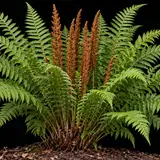
Shuttlecock-shaped clump of tall arching bright-green fronds tapering sharply to the base, with short stiff brown fertile fronds in the centre.
speciesnativeedible-fiddleheadspreadingThe North American ostrich fern, and how it is almost always grown and harvested: vase-shaped rosettes of arching fronds 3 to 6 feet tall, spreading steadily by underground runners, with stiff dark-brown fertile fronds standing through winter. This is the plant the commercial fiddlehead harvest is built on - and it carries the same mandatory 15-minute boil as every other form.
The King (Matteuccia struthiopteris 'The King')
Taller and heavier version of the species, with broad arching fronds forming a large shuttlecock.
cultivarlargeedible-fiddleheadspreadingA selection sold in the nursery trade for its larger, taller, more strongly vase-shaped clumps - grown as an ornamental first and foremost, but the same species, with the same edible fiddleheads and exactly the same cooking rule. Give it more room, 3 to 4 feet between crowns, and the same rich damp shade.
Grower tips
Notes from growers, tagged with the zone they grow in. A person reads every post before it appears.
Nobody has posted about Ostrich Fern yet. The first one usually saves someone a season.
Free account. Your post shows your grower name and zone, never your email.