Add it to your home screen and it opens full screen: no browser bars, one tap away, and everything stays signed in. Free, nothing to download from an app store.
- Tap the Share button in your browser
- Scroll down and choose “Add to Home Screen”
- Open GrowSomeFood from your home screen
- Open your browser’s menu
- Choose “Add to Home screen” or “Install app”
- Open GrowSomeFood from your home screen
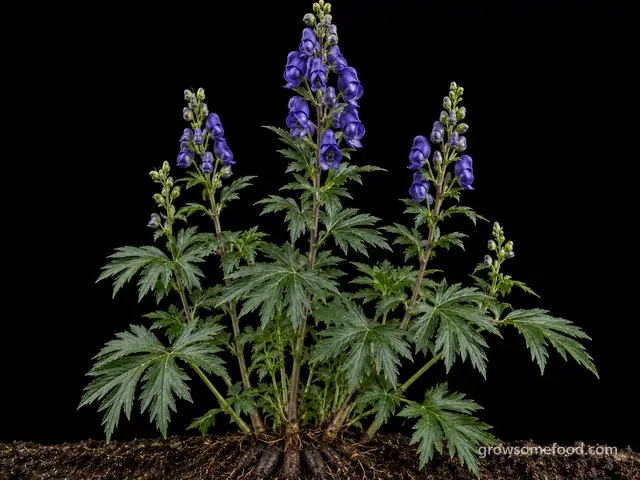
Monkshood
A superb late-summer perennial with hooded indigo spires - and one of the most poisonous plants sold in nurseries, whose tuberous root has been dug and eaten in mistake for horseradish.
POISONOUS IN EVERY PART, and one of the most toxic plants sold in nurseries. Aconitine hits nerves and the heart, there is no antidote, and the TUBEROUS ROOT is the most poisonous part. Roots have been eaten in mistake for horseradish. The test is smell: cut horseradish is violently pungent in seconds, monkshood root has no smell at all. Aconitine is absorbed through skin, so wear gloves for every job and never handle it with cuts. Suspected ingestion is an emergency - call poison control now.
Overview
The one thing to knowIt is also poisonous in every part, and it is not a mild poison.
Monkshood (Aconitum) is one of the best things that happens in a late-summer border: stiff 3- to 5-foot spires of hooded flowers in an indigo so deep it reads almost black, in part shade, at a point in the season when little else is starting. The common monkshood (A. napellus) flowers in mid to late summer; azure monkshood (A. carmichaelii) carries on into October. Bumblebees, which are the only insects heavy enough to force the hood open, work it constantly.
It is also poisonous in every part, and it is not a mild poison. Aconitine and its relatives act on nerve and heart cells; there is no antidote, symptoms can begin within minutes, and the amounts involved are small. The tuberous root is the most poisonous part of the plant.
That last fact is why this entry exists. Monkshood roots have been dug, grated and eaten in mistake for horseradish, which is exactly the sort of mistake a gardener with both plants can make. The discriminator is not subtle and it is worth knowing cold: cut horseradish is violently, unmistakably pungent within seconds. Monkshood root has no smell at all.
It is gated here as a plant to grow deliberately. Grown knowingly, in gloves, labelled, and nowhere near a bed where roots get dug, it is a magnificent and entirely manageable perennial. Grown carelessly it is the most dangerous thing in the garden.
Quick facts
- Sprouts in
- 90 days30 to 180
- Soil to sprout
- 55 °F40 to 65
- Life cycle
- Perennial, lives about 15 years
- Height
- 42 in24 to 60
- Spread
- 15 in10 to 24
- Cold
- Takes hard frostdamaged below -40°F
- Heat
- Struggles above 85°F
- Self-sows
- Yes, expect volunteers
Full sun or part sun or part shade · medium water · consistently moist soil · 18 in apart (12 to 24) · direct sow or transplant or division or tubers
When to plant
Fall planting is open for 34 more days. Next: spring, Mar 27 to May 8.
- Plant tubers Sep 13 – Oct 25 Open now · 34 days leftAbout 6 weeks before to at your first frost (Oct 25 here)Plant dormant tubers about 2 inches deep in autumn, in gloves, in moisture-retentive soil. Autumn planting gives the strongest first summer.
- Transplant Mar 27 – May 8 Opens in 187 daysAbout 2 weeks before to 4 weeks after your last frost (Apr 10 here)Set out potted plants in spring once the soil is workable. Expect a modest first year - monkshood takes two or three seasons to reach full height and flower.
Frost here: last around Apr 10 (Mar 27 to Apr 24 most years), first around Oct 25. Zone averages, your own yard may run a week or two either way.
Life stages
One stage to settle in, then three that repeat each year. Windows are typical; your zone and weather move them.
Tuber planting and rooting
Day 0 to 70 from sowing- ProtectGloves on before the bag is openedDormant monkshood tubers are the most poisonous part of the plant, and this is the one job that puts them in your hands. Wear waterproof gloves, keep the tubers away from food surfaces and out of the kitchen, work with no cuts on your hands, and wash thoroughly afterwards. Never handle them and then eat, smoke or rub your eyes.
- DoPlant the tubers shallow, in ground that stays moistSet dormant tubers about 2 inches deep and 18 inches apart in rich soil that holds moisture but never waterlogs, in autumn or very early spring. Monkshood is slow to settle and resents being moved, so choose the position once and leave it - the third year is far better than the first.
- ProtectChoose a spot far from anywhere you dig rootsSite is the safety decision, not identification skill. Never plant monkshood in or beside a vegetable bed, an herb bed, or anywhere horseradish, parsnip or any other root crop grows or has grown. Put a permanent label on the planting so the next person who gardens here knows what the root is.
Watch for- Tubers handled without gloves, or carried through a kitchen
- A planting sited near root crops or an herb bed
- Ground that stands wet over winter (tubers rot)
Spring foliage
Apr to Jun, every year- InspectDeeply cut palmate leaves - like a giant buttercupMonkshood leaves are dark glossy green and deeply divided in a palm shape into five to seven narrow, toothed lobes, on stiff upright stems. That is the family look it shares with delphinium and larkspur, which are also toxic. It is nothing like a horseradish leaf, which is large, coarse, crinkled and undivided with a wavy toothed edge - the reason to identify a root by the leaves attached to it, never by the root alone.
- WaterNever let it dry outweeklyMonkshood is a mountain-meadow plant and wants soil that stays evenly moist all season. Drought is what causes weak stems, scorched leaf edges and thin flowering. Water in dry spells and mulch 2 inches in spring, keeping the mulch off the crown.
- ProtectGloves for weeding, tying and tidying tooAconitine is absorbed through the skin and through any break in it, and handling cut stems and sap with bare hands is reported to cause tingling and numbness in the fingers. Treat gloves as standard for every task around this plant, keep the sap off your face, and wash your hands afterwards even though you wore them.
Watch for- Palmate deeply divided leaves - not to be confused with horseradish foliage
- Soil drying out (the usual cause of poor flowering)
- Anyone weeding around it bare-handed
Late summer hooded spikes
Jul to Oct, every year- InspectA hood, not a spur - how to tell it from delphiniumEach flower is a helmet: the upper sepal arches forward over the rest like a monk's cowl, in deep indigo, violet, white or occasionally yellow, carried in a stiff spire. Delphinium and larkspur look similar in leaf and habit but their flowers carry a backward-pointing SPUR instead of a hood. Both are poisonous, so the difference is for the record rather than for safety.
- SupportStake the tall and the branching kindsCommon monkshood and the branching hybrids reach 4 to 5 feet and lean in rich soil or after rain. Put a stake or a ring in early, in gloves. Azure monkshood (Aconitum carmichaelii) is the stiffest kind and usually stands unaided - worth choosing if you would rather not handle the plant more than necessary.
- PruneCut for the vase only into a household that understands itMonkshood is a fine long-lasting cut flower and a poisonous one. Cut in gloves, keep the stems and the vase water away from children, pets and food preparation, and pour the water down a drain rather than into a pet bowl or a houseplant a cat chews. Never put it in an arrangement with edible flowers or herbs.
Watch for- Spikes leaning in rich soil or after storms
- Cut stems and vase water left within reach of children or pets
- Bumblebees working the flowers - the plant is built for them and they are unharmed
Autumn dieback and division
Oct to Mar, every year- PruneCut down after the frost, in gloves, and bag the topsCut the stems to the ground once they blacken, wearing gloves. Bag the tops for municipal green waste rather than composting them, and never add them to a pile that livestock, poultry or rabbits can reach. Seed heads left standing will sow themselves around, so remove them unless you want seedlings.
- ProtectDivision is the moment the deadliest part is in your handsLift and divide only every four or five years, in autumn or very early spring, and only in waterproof gloves. The tuber cluster - a plump new tuber beside last year's shrivelled one - is the most poisonous part of the plant. Never rinse tubers in a kitchen sink, never set them on a food surface, and account for every piece before you leave the bed.
Watch for- Dormant tubers left lying in a bed or a shed where they could be picked up
- Seed heads left to self-sow into unwanted places
- Tubers rotting in ground that stands wet all winter
Watch out for
6 to know. 2 are high-risk: Aconitine Poisoning by Ingestion (deadly), Root Mistaken for Horseradish. 4 are active in September.
Aconitine Poisoning by Ingestion (deadly)Severity High DisordernowAny ingestion of leaf, flower, seed or root by a person or animal.
Any ingestion of leaf, flower, seed or root by a person or animal. Early signs are tingling and numbness of the lips, mouth and face spreading to the limbs, then nausea, vomiting, weakness and irregular heartbeat - all of which mean the emergency is already under way.
Suspected ingestion is an EMERGENCY - call poison control or emergency services immediately and do not wait for symptoms. There is no antidote; treatment is urgent supportive hospital care for heart-rhythm effects. Name the plant and take a piece of it if you can.
Never eat or taste any part and never prepare it in any form. Wear gloves for every job, keep tubers and cut stems out of the kitchen, label the planting, and site it well away from vegetable beds, herb beds and anywhere root crops are dug.
Every part contains aconitine and related alkaloids that act directly on nerve and heart cells, concentrated most heavily in the tuberous root and the seed. There is no antidote, onset can be within minutes, and the quantity required is small. Drying and cooking do not make any part safe.
Root Mistaken for HorseradishSeverity High DisordernowAny root dug from a bed where monkshood grows or has grown, and any root identified without its leaves attached.
Any root dug from a bed where monkshood grows or has grown, and any root identified without its leaves attached. A monkshood tuber is short (2-4 in), tapering and blackish-brown, usually with last year's shrivelled tuber attached beside this year's; horseradish root is long, cylindrical, buff outside and cream-white inside.
The field test is smell: cut or scrape the root, and cut horseradish is violently sinus-clearing within seconds while monkshood root has no smell at all. No smell means discard it and wash your hands. If any has been eaten, call poison control immediately and do not wait for symptoms.
Never plant monkshood in or beside a bed where roots are dug, label both plants permanently, and identify any root you intend to eat by the leaves attached to it - horseradish leaves are large, coarse, crinkled and undivided, monkshood leaves are deeply cut into five to seven palmate lobes.
The specific accident that puts monkshood in this catalog. Its dormant tuber has been dug, grated and eaten as horseradish, which is fatal - the root is the most poisonous part of the plant, and the two are dug in the same seasons by the same gardener. The confusion is entirely preventable, because the discriminators are unmistakable once known.
Skin and Sap ExposureSeverity Medium DisordernowTingling, numbness or burning in the fingers or lips after weeding, cutting back or dividing; any handling of the plant with cuts or grazes on the hands, or hand-to-mouth and hand-to-eye contact afterwards.
Tingling, numbness or burning in the fingers or lips after weeding, cutting back or dividing; any handling of the plant with cuts or grazes on the hands, or hand-to-mouth and hand-to-eye contact afterwards.
Wash the skin thoroughly with soap and water at once. Call poison control for advice if numbness spreads or persists, or if any symptom appears beyond the contact area.
Wear waterproof gloves for every task - planting, weeding, staking, cutting, deadheading and dividing - work with no broken skin on your hands, keep sap away from your face, and wash thoroughly afterwards even though you wore gloves.
Aconitine is absorbed through the skin and through any break in it, so this is one of the few garden plants where handling itself carries a warning rather than just eating it. Gardeners handling cut stems, sap and especially dormant tubers with bare hands report tingling and numbness in the fingers.
Crown RotSeverity Medium DiseaseThe usual reason a monkshood tuber never reappears after a wet winter.
Plant in soil that holds moisture but drains freely, avoid winter-wet hollows, keep mulch clear of the crown, and do not set the tubers deeper than they need. Every part of monkshood is dangerously toxic, so wear gloves when lifting and cutting away rotted tubers, and bin rather than compost them.
A plant that fails to green up or emerge in spring when everything around it does - the most common way this gets discovered, and by then it is already too late. Stems that wilt, blacken, and collapse in wet weather while the soil is clearly damp rather than dry. A crown that is soft, dark, brown, or mushy when you press or lift it, sometimes with a foul smell, instead of firm and pale. New growth that pulls away from the crown with almost no resistance. Clumps browning and going hollow in the middle while the outer growth stays alive. In stands and cover crops, patches wilting, yellowing, and thinning out after wet spells or over a mild wet winter.
There is usually no cure once the crown itself has rotted: the plant is lost, and the job is to save what you can and fix the site. Lift it, cut away every soft, dark, rotted part with a clean blade back to firm tissue, and replant only healthy divisions or firm outer growth into fresh, sharply drained soil or medium. On potted and specialist plants, repotting into fresh airy medium and keeping them drier with better airflow gives the best chance, though a badly rotted crown is usually beyond saving. Bin the rotted material rather than composting it. Replant somewhere better drained rather than back into the same wet spot - or start again from seed, cuttings, or self-sown seedlings, which is the realistic option for anything that resents being moved at all.
Drainage and airflow at the crown are everything. Match the plant to the site first: a dry-adapted perennial planted in heavy or enriched ground is on borrowed time whatever else you do. In wet or clay soil, plant on a slope, berm, raised bed, or gritty rock-garden site so water drains away from the crown rather than standing over it. Set plants at the right depth - never bury the crown - and keep mulch, dead leaves, and debris pulled back from it rather than piled against it, since damp material resting on the crown is a common trigger. Do not overwater, and ease right off during dormancy, when a resting plant wants to be barely damp rather than wet. Give crowded plantings enough space and airflow to dry out, and do not sow a stand too thickly. In cold, wet climates, divide in spring rather than fall, so plants are not recovering from surgery through the wettest months.
Crown rot is the rotting of a plant at the crown - the growing point where the stems meet the roots, right at or just below soil level. Soil fungi and water molds that live in most ground attack that tissue whenever it sits wet, cold, and airless, and because the crown is the one part a perennial cannot regrow from, losing it usually means losing the plant. It is above all a winter problem: a plant that survives hard frost perfectly well in dry ground rots out in a wet one, and the classic story is a perennial that simply never comes back in spring. Dry-adapted plants growing in heavy or over-improved soil are the most vulnerable, along with anything that has mulch, wet leaves, or piled debris sitting against the crown, and anything planted too deep.
Powdery MildewSeverity Low DiseasenowEvery part of monkshood is dangerously toxic, so handle mildewed foliage accordingly: wear gloves, bag the material rather than composting or shredding it, and wash up afterwards.
Drought at the roots makes mildew much worse on monkshood, so steady watering plus thinning crowded clumps is the real control.
Round white powdery spots on the upper leaf surfaces that spread and merge until whole leaves look dusted. It usually starts on the oldest, lowest, most shaded leaves and works upward, so check there first. Look at the undersides too, and at stems, buds, and flower stalks, which get coated as it advances. Leaves that yellow, brown, curl, or go crisp and drop early under the coating. New growth that opens small, crumpled, or twisted where the fungus has reached the shoot tips. On plants where it gets onto the fruit, a dull gray film, russeted or scarred skin, and cracking. Late in the season, tiny dark specks scattered through the white felt - that is the fungus setting up to overwinter on the debris.
Start early: sprays protect healthy tissue, they do not clean up leaves that are already coated. Pick off and bin the worst leaves as soon as you see them, and open the plant up by thinning or pruning so air moves through. On anything that regrows quickly, shearing the whole plant back forces a clean flush and beats spraying. If it keeps spreading, potassium bicarbonate, horticultural oil, or neem applied weekly will hold it - cover both leaf surfaces. Sulfur also works, but it burns the foliage of some plants, should never go on in heat, and must not be mixed with or applied close behind an oil spray. Whatever you use must be labeled for the plant you are treating: follow that label and observe its pre-harvest interval on anything you eat. Do not compost badly infected material. Late-season mildew on a plant that is finishing anyway is usually cosmetic; on a crop still filling out it is worth acting on.
Give plants room. Crowding and still air are the biggest single driver, so space at the full recommended distance, thin seedlings properly, and divide or prune out congested growth until air moves through the plant. Full sun and an open position help; deep shade and a still corner against a wall are where it always starts. Water at the base rather than overhead, and water early in the day so nothing stays damp overnight. Keep plants evenly watered - drought stress at the roots leaves them far more susceptible, even though the fungus itself likes dry air. Go easy on nitrogen, since soft lush growth is the most vulnerable. Where resistant varieties exist for what you are growing, choosing one is the single most effective thing you can do on a plant that mildews every year. Clear infected leaves and stems away at the end of the season rather than composting them.
Powdery mildew is a fungal disease that coats leaves - and often stems, buds, and fruit - in a white-to-gray powder that looks like spilled talcum. It is not one fungus but a large family of them, each fairly specialised to its own group of plants, which is why mildew on one crop rarely jumps to an unrelated one beside it. Unlike most leaf diseases it does not need wet leaves: it thrives on warm dry days followed by humid nights, and it takes hold fastest where plants stand crowded in still air or in shade. The coating blocks light, so heavily covered leaves yellow, brown, and drop early. On many plants that is mostly disfiguring and arrives late enough not to matter; where it strips away the leaves a crop still needed to finish, it costs you size, sweetness, and quality.
AphidsSeverity Low PestWear gloves for every job on monkshood, including dislodging aphids - every part of the plant is dangerously toxic and its poison can be absorbed through the skin.
Dense clusters of tiny insects packed onto shoot tips, flower buds, and the undersides of young leaves. Curled, cupped, or distorted new growth that never opens properly. A sticky shine on the leaves - and on whatever sits under the plant - that later goes black with sooty mold. Tiny white cast skins left behind where a colony has been feeding. Ants running steadily up and down the stems, which is often the first thing you notice. Mottled, streaked, or misshapen leaves that do not grow out can mean a virus the aphids brought with them rather than the feeding itself.
Knock the colonies off with a hard jet of water and repeat every few days - on most plants that alone ends it. Pinch out or prune off the worst-infested tips rather than treating the whole plant. If colonies keep rebuilding, spray insecticidal soap or horticultural oil directly onto the insects, covering leaf undersides, and repeat weekly until they are gone; treat early or late in the day, and never spray a wilted or heat-stressed plant. Avoid broad-spectrum insecticides - they kill the ladybugs, lacewings, and parasitic wasps that were about to solve the problem for you, and aphid numbers usually come back worse afterward. Anything you spray must be labeled for the plant you are treating; follow that label and observe its pre-harvest interval. On anything you eat, wash leaves, heads, and buds well before use, since aphids hide down in crowns, folds, and tight growth.
Go easy on nitrogen: the soft, lush growth that heavy feeding produces is exactly what aphids breed on. Check new growth once a week through spring and early summer so you catch colonies while they are still small, and rub the first few out with your fingers. Leave flowering plants nearby and skip broad-spectrum sprays - ladybugs, lacewings, hoverflies, and parasitic wasps do most of this work for free, and they only stay if there is something for them to eat. Keep ants off the plant where you can, since they protect aphids from those predators. Water steadily so plants are not stressed, and check any new plant over before you bring it home or move it indoors, since aphids usually arrive on something else.
Aphids are small soft-bodied sap-suckers - green, black, gray, pink, or waxy white, and mostly wingless - that gather in dense colonies on the tenderest new growth: shoot tips, buds, and the undersides of young leaves. They breed extremely fast in mild weather, so a few can become hundreds inside a week. Their feeding curls and distorts soft growth, and the sticky honeydew they excrete coats everything below and turns black with sooty mold. Ants often farm and defend the colonies for that honeydew. A few aphids are normal on almost any plant and a healthy plant shrugs them off; only dense, persistent colonies do real damage, and some aphids also spread plant viruses as they feed.
Good & bad neighbors
First rule: keep Horseradish apart. Never grow these two in the same bed, or monkshood anywhere near ground where roots are dug.
Plant nearby
-
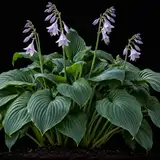
The classic partner for the same conditions - hosta mounds cover the bare lower stems and keep the ground cool and moist while the monkshood spires rise clear above them.
-
AstilbeAnother moisture-loving part-shade perennial with the same needs; astilbe flowers earlier and its foliage fills the front of the border while monkshood is still building toward its late display.
-
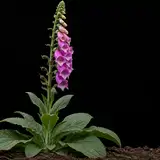
They suit each other - the same cool, moist, part-shaded ground, with foxglove spires in early summer handing over to monkshood in late. Note what you are building, though: a bed in which nothing at all is edible. Label it, keep it away from herb and vegetable beds, and never gather anything from it.
Keep apart
-
Never grow these two in the same bed, or monkshood anywhere near ground where roots are dug. Monkshood tubers have been eaten in mistake for horseradish, which is fatal. If you have both, keep them in separate parts of the garden and label them. The test if you are ever unsure: cut horseradish is violently pungent within seconds; monkshood root has no smell at all.

Varieties · 5
You pick one when you add Monkshood to your garden. Its days to maturity set your harvest window.
Common Monkshood (Aconitum napellus)
Stiff spires of hooded violet-blue flowers over deeply divided dark green leaves.
speciestallmidsummerdeadly-poisonThe classic monkshood: dense spires of deep indigo hooded flowers on 3-4 ft stems in mid to late summer, above finely cut palmate leaves. The species behind most of the historical record, and the one whose tuber has been mistaken for horseradish. Poisonous in every part, root most of all.
Azure Monkshood (Aconitum carmichaelii 'Arendsii')
Sturdy upright stems topped with dense heads of bright violet-blue hooded flowers in autumn.
late-floweringself-supportingdeadly-poisonThe best garden monkshood for most people: thick stiff stems 3-4 ft tall that stand without staking, glossy leathery leaves, and dense heads of vivid amethyst-blue hoods in September and October, weeks after everything else has finished. Equally poisonous in every part; the advantage is simply that you need to handle it less.
Bicolor Monkshood (Aconitum x cammarum 'Bicolor')
Branching spikes of white flowers with blue-violet hoods and margins.
bicolorbranchingneeds-stakingdeadly-poisonA branching hybrid with loose airy spikes of white flowers edged and hooded in violet-blue, 3-4 ft, flowering mid to late summer. Prettier and looser than the species, and floppier - stake it early. As poisonous as every other Aconitum.
Yellow Wolfsbane (Aconitum lycoctonum subsp. vulparia)
Slender spires of narrow creamy-yellow hooded flowers in part shade.
yellowwoodlandshadedeadly-poisonThe pale yellow woodland aconite, with narrow helmet-shaped flowers on 3-5 ft stems in light shade - a European species and the original wolf bait that gave the genus its second name. Poisonous exactly like the blue kinds; the colour is not a clue to anything.
Native American monkshoods (A. columbianum, A. uncinatum)
Loose spires of blue-violet hooded flowers on tall stems in moist streamside or woodland ground.
speciesnativedeadly-poisonavoidNorth America has its own monkshoods - western monkshood along Rocky Mountain and Pacific streamsides, and southern blue monkshood in Appalachian woods. Both are wild plants met on a walk rather than nursery stock, both carry the same aconitine alkaloids, and both grow in exactly the damp ground where people forage. Listed here so a native monkshood is never assumed to be the harmless one.
Grower tips
Notes from growers, tagged with the zone they grow in. A person reads every post before it appears.
Nobody has posted about Monkshood yet. The first one usually saves someone a season.
Free account. Your post shows your grower name and zone, never your email.