Add it to your home screen and it opens full screen: no browser bars, one tap away, and everything stays signed in. Free, nothing to download from an app store.
- Tap the Share button in your browser
- Scroll down and choose “Add to Home Screen”
- Open GrowSomeFood from your home screen
- Open your browser’s menu
- Choose “Add to Home screen” or “Install app”
- Open GrowSomeFood from your home screen
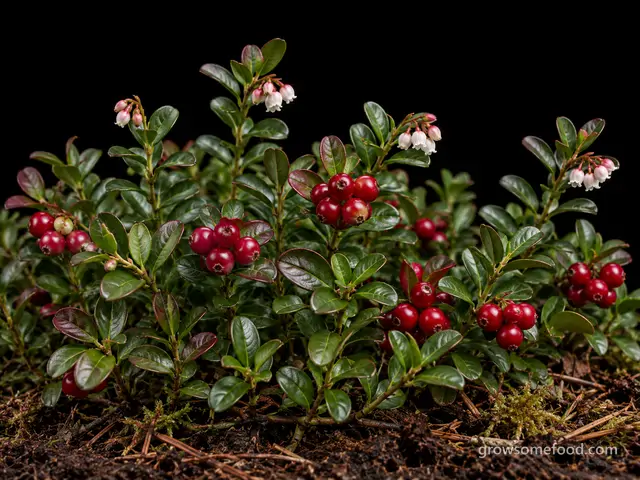
Lingonberry
A tough little evergreen groundcover from the far north that also feeds you: glossy leaves all winter, pink bells in spring, and firm scarlet berries for the sauce that goes with everything.
Ripe berries are entirely safe. They are fiercely tart raw, which is a flavor matter and not a hazard. The real risk here is the name: 'mountain cranberry', 'lowbush cranberry' and 'partridgeberry' are all used for other plants as well, so identify by the plant rather than the label - lingonberry is a low EVERGREEN mat with small glossy leaves and firm red berries in clusters at the shoot tips.
Overview
The one thing to knowFirst, the name is a mess: lingonberry is also called mountain cranberry, lowbush cranberry, cowberry and partridgeberry, and every one of those names belongs to some other plant too.
Lingonberry is a dwarf evergreen shrub - really a creeping mat 4 to 12 inches high - that grows across the boreal north on both sides of the Atlantic. It gives you three things at once: a genuinely handsome year-round groundcover of small glossy dark leaves, clusters of pink-white bells in late spring, and firm scarlet berries that are the backbone of Scandinavian cooking. It is hardy to about -40°F under snow, and in cold-climate gardens where almost no fruit is reliable, this one is.
Two things to be clear about before you plant. First, the name is a mess: lingonberry is also called mountain cranberry, lowbush cranberry, cowberry and partridgeberry, and every one of those names belongs to some other plant too. It is not the bog cranberry, and it is not the highbush cranberry, which is a Viburnum and no relation. Second, it demands the same acidic soil a blueberry does - pH 4.0 to 5.5 - and it is slow, so the first two or three years are a weeding job while the mat knits together. Get those right and it will hold the ground and feed you for decades.
Quick facts
- Life cycle
- Perennial, lives about 20 years
- Height
- 10 in4 to 16
- Spread
- 24 in12 to 36
- Cold
- Takes hard frostdamaged below -40°F
- Heat
- Struggles above 80°F
Full sun or part sun or part shade · medium water · well-drained soil · 18 in apart (12 to 24) · transplant or cuttings or division
When to plant
Fall transplanting is open for 4 more days.
- Transplant Aug 6 – Sep 25 Closes in 4 daysAbout 11 weeks before to 4 weeks before your first frost (Oct 25 here)Zone 7 is the warm limit and only works with genuinely cool summers - give afternoon shade, deep acidic mulch and steady moisture. Heat, not cold, is what kills lingonberries.
Frost here: last around Apr 10 (Mar 27 to Apr 24 most years), first around Oct 25. Zone averages, your own yard may run a week or two either way.
Life stages
One stage to settle in, then four that repeat each year. Windows are typical; your zone and weather move them.
Settling in (years 1-3)
The first year after planting- DoGet the soil pH to 4.0-5.5 BEFORE plantingLingonberry wants ground at least as acidic as a blueberry's, and no amount of watering or feeding fixes the wrong pH. Test first; amend with elemental sulfur well ahead, or build a bed of peat, pine bark and sand. Planting into ordinary garden soil is the usual reason a lingonberry never thrives.
- WeedWeed relentlessly while the mat fills inevery 2 weeksThis is the job that actually decides whether the planting works. Lingonberries are low and slow and cannot out-compete anything; a bed left to itself for one season is a weed patch with a few lingonberries in it. Hand-weed, do not hoe - the roots are shallow.
- MulchMulch 2-3 inches with pine needles, bark or sawdustAcidic mulch holds moisture over the shallow roots, keeps them cool, and suppresses the weeds that would otherwise swamp a young planting. Keep it topped up every year - it is permanent infrastructure here, not a one-off.
- WaterNever let the root zone dry outevery 3 daysThe roots are fine, shallow and hairless, so a lingonberry has no drought reserve at all. Water so the top few inches stay damp - but in free-draining ground, because standing water rots it just as fast.
- PrunePick the flowers off the first yearStrip the first season's bloom so the plant puts everything into roots and runners. You are trying to build a mat; fruit can wait a year.
Watch for- Yellowing between green leaf veins (soil pH has crept up)
- Weeds closing over the young plants
- Plants sitting still for two seasons (normal - they spread underground before they spread above it)
Bloom (often twice)
May to Jul, every year- PollinateLet the bumblebees work, and plant two cultivarsLingonberry is self-fertile, so a single cultivar will fruit - but two different cultivars flowering together set noticeably more and larger berries. Bumblebees are the main pollinator; do not spray anything at bloom.
- InspectExpect a second bloom on European cultivarsMost named cultivars flower in late spring and again around midsummer, which is why they give a small summer picking and then a heavier main crop in fall. A second flush of little pink bells in July is normal, not confusion.
Watch for- Late frost on open flowers (the bells are more tender than the plant)
- Very few flowers on a heavily fertilized planting - too much nitrogen gives leaves instead
Berries filling
Jun to Aug, every year- WaterKeep water steady while berries sizeevery 4 daysAbout an inch a week through fruit filling. Drought at this stage gives small, hard berries and can make the plant shed them outright.
- FertilizeFeed at HALF rates, with an acid fertilizer onlyLingonberry evolved on poor, acidic ground and is easily overfed - heavy nitrogen gives lush leaves, few berries and winter-tender growth. Use an ammonium-based rhododendron or azalea formula at half the label rate, once in spring. Never lime, never nitrate.
Watch for- Small hard berries in a dry spell
- Green fruit dropping
- Birds starting to work the patch as color shows
Picking (small summer crop, main fall crop)
Jul to Oct, every year- HarvestPick when berries are dark red right throughweeklyWait until a berry is deep red all over, including the shaded underside - pale or orange-tinged fruit is not ready. Unlike a blueberry, a ripe lingonberry stays firm, so softness is not your cue.
- HarvestTake the main crop after the first light frost if you canA light autumn frost genuinely knocks the sharp edge off lingonberries and is the traditional signal in the north. The berries hold on the plant for weeks without spoiling, so there is little cost to waiting.
- ProtectNet if birds find the patchA low mat is easy to cover. Lay netting over hoops before the fruit colors, and keep the edges pinned at ground level.
Watch for- Birds stripping a small planting
- Berries left so long they shrivel (rare - they keep unusually well on the plant)
Winter (it stays evergreen)
Nov to Mar, every year- ProtectShield the leaves where snow cover is unreliableLingonberry keeps its leaves all winter, so it goes on losing water through them while the ground is frozen and the roots cannot replace it. Under snow it is safe to -40°F; exposed to winter sun and wind it burns. Lay evergreen boughs, a light straw cover or a burlap screen over the bed in zones where snow comes and goes.
- WaterWater deeply before the ground freezesA well-watered plant going into winter is far more resistant to desiccation than a dry one. This one autumn soaking prevents most winter burn.
Watch for- Leaves turning bronze-purple (normal winter color, not damage)
- Leaves going brown, crisp and curled on the windward or sunny side (winter burn)
- Frost heaving lifting shallow-rooted young plants
Harvest
- Deep red right through, including the shaded underside - no orange or pale patches
- Still firm and glossy; a ripe lingonberry never softens the way a blueberry does
- Left until after the first light frost where you can, which takes the hard edge off the tartness
- Pick when berries are dark red right through · weekly
- Take the main crop after the first light frost if you can
- Net if birds find the patch
Per plant 2 to 24 ozPicking pick as they ripen
Cook with lingonberries
Watch out for
4 to know. 1 is high-risk: Root Rot. 2 are active in September.
Root RotSeverity High DiseasenowThe contradiction at the heart of growing lingonberry: it wants soil that is constantly moist AND sharply drained, and the wet half of that instruction kills far more plants than the dry half.
A peat-bark-sand raised bed solves it. Patches dying out in a low corner of an otherwise healthy mat are almost always this rather than winter damage.
Wilting in the middle of the day on a plant whose soil is damp - the classic tell, and the reason people water a rotting plant and finish it off. Leaves yellowing from the bottom up, dull off-color foliage, and growth that stalls for no visible reason. Whole shoots, or one side of the plant, collapsing while the rest still looks fine. Soft, dark, or mushy tissue at the base of the stem or at the crown, sometimes with a sour smell. Lift a failing plant and look at the roots: healthy ones are firm and pale, rotted ones are brown or black and slimy, and the outer layer slips off between your fingers leaving a thread of core behind. Seedlings that topple over at soil level are the same problem, called damping-off.
There is no cure for tissue that has already rotted, so act on the conditions rather than looking for a spray. Stop watering at once and fix the drainage - open up compacted soil, or move the plant to a raised, sharply drained position or a container. Lift a badly affected plant, cut away every soft dark root and rotted section with a clean blade back to firm pale tissue, and replant only the healthy parts into fresh free-draining soil or mix. Often the better move is to give up on the plant and save its offspring instead: cuttings, offsets, or divisions taken from firm healthy growth root readily and give you a clean start. Bin the rotted material rather than composting it, and correct the drainage before you replant, because the rot comes straight back in the same wet spot.
Drainage is the whole defense. Match the plant to the site first - something that wants sharp drainage will not survive heavy clay or a low, water-collecting spot however well you tend it. Where the ground is heavy, plant on a raised bed, berm, or slope, or grow in a container. Set plants at the depth they were already growing, since burying the crown or the root flare is a common cause of rot, and keep mulch pulled back a few inches from the stem base instead of piled against it. Water the soil rather than the calendar: check that the top inch or two is dry before watering again, cut back hard in cool weather and winter dormancy, and never leave a pot standing in a full saucer. Do not plant or dig in soggy ground, and go easy on rich amendments for plants that want it lean. Rotate annual crops, and start with clean healthy plants and fresh mix.
Root rot is not one organism but a group of soil fungi and water molds - Pythium, Phytophthora, Fusarium, Rhizoctonia and others - that sit harmlessly in most soils and only turn destructive when the ground stays saturated. Waterlogged soil drives the air out, the roots suffocate, and the weakened tissue is invaded and goes soft, brown, and stringy. Because the damage is underground you usually see it first as something that looks like drought: wilting, yellowing, stunting, a plant that does not respond to being watered. Overwatering, heavy compacted ground, a low spot that collects runoff, a pot with no drainage or a saucer left standing full, and cold wet soil in winter are the usual causes. Once roots have actually rotted there is no cure - this is a problem you prevent rather than treat.
Birds & WildlifeSeverity Medium WildlifenowLess punishing than on most berries, because the fruit is very tart and birds usually have easier options in autumn - but a low mat is trivially easy to net over hoops, so cover a small planting if you see them working it.
Grouse and other ground birds take more interest than songbirds do.
Fruit disappearing from the outermost, most exposed parts of the plant first, and from the top of a tree where you cannot reach anyway. Single neat pecks and gouges in ripening fruit, with several fruits sampled rather than one eaten through - the classic sign that it was birds rather than an animal. Heads of grain or seed going visibly lighter and emptier as they ripen, with hulls and chaff scattered underneath. Freshly sown seed vanishing off the surface of a bed before it germinates. Bird traffic in and out of the plant picking up as the crop colors, and birds waiting on nearby wires and branches. Wasps arriving at the pecked and split fruit shortly afterward.
There is no treatment once a crop is being taken - only protection and timing, so the answer is to get netting on and to pick what is ready. Reflective tape, flash ribbon, spinners, and decoy predators do work, but only for a few days at a time: birds habituate fast, so move and rotate them and never rely on them as the main defense for a crop you care about. Cut and gather grain or seed heads a little early, at firm dough, and finish drying them under cover instead of leaving them standing for the flocks. Plant a little extra, or a decoy crop the birds prefer, and accept sharing anything that crops heavily. On a wild or foraged patch, fruit going to birds and small mammals is the point of the plant rather than a problem to solve.
Net, and net early. Bird netting draped over a frame or hoops so it stands off the fruit, with the edges closed at ground level, is the only thing that reliably works at harvest scale - and it has to go on before the crop starts to color, because once birds have found the food they are far harder to displace. Keep fruit trees small enough that netting them is actually feasible; that decision gets made years earlier, at planting. Bags of mesh, organza, or paper slipped over individual heads, clusters, or prize fruit protect a small crop without netting the whole plant. Then shorten the exposure: pick promptly and completely rather than leaving ripe fruit hanging as a lure, clear split and dropped fruit that draws birds and wasps alike, and where a crop can finish off the plant, harvest a little early and ripen or dry it under cover. Rake in or cover broadcast seed so it is not lying in plain view.
Birds find ripening fruit and seed before you do. Robins, waxwings, starlings, catbirds, jays, sparrows, finches, blackbirds, and doves all work a garden, and the pressure arrives in a narrow window - the last days before harvest, when sugar rises, color changes, and the crop softens or the grain hardens. A flock can strip a small planting in a day or two, and birds that only peck rather than take whole fruit still leave wounds that rot or draw wasps. Squirrels, chipmunks, and other wildlife usually turn up on the same crop at the same time. This is competition rather than disease: the birds are not harming the plant, and a big tree or a heavy-cropping bush often has enough for everyone - but on a small planting it can be the difference between a harvest and none.
Winter Burn (Evergreen Desiccation)Severity Medium DisorderThe one seasonal job most growing guides leave out, and the usual reason a lingonberry bed looks half dead in March.
It is a zone 5-7 problem far more than a zone 2-3 one, because the far north gets dependable snow cover and the middle of the country does not.
Leaves going brown, crisp and curled, worst on the side facing the winter sun or the prevailing wind and on any growth standing above the snow line. Damage appearing in late winter and early spring rather than during the coldest weather. Whole exposed shoot tips dying back while growth that stayed buried under snow is untouched. Do not confuse it with the normal bronze-purple color lingonberry foliage takes on every winter, which is healthy and reverses in spring.
Wait before you cut anything. Damaged foliage looks worse than the plant usually is, and lingonberry regrows readily from the crown and rhizomes - let new growth start in spring and then shear off what is genuinely dead. Water as soon as the ground thaws to help the plant recover, and plan cover for the following winter. Repeated severe burn year after year is a siting problem: move the planting somewhere sheltered.
Water the bed deeply in late autumn before the ground freezes - a well-hydrated plant going into winter resists desiccation far better than a dry one. Keep the acidic mulch topped up over the roots. Where snow cover is unreliable, lay evergreen boughs, a light straw covering, or a burlap screen over the bed for the winter, or site the planting where it is sheltered from winter sun and wind rather than out in the open. An anti-desiccant spray is an option on a small planting but is a weaker defense than physical cover.
Not a pest or a disease but a water problem in winter. Lingonberry keeps its leaves all year, so on bright, windy winter days the foliage goes on losing moisture while the soil is frozen and the roots cannot replace a drop of it. The leaves dry out and die from the edges in. Under snow the plant is insulated and perfectly safe to around -40°F; it is exposure, not cold, that does the damage - which is why lingonberries often come through a brutal snowy winter untouched and get scorched by a mild, dry, open one.
Gray Mold (Botrytis)Severity Low DiseaseAttacks the flowers rather than the firm, acidic fruit here - a wet, cold spring can blight a lot of bloom and quietly cost you the crop before you notice.
It is worst on dense over-fertilized mats, which is one more reason to keep feeding light.
Browned, collapsed flowers and buds; soft, water-soaked brown patches on leaves, stems or fruit; and a dusty gray-brown fuzz over the dead tissue. Rot jumping between two pieces of fruit or two petals that touch is the signature, and it often shows up again in the fridge or the storage box days later.
Cut out and destroy infected tissue as soon as it appears, and bag it rather than composting it. Harvest ahead of a prolonged wet spell and store the crop dry and cold. Protective fungicides help through long damp weather, but airflow and sanitation do most of the work.
Space and prune for airflow, water at the base rather than over the top, and go easy on nitrogen, which produces the soft growth it prefers. Clear dead leaves, spent flowers and rotting fruit at every pass, since that debris is where it overwinters. Handle fruit, buds and bulbs gently, because it enters through bruises, and cure and store anything you keep dry and well ventilated.
Botrytis cinerea and its relatives - the fuzzy gray-brown mold of cool, wet, humid weather. It blights flowers and buds, rots ripening fruit, and moves into soft, aging, bruised or frost-damaged tissue through the smallest wound, coating whatever it kills in dusty gray spores. It overwinters on dead plant debris, spreads on air currents and by direct contact between touching tissue, and keeps working after harvest, which is why it also ruins fruit and bulbs in storage.
Good & bad neighbors
Plant nearby
-
The natural pairing: identical acid-soil, moisture and mulch requirements, and lingonberry makes an evergreen living mulch under the taller bushes. One acidic bed then serves both, which is much less work than maintaining two.
-
Same acidic, moist, part-shade conditions, so grouping them lets you build and maintain one acidic bed. All parts of rhododendron and azalea are toxic if eaten (grayanotoxins) - keep them clear of where children pick berries, which matters more than usual next to a low red-berried plant.
- Traditional pairings, thin evidence
-
Another evergreen Ericaceae with the same acid-soil needs - a good structural partner in a shaded acidic bed where lingonberry covers the ground beneath it.
-
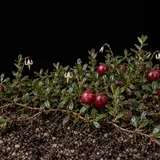
Cross-reference and the other half of the name problem. The true cranberry (Vaccinium macrocarpon) is a genuine close relative and shares this plant's acid-soil requirement - but it is a bog plant that wants consistently wet ground, while lingonberry needs sharp drainage. Related, similar-looking, and emphatically not interchangeable in the garden.
-
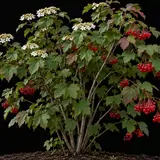
Cross-reference rather than a planting recommendation. Highbush cranberry is a Viburnum and no relation to this plant or to the true bog cranberry, despite all three sharing the word. If you came here looking for a red-berried shrub called cranberry, check which plant you actually mean before you plant or pick.
Keep apart
-
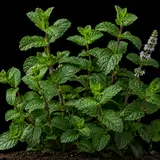
Mint will simply erase a lingonberry bed. This is a slow, low, non-competitive plant, and any running herb or vigorous groundcover put near it wins within a season.
-
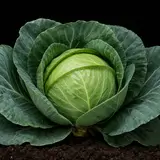
Heavy feeders that want limed, near-neutral soil - directly opposed to the acidic, lean conditions lingonberry needs. Never lime a bed anywhere near it.
Varieties · 7
You pick one when you add Lingonberry to your garden. Its days to maturity set your harvest window.
European Lingonberry 6 varieties
Koralle
Dense 10-12 inch evergreen mound covered in heavy clusters of bright red berries.
twice-bearinghigh-yieldornamentalThe most widely planted lingonberry cultivar in the world and the usual starting point: a Dutch selection with very heavy crops of medium-large bright red berries, two flushes a year, and a dense, tidy, thoroughly ornamental habit around 10-12 inches high. Reliable, available, and a good pollen partner for anything else on this list.
Red Pearl
Large dark red berries on a vigorous spreading mat to about 12 inches.
twice-bearinglarge-fruitvigorousspreaderA Dutch cultivar with notably large, dark red berries and a vigorous spreading habit that fills a bed faster than most - useful when you are trying to establish ground cover as well as a crop. Generally reported as more tolerant of less-than-perfect soil than its siblings, though it still wants acidity.
Erntedank
Upright 10-14 inch plants with medium red berries in tight clusters.
twice-bearinguprightgood-flavorA German cultivar from the first wave of lingonberry breeding: upright growth to around 12 inches, dependable two-crop cropping, and good flavor. An old, well-tested variety and a sensible second cultivar to plant alongside Koralle for better fruit set.
American Lingonberry (ssp. minus) 1 variety
Wild American Lingonberry
A tight 2-6 inch evergreen carpet of small glossy leaves with small dark red berries.
nativeone-cropvery-lowextremely-hardyThe North American native subspecies (ssp. minus), sold by native-plant nurseries and known across the north as lowbush cranberry or mountain cranberry. A tiny 2-6 inch evergreen carpet with small, intensely flavored berries and a single late-summer crop. It yields far less than the European cultivars and is chosen for what it is - a hardy native groundcover for cold, acidic, difficult ground that also happens to make excellent sauce.
Grower tips
Notes from growers, tagged with the zone they grow in. A person reads every post before it appears.
Nobody has posted about Lingonberry yet. The first one usually saves someone a season.
Free account. Your post shows your grower name and zone, never your email.