Add it to your home screen and it opens full screen: no browser bars, one tap away, and everything stays signed in. Free, nothing to download from an app store.
- Tap the Share button in your browser
- Scroll down and choose “Add to Home Screen”
- Open GrowSomeFood from your home screen
- Open your browser’s menu
- Choose “Add to Home screen” or “Install app”
- Open GrowSomeFood from your home screen
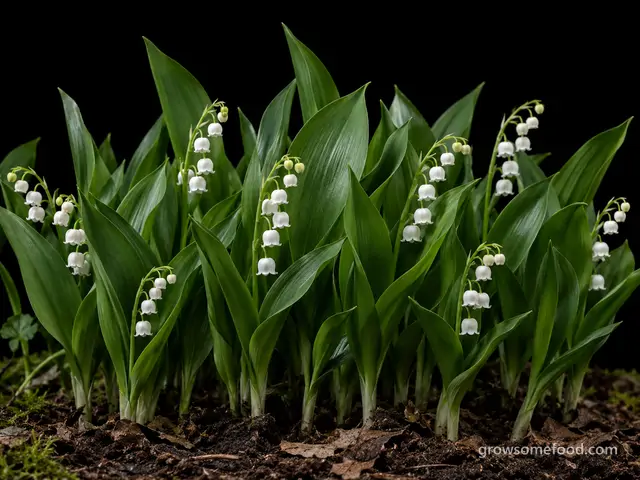
Lily-of-the-Valley
A beloved fragrant groundcover that is poisonous in every part, spreads without limit, and is the deadly lookalike for two commonly foraged spring plants.
POISONOUS - never eat any part, and never plant it where children or pets play. All parts contain cardiac glycosides; COOKING DOES NOT DESTROY THEM. The red-orange autumn berries are the usual cause of child poisoning, and even the vase water is toxic. For foragers: the spring shoots resemble RAMPS and SOLOMON'S SEAL - but this has NO onion smell and comes up as a dense carpet of short spears. Suspected ingestion is an emergency - call poison control immediately.
Overview
The one thing to knowIt is poisonous in every part.
Lily-of-the-valley (Convallaria majalis) is one of the most loved and most problematic plants in cultivation. The scent is genuinely extraordinary and the nodding white bells are beautiful - and everything else about it argues against planting it.
It is poisonous in every part. The plant contains cardiac glycosides - convallatoxin and relatives, chemically similar to digitalis - which disturb heart rhythm. Cooking, drying and boiling do not destroy them. The bright orange-red autumn berries are the usual cause of childhood poisoning, and even the water a bouquet has stood in is toxic.
It spreads without limit. A shallow mat of running rhizomes expands every year into a dense monoculture that shades out woodland wildflowers; it is listed as invasive in parts of the northern United States and Canada. Digging half of it out leaves fragments that regrow thicker.
And it is a foraging hazard. Its spring shoots come up alongside, and closely resemble, ramps and Solomon's seal - two plants people gather to eat. This entry exists mostly so you can tell them apart.
Quick facts
For identification. Not a growing guide.
- Life cycle
- Perennial, lives about 25 years
- Where it grows
- Part shade · Shade, consistently moist soil
- Height
- 8 in6 to 12
- Spread
- 24 in12 to 120
- Cold
- Takes hard frostdamaged below -40°F
- Heat
- Struggles above 90°F
- Self-sows
- Yes. Never let it set seed.
Through the year
How to recognize it in each season.
Spring shoots (the foraging hazard)
Mar to May, every year- Dense carpet of short spears - no onion smellLily-of-the-valley emerges as tightly packed pointed spears from a shallow running rhizome, each unrolling into two or three broad leaves from a basal sheath, and never getting taller than about 8-12 inches. This is the stage confused with RAMPS (which smell strongly of onion - lily-of-the-valley has no smell at all) and with SOLOMON'S SEAL shoots (which are individually spaced along a thick jointed rhizome and elongate into one arching 2-4 ft stem).
- Never gather shoots from a patch you did not watch last yearAt the spear stage no flower is available to confirm identity, and the leaves alone are not a safe test. The only reliable rule for ramps or Solomon's seal is to harvest from a clump you personally watched flower and die back the previous season.
Key signs- Dense uniform carpets of short spears in shade - not a ramp patch
- Any spring shoot gathered without an onion smell
Bloom
Apr to Jun, every year- Nodding white bells on a one-sided stalkA leafless stalk carries a row of small, waxy, nodding white bells along one side, powerfully fragrant. This is the only time of year the plant announces itself clearly - mark the patch now if you forage the same woodland for ramps or Solomon's seal.
- Do not bring it indoors as a cut flower where children or pets areThe flowers are the classic wedding posy, and the vase water they stand in becomes toxic. If it is in the house, keep the vase out of reach and pour the water down a drain, not into a pet bowl or a plant a pet chews.
Key signs- Cut posies left within reach of children or pets
- Vase water tipped into pet-accessible dishes
Orange berries (the child hazard)
Jul to Oct, every year- Remove berries where children playBright red-orange berries follow the flowers and are the single most common route to childhood poisoning from this plant - they look edible and sit at toddler height. Where a colony exists near a play area, cut the fruiting stalks off and bin them.
Key signs- Red-orange berries at child height
- Berries dropped onto lawns and paths
Winter rhizome
Nov to Feb, every year- The rhizome is where the colony livesTops die away but the shallow mat of running rhizomes ('pips') persists and expands every year. Any fragment left behind regrows, which is why partial digging makes a colony denser rather than smaller.
Key signs- Colony edges creeping into beds and woodland each year
Hazards
Poisoning by IngestionSeverity High DisordernowBerries within reach of children; any wild spring green gathered without an onion smell; symptoms including nausea, vomiting, blurred vision, confusion and irregular heartbeat.
Berries within reach of children; any wild spring green gathered without an onion smell; symptoms including nausea, vomiting, blurred vision, confusion and irregular heartbeat.
Suspected ingestion is an EMERGENCY - call poison control or emergency services immediately and do not wait for symptoms. Discard any doubtful foraged batch entirely rather than tasting to check.
Do not plant it. Remove fruiting stalks where children play, keep cut stems and their vase water out of reach, and never gather spring greens that do not smell of onion when crushed.
All parts contain cardiac glycosides that disturb heart rhythm, and cooking does not destroy them. The two common routes are children eating the bright orange-red berries and foragers mistaking spring shoots for ramps or Solomon's seal. Even vase water becomes toxic.
Aggressive Rhizome SpreadSeverity High DisordernowRhizomes running past the intended area, dense new shoots filling open water, and seedlings appearing in any bare wet mud downwind.
Rhizomes running past the intended area, dense new shoots filling open water, and seedlings appearing in any bare wet mud downwind.
Repeatedly cut stems below the waterline through a full season to drown the rhizomes, dig out the mats, or draw the water down; expect it to take persistence over more than one year.
Do not plant it; where it exists, install a deep physical barrier (8-10 inches) and keep it away from woodland edges. Remove berries to limit bird-carried spread.
A shallow mat of running rhizomes expands every year into a dense monoculture that shades out woodland wildflowers. Any fragment left in the soil regrows, so partial digging thickens the colony instead of reducing it.
Good & bad neighbors
First rule: keep Ramps apart. Never let lily-of-the-valley grow into a ramp patch.
Plant nearby
-
Not a planting partner - a replacement. Foamflower gives the same low, spreading, white-flowered shade cover in the same conditions, is native, and is not poisonous.
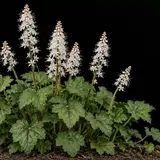
Keep apart
-
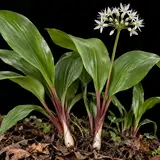
Never let lily-of-the-valley grow into a ramp patch. Their spring leaves look alike, and lily-of-the-valley is poisonous - putting them in the same ground removes the one thing that makes ramp foraging safe, which is knowing what else is in the patch. The test is smell: ramps reek of onion, this does not.
-
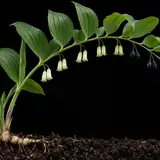
The shoot-stage lookalike pair. Solomon's seal shoots are individually spaced along a thick jointed rhizome and elongate into one arching stem; lily-of-the-valley comes up as a dense carpet of short spears and stays under a foot. Do not grow them together if you cut Solomon's seal shoots.
Grower tips
Notes from growers, tagged with the zone they grow in. A person reads every post before it appears.
Nobody has posted about Lily-of-the-Valley yet.
Free account. Your post shows your grower name and zone, never your email.