Add it to your home screen and it opens full screen: no browser bars, one tap away, and everything stays signed in. Free, nothing to download from an app store.
- Tap the Share button in your browser
- Scroll down and choose “Add to Home Screen”
- Open GrowSomeFood from your home screen
- Open your browser’s menu
- Choose “Add to Home screen” or “Install app”
- Open GrowSomeFood from your home screen
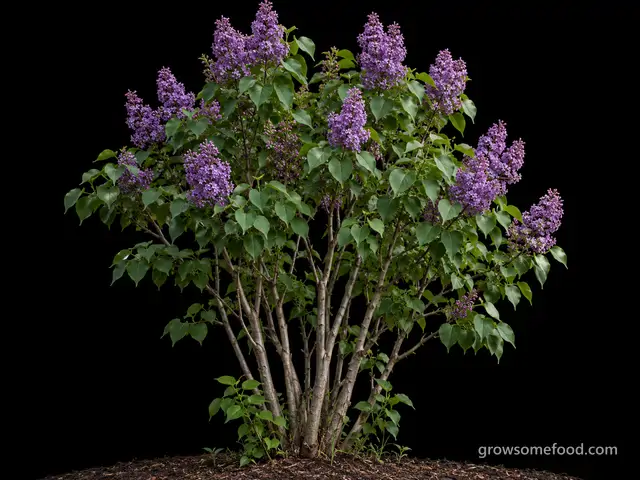
Lilac
The shrub that measures out spring across the northern half of the country: two weeks of the most recognisable fragrance in American gardening on a plant that routinely outlives the house. Hardy to zone 3, long-lived past 75 years, and asking only two things it will not negotiate - full sun, and real winter cold.
Lilac itself is non-toxic to people, dogs, cats, and horses, and the florets are edible in small amounts off unsprayed plants. Two name-alikes are not. 'Persian lilac' is chinaberry, whose yellow berries can be fatal to a child, and 'summer lilac' is butterfly bush. A true lilac makes dry brown seed capsules and never berries - so eat only Syringa flowers you grew yourself, and treat anything berried that someone calls a lilac as an unidentified plant.
Overview
The one thing to knowSyringa vulgaris came off the rocky hillsides of the Balkan Peninsula, travelled to Vienna through Ottoman gardens in the 1500s, and arrived in North America with the first colonial nurseries.
A lilac does nothing for eleven months of the year and then, for a fortnight in May, produces the most recognisable smell in American gardening. Syringa vulgaris came off the rocky hillsides of the Balkan Peninsula, travelled to Vienna through Ottoman gardens in the 1500s, and arrived in North America with the first colonial nurseries. The lilacs Governor Benning Wentworth planted at Portsmouth, New Hampshire around 1750 are still flowering; New Hampshire made the lilac its state flower in 1919 for exactly that reason. It is the shrub that marks where a farmhouse used to be.
Lilacs are genuinely tough - hardy to zone 3, indifferent to lean soil, unbothered by most pests - and they have exactly two demands that are not negotiable. The first is full sun: a lilac in shade makes a fine green bush and almost no flowers. The second is real winter: the flower buds need something like a thousand hours below 45°F, which is why lilacs fail in the Deep South and why the low-chill Descanso hybrids had to be bred for California. Beyond those, one rule of timing governs everything: a lilac sets next spring's buds within weeks of this spring's bloom, so the pruners come out in June and never in March.
Quick facts
- Winter chill
- 1000 hours below 45°F300 to 1400
- Life cycle
- Perennial, lives about 75 years
- Height
- 10 ft3 to 25
- Spread
- 8 ft3 to 15
- Cold
- Takes hard frostdamaged below -40°F
- Heat
- Struggles above 95°F
Full sun or part sun · medium water · well-drained soil · 8 ft apart (5 to 15) · transplant or cuttings or division
When to plant
Fall transplanting is open for 6 more days. Next: spring, Mar 13 to May 22.
- Transplant Aug 16 – Sep 27 Closes in 6 daysAbout 10 weeks before to 4 weeks before your first frost (Oct 25 here)Early fall planting into still-warm soil roots the shrub before winter with less heat stress. Water until the ground freezes and mulch, keeping the mulch off the stems.
- Transplant Mar 13 – May 22 Opens in 173 daysAbout 4 weeks before to 6 weeks after your last frost (Apr 10 here)The main window. Plant container or balled-and-burlapped shrubs into full sun and well-drained, near-neutral soil, at or barely above grade. Never a low spot that holds water. Water weekly through the first summer.
Frost here: last around Apr 10 (Mar 27 to Apr 24 most years), first around Oct 25. Zone averages, your own yard may run a week or two either way.
Life stages
One stage to settle in, then three that repeat each year. Windows are typical; your zone and weather move them.
Year 1 - rooting in
Day 0 to 180- WaterWater deeply once a week, then stop fussingweeklyA new lilac wants a deep soak once a week through its first summer, and less after that. Established lilacs are close to drought-tolerant. What kills them is the opposite problem: standing water. If the planting hole holds water for hours after a soak, move the shrub to higher ground or build the bed up - a lilac in a wet low spot declines for a few years and then dies.
- DoPlant at grade, in full sun, in sweet soilSet the shrub with its root flare at or barely above the surrounding soil - planted deep, a lilac sulks for years. Give it six or more hours of direct sun; anything less and you will get a healthy green bush and almost no flowers. Lilacs are one of the few garden shrubs that prefer soil on the alkaline side, so if a soil test comes back below about pH 6.0, work in garden lime at the label rate.
- MulchMulch 2-3 inches, pulled back off the stemsA mulch ring holds moisture and keeps the mower and string trimmer away from the bark. Keep it a few inches clear of the stems: mulch piled against lilac wood invites borers and rot. Skip the lawn fertilizer that drifts in from the turf - high nitrogen is one of the classic reasons a lilac makes leaves and no flowers.
Watch for- Water standing in the planting hole after a soak (the single most common way to lose a lilac)
- A shrub set too deep, with no visible flare where the stems meet the soil
Spring bloom
Apr to Jun, every year- HarvestCut for the vase when a third of the florets are openCut in the cool of the morning, choosing panicles with about a third to a half of the little florets open - a fully open truss shatters in a day. Strip every leaf below the water line, then split or crush the bottom inch of the woody stem and stand it in warm water. Expect four to seven days, which is short, and worth it.
- PrunePrune within three weeks of the last flower, or not at allThis is the whole of lilac care. The shrub sets next spring's flower buds within weeks of finishing this spring's bloom, so the pruners come out in June and go away again. Cut the spent trusses back to the pair of buds just below them, take out dead, weak, and crossing wood, and stop. Anything you cut in fall, winter, or early spring is next year's flowers.
- PruneRenew a third of the oldest stems each JuneAn old lilac turns into a thicket of tall bare trunks with flowers only at the top. The cure is renewal, not shearing: right after bloom, cut a third of the oldest, thickest stems clean off at ground level, and repeat the next two years. In three seasons the shrub is rebuilt from young wood at eye height with barely a lost season of bloom. Cutting the entire shrub to 12 inches also works but costs you two or three years of flowers.
- PruneShear lightly after the first flush to bring on the rebloomreblooming onlyReblooming lilacs flower again on new summer growth. A light shear over the whole shrub as the spring flush fades - taking off the spent trusses and an inch or two of tip - pushes the fresh growth that carries the summer and fall flowers. Water and a light feed after that shear pay for themselves.
Watch for- Blackened, water-soaked shoot tips and blasted flower trusses after a cold wet spell (bacterial blight)
- Bloom only at the very top of tall bare trunks - the shrub is asking for renewal pruning
Summer growth and bud set
Jun to Sep, every year- WeedThin the suckers - but know which ones to keepmonthlyCommon lilacs sucker freely, and on an own-root plant those suckers are the shrub renewing itself: keep a few well-placed ones and pull the rest while they are soft. On a GRAFTED lilac, suckers coming from below the graft are the rootstock, usually privet, and they will take the plant over. They give themselves away with different leaves and rampant growth - rip them off at the source rather than cutting them.
- InspectCheck the old trunks for borer holesLilac borer works the oldest, thickest stems. Look at the lower two feet of each trunk for small round holes with sawdust-like frass at the base, and for a cane whose leaves wilt and brown while the rest of the shrub is fine. Cut infested stems out at ground level and burn or bin them - this is one more reason to keep renewing the old wood.
- DoLeave the late-summer mildew alonePowdery mildew whitening lilac leaves in August is close to inevitable in a humid summer and it is almost pure cosmetics: the leaves have already done their year's work and the flower buds for next spring are already set. Do not spray a shrub that is finishing anyway. If it bothers you every year, plant a Korean or Meyer type - they barely mildew at all.
Watch for- A whole cane wilting in midsummer while the shrub around it looks fine (borer)
- Rootstock suckers with different-looking leaves on a grafted plant
- White powdery film on leaves from midsummer - cosmetic at this point
Fall and winter
Oct to Mar, every year- DoPut the pruners away until after next bloomEvery fat bud on the shrub right now is a flower truss for spring. Winter tidying, hard renewal cuts, and the neat early-spring haircut everything else gets are exactly how gardeners talk themselves out of a bloom. The one exception is genuinely dead, broken, or diseased wood, which can come out any time.
- ProtectGuard young stems from rabbits and volesRabbits strip the bark from young lilac stems under snow and voles chew the root collar. A cylinder of hardware cloth around each young stem, set an inch into the soil and taller than the expected snow line, ends the problem. Keep mulch pulled back from the base, since it is where voles nest.
- FertilizeSoil-test in late winter and lime if it is sourLilacs like a near-neutral to slightly alkaline soil, roughly pH 6.5 to 7.0, which is why they thrive around old stone foundations. If a test comes back acid, spread garden lime at the label rate in late winter. Skip the general feeding - a light dressing of compost is plenty, and nitrogen buys you leaves at the cost of flowers.
Watch for- Bark stripped from young stems at snow height (rabbits)
- The temptation to prune during winter cleanup - that is next spring's bloom
Watch out for
6 to know. 1 is high-risk: Failure to Bloom. 1 is active in September.
Failure to BloomSeverity High DisorderA dense, healthy, fast-growing shrub with abundant leaves and no flower trusses.
A dense, healthy, fast-growing shrub with abundant leaves and no flower trusses. Bloom only at the very tops of tall bare trunks, out of reach and out of scent. A young plant three or fewer years in the ground that has never flowered. A shrub in a bed that gets lawn fertilizer, or one shaded for part of the day by a tree that has grown since it was planted. In mild-winter regions, a shrub that leafs out beautifully every year and has never once set a bud.
Diagnose before cutting. If it is shade, remove the competing limbs or move the shrub. If it is pruning timing, simply skip a year of pruning and the buds return. If it is nitrogen, stop feeding and wait a season. If it is age, wait - three to five years to the first real bloom is normal. If it is an overgrown thicket flowering only at the top, renew a third of the oldest stems at ground level each June for three years. If it is chill, no treatment exists; replace the plant with a low-chill hybrid or a crape myrtle.
Site in six or more hours of direct sun and keep it there - the commonest cause is a tree that grew up beside it. Prune only in the three weeks after flowering. Keep lawn fertilizer and other high-nitrogen feeds out of the bed; compost is enough. Plant at grade rather than deep. In zones 8 and warmer, buy a low-chill Descanso hybrid or grow something else, because a common lilac will never get the chilling hours it needs.
By far the most common complaint about lilacs, and almost never a disease. A healthy, vigorous, green shrub that produces no flowers has one of five things wrong with it: too little sun, pruning done at any time other than the few weeks right after bloom, too much nitrogen, a plant that is simply too young, or - south of about zone 7 - not enough winter chilling to set flower buds at all. A lilac forms next spring's buds within weeks of finishing this spring's bloom, so from midsummer onward every cut removes flowers. Lilacs also bloom in cycles, and a light year after a spectacular one is normal rather than a problem.
Root RotSeverity Medium DiseaseThe commonest way people lose a lilac outright, and it is nearly always a siting mistake rather than bad luck.
Lilacs want sharply drained ground and will not tolerate a low spot that puddles, a downspout outfall, or heavy clay that stays sodden through winter. The decline is slow - a few thin years, then dieback and death - so it is rarely recognised for what it is. Plant high, on a berm or raised bed in heavy soil, and never plant a replacement lilac in the same wet hole.
Wilting in the middle of the day on a plant whose soil is damp - the classic tell, and the reason people water a rotting plant and finish it off. Leaves yellowing from the bottom up, dull off-color foliage, and growth that stalls for no visible reason. Whole shoots, or one side of the plant, collapsing while the rest still looks fine. Soft, dark, or mushy tissue at the base of the stem or at the crown, sometimes with a sour smell. Lift a failing plant and look at the roots: healthy ones are firm and pale, rotted ones are brown or black and slimy, and the outer layer slips off between your fingers leaving a thread of core behind. Seedlings that topple over at soil level are the same problem, called damping-off.
There is no cure for tissue that has already rotted, so act on the conditions rather than looking for a spray. Stop watering at once and fix the drainage - open up compacted soil, or move the plant to a raised, sharply drained position or a container. Lift a badly affected plant, cut away every soft dark root and rotted section with a clean blade back to firm pale tissue, and replant only the healthy parts into fresh free-draining soil or mix. Often the better move is to give up on the plant and save its offspring instead: cuttings, offsets, or divisions taken from firm healthy growth root readily and give you a clean start. Bin the rotted material rather than composting it, and correct the drainage before you replant, because the rot comes straight back in the same wet spot.
Drainage is the whole defense. Match the plant to the site first - something that wants sharp drainage will not survive heavy clay or a low, water-collecting spot however well you tend it. Where the ground is heavy, plant on a raised bed, berm, or slope, or grow in a container. Set plants at the depth they were already growing, since burying the crown or the root flare is a common cause of rot, and keep mulch pulled back a few inches from the stem base instead of piled against it. Water the soil rather than the calendar: check that the top inch or two is dry before watering again, cut back hard in cool weather and winter dormancy, and never leave a pot standing in a full saucer. Do not plant or dig in soggy ground, and go easy on rich amendments for plants that want it lean. Rotate annual crops, and start with clean healthy plants and fresh mix.
Root rot is not one organism but a group of soil fungi and water molds - Pythium, Phytophthora, Fusarium, Rhizoctonia and others - that sit harmlessly in most soils and only turn destructive when the ground stays saturated. Waterlogged soil drives the air out, the roots suffocate, and the weakened tissue is invaded and goes soft, brown, and stringy. Because the damage is underground you usually see it first as something that looks like drought: wilting, yellowing, stunting, a plant that does not respond to being watered. Overwatering, heavy compacted ground, a low spot that collects runoff, a pot with no drainage or a saucer left standing full, and cold wet soil in winter are the usual causes. Once roots have actually rotted there is no cure - this is a problem you prevent rather than treat.
Lilac Bacterial BlightSeverity Medium DiseaseThe commonest reason a lilac's flower trusses brown and blast just as they were about to open, and it is often blamed on frost.
On a mature shrub it is a lost season, not a lost plant.
Young shoots that turn brown to black from the tip down, often collapsing at a soft, water-soaked spot partway along the stem. Flower buds and open trusses that brown and shrivel without opening properly, which is where the older name 'blossom blast' comes from. Angular brown spots on young leaves, sometimes with a yellow halo. Damage appearing suddenly after a cold, wet, windy spell in spring, and worst on the youngest, softest growth.
There is no cure for infected tissue, so cut it out. Prune affected shoots back well below the visible damage, into clean healthy wood, and do it in dry weather; disinfect the blades between every cut with rubbing alcohol or a household disinfectant, because the pruners themselves spread it. Destroy the prunings. Copper sprays applied as buds break can reduce infection where the disease recurs every year, but they protect healthy tissue only and will not rescue blackened shoots. Most established shrubs regrow and bloom normally the following spring.
Do not force soft growth - skip high-nitrogen feeding, which is the single biggest risk factor. Prune for air movement so foliage dries quickly, avoid overhead watering, and space plants properly. Make all pruning cuts in dry weather. Rake up and remove fallen infected leaves and prunings rather than composting them, since the bacterium overwinters in debris and in infected wood. In areas where cold wet springs are the norm, favour cultivars with a reputation for resistance and avoid siting a lilac in a frost pocket.
A bacterial disease (Pseudomonas syringae pv. syringae) that strikes in cool, wet springs, entering through frost cracks and pruning wounds and blackening young shoots and flower trusses from the tip down. Damage looks alarming and is rarely fatal on an established shrub, but a bad spring can take out most of a season's bloom. Soft, sappy growth forced by heavy nitrogen feeding is the most susceptible, and white-flowered cultivars are generally hit harder than purple ones. The same bacterium causes blight on many woody plants, so a nearby infected tree can be the source.
Lilac BorerSeverity Medium PestThis is the pest that punishes a lilac left to grow into a thicket of old trunks - and the reason the renewal pruning advice is worth taking seriously rather than treating as cosmetic.
One whole cane wilting, yellowing, and dying back in summer while the rest of the shrub looks perfectly healthy - the classic sign. Small round exit holes about a quarter inch across on the lower two or three feet of older trunks. Coarse sawdust-like frass packed in bark crevices or piled at the base of a stem. Swollen, cracked, or roughened bark over a tunnel, and stems that snap off in wind at a weakened point. Papery brown pupal cases left sticking out of exit holes in spring.
Cut infested stems out at ground level and burn or bin them - do not compost or stack them. There is no way to reach a grub already inside the wood with a spray, and systemic treatments perform poorly against this insect. Where the borer recurs annually, a bark spray applied to the lower trunks in spring at the start of adult flight, timed by a pheromone trap and labelled for this use, protects the wood from egg-laying; that is a professional-grade approach and rarely necessary in a garden. For most gardeners the answer is simply to keep renewing the old wood.
Renewal pruning is the real control: cutting a third of the oldest stems to the ground each June keeps the shrub young and removes the thick old wood the borer needs. Keep mowers and string trimmers away from the base, since wounds are where eggs are laid, and keep mulch pulled back off the stems. Do not leave pruning stubs. Keep the shrub unstressed with adequate water in drought, and remove and destroy infested stems promptly rather than stacking them nearby, because the adults emerge from cut wood.
The larva of a clearwing moth (Podosesia syringae) that looks convincingly like a wasp in flight. Adults emerge in spring and lay eggs on the bark of older stems, particularly near wounds and mower scars; the grubs tunnel into the wood and feed under the bark for a year, girdling stems from the inside. Stems more than about an inch thick are the targets, so this is a disease of neglected, overgrown lilacs full of old trunks and of shrubs damaged at the base. The same insect attacks ash and privet, which are close relatives.
Scale & Sooty MoldSeverity Medium PestOystershell scale is the lilac's own: grey-brown armoured bumps shaped like tiny mussel shells, encrusting older stems until the bark looks scabby and whole canes thin and die back.
It is armoured rather than soft, so there is no honeydew and no sooty mold to warn you. Crawlers hatch in late May to June - that is the window when oil actually works - and a dormant oil in late winter plus renewal pruning of the crustiest old stems does most of the job.
Rows of small brown, tan, black, white, or waxy bumps along stems, twigs, leaf midribs, and leaf undersides that do not brush off but can be scraped loose with a fingernail. A sticky shine on the leaves - and on the floor, table, or path beneath the plant - that later turns black with sooty mold. Ants running steadily up and down the stems, since they farm and defend scale for that honeydew; often the first sign anything is wrong. Yellowing leaves, weak thin growth, and dieback of individual branches or canes that are heavily encrusted. On fruit crops, scale covers and sooty mold directly on the fruit. Check the leaf undersides and the shaded inner wood, which is where colonies build up unseen.
Horticultural oil is the main control: it works by smothering, so it has to coat the insects thoroughly - stems, twigs, and leaf undersides - and it usually needs repeating, because the waxy covering shields them and no single pass reaches everything. On deciduous woody plants a dormant-season oil smothers the overwintering stage while the leaves are out of the way, and timing a growing-season spray to the crawler stage, when the young are mobile and uncovered, is far more effective than spraying settled adults. On a small plant or a light infestation, scrub or wipe the scales off by hand, or dab them with a cotton swab of rubbing alcohol. Prune out and destroy badly encrusted wood rather than trying to save it. Wash off the sooty mold once the scale is gone - it lives on the honeydew, not on the plant, and stops once the supply does. Anything you spray must be labeled for the plant, and oils can burn delicate foliage, so test first.
Inspect. Look over leaf undersides and stems regularly - on a crop you pick, every harvest is a scouting chance - and check every new plant thoroughly before you buy it, plant it, or set it beside anything else, because scale almost always arrives on a plant rather than flying in. Quarantine new houseplants for a few weeks. Keep plants unstressed and not over-fertilized, since soft, forced growth is what populations build on. Prune for airflow and light to open up the shaded inner growth where scale hides, and prune out heavily infested wood as routine maintenance - on anything that gets a hard annual pruning, that alone removes most of any buildup. Leave the lady beetles, lacewings, and parasitic wasps alone, since they normally keep scale down to nothing, and keep ants off the plant where you can, because ants protect the colonies from those predators. Indoors, avoid hot, dry, still winter air.
Scale insects are sap-suckers that spend most of their lives immobile, fixed to a stem, twig, or leaf underside beneath a waxy or shell-like cover. They look far more like bumps, blisters, or crusty encrustations than like insects, which is why an infestation is usually well established before anyone notices it. Soft scales excrete large amounts of sticky honeydew that drips onto everything below and grows a black sooty mold - and those blackened leaves are often the first thing a gardener actually sees. Armored scales produce no honeydew but sit under a hard shield that protects them from most sprays. They spread as tiny mobile crawlers in the weeks after hatching, which is the only stage that moves and the only stage that is easy to kill. Populations build on stressed plants, on crowded shaded growth, and above all on plants kept indoors in dry, still air over winter.
Powdery MildewSeverity Low DiseasenowOn lilac this is close to inevitable in a humid August and close to harmless: it arrives after the leaves have done their year's work and after next spring's flower buds are already set, so a whitened shrub still blooms normally.
Do not start a spray programme for it. If the grey look bothers you every year, the real fix is a Korean or Meyer type ('Miss Kim', 'Palibin'), which barely mildew, plus spacing and sun.
Round white powdery spots on the upper leaf surfaces that spread and merge until whole leaves look dusted. It usually starts on the oldest, lowest, most shaded leaves and works upward, so check there first. Look at the undersides too, and at stems, buds, and flower stalks, which get coated as it advances. Leaves that yellow, brown, curl, or go crisp and drop early under the coating. New growth that opens small, crumpled, or twisted where the fungus has reached the shoot tips. On plants where it gets onto the fruit, a dull gray film, russeted or scarred skin, and cracking. Late in the season, tiny dark specks scattered through the white felt - that is the fungus setting up to overwinter on the debris.
Start early: sprays protect healthy tissue, they do not clean up leaves that are already coated. Pick off and bin the worst leaves as soon as you see them, and open the plant up by thinning or pruning so air moves through. On anything that regrows quickly, shearing the whole plant back forces a clean flush and beats spraying. If it keeps spreading, potassium bicarbonate, horticultural oil, or neem applied weekly will hold it - cover both leaf surfaces. Sulfur also works, but it burns the foliage of some plants, should never go on in heat, and must not be mixed with or applied close behind an oil spray. Whatever you use must be labeled for the plant you are treating: follow that label and observe its pre-harvest interval on anything you eat. Do not compost badly infected material. Late-season mildew on a plant that is finishing anyway is usually cosmetic; on a crop still filling out it is worth acting on.
Give plants room. Crowding and still air are the biggest single driver, so space at the full recommended distance, thin seedlings properly, and divide or prune out congested growth until air moves through the plant. Full sun and an open position help; deep shade and a still corner against a wall are where it always starts. Water at the base rather than overhead, and water early in the day so nothing stays damp overnight. Keep plants evenly watered - drought stress at the roots leaves them far more susceptible, even though the fungus itself likes dry air. Go easy on nitrogen, since soft lush growth is the most vulnerable. Where resistant varieties exist for what you are growing, choosing one is the single most effective thing you can do on a plant that mildews every year. Clear infected leaves and stems away at the end of the season rather than composting them.
Powdery mildew is a fungal disease that coats leaves - and often stems, buds, and fruit - in a white-to-gray powder that looks like spilled talcum. It is not one fungus but a large family of them, each fairly specialised to its own group of plants, which is why mildew on one crop rarely jumps to an unrelated one beside it. Unlike most leaf diseases it does not need wet leaves: it thrives on warm dry days followed by humid nights, and it takes hold fastest where plants stand crowded in still air or in shade. The coating blocks light, so heavily covered leaves yellow, brown, and drop early. On many plants that is mostly disfiguring and arrives late enough not to matter; where it strips away the leaves a crop still needed to finish, it costs you size, sweetness, and quality.
Good & bad neighbors
Plant nearby
-
Daffodils bloom at the lilac's bare feet just before it leafs out, and the shrub's summer canopy then hides their dying foliage. Both want the same sun and sharp drainage, and neither is touched by deer.
-
The classic late-May pairing of American gardens - peonies open as the lilacs fade, in the same full sun and well-drained soil, and the two share every Memorial Day vase in the upper Midwest.
- Traditional pairings, thin evidence
-
A haze of blue-flowered catmint at the base covers the bare legs that every mature lilac develops, tolerates the same dry alkaline soil, and carries the bed for months after the lilac is done.
-
Cheap, permanent, and the right colour: a drift of muscari under a lilac flowers weeks earlier in the same shade of blue-purple, then vanishes before the shrub needs the space.
-
Bearded irises want exactly what a lilac wants - full sun, sweet soil, and dry feet - and their vertical fans read well against the shrub's mass. Keep them out at the drip line where the lilac's roots are thinner.





Varieties · 9
You pick one when you add Lilac to your garden. Its days to maturity set your harvest window.
Common and French Hybrid 4 varieties
Common Lilac (Syringa vulgaris)
Loose conical trusses of small lilac-purple florets on an upright 10-15 foot suckering shrub with heart-shaped leaves.
common-lilacold-woodvery-fragrantheirloomThe species itself, and the shrub behind every abandoned farmstead in the northern half of the country: pale lilac-purple trusses, the definitive fragrance, and a lifespan that runs past a century. Suckers freely, which is exactly how it gets passed along - dig a rooted sucker in spring and you have another one. Gets leggy and mildews in humid summers; renewal pruning is the fix.
Sensation
Rich purple single florets neatly rimmed with white, in full conical trusses.
common-lilacold-woodbicolourfragrantThe one people stop and stare at: deep purple florets each edged in a clean white picotee line, on a vigorous 8-12 foot shrub. Fragrant, superb in a vase, and prone to throwing the occasional all-purple reversion branch - cut those out at the source or they take over the shrub.
Dwarf Korean and Meyer 2 varieties
Miss Kim
Compact rounded shrub with small dark leaves and dense pale lavender-to-white trusses, burgundy in fall.
old-woodmildew-resistantlatefall-colourThe best all-round lilac for a modern garden: a tidy 4-7 foot shrub with icy lavender buds opening near-white, a spicier and arguably better fragrance than the common lilac, strong powdery mildew resistance, and burgundy fall colour. Blooms a couple of weeks after the common lilacs, barely suckers, and needs almost no pruning. If a foundation bed has room for one lilac, this is usually it.
Palibin (Meyer lilac)
Neat mounded shrub with tiny glossy leaves and abundant small pinkish-lilac trusses.
old-woodmildew-resistantsmall-gardencontainerThe true dwarf: a dense rounded 4-5 foot shrub covered in small pale lilac-pink trusses, mildew-resistant, non-suckering, and small enough for a large container or a low hedge. Often grafted onto a standard as a lollipop tree-form lilac for patios and small courtyards.
Reblooming 1 variety
Bloomerang Dark Purple
Rounded compact shrub with deep purple trusses in spring and lighter repeat trusses through late summer.
dwarffragrantsmall-gardenmodernA compact 4-6 foot rebloomer: a full flush of fragrant dark purple trusses with the spring lilacs, a summer pause, and then scattered repeat bloom on new growth from midsummer to frost. The repeat flush is genuinely smaller than the spring one, which is worth knowing before you buy. Shear lightly after the spring flush, then water and feed to drive the rebloom.
Low-Chill (Descanso hybrids) 1 variety
Lavender Lady (Descanso hybrid)
Fragrant single lavender trusses on an upright shrub, flowering in late winter to early spring in mild climates.
old-woodfragrantmild-winterThe lilac for mild-winter California and the low-chill South-West: an 8-12 foot shrub with fragrant single lavender trusses that flowers on roughly 150-400 chilling hours instead of the thousand-plus a common lilac demands. The original of the Descanso Gardens breeding programme and still the most widely grown of them. Expect a lighter show than a cold-winter garden would get.
Japanese Tree Lilac 1 variety
Ivory Silk (Japanese tree lilac)
Small upright tree with peeling reddish-brown bark and foot-long creamy-white flower plumes in early summer.
tree-formmildew-resistanturban-tolerantvery-hardyNot a shrub at all: a 20-25 foot single-trunk tree with glossy cherry-like bark, carrying huge creamy-white plumes in June, weeks after the shrub lilacs finish. Bred for the street - tolerant of pavement, salt, and pollution, hardy to zone 3, and notably resistant to borer, scale, and mildew. Its honey-privet fragrance is nothing like classic lilac and divides opinion sharply.
Grower tips
Notes from growers, tagged with the zone they grow in. A person reads every post before it appears.
Nobody has posted about Lilac yet. The first one usually saves someone a season.
Free account. Your post shows your grower name and zone, never your email.