
Add it to your home screen and it opens full screen: no browser bars, one tap away, and everything stays signed in. Free, nothing to download from an app store.
- Tap the Share button in your browser
- Scroll down and choose “Add to Home Screen”
- Open GrowSomeFood from your home screen
- Open your browser’s menu
- Choose “Add to Home screen” or “Install app”
- Open GrowSomeFood from your home screen
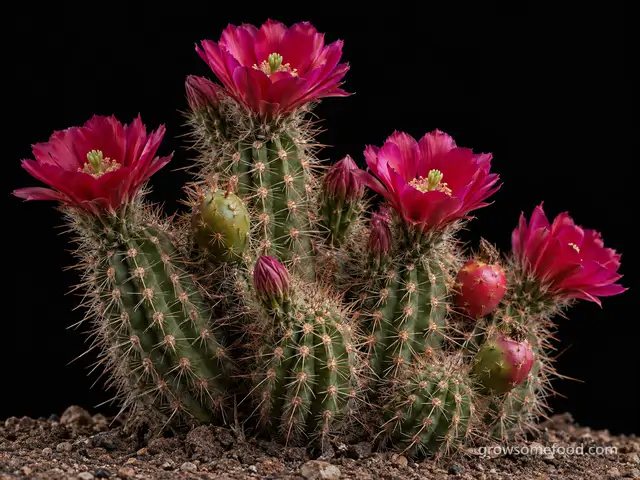
Hedgehog Cactus
A compact, clumping desert cactus with outsized, brilliant magenta spring flowers and sweet red fruit that genuinely tastes like strawberry - one of the most rewarding small cacti, easy in a rock garden or pot, and a real two-for-one of dazzling bloom and delicious harvest.
Safety notes Hedgehog cactus is a wonderful small edible: the red fruit is sweet and famously tastes like strawberry, and the flowers are edible too. The hazard is physical, not chemical - stiff, sharp spines cover the stems. Ripe fruit sheds its spines, but always de-spine fruit and handle plants with thick gloves and tongs, and site it away from paths and children. Non-toxic otherwise. Buy nursery-propagated plants only: wild cacti are legally protected and some Echinocereus are federally endangered.
Overview
The hedgehog cactus (Echinocereus engelmannii, Engelmann's or strawberry hedgehog) is one of the most rewarding small cacti of the Southwest. It forms a low, tidy clump or mound of cylindrical, ribbed, spiny stems - rarely more than a foot or so tall - native across the Sonoran and Mojave Deserts of Arizona, California, Nevada, Utah, and western New Mexico. (Texas has its own hedgehogs - E. enneacanthus, E. dasyacanthus and others - but not this one.) Its great gift is its flowers: unusually large, brilliant magenta-to-pink cups that, unlike the one-day blooms of many cacti, stay open for several days, making a spectacular spring show on a compact plant.
The one thing to knowThe hedgehog cactus (Echinocereus engelmannii, Engelmann's or strawberry hedgehog) is one of the most rewarding small cacti of the Southwest.
Quick facts
- Sprouts in
- 30 daysRange: 14–90 days
- Soil temperature
- 80 °FRange: 70–90 °F
- Height
- 12 inRange: 6–18 in
- Spread
- 18 inRange: 8–36 in
- Cold
- Takes light frostdamaged below 10°F
- Heat
- Struggles above 115°F
- Life cycle
- Perennial, lives about 30 years
- Save seeds
- About 60 days after plantingRange: 45–90 days
- Self-sows
- Yes, expect volunteers
- Soil
- Well-drained
- Water
- Low
- Plant spacing
- 18 inRange: 12–30 in
When to plant
No planting window on record for this zone. Nearest zone with one: 8a.
Frost here: last around Apr 10 (Mar 27 to Apr 24 most years), first around Oct 25. Zone averages, your own yard may run a week or two either way.
Life stages
Establish, grow, repeat
Getting established and returning each season are different parts of the story.
Stage 1 of 5 · Getting established
Rooting in (year 1)
Day 0 to 90 after transplanting
Care at this stage
-
Water lightly to establish, then dry off
Give a new plant occasional light watering in warm months to root in, always letting the gritty soil dry fully between. Once established it is very drought-tolerant. Wet, poorly drained soil is the main killer - keep it on the dry side.
-
Full sun to light afternoon shade; protect young plants from hard frost
Hedgehog cactus takes full sun and, in the hottest low desert, benefits from light afternoon shade. Protect young plants from hard freezes with frost cloth in the colder parts of its range.
Months are typical seasonal windows; climate, variety, and plant age can shift them.
Harvest
- Fruit fully red-to-purple, plump, and slightly soft in early summer, with spines loosened and easily brushed off
- Fruit twists off easily when ripe
- All spines wiped/brushed from the fruit before eating
- Pick the sweet red 'strawberry' fruit · every 5 days
- Share with wildlife
Picking pick as they ripen
Watch out for
3 to know. 1 is high-risk: Root Rot. None are active in October.
Root RotSeverity High DiseaseSeason: Jan, Feb, Jul, Aug, Nov, DecWilting in the middle of the day on a plant whose soil is damp - the classic tell, and the reason people water a rotting plant and finish it off.
Gritty sharply drained soil, sparing water with a full dry-down between, and no water at all in winter; grow it in pots in wet-winter climates. Cut out small early rot with a clean tool, and salvage healthy offsets to restart if the base goes.
Wilting in the middle of the day on a plant whose soil is damp - the classic tell, and the reason people water a rotting plant and finish it off. Leaves yellowing from the bottom up, dull off-color foliage, and growth that stalls for no visible reason. Whole shoots, or one side of the plant, collapsing while the rest still looks fine. Soft, dark, or mushy tissue at the base of the stem or at the crown, sometimes with a sour smell. Lift a failing plant and look at the roots: healthy ones are firm and pale, rotted ones are brown or black and slimy, and the outer layer slips off between your fingers leaving a thread of core behind. Seedlings that topple over at soil level are the same problem, called damping-off.
There is no cure for tissue that has already rotted, so act on the conditions rather than looking for a spray. Stop watering at once and fix the drainage - open up compacted soil, or move the plant to a raised, sharply drained position or a container. Lift a badly affected plant, cut away every soft dark root and rotted section with a clean blade back to firm pale tissue, and replant only the healthy parts into fresh free-draining soil or mix. Often the better move is to give up on the plant and save its offspring instead: cuttings, offsets, or divisions taken from firm healthy growth root readily and give you a clean start. Bin the rotted material rather than composting it, and correct the drainage before you replant, because the rot comes straight back in the same wet spot.
Drainage is the whole defense. Match the plant to the site first - something that wants sharp drainage will not survive heavy clay or a low, water-collecting spot however well you tend it. Where the ground is heavy, plant on a raised bed, berm, or slope, or grow in a container. Set plants at the depth they were already growing, since burying the crown or the root flare is a common cause of rot, and keep mulch pulled back a few inches from the stem base instead of piled against it. Water the soil rather than the calendar: check that the top inch or two is dry before watering again, cut back hard in cool weather and winter dormancy, and never leave a pot standing in a full saucer. Do not plant or dig in soggy ground, and go easy on rich amendments for plants that want it lean. Rotate annual crops, and start with clean healthy plants and fresh mix.
Root rot is not one organism but a group of soil fungi and water molds - Pythium, Phytophthora, Fusarium, Rhizoctonia and others - that sit harmlessly in most soils and only turn destructive when the ground stays saturated. Waterlogged soil drives the air out, the roots suffocate, and the weakened tissue is invaded and goes soft, brown, and stringy. Because the damage is underground you usually see it first as something that looks like drought: wilting, yellowing, stunting, a plant that does not respond to being watered. Overwatering, heavy compacted ground, a low spot that collects runoff, a pot with no drainage or a saucer left standing full, and cold wet soil in winter are the usual causes. Once roots have actually rotted there is no cure - this is a problem you prevent rather than treat.
Cochineal Scale & MealybugsSeverity Low PestSeason: May–SepFluffy white cottony masses clustered on the pads (crimson-red liquid when crushed), yellowing or weakening of heavily infested pads.
Fluffy white cottony masses clustered on the pads (crimson-red liquid when crushed), yellowing or weakening of heavily infested pads.
Blast off with a strong jet of water (the simplest control), or use insecticidal soap or horticultural oil on heavy infestations; remove badly infested pads.
Inspect new plants, give good airflow and full sun, and knock small infestations off early before they build.
The famous dye insect: a scale that lives on prickly pear pads under a protective white cottony wax, sucking sap. Light infestations are cosmetic, but heavy ones weaken and disfigure pads. Crushing the white masses releases the deep crimson dye that made cochineal historically valuable.
Sunscald & Corky ScabSeverity Low DisorderSeason: Jun–AugPale, corky, tan or yellow patches on the sun-facing side, especially on newly moved plants in the hottest desert.
Pale, corky, tan or yellow patches on the sun-facing side, especially on newly moved plants in the hottest desert.
None needed - the scarring is cosmetic and permanent; prevent further scald with gradual sun exposure and light afternoon shade.
Keep the original south-facing side facing south, harden shaded plants to full sun gradually, and site in bright but not reflected-oven exposure; avoid keeping the surface wet.
Corky, tan, or yellowed scarring of the skin from sunscald (often after abrupt exposure to intense sun or from the wrong orientation) or from prolonged excess moisture on the surface. Cosmetic rather than fatal, but permanent.
Good & bad neighbors
Plant nearby
-
The compact hedgehog and solid barrel make a strong scale contrast in a cactus bed, wanting identical full sun and sharply drained soil.
-
Brittlebush's silvery mounds and yellow spring daisies complement the hedgehog's magenta flowers, both thriving in dry, sunny, low-water desert conditions.
-
Desert penstemon spikes rise above low hedgehog clumps, both drawing pollinators (and hummingbirds) on the same lean, sunny, well-drained terms.
-
A natural desert-garden pairing: low clumping hedgehog at the foot of a bolder prickly pear, both edible cacti sharing full sun and sharp drainage.

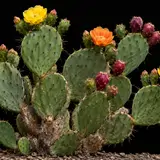
Varieties · 3
You pick one when you add Hedgehog Cactus to your garden. Its days to maturity set your harvest window.
Engelmann's Hedgehog (Echinocereus engelmannii)
The classic strawberry hedgehog: a low clumping cactus of ribbed spiny stems with large, brilliant magenta flowers that last several days and sweet red fruit tasting of strawberry.
Variety details for Engelmann's Hedgehog (Echinocereus engelmannii)
Low mound of spiny cylindrical stems topped by big magenta cups, then red fruit.
speciesnativeclumpingmagenta-flowerWidespread across the Sonoran and Mojave Deserts of Arizona, California, Nevada, Utah, and western New Mexico - it does not reach Texas. A superb small ornamental and edible.
Claret Cup Hedgehog (Echinocereus triglochidiatus)
A closely related hedgehog forming dense mounds of many stems topped by vivid orange-red, waxy, hummingbird-pollinated flowers.
Variety details for Claret Cup Hedgehog (Echinocereus triglochidiatus)
Rounded mound of stems covered in brilliant scarlet cup flowers, loved by hummingbirds.
related-speciesnativevery-cold-hardyred-flowerExceptionally cold-hardy (into zone 5 or colder), ranging into the mountains and cold interior West - the hedgehog to grow in colder gardens. Fruit edible. Note: one variety of this species, the Arizona hedgehog (var. arizonicus), is federally endangered, so buy nursery-propagated plants and never collect or trade wild ones.
Fendler's Hedgehog (Echinocereus fendleri)
A cold-hardier hedgehog of the high desert grasslands (New Mexico, Arizona, and beyond) with large purple-magenta flowers and sweet edible red fruit, tolerating colder winters than the low-desert engelmannii.
Variety details for Fendler's Hedgehog (Echinocereus fendleri)
Few-stemmed clump with large magenta-purple flowers and red fruit.
related-speciesnativecold-hardypurple-magenta-flowerA good choice for higher-elevation Southwest gardens. Note: one variety of this species, Kuenzler's hedgehog (var. kuenzleri) of New Mexico, is federally endangered, so buy nursery-propagated plants and never collect or trade wild ones.
Grower tips
Notes from growers, tagged with the zone they grow in. A person reads every post before it appears.
Nobody has posted about Hedgehog Cactus yet. The first one usually saves someone a season.
Free account. Your post shows your grower name and zone, never your email.