Great Blue Lobelia

Lobelia siphilitica · Campanulaceae
Flower Perennial Herb Ornamental
Native to eastern and central North America

Great blue lobelia is TOXIC and must not be eaten - like its sister cardinal flower, every part contains lobelia alkaloids (including lobeline, which acts somewhat like nicotine) that can cause nausea, vomiting, and in quantity serious poisoning. It has a traditional but dangerous medicinal history and should never be ingested. The sap can irritate skin and eyes in sensitive people, so wash up after handling. Grow it for the bumblebees, never for the table; keep it from children and pets.

Overview

The blue sister of cardinal flower: tall spikes of clear blue flowers for wet soil, rain gardens, and pond edges in late summer - a premier bumblebee plant that pairs stunningly with its scarlet, hummingbird-loving twin.

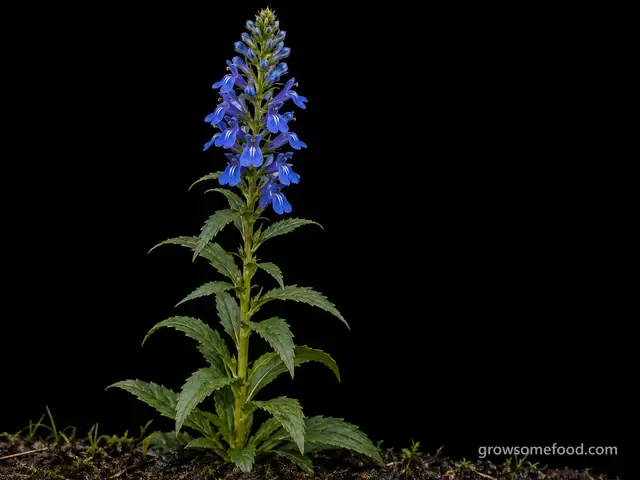
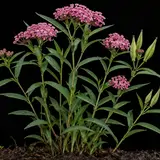
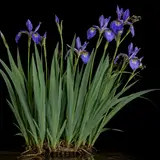
Great blue lobelia (Lobelia siphilitica) is the blue counterpart to cardinal flower - the same tall, late-summer flower spikes and the same love of wet soil, but in clear, cool blue instead of blazing scarlet. Dense spikes of two-lipped, white-throated blue tubular flowers rise 2-3 feet over leafy clumps just as summer wanes, one of the truest blues in the native garden and a rare bright note for a damp spot in late season.

Where cardinal flower's red is aimed at hummingbirds, great blue lobelia's blue is a bumblebee flower: heavy bumblebees are strong enough to force open and enter the blooms, and they're its main pollinators. It's a plant of wet meadows, stream banks, and pond edges, thriving in constantly damp to wet soil and rain gardens where most flowers fail. Like its scarlet sister it's short-lived but self-sows and forms offset rosettes to renew itself, and every part is toxic - so it's grown for its color and its bees. The two lobelias together, red and blue, make a classic wet-garden pairing.

At a glance

Sun
Full sun · Part sun · Part shade
Water
High
Spacing
12–18 in (typ. 15)
Mature height
24–42 in (typ. 30)
Start by
Direct sow · Transplant · Division
Frost
Hardy
Germination
14–30 days (typ. 21) @ 65–75 °F (typ. 70)
Start indoors
8–12 wks (typ. 10) before transplant
Spread
9–18 in (typ. 12)
Soil
Tolerates wet soil
Temperature
Damaged below -35°F · struggles above 95°F
Seed ready
90–140 days (typ. 110) (for saving)
Self-sows
Yes — expect volunteers

When to plant

Apr 10 – May 22
Primary TransplantSpring
Set out transplants after last frost into consistently moist to wet, rich soil in full sun to part shade; they establish quickly with ample water and often bloom the first year.
Sep 15 – Nov 1
Secondary TransplantFall
In mild-winter zones, plant in early fall into wet soil so it establishes a strong rosette before winter for stronger bloom the next year.
Oct 11 – Nov 8
Secondary Direct sowFall
Surface-sow the tiny seed in fall onto moist soil (it needs light and cold-stratification); it germinates in spring. Do not cover the seed - light is required.

Zone 7a typical frost: last Apr 10 · first Oct 25 (spring frost runs Mar 27–Apr 24 in a typical spread of years)

Life stages

  1. Year 1 - rooting in day 0–60 from transplant
    • Keep it consistently moist to wetevery 3 d
      Great blue lobelia is a plant of wet meadows and stream banks - it wants steady moisture and won't tolerate drying out. Water a new plant regularly and never let the soil dry; it's ideal for rain gardens, pond edges, and damp low spots.
    • Mulch to hold moisture, keep the crown clear
      Mulch helps hold the moisture it craves - but like cardinal flower it forms a low overwintering rosette, so keep mulch and fallen leaves OFF the crown over winter, or the rosette can smother and rot.
    Wilting or crisping in dry soil (a fast killer)Winter loss from a mulched-over or leaf-smothered rosette
  2. Spring & summer growth Apr, May, Jun, Jul (yearly)
    • Keep the soil moist all season
      Consistent, generous moisture is the single most important thing - keep the soil damp to wet through the whole growing season, especially in sun. It grows a bit shorter and stockier than cardinal flower, in leafy upright clumps.
    • Keep the basal rosette clear
      Weed gently around the low rosette of leaves; keeping it clear of smothering debris helps this short-lived plant survive to bloom and reseed, just as with its scarlet sister.
    Drought wiltSlugs or snails on the tender rosette in wet conditions
  3. Late-summer bloom Jul, Aug, Sep (yearly)
    • Watch the bumblebees
      The show: dense spikes of clear blue, two-lipped tubular flowers, striped white at the throat, blooming for weeks in late summer. Bumblebees are the main pollinators, big enough to force open and enter the flowers - the blue counterpart to cardinal flower's hummingbird show.
    • Leave some spikes to self-sow
      You can deadhead spent spikes to tidy or prompt a little rebloom, but leave several to set and drop seed - great blue lobelia is short-lived, so self-sowing is how a stand keeps itself going.
    Bumblebees working the blue flowers (the whole point)Butterflies and other long-tongued bees also visiting
  4. Rosette & winter Jan, Feb, Mar, Oct, Nov, Dec (yearly)
    • Keep leaves and heavy mulch off the winter rosette
      After bloom the plant forms a low overwintering rosette that must stay exposed to light and air - rake fallen leaves and heavy mulch off it, or the rosette rots. This, plus drought, is the main reason short-lived lobelias are lost over winter.
    • Let it self-sow and divide the rosette offsets
      Leave seed to self-sow, and in spring separate the small offset rosettes that form around the parent to make new plants - the best way to keep this short-lived perennial going, exactly as with cardinal flower.
    Rosette smothered by leaves or mulch (rake it clear)Frost-heaving in bare wet soil (a light airy mulch around, not over, the crown helps)

Watch out for

Drought Stress High DisorderJun, Jul, Aug, Sep

Not a pest but a siting problem, and on a moisture-loving plant it is usually the thing that actually kills it. When the soil dries out, leaf edges brown and crisp, foliage wilts and drops early, flowering and fall color are cut short, and growth thins. Hot sun, wind and exposed positions make it worse by pulling water out faster than the roots can replace it. A plant that wants reliably moist or wet ground has no drought tolerance to fall back on, and young or recently planted ones have the least of all.

Watch for: Wilting on hot afternoons, browning and crisping along leaf edges and tips, premature leaf drop, collapsed flower stems, and thin, stunted growth - showing up first on young plants and on the driest, most exposed side of the planting.

Prevent: Match the site to the plant: put a moisture-loving species where the ground actually stays damp - a rain garden, pond edge, ditch, seep or low spot - rather than in an ordinary border you intend to keep watered. Mulch to hold moisture and keep the roots cool, water deeply through every dry spell while the plant is establishing, and avoid hot, windy, exposed positions.

Treat: Water deeply and consistently, then mulch. Mild wilting reverses within a day or two, but a prolonged drought sets a plant back hard and can kill a young one outright. If a plant scorches every summer, the site is wrong - move it to damper ground rather than trying to water it through.

This is great blue lobelia's greatest threat. It is a wet-soil plant that wilts and crisps rapidly once the ground dries in the growing season, and a prolonged dry spell is often fatal.

Winter Rosette Rot / Smother High DisorderJan, Feb, Mar, Nov, Dec

A leading cause of winter loss for short-lived lobelias: the overwintering basal rosette rots when smothered by fallen tree leaves or heavy mulch, which cut off the light and air it needs, and can also be lost to frost-heaving in bare wet soil.

Watch for: Missing or mushy rosettes in spring under matted leaves or thick mulch; heaved crowns lifted out of wet soil.

Prevent: Rake fallen leaves and heavy mulch OFF the rosette; use only a light, airy mulch around (not over) the crown; ensure the site drains enough to avoid standing ice.

Treat: None once rotted - rely on self-sown seedlings and offsets; prevent by keeping the rosette clear each winter.

Slugs & Snails Low PestApr, May, Jun

Slugs and snails are nocturnal mollusks that rasp ragged holes in soft leaves, shear off seedlings at ground level, and chew into ripe fruit that touches the soil. They feed at night and in the early morning and spend the day hidden under boards, pots, dense mulch, leaf litter, and low foliage, becoming active in exactly the cool, damp, shaded conditions that suit young plants. Damage is heaviest in wet spells and on tender spring growth: a single wet week can erase a row of seedlings while an established, tough-leaved plant of the same species is barely marked. They lay clusters of small pearly eggs in damp soil and under debris, so a garden with plenty of cover carries a resident population year after year rather than being invaded from outside.

Watch for: Irregular ragged holes chewed out of the middle of leaves and along the edges - not the clean-edged cuts a caterpillar leaves. Seedlings that vanish overnight, or that are cut off at soil level with nothing left behind. Silvery dried slime trails across leaves, soil, pots, and paving in the morning: this is the giveaway that tells you it was mollusks rather than an insect. Chewed pits in ripe fruit, especially where it rests on the ground. Damage that shows up on the lowest, dampest leaves first and gets worse after rain or evening watering. Turn over a board, an upturned pot, or a clump of dense mulch during the day and look for the animals themselves sheltering in the cool underneath.

Prevent: Take away the daytime shelter first: lift boards and upturned pots, clear piles of debris, keep dense mulch pulled back from crowns and stems, and give crowded plantings enough airflow to dry out. Water in the morning rather than the evening so the surface is dry by the time they come out. Copper tape around containers and raised beds gives them a shock they will not cross, and it is the one barrier that reliably works. Get plants past the vulnerable stage quickly - start seedlings in pots and set them out at a decent size rather than direct-sowing into a cold wet bed, since most plants stop being worth defending once the leaves toughen. Leave the ground beetles, frogs, toads, and ground-feeding birds alone, because they eat mollusks all night for free and broad-spectrum slug pellets kill them too. Where thick-leaved or resistant varieties exist for what you are growing, they take far less damage.

Treat: Hand-picking works and costs nothing: go out an hour after dark with a headlamp, drop what you find into soapy water, and repeat nightly for a week or two - persistence is what wins, not any single product. Shallow beer traps sunk to soil level catch them too, but need emptying and refilling daily to be worth anything. Iron-phosphate bait is the standard control and is far lower-risk around pets and wildlife than the old metaldehyde products, but it is not harmless: many formulations include EDTA, and a dog that eats a quantity of pellets can develop iron toxicosis. Scatter it thinly per the label, never in piles, and keep dogs off a baited bed. Clear fallen foliage and debris in autumn, where the eggs are laid. In a wet climate this is a population you manage each season rather than one you eradicate - and on most established plants light grazing is cosmetic and needs nothing at all.

They chew the tender basal rosette the plant overwinters on, so keep debris off the crown. Established plants outgrow light damage.

Good & bad neighbors

Plant nearby
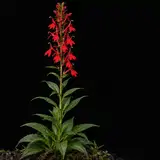
Cardinal FlowerIts own scarlet-flowered sister species (L. cardinalis) - identical wet-soil needs, simultaneous late-summer bloom, and a stunning blue-and-red combination that serves both bumblebees and hummingbirds. The two hybridize freely.
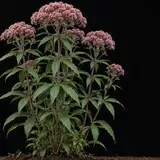
Joe-Pye WeedA classic wet-soil, late-summer native pairing: Joe-Pye weed's mauve butterfly domes behind great blue lobelia's blue bumblebee spikes, both thriving in rain gardens and pond edges.
Swamp MilkweedShares great blue lobelia's love of wet soil and full to part sun and adds monarch support and pink to the palette - a natural rain-garden trio with Joe-Pye weed and cardinal flower.
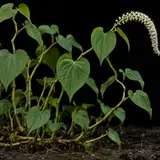
Lizard's TailA wet-shade groundcover that carpets the ground beneath great blue lobelia's spikes in a shadier damp planting, its low white flower tails contrasting the tall blue spikes.
Blue Flag IrisA native wetland iris for the same wet ground, blooming earlier in the season and contributing sword foliage and structure before the lobelia's late-summer blue takes over.Traditional pairing — evidence is thin.
Keep apart

Varieties · 3

Alba (White Great Blue Lobelia)Zones 4a–9b

Spikes of pure white two-lipped flowers over the same leafy clumps.

whiteselectionbumblebeewetlandself-seeding

A white-flowered form of great blue lobelia with the same wet-soil toughness and bumblebee value, its crisp white spikes cooling a damp planting and pairing beautifully with the blue species and with cardinal flower's scarlet.

Great Blue Lobelia (Lobelia siphilitica)Zones 4a–9b

Upright spikes of clear blue, two-lipped, white-striped flowers over leafy green clumps.

speciesnativebluebumblebeewetlandself-seeding

The wild species: dense spikes of clear blue, white-throated flowers 2-3 feet tall over leafy clumps, the classic bumblebee plant for wet soil, rain gardens, and pond edges. Short-lived but self-sowing, and the blue partner to cardinal flower.

Vedrariensis (Lobelia x)Zones 5a–9b

Tall spikes of deep violet-purple flowers on vigorous upright plants.

hybridpurplevigorouscut-flowerbumblebee

A garden hybrid of great blue lobelia and its relatives with rich violet-purple flower spikes and hybrid vigor, bridging the blue and red parents - a showy, sturdy moisture-lover for wet borders and rain gardens.

Grow

Constant moisture is essential - grow it in wet, rich soil in sun to part shade; never let it dry out, and keep the winter rosette clear of smothering leaves, exactly as for cardinal flower.

Great blue lobelia has the same core need as its scarlet sister: moisture. It's a wet-meadow and streambank native that thrives in constantly damp to wet, rich soil and is perfect for rain gardens, pond and stream edges, and low wet spots - the wetter the site, the happier it is, and the more sun it can take. In average garden soil it will decline unless watered faithfully; it wilts fast in drought. It grows in full sun (with enough water) to part shade, and it's a touch more tolerant of ordinary moist soil and shade than cardinal flower, making it a bit easier in a mixed border.

Two things cause most losses, again as with cardinal flower. First, drying out - never let it. Second, a smothered winter rosette: it overwinters as a low rosette of leaves that must stay exposed to light and air, so fallen leaves or heavy mulch piled on it over winter will rot it. Keep the crown clear, let it self-sow, and separate its offset rosettes in spring to keep this short-lived beauty going.

Care

Keep it constantly moist, rake leaves and heavy mulch off the winter rosette, and let it self-sow and form offsets to replace the short-lived plants - the same care rhythm as cardinal flower.

Great blue lobelia's care mirrors cardinal flower's, revolving around water and its winter rosette. Keep the soil consistently damp to wet all season - the number-one key to success - and it needs little fertilizer in rich, moist ground. Watch for slugs on the tender rosette in wet conditions. Deadheading spent spikes is optional and can prompt a little rebloom, but leave some to seed.

The critical seasonal task is winter protection of the rosette: after bloom the plant forms a low overwintering rosette that needs light and air, so rake off fallen leaves and keep heavy mulch away from the crown, or it rots (a light, airy mulch around but not over the rosette helps prevent frost-heaving in bare wet soil). Because individual plants are short-lived (typically 3-5 years), let it self-sow and divide the small offset rosettes that form around the parent each spring - together these keep a stand going indefinitely. It's a little longer-lived and less fussy than cardinal flower, but the same rules apply.

Harvest

Not a harvest plant - it's toxic and grown for bumblebees. It can be cut for arrangements, but its blue spikes are worth more standing; the one thing to gather is dust-fine seed to spread it.

Great blue lobelia isn't a harvest crop - every part is toxic, so nothing is edible, and it's grown for its color and its bumblebees. The blue spikes can be cut for cool, striking arrangements and last reasonably well in water, but most gardeners leave them standing, because a blooming spike worked by bumblebees (and often paired with cardinal flower's scarlet) is the whole reason to grow it.

The one thing worth collecting is seed, if you want to spread it: after bloom the spikes form small capsules full of dust-fine seed; let them dry and split, then scatter the tiny seed on moist, bare soil where you want new plants (don't bury it - it needs light to germinate). Mostly, though, great blue lobelia spreads itself by self-sowing and by offset rosettes, so you can simply let it colonize a damp spot. Note that it can hybridize with cardinal flower where the two grow together, producing intermediate purple-flowered offspring.

Storage

Nothing to store as food; save the dust-fine seed for surface-sowing, and the plant persists through self-sowing and offset rosettes rather than long-lived crowns.

There's nothing to store as food. To save seed, collect the small capsules as they dry and split, and store the extremely fine, dust-like seed cool and dry; it needs light and a cold, moist period to germinate, so surface-sow it in fall or cold-stratify before spring sowing - never bury it.

Great blue lobelia doesn't store as a durable, long-lived crown - individual plants are short-lived - so a planting persists instead through self-sown seed (which overwinters in the soil and germinates in spring) and through the offset rosettes it forms, which can be separated and replanted. In effect it banks itself as seed and small daughter rosettes rather than as a big permanent clump, which is why keeping the winter rosettes alive and letting it reseed matter so much - the same strategy as its scarlet sister.

Propagation & seed saving

Multiply by separating the offset rosettes in spring (easy and reliable), by surface-sown cold-stratified seed, or by rooting stem layers in moist soil - just like cardinal flower.

Great blue lobelia is easy to multiply, which matters given its short life. The simplest method is to separate the offset rosettes that form around the base of the parent plant in early spring, replanting each into moist soil - a quick, reliable way to keep a favorite going. You can also layer it: bend a flowering stem down, pin it to moist soil, and it will often root at the leaf nodes.

From seed, surface-sow the dust-fine seed (it needs light and cold-stratification) onto moist soil in fall, or cold-stratify and sow indoors in late winter; seedlings are tiny at first but grow quickly in wet, rich soil and often bloom their first or second year. It also self-sows freely on damp bare ground, and readily crosses with cardinal flower where both grow, so seed-grown plants near a mixed planting may show intermediate colors. Between offsets, seed, and self-sowing, a stand renews itself readily - the trick is simply keeping the plants alive through winter and drought.

Nutrition

Not a food plant - it's toxic and grown for bumblebees. Its value is ecological: a premier late-summer bumblebee nectar source for wet habitats, complementing cardinal flower's hummingbird role.

Great blue lobelia is not eaten - every part is toxic, containing lobelia alkaloids that cause nausea, vomiting, and worse in quantity. It's grown strictly as an ornamental and wildlife plant, and even its traditional medicinal uses were risky.

Its value is ecological. Great blue lobelia is a premier bumblebee plant: its blue, two-lipped, nectar-rich flowers are shaped so that heavy bumblebees, strong enough to pry them open and push inside, are the main pollinators, and it provides valuable late-summer nectar as the season winds down. Long-tongued bees and some butterflies visit too. Where cardinal flower's scarlet feeds hummingbirds, great blue lobelia's blue feeds bumblebees, so growing the two sisters together turns a soggy problem area - a rain garden, pond edge, or boggy corner - into a resource for both hummingbirds and bees at once. It feeds pollinators, not people.

Traditional & historical uses

Its species name records a false 18th-century claim that its root cured syphilis; like all lobelias it's a potent, toxic traditional herb to respect, not self-prescribe - the honest history is cautionary.

This section records how people have traditionally used this plant, and what is known about the risks. It is history and general information — not medical advice, and not a recommendation to treat anything. Plants are not dosed like medicines, some interact with prescriptions, and some are harmful in ways that are not obvious. Talk to a clinician before using any plant medicinally.

Great blue lobelia carries a striking and cautionary story in its very name. The species epithet siphilitica records an 18th-century belief that its root could cure syphilis - a reputation reported from Indigenous use and eagerly promoted in Europe, where the plant was imported as a hoped-for remedy. The claim proved false, and the treatment failed, but the name stuck, a permanent reminder of a medical dead end.

The honest science echoes cardinal flower's: this is a potent, toxic herb, not a safe home medicine. Like all lobelias it contains alkaloids including lobeline (which acts somewhat like nicotine), and Indigenous peoples and later herbalists used it cautiously for various ailments - a close relative, Lobelia inflata ('Indian tobacco'), was a powerful and dangerous emetic in 19th-century herbalism. Great blue lobelia should be regarded as a historical and specialist herb to respect, not self-prescribe - never eaten and never taken internally in any form, by anyone. Today it's grown purely for its beauty and its bees.

History

Sent to Europe in the 1700s on a false promise of curing syphilis (hence its name), and used cautiously in Indigenous medicine like its toxic relatives; now a beloved native bumblebee plant for wet gardens.

Great blue lobelia's history turns on a famous mistake. In the early 1700s it was carried from North America to Europe as a supposed cure for syphilis - a reputation drawn from Indigenous medicinal use and championed (the story goes) by figures who paid for the 'secret' - and the botanist Linnaeus enshrined the claim in the species name siphilitica when he described the plant. The cure did not work, but the name endures as a botanical fossil of that hopeful, mistaken era.

Beyond that episode, Indigenous peoples of eastern North America used great blue lobelia and its relatives medicinally and ceremonially, always cautiously because the lobelias are toxic (its cousin Lobelia inflata, 'Indian tobacco,' was a potent 19th-century emetic). Long known simply as a handsome wild flower of wet meadows, it has been embraced by the native-plant and pollinator-garden movements as one of the best true-blue natives for damp ground - a bumblebee magnet and the classic blue partner to its scarlet sister, cardinal flower, in rain and water gardens across its range.

Troubleshooting

Almost every failure is drought or a smothered winter rosette; both kill this short-lived, moisture-loving plant - keep it wet, keep the crown clear, and let it self-sow, just like cardinal flower.

Wilted, crispy, declining in summer: too dry - great blue lobelia demands constant moisture and dies quickly in drought; water it faithfully and site it somewhere wet (rain garden, pond edge). Vanished over winter: the two big causes are a rosette smothered by fallen leaves or heavy mulch (rake it clear - the overwintering rosette needs light and air) and frost-heaving in bare wet soil (a light airy mulch around, not over, the crown helps). Plant died after a few years: normal - it's short-lived; rely on self-sown seedlings and offset rosettes to replace it, and let some spikes seed each year. No germination from seed: the seed is dust-fine and needs light and cold - surface-sow it (never bury it) after cold-stratification. Holes in the rosette leaves: slugs in wet conditions - manage with traps or iron-phosphate bait. Purple-flowered volunteers: not a problem - it has hybridized with a nearby cardinal flower; enjoy the intermediate colors or rogue them out if you want pure blue.

Growing across climates

Hardy and widely native across the eastern and central U.S. (zones 4-9) wherever soil stays wet; a touch tougher and more shade- and soil-tolerant than cardinal flower, with dryness its main limit.

Great blue lobelia is native across the eastern and central United States and hardy roughly zones 4-9, with moisture - not climate - setting its limits, much like cardinal flower but a shade more adaptable. Zones 4-5: cold-hardy; the main winter care is keeping the rosette from being smothered or heaved in wet ground. Zones 6-8: its heartland - reliable clear-blue late-summer bloom and bumblebee visits wherever the soil stays damp, and it tolerates ordinary moist soil and part shade a little better than its scarlet sister. Hot South (zones 8-9): good in wet soil and tolerant of heat and humidity, appreciating some afternoon shade in the hottest sites; keep it constantly moist. Arid West: only viable in gardens with reliable irrigation or a wet feature - it has no chance in dry ground. Everywhere the rule is the same: give it wet feet, and great blue lobelia thrives from the cold North to the hot South, the dependable blue for damp native plantings.

Grower tips

No grower tips for Great Blue Lobelia yet. Yours could be the first.

Connection interrupted

Reconnecting to GrowSomeFood

Keep this page open. We are trying to restore your garden session.

Attempt of . Retrying automatically.

Still offline

Could not reconnect

Your phone may have switched networks or gone to sleep. Try again when the signal is steady.

Session expired

Reload to continue

This garden session is no longer available on the server. Reloading will start a fresh session.