Add it to your home screen and it opens full screen: no browser bars, one tap away, and everything stays signed in. Free, nothing to download from an app store.
- Tap the Share button in your browser
- Scroll down and choose “Add to Home Screen”
- Open GrowSomeFood from your home screen
- Open your browser’s menu
- Choose “Add to Home screen” or “Install app”
- Open GrowSomeFood from your home screen
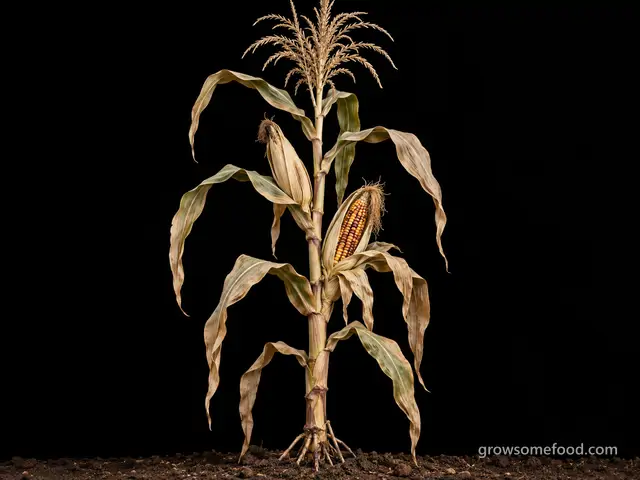
Grain Corn & Popcorn
Corn you grow to DRY, not to eat fresh: dent, flint, and flour types for cornmeal and masa, plus popcorn - the original storage grain of the Americas.
No toxic parts. Store only fully dry, sound kernels - visibly moldy grain can carry mycotoxins and should be discarded, not eaten. The edible corn smut fungus (huitlacoche) on ears is a delicacy, not a poison. Nixtamalizing uses food-grade pickling lime (calcium hydroxide) - never quicklime (calcium oxide) or garden/builders' lime; the solution is strongly alkaline, so keep it off skin and out of eyes, and rinse the finished nixtamal well before grinding.
Overview
The one thing to knowInstead of racing an ear to the pot at peak sugar, you leave the ears on the stalk all season and harvest them dry - hard, glossy kernels that store for years and become cornmeal, grits, polenta, masa, or popcorn.
Grain corn flips the sweet-corn idea on its head. Instead of racing an ear to the pot at peak sugar, you leave the ears on the stalk all season and harvest them dry - hard, glossy kernels that store for years and become cornmeal, grits, polenta, masa, or popcorn. It's the corn that fed civilizations for millennia; sweet corn is the young upstart. One block of it turns a garden into a small grain field, stalks and all.
The types are old and distinct: dent corn (a dimple forms in each drying kernel) is the classic cornmeal and masa corn; flint corn carries hard, glassy, often jewel-colored kernels and makes the best polenta; flour corn grinds soft and fine, the blue-cornmeal type; and popcorn is its own small-kerneled kind, the only one that pops. They all grow exactly alike - tall, wind-pollinated, block-planted - and differ at the mill and the stove.
Quick facts
- Sprouts in
- 8 days6 to 14
- Soil to sprout
- 70 °F55 to 90
- Life cycle
- Annual
- Seed to save
- About 110 days after planting90 to 125
- Height
- 8 ft6 to 12
- Spread
- 18 in12 to 24
- Cold
- Killed by frostdamaged below 32°F
- Heat
- Struggles above 100°F
Full sun · medium water · well-drained soil · 10 in apart (8 to 12) · direct sow
When to plant
Nothing is open today. Spring sowing opens 7 months, Apr 17 to May 8.
- Direct sow Apr 17 – May 8 Opens in 208 daysAbout 7 days after to 4 weeks after your last frost (Apr 10 here)Sow once soil hits 60°F. Count back 100-120 days PLUS a dry fall stretch from your first frost; zones 3-4 should choose 85-95 day flints (Painted Mountain, Nothstine Dent).
Frost here: last around Apr 10 (Mar 27 to Apr 24 most years), first around Oct 25. Zone averages, your own yard may run a week or two either way.
Life stages
Seven stages, about 4 months from sowing to the first pull. Windows are typical; your zone and weather move them.
Germination
Day 0 to 9 from sowing- WaterKeep the seedbed moist but not soggyevery 2 daysEven moisture sprouts corn; waterlogged cold soil rots it. Plump dent, flint, and popcorn seed is more forgiving of cool soil than shriveled supersweet seed, but 60°F is still the safe line.
- ProtectSow 1-2 inches deep into 60°F soilCold soil gives patchy stands. Hardy flints (Painted Mountain) germinate at the cool end; popcorn is slowest and appreciates the warmest soil of the group.
Watch for- Patchy emergence (cold soil or seed-corn maggot)
- Birds and crows pulling up sprouting seeds
Seedling
Day 9 to 24 from sowing- ThinThin to 8-12 inches apart in the blockCrowded plants make spindly stalks and nubbin ears. Grain corn stands all season, so give every stalk room to build.
- WeedWeed while plants are smallevery 10 daysYoung corn competes poorly; cultivate shallowly to spare its near-surface roots.
Watch for- Cutworms felling seedlings
- Flea beetles on young leaves
- Purple leaves (cold soil, not a disease)
Vegetative
Day 24 to 60 from sowing- FertilizeSide-dress nitrogen when knee-highmonthlyGrain corn feeds as hard as sweet corn and stands twice as long; side-dress when plants are 12-18 inches and again at tasseling.
- WaterWater deeply about an inch a weekweeklyDeep watering builds the root system and prop roots that keep 8-12 foot stalks standing through summer storms.
- MulchHill soil at the base and leave the roots aloneA little soil hilled around the stalk anchors it for the long season; avoid deep cultivation near the shallow roots.
Watch for- Yellowing lower leaves (nitrogen hunger - feed now)
- Leaning stalks after storms (hill the bases)
- European corn borer holes and frass on stalks
Tasseling & silking (pollination)
Day 62 to 85 from sowing- PollinatePlant in BLOCKS (4x4 minimum), not single rowsCorn is wind-pollinated: pollen falls from the tassels onto the silks below, and every pollinated silk becomes one kernel. A block of short rows fills ears; a long single row leaves gaps. Hand-pollinate small plantings by shaking tassels over silks on a dry morning.
- ProtectKeep your pollen away from sweet cornGrain-corn pollen turns any supersweet (sh2) planting within ~250 feet starchy, and stray sweet-corn pollen dilutes the seed you save. Separate plantings by distance or a 2-3 week tasseling gap.
- WaterNever let corn go dry during pollinationevery 3 daysDrought or heat above 95°F at silking kills pollen and leaves gap-toothed ears; these two weeks are the crop's make-or-break window.
Watch for- Heat wave during silking (gappy ears)
- Corn earworm moths on fresh silks
- Rootworm beetles clipping silks
Ear fill (milk to dent)
Day 78 to 110 from sowing- WaterKeep water steady through the dough stageevery 4 daysKernels are filling with the starch you'll eventually grind or pop; moisture stress now means light, poorly filled ears. Ease off only once kernels begin to harden.
- ProtectGuard milk-stage ears from raccoonsRaccoons raid grain corn at the sweet milk stage just like sweet corn; once kernels harden they mostly lose interest. Electric fencing or bagged ears protect the vulnerable weeks.
Watch for- Raccoons testing milk-stage ears
- Corn earworm at the ear tip
- Stalks lodging in storms (borer-weakened)
Field dry-down
Day 110 to 140 from sowing- InspectCheck for the black layer and hard kernelsweeklyPull a kernel and look at its base: a black layer there means the plant has finished filling it. From then on the ear only needs to DRY - a thumbnail should no longer dent the kernels.
- DoStop watering and let the field brownHusks, leaves, and stalks drying to tan is the goal now, not a problem. The longer ears dry on the stalk in fair weather, the less curing they need indoors.
Watch for- Husks browning and tipping down (normal)
- A wet forecast (pick and finish drying indoors)
- Ear molds in prolonged rain
Harvest
Day 105 to 140 to the first pull from sowing, picking to about day 150- HarvestPick when husks are papery and kernels hardevery 4 daysTwist ears off once husks are brown and dry and kernels are glossy, hard, and impossible to dent. Beat a long wet spell or a hard freeze by picking a little early and finishing the drying indoors.
- DoCure husked ears 2-4 weeks in mesh with airflowweeklyHusk the ears and cure them in mesh bags or on racks somewhere warm, dry, and airy. Shell a test handful weekly: kernels should shell cleanly and a twisted ear should rattle. Popcorn earns an extra test - pop 20 kernels; chewy popcorn is still too moist.
Watch for- Rodents finding curing ears (cure in mesh, off the floor)
- Mold on ears picked wet (spread them out, add airflow)
- Popcorn popping poorly (too moist or too dry - see the pop test)
Harvest
- Husks papery, brown, and dry on the stalk
- Kernels hard and glossy - a thumbnail won't dent them
- A pulled kernel shows a black layer at its base
- Stalks and leaves have dried to tan
- Pick when husks are papery and kernels hard · every 4 days
- Cure husked ears 2-4 weeks in mesh with airflow · weekly
Per plant 1 to 2 ears, 6 to 16 ozPicking pull once
Cook with Grain Corn & Popcorn
Watch out for
7 to know. 1 is high-risk: European Corn Borer. 4 are active in September.
European Corn BorerSeverity High PestGrain corn stands months longer than sweet corn, so borer-weakened stalks have far more time to lodge - fall stalk destruction matters double here.
Small entry holes with sawdust-like frass on stalks and leaf axils, broken tassels, and tunneling into the ear from the side.
Once inside the stalk, larvae are protected from sprays - control relies on prevention, fall cleanup, and Bt on early larvae.
Rotate crops, shred and destroy old cornstalks in fall (larvae overwinter in them), and plant resistant hybrids; Bt-timed sprays target young larvae before they bore in.
A moth larva that bores into stalks, leaf midribs, and ears, weakening stalks so they break and opening the plant to rot.
Corn EarwormSeverity Medium PestnowLess costly on grain corn than sweet corn - tip damage is trimmed at shelling - but earworm wounds invite ear molds in a wet fall, so tight-husked varieties still pay.
Chewed, discolored kernels and dark frass at the ear tip, and a fat caterpillar (green, brown, or pink) inside the husk near the top.
Damage is usually confined to the tip - just cut it off. Bt sprayed on silks catches young larvae; the ear below is fine to eat.
Choose varieties with tight husk tips; a few drops of vegetable or mineral oil (with a little Bt) on the silk 5-6 days after silking smothers young larvae; encourage natural enemies.
The most common sweet-corn pest: a night-flying moth lays eggs on fresh silks, and the caterpillar tunnels down into the ear tip to feed on developing kernels.
Corn SmutSeverity Medium DiseasenowA smutted ear is lost for grain, and burst galls seed next year's spores - patrol the long season and cut galls young (or eat them as huitlacoche).
Grotesque silvery-gray swollen galls replacing kernels on the ear (or on tassels/stalks), which later burst into masses of black spores.
No spray cure - cut out and destroy galls early. Note: young, firm galls are the prized Mexican delicacy huitlacoche ('corn mushroom'), genuinely delicious cooked.
Avoid wounding plants, keep them evenly watered and unstressed, rotate, and remove and destroy galls before they blacken and release spores (don't compost them).
A fungus that turns kernels into swollen, gray-white then black galls on ears, tassels, and stalks, favored by heat, drought stress, and plant injury.
Northern Corn Leaf BlightSeverity Medium DiseasenowThe long grain-corn season overlaps the disease's peak, unlike early sweet corn - keep the block airy and rotate ground yearly.
Elongated (1-6 inch) gray-green to tan lesions on the leaves, starting low and moving up, that can merge and blight whole leaves.
Rarely warrants treatment in home gardens on sweet corn maturing before infection peaks; remove badly affected debris after harvest.
Rotate crops, plant resistant hybrids, and clean up crop debris where the fungus overwinters; good spacing and airflow slow it.
A fungal leaf disease causing long, cigar-shaped gray-green lesions that reduce the plant's photosynthetic area in wet, moderate-temperature weather.
RaccoonsSeverity Medium WildlifenowGrain corn is vulnerable at the milk stage just like sweet corn; once kernels harden, raccoon pressure fades - defend the milky weeks and the crop mostly defends itself after.
Stalks pulled or broken down overnight, husks torn open, and half-eaten ears scattered on the ground - a whole patch can be lost in one night.
Reinforce fencing immediately at first sign; once raccoons find a patch they return nightly until it's gone.
A two-strand electric fence (at ~6 and 12 inches) is the most reliable defense; also try bagging individual ears in mesh, a radio playing in the patch, or a dog nearby. The Three Sisters' prickly squash vines underfoot help deter them.
The single greatest threat to home sweet corn: raccoons raid the patch at night, often the very night before the ears are ripe, tearing down stalks and stripping ears.
Common RustSeverity Medium DiseaseGrain corn's long season gives rust more time to build than sweet corn's - healthy leaves into September are what fill heavy ears, so airflow and rotation earn their keep.
Small, oval, rust-colored raised pustules scattered on leaves (upper and lower), rubbing off as reddish powder, later turning dark.
Usually tolerable on sweet corn maturing before it peaks; remove badly infected lower leaves, and fungicides are rarely needed in home gardens.
Plant resistant hybrids (most modern ones are), give good airflow and full sun, and avoid overhead watering; rust blows in on wind so timing helps.
A fungal disease producing cinnamon-brown pustules on both leaf surfaces, favored by cool, humid weather; heavy infection cuts photosynthesis and yield.
Corn RootwormSeverity Medium PestTall, top-heavy grain corn on rootworm-pruned roots lodges badly in fall storms - rotate the block every year without exception.
Plants leaning or 'goose-necked' from root damage, easy to pull up, and slender striped or spotted beetles feeding on silks and pollen at flowering.
No rescue for damaged roots; rotation is the control. Heavy adult silk-clipping at pollination can be reduced by hand-pollinating.
Rotate corn to a different bed each year - the larvae starve without corn roots, so rotation nearly eliminates them; this is the classic reason not to grow corn in the same spot two years running.
Beetle larvae that feed on and tunnel through corn roots, causing plants to lodge (fall over) and lose vigor; adults also clip silks and interfere with pollination.
Good & bad neighbors
Plant nearby
-
The original Three Sisters: beans climb the tall grain-corn stalks (historically THIS corn, not sweet corn) and their nitrogen feeds the hungry grass.
-
The third Sister: sprawling vines shade the soil, hold moisture, and prickly leaves discourage raccoons beneath the corn.
- Traditional pairings, thin evidence
-
Traditional field-edge partner drawing pollinators and birds; keep it from shading the block - it also competes and is mildly allelopathic.
Varieties · 13
You pick one when you add Grain Corn & Popcorn to your garden. Its days to maturity set your harvest window.
Dent 4 varieties
Reid's Yellow Dent
Large tapered ears of deep-yellow dented kernels on tall 8-10 foot stalks.
yellowheirloomopen-pollinatedTHE American dent corn: the 1893 World's Fair prize winner that became the ancestor of the Corn Belt, still grown for rich yellow cornmeal and reliable, heavy ears. Open-pollinated - a cornerstone seed-saving variety.
Bloody Butcher
Long ears of glossy oxblood-red kernels, occasional white ones, on 10-12 foot stalks.
redheirloomopen-pollinatedtallAn 1840s Virginia heirloom with deep blood-red kernels on very tall stalks; makes striking pink-red cornmeal and grits, and the dark ears double as decoration.
Flint 3 varieties
Painted Mountain
Slender ears in endlessly varied reds, golds, purples, and pinks on short hardy plants.
multicolorshort-seasoncold-hardyopen-pollinatedA Montana-bred flint composite famous as the toughest, earliest grain corn available - ripens in mountain and zone-3 gardens no other corn can. Every ear is a different watercolor of colors; grinds into hearty meal.
Floriani Red Flint
Tapered ears of pointed, deep-red flint kernels.
redheirloomopen-pollinateditalianAn Italian valley heirloom prized as one of the best-eating polenta corns anywhere - pointed ruby kernels that grind into rosy, richly flavored meal.
Flour 2 varieties
Hopi Blue
Dusty blue-black kernels on ears borne by sturdy, drought-adapted plants.
blueheirloomopen-pollinateddrought-tolerantThe famous Southwestern flour corn, grown by Hopi farmers for centuries: deep blue-black kernels that grind into fragrant blue cornmeal for piki bread and pancakes. Deep-rooted and remarkably drought-tolerant.
Mandan Bride
Multicolored ears - white, red, blue, and mottled - on compact northern-adapted plants.
multicolorheirloomshort-seasonopen-pollinatedA northern Plains flour corn from Mandan agriculture, ripening fast enough for short seasons; softly starched multicolored kernels grind into fine flour.
Popcorn 4 varieties
Strawberry
Short, plump, strawberry-shaped ears of deep mahogany-red kernels.
redheirloomornamentalopen-pollinatedThe beloved little popcorn shaped and colored like a giant strawberry - mahogany-red 2-3 inch ears that decorate the table until you shell and pop them.
Japanese Hulless
Stubby ears of small pearly-white kernels, several per stalk.
whiteheirloomopen-pollinatedA century-old home-garden standard: 'hulless' popcorn whose tender-shattering hulls all but disappear when popped - snowy, crisp, and kind to teeth.
Grower tips
Notes from growers, tagged with the zone they grow in. A person reads every post before it appears.
Nobody has posted about Grain Corn & Popcorn yet. The first one usually saves someone a season.
Free account. Your post shows your grower name and zone, never your email.