Add it to your home screen and it opens full screen: no browser bars, one tap away, and everything stays signed in. Free, nothing to download from an app store.
- Tap the Share button in your browser
- Scroll down and choose “Add to Home Screen”
- Open GrowSomeFood from your home screen
- Open your browser’s menu
- Choose “Add to Home screen” or “Install app”
- Open GrowSomeFood from your home screen
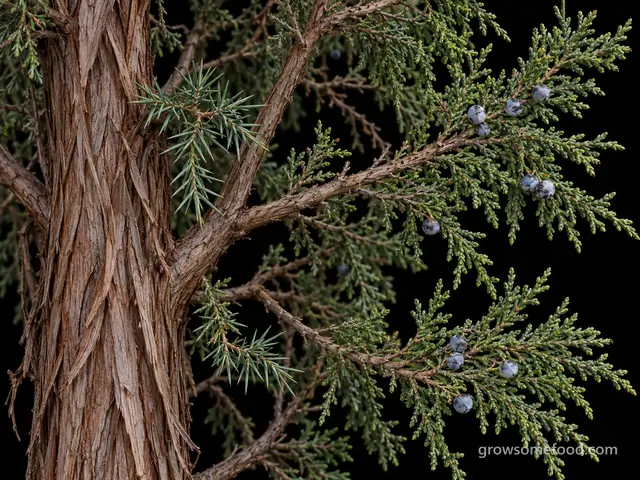
Eastern Red Cedar
The toughest native evergreen in the East, and the only home of the emerald juniper hairstreak butterfly. It feeds waxwings all winter and shelters birds in the worst weather - but it is also the alternate host for cedar-apple rust, and it seeds into prairie relentlessly, so it needs siting with thought.
Eastern red cedar is a juniper, not a true cedar, and its berry-like cones are NOT the culinary juniper of gin and game marinades - that is Juniperus communis. Red cedar cones are resinous and are not recommended as a substitute, and juniper preparations are avoided in pregnancy. Foliage and sawdust irritate the skin and airways of some people, so wear gloves and a dust mask when shearing or milling it. Male trees shed heavy pollen in late winter and are a significant allergen.
Overview
The one thing to knowIt is the larval host of the juniper hairstreak, a small brilliant emerald butterfly whose caterpillars feed on this tree and essentially nothing else.
Eastern red cedar (Juniperus virginiana) is not a cedar at all - it is a juniper, and the most widely distributed conifer in the eastern United States. It grows on limestone glades, abandoned pasture, sand, clay, and roadside rubble, takes drought, wind, salt spray, and −40 °F, and asks nothing at all once it is in the ground. Few native plants are this useful for this little effort.
Its wildlife record is specific and hard to match. It is the larval host of the juniper hairstreak, a small brilliant emerald butterfly whose caterpillars feed on this tree and essentially nothing else. Its frosted blue cones ripen in fall and hang on through winter, which is why the cedar waxwing carries its name; bluebirds, robins, mockingbirds, and yellow-rumped warblers all lean on it in the hungriest weeks of the year. And in a bare winter landscape a dense red cedar is shelter - the roost that gets songbirds through a cold night and the windbreak that makes a field edge habitable.
Two things make it a tree to place deliberately rather than casually. It is the juniper half of cedar-apple rust and its relatives, so it does not belong near apples, crabapples, hawthorns, pears, quince, mayhaw, or serviceberry. And birds plant it everywhere: across the Great Plains and the prairie states, red cedar advancing into unburned grassland is a serious conservation problem. Sited well, it is one of the best trees you can grow. Sited badly, it is somebody else's problem.
Quick facts
- Sprouts in
- 180 days60 to 540
- Soil to sprout
- 68 °F50 to 85
- Life cycle
- Perennial, lives about 150 years
- Seed to save
- About 180 days after planting150 to 240
- Height
- 40 ft20 to 60
- Spread
- 15 ft8 to 25
- Cold
- Takes hard frostdamaged below -40°F
- Heat
- Struggles above 110°F
- Self-sows
- Yes, expect volunteers
Full sun or part sun · low water · well-drained soil · 15 ft apart (8 to 25) · direct sow or transplant
When to plant
Fall transplanting is open for 20 more days. Next: fall, Sep 25 to Nov 24.
- Transplant Aug 16 – Oct 11 Open now · 20 days leftAbout 10 weeks before to 2 weeks before your first frost (Oct 25 here)Fall planting works well in milder zones, giving roots the cool season to establish before summer. Water it in through any dry autumn spell and avoid planting so late that it heaves in the first hard freeze.
- Direct sow Sep 25 – Nov 24 Opens in 4 daysAbout 4 weeks before to 4 weeks after your first frost (Oct 25 here)Clean the pulp off ripe cones and sow outdoors in fall in a protected bed. Expect a long wait - red cedar seed has both a hard coat and internal dormancy and routinely takes one to two winters to come up, unevenly. Transplants are far quicker.
- Transplant Feb 27 – May 22 Opens in 159 daysAbout 6 weeks before to 6 weeks after your last frost (Apr 10 here)Plant container or balled-and-burlapped stock from late winter through spring into any well-drained soil in full sun. Check the distance to the nearest apple, hawthorn or quince before you dig the hole - that is the decision you cannot undo later.
Frost here: last around Apr 10 (Mar 27 to Apr 24 most years), first around Oct 25. Zone averages, your own yard may run a week or two either way.
Life stages
One stage to settle in, then four that repeat each year. Windows are typical; your zone and weather move them.
Years 1-2 - rooting in
The first year after planting- WaterWater the first year, then stopweeklyWater a new red cedar weekly through its first growing season and into the second on dry sites. After that it is one of the most drought-proof trees in the East and wants nothing - it grows on limestone glades, sand, and roadside cuts where little else will. Overwatering an established one does more harm than a dry summer.
- ProtectMeasure the distance to the orchard firstThis is the siting decision you only get to make once. Red cedar is the alternate host for cedar-apple rust and its relatives, which need both a juniper and a rose-family tree to complete their cycle. Put as much distance as the property allows between it and any apple, crabapple, hawthorn, pear, quince, mayhaw, or serviceberry - a few hundred feet helps, a half mile is close to a cure.
- ProtectKeep it well away from the house in fire countryRed cedar foliage is resinous and burns fast and hot; a mature one against a wall is a torch waiting for an ignition source. In any fire-prone region, keep red cedar out of the first 30 feet around structures, do not plant it under eaves or over a deck, and clear the dead interior foliage that accumulates inside older plants.
Watch for- Fast, easy establishment - this is a tough tree to kill
- Deer browsing young plants in a hard winter
- Bagworm bags arriving on nursery stock (check before you buy)
- Volunteer seedlings appearing wherever birds perch
Late-winter pollen
Feb to Apr, every year- InspectMale trees release clouds of pollenMost red cedars are male or female. In late winter the males turn bronze-gold with tiny cones and release visible clouds of pollen at a touch - a significant allergen, and worth knowing before you plant a row of them outside a bedroom window. The related cedar fever of central Texas comes from Ashe juniper, a close cousin, but red cedar pollen is the same kind of problem.
- InspectOnly female trees make the blue berriesThe frosted blue berry-like cones that feed waxwings and give the tree half its ornamental value are borne only on female plants, and only with a male somewhere in the neighborhood. If the birds are the point, buy a named female selection or a plant already carrying fruit rather than an unsexed seedling.
Watch for- Bronze-gold cast on male trees and visible pollen clouds in late winter
- Pollen allergy flaring in February and March
Spring & summer growth
Apr to Aug, every year- InspectLook for the juniper hairstreakA small, brilliant emerald-green butterfly, the juniper hairstreak, lays its eggs on this tree and almost nothing else - its caterpillars feed on red cedar foliage, and where the tree disappears the butterfly goes with it. Look for the adults nectaring on nearby flowers in spring and again in midsummer, and never spray a tree you planted for wildlife.
- InspectScout for bagworms and pick them offevery 3 weeksBagworms are the one pest that genuinely kills junipers, because a stripped conifer cannot releaf the way a broadleaf tree can. Their spindle-shaped bags are camouflaged with the tree's own foliage and look like cones or debris. Check the outer twigs every few weeks in summer, and pick off every bag you find between fall and spring - that alone controls them.
- PruneShear lightly if at all, and only in dry weatherRed cedar takes shearing for a hedge or screen, but only into green growth - cut back into bare brown wood and it will not resprout, leaving a permanent hole. Trim lightly in late spring or early summer, always in dry weather to avoid opening the plant to tip blight, and let a specimen tree keep its natural narrow pyramidal shape.
Watch for- Emerald-green juniper hairstreak butterflies around the tree
- Spindle-shaped bagworm cases disguised with foliage
- Shoot tips turning grey-brown after a wet spring (tip blight)
- Dead interior foliage accumulating inside older plants
Blue cones & the winter bird larder
Sep to Dec, every year- InspectFrosted blue cones, and the birds that followFemale trees ripen dense crops of pale blue, waxy, berry-like cones in fall that hang on into winter. Cedar waxwings are named for this tree and descend on it in flocks; bluebirds, robins, mockingbirds, and yellow-rumped warblers all depend on it when almost nothing else is left. It is one of the most valuable winter food plants in the East.
- InspectExpect seedlings wherever birds perchEvery bird that eats the cones plants more red cedars, which is exactly how it takes over unburned pasture and prairie. Walk fence lines, field edges, and beneath perches once a year and pull the volunteers while they are small - they come out easily at ankle height and need a saw two years later.
Watch for- Flocks of cedar waxwings stripping a fruiting tree
- Heavy cone crops on female plants (blue and waxy, not edible)
- Seedlings colonizing fence lines and unmown ground
Winter shelter & gall removal
Dec to Mar, every year- PruneCut out the rust galls before spring rainLate winter is the one window that matters. Cedar-apple rust overwinters as hard brown golf-ball galls hanging on the twigs; warm spring rain makes them erupt into orange gelatinous horns that release spores onto every apple and hawthorn downwind. An hour with loppers in January or February, taking the galls off before they swell, measurably lowers the pressure on the neighborhood's fruit trees.
- ProtectLet it do its winter jobA dense evergreen in a bare landscape is shelter. Red cedar is a primary winter roost and nesting cover for songbirds, a working windbreak that cuts wind speed for several times its own height downwind, and a snow fence. Leave the lower branches on a windbreak planting - limbing it up throws away most of what it was planted for.
- SupportCheck multi-stemmed plants before heavy snowNarrow, multi-leadered columnar forms splay open under wet snow and ice and often never close again. On upright selections, tie the leaders loosely together with soft strapping before winter, or brush heavy snow off gently and upward rather than knocking it down through the branches.
Watch for- Hard brown galls hanging on the twigs (cut them out now)
- Songbirds roosting inside the canopy on cold nights
- Columnar forms splaying open under snow load
- Bronzing or purpling of the foliage in hard cold - normal for the species
Watch out for
4 to know. None are high-risk for Eastern Red Cedar. 1 is active in September.
BagwormsSeverity Medium PestnowThis is the one pest that actually kills red cedars, and it is entirely preventable by hand.
The bags are camouflaged with the tree's own foliage and look like small cones - assume anything cone-shaped on a red cedar in winter deserves a second look, and strip every bag off between fall and early spring.
Small spindle- or cone-shaped bags, one to two inches long, hanging from the twigs and covered in fragments of the host plant's own foliage - which is exactly why they get mistaken for cones, dead tips, or debris and go unnoticed for a season or two. Bags that move, or that have a caterpillar head poking out of the open end, in early summer. Brown, thinning, stripped patches on an evergreen, usually starting near the top. Old bags sealed shut and hanging through winter: those are the ones full of eggs, and finding them in December is the best possible timing.
Hand-picking is the whole treatment on anything you can reach, and it works completely: pull off every bag between fall and mid-spring, before the eggs hatch, and destroy them rather than dropping them at the base of the plant. Bagworms are only vulnerable to spray while the caterpillars are small and outside their bags, so if you must treat, do it in early summer shortly after hatch - Bt (Bacillus thuringiensis) or spinosad is effective then and spares most other insects. Once the bags are large and sealed, no spray reaches the insect inside and you are back to hand-picking. On a large tree beyond reach an arborist can treat; on broadleaf plants, tolerate light infestations, which regrow.
Look for the bags in fall and winter, when the plant is otherwise quiet and they are the only thing hanging on it, and pick them off. Inspect new nursery evergreens carefully before you buy - bagworms travel on plants, and a nursery-grown juniper or arborvitae is the classic way they arrive in a garden. Keep plants healthy and watered, since a stressed evergreen has far less capacity to recover from defoliation. Leave the parasitic wasps and predatory insects that attack bagworms alone; broad-spectrum insecticide is what lets populations get away from you in the first place.
Bagworm caterpillars build a spindle-shaped case out of silk and fragments of whatever they are eating, carry it with them as they feed, and never leave it - the adult female never even develops wings, so an infestation stays put and builds on the same plant year after year. Each bag is a nursery: a female can leave several hundred eggs inside hers to overwinter, and they hatch in late spring into tiny caterpillars that balloon on silk threads to nearby plants. They feed on a wide range of trees and shrubs, but they do their worst on evergreens, because a conifer stripped of its foliage cannot releaf the way a broadleaf tree can. The same numbers that are cosmetic on an oak are genuinely capable of killing a juniper, arborvitae, or spruce.
Cedar-Quince RustSeverity Low DiseaseOn the cedar itself this one shows as swollen, perennial cankers on twigs rather than the tidy round galls of cedar-apple rust, and it can kill small wood.
The real stake is elsewhere: this is the rust that ruins quince, mayhaw and hawthorn fruit outright. Cut swollen twigs out in late winter and keep this tree away from any of those.
Developing fruit that swells lopsidedly, distorts, and grows tufts or fine tubes of orange fungal tissue - unmistakable once seen and quite different from the flat orange leaf spots of cedar-apple rust. Swollen, cankered areas on young twigs and on thorns, sometimes girdling and killing the shoot beyond. Bright orange gelatinous horns emerging from woody galls on nearby junipers and red cedars during warm wet spells in spring - that is the spore source, and finding it tells you where the problem lives. Fruit dropping early in numbers, or coming off the tarp misshapen and hollow.
There is no cure for an infected fruit or a cankered twig - remove and destroy them. On the juniper side, cutting out the woody galls in late winter before they produce spore horns reduces local pressure. Where the disease is severe and the cedars cannot be removed, protectant fungicide programs timed to bloom and early fruit development are used commercially, but they must start before infection and be repeated through the wet spring window; on a home tree the honest answer is usually siting and tolerance rather than a spray schedule.
Site the tree away from junipers and eastern red cedar. That single decision does more than everything else combined, because the fungus cannot complete its life cycle without both hosts, and spore travel drops off sharply with distance - a few hundred yards is a meaningful buffer even though spores can carry further. Where you own the junipers, removing them is the definitive fix; where a neighbor's cedar line is the source, distance and variety choice are what you have. Keep the canopy open so it dries quickly after spring rain, since infection needs extended wetness. Clean up and destroy infected fruit and prunings rather than leaving them under the tree.
Cedar-quince rust (Gymnosporangium clavipes) is one of the Gymnosporangium rusts that alternate between a juniper host and a rose-family host, and it is the most damaging of them because of WHERE it attacks. Where cedar-apple rust mainly spots leaves, cedar-quince rust goes for the fruit, and on hawthorn, quince, and mayhaw it swells, distorts, and hollows out developing fruit, covering it in tufted orange-fungal growth and rendering the crop unusable. It also attacks twigs and thorns, causing swollen cankers that can girdle small wood. The fungus overwinters as a perennial gall or swelling on juniper and eastern red cedar; in wet spring weather those galls produce gelatinous orange horns that release spores, which blow to the rose-family host. It cannot spread host to host - it must have both. Distance from junipers is therefore the whole control, and a few hundred yards makes a large difference.
Juniper Tip BlightSeverity Low DiseaseShoot tips turning dull green, then yellow, then ash-grey or brown, with the dead section stopping abruptly at a sharp line a few inches back from the tip.
Shoot tips turning dull green, then yellow, then ash-grey or brown, with the dead section stopping abruptly at a sharp line a few inches back from the tip. Tiny black pinhead fruiting dots on the greyed bark at that line, visible with a hand lens. Damage concentrated on soft new growth and in the crowded, shaded interior of a sheared plant. Symptoms worst after a wet spring, or appearing in late winter on the previous year's growth.
Prune the blighted tips out several inches into healthy wood, in dry weather, disinfecting the blades between cuts, and destroy the prunings rather than composting them. That is normally the end of it. Fungicide is only justified on young nursery stock or a formal hedge where appearance matters and the disease returns year after year, timed to protect new growth as it emerges in spring. Remember that red cedar will not resprout from bare brown wood, so cut back only as far as you must.
Airflow and dryness do almost all of it. Space plants so foliage dries quickly, avoid overhead and especially evening watering, and resist shearing a juniper into a dense shell, which traps moisture inside. Prune only in dry weather. Avoid wounding the plant in late summer, which is Kabatina's route in. Do not push it with nitrogen. Where the disease recurs, choose a resistant selection, and never plant junipers in shade or in a still, humid corner.
Two fungi, Phomopsis and Kabatina, kill juniper shoot tips in much the same way and are usually lumped together as tip blight. Phomopsis attacks soft new growth from spring through summer whenever it stays wet; Kabatina enters through wounds in late summer and shows up in late winter and early spring. Neither kills an established healthy plant - they take the outermost few inches of shoot - but repeated years of it in a wet climate leave a plant looking moth-eaten. Crowded, sheared, shaded plants and young nursery stock are hit hardest, and a plant pushed with fertilizer into soft growth is the most susceptible of all.
Cedar-Apple RustSeverity Low DiseaseEastern red cedar is the juniper host - this is the single biggest reason to think before planting one.
The galls barely bother the cedar; the damage lands on someone's apples, crabapples, hawthorns, pears and serviceberries, quite possibly a neighbor's. If you already have red cedars, cut the brown galls out in late winter. If you are planting fruit nearby, choose rust-resistant varieties rather than expecting to clear the cedars.
On the juniper: hard, brown, dimpled galls the size of a marble up to a golf ball hanging on the twigs through winter, then swelling in spring rain and erupting into bright orange gelatinous horns like a sea anemone - unmistakable, and the signal that spores are being released right now. On the apple, crabapple, hawthorn or serviceberry nearby: bright yellow-orange spots on the upper leaf surface from late spring, later developing tiny black dots and then fringed tube-like growths on the underside, with heavily spotted leaves yellowing and dropping by midsummer. Blemished, spotted fruit after a wet spring.
On the juniper side, cut the woody galls out in late winter, before warm rain makes them push out spore horns - an hour with loppers measurably lowers local pressure. The galls do little harm to the juniper itself, so this is done for the neighborhood's apples rather than for the cedar. On the rose-family host there is no cure for an infected leaf: rake and destroy fallen spotted leaves, and where the disease is severe, protectant fungicide programs timed from pink bud through several weeks after petal fall are used, but they must start before infection and be repeated. On a home tree the honest answer is usually a resistant variety and tolerance rather than a spray schedule.
Distance first, resistant varieties second. The fungus must have both hosts, and infection falls off sharply with separation - a few hundred feet helps and a half mile is close to a cure - so when siting a new tree, put junipers and rose-family fruit as far apart as the property allows. In most of the eastern United States red cedars are so common that removing yours will not clear the air, so anyone wanting apples in rust country should choose resistant varieties rather than counting on removal. Where you own the junipers and the orchard matters more, take them out. Keep canopies open so leaves dry quickly, since infection needs extended spring wetness.
Cedar-apple rust (Gymnosporangium juniperi-virginianae) cannot complete its life cycle on one host. It needs a juniper - almost always eastern red cedar - and a rose-family host, and it alternates between them every year. On the juniper it forms hard brown galls up to golf-ball size on the twigs; after warm spring rain each gall pushes out bright orange gelatinous horns that release spores. Those spores blow to apples, crabapples and their relatives, where they cause bright orange-yellow leaf spots and, in a bad year, early defoliation and blemished fruit. Spores from the rose-family host then blow back to junipers in late summer to start new galls. Two close relatives work the same way: cedar-hawthorn rust on hawthorn, serviceberry and pear, and cedar-quince rust, which attacks fruit and twigs rather than leaves. None of them spread juniper to juniper or apple to apple - they must have both hosts, which is what makes distance the control.
Good & bad neighbors
First rule: keep Apple and crabapple apart. Cedar-apple rust needs both hosts and cannot complete its cycle without a juniper.
Plant nearby
-
The natural pairing on glades and prairie edges - dark evergreen structure behind coppery bunchgrass, both drought-proof and both happy in lean soil. One honest caveat: red cedar is the species that closes over grassland when fire is removed, so keep it as a placed specimen rather than letting seedlings into a meadow planting.
-
The other tough native evergreen of the Southeast, and a good mixed-screen partner. Alternating the two breaks up the monoculture look, spreads the risk of a single pest running through a hedge, and adds a second waxy winter fruit that birds use.
Keep apart
-
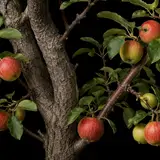
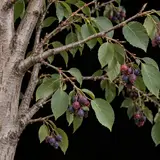
Cedar-apple rust needs both hosts and cannot complete its cycle without a juniper. Red cedar within a few hundred feet of an apple means orange leaf spots, early defoliation, and blemished fruit in any wet spring. Keep them as far apart as the property allows, cut galls out of the cedar in late winter, and choose rust-resistant apple varieties in cedar country.
-
Mayhaw is a hawthorn, and cedar-quince rust swells and hollows its fruit into something unusable - which is the only reason to grow the tree. Mayhaw and red cedar do not belong on the same property if the site allows any choice at all.
-
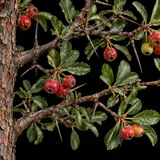
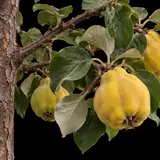
Cedar-quince rust is the worst of the family because it attacks the fruit rather than the leaves, and quince is one of its named primary hosts. If you want quince, this tree is the one thing you most need to keep away from it.
-
Cedar-hawthorn rust runs between junipers and this whole group, spotting leaves and sometimes fruit. It is milder than the apple and quince versions but the same siting logic applies: distance first, then resistant selections.
Varieties · 5
You pick one when you add Eastern Red Cedar to your garden. Its days to maturity set your harvest window.
Eastern Red Cedar (Juniperus virginiana)
Narrow dark evergreen pyramid with shredding red-brown bark and pale blue waxy cones on female trees.
speciesnativeevergreendrought-tolerantThe wild species: a narrow to broadly pyramidal evergreen 20 to 50 feet tall, with scale-like dark green foliage that bronzes in winter, shredding reddish bark, and frosted blue cones on female plants. Grows anywhere with sun and drainage, hosts the juniper hairstreak, and feeds waxwings all winter. Seedlings may be male or female.
Taylor
Very narrow silvery blue-green column, far taller than wide.
cultivarnarrowcolumnarscreeningA strikingly narrow silver-green column found in Taylor, Nebraska, and widely used as a hardy native stand-in for Italian cypress in the Midwest and plains. Excellent for tight screens and formal accents; tie the leaders before heavy snow, which can splay narrow forms open.
Emerald Sentinel
Dense upright pyramid of dark green foliage carrying abundant pale blue cones.
cultivaruprightfemaleheavy-fruitingAn upright pyramidal female selection with dark green foliage that holds its color well in winter and sets heavy crops of blue cones - the usual choice when winter bird food and reliable fruit are the point, as well as a dependable screening plant.
Grey Owl
Low spreading mound of soft silver-blue foliage, much wider than tall.
cultivarspreadingshrubsilver-blueA low, wide, spreading shrub form with soft silvery blue-grey foliage, growing about 3 feet tall and 6 or more feet across. Useful for banks, foundations, and mass plantings where the tree form would be far too large - and the same tough constitution.
Southern Red Cedar (var. silicicola)
Broad, open crown of fine soft often drooping foliage; heavy blue fruit on female trees.
varietynativecoastalsalt-tolerantThe coastal southeastern form, treated by some botanists as a separate species, with finer, softer, often weeping foliage and a broader crown. Notably more tolerant of salt spray, humidity, and the heat of the Deep South, and the better choice from coastal Georgia through Florida and the Gulf.
Grower tips
Notes from growers, tagged with the zone they grow in. A person reads every post before it appears.
Nobody has posted about Eastern Red Cedar yet. The first one usually saves someone a season.
Free account. Your post shows your grower name and zone, never your email.