
Add it to your home screen and it opens full screen: no browser bars, one tap away, and everything stays signed in. Free, nothing to download from an app store.
- Tap the Share button in your browser
- Scroll down and choose “Add to Home Screen”
- Open GrowSomeFood from your home screen
- Open your browser’s menu
- Choose “Add to Home screen” or “Install app”
- Open GrowSomeFood from your home screen

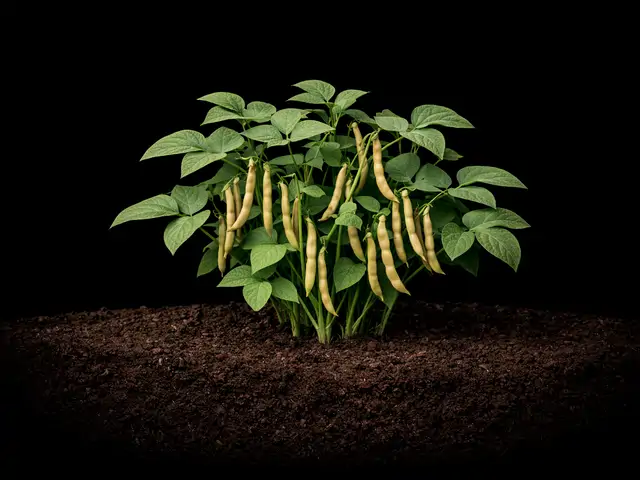
Dry Bean
The pantry crop: grow common beans to full dry seed for storable, protein-rich beans that keep for years - the closest a garden comes to staple food.
Safety notes Dry beans MUST be cooked (boiled hard for at least 10 minutes) before eating. Raw and undercooked beans contain lectins (phytohaemagglutinin) that cause severe stomach upset - kidney beans especially.
Overview
Dry beans are the same species as snap beans (Phaseolus vulgaris) grown all the way to the finish: instead of picking tender pods, you let the plants mature, the pods brown and dry, and you shell out the hard seeds - black beans, pinto, kidney, navy, cannellini, and a rainbow of heirlooms. This is the crop that turns a garden into a source of real staple food: shelf-stable, protein-dense, and keepable for years.
The one thing to knowPlan by the row rather than the plant: a bush plant gives only an ounce or two of shelled seed, so reckon on roughly 3 to 5 pounds of dry beans from a 25-foot row and scale up from there for a winter's soup and chili.
Quick facts
- Sprouts in
- 8 daysRange: 6–14 days
- Soil temperature
- 75 °FRange: 60–90 °F
- Height
- 22 inRange: 16–30 in
- Spread
- 12 inRange: 8–18 in
- Cold
- Killed by frostdamaged below 33°F
- Heat
- Struggles above 95°F
- Life cycle
- Annual
- Save seeds
- About 95 days after plantingRange: 85–120 days
- Soil
- Well-drained
- Water
- Medium
- Plant spacing
- 4 inRange: 3–6 in
When to plant
Nothing is open today. Spring sowing opens 6 months, Apr 10 to May 8.
- Direct sow Apr 10 – May 8 Opens in 173 daysAbout at to 4 weeks after your last frost (Apr 10 here)Sow once the soil hits 60°F; give the crop the whole season to mature and dry on the plant.
Frost here: last around Apr 10 (Mar 27 to Apr 24 most years), first around Oct 25. Zone averages, your own yard may run a week or two either way.
Life stages
From the first start to harvest
Follow the growing sequence. Choose a stage to see its care and signs to watch for.
Stage 1 of 7 · The growing sequence
Germination
Day 0 to 8 from sowing
Care at this stage
-
Keep soil moist, never soggy
Wait for 60°F soil, water in at sowing, then keep just moist. Cold wet soil rots the seed.
-
Don't sow into cold ground
Dry beans need the full warm season to mature and dry down, so sow on time - but not before the soil hits 60°F.
Stages can overlap; weather, variety, and growing conditions change the pace.
Harvest
- Most pods tan or brown, dry, and brittle
- Seeds rattle loose inside the pods
- A dry bean shatters rather than dents when bitten
- Pull the whole plant when pods are dry
- Shell, then dry the seed further
Per plant 0.5 to 3 ozPicking pull once
Cook with Dry Bean
Watch out for
6 to know. 2 are high-risk: Bean Weevil, Bean Anthracnose. 1 is active in October.
Bean WeevilSeverity High PestnowSeason: Sep–JanRound holes in stored beans, fine powdery dust in the jar, tiny beetles emerging, and hollowed or tunneled seeds.
The signature storage pest of dry beans - the freeze-before-storing step is essentially mandatory for home-saved beans.
Round holes in stored beans, fine powdery dust in the jar, tiny beetles emerging, and hollowed or tunneled seeds.
Freeze or heat-treat infested lots to kill the weevils; discard heavily damaged beans; keep new stores away from old to prevent reinfestation.
Harvest and dry promptly; store fully dried beans airtight; and above all, freeze shelled beans for at least a week before storing to kill any eggs and larvae.
A small beetle (Acanthoscelides) whose larvae develop inside stored dry beans, hollowing the seed and boring round exit holes - the classic ruin of a jar of home-grown beans. Eggs are often already in the pod at harvest.
Bean AnthracnoseSeverity High DiseaseSeason: Jun–SepSunken, dark-bordered spots on pods (pink ooze in humidity), reddish-brown streaks on stems and leaf veins, seed with dark blotches.
The seed-borne cycle is the danger for dry beans - one infected crop can taint your seed line. Sourced-clean seed is the key defense.
Sunken, dark-bordered spots on pods (pink ooze in humidity), reddish-brown streaks on stems and leaf veins, seed with dark blotches.
Remove and destroy infected plants; copper can protect healthy foliage in a wet season. Don't save seed from infected plants.
Start with clean, disease-free seed; never save seed from infected plants; never work wet plants; rotate 2-3 years; clear debris.
A seed- and splash-borne fungus (Colletotrichum lindemuthianum) causing dark, sunken lesions on pods, stems, and leaf veins - and because it is seed-borne, it carries straight into next year's crop through saved seed, making it especially serious for dry-bean growers.
AphidsSeverity Medium PestSeason: May–AugDense clusters of tiny insects packed onto shoot tips, flower buds, and the undersides of young leaves.
Aphids vector bean mosaic virus, which is a bigger threat to a seed-saved dry-bean crop than the feeding itself. A reflective mulch under young plants deters them.
Dense clusters of tiny insects packed onto shoot tips, flower buds, and the undersides of young leaves. Curled, cupped, or distorted new growth that never opens properly. A sticky shine on the leaves - and on whatever sits under the plant - that later goes black with sooty mold. Tiny white cast skins left behind where a colony has been feeding. Ants running steadily up and down the stems, which is often the first thing you notice. Mottled, streaked, or misshapen leaves that do not grow out can mean a virus the aphids brought with them rather than the feeding itself.
Knock the colonies off with a hard jet of water and repeat every few days - on most plants that alone ends it. Pinch out or prune off the worst-infested tips rather than treating the whole plant. If colonies keep rebuilding, spray insecticidal soap or horticultural oil directly onto the insects, covering leaf undersides, and repeat weekly until they are gone; treat early or late in the day, and never spray a wilted or heat-stressed plant. Avoid broad-spectrum insecticides - they kill the ladybugs, lacewings, and parasitic wasps that were about to solve the problem for you, and aphid numbers usually come back worse afterward. Anything you spray must be labeled for the plant you are treating; follow that label and observe its pre-harvest interval. On anything you eat, wash leaves, heads, and buds well before use, since aphids hide down in crowns, folds, and tight growth.
Go easy on nitrogen: the soft, lush growth that heavy feeding produces is exactly what aphids breed on. Check new growth once a week through spring and early summer so you catch colonies while they are still small, and rub the first few out with your fingers. Leave flowering plants nearby and skip broad-spectrum sprays - ladybugs, lacewings, hoverflies, and parasitic wasps do most of this work for free, and they only stay if there is something for them to eat. Keep ants off the plant where you can, since they protect aphids from those predators. Water steadily so plants are not stressed, and check any new plant over before you bring it home or move it indoors, since aphids usually arrive on something else.
Aphids are small soft-bodied sap-suckers - green, black, gray, pink, or waxy white, and mostly wingless - that gather in dense colonies on the tenderest new growth: shoot tips, buds, and the undersides of young leaves. They breed extremely fast in mild weather, so a few can become hundreds inside a week. Their feeding curls and distorts soft growth, and the sticky honeydew they excrete coats everything below and turns black with sooty mold. Ants often farm and defend the colonies for that honeydew. A few aphids are normal on almost any plant and a healthy plant shrugs them off; only dense, persistent colonies do real damage, and some aphids also spread plant viruses as they feed.
Bean Mosaic VirusSeverity Medium DiseaseSeason: Jun–AugMottled light-and-dark green leaves, puckered or curled foliage, stunted plants, and reduced pod set.
Corrected from the draft's truncated 'common-bean-mosaic-viru' slug; seed-borne, so clean seed and resistant varieties matter for saved-seed crops.
Mottled light-and-dark green leaves, puckered or curled foliage, stunted plants, and reduced pod set.
No cure - rogue out infected plants to protect the rest, and don't save their seed.
Grow resistant varieties (many carry BCMV resistance), control aphids, use clean seed, and remove infected plants promptly.
A group of viruses (notably Bean Common Mosaic Virus) that mottle and distort leaves and stunt plants; spread by aphids and carried in infected seed.
Mexican Bean BeetleSeverity Medium PestSeason: Jun–AugFuzzy spiny yellow larvae and neat clusters of yellow eggs on the leaf undersides, lacy skeletonized leaves with only the veins left, and coppery black-spotted adults on the foliage.
Defoliation during pod fill directly shrinks the dry-bean yield.
Fuzzy spiny yellow larvae and neat clusters of yellow eggs on the leaf undersides, lacy skeletonized leaves with only the veins left, and coppery black-spotted adults on the foliage. The larvae are usually well established underneath before the adults become obvious, so turn the leaves over.
Hand-crush eggs and larvae on the leaf undersides - done every day or two while the pods are filling, this alone controls a home planting. Insecticidal soap or neem knocks back a heavy larval outbreak, and the parasitic wasp Pediobius is available for large plantings. Do not spray anything onto open flowers.
Float row cover over young plants, scout leaf undersides weekly from midsummer and crush the egg clusters before they hatch, grow early varieties that finish before peak beetle season where you can, clean up bean-family debris in fall, and rotate the bean bed.
A coppery, black-spotted beetle that looks like an oversized ladybug and is in fact a member of the same family - but this one eats plants. The spiny yellow larvae do most of the damage, feeding on the undersides of bean-family leaves and skeletonizing them into lace, which cuts the photosynthesis that fills the pods. Both adults and larvae feed, and over a long season the generations stack up.
Bean RustSeverity Medium DiseaseSeason: Jul–SepSmall raised rusty-orange pustules ringed with yellow, mostly on the leaf undersides and usually starting low in the plant where humidity is highest, followed by yellowing, browning and early leaf drop once it takes hold.
Defoliation during pod fill directly shrinks the dry-bean yield, which is the entire crop here. A shared bean-family disease, kept on its own slug so it stays distinct from cereal and allium rusts.
Small raised rusty-orange pustules ringed with yellow, mostly on the leaf undersides and usually starting low in the plant where humidity is highest, followed by yellowing, browning and early leaf drop once it takes hold.
Strip the worst-affected leaves early, starting with the lower ones. Sulfur slows the spread in a wet season; copper is not effective against rust. A late infection often still allows a full harvest, and fungicides are rarely needed in a home garden.
Grow resistant or tolerant varieties where they are offered, space and train for airflow, water at the base so the leaves stay dry, and rotate beans on a two to three year cycle. Remove crop debris after harvest rather than leaving it to carry the fungus over.
A fungal disease (Uromyces) of bean-family plants, producing raised rusty orange-brown pustules on the leaves and sometimes the stems, mostly on the undersides and ringed with yellow. Heavy infection browns and drops the foliage, and losing leaf area during pod fill directly shrinks the crop. It is worst in warm, humid weather and wherever the leaves stay wet.
Good & bad neighbors
Plant nearby
-
French marigolds suppress root-knot nematodes and are widely interplanted with beans.
-
The three-sisters partner: beans fix nitrogen for the heavy-feeding corn; pole-type dry beans can climb the stalks.
-
The third sister: sprawling squash shades the ground and suppresses weeds while beans enrich the soil.
- Traditional pairings, thin evidence
-
Shares warm-season timing and benefits from the nitrogen beans add to the bed.

Keep apart
- Traditional pairings, thin evidence
-
Fennel is widely said to inhibit neighbouring vegetables, but the evidence is thin garden lore rather than measured allelopathy in a bean bed.
-
Long-standing garden lore; no controlled evidence that alliums affect legume growth or nodulation.
-
Long-standing garden lore; no controlled evidence that alliums affect legume growth or nodulation.
-
Long-standing garden lore; no controlled evidence that alliums affect legume growth or nodulation. Separate them if you like the tradition, but don't rearrange a bed over it.


Varieties · 23
You pick one when you add Dry Bean to your garden. Its days to maturity set your harvest window.
Black beans 2 varieties
Black Turtle
The classic black bean of Latin American cooking: small, shiny, dense black seeds with rich, earthy flavor that hold their shape in soups, burritos, and rice-and-beans.
Variety details for Black Turtle
Small, glossy jet-black seeds with a white interior.
drybushblack-beanReliable, productive bush plants and one of the earlier-maturing dry beans, which helps in shorter seasons.
Midnight Black Turtle
A black turtle selection bred for uniform, glossy jet-black seeds and dependable yields - the same rich black soup and chili bean as Black Turtle.
Variety details for Midnight Black Turtle
Small, shiny, uniform jet-black seeds.
drybushblack-bean
Pinto beans 1 variety
Pinto
The most-grown bean in the United States and the base of refried beans and chili: mottled beige-and-brown seeds (the name means 'painted') that cook to a creamy, mild, uniform brown.
Variety details for Pinto
Mottled beige seeds streaked reddish-brown, turning uniform tan when cooked.
drybushDependable, adaptable bush plants - a foundational dry bean for any pantry garden. Note that 'Pinto' is a market class rather than a single cultivar: seed sold as pinto may be Othello, La Paz, Bill Z or any of dozens more, and rust and mosaic resistance differ from one to the next, so check the named cultivar on the packet.
Kidney beans 1 variety
Red Kidney
The big, glossy, deep-red kidney-shaped bean of chili and three-bean salad, holding its shape and firm texture through long cooking.
Variety details for Red Kidney
Large, glossy, deep-red kidney-shaped seeds.
drybushNeeds a longer season to finish. Note: kidney beans have the highest lectin content of any bean and must be boiled hard for 10 minutes - never eaten raw or slow-cooked without a hard boil first.
Navy & Great Northern (small white beans) 2 varieties
Navy
The small white bean of baked beans and hearty soups, named for its long service as US Navy rations.
Variety details for Navy
Small, oval, smooth white seeds.
drybushwhite-beanMild, dense, and quick to cook to creaminess, with a strong bush yield of tiny seeds. A pantry workhorse. Like pinto, 'Navy' names a market class rather than one cultivar, so disease resistance depends on which navy-type cultivar you actually bought.
Great Northern
A medium white bean, larger than navy and milder still, that absorbs flavors beautifully and holds its shape in soups, stews, and cassoulet.
Variety details for Great Northern
Medium, oval, creamy-white seeds.
drybushwhite-beanA dependable, high-yielding staple.
Cannellini (white kidney) 1 variety
Cannellini
The large white Italian kidney bean, creamy and mild, essential to minestrone, ribollita, and tuna-and-bean salads.
Variety details for Cannellini
Large, oval-to-kidney-shaped, smooth white seeds.
drybushwhite-beanitalianCooks tender while keeping its shape - the sophisticated white bean of the pantry.
Other varieties 16 varieties
Jacob's Cattle
A striking New England heirloom named for its white seeds splashed with maroon, like a spotted cow.
Variety details for Jacob's Cattle
White seeds boldly speckled and splashed with deep maroon.
drybushheirloomResists Bean Rust
Sweet, meaty flavor prized for baked beans and soups; one of the earlier dry beans, well suited to short northern seasons.
Cherokee Trail of Tears
A pole-type heirloom of deep significance, carried by the Cherokee people on the forced 1838 removal that gives it its name.
Variety details for Cherokee Trail of Tears
Purple-streaked green pods; small, shiny jet-black dry seeds.
drypoleheirloomsnap-or-dryDual-purpose: eat the pods young as snap beans, or let them mature to shiny black dry beans. Vigorous climbers with purple-tinged pods and flowers - give them a trellis.
Grower tips
Notes from growers, tagged with the zone they grow in. A person reads every post before it appears.
Nobody has posted about Dry Bean yet. The first one usually saves someone a season.
Free account. Your post shows your grower name and zone, never your email.