
Add it to your home screen and it opens full screen: no browser bars, one tap away, and everything stays signed in. Free, nothing to download from an app store.
- Tap the Share button in your browser
- Scroll down and choose “Add to Home Screen”
- Open GrowSomeFood from your home screen
- Open your browser’s menu
- Choose “Add to Home screen” or “Install app”
- Open GrowSomeFood from your home screen
Dewberry
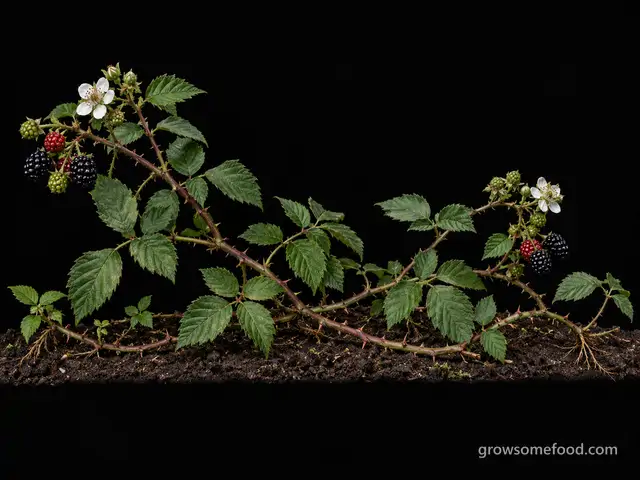
The native trailing blackberry that ripens first - a low, thorny, sprawling wild bramble whose early dull-black berries are a foraging highlight of late spring, weeks ahead of upright blackberries.
Safety notes Dewberry is a safe, delicious edible native - the blackberry-like fruit is eaten fresh or cooked, and young leaves make a traditional astringent tea. It has no toxic look-alikes (all Rubus fruits are edible). The trailing canes carry sharp thorns (southern dewberry can be fiercely thorny), so wear gloves and long sleeves and watch for ground-level canes underfoot. As a low plant it grows where ticks and chiggers may be, so take normal field precautions. Forage only from herbicide-free ground.
Overview
Dewberry is the trailing cousin of the blackberry - a group of low, native Rubus species (northern dewberry R. flagellaris, southern dewberry R. trivialis, and kin) whose slender, thorny canes run along the ground instead of standing up in an arching thicket. It fruits the same blackberry-like aggregate berries, but with two foraging advantages: dewberries ripen earlier - often in late spring, weeks ahead of upright blackberries - and their sprawling, low habit makes them easy to spot draped over sunny banks, field edges, roadsides, and clearings.
The one thing to knowDewberry is the trailing cousin of the blackberry - a group of low, native Rubus species (northern dewberry R.
Quick facts
- Height
- 12 inRange: 6–24 in
- Spread
- 6 ftRange: 3–12 ft
- Cold
- Takes hard frostdamaged below -25°F
- Heat
- Struggles above 100°F
- Life cycle
- Perennial, lives about 10 years
- Self-sows
- Yes, expect volunteers
- Soil
- Well-drained
- Water
- Medium
- Plant spacing
- 48 inRange: 24–96 in
When to plant
Nothing is open today. Spring transplanting opens 5 months, Mar 27 to May 8.
- Transplant Mar 27 – May 8 Opens in 159 daysAbout 2 weeks before to 4 weeks after your last frost (Apr 10 here)Set out plants or rooted tip layers in spring into full sun; dewberry establishes and trails to form a low sprawling patch, typically fruiting the second year on floricanes. Far more often it is simply foraged where it grows wild.
Frost here: last around Apr 10 (Mar 27 to Apr 24 most years), first around Oct 25. Zone averages, your own yard may run a week or two either way.
Life stages
Establish, grow, repeat
Getting established and returning each season are different parts of the story.
Stage 1 of 4 · Getting established
Rooting in / trailing
Day 0 to 120 after transplanting
Care at this stage
-
Water to establish the trailing canes
Keep new plants moist to root in. Dewberry grows as a low TRAILING bramble - its slender thorny canes run along the ground rather than standing upright like a blackberry, rooting where the tips touch soil and forming a sprawling patch.
-
Recognize the trailing, thorny canes
Unlike an upright blackberry, dewberry's thin canes trail on or near the ground, often with reddish, hair-like prickles or sharp thorns. It fruits on second-year canes (floricanes), like other brambles - this year's new canes fruit next year.
Months are typical seasonal windows; climate, variety, and plant age can shift them.
Harvest
- Berries fully dull-black (turned from glossy to matte) and detaching with the gentlest tug
- Ripening earlier than blackberries, in late spring to early summer; young leaves gathered earlier for tea
- Pick dull-black berries that slip off easily · every 3 days
- Gather young leaves for tea
Picking pick as they ripen
Cook with Dewberry
Watch out for
3 to know. None are high-risk for Dewberry. None are active in October.
Orange RustSeverity Medium DiseaseSeason: Apr–JunNew spring shoots that are spindly, pale, and clustered ('witches broom'), with bright powdery orange pustules coating the undersides of the leaves.
New spring shoots that are spindly, pale, and clustered ('witches broom'), with bright powdery orange pustules coating the undersides of the leaves.
No cure - dig out and destroy infected plants entirely, roots and all, as soon as you see the orange spores, before they infect neighbors. This is a rogue-it-out disease.
Plant certified disease-free, resistant stock; remove wild brambles nearby (a major source); give good airflow. Once a plant shows it, it's infected for life.
A systemic fungal disease specific to blackberries and related brambles: it lives permanently inside the whole plant, producing masses of bright orange spores on leaf undersides in spring. It never kills the plant outright but deforms it, stops it fruiting, and spreads to healthy plants.
Birds & WildlifeSeverity Medium WildlifeSeason: May–JulFruit disappearing from the outermost, most exposed parts of the plant first, and from the top of a tree where you cannot reach anyway.
The early ripe berries are prized by birds and mammals, which work the sprawling low patch fast - a mark of the plant's ecological value as much as a nuisance to foragers. Check the patch every two or three days at peak and pick promptly; net only a cultivated patch.
Fruit disappearing from the outermost, most exposed parts of the plant first, and from the top of a tree where you cannot reach anyway. Single neat pecks and gouges in ripening fruit, with several fruits sampled rather than one eaten through - the classic sign that it was birds rather than an animal. Heads of grain or seed going visibly lighter and emptier as they ripen, with hulls and chaff scattered underneath. Freshly sown seed vanishing off the surface of a bed before it germinates. Bird traffic in and out of the plant picking up as the crop colors, and birds waiting on nearby wires and branches. Wasps arriving at the pecked and split fruit shortly afterward.
There is no treatment once a crop is being taken - only protection and timing, so the answer is to get netting on and to pick what is ready. Reflective tape, flash ribbon, spinners, and decoy predators do work, but only for a few days at a time: birds habituate fast, so move and rotate them and never rely on them as the main defense for a crop you care about. Cut and gather grain or seed heads a little early, at firm dough, and finish drying them under cover instead of leaving them standing for the flocks. Plant a little extra, or a decoy crop the birds prefer, and accept sharing anything that crops heavily. On a wild or foraged patch, fruit going to birds and small mammals is the point of the plant rather than a problem to solve.
Net, and net early. Bird netting draped over a frame or hoops so it stands off the fruit, with the edges closed at ground level, is the only thing that reliably works at harvest scale - and it has to go on before the crop starts to color, because once birds have found the food they are far harder to displace. Keep fruit trees small enough that netting them is actually feasible; that decision gets made years earlier, at planting. Bags of mesh, organza, or paper slipped over individual heads, clusters, or prize fruit protect a small crop without netting the whole plant. Then shorten the exposure: pick promptly and completely rather than leaving ripe fruit hanging as a lure, clear split and dropped fruit that draws birds and wasps alike, and where a crop can finish off the plant, harvest a little early and ripen or dry it under cover. Rake in or cover broadcast seed so it is not lying in plain view.
Birds find ripening fruit and seed before you do. Robins, waxwings, starlings, catbirds, jays, sparrows, finches, blackbirds, and doves all work a garden, and the pressure arrives in a narrow window - the last days before harvest, when sugar rises, color changes, and the crop softens or the grain hardens. A flock can strip a small planting in a day or two, and birds that only peck rather than take whole fruit still leave wounds that rot or draw wasps. Squirrels, chipmunks, and other wildlife usually turn up on the same crop at the same time. This is competition rather than disease: the birds are not harming the plant, and a big tree or a heavy-cropping bush often has enough for everyone - but on a small planting it can be the difference between a harvest and none.
Spotted Wing DrosophilaSeverity Medium PestSeason: May–JulSoft, sunken, weeping fruit that collapses under light pressure, and tiny egg-laying scars on otherwise perfect ripening berries.
Dewberry's early crop often ripens before fly numbers peak, which is a real advantage over the later caneberries.
Soft, sunken, weeping fruit that collapses under light pressure, and tiny egg-laying scars on otherwise perfect ripening berries. To confirm, crush or float suspect fruit in salt water (1-2 teaspoons per cup) and look for small white maggots floating out. In an apple-cider-vinegar or yeast-sugar trap, the males carry a distinct dark spot at each wingtip.
There is no rescue for infested fruit. Control is relentless sanitation plus trap-based monitoring to time any spray: bag or freeze culls rather than leaving them, never drop them on the ground, and use vinegar or yeast-sugar traps to tell you when the flies have arrived. Well-timed targeted sprays such as spinosad are used where pressure is high - use only a product labeled for the crop you are treating, follow the label exactly, and observe its pre-harvest interval.
Pick short and often - every two or three days through the ripening window - and remove ALL overripe and dropped fruit, because culls left on the plant or the ground breed the next generation. Cool the harvest to about 35°F promptly, which stops larvae developing in fruit you have already picked. Fine mesh under 1 mm excludes the fly where pressure is high.
An invasive vinegar fly (Drosophila suzukii). Unlike ordinary fruit flies, which need damaged or overripe fruit, the female has a saw-edged ovipositor that cuts into sound, intact, ripening fruit to lay her eggs. The larvae feed inside, so the fruit softens, sinks, weeps and collapses just as you were about to pick it. It has become the dominant pest of soft fruit across the country, and the old rule that fruit flies only bother spoiled fruit no longer applies.
Good & bad neighbors
All of these are traditional pairings. The evidence is thin, so treat them as a nudge, not a rule.
Plant nearby
-
Dewberry is essentially a trailing blackberry - same genus, same culture, same delicious fruit - but it ripens earlier and sprawls low rather than standing upright; growing or foraging both extends the bramble-berry season from late spring into midsummer. (They can share bramble diseases, so give clean plants some space.)
-
Two native Rosaceae fruits that ripen in the same late-spring-to-early-summer window in the same sunny meadows and field edges; foraged together they make an early native-fruit harvest well ahead of the summer brambles.
-
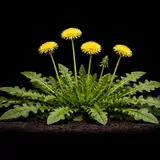
A common companion of the sunny field edges and clearings where dewberry sprawls; its early flowers feed the pollinators that later set the dewberry fruit, and its greens are foraged on the same walk.
-
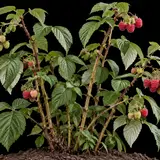
A fellow caneberry with the same two-year cane cycle and astringent leaf tea; dewberry and raspberry span the bramble spectrum, though like all Rubus they share some diseases, so pair clean stock with spacing rather than crowding them together.
Varieties · 3
You pick one when you add Dewberry to your garden. Its days to maturity set your harvest window.
Northern Dewberry (Rubus flagellaris)
The common northern dewberry: a cold-hardy native trailing bramble of the eastern and central US, its slender thorny canes running along the ground on sunny banks and field edges.
Variety details for Northern Dewberry (Rubus flagellaris)
Low trailing thorny canes with three-to-five-part toothed leaves, white flowers, and early dull-black aggregate berries.
speciesnativeedibletrailingWhite flowers and early, dull-black, blackberry-like berries - the first bramble fruit of the year in cooler regions.
Southern Dewberry (Rubus trivialis)
The southern dewberry: a heat-loving native that sprawls over sandy fields and roadsides across the South, often fiercely thorny with reddish bristly prickles.
Variety details for Southern Dewberry (Rubus trivialis)
Vigorous low trailing canes with reddish bristly prickles, white flowers, and early large-drupeleted black berries.
speciesnativeedibletrailingRipens its blackberry-like berries very early (late spring) - the classic Southern dewberry of seasonal picking traditions.
Swamp Dewberry (Rubus hispidus)
A low, bristly native dewberry of moist and boggy ground and damp woods in the East, with small tart-to-sour berries.
Variety details for Swamp Dewberry (Rubus hispidus)
Low, wiry, bristly trailing canes with glossy semi-evergreen leaflets and small dark berries, in damp ground.
speciesnativeedibletrailingEdible and foraged the same way (best cooked or sweetened for the tartness); a good native groundcover for wetter sites where other brambles struggle.
Grower tips
Notes from growers, tagged with the zone they grow in. A person reads every post before it appears.
Nobody has posted about Dewberry yet. The first one usually saves someone a season.
Free account. Your post shows your grower name and zone, never your email.