
Add it to your home screen and it opens full screen: no browser bars, one tap away, and everything stays signed in. Free, nothing to download from an app store.
- Tap the Share button in your browser
- Scroll down and choose “Add to Home Screen”
- Open GrowSomeFood from your home screen
- Open your browser’s menu
- Choose “Add to Home screen” or “Install app”
- Open GrowSomeFood from your home screen
Desert Marigold
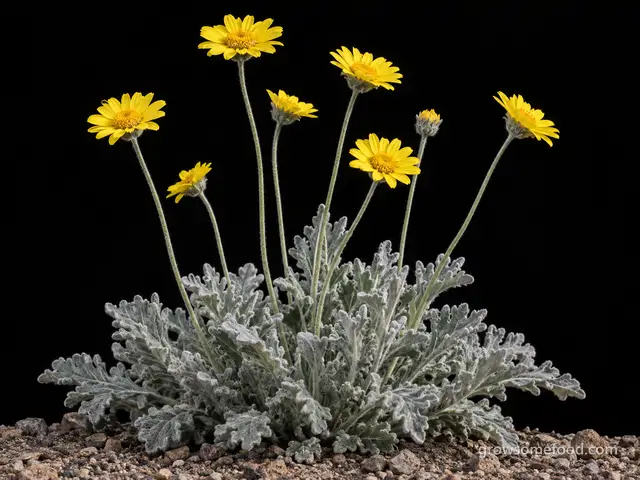
A cheerful, silvery-leaved Southwestern wildflower that blooms bright yellow daisies for an astonishingly long season - spring through fall and even year-round in mild climates - self-sowing to renew itself; a tough, easy, drought-proof native (and NOT the common Tagetes marigold).
Safety notes This is the true DESERT marigold (Baileya multiradiata), a Southwestern wildflower - NOT the common garden marigold (Tagetes). It is grown as an ornamental and is NOT eaten. It is mildly TOXIC to livestock: sheep and goats grazing large amounts can be poisoned (it contains sesquiterpene lactones), so it is a concern on rangeland, though animals usually avoid it. In the home garden it poses little risk to people or pets, who do not eat it, but do not consume any part.
Overview
Desert marigold (Baileya multiradiata) is one of the most cheerful and hardworking wildflowers of the American Southwest - and, despite the shared name, it is not the common garden marigold (Tagetes) but a distinct native daisy. From a low mound of woolly, silvery-gray leaves it sends up bright golden-yellow daisy flowers on slender leafless stalks, and it blooms for an exceptionally long season - from spring through fall with any moisture, and even sporadically year-round in the mild low desert - giving it one of the longest flowering runs of any desert plant.
Quick facts
- Sprouts in
- 14 daysRange: 7–30 days
- Soil temperature
- 70 °FRange: 60–85 °F
- Height
- 18 inRange: 10–24 in
- Spread
- 14 inRange: 8–18 in
- Cold
- Takes light frostdamaged below 15°F
- Heat
- Struggles above 115°F
- Life cycle
- Grown as an annualBotanically a perennial
- Save seeds
- About 60 days after plantingRange: 45–90 days
- Self-sows
- Yes, expect volunteers
- Soil
- Well-drained
- Water
- Low
- Plant spacing
- 14 inRange: 10–20 in
When to plant
Nothing is open today. Spring sowing opens 5 months, Mar 27 to May 1.
- Direct sow Mar 27 – May 1 Opens in 158 daysAbout 2 weeks before to 3 weeks after your last frost (Apr 10 here)Spring sowing also works, and it is the route for colder zones (roughly 6-7), where desert marigold is grown as a warm-season annual for one long summer of bloom rather than a persistent perennial. Sow around last frost into lean, sunny, sharply drained ground.
Frost here: last around Apr 10 (Mar 27 to Apr 24 most years), first around Oct 25. Zone averages, your own yard may run a week or two either way.
Life stages
Establish, grow, repeat
Getting established and returning each season are different parts of the story.
Stage 1 of 4 · Getting established
Sprouting (cool-season rains)
Day 0 to 14 from sowing
Care at this stage
-
Keep barely moist until up, then ease off
Sow seed on lean, gritty, well-drained soil and keep it barely moist until seedlings emerge (a week or two in warm soil). Desert marigold germinates readily with cool-season moisture. Do not overwater - it is a desert plant that rots in soggy ground.
-
Thin seedlings to give each room
Thin crowded seedlings to about a foot apart so each forms a tidy rosette and blooming mound. Extra seedlings transplant while small but resent root disturbance once established.
Months are typical seasonal windows; climate, variety, and plant age can shift them.
Watch out for
3 to know. None are high-risk for Desert Marigold. 1 is active in October.
Root RotSeverity Medium DiseaseSeason: Jan, Feb, Jul, Aug, DecWilting in the middle of the day on a plant whose soil is damp - the classic tell, and the reason people water a rotting plant and finish it off.
Lean, sharply drained soil in full sun, sparing water, and nothing rich; keep it dry in the off season. Self-sown seedlings from earlier flowers usually replace a plant you lose.
Wilting in the middle of the day on a plant whose soil is damp - the classic tell, and the reason people water a rotting plant and finish it off. Leaves yellowing from the bottom up, dull off-color foliage, and growth that stalls for no visible reason. Whole shoots, or one side of the plant, collapsing while the rest still looks fine. Soft, dark, or mushy tissue at the base of the stem or at the crown, sometimes with a sour smell. Lift a failing plant and look at the roots: healthy ones are firm and pale, rotted ones are brown or black and slimy, and the outer layer slips off between your fingers leaving a thread of core behind. Seedlings that topple over at soil level are the same problem, called damping-off.
There is no cure for tissue that has already rotted, so act on the conditions rather than looking for a spray. Stop watering at once and fix the drainage - open up compacted soil, or move the plant to a raised, sharply drained position or a container. Lift a badly affected plant, cut away every soft dark root and rotted section with a clean blade back to firm pale tissue, and replant only the healthy parts into fresh free-draining soil or mix. Often the better move is to give up on the plant and save its offspring instead: cuttings, offsets, or divisions taken from firm healthy growth root readily and give you a clean start. Bin the rotted material rather than composting it, and correct the drainage before you replant, because the rot comes straight back in the same wet spot.
Drainage is the whole defense. Match the plant to the site first - something that wants sharp drainage will not survive heavy clay or a low, water-collecting spot however well you tend it. Where the ground is heavy, plant on a raised bed, berm, or slope, or grow in a container. Set plants at the depth they were already growing, since burying the crown or the root flare is a common cause of rot, and keep mulch pulled back a few inches from the stem base instead of piled against it. Water the soil rather than the calendar: check that the top inch or two is dry before watering again, cut back hard in cool weather and winter dormancy, and never leave a pot standing in a full saucer. Do not plant or dig in soggy ground, and go easy on rich amendments for plants that want it lean. Rotate annual crops, and start with clean healthy plants and fresh mix.
Root rot is not one organism but a group of soil fungi and water molds - Pythium, Phytophthora, Fusarium, Rhizoctonia and others - that sit harmlessly in most soils and only turn destructive when the ground stays saturated. Waterlogged soil drives the air out, the roots suffocate, and the weakened tissue is invaded and goes soft, brown, and stringy. Because the damage is underground you usually see it first as something that looks like drought: wilting, yellowing, stunting, a plant that does not respond to being watered. Overwatering, heavy compacted ground, a low spot that collects runoff, a pot with no drainage or a saucer left standing full, and cold wet soil in winter are the usual causes. Once roots have actually rotted there is no cure - this is a problem you prevent rather than treat.
Damping-OffSeverity Low DiseasenowSeason: Mar, Apr, Oct, NovSeedlings that fail to emerge or collapse at the soil line soon after germinating, and thin, patchy establishment in cold wet conditions.
Seedlings that fail to emerge or collapse at the soil line soon after germinating, and thin, patchy establishment in cold wet conditions.
None for affected seedlings; reduce watering, improve drainage and airflow, and resow more thinly if needed.
Sow into warm-enough, well-drained, moist (not soggy) soil with good seed-to-soil contact, and don't sow too deep or too early into cold ground.
A seedling rot that collapses young desert marigold seedlings sown too thickly or kept too wet in cool conditions - a minor issue easily avoided by lean, well-drained sowing and careful watering.
AphidsSeverity Low PestSeason: Mar–MayDense clusters of tiny insects packed onto shoot tips, flower buds, and the undersides of young leaves.
Dense clusters of tiny insects packed onto shoot tips, flower buds, and the undersides of young leaves. Curled, cupped, or distorted new growth that never opens properly. A sticky shine on the leaves - and on whatever sits under the plant - that later goes black with sooty mold. Tiny white cast skins left behind where a colony has been feeding. Ants running steadily up and down the stems, which is often the first thing you notice. Mottled, streaked, or misshapen leaves that do not grow out can mean a virus the aphids brought with them rather than the feeding itself.
Knock the colonies off with a hard jet of water and repeat every few days - on most plants that alone ends it. Pinch out or prune off the worst-infested tips rather than treating the whole plant. If colonies keep rebuilding, spray insecticidal soap or horticultural oil directly onto the insects, covering leaf undersides, and repeat weekly until they are gone; treat early or late in the day, and never spray a wilted or heat-stressed plant. Avoid broad-spectrum insecticides - they kill the ladybugs, lacewings, and parasitic wasps that were about to solve the problem for you, and aphid numbers usually come back worse afterward. Anything you spray must be labeled for the plant you are treating; follow that label and observe its pre-harvest interval. On anything you eat, wash leaves, heads, and buds well before use, since aphids hide down in crowns, folds, and tight growth.
Go easy on nitrogen: the soft, lush growth that heavy feeding produces is exactly what aphids breed on. Check new growth once a week through spring and early summer so you catch colonies while they are still small, and rub the first few out with your fingers. Leave flowering plants nearby and skip broad-spectrum sprays - ladybugs, lacewings, hoverflies, and parasitic wasps do most of this work for free, and they only stay if there is something for them to eat. Keep ants off the plant where you can, since they protect aphids from those predators. Water steadily so plants are not stressed, and check any new plant over before you bring it home or move it indoors, since aphids usually arrive on something else.
Aphids are small soft-bodied sap-suckers - green, black, gray, pink, or waxy white, and mostly wingless - that gather in dense colonies on the tenderest new growth: shoot tips, buds, and the undersides of young leaves. They breed extremely fast in mild weather, so a few can become hundreds inside a week. Their feeding curls and distorts soft growth, and the sticky honeydew they excrete coats everything below and turns black with sooty mold. Ants often farm and defend the colonies for that honeydew. A few aphids are normal on almost any plant and a healthy plant shrugs them off; only dense, persistent colonies do real damage, and some aphids also spread plant viruses as they feed.
Good & bad neighbors
Plant nearby
-
Two silvery-leaved yellow-daisy desert natives that layer beautifully - brittlebush the shrub above, desert marigold the long-blooming ground layer below - sharing identical dry, sunny, sharply drained conditions.
-
A classic Southwestern wildflower pairing: gold desert marigold and orange California poppy both self-sow into sheets of warm color on lean, sunny, sharply drained ground.
-
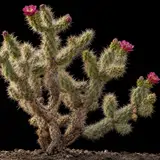
Desert marigold's long-blooming daisies soften and carpet the ground beneath a sculptural cholla, sharing the same dry, sunny, low-water desert conditions.
-
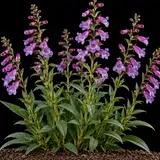
Desert marigold's low gold contrasts the vertical red or pink spikes of desert penstemon, both feeding pollinators on the same lean, sunny, well-drained terms and blooming in the desert spring.
Varieties · 2
You pick one when you add Desert Marigold to your garden. Its days to maturity set your harvest window.
Desert Marigold (Baileya multiradiata)
The classic species: a low mound of woolly silver-gray leaves topped by bright yellow daisy flowers on slender leafless stalks, blooming from spring through fall (year-round in mild climates).
Variety details for Desert Marigold (Baileya multiradiata)
Silver-gray mound with tall bare stalks bearing full, bright yellow daisies over a very long season.
speciesnativelong-bloomingyellow-daisyA short-lived, freely self-sowing perennial usually grown as an annual/biennial: it persists and reseeds in zones 8-11 and is sown around last frost for one long summer of bloom in zones 6-7. Tough, drought-proof, and a long-season pollinator plant. Mildly toxic to livestock; not eaten.
Woolly Desert Marigold (Baileya pleniradiata)
A close native relative, similar in appearance and use but often woollier and with leaves extending higher up the flowering stems.
Variety details for Woolly Desert Marigold (Baileya pleniradiata)
Woolly silver plant with yellow daisies, leaves running further up the flower stalks.
related-speciesnativeyellow-daisywoollierShares the same long bloom, silver foliage, drought toughness, and self-sowing habit - perennial in zones 8-11, a one-season summer annual in zones 6-7; sometimes sold interchangeably with B. multiradiata in native seed mixes.
Grower tips
Notes from growers, tagged with the zone they grow in. A person reads every post before it appears.
Nobody has posted about Desert Marigold yet. The first one usually saves someone a season.
Free account. Your post shows your grower name and zone, never your email.