Curly Dock

Rumex crispus · Polygonaceae
Vegetable Perennial Herb Food
Introduced - native to Europe and western Asia; now a widespread weed across North America
Plant with care. A fine foraged green and free grain, but a deep-taprooted perennial that resprouts from the crown and taproot left behind, and each stalk sheds tens of thousands of seeds that stay viable for years. A listed noxious weed in some states. Forage it - don't sow it near pasture or cropland.

Curly dock is a safe, non-toxic edible - young leaves are a tangy, lemony green (raw in small amounts or cooked) and the abundant seeds grind into a flour or grain extender. But like spinach, rhubarb, and sorrel it is HIGH IN OXALIC ACID: eat leaves in moderation, favor young ones, and cook older leaves (changing the water reduces oxalates). Moderate it if prone to kidney stones. The root ('yellow dock') has a traditional medicinal use for herbalists. Forage only from herbicide-free ground.

Overview

The rusty-stalked 'weed' of damp fields and ditches - a lemony, sorrel-like foraged green and a free wild grain, best enjoyed in moderation because its sour tang is oxalic acid.

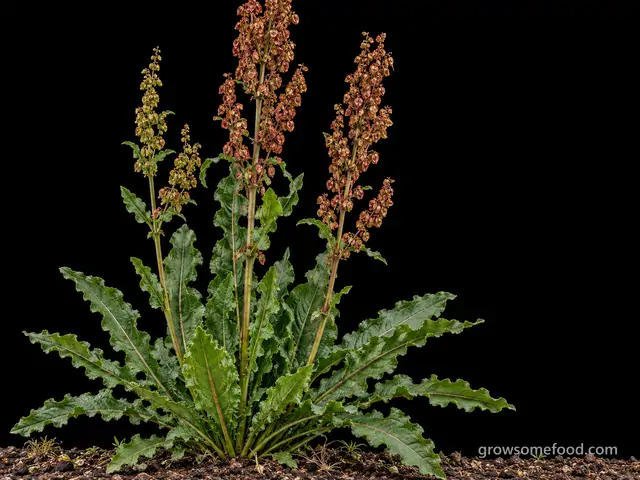
Curly dock (Rumex crispus) is the tall plant with wavy, crimped-edged leaves and, in late summer, unmistakable rusty-brown seed stalks that stand across damp fields, ditches, roadsides, and disturbed ground almost everywhere. It is a two-part foraged food: the young leaves are a bright, lemony, sorrel-like green, and the abundant seeds are a free wild grain, ground into a flour or grain extender.

That pleasant sourness comes from oxalic acid - the same compound in spinach, rhubarb, and true sorrel - which is why curly dock is enjoyed in moderation rather than eaten by the bowlful: favor young leaves, cook older ones, and go easy if you are prone to kidney stones. A tough, deep-taprooted perennial, dock greens up early in spring, sends up its rusty stalks in summer, and overwinters as a hardy root, self-sowing prolifically from enormous, long-lived seed sets. It is almost always a volunteer weed rather than a planted crop - but a useful one, giving a tangy cool-season green and a dependable free grain, plus a root with a long herbal tradition as 'yellow dock.'

At a glance

Sun
Full sun · Part sun
Water
Medium
Spacing
8–18 in (typ. 12)
Mature height
24–60 in (typ. 40)
Start by
Direct sow
Frost
Hardy
Germination
7–21 days (typ. 14) @ 55–80 °F (typ. 68)
Spread
10–24 in (typ. 16)
Soil
Consistently moist
Temperature
Damaged below -30°F · struggles above 100°F
Seed ready
90–150 days (typ. 120) (for saving)
Self-sows
Yes — expect volunteers

When to plant

Mar 27 – May 22
Primary Direct sowSpring
If growing on purpose, direct-sow in cool spring soil on moist ground for tangy greens; far more often it volunteers on damp, disturbed ground and needs no sowing.
Aug 16 – Sep 27
Secondary Direct sowFall
Late-summer sowing gives milder fall greens and overwinters as a taproot for an early-spring rosette.

Zone 7a typical frost: last Apr 10 · first Oct 25 (spring frost runs Mar 27–Apr 24 in a typical spread of years)

Life stages

  1. Seedling rosette day 0–60 from sowing
    • Recognize the wavy-edged rosette
      Curly dock forms a rosette of long, narrow leaves with distinctly WAVY, CRIMPED (curled) edges over a deep yellow taproot, on moist, disturbed ground. The young rosette leaves are the best for eating. It is deeply taprooted and tough once established, needing no care.
    The telltale curled, wavy leaf edgesDeep yellow taproot making it hard to pull once established
  2. Young leaves (harvest) Mar, Apr, May, Sep, Oct (yearly)
    • Pick young leaves before the stalk risesevery 10 d
      Harvest the young, tender rosette leaves in the cool seasons, before the tall flower stalk rises - a tangy, lemony green (the tang is oxalic acid). Eat small amounts raw, or cook older leaves (cooking mellows both the sourness and the oxalates). Cut-and-come-again from the crown while young. Eat in moderation.
    • A lemony cool-season green
      Curly dock's young leaves have a bright, sour, lemony flavor from oxalic acid - pleasant in moderation, like sorrel. Bitterness and toughness rise sharply as the plant bolts and the weather warms; take the young leaves.
    Leaves getting tough, bitter, and more sour with heat and age (harvest young)Rising oxalic-acid tang - eat in moderation
  3. Flower stalk & rusty seeds Jun, Jul, Aug (yearly)
    • Strip the seeds when brown and paperyevery 14 d
      Curly dock sends up a tall stalk that turns a distinctive RUSTY BROWN with dense clusters of papery winged seeds. When brown and dry, strip the seeds off - rub off the papery husks (winnow) and grind the small seeds into a flour or grain extender, or use them whole as a trail nibble.
    • Rusty stalks you can spot from afar
      The tall, rust-brown seed stalks are one of the easiest wild plants to spot across a field in late summer, standing long after the leaves fade. Each plant sheds huge numbers of long-lived seeds - the reason dock is such a persistent weed.
    Enormous, long-lived seed set (heavy self-seeding)Rusty stalks marking the plants for seed harvest
  4. Winter dormancy Jan, Feb, Nov, Dec (yearly)
    • Rests as a deep taproot
      Curly dock dies back and overwinters as its deep yellow taproot, sending up a fresh rosette of leaves early in spring - among the first tangy greens available. No winter care needed; the plant persists and resprouts from the crown and taproot left in the ground.
    Overwintering taproots ready to send up early-spring rosettes

Harvest

Style
Cut and come again
First production
1–1 yrs (typ. 1)
It's ready when
  • Young, tender, lemony rosette leaves in the cool seasons, before the stalk rises
  • Rusty-brown, dry, papery seed clusters in late summer for grinding
What you harvest
Leafmain crop
Tangy raw green (small amounts) · Cooked greens · Soups
Young rosette leaves - a lemony, sorrel-like green (the tang is oxalic acid). Eat young leaves raw in small amounts or cook older ones; cooking mellows the sourness and oxalates. Eat in moderation. Cut-and-come-again while young.
Seed
Ground flour / grain extender · Trail nibble
Abundant small winged seeds from the rusty stalks - winnow off the papery husks and grind into a flour or grain extender, or nibble whole. A traditional foraged grain of lean times.

Watch out for

Aggressive Self-Seeding & Spread Medium DisorderJul, Aug, Sep

Not a pest but a management issue. This plant sets and sheds seed prolifically, so anything left to ripen builds a persistent seed bank in the soil and returns as a heavy flush of volunteers the following season. Much of that seed stays viable for years, which is why one season of letting it go can take several seasons to undo.

Watch for: Ripe seed heads or stalks shedding onto the ground, and a flush of volunteer seedlings coming up well beyond where the parent plant stood - most obvious in the first weeks of the plant's growing season.

Prevent: Cut, deadhead or harvest the seed heads before they ripen and shatter, which is far easier than dealing with what they drop. Where the plant is grown deliberately, keep it in defined rows or a contained bed so that volunteers are obvious, and site it only where naturalizing is welcome.

Treat: Hoe or hand-pull volunteers while they are small and before they set seed - the existing seed bank will keep germinating for several seasons either way, so this is an ongoing job rather than a single fix. Where the volunteers are themselves edible, harvesting them is the easiest control, but only ever eat or grow on a seedling you can positively identify.

Two problems at once here: each rusty stalk sheds thousands of long-lived seeds, and the plant resprouts from any crown or taproot left in the ground. Cut the seed stalks before they ripen and dig the whole taproot out while the soil is moist, because a crown left behind simply regrows.

Herbicide / Pollution Contamination Medium DisorderMar, Apr, May, Sep, Oct

A risk to the forager rather than to the plant. This species grows in lawns, gardens, pastures, croplands, field margins, paths and roadsides - exactly the places that get sprayed with herbicides and lawn chemicals, or that collect road pollution and runoff. The plant itself is harmless; what can make it unsafe to eat is where it has been growing.

Watch for: Plants growing in treated lawns, sprayed beds, pastures or croplands, along busy or polluted roadsides, or anywhere the ground around them looks suspiciously weed-free. Yellowed, twisted or distorted growth on neighboring plants is a sign something has been sprayed recently.

Prevent: Only forage from ground you know has not been treated with herbicides or pesticides, and stay well back from busy roadsides. Ask before harvesting on land you do not manage. If you are not sure, grow your own patch, or gather only from a clean site you have watched across a full season.

Treat: Do not harvest a contaminated plant - there is no washing this off, and no way to tell by looking. The plant itself is fine, so the answer is simply to choose a different site.

Dock is a pasture and ditch plant, and pastures are routinely sprayed to control it - dock is often the target rather than a bystander. Gather from clean damp ground you actually know.

Oxalic Acid Content Medium DisorderMar, Apr, May, Jun, Sep, Oct

A food-safety note rather than a plant problem: curly dock's lemony sourness is oxalic acid, so the leaves are eaten in moderation (like spinach, rhubarb, and sorrel), not as a bulk green.

Watch for: N/A - a dietary consideration; the sour, lemony taste itself signals the oxalic acid, which is stronger in older and bolted leaves.

Prevent: Favor young leaves, eat in moderation, and cook older leaves (changing the cooking water) to reduce oxalates; moderate it if prone to kidney stones or kidney issues.

Treat: Cook rather than eat large amounts raw; otherwise no action needed - dock is a healthful tangy green in sensible portions.

Good & bad neighbors

Plant nearby
SorrelCurly dock is a wild Rumex, the same genus as cultivated garden sorrel - both are lemony, oxalic-acid-tangy greens eaten in moderation; growing sorrel is the easiest way to learn the flavor and the moderation habit dock shares.Traditional pairing — evidence is thin.
DandelionA fellow tough, deep-taprooted foraged perennial of the same disturbed ground; dandelion's bitterness and dock's lemony sourness cover different corners of the wild-greens flavor range, and both give an early-spring rosette.Traditional pairing — evidence is thin.
Stinging NettleThe classic pairing of folk first aid - dock leaves are the traditional remedy rubbed on nettle stings, and the two conveniently grow in the same damp, rich ground, so a dock plant is often right beside the nettle that stung you.Traditional pairing — evidence is thin.
Keep apart

Varieties · 2

Broad-Leaved Dock (Rumex obtusifolius)Zones 3a–9b

Rosette of broad, oval, sometimes red-veined leaves with tall rusty seed stalks.

speciesperennialediblebroad-leavesweedy

A close dock relative with broader, more oval leaves, foraged the same way (young leaves cooked, seeds ground) and carrying the same oxalic-acid moderation caution. The dock leaf most famously rubbed on nettle stings; an equally common weed of the same damp ground.

Curly Dock (Rumex crispus)Zones 3a–9b

Rosette of long narrow wavy-edged leaves and tall stalks that turn rusty brown with dense papery seed clusters.

speciesperenniallemonyedible-seedswavy-leavesrusty-stalks

The common curly dock: a deep-taprooted perennial with long narrow leaves with wavy crimped edges and tall rusty-brown seed stalks. Young leaves are a lemony sorrel-like green (eaten in moderation for the oxalic acid) and the abundant seeds a free wild grain. The classic 'sour dock' / 'yellow dock.'

Grow

A tough, deep-taprooted perennial of moist, disturbed ground; it volunteers in damp fields and ditches, needs no care, and self-sows heavily from its rusty seed stalks.

Curly dock thrives on moist, disturbed ground - damp fields, ditches, pasture edges, roadsides, and low spots - in full sun to part shade, where its deep yellow taproot anchors it and makes it very persistent. It is a hardy perennial that greens up early in spring, bolts to rusty seed stalks in summer, and dies back to its taproot for winter, returning reliably year after year.

You almost never plant dock; it volunteers abundantly from a huge, long-lived soil seed bank. To grow it deliberately for greens, direct-sow it in cool spring or late-summer soil on moist ground and keep young sowings damp for milder, more tender leaves. Because it self-sows so heavily (each rusty stalk sheds thousands of seeds that persist for years) and resprouts from its deep taproot, curly dock is far easier to establish than to remove - so treat it as the free, self-sustaining crop it is, harvesting young leaves and seed while managing it where you want it gone. Cutting the seed stalks before they ripen is the main way to limit its spread.

Harvest

Pick young lemony leaves in the cool seasons (eat in moderation, cook older ones), and strip the rusty-brown seed clusters in late summer to winnow and grind into flour.

Curly dock offers two harvests. Take the young, tender rosette leaves in the cool seasons - early spring and fall - before the tall flower stalk rises, when they are mildest and least tough. Their bright, lemony sourness (from oxalic acid) is pleasant like sorrel: eat young leaves raw in small amounts in salads, or - better for older leaves - cook them (which mellows both the sourness and the oxalates; changing the cooking water reduces oxalates further). Because of that oxalic acid, enjoy dock leaves in moderation, not as a bulk green.

In late summer, harvest the seeds: when the tall stalks turn rusty brown and papery, strip the dense seed clusters off, rub and winnow away the papery husks, and grind the small seeds into a flour or grain extender (or nibble them whole). It is a traditional foraged grain of lean times - modest work for a modest but real yield. As always, forage only from ground free of herbicides, and confirm the ID by the distinctive wavy, curled leaf edges and rusty seed stalks.

Nutrition

A nutritious tangy green rich in vitamins A and C and iron, plus edible grain seeds - eaten in moderation because of its oxalic-acid (sour) content.

Curly dock is a genuinely nutritious wild green: its young leaves are notably rich in vitamins A and C and supply iron and other minerals, along with the beneficial (and characteristic) oxalic acid that gives the lemony tang. The seeds add a modest free grain, carrying fiber, protein, and minerals - a traditional survival food ground into flour.

The one real caveat is the familiar one for tangy greens: that oxalic acid means dock is best eaten in moderation (like spinach, rhubarb, and sorrel), favoring young leaves and cooking older ones, and moderating it if you are prone to kidney stones. Beyond food, the deep yellow taproot is the classic herbal 'yellow dock,' long used as a gentle bitter and blood tonic in folk and traditional medicine - a use best left to informed herbalists and mentioned here only for its historical importance, not as a treatment. Eaten sensibly, curly dock delivers a vitamin-rich tangy green and a free grain from a plant most people only ever mow down as a weed.

Traditional & historical uses

Curly dock's deep yellow taproot is the classic herbal 'yellow dock.' It was traditionally used as a gentle bitter digestive, a mild stimulant laxative (from its anthraquinones), a 'blood-cleansing' alterative for skin complaints, and in iron tonics. It carries real cautions - laxative effect, oxalic acid, pregnancy - so it is a herbalist's remedy, not a food. Educational only, not medical advice.

This section records how people have traditionally used this plant, and what is known about the risks. It is history and general information — not medical advice, and not a recommendation to treat anything. Plants are not dosed like medicines, some interact with prescriptions, and some are harmful in ways that are not obvious. Talk to a clinician before using any plant medicinally.

Beyond its tangy edible leaves, curly dock is best known medicinally for its deep yellow taproot - the traditional herbal 'yellow dock' (Rumex crispus root), a mainstay of Western folk and traditional herbalism.

Traditional uses: the bitter root is used as a gentle digestive bitter and cholagogue (to stimulate bile and digestion), as a mild stimulant laxative for constipation, and as a classic 'blood-cleansing' alterative that was reputed in Western folk herbalism to help chronic skin complaints such as eczema and acne - a claim with no clinical support. It also appears in traditional iron tonics for sluggish or iron-poor states. Its laxative action comes from anthraquinone compounds (emodin and relatives), the same family found in senna and rhubarb root; it also contains astringent tannins and iron. The leaves themselves are the traditional first aid rubbed on nettle stings.

Honest caveats: this is a genuine herbal medicine with genuine cautions. The anthraquinones make it a laxative that should not be overused or taken long-term (risk of dependency and electrolyte loss), and it is avoided in pregnancy and nursing and with bowel obstruction. Like the leaves, the plant is high in oxalic acid, a concern for anyone prone to kidney stones, and it can interact with medications. Leave medicinal use of the root to knowledgeable herbalists. Educational information, not medical advice.

History

A Eurasian plant carried worldwide with agriculture - a foraged 'sour dock' green, a lean-times grain, and the source of the traditional herbal 'yellow dock' root.

Curly dock is native to Europe and western Asia and has followed people and agriculture around the world, becoming one of the most common weeds of moist, disturbed ground across North America. As food, it has a long folk history as a foraged tangy spring green - 'sour dock' - eaten across Europe and beyond, and its abundant, storable seeds served as a wild grain in lean times, ground into flour when other food was scarce.

Its deep yellow taproot gives it its other old name, 'yellow dock,' one of the more storied roots in Western folk herbalism, traditionally used as a gentle bitter tonic for digestion and the blood - a use that persists in modern herbalism (and one this entry notes for history rather than recommends). Dock leaves also carry a homespun bit of folk first aid: they are the traditional remedy rubbed on nettle stings, and the two plants conveniently often grow side by side in the same damp ground. For most of its North American history curly dock has simply been an overlooked weed; foragers have rediscovered it as a dependable tangy green and free grain.

Troubleshooting

Eat leaves in moderation for the oxalic acid, harvest young before it bolts, favor cooking older leaves, and manage its heavy seeding and deep resprouting taproot.

Can I eat a lot of the leaves? Enjoy dock in moderation - the pleasant sour tang is oxalic acid (as in spinach, rhubarb, and sorrel); favor young leaves, cook older ones (and change the cooking water) to reduce oxalates, and moderate it if you are prone to kidney stones. The leaves are tough and harshly sour: you picked older or bolted leaves - take young rosette leaves in the cool seasons, and cook rather than eat older ones raw. How do I know it is curly dock? Look for the long, narrow leaves with distinctly wavy, crimped (curled) edges and, in summer, the tall rusty-brown seed stalks - both are distinctive. My seed flour is husky: rub and winnow the papery husks off the seeds before grinding. I cannot get rid of it: dock resprouts from the crown and taproot left in the ground and sheds thousands of long-lived seeds - dig the whole taproot and cut seed stalks before they ripen, over several seasons. Is it safe? Yes - non-toxic and distinctive; only avoid herbicide-treated ground and eat in moderation. Pests and diseases: few of note.

Growing across climates

A hardy plant adapted across nearly the whole country (zones 3-9) wherever ground is moist; cool-season greens everywhere, with the leaf harvest shifting from spring/fall in the North to winter in the South.

Curly dock is hardy and naturalized across nearly all of North America, roughly zones 3-9, wherever the ground stays moist - it favors damp fields, ditches, low spots, and disturbed ground and is far less at home in bone-dry sites. Its leaves are always best in the cool seasons, so the leaf-harvest window shifts by climate. Cold northern zones (3-6): a hardy perennial that greens up early for spring greens, sends up rusty seed stalks in summer, and overwinters as its deep taproot. Temperate zones (6-8): spring and fall leaf harvests with abundant summer seed. Warm southern zones (8-9): gather the tangy leaves through the cool months of fall, winter, and spring, since summer heat toughens and sharpens them and pushes the plant to bolt.

Everywhere the seed harvest comes in late summer, when the rusty stalks dry, and the flavor rule holds: cool weather and young growth make milder dock, while heat and age make it tough and harshly sour. Because it is so hardy, so widespread, and so tied to common damp, disturbed ground, curly dock is available as a foraged tangy green and free grain across essentially the entire country - a dependable, if humble, wild food wherever there is a moist weedy patch.

Grower tips

No grower tips for Curly Dock yet. Yours could be the first.

Connection interrupted

Reconnecting to GrowSomeFood

Keep this page open. We are trying to restore your garden session.

Attempt of . Retrying automatically.

Still offline

Could not reconnect

Your phone may have switched networks or gone to sleep. Try again when the signal is steady.

Session expired

Reload to continue

This garden session is no longer available on the server. Reloading will start a fresh session.