
Add it to your home screen and it opens full screen: no browser bars, one tap away, and everything stays signed in. Free, nothing to download from an app store.
- Tap the Share button in your browser
- Scroll down and choose “Add to Home Screen”
- Open GrowSomeFood from your home screen
- Open your browser’s menu
- Choose “Add to Home screen” or “Install app”
- Open GrowSomeFood from your home screen
Columbine
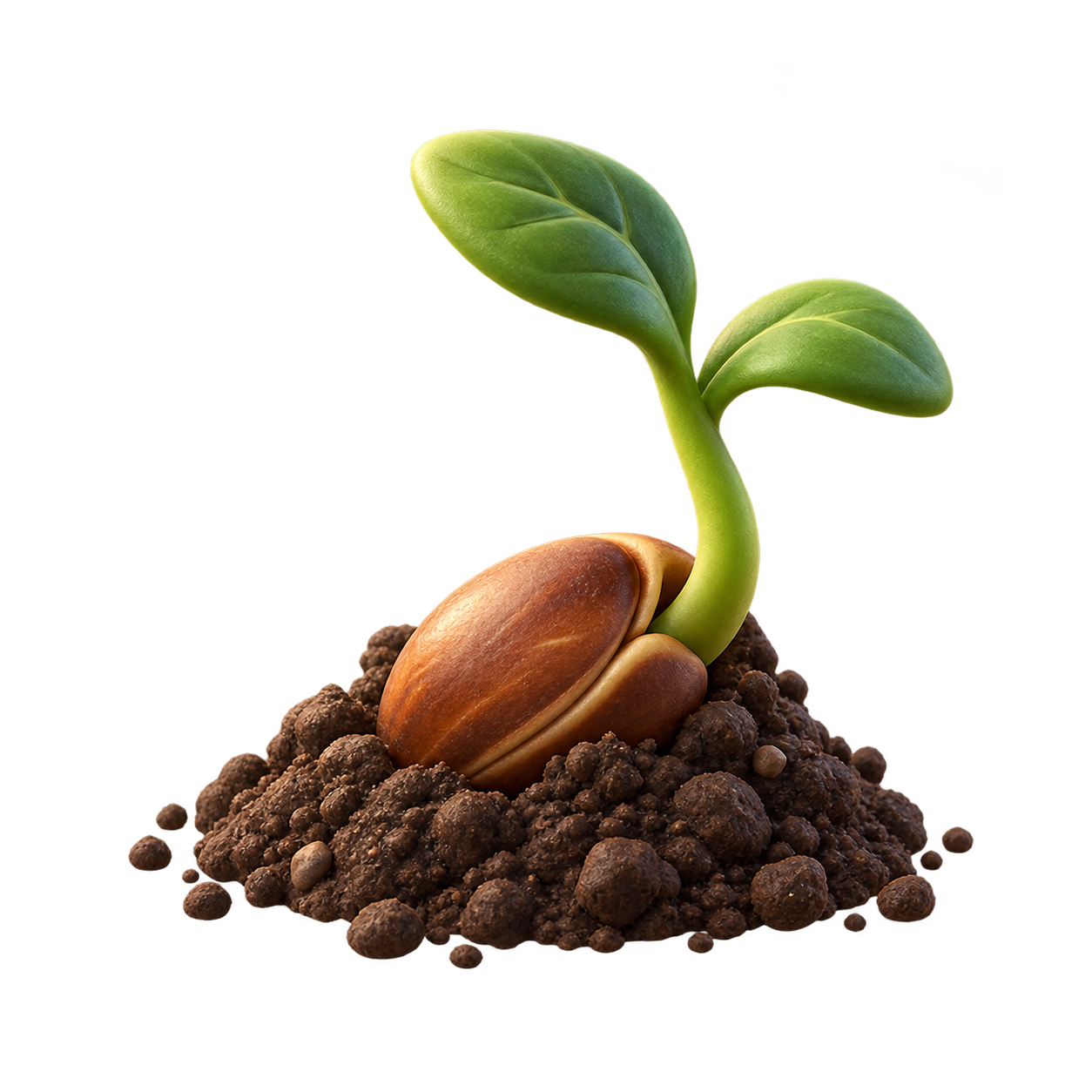
The woodland-edge charmer that welcomes hummingbirds back in spring - dainty nodding, long-spurred flowers over ferny foliage, thriving in part shade and reseeding itself into gentle drifts.
Safety notes Columbine is grown as an ornamental, not a food. The seeds and roots contain compounds (including cyanogenic glycosides) that are toxic if eaten in quantity, so keep them away from children and don't ingest any part. The flowers are sometimes described as edible in tiny amounts, but because the rest of the plant is toxic it's safest to treat the whole plant as ornamental only. It is not a contact irritant and is otherwise safe to grow and handle.
Overview
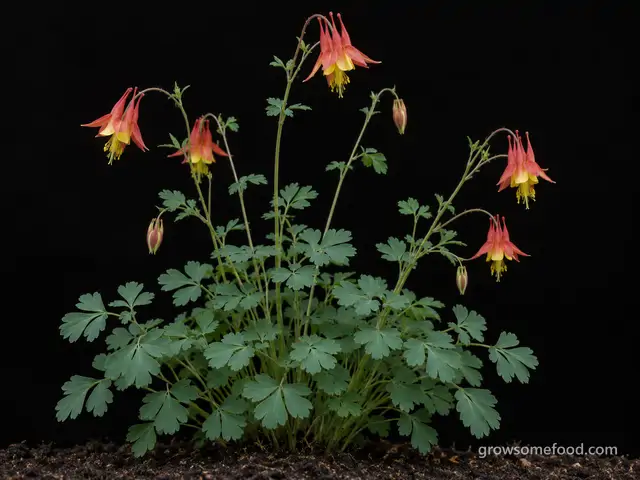
Columbine (Aquilegia) is one of the most beloved and distinctive spring flowers - intricate, nodding blooms with backward-pointing spurs dangling over delicate, blue-green ferny foliage. The wild eastern species (A. canadensis) rings in red and yellow, while garden hybrids come in nearly every color; all share that unmistakable spurred, bonnet-like shape that gives it the folk name 'granny's bonnet.'
The one thing to knowColumbine (Aquilegia) is one of the most beloved and distinctive spring flowers - intricate, nodding blooms with backward-pointing spurs dangling over delicate, blue-green ferny foliage.
Quick facts
- Sprouts in
- 30 daysRange: 21–45 days
- Soil temperature
- 68 °FRange: 60–72 °F
- Start indoors
- 8 weeks before transplantRange: 6–10 weeks
- Height
- 24 inRange: 12–36 in
- Spread
- 15 inRange: 10–18 in
- Cold
- Takes hard frostdamaged below -40°F
- Heat
- Struggles above 90°F
- Life cycle
- Perennial, lives about 4 years
- Save seeds
- About 90 days after plantingRange: 70–120 days
- Self-sows
- Yes, expect volunteers
- Soil
- Well-drained
- Water
- Medium
- Plant spacing
- 15 inRange: 10–18 in
When to plant
Fall sowing is open for 27 more days. Next: winter, Jan 30 to Feb 20.
- Direct sow Oct 11 – Nov 15 Open now · 27 days leftAbout 2 weeks before to 3 weeks after your first frost (Oct 25 here)Fall-sow seed on the soil surface (light aids germination) so winter cold stratifies it - the easiest method, mimicking its natural self-sowing. Seedlings appear in spring and bloom the following year.
- Start indoors Jan 30 – Feb 20 Opens in 103 daysAbout 10 weeks before to 7 weeks before your last frost (Apr 10 here)For spring transplants, cold-stratify seed in the fridge 3-4 weeks, then surface-sow indoors 8-10 weeks before last frost (needs light to germinate).
- Transplant Apr 10 – May 22 Opens in 173 daysAbout at to 6 weeks after your last frost (Apr 10 here)Set out transplants after last frost into humusy, moist-but-well-drained soil in part shade; they establish quickly and usually bloom their second year.
Frost here: last around Apr 10 (Mar 27 to Apr 24 most years), first around Oct 25. Zone averages, your own yard may run a week or two either way.
Life stages
Establish, grow, repeat
Getting established and returning each season are different parts of the story.
Stage 1 of 4 · Getting established
Year 1 - rooting in
Day 0 to 60 after transplanting
Care at this stage
-
Keep evenly moist while rooting
Water a new plant to keep the soil evenly moist through its first season - columbine likes humusy, moist-but-well-drained woodland-edge soil and dislikes both drought and soggy ground.
-
Mulch lightly with leaf litter
A light woodland mulch of leaf litter or compost suits its natural habitat, holds moisture, and enriches the soil - but keep it off the crown.
Months are typical seasonal windows; climate, variety, and plant age can shift them.
Watch out for
3 to know. None are high-risk for Columbine. None are active in October.
Columbine SawflySeverity Medium PestSeason: Apr–JunGreen larvae (like tiny caterpillars) on the leaf edges and undersides, and leaves quickly eaten to the midrib.
Green larvae (like tiny caterpillars) on the leaf edges and undersides, and leaves quickly eaten to the midrib.
Hand-pick or knock larvae into soapy water, or hose them off; insecticidal soap for heavy infestations. Sawfly season is bloom season here, so spray only at dusk once the flowers have closed and the bees and hummingbirds have stopped working, never on open blooms in the middle of the day - and skip spinosad, which kills bees until it dries. The plant recovers well even if fully defoliated, so it is never worth poisoning an early nectar source to save the leaves.
Scout plants in spring and act early; healthy plants regrow after shearing.
Small green caterpillar-like sawfly larvae that can rapidly chew columbine leaves down to the stems, sometimes defoliating a plant in days in spring.
Columbine Leaf MinerSeverity Low PestSeason: Apr–JunPale white or tan winding trails etched through the leaves, worst after bloom.
Pale white or tan winding trails etched through the leaves, worst after bloom.
Shear the whole plant back to its basal rosette after bloom - it regrows clean foliage. No spraying needed.
Tolerate it (it doesn't harm the plant); remove badly mined leaves and clean up debris in fall.
Tiny fly larvae that tunnel between the leaf surfaces, leaving pale, winding, serpentine trails across the foliage. The signature columbine pest - unsightly but essentially harmless to the plant.
Powdery MildewSeverity Low DiseaseSeason: Jun–AugRound white powdery spots on the upper leaf surfaces that spread and merge until whole leaves look dusted.
On columbine this often follows dry stress. Cutting mildewed foliage right back usually brings a clean new flush, which beats spraying.
Round white powdery spots on the upper leaf surfaces that spread and merge until whole leaves look dusted. It usually starts on the oldest, lowest, most shaded leaves and works upward, so check there first. Look at the undersides too, and at stems, buds, and flower stalks, which get coated as it advances. Leaves that yellow, brown, curl, or go crisp and drop early under the coating. New growth that opens small, crumpled, or twisted where the fungus has reached the shoot tips. On plants where it gets onto the fruit, a dull gray film, russeted or scarred skin, and cracking. Late in the season, tiny dark specks scattered through the white felt - that is the fungus setting up to overwinter on the debris.
Start early: sprays protect healthy tissue, they do not clean up leaves that are already coated. Pick off and bin the worst leaves as soon as you see them, and open the plant up by thinning or pruning so air moves through. On anything that regrows quickly, shearing the whole plant back forces a clean flush and beats spraying. If it keeps spreading, potassium bicarbonate, horticultural oil, or neem applied weekly will hold it - cover both leaf surfaces. Sulfur also works, but it burns the foliage of some plants, should never go on in heat, and must not be mixed with or applied close behind an oil spray. Whatever you use must be labeled for the plant you are treating: follow that label and observe its pre-harvest interval on anything you eat. Do not compost badly infected material. Late-season mildew on a plant that is finishing anyway is usually cosmetic; on a crop still filling out it is worth acting on.
Give plants room. Crowding and still air are the biggest single driver, so space at the full recommended distance, thin seedlings properly, and divide or prune out congested growth until air moves through the plant. Full sun and an open position help; deep shade and a still corner against a wall are where it always starts. Water at the base rather than overhead, and water early in the day so nothing stays damp overnight. Keep plants evenly watered - drought stress at the roots leaves them far more susceptible, even though the fungus itself likes dry air. Go easy on nitrogen, since soft lush growth is the most vulnerable. Where resistant varieties exist for what you are growing, choosing one is the single most effective thing you can do on a plant that mildews every year. Clear infected leaves and stems away at the end of the season rather than composting them.
Powdery mildew is a fungal disease that coats leaves - and often stems, buds, and fruit - in a white-to-gray powder that looks like spilled talcum. It is not one fungus but a large family of them, each fairly specialised to its own group of plants, which is why mildew on one crop rarely jumps to an unrelated one beside it. Unlike most leaf diseases it does not need wet leaves: it thrives on warm dry days followed by humid nights, and it takes hold fastest where plants stand crowded in still air or in shade. The coating blocks light, so heavily covered leaves yellow, brown, and drop early. On many plants that is mostly disfiguring and arrives late enough not to matter; where it strips away the leaves a crop still needed to finish, it costs you size, sweetness, and quality.
Good & bad neighbors
Plant nearby
-
Both are hummingbird plants; columbine covers early spring and bee balm carries the hummingbird show into summer, extending nectar for the same visitors in part-sun beds.
-
A native woodland-edge companion with the same part-shade and moisture needs and overlapping spring bloom, weaving nicely among columbine's ferny foliage.
-
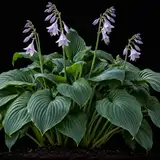
A practical shade pairing - hostas' broad leaves fill in around and after columbine's airy foliage and share its part-shade, moist, humusy conditions.
-
A native woodland groundcover that shares columbine's part-shade, humusy, moist conditions and covers the ground beneath its airy stems - a classic shade-garden pairing.
Varieties · 5
You pick one when you add Columbine to your garden. Its days to maturity set your harvest window.
Eastern native - Aquilegia canadensis 1 variety
Eastern Red Columbine (Aquilegia canadensis)
The wild native columbine: dainty nodding flowers with red spurs and yellow faces over blue-green ferny foliage, blooming in mid-spring.
Variety details for Eastern Red Columbine (Aquilegia canadensis)
Nodding red-and-yellow spurred flowers dangling over delicate blue-green foliage.
speciesnativered-and-yellowhummingbirdThe best columbine for hummingbirds and native gardens, tough and freely self-sowing.
Western native - Aquilegia formosa 1 variety
Western Columbine (Aquilegia formosa)
The western North American counterpart to the eastern red columbine, with similar red-and-yellow nodding flowers, native to the western mountains and better suited to western gardens and their hummingbirds.
Variety details for Western Columbine (Aquilegia formosa)
Nodding red-and-yellow spurred flowers, similar to the eastern species, on western native plants.
speciesnativered-and-yellowhummingbirdIts native range is the West - roughly Alaska and British Columbia south through California and east to the northern Rockies - and is NOT the eastern range shown on this page, which describes Aquilegia canadensis. It also wants cooler, moister, higher-elevation conditions than the eastern species and is short-lived in eastern or southern heat.
European columbine - Aquilegia vulgaris 1 variety
European Columbine (Aquilegia vulgaris / 'Granny's bonnet')
The old cottage-garden columbine from Europe, with nodding short-spurred purple, blue, pink, or white 'granny's bonnet' flowers.
Variety details for European Columbine (Aquilegia vulgaris / 'Granny's bonnet')
Nodding short-spurred bonnet-shaped flowers in purple, blue, pink, or white.
speciescottage-gardenshort-spurredself-seedingCharming and freely self-sowing, though not native and less specialized for hummingbirds than the wild red type. Note that the native range shown on this page is Aquilegia canadensis's: A. vulgaris is a European introduction that is native nowhere in North America and readily escapes cultivation, so treat it as a garden plant rather than a native planting.
Garden hybrid strains 2 varieties
Origami series
A popular compact hybrid strain with large, upward-facing, long-spurred flowers in a wide range of colors and bicolors on tidy 15-18 inch plants - showy and uniform, good for borders and containers.
Variety details for Origami series
Large upfacing spurred flowers in blues, pinks, reds, yellows, and whites on compact plants.
hybridlarge-floweredupfacingmixed-colorsSongbird series
A robust hybrid series with big, long-spurred, outfacing flowers (named for songbirds - 'Bluebird,' 'Cardinal,' 'Dove') in clear colors on strong 18-30 inch stems.
Variety details for Songbird series
Large long-spurred flowers in clear blues, reds, and whites on strong stems.
hybridlarge-floweredlong-spurredmixed-colorsVigorous and free-flowering.
Grower tips
Notes from growers, tagged with the zone they grow in. A person reads every post before it appears.
Nobody has posted about Columbine yet. The first one usually saves someone a season.
Free account. Your post shows your grower name and zone, never your email.