Add it to your home screen and it opens full screen: no browser bars, one tap away, and everything stays signed in. Free, nothing to download from an app store.
- Tap the Share button in your browser
- Scroll down and choose “Add to Home Screen”
- Open GrowSomeFood from your home screen
- Open your browser’s menu
- Choose “Add to Home screen” or “Install app”
- Open GrowSomeFood from your home screen
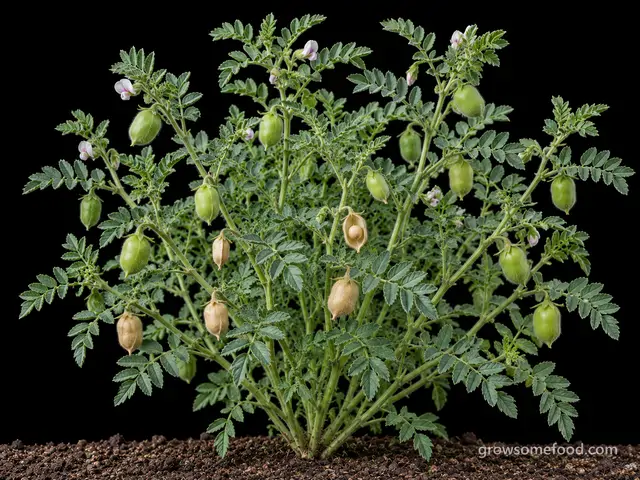
Chickpea
The hummus bean, and an easy cool-season legume: a knee-high fern-leaved bush that sets one or two nutty seeds per pod, fixes its own nitrogen, and wants a dry spring rather than a hot wet one.
Cook dried chickpeas thoroughly - soak, then boil hard before simmering; raw and undercooked legume seed contains lectins that cause stomach upset. The unusual part is the plant, not the food: chickpea leaves, stems and pods are coated in glands that exude malic and oxalic acid, a sour liquid that permanently stains clothing and can irritate or sting skin, worst in damp weather. Wear gloves and long sleeves when weeding, picking, or pulling a wet chickpea patch, and wash up afterward.
Overview
The one thing to knowIt is a cool-season crop, which surprises people who associate it with hot countries.
The chickpea is a knee-high, fine-leaved annual legume grown for the round nutty seeds behind hummus, falafel, chana masala, and a thousand stews. Each small inflated pod holds just one or two seeds, which is why a chickpea row looks modest beside a bean row - you grow chickpeas by the bed rather than by the plant, and reckon a 25-foot row at a few pounds of dry seed.
It is a cool-season crop, which surprises people who associate it with hot countries. Chickpeas germinate in cool soil, flower best in mild weather, and want a rainless late spring to dry down in; heat at flowering drops the pods, and humidity brings the disease that limits the crop worldwide. That is why the American chickpea belt is the dry Palouse and the Northern Plains, and why a Southern gardener sows in autumn and harvests in May instead of treating it as a summer bean.
Two things are worth knowing before you plant. Chickpeas need their own specific inoculant, not the general bean-and-pea kind. And the foliage is coated in glands that exude a sour acid, which stains clothes permanently and can sting skin - so gloves and long sleeves, especially when the plants are wet.
Quick facts
- Sprouts in
- 10 days7 to 16
- Soil to sprout
- 70 °F50 to 85
- Life cycle
- Annual
- Seed to save
- About 105 days after planting95 to 125
- Height
- 20 in12 to 26
- Spread
- 12 in8 to 18
- Cold
- Takes light frostdamaged below 25°F
- Heat
- Struggles above 95°F
Full sun · low water · well-drained soil · 6 in apart (4 to 8) · direct sow
When to plant
Nothing is open today. Spring sowing opens 6 months, Mar 13 to Apr 3.
- Direct sow Mar 13 – Apr 3 Opens in 173 daysAbout 4 weeks before to 7 days before your last frost (Apr 10 here)Sow in late winter, a few weeks before last frost, so the crop finishes before the humid heat arrives. Space widely for airflow - a wet spring in the East is where ascochyta blight does its damage.
Frost here: last around Apr 10 (Mar 27 to Apr 24 most years), first around Oct 25. Zone averages, your own yard may run a week or two either way.
Life stages
Seven stages, about 4 months from sowing to the first pull. Windows are typical; your zone and weather move them.
Germination
Day 0 to 10 from sowing- WaterWater in once, then leave it aloneevery 5 daysChickpea seed germinates in cool soil and rots in wet soil. Water the row in at sowing and then let the bed be - the seed has plenty of reserve and does not want to sit in damp ground.
- DoInoculate with CHICKPEA-specific rhizobiaChickpeas need Mesorhizobium ciceri, which is not the bacterium in a general garden bean-and-pea inoculant. In ground that has never grown chickpeas, the difference between inoculated and uninoculated rows is obvious - green and vigorous versus yellow and stunted. Buy chickpea inoculant with the seed.
Watch for- Seed rotting in cold, soggy ground
- Birds and rodents working the row before emergence
Seedling
Day 10 to 32 from sowing- ThinThin to 4-6 inches apartChickpeas need air moving through them more than most legumes, because still humid air is what ascochyta blight needs. Thin to 4-6 inches in rows 18-24 inches apart and resist the urge to crowd them.
- WeedWeed early - with gloves onGet the bed clean while the plants are small and the canopy is open. Wear gloves and long sleeves: the foliage exudes a sour acid that stains clothing and can sting skin, and it is worst on damp plants.
Watch for- Cutworms felling seedlings at soil level
- Yellow, stunted plants (wrong inoculant, or none)
- Seedlings collapsing in a warm wet spell
Vegetative
Day 28 to 55 from sowing- FertilizeNo nitrogen - the plant makes its ownOnce nodulated, a chickpea supplies its own nitrogen. Extra nitrogen grows soft leafy plants, delays maturity, and pushes the harvest into the humid heat you were trying to beat. Dig a plant and check: healthy nodules are pink inside.
- WaterWater sparinglyevery 12 daysChickpeas are genuinely drought-tolerant and far more likely to be lost to a wet bed than a dry one. Water only enough to keep them moving; never let the ground stay saturated.
Watch for- Brown ring-marked spots on leaves and stems (ascochyta blight)
- A plant yellowing and wilting from one side (fusarium wilt)
- Aphids on shoot tips
Flowering
Day 52 to 80 from sowing- WaterKeep water steady through bloomSmall white, pink, or blue pea flowers open one or two at a leaf axil. Heat above the mid-eighties or a drought at this point drops the flowers and empties the pods, so this is the one stretch worth watering for.
- InspectStay out of the row when the plants are wetWalking a wet chickpea patch spreads ascochyta blight from plant to plant, and coats you in the acid exudate at its strongest. Wait for the foliage to dry - the rule protects the crop and you at the same time.
Watch for- Flowers dropping in a heat wave
- Blight lesions spreading after rain
- Bees working the flowers (harmless - chickpeas self-pollinate)
Pod fill
Day 70 to 95 from sowing- HarvestPick a few green chickpeas while you canevery 5 daysWhen the pods are plump and still bright green, shell a handful: green chickpeas are sweet and pea-like, a delicacy in India as hara chana and in Italy. Take only a few plants' worth - anything picked green is seed you do not dry.
- InspectScout the filling pods for borersCorn earworm bores into swelling chickpea pods and eats the seed inside. Check for entry holes and dark frass, hand-pick the caterpillars, and treat small larvae with Bt if a lot of pods are being hit.
Watch for- Small entry holes and dark frass on pods
- Pods that stayed flat and empty (heat at flowering)
- Blight lesions moving onto the pods
Drying down
Day 92 to 110 from sowing- WaterStop watering as the plants yellowOnce the leaves yellow and the pods begin to go papery, cut the water off entirely so the crop cures on the stem instead of rotting. Rain during dry-down can mold or sprout the seed in the pod.
- InspectWait for the rattleThe crop is ready when the plants have browned, the leaves have dropped, and most pods are tan and papery with the seed loose enough to rattle. Watch the forecast: a wet week now is the moment to pull plants and finish them under cover.
Watch for- Rain forecast during dry-down (pull and finish under cover)
- Pods shattering and dropping seed if left too long
- Mold on pods after a humid spell
Harvest
Day 95 to 125 to the first pull from sowing- HarvestPull whole plants - wearing glovesWhen most pods are tan and rattling, pull the plants and stack or hang them under cover for another week or two if they are not bone dry. Gloves and long sleeves are not optional here: pulling a damp row barehanded is how people meet the acid exudate.
- DoThresh, winnow, then dry the seed furtherShell small amounts by hand, or put the dry plants in a sack and tread or beat it, then winnow the chaff off in a breeze. Spread the seed thinly for another week until a chickpea shatters rather than dents when bitten - that is the test for safe storage.
Watch for- Blotched or sunken-spotted seed at threshing (blight - do not save it)
- Seed that dents rather than shatters (dry it longer)
- Bean weevil holes appearing in stored seed
Harvest
- Plants brown and dry, leaves dropped, most pods tan and papery
- Seeds rattle loose inside the pods
- A dry chickpea shatters rather than dents when you bite it
- For green chickpeas instead: pods plump, bright green, and filled
- Pull whole plants - wearing gloves
- Thresh, winnow, then dry the seed further
Per plant 0.5 to 3 ozPicking pull once
Cook with chickpeas
Watch out for
6 to know. 1 is high-risk: Ascochyta Blight (Chickpea). None are active in September.
Ascochyta Blight (Chickpea)Severity High DiseaseThe single reason a home chickpea crop fails in the humid East.
If you follow only one rule from this entry, make it the one about staying out of the patch when the plants are wet.
Round or oval tan lesions with dark brown borders on leaves and pods, dotted with concentric rings of pinhead-sized black specks - those rings are the identifying feature. Elongated dark lesions on stems that girdle them, leaving the top of the plant snapped over and hanging. Patches of collapse that start at one plant and spread outward down the row after every rain. Dark blotches or sunken spots on the seed when you thresh, which is how the disease rides into next year's crop.
There is no cure for an infected plant. Pull and destroy badly affected plants early, before rain splashes spores onto the rest of the row, and bin rather than compost the debris. Where a crop is worth protecting, a protectant fungicide applied before or at the first sign of disease can hold it - use only a product labeled for chickpeas, follow the label exactly, and observe its pre-harvest interval. Above all, do not save seed from an affected crop, and move the bed onto a different family next season.
Start with clean, disease-free seed and never save seed from a crop that showed the disease. Rotate three to four years away from chickpeas and clear the stubble rather than leaving it standing. Space plants and rows widely so foliage dries fast, and site the crop where air moves. Never walk, weed, or harvest a chickpea patch while the foliage is wet, since that is how it travels plant to plant - this single habit is the most effective thing a gardener can do. Sow as early as the season allows so the crop is filling before the wettest weeks. Where they are offered, grow varieties listed as ascochyta-tolerant; there is no immunity, but the differences are real, and small-seeded desi types generally hold up better than large kabuli ones.
The disease that limits chickpea growing worldwide, caused by the fungus Ascochyta rabiei. It attacks leaves, stems, and pods, producing tan-to-brown lesions with dark margins, marked with concentric rings of tiny black fruiting bodies. Stem lesions girdle and snap the plant, so the top simply hangs over and dies, and in a wet spring a patch can go from lightly spotted to collapsed in a fortnight. It is both seed-borne and debris-borne: it arrives on infected seed, overwinters on last year's stubble, and then splashes plant to plant in rain or on your sleeves as you walk the row. This is why chickpeas are grown as a dryland crop, and why a humid eastern spring is the hardest place to bring one in.
Root RotSeverity Medium DiseaseChickpeas are sown into cool ground in early spring, which is exactly when a heavy or low-lying bed stays saturated - the commonest cause of a row that never comes up evenly.
Sow on a ridge or a raised bed and water the row in once rather than keeping it damp.
Wilting in the middle of the day on a plant whose soil is damp - the classic tell, and the reason people water a rotting plant and finish it off. Leaves yellowing from the bottom up, dull off-color foliage, and growth that stalls for no visible reason. Whole shoots, or one side of the plant, collapsing while the rest still looks fine. Soft, dark, or mushy tissue at the base of the stem or at the crown, sometimes with a sour smell. Lift a failing plant and look at the roots: healthy ones are firm and pale, rotted ones are brown or black and slimy, and the outer layer slips off between your fingers leaving a thread of core behind. Seedlings that topple over at soil level are the same problem, called damping-off.
There is no cure for tissue that has already rotted, so act on the conditions rather than looking for a spray. Stop watering at once and fix the drainage - open up compacted soil, or move the plant to a raised, sharply drained position or a container. Lift a badly affected plant, cut away every soft dark root and rotted section with a clean blade back to firm pale tissue, and replant only the healthy parts into fresh free-draining soil or mix. Often the better move is to give up on the plant and save its offspring instead: cuttings, offsets, or divisions taken from firm healthy growth root readily and give you a clean start. Bin the rotted material rather than composting it, and correct the drainage before you replant, because the rot comes straight back in the same wet spot.
Drainage is the whole defense. Match the plant to the site first - something that wants sharp drainage will not survive heavy clay or a low, water-collecting spot however well you tend it. Where the ground is heavy, plant on a raised bed, berm, or slope, or grow in a container. Set plants at the depth they were already growing, since burying the crown or the root flare is a common cause of rot, and keep mulch pulled back a few inches from the stem base instead of piled against it. Water the soil rather than the calendar: check that the top inch or two is dry before watering again, cut back hard in cool weather and winter dormancy, and never leave a pot standing in a full saucer. Do not plant or dig in soggy ground, and go easy on rich amendments for plants that want it lean. Rotate annual crops, and start with clean healthy plants and fresh mix.
Root rot is not one organism but a group of soil fungi and water molds - Pythium, Phytophthora, Fusarium, Rhizoctonia and others - that sit harmlessly in most soils and only turn destructive when the ground stays saturated. Waterlogged soil drives the air out, the roots suffocate, and the weakened tissue is invaded and goes soft, brown, and stringy. Because the damage is underground you usually see it first as something that looks like drought: wilting, yellowing, stunting, a plant that does not respond to being watered. Overwatering, heavy compacted ground, a low spot that collects runoff, a pot with no drainage or a saucer left standing full, and cold wet soil in winter are the usual causes. Once roots have actually rotted there is no cure - this is a problem you prevent rather than treat.
Acid Exudate on the FoliageSeverity Medium DisorderWorth knowing before your first chickpea harvest rather than after it.
It is not dangerous, but pulling a damp row barehanded is a memorably unpleasant way to learn about it.
Wet chickpea foliage after rain, dew, or overhead watering - the exudate is at its strongest then. A sour, vinegary smell as you work down the row. Hands that feel sticky and then begin to sting after weeding a damp patch. Dark, permanent staining on sleeves, gloves, and knees. Redness, itching, or a rash appearing on the forearms hours after working the crop. Children picking through a chickpea bed barehanded.
Wash the skin with soap and water as soon as you notice it and the irritation usually settles within a few hours. A cool compress and a plain moisturizer help, and an over-the-counter hydrocortisone cream will calm a mild reaction. If it gets into the eyes, rinse with clean water for several minutes. Seek medical advice for a blistering reaction, for anything that keeps spreading, or if a large area of skin is involved. Stained clothing does not come clean - keep an old shirt for the chickpea bed.
Wear gloves and long sleeves whenever you weed, thin, pick green pods, or pull plants at harvest, and change out of those clothes afterward rather than wearing them the rest of the day. Work the row when the foliage is dry wherever you can - the same rule that keeps ascochyta blight from spreading, so it pays twice over. Water at the base rather than overhead. Wash hands and forearms with soap and water when you come in, and keep the exudate well away from your eyes.
Chickpea foliage is not like other legumes. Every leaf, stem, and pod is covered in glandular hairs that continuously exude a sour liquid rich in malic and oxalic acid - a real plant defense, and strong enough that it was collected in antiquity as a vinegar substitute. Brushing past a dry plant does little, but working a wet patch coats hands, forearms, and clothing in it. It stains fabric permanently, and on skin it can cause stinging, irritation, and in sensitive people a rash or a mild chemical burn, particularly where skin is already broken or where the exposure goes on for a while. Commercial chickpea crews wear protective clothing for exactly this reason, and it is the thing about growing chickpeas that most often catches a new gardener out.
AphidsSeverity Medium PestAphids vector the viruses that stunt and mottle chickpeas, which matters more than the feeding itself on a seed-saved crop.
Note that hosing them off wets the foliage, so do it early on a day the plants will dry fast - a wet chickpea patch spreads ascochyta blight.
Dense clusters of tiny insects packed onto shoot tips, flower buds, and the undersides of young leaves. Curled, cupped, or distorted new growth that never opens properly. A sticky shine on the leaves - and on whatever sits under the plant - that later goes black with sooty mold. Tiny white cast skins left behind where a colony has been feeding. Ants running steadily up and down the stems, which is often the first thing you notice. Mottled, streaked, or misshapen leaves that do not grow out can mean a virus the aphids brought with them rather than the feeding itself.
Knock the colonies off with a hard jet of water and repeat every few days - on most plants that alone ends it. Pinch out or prune off the worst-infested tips rather than treating the whole plant. If colonies keep rebuilding, spray insecticidal soap or horticultural oil directly onto the insects, covering leaf undersides, and repeat weekly until they are gone; treat early or late in the day, and never spray a wilted or heat-stressed plant. Avoid broad-spectrum insecticides - they kill the ladybugs, lacewings, and parasitic wasps that were about to solve the problem for you, and aphid numbers usually come back worse afterward. Anything you spray must be labeled for the plant you are treating; follow that label and observe its pre-harvest interval. On anything you eat, wash leaves, heads, and buds well before use, since aphids hide down in crowns, folds, and tight growth.
Go easy on nitrogen: the soft, lush growth that heavy feeding produces is exactly what aphids breed on. Check new growth once a week through spring and early summer so you catch colonies while they are still small, and rub the first few out with your fingers. Leave flowering plants nearby and skip broad-spectrum sprays - ladybugs, lacewings, hoverflies, and parasitic wasps do most of this work for free, and they only stay if there is something for them to eat. Keep ants off the plant where you can, since they protect aphids from those predators. Water steadily so plants are not stressed, and check any new plant over before you bring it home or move it indoors, since aphids usually arrive on something else.
Aphids are small soft-bodied sap-suckers - green, black, gray, pink, or waxy white, and mostly wingless - that gather in dense colonies on the tenderest new growth: shoot tips, buds, and the undersides of young leaves. They breed extremely fast in mild weather, so a few can become hundreds inside a week. Their feeding curls and distorts soft growth, and the sticky honeydew they excrete coats everything below and turns black with sooty mold. Ants often farm and defend the colonies for that honeydew. A few aphids are normal on almost any plant and a healthy plant shrugs them off; only dense, persistent colonies do real damage, and some aphids also spread plant viruses as they feed.
Fusarium Wilt (Chickpea)Severity Medium DiseaseHost-specific to chickpea - the fusarium that wilts a tomato is a different special form of the same species and will not cross to your chickpeas, which is why this row carries its own slug rather than the shared one.
A plant that yellows, droops from the top down, and dies while its neighbours look fine. Drooping that begins on one side or one branch rather than all over. Brown or black discoloration inside the stem when you slit it lengthwise near the base. Seedlings that emerge and then simply collapse. Patches of dead plants recurring in the same part of a bed year after year.
There is no cure and no spray. Pull and destroy affected plants along with the soil around their roots, bin rather than compost them, and move chickpeas to fresh ground. Solarizing the bed through high summer and a long rotation reduce the fungus but do not eliminate it.
Rotate three to four years away from chickpeas and do not put them back into a bed where a wilt appeared. Use clean seed and grow resistant varieties where they are offered, since resistance is the main tool against this disease. Sow early into cool soil, keep drainage sharp, avoid over-watering, and do not carry soil or tools from an affected bed to a clean one.
A soil-borne fungus (Fusarium oxysporum f. sp. ciceris) that plugs the water-carrying vessels of a chickpea and kills it, sometimes at the seedling stage and sometimes just as the pods are filling. It persists in soil for years as resting spores, so once a bed carries it, chickpeas cannot be grown there for a long time. Warm soil favours it, which is one more reason a late sowing goes badly.
Corn EarwormSeverity Medium PestThe main pod pest of chickpeas - one caterpillar can work through several pods, and with only one or two seeds in each, the loss adds up faster than it does on a bean.
An early crop that fills before midsummer largely escapes it.
Chewed, discolored kernels and dark frass at the ear tip, and a fat caterpillar (green, brown, or pink) inside the husk near the top.
Damage is usually confined to the tip - just cut it off. Bt sprayed on silks catches young larvae; the ear below is fine to eat.
Choose varieties with tight husk tips; a few drops of vegetable or mineral oil (with a little Bt) on the silk 5-6 days after silking smothers young larvae; encourage natural enemies.
The most common sweet-corn pest: a night-flying moth lays eggs on fresh silks, and the caterpillar tunnels down into the ear tip to feed on developing kernels.
Good & bad neighbors
All of these are traditional pairings. The evidence is thin, so treat them as a nudge, not a rule.
Plant nearby
-
The traditional Indian chickpea intercrop, and a genuinely comfortable pairing in a garden: both are cool-season, both want the same lean freely drained soil, and coriander's flowers pull in the parasitic wasps that work pod-boring caterpillars.
-
Chickpeas after or beside a cereal is the classic dryland rotation: the legume leaves nitrogen behind for the grain, and the grain breaks the cycle of the soil-borne wilt and blight that build up when chickpeas follow chickpeas.
-
Another traditional Indian intercrop and a useful rotation partner - a brassica shares no diseases with a legume, and both take the same early cool sowing.
Keep apart
-
Long-standing garden lore that alliums inhibit legumes and their nitrogen-fixing bacteria; there is no controlled evidence for it. Separate them if you keep the tradition, but do not rearrange a bed over it.
-
The same allium-legume tradition, with the same caveat: folklore rather than demonstrated agronomy, and no measured effect on chickpea nodulation.
Varieties · 3
You pick one when you add Chickpea to your garden. Its days to maturity set your harvest window.
Kabuli (large cream chickpeas) 1 variety
Kabuli
Large, round, beige-cream seeds with a thin skin and a pronounced beak; white flowers on knee-high fern-leaved plants.
large-seededhummusThe big cream-coloured chickpea nearly every American means by the word - what garden seed sold simply as chickpea or garbanzo almost always turns out to be. Plants stand a foot or two tall with fine fern-like leaves and white flowers, carrying one or two large plump seeds in each inflated pod. This is the type for hummus, falafel, and whole-chickpea stews, milder and creamier than desi types and easier to slip the skins from. Note that Kabuli names a market class rather than one cultivar, so blight and wilt tolerance depend on which named variety is actually in the packet.
Desi (small dark chickpeas) 2 varieties
Desi
Small angular seeds in brown to near-black with a thick wrinkled coat; compact bushy plants with pink or violet-flushed flowers.
small-seededblight-tolerantheat-tolerantThe older, smaller, darker chickpea of India and Ethiopia - kala chana whole, chana dal when split and hulled. Seeds are angular and thick-coated in brown, tan, green, or near-black, on shorter and bushier plants that often carry pink or blue-flushed flowers. Nuttier and denser in the pot than kabuli, with more fiber and polyphenols. For a home grower the real argument for desi is agronomic: it is quicker, tougher, and generally more tolerant of heat, drought, and ascochyta blight, which makes it the sensible first chickpea anywhere the spring is humid or unreliable.
Black Kabouli
Small, angular, matte near-black seeds with a thick coat; compact plants with violet-flushed flowers.
black-seededheirloomsmall-seededA striking black-seeded heirloom carried by several US garden-seed houses and the one named chickpea most home growers can actually find. Despite the name, it behaves as a desi type: small dark angular seeds with a thick coat, on compact quick plants that handle heat and difficult springs better than the big pale kabuli class. The flavour is deep and nutty, and the seeds hold their dark colour through cooking, which makes a dramatic hummus. A good first chickpea for a garden that is not in the dry West.
Grower tips
Notes from growers, tagged with the zone they grow in. A person reads every post before it appears.
Nobody has posted about Chickpea yet. The first one usually saves someone a season.
Free account. Your post shows your grower name and zone, never your email.