Add it to your home screen and it opens full screen: no browser bars, one tap away, and everything stays signed in. Free, nothing to download from an app store.
- Tap the Share button in your browser
- Scroll down and choose “Add to Home Screen”
- Open GrowSomeFood from your home screen
- Open your browser’s menu
- Choose “Add to Home screen” or “Install app”
- Open GrowSomeFood from your home screen
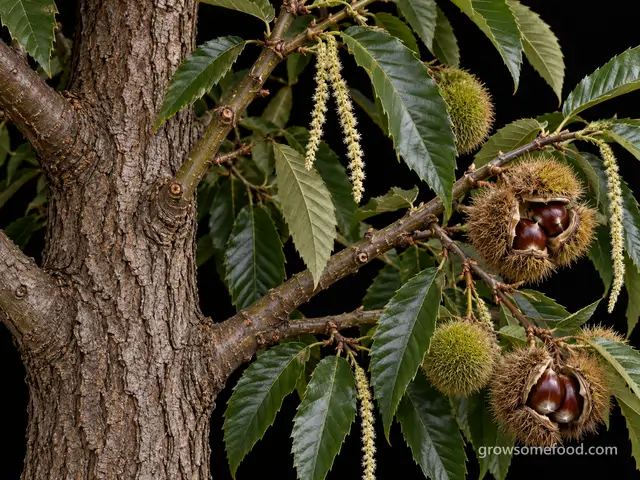
Chestnut
The largest nut-tree gap in most American gardens: a fast, heavy-bearing, blight-resistant Chinese or hybrid chestnut that gives a starchy, sweet crop nothing else in the orchard produces.
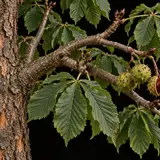
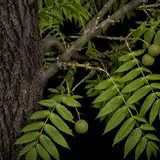
Sweet chestnuts are food; horse chestnuts and buckeyes (Aesculus) are not, and eating those brings vomiting, cramps and worse - dogs are the usual casualty. Tell them apart by the husk: an edible chestnut burr is a dense hedgehog of fine, sharp, hair-like spines holding 2-3 flat-sided nuts, each with a pointed tip and a pale scar; a conker husk has thick, sparse, blunt spikes and one round glossy seed. Always cut a slit in the shell before roasting - sealed nuts burst. Discard any moldy nut.
Overview
Chestnuts are the odd one out among nuts. Where a walnut or a pecan is rich and oily, a chestnut is starchy, sweet and low in fat - closer to a potato or a grain than to any other nut, which is why it was a staple carbohydrate across southern Europe and eastern Asia long before it was a Christmas treat. A mature tree drops 50 to 100 pounds of nuts a year, begins bearing in three to five years from a grafted tree, and doubles as a handsome 40-60 foot shade tree.
What you plant matters more here than for almost any other fruit or nut. The native American chestnut (Castanea dentata), once one of the great trees of the eastern forest, was destroyed by an introduced fungal blight after 1904 and survives mostly as short-lived root sprouts - planting one is an act of hope, not an orchard decision. What home growers actually plant is the blight-resistant Chinese chestnut (C. mollissima) or an American-Chinese hybrid such as the Dunstan chestnuts. Both crop well and shrug off the blight that killed the native tree. Two rules govern success: plant two different trees, because a lone chestnut sets empty burrs, and pick the nuts up daily, because they are perishable and the squirrels are not patient.
Quick facts
- Sprouts in
- 40 days21 to 90
- Soil to sprout
- 60 °F45 to 70
- Life cycle
- Perennial, lives about 100 years
- Height
- 50 ft30 to 70
- Spread
- 45 ft30 to 60
- Cold
- Takes hard frostdamaged below -20°F
- Heat
- Struggles above 100°F
Full sun · medium water · well-drained soil · 35 ft apart (25 to 50) · direct sow or transplant
When to plant
Fall transplanting is open for 48 more days. Next: fall, Sep 25 to Nov 15.
- Transplant Aug 26 – Nov 8 Open now · 48 days leftAbout 9 weeks before to 2 weeks after your first frost (Oct 25 here)In the warm South, fall and early-winter planting gives roots a cool season to establish before summer heat.
- Direct sow Sep 25 – Nov 15 Opens in 4 daysAbout 4 weeks before to 3 weeks after your first frost (Oct 25 here)Nuts can be sown where the tree is to grow, but they must never dry out and need cold stratification, which fall sowing provides. Protect each nut with hardware cloth - squirrels find them within days - and expect a seedling tree to fruit a couple of years later than a grafted one.
- Transplant Jan 1 – Feb 28 Opens in 102 daysLate-winter dormant planting also works well in mild-winter zones, before bud break.
Frost here: last around Apr 10 (Mar 27 to Apr 24 most years), first around Oct 25. Zone averages, your own yard may run a week or two either way.
Life stages
One stage to settle in, then four that repeat each year. Windows are typical; your zone and weather move them.
Years 1-3 - getting rooted
The first year after planting- DoPlant two different trees, 30-40 feet apartChestnuts are wind-pollinated and effectively self-sterile: a lone tree flowers heavily and sets empty burrs year after year. Plant at least two genetically different trees (two named varieties, or two seedlings) within about 100 feet of each other, and give each 30-40 feet of room.
- WaterWater deeply through the first three summersweeklyYoung chestnuts are shallow-rooted and drought-sensitive; a slow soaking every week or ten days through the first three dry seasons decides whether the tree grows away or sits still. Established trees rarely need it.
- ProtectCage the trunk against deer, voles and rabbitsA wire cage around the young trunk, plus a guard at ground level, prevents both winter bark chewing and autumn antler rubbing - the two things that kill young nut trees outright. Leave it on until the trunk is thick and the canopy is above browse height.
- DoCheck the soil is acid and well drained BEFORE plantingChestnuts want a well-drained, sandy or loamy soil at pH 5.0-6.5 and will not tolerate heavy wet clay or limestone ground - waterlogged roots invite Phytophthora ink disease, which is the second great killer of chestnuts after blight. Choose the site, not the amendment.
Watch for- Deer browsing and buck rubbing on young trunks
- Standing water or heavy clay around the roots
- Drought stress in the first three summers
Catkins (early summer)
Jun to Jul, every year- PollinateLet the wind do it - and expect the smellLong cream catkins cover the tree in early summer, carrying the male flowers, with the female flowers tucked at the base of the later ones. Pollination is by wind and insects between two different trees. The heavy, distinctly musky scent at bloom is normal and lasts a couple of weeks; site trees away from a patio if that matters to you.
Watch for- A lone tree flowering heavily (it will still set empty burrs)
- Late frost damaging young growth
Burrs filling
Jul to Sep, every year- WaterWater through an August droughtevery 10 daysNut fill happens in late summer, and a dry August is the difference between plump nuts and shriveled ones. Soak established trees deeply if the season is dry while burrs are sizing.
- InspectWatch for gall wasp and blight cankersMidsummer is when Asian chestnut gall wasp galls are obvious on shoots and when blight cankers show as sunken orange-brown patches with wilting foliage above them. Both are far easier to deal with caught early.
Watch for- Sunken orange-brown cankers with dying branches above (chestnut blight)
- Green swollen galls on shoots and leaf bases (gall wasp)
- Burrs dropping early and empty
Nut fall (autumn)
Sep to Nov, every year- HarvestGather from the ground every single dayRipe burrs split open and drop the nuts over a few weeks. Chestnuts are high-moisture and perishable, so nuts left lying go moldy or are found by squirrels within a day or two. Pick up daily, wear thick gloves or use tongs for the burrs, and refrigerate what you gather.
- DoFloat-test and cure the cropDrop the nuts in water and discard any that float - those are dried out, wormy or empty. Then hold the sound nuts at room temperature for 3-7 days to sweeten (starch converts to sugar) before refrigerating them.
Watch for- Squirrels clearing the drop before you get there
- Small round exit holes in nuts (chestnut weevil)
- Mold on nuts left on damp ground
Winter - pruning and inspection
Dec to Mar, every year- PrunePrune lightly in late winter to a strong central leaderTrain young trees to one central leader with well-spaced scaffolds, and after that prune only to remove dead, crossing or crowded wood. Chestnuts fruit on new growth from year-old wood, so heavy heading cuts cost you nuts.
- InspectWalk the tree for blight cankers with the leaves offWinter is the best time to see them: sunken or swollen orange-brown patches on the bark, often cracked, with dead wood above. Cut infected limbs out well below the canker and burn or bin the wood - do not leave it lying under the tree.
Watch for- Orange-brown sunken or swollen bark cankers
- Vole damage under mulch or snow at the trunk base
- Ink-black staining and bleeding at the root collar (ink disease)
Harvest
- Burrs split open on the tree and nuts fall free to the ground
- Shells glossy deep brown, nuts firm and heavy for their size
- Sound nuts sink in water - floaters are dried, empty or wormy
- Gather from the ground every single day
- Float-test and cure the crop
Per plant 10 to 100 lbPicking pick as they ripen
Cook with chestnuts
Watch out for
6 to know. 4 are high-risk: Squirrels, Chipmunks & Voles, Chestnut Blight, Ink Disease (Phytophthora root rot), Chestnut Weevil. 5 are active in September.
Squirrels, Chipmunks & VolesSeverity High WildlifenowNamespaced deliberately: the generic squirrels-and-rodents record in this catalog is authored around bulbs and shrubs and reads wrongly on a 50-foot tree, where netting is not an option and daily gathering is the whole strategy.
Cut green burrs and shredded husks scattered under the tree well before the crop is ripe, and a canopy visibly thinning of burrs. A day's nut drop simply gone when you come out the next morning. Squirrels working the branches at dawn and dusk in September and October, and caching activity in nearby beds and lawn. On young trees, gnawed bark at the base, especially where mulch or long grass sits against the trunk, and vole runways showing when the snow melts.
There is no way to exclude squirrels from an open, mature nut tree, so the realistic answer is speed and volume: gather daily, plant more than one tree, and accept a share going to wildlife. Trapping is largely futile, since new squirrels move into cleared territory within weeks. Vole damage is the one you can act on - clear cover, fit guards, and check young trunks each winter; a tree girdled all the way round rarely recovers, so this is prevention rather than treatment.
Gather every single day through the drop - promptness is the entire defense, and a drop left for two days is usually a drop lost. Some growers pick nearly-ripe burrs by hand and open them under cover to beat the wildlife outright. Keep the orchard floor short and clear so caching is less attractive and so you can see what has fallen. For voles, pull mulch and grass back from the trunk, fit a wire mesh guard around the base of every young tree, and keep the guard in place through winter. A metal trunk baffle can slow squirrels on a young tree, though it stops mattering once branches from anything else reach the canopy.
Squirrels are the single biggest obstacle between a home chestnut tree and a harvest. They start on the burrs while the nuts are still green, cut whole burrs off the tree, and clear the ground drop within a day - caching far more than they eat. Chipmunks and blue jays work the same crop. Because a mature chestnut is a 40-60 foot tree, none of the usual fruit defenses apply: there is nothing to net and nothing to cage. Voles are the other half of the problem and the more serious one for a young tree: they chew bark off the trunk at ground level under mulch and winter snow, and a stem girdled right around is dead in spring.
Chestnut BlightSeverity High DiseasenowThe reason this catalog entry is about Chinese and hybrid chestnuts rather than the native tree.
On a resistant tree, treat blight as an annual winter inspection job, not a catastrophe.
Sunken or swollen orange-brown to cinnamon patches on the bark, often cracked, sometimes with fine orange pimples on the surface. A branch whose leaves suddenly wilt, turn brown and hang on rather than dropping - then trace down the stem to find the canker below it. Fans of buff-colored fungal tissue under bark peeled back at the canker edge. Vigorous sprouting from the trunk or base below a dying top, which is the tree responding to being girdled.
There is no spray cure. Cut infected limbs out well below the visible canker, into clean wood, and burn or bin the prunings rather than leaving them under the tree. On a resistant Chinese or hybrid tree, cankers are commonly contained by the tree itself and the job is monitoring and pruning. On a susceptible tree the top is eventually lost whatever you do; the roots usually survive and resprout. Hypovirulence treatment - deliberately introducing a virus that weakens the fungus - is used in research and by some restoration groups but is not a practical home remedy.
Plant blight-resistant stock: Chinese chestnut (C. mollissima) or American-Chinese hybrids such as the Dunstan types, especially anywhere in the former range of the American chestnut. Avoid the large European x Japanese varieties like Colossal east of the Rockies. Then minimize wounds, since the fungus needs one to get in: prune only in dry weather in late winter, keep mowers and trimmers away from the trunk, and cage against deer antler rubbing and rodent chewing. Disinfect pruning tools between trees. Keep trees unstressed - drought-stressed and poorly sited trees wall off infections less effectively.
The fungus (Cryphonectria parasitica) that destroyed the American chestnut as a forest tree, killing an estimated three to four billion trees after arriving on imported nursery stock around 1904. It enters through wounds in the bark, grows in the living tissue, and forms a canker that expands until it girdles the stem - everything above the canker then wilts and dies while the roots stay alive and send up new sprouts, which get infected in their turn. Spores travel on wind, rain, insects, birds and pruning tools. The fungus is now endemic across the entire former range of the native tree, which is why species choice matters so much: Chinese chestnut and its hybrids tolerate infection and wall it off, while American and most European varieties do not.
Ink Disease (Phytophthora root rot)Severity High DiseasenowThe reason this file insists on drainage and pH before anything else.
Wet clay kills chestnuts as reliably as blight does, and far less dramatically.
Overall yellowing, undersized leaves, thin canopy and dieback starting at the top of the tree. Dark, inky, wet-looking staining or bleeding at the root collar and lower trunk. Reddish-brown discoloration under the bark at the base when cut into. Decline concentrated in low, wet or compacted parts of the site, and worsening after a wet season.
There is no practical cure once a tree is infected - improve drainage immediately, pull soil and mulch away from the collar, and stop supplemental water. A declining tree is usually lost, and replanting a chestnut into the same wet spot repeats the result; move to a well-drained site instead. This is a disease you prevent by where you dig the hole.
Site selection is the whole defense, and it happens once. Plant on deep, well-drained, slightly acid sandy or loamy soil, preferably on a slope; never plant a chestnut in heavy clay, a low wet spot, or ground where water stands after rain. Do not overwater established trees or run irrigation against the trunk. Keep mulch pulled back from the root collar so it does not stay wet. Buy trees from a clean nursery, since the pathogen moves in infested soil and container media.
A water-mold root and collar rot (Phytophthora cinnamomi and relatives) and the second great killer of chestnuts after blight - historically it destroyed chestnut orchards across the American South and southern Europe before blight ever arrived. It attacks the roots and root collar in wet, heavy or poorly drained soil, rotting the tissue and cutting off water to the crown, so the tree yellows, thins and dies from the top down over one or more seasons. The name comes from the blue-black staining and bleeding that appears at the base of an infected trunk. Chinese chestnut carries more resistance than American or European chestnut, but no chestnut survives waterlogged ground.
Chestnut WeevilSeverity High PestnowThe commonest disappointment in a first chestnut harvest.
Float-test, refrigerate the same day, and clear the orchard floor in fall - do those three and the problem stays small.
Neat round exit holes about the size of a pencil lead in the shells, usually appearing days after harvest rather than at gathering time. Cream-colored, legless, C-shaped grubs inside cracked nuts. Nuts that float in the water test. Fine frass in a storage container. Adults - small weevils with a very long curved snout - on the burrs in late summer.
Nothing rescues an infested nut - discard it, and do not compost it where the grub can reach soil. Because the larvae spend most of the year in the ground beneath the tree, keeping the ground clean and disturbed is the practical control; poultry ranging under the trees are genuinely effective at reducing populations. Insecticide programs exist for commercial orchards but are rarely worth it in a home planting where daily gathering and cold storage do most of the work.
Sanitation is the whole game. Gather nuts daily so grubs have no chance to exit into your soil, and clear every fallen burr and leftover nut at the end of the season rather than leaving them under the tree. Float-test every batch and discard the floaters. Then break the cycle in storage: refrigerating the crop promptly stops the grubs developing, and a brief hot-water dip (about 120°F for 20 minutes) before drying and refrigerating is the traditional home treatment.
Two long-snouted weevils (Curculio species) are the main insect pest of home chestnut crops. The adult drills through the developing burr and lays eggs inside the nut; the grub eats the kernel and then chews its way out after the nut has fallen, leaving a neat round hole and burrowing into the soil to pupate. Infested nuts often look perfect when gathered and reveal themselves in the kitchen or in storage a week later, which is why sorting and prompt refrigeration matter so much. Populations build year on year in an orchard where fallen nuts and burrs are left on the ground.
Deer (browse resistance)Severity Medium WildlifenowYoung chestnuts are at real risk for their first several years: browsing checks growth, and autumn antler rubbing on a sapling trunk kills it outright.
Cage every young trunk from planting day and leave the cage on until the bark is thick and the canopy is above reach. Deer also clean up fallen nuts, which matters less.
Growth cleanly missing overnight, with the plant browsed back to a level line about as high as a deer can comfortably reach. Ragged, torn stem ends rather than the clean angled cut a rabbit leaves - the single most reliable identifier. Buds and flowers gone while the foliage below is untouched, since deer often take the best part first. Hoof prints and droppings in soft ground near the damage. Repeat visits, with fresh damage each morning once a planting has been found. On young trees, shredded and stripped bark and broken low branches in autumn - that is antler rubbing rather than feeding.
There is no chemical fix, only exclusion and recovery. Get physical protection up immediately after the first damage, because deer return to a known meal, and reinforce or rotate whatever you were relying on before. Most plants regrow from browsing if the crown and roots are intact - feed and water a grazed plant and protect the regrowth while it comes back. What does not recover in the same season is anything whose buds or flowers have been taken, and a young tree whose bark has been rubbed right around the trunk is usually lost. Where deer pressure is genuinely heavy, the honest answer is to fence properly or to grow the plants deer leave alone, rather than to keep replacing losses.
Fencing is the only thing that reliably works. Eight feet is the standard for excluding deer, or two parallel four-foot fences a few feet apart, which they will not jump because they cannot judge the landing. Short of that, cage individual plants: a sturdy wire cage or trunk guard around every young tree, left on until the trunk is thick and the canopy is above browse height, prevents both browsing and antler rubbing and is the single highest-value thing you can do for a young tree. Repellent sprays do help at moderate pressure, but they wash off and deer habituate, so reapply after rain and rotate between different types through the season. Motion-activated sprinklers, scent deterrents, and noise devices work for a while and then stop. Siting matters too: plants close to the house, in daily traffic, and screened behind other planting get browsed less than the same plant out at the boundary.
Deer are the largest garden problem across much of the country, and where pressure is high they set the limit on what you can grow at all. They browse at night and around dawn and dusk, taking tender shoots, leaves, buds, flowers, and fruit within about five feet of the ground, and they come back night after night to anything they have found and liked. Because they have no upper incisors they tear rather than cut, leaving ragged stem ends - that is how you tell deer damage from a rabbit's clean angled cut. In fall, bucks rub their antlers on young trunks and can strip the bark right around a stem, which kills a young tree outright. Palatability varies enormously between plants and between seasons: a herd short of food in late winter eats things it ignores in June, and no plant is truly deer-proof.
Asian Chestnut Gall WaspSeverity Medium PestRarely kills a tree but can suppress growth and nut set for a few years.
Winter is the easy time to spot and prune out old galls.
Round or irregular green, pink or reddish swellings at bud, shoot and leaf-stalk positions in late spring and early summer, later drying to hard brown woody galls that persist on the twigs. Shoots that fail to elongate, with tufted, distorted leaves. A noticeable drop in nut set on an otherwise healthy tree. Old dry galls still on the twigs in winter.
There is no effective home spray, because the larvae are protected inside the gall for most of their life. Pruning out galls before emergence is the practical measure. In much of the infested range the parasitic wasp Torymus sinensis, introduced for biological control, has substantially reduced gall wasp populations over time, so an outbreak that looks alarming often subsides across several seasons.
Buy nursery stock from a reputable source and check your state's rules on moving chestnut planting material, since the wasp is carried in dormant buds. Prune out and destroy galled shoots in late winter before the adults emerge in early summer. Keep trees vigorous - a strong tree tolerates a moderate infestation. Some Chinese cultivars are notably more tolerant than others; ask the nursery.
A tiny introduced wasp (Dryocosmus kuriphilus) whose larvae cause swollen green-to-reddish galls on developing buds, shoots and leaf stalks. Galled shoots never extend properly, so a heavily infested tree loses much of its new growth, sets few nuts, and declines over several seasons. It spread through the southeastern US after arriving in Georgia in the 1970s and is the reason several states regulate the movement of chestnut nursery stock - the wasp travels inside dormant buds on nursery trees.
Good & bad neighbors
First rule: keep Horse chestnut apart. Not a growing conflict but a safety one: never plant horse chestnut where children or visitors gather nuts from an edible chestnut.
Plant nearby
-
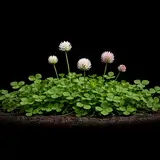
The standard orchard-floor cover: it fixes nitrogen, holds the soil, feeds pollinators, and makes it far easier to see and gather fallen nuts than long grass does. Keep it back from the trunk so it does not shelter voles.
- Traditional pairings, thin evidence
-
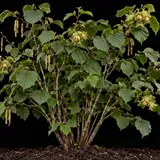
A natural pairing in a small nut planting: hazelnuts crop young and at shrub height while chestnuts take years and grow to 50 feet, so the hazels earn their keep from the understory edge while the chestnuts fill out. Keep them out from under the eventual canopy.
-
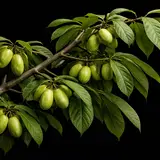
A shade-tolerant native understory fruit that is happy on the sheltered edge of a chestnut planting, giving a second crop from ground the big trees are not using yet. Both like well-drained, slightly acid soil.
Keep apart
-
Not a growing conflict but a safety one: never plant horse chestnut where children or visitors gather nuts from an edible chestnut. Conkers are poisonous and the two crops fall in the same weeks. Field check - an edible chestnut burr is a dense hedgehog of fine spines with 2-3 flat-sided pointed nuts; a conker husk has thick sparse blunt spikes and one round glossy seed.
- Traditional pairings, thin evidence
-
Chestnut tolerates juglone better than many plants, but two large nut trees planted close compete hard for light and root space and both need 30-40 feet. Give each its own room rather than crowding them; that is the real reason to separate them.
Varieties · 9
You pick one when you add Chestnut to your garden. Its days to maturity set your harvest window.
Chinese Chestnut 3 varieties
Qing
Large, glossy dark-brown nuts with a sweet, rich kernel.
blight-resistantgreat-flavoreasy-peelResists Chestnut Blight
Widely regarded as one of the best-flavored Chinese chestnuts available in the US, with large, sweet nuts that peel comparatively well - a favorite of Midwestern growers. Vigorous and productive; like all chestnuts it needs a different variety nearby to pollinate it.
Peach
Medium to large brown nuts, sweet and well filled.
blight-resistantsweetproductiveResists Chestnut Blight
A productive Chinese selection known for consistently sweet nuts and dependable annual bearing. A good general-purpose orchard tree for the Midwest and mid-Atlantic, and a common pollen partner for Qing.
American-Chinese Hybrid 3 varieties
Dunstan
Large, glossy, sweet nuts on a vigorous, fairly upright tree.
hybridblight-resistantlarge-nutwidely-soldResists Chestnut Blight
The most widely sold chestnut in the United States - a family of American x Chinese hybrids descended from Dr Robert Dunstan's 1960s crosses of a surviving American chestnut with Chinese trees. Blight-resistant, fast-growing, heavy-bearing, with large sweet nuts. Usually sold as seedlings of Dunstan parentage, which conveniently gives you the genetic diversity needed for pollination.
Sleeping Giant
Medium-large brown nuts on a tall, vigorous, well-formed tree.
hybridblight-resistantvigorouscold-hardyResists Chestnut Blight
A Connecticut Agricultural Experiment Station hybrid (Chinese with American and Japanese parentage) known for vigor, good form and cold hardiness, making it a solid choice for the Northeast. Nuts are medium-large and sweet.
European x Japanese 2 varieties
Colossal
Very large, glossy mahogany nuts that peel unusually cleanly.
european-japanesevery-large-nuteasy-peelwest-coastThe commercial standard on the Pacific Coast: enormous, glossy, easy-peeling nuts of excellent quality on a large spreading tree. The catch is decisive - Colossal is BLIGHT-SUSCEPTIBLE and is not a sound choice east of the Rockies, where chestnut blight is endemic. It also needs a compatible pollinizer such as Nevada.
Nevada
Medium brown nuts; planted mainly for pollen.
european-japanesepollinizerwest-coastGrown chiefly as the standard pollinizer for Colossal on the West Coast, with medium-sized nuts of its own. Like Colossal it lacks reliable blight resistance and belongs in low-blight-pressure western plantings.
American Chestnut 1 variety
American chestnut (Castanea dentata) - the native tree, not an orchard choice
Narrow, sharply saw-toothed leaves; small, very sweet nuts, usually three per burr - and, on mature stems, sunken orange-brown blight cankers.
nativeblight-susceptiblerestorationidentificationThe native American chestnut, listed here so you can recognize it and understand what happened rather than as something to plant for nuts. Its nuts are small and exceptionally sweet, and its timber was superb, but chestnut blight kills the trunk of essentially every tree, leaving root sprouts that regrow and die back on a cycle of a decade or two. If you want to help, join an organized restoration breeding program; if you want chestnuts to eat, plant a Chinese or hybrid tree.
Grower tips
Notes from growers, tagged with the zone they grow in. A person reads every post before it appears.
Nobody has posted about Chestnut yet. The first one usually saves someone a season.
Free account. Your post shows your grower name and zone, never your email.