Add it to your home screen and it opens full screen — no browser bars, one tap away, and everything stays signed in. Free, nothing to download from an app store.
- Tap the Share button in your browser
- Scroll down and choose “Add to Home Screen”
- Open GrowSomeFood from your home screen
- Open your browser’s menu
- Choose “Add to Home screen” or “Install app”
- Open GrowSomeFood from your home screen
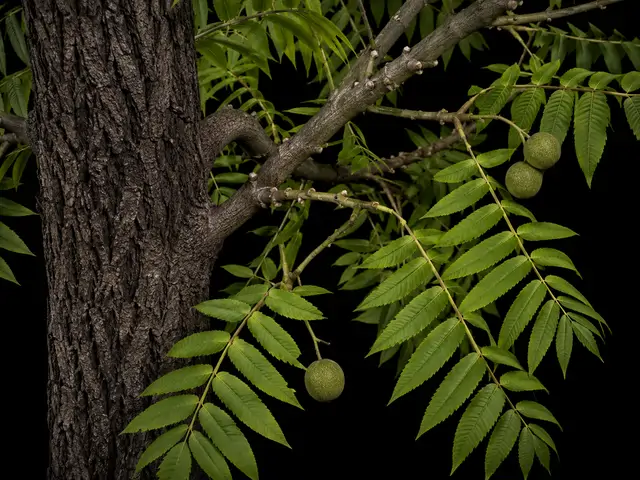
Black Walnut
The nut kernel is a delicious, safe food and a common tree-nut allergen. The tree's real hazard is to OTHER PLANTS, not people: black walnut roots, leaves, and hulls release juglone, a natural compound that stunts or kills many nearby plants (tomatoes, peppers, apples, blueberries, azaleas, and more) - so choose what you plant beneath it. The green hulls also stain hands, clothing, and pavement a stubborn brown; wear gloves when hulling. Wilted walnut leaves can also be toxic to horses.
Overview
A magnificent native nut-and-timber tree bearing rich, boldly flavored black walnuts - but famous for the juglone in its roots that stunts or kills many nearby plants, so it must be sited with care, well away from the garden.
Black walnut (Juglans nigra) is one of the most valuable and distinctive native trees of eastern North America - a tall (50-75+ foot), long-lived hardwood that yields both a prized nut and some of the most valuable timber on the continent. Its nuts have a rich, bold, unmistakable flavor far stronger than the mild English (Persian) walnut sold in stores, treasured in baking, ice cream, and confections. It's a handsome, high-crowned shade tree with dark, deeply furrowed bark and airy compound leaves.
But black walnut comes with a serious caveat that makes it a plant-with-caution tree: its roots, leaves, and hulls release juglone, a natural allelopathic chemical that stunts or kills many other plants - tomatoes, peppers, potatoes, apples, blueberries, azaleas, rhododendrons, and more - within and beyond its root zone. So it must be sited well away from vegetable gardens, orchards, and sensitive plantings. Add hard-to-crack shells and hulls that stain everything brown, and it's a tree that rewards the right spot and the right expectations. Given a big, open, out-of-the-way place, though, it's a superb native that feeds people and wildlife and grows into a valuable heirloom tree. (It's a different species from the store-bought English walnut in the catalog's 'walnut' entry.)
At a glance
- Sun
- Full sun
- Water
- Medium
- Spacing
- 480–960 in (typ. 720)
- Mature height
- 600–1200 in (typ. 840)
- Start by
- Direct sow · Transplant
- Frost
- Hardy
- Germination
- 30–120 days (typ. 60) @ 55–75 °F (typ. 65)
When to plant
Zone 7a typical frost: last Apr 10 · first Oct 25
Life stages
- Years 1-3 - young tree day 0–1095 from transplant
-
Water while establishingevery 7 dWater a young black walnut deeply and regularly through its first 2-3 years. It grows a deep taproot and resents transplanting, so plant it small (or from a nut in place). Give it deep, rich, well-drained soil for best growth - it's a bottomland tree at heart.
-
Site it FAR from the vegetable garden and sensitive plantsThe critical siting rule: black walnut roots release JUGLONE, which stunts or kills tomatoes, peppers, potatoes, apples, blueberries, azaleas, and many other plants within (and beyond) its root zone. Plant it well away from vegetable gardens, orchards, and sensitive ornamentals - and remember the toxic zone expands as the tree grows.
-
Mulch the root zone (keep hulls out of compost)A wide mulch ring helps the young tree, but don't mulch sensitive plants with black walnut leaves, hulls, or wood chips, which carry juglone. Keep walnut debris out of the vegetable garden and general compost.
Transplant shock (plant small; the taproot resents moving)Juglone damage to nearby plants (yellowing, wilting, death of tomatoes and others)Deer browsing young saplingsSlow to moderate early growth building the taproot -
Water while establishingevery 7 d
- Late-spring bloom & pollination Apr, May, Jun (yearly)
-
Catkins and tiny female flowersBlack walnut leafs out late and then blooms: long dangling male catkins shed pollen, and small female flowers at the shoot tips receive it, wind-pollinated. A single tree can pollinate itself, but two trees improve the nut set.
-
A second tree helps the cropBlack walnuts are wind-pollinated and somewhat dichogamous (pollen and receptive flowers can peak at different times on one tree), so a second walnut nearby improves and steadies nut production, though a lone tree usually still bears.
Late leaf-out (normal - walnut is one of the last trees to leaf out)Late frost catching the new growth (walnut's late leafing usually dodges it)Light nut set on a lone tree in some years -
Catkins and tiny female flowers
- Summer nut development Jun, Jul, Aug, Sep (yearly)
-
Water in drought to fill the nutsRound green hulls swell through summer, each enclosing a hard-shelled nut and a rich kernel. Watering in a dry late summer helps the kernels fill; drought can give poorly filled nuts. Expect alternate bearing - a heavy 'on' year often follows a lighter one.
-
Watch for husk fly and the green-hull stageThe green hulls stay firm through summer, then soften and darken as the nuts ripen in fall. Watch for walnut husk fly, whose maggots blacken and soften the hulls early - a hulling nuisance that doesn't harm the kernel inside.
Round green hulls swelling (the nuts developing inside)Walnut husk fly blackening hulls prematurelyAlternate bearing (heavy year followed by light)Natural summer nut drop -
Water in drought to fill the nuts
- Nut harvest (fall) Sep, Oct, Nov (yearly)
-
Gather nuts as they drop, and hull promptly (with gloves!)every 3 dBlack walnuts ripen and drop in fall when the green hull softens and yellows. Gather them promptly off the ground (before mold and squirrels get them), and hull them soon - WEAR GLOVES, because the hulls stain hands, clothes, and pavement a stubborn brown. A common trick is to spread them on a driveway and drive over them to loosen the hulls.
-
Race the squirrelsSquirrels harvest black walnuts relentlessly and can clear a tree fast, caching what they don't eat. Gather daily in the drop window, and cull any nuts that float in a water test (empty or weevil-damaged) before curing.
Squirrels stripping the cropHulls staining everything (wear gloves; protect pavement)Nuts molding on damp ground if not gathered promptlyPoorly filled or floating nuts (discard them) -
Gather nuts as they drop, and hull promptly (with gloves!)every 3 d
- Fall color & winter dormancy Jan, Feb, Mar, Oct, Nov, Dec (yearly)
-
Early yellow drop, then a bare, open winter formBlack walnut is among the first trees to drop its leaves (turning yellow, sometimes early in dry years), leaving a bare, open, high-crowned tree for a long winter. Its dark, deeply furrowed bark and stout twigs are handsome in the bare season.
-
Prune in late winter (walnut bleeds if cut later)Prune in the dormant season, late winter, to remove dead, crossing, or weak wood and train a strong central leader for timber form. Like maples, walnut bleeds sap heavily from spring cuts - so prune in the cold months, and keep the trunk clean for valuable timber if that's your goal.
Early leaf drop (normal - walnut leafs out last and drops first)Self-sown nuts and seedlings (and squirrel-planted ones) around the treeThousand cankers disease in some regions (see troubleshooting) -
Early yellow drop, then a bare, open winter form
Harvest
- Style
- Repeated picking
- Typical yield
- 200–6000 nuts (typ. 1500)
- By weight
- 96–1920 oz (typ. 480)
- First production
- 6–15 yrs (typ. 10)
- Green hulls softened and turned yellowish, nuts dropping in fall
- The hull dents under thumb pressure (ripe); firm green hulls are not ready
- Kernel inside a test nut is plump and tan, not shriveled
- Nuts gathered promptly and hulled before the hull rots black on the kernel
Watch out for
Juglone Toxicity (Allelopathy) Disorder HighApr, May, Jun, Jul, Aug, Sep
Black walnut's defining trait: its roots (and, to a lesser degree, leaves and hulls) release juglone, a natural allelopathic compound that stunts, wilts, and kills many sensitive plants - tomatoes, peppers, potatoes, eggplant, apples, blueberries, azaleas, rhododendrons, peonies, and more - within and beyond the tree's root zone. This is a hazard to your other plants, not to people.
Watch for: Sensitive plants near a black walnut yellowing, wilting, stunting, and dying (often suddenly in summer) while unaffected species nearby look fine; the damaged zone expanding as the tree grows.
Prevent: Site black walnut well away from vegetable gardens, orchards, and sensitive ornamentals; grow only juglone-tolerant plants in its root zone; keep walnut leaves, hulls, and wood chips out of gardens and compost. The toxic zone can persist for years after a tree is removed.
Treat: Move sensitive plants out of the root zone (raised beds with a barrier help but aren't foolproof near roots); replace with juglone-tolerant species. There's no way to neutralize juglone in the soil around a living tree.
Thousand Cankers Disease Disease HighMay, Jun, Jul, Aug, Sep
A serious, sometimes fatal disease of walnuts caused by a fungus (Geosmithia) carried by the tiny walnut twig beetle. The beetles create countless small cankers beneath the bark that coalesce and girdle branches and trunks, causing progressive dieback and death, especially of black walnut. It has spread through parts of the West and pockets of the East.
Watch for: Yellowing, thinning, and dieback of the upper crown, numerous small dark cankers under the bark around tiny beetle entry holes, and progressive decline over a few years.
Prevent: Keep trees vigorous and unstressed; crucially, DO NOT move walnut firewood or wood between regions, which spreads the beetle and fungus; buy local nursery stock and follow any regional quarantines.
Treat: There is no cure - infected trees usually decline and die. Remove and properly dispose of affected wood on site (don't transport it), and consult a forester or extension office, especially in or near known outbreak areas.
Walnut Husk Fly Pest LowAug, Sep, Oct
The signature late-season walnut pest: a fly that lays eggs in the husk, and whose maggots tunnel through it, causing the husk to blacken, soften, and rot, and to stick tightly to the shell so it won't hull cleanly - staining the shell and darkening the kernel if left on, though the maggots rarely reach the nut itself.
Watch for: Black, soft, slimy husks in late summer that cling to the shell, small white maggots inside the rotting husk, and stained, hard-to-hull nuts.
Prevent: Gather and destroy dropped, infested nuts promptly to break the cycle; hang yellow sticky traps to monitor emergence; hull nuts immediately after gathering so the maggots can't taint the kernel.
Treat: Sanitation is the main home control; heavy infestations in orchards are treated with bait sprays timed to trap catches. On a home tree, prompt gathering and hulling limits the damage.
Good & bad neighbors
Varieties · 4
The wild native: a tall (50-75+ foot) nut-and-timber tree with rich, boldly flavored nuts in very hard shells, and roots that release juglone. Nut size and crackability vary tree to tree. Superb flavor and timber, but must be sited well away from gardens and sensitive plants.
A cold-hardy, productive cultivar prized for high-quality, well-filled kernels and good cracking, well suited to northern black-walnut growing - a strong choice where flavor, kernel quality, and hardiness matter.
The familiar store-bought walnut - a different, introduced species (native to Asia/southeastern Europe) with a thin, easy-cracking shell and mild flavor, less cold-hardy and grown mainly in California and the milder South. The black walnut is hardier, bolder-flavored, but far harder to crack. See the separate 'walnut' catalog entry.
A classic, widely grown black walnut cultivar selected for large nuts, relatively easy cracking, and reliable, early, heavy production - a longtime favorite for home growers wanting better, more crackable nuts than a random seedling.
Grow
Full sun and deep, rich, well-drained soil in zones 4-9; plant it small (deep taproot) and - above all - site it far from the vegetable garden, orchard, and juglone-sensitive plants, because its roots poison many neighbors.
Black walnut wants full sun and deep, rich, well-drained soil - it grows biggest and best on fertile bottomland and deep loam, though it tolerates a range of soils. It's hardy across zones 4-9. Because it forms a deep taproot and resents moving, plant it small (or start it from a nut in place) and disturb the roots as little as possible.
The single most important growing decision is where NOT to plant it. Black walnut's juglone - concentrated in its roots but also in leaves and hulls - stunts, yellows, wilts, and kills a long list of sensitive plants (tomatoes, peppers, potatoes, eggplant, apples, blueberries, azaleas, rhododendrons, peonies, and many more), and the affected zone expands as the tree grows and can persist for years after removal. So site it well away from your vegetable garden, fruit trees, and sensitive ornamentals - a back corner, a woodland edge, or an open area where you'll grow only juglone-tolerant plants beneath it. Keep its leaves and hulls out of the veggie garden and general compost. Given the right isolated spot, it's an easy, tough, rewarding tree - just not a neighbor for your tomatoes.
Care
Low-care once sited well - water young trees, prune in late winter (it bleeds if cut in spring), manage the juglone by choosing tolerant neighbors, and handle the messy, staining harvest with gloves.
Once properly sited, black walnut is a low-care tree. Water it while young and in serious drought, and mulch the root zone (with non-walnut mulch near any sensitive plants). Prune in late winter, the dormant season, to remove dead or weak wood and - if you're growing it for timber - train a single straight, clean trunk; like maples and its cousin the pecan, walnut bleeds sap heavily from cuts made in spring, so avoid pruning then.
Most of black walnut's 'care' is really management of its two nuisances. First, the juglone: don't fight it - instead, grow only juglone-tolerant plants in its root zone (many natives, grasses, and some perennials cope fine), and keep walnut leaves and hulls out of gardens and compost. Second, the harvest mess: the hulls stain everything a stubborn brown, so wear gloves and protect pavement when hulling. Watch for walnut husk fly (a hulling nuisance) and, in affected regions, the serious thousand cankers disease. Otherwise, this tough native largely takes care of itself while slowly becoming a valuable, nut-bearing heirloom.
Harvest
Gather the nuts as they drop in fall, hull them promptly with gloves (they stain badly), cure, then face the famously hard shell - the reward is a uniquely rich, bold-flavored native nut.
Black walnuts ripen and drop in fall, when the round green hull softens, yellows, and dents under thumb pressure. Gather them promptly off the ground - before they mold on damp soil or the squirrels cache them - then hull them soon, because a hull left to rot black on the shell taints the kernel. The classic caution: wear gloves, because the hulls stain hands, clothes, and pavement a deep, stubborn brown (a natural dye, in fact). A popular home trick is to spread the nuts on a driveway and drive over them to pop the hulls loose, or stomp them, then wash the hulled nuts and do a float test to discard empty, floating nuts.
Then cure the hulled, in-shell nuts a few weeks in a dry, airy place so the kernels firm and the flavor mellows. Finally comes black walnut's legendary challenge: the extremely hard shell, which defeats ordinary nutcrackers - people use heavy-duty crackers, a vise, or a hammer on a hard surface to extract the rich kernels. It's real work, but the payoff is a nut with a deep, bold, distinctive flavor that no store-bought English walnut can match - and a mature tree can drop a bushel or more in a good year.
Storage
In-shell nuts keep for months to a year cool and dry; shelled kernels are oil-rich and go rancid, so refrigerate or freeze them - freezing best preserves the bold flavor.
Black walnuts store well once cured. In-shell and cured, they keep for several months to a year in a cool, dry, ventilated spot (the very hard shell protects the kernel), and much longer refrigerated. Because the kernels are high in oil, once shelled they turn rancid if kept warm - so store shelled black walnuts in the refrigerator (a few months) or, best, the freezer, where they keep their rich, bold flavor for a year or two in sealed bags. Freezing is the standard way to bank a big harvest.
Cull as you store: discard any nuts that floated in the water test (empty or insect-damaged) and any with off odors, since rancid or wormy nuts spoil a batch. Beyond storing them whole, a heavy crop becomes baking walnuts (their bold flavor shines in cakes, cookies, fudge, and the classic black-walnut ice cream), and the nuts can be pressed for a distinctive oil. Because the flavor is so strong, a little goes a long way - so even a modest, well-frozen stash keeps a baker supplied through the year.
Propagation & seed saving
Easiest from a whole nut planted where the tree will grow (needs winter stratification, forms a taproot); grafted named cultivars give better, easier-cracking nuts sooner but are specialist-grown.
Black walnut grows readily from a whole nut. Plant nuts (in or out of the hull) in fall right where the tree will stand, since they need winter cold stratification, germinate in spring, and immediately form a deep taproot that makes transplanting hard - so sow in place or in a deep pot moved young, and protect the nuts from squirrels with a screen or cage. Direct-sown black walnuts establish strongly, and the tree self-sows (with much help from nut-caching squirrels) around mature trees.
For better nuts sooner, plant a grafted named cultivar selected for larger, easier-cracking, well-filled kernels ('Thomas,' 'Emma K,' 'Sparrow,' and others), propagated by specialist nurseries by grafting a chosen scion onto seedling rootstock - these bear improved nuts years earlier than a random seedling. Because seedling nut quality (and crackability) varies a lot, a grafted cultivar is worth it if the nuts are the point; a seedling is fine if you mainly want a shade or timber tree and will take whatever nuts come. Either way, expect 6-15 years to the first real crop and site the tree with its juglone in mind.
Nutrition
A nutritional powerhouse - rich in protein, healthy fats (including omega-3s), fiber, and minerals - and a top wildlife food, though the tree's juglone limits what can grow nearby.
Black walnuts are a nutritional powerhouse. Like other walnuts they're dense in protein, healthy unsaturated fats (including plant-based omega-3 alpha-linolenic acid), fiber, and a range of minerals - magnesium, phosphorus, manganese, and more - plus antioxidants. They're actually higher in protein than English walnuts and carry a stronger, more distinctive flavor. Like all nuts they're calorie- and oil-dense, so they nourish in handfuls; their bold taste means a little goes far in cooking.
The tree is also a major wildlife food: squirrels above all (they harvest and cache the nuts relentlessly, and plant many of the next generation of trees), plus other rodents and, when they can crack them, larger animals. Its late-spring catkins feed some insects, and the foliage hosts native caterpillars including the regal moth and luna moth. The honest ecological note is the juglone: it suppresses many understory plants, so a black walnut supports a less diverse ground layer than an oak or hickory - a trade-off for its rich nuts and superb timber. For people, though, it's a genuinely healthful, protein-rich native food.
History
A tree of great value in American history - its rich nuts fed Indigenous peoples and settlers, its hulls dyed cloth brown, and its dark, beautiful wood became the continent's most prized native furniture and gunstock timber.
Black walnut has been treasured in North America for both food and material for centuries. Indigenous peoples gathered and stored the rich nuts, pounded them into meal, and boiled them for oil and a milky 'walnut milk,' while using the hulls and roots as a brown and black dye for baskets, cloth, and hair - a use settlers adopted (black-walnut hull dye is still used by crafters today). The nuts remained an important wild and farm food across the eastern and central states, and commercial black-walnut nutmeats are still gathered from wild trees today, especially in Missouri and the Midwest.
But the tree's greatest fame is its wood. Black walnut heartwood is a deep, rich, chocolate brown, strong, stable, and beautifully grained - long the most prized native furniture wood in America, and the premier timber for fine cabinetry, veneer, and gunstocks. Its value was so high that in some eras large veneer-quality trees were poached, and a single exceptional log could be worth a fortune. That dual value - superb nuts and superb timber - along with its distinctive juglone chemistry, has made black walnut one of the most storied and economically important native hardwoods of the eastern forest.
Troubleshooting
The defining issue is juglone killing nearby plants (site it away, grow tolerant neighbors); other challenges are the very hard shell, staining hulls, walnut husk fly, squirrels, and thousand cankers disease in some regions.
Tomatoes and other plants near the tree wilting, yellowing, and dying: juglone toxicity - black walnut roots poison sensitive plants (tomatoes, peppers, potatoes, apples, blueberries, azaleas, and more) in and beyond its root zone. Move the garden away from the tree, and grow only juglone-tolerant plants beneath it; keep walnut leaves and hulls out of the veggie garden and compost. I can't crack the nuts: black walnut shells are famously hard - use a heavy-duty cracker, vise, or hammer on a hard surface, not an ordinary nutcracker. Everything's stained brown: the hulls are a strong natural dye - wear gloves and protect pavement when hulling. Hulls turning black and mushy early with maggots: walnut husk fly - a hulling nuisance that doesn't harm the kernel; gather and hull promptly. Nuts vanishing before harvest: squirrels - gather daily in the drop window. Branch dieback, dark cankers, and decline (in affected regions): possibly thousand cankers disease (a beetle-spread fungus) - a serious, spreading threat in parts of the range; consult a forester and don't move walnut firewood. Few nuts some years: normal alternate bearing - a heavy year often follows a light one.
Growing across climates
A broadly hardy tree of the eastern and central U.S. (zones 4-9), best on deep, rich, moist-but-well-drained bottomland soils; its limits are poor, dry, shallow, or compacted soils and, regionally, thousand cankers disease.
Black walnut is native and hardy across the eastern and central United States, zones 4-9, and it grows biggest and best on deep, rich, moist-but-well-drained soils. Zones 5-7 (its heartland): the fertile bottomlands and deep loams of the Midwest, Ohio Valley, and Mid-Atlantic grow the finest black walnuts and the most valuable timber. Zones 4 and the cold north: hardy, though the season may be short for ripening in the coldest areas; choose locally adapted, earlier-ripening trees. Zones 8-9 (the South): grows well where soils are deep and not too dry, though it's more a tree of the uplands and bottomlands than the hot, dry, sandy coastal plain. Its real limits are soil rather than temperature: black walnut does poorly on shallow, dry, compacted, or infertile ground, wanting depth and fertility to thrive. The one climate-linked threat to watch is thousand cankers disease, a beetle-and-fungus complex that has spread in parts of the West and pockets of the East and can kill trees - a reason not to move walnut firewood between regions. Given deep, rich soil and room, black walnut is a resilient, long-lived tree across most of its wide native range.
Cook it
All 3 recipes →No grower tips for Black Walnut yet — yours could be the first.
Sign in to share what works in your garden.