Add it to your home screen and it opens full screen: no browser bars, one tap away, and everything stays signed in. Free, nothing to download from an app store.
- Tap the Share button in your browser
- Scroll down and choose “Add to Home Screen”
- Open GrowSomeFood from your home screen
- Open your browser’s menu
- Choose “Add to Home screen” or “Install app”
- Open GrowSomeFood from your home screen
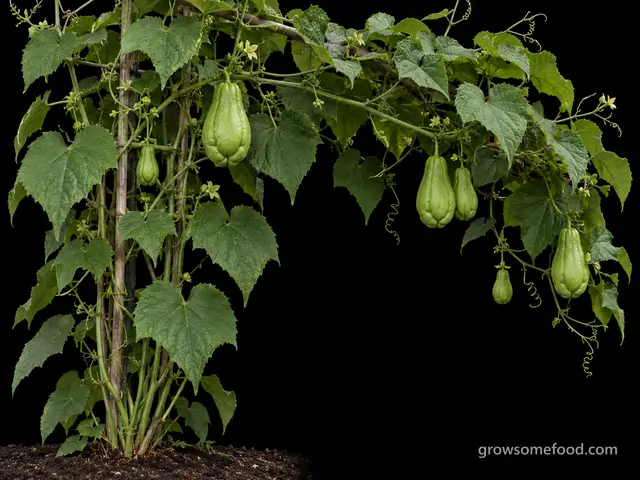
Chayote
Plant one fist-sized fruit, get a 40-foot vine and dozens of mild, crisp squash in the fall. Fruit, seed, shoots and root are all edible - the only catch is that it needs a long season.
Unusually for a squash relative, nearly the whole plant is food: fruit, the single flat seed inside it, the tender shoot tips, and the mature tuberous root are all edible, and the fruit can be eaten raw or cooked. The only real nuisance is the sap - a cut raw chayote weeps a clear liquid that dries into a tight sticky film and leaves some people's hands dry, itchy or oddly numb for hours. Peel it under running water, wear gloves if you react, or cook it whole and slip the skin off afterward.
Overview
Chayote is the squash relative that behaves like nothing else in the garden. You plant the fruit itself - one whole, fist-sized, faintly wrinkled green pear that sprouts through its own skin - and in return you get a vine that runs thirty to fifty feet and, come autumn, hands you dozens of mild, crisp, pale-green fruit. In Louisiana it is mirliton and it is Thanksgiving food; in the Caribbean it is christophine, in the Philippines sayote, in Mexico and Central America chayote, where it comes from and where it has been eaten for at least as long as corn.
The flavor is deliberately mild - something between a cucumber, a summer squash and a water chestnut - which is the point: it takes on whatever it is cooked with and stays crisp doing it. Almost the entire plant is food. The fruit is eaten raw or cooked, skin and all when young; the single flat seed inside is the sweetest part; the tender shoot tips are a stir-fry green; and an old vine builds a large starchy root that is a vegetable in its own right.
There is one thing that decides whether you get a crop: chayote flowers on short days. It vines all summer and only blooms as the days shorten in late summer, which means the fruit arrives in September, October and November - and a garden whose first frost comes early simply never reaches the payoff. That single fact explains almost every disappointed chayote grower north of zone 8.
Quick facts
- Sprouts in
- 21 days10 to 45
- Life cycle
- Perennial, grown as an annual
- Height
- 20 ft8 to 40
- Spread
- 25 ft12 to 50
- Support
- Grows better on a trellis or stake
- Cold
- Killed by frostdamaged below 32°F
- Heat
- Struggles above 100°F
Full sun or part sun · medium water · well-drained soil · 12 ft apart (8 to 20) · direct sow or transplant
When to plant
Nothing is open today. Spring indoor sowing opens 5 months, Feb 13 to Mar 13.
- Start indoors Feb 13 – Mar 13 Opens in 145 daysAbout 8 weeks before to 4 weeks before your last frost (Apr 10 here)Marginal. Sprout the fruit in a large pot indoors in late winter and plant out after frost. Even then an early fall frost usually arrives before the fruit does - grow it for the shoots and the spectacle, and treat any fruit as a bonus.
Frost here: last around Apr 10 (Mar 27 to Apr 24 most years), first around Oct 25. Zone averages, your own yard may run a week or two either way.
Life stages
Four stages, about 6 months from sowing to the first pull. Windows are typical; your zone and weather move them.
Sprouting & rooting in
Day 0 to 25 from sowing- WaterKeep the planting fruit moist but never sitting in waterThe whole fruit is the seed, and a waterlogged one simply rots. Water enough to keep the soil around it evenly damp, and plant into ground that drains - a slight mound is ideal. Ease off if the shoot is slow to appear rather than watering harder.
- SupportGet the trellis up before the vine needs itA chayote will run 30-50 feet in a season and gets genuinely heavy with fruit. Build the arbor, fence or strong trellis before you plant, not in July when the vine is already climbing your tomatoes - retrofitting support around a running chayote is miserable work.
- ProtectPlant only after frost, into warm soilChayote is killed outright at 32°F and sulks below 55°F. Plant the sprouted fruit after your last frost date once the soil is properly warm; in short seasons, sprout it indoors in a large pot from late winter and set it out afterward.
Watch for- A planting fruit that softens and rots (too wet, or it was already too old)
- Slugs and snails taking the first tender shoot
- Nothing emerging for three or four weeks (normal - be patient)
Vine run
Day 30 to 130 from sowing- WaterWater deeply once or twice a week through summerevery 5 daysA vine this size moves a great deal of water. Soak the root zone deeply rather than sprinkling, and mulch to hold it; a chayote that dries out repeatedly through summer flowers late and sets poorly in the fall.
- FertilizeFeed moderately - and go easy on nitrogenevery 45 daysWork compost in at planting and side-dress once or twice through summer with a balanced feed. Heavy nitrogen gives you what people most often complain about with chayote: a monstrous, beautiful vine that never sets a single fruit.
- SupportTrain the leading shoots up and along the structureevery 2 weeksGuide the runners onto the arbor or fence early and spread them out rather than letting them bundle. Fruit hanging in the open under a horizontal arbor is easier to see, cleaner, and far easier to pick than fruit buried in a heap of vine on the ground.
- WeedKeep the base clear and mulchedWeed and mulch around the crown while the vine is still small. Once it takes off nothing competes with it, but a young chayote can be smothered, and mulch over the crown is also what carries the root through winter in borderline zones.
Watch for- Powdery white film spreading over the older leaves
- Striped or spotted cucumber beetles in the flowers
- Aphid colonies under the young leaves
- A vine engulfing everything within 30 feet (site it accordingly)
Flowering (short days)
Day 130 to 185 from sowing- PollinateLeave the flowers to the insects - and stop sprayingChayote carries separate male and female flowers on the same vine and is pollinated by bees, flies and wasps. The small greenish flowers are easy to miss. Do not spray insecticide on a flowering vine; if you must treat something, do it at dusk once the flowers have closed.
- WaterKeep water steady once flowering startsevery 5 daysDrought at flowering drops the young fruit. This is the payoff stage after a whole summer of vine, so keep the root zone evenly moist right through until harvest is over.
Watch for- Flowers appearing only as the days shorten in late summer (this is normal and expected)
- Plenty of male flowers and no fruit forming (poor pollination or too much nitrogen)
- No flowers at all by late September (the season is too short - see Troubleshooting)
Harvest (fall)
Day 150 to 220 to the first pull from sowing, picking to about day 235- HarvestPick young at 4-6 inches, while a fingernail still dents the skinevery 3 daysYoung chayote is tender, mild and needs no peeling. Left on the vine it toughens, the single seed hardens, and eventually it sprouts in place. Check the vine every two or three days once fruit starts; a productive vine can hand you dozens of fruit in a fortnight.
- HarvestStrip the vine before the first frostFrost turns hanging fruit to mush overnight. When a freeze is forecast, pick everything, including small immature fruit - the little ones are excellent cooked whole. Set aside two or three of the best, unblemished fruit as next year's planting stock.
- ProtectMulch the crown deeply to overwinter the rootIn zones 8-9 the tuberous root survives a normal winter under a foot of straw or leaves piled over the crown, and a second-year vine starts far earlier and crops far more heavily than a first-year one. Cut the frost-killed top back to a stub before mulching.
Watch for- Fruit going pale, hard and slightly wrinkled (left too long)
- A sprout emerging from a fruit still on the vine (well past prime)
- Soft dark rot at the blossom end after wet weather
- Frost forecast with fruit still hanging
Harvest
- Fruit 4-6 inches long and 4-8 ounces - young is better than big
- Skin still thin enough that a fingernail dents it easily
- Even light-to-medium green (or ivory, on white types) with no hardening or wrinkling
- Picked before the single seed inside firms up and before any sprout appears
- Pick young at 4-6 inches, while a fingernail still dents the skin · every 3 days
- Strip the vine before the first frost
- Mulch the crown deeply to overwinter the root
Per plant 20 to 150 fruits, 10 to 75 lbPicking pick as they ripenFirst crop 1 to 2 yrs
Cook with chayotes
Watch out for
5 to know. 1 is high-risk: No Fruit Before Frost (Short-Day Flowering). 4 are active in September.
No Fruit Before Frost (Short-Day Flowering)Severity High DisordernowThis is the single most important fact about growing chayote in the United States, and the reason the crop is dependable in zones 9-11, a race in zone 8, and mostly a beautiful failure in zone 7 and colder.
A huge, healthy, dark green vine through July and August with no flowers at all. Small greenish flowers appearing only in September - that is normal, and the clock starts then. Plenty of male flowers with no small fruit swelling behind any female ones. Flowers forming and then yellowing and dropping. A frost date in the forecast while the fruit is still marble-sized.
There is no in-season fix once the days have shortened - the response is to protect the fruit you do get. Cover the vine or run a frost cloth over the arbor for the first light freezes, which often buys two or three more weeks of ripening. When a hard freeze is coming, strip every fruit including immature ones; small chayotes cook whole and are perfectly good. Then mulch the crown deeply and try again from an overwintered root next year, or move the plant to the warmest, longest-season corner you have.
Buy the time back at the front of the season. Sprout the fruit indoors in a large pot in late winter and plant it out the moment frost has passed - every week gained in spring is a week of fruiting in the fall. Cut nitrogen right back once the vine is running; compost and a light balanced feed are enough. Protect the crown with deep mulch in zones 8-9 so the root overwinters, because a second-year vine starts far earlier and crops much harder than a first-year one. Do not spray insecticide on a flowering vine, and plant something that flowers late nearby to keep pollinators in the garden into autumn.
The universal chayote disappointment, and it is a calendar problem rather than a pest. Chayote is a short-day plant: it vines all summer and only initiates flowers as day length drops in late summer, which puts fruiting in September, October and November. Where the first frost arrives in early or mid October, the vine is killed at exactly the moment it begins to produce - so the gardener gets a spectacular forty-foot plant and not one fruit. Two other things end the same way: heavy nitrogen, which pushes vine growth at the direct expense of flowering, and poor pollination in a cool, wet or sprayed autumn.
Cucumber BeetlesSeverity Medium PestnowChayote is markedly less troubled by beetles and by bacterial wilt than cucumbers and squash - a mature vine shrugs off feeding that would kill a young cucumber.
The vulnerable window is the first few weeks after planting; row cover then, and take it off well before the vine flowers in late summer.
Ragged holes in leaves and flowers, scarred fruit rind, and the beetles themselves - striped or spotted, about a quarter inch - diving into blossoms as you approach.
Hand-pick in the cool early morning when beetles are sluggish; kaolin clay deters feeding; spot-treat heavy pressure at flowering with an evening insecticide application to spare bees. Use only a product labeled for the crop you are treating, follow the label exactly, and observe the pre-harvest interval before you pick. Controlling beetles is really about preventing the wilt they spread.
Row covers from planting until flowering are the single best defense (remove at bloom for pollination); yellow sticky traps; delay-sow past the first beetle surge; clean up crop debris in fall and choose wilt-tolerant varieties.
Small yellow beetles marked with black stripes or spots that chew leaves, flowers, and fruit rind. Their real danger is disease: they carry and spread the bacterium that causes cucurbit bacterial wilt and also transmit mosaic viruses, so even light feeding can be costly.
Powdery MildewSeverity Low DiseasenowNearly universal on chayote late in the season and almost always cosmetic - the vine is far too vigorous to be checked by it, and by the time leaves whiten the fruit is already forming.
Spread the runners out on the arbor for airflow and otherwise ignore it; do not spray a vine that is in flower.
Round white powdery spots on the upper leaf surfaces that spread and merge until whole leaves look dusted. It usually starts on the oldest, lowest, most shaded leaves and works upward, so check there first. Look at the undersides too, and at stems, buds, and flower stalks, which get coated as it advances. Leaves that yellow, brown, curl, or go crisp and drop early under the coating. New growth that opens small, crumpled, or twisted where the fungus has reached the shoot tips. On plants where it gets onto the fruit, a dull gray film, russeted or scarred skin, and cracking. Late in the season, tiny dark specks scattered through the white felt - that is the fungus setting up to overwinter on the debris.
Start early: sprays protect healthy tissue, they do not clean up leaves that are already coated. Pick off and bin the worst leaves as soon as you see them, and open the plant up by thinning or pruning so air moves through. On anything that regrows quickly, shearing the whole plant back forces a clean flush and beats spraying. If it keeps spreading, potassium bicarbonate, horticultural oil, or neem applied weekly will hold it - cover both leaf surfaces. Sulfur also works, but it burns the foliage of some plants, should never go on in heat, and must not be mixed with or applied close behind an oil spray. Whatever you use must be labeled for the plant you are treating: follow that label and observe its pre-harvest interval on anything you eat. Do not compost badly infected material. Late-season mildew on a plant that is finishing anyway is usually cosmetic; on a crop still filling out it is worth acting on.
Give plants room. Crowding and still air are the biggest single driver, so space at the full recommended distance, thin seedlings properly, and divide or prune out congested growth until air moves through the plant. Full sun and an open position help; deep shade and a still corner against a wall are where it always starts. Water at the base rather than overhead, and water early in the day so nothing stays damp overnight. Keep plants evenly watered - drought stress at the roots leaves them far more susceptible, even though the fungus itself likes dry air. Go easy on nitrogen, since soft lush growth is the most vulnerable. Where resistant varieties exist for what you are growing, choosing one is the single most effective thing you can do on a plant that mildews every year. Clear infected leaves and stems away at the end of the season rather than composting them.
Powdery mildew is a fungal disease that coats leaves - and often stems, buds, and fruit - in a white-to-gray powder that looks like spilled talcum. It is not one fungus but a large family of them, each fairly specialised to its own group of plants, which is why mildew on one crop rarely jumps to an unrelated one beside it. Unlike most leaf diseases it does not need wet leaves: it thrives on warm dry days followed by humid nights, and it takes hold fastest where plants stand crowded in still air or in shade. The coating blocks light, so heavily covered leaves yellow, brown, and drop early. On many plants that is mostly disfiguring and arrives late enough not to matter; where it strips away the leaves a crop still needed to finish, it costs you size, sweetness, and quality.
Chayote Sap IrritationSeverity Low DisordernowReactions vary hugely between people, and someone who peels chayote for years without trouble can still get it from a batch of old, tough-skinned fruit.
It is a nuisance, not a toxicity - nothing about it makes the chayote less safe to eat.
A clear liquid beading at the cut surface that quickly dries sticky. Hands that feel tight, varnished, or slippery-dry after peeling several fruit. Itching, tightness or a numb, waxy sensation in the fingertips developing over the following hours. Cracked or reddened skin in people who peel large quantities, which is the classic complaint after a session making mirliton dressing.
Nothing dramatic is needed. Wash with soap and warm water as soon as you are done, scrubbing rather than rinsing, since the dried film resists water alone; a little oil or a rub with lemon lifts it. Follow with a moisturizer if the skin feels tight. The numb, waxy sensation fades on its own over a few hours. Anyone who reacts strongly should simply switch to gloves rather than trying to tough it out.
Pick young. A 4-6 inch fruit whose skin still dents under a fingernail does not need peeling at all, which sidesteps the whole problem. Otherwise peel under running water, which carries the sap away before it dries, or wear disposable gloves - the standard practice in Louisiana kitchens on a big batch. Cooking the fruit whole and slipping the skin off afterward avoids raw sap entirely, and is how stuffed mirliton is traditionally started.
Cut or peel a raw chayote and it weeps a clear, slightly milky sap that dries to a tight, sticky film on the hands. For most people that is merely annoying - the skin feels varnished and needs a scrub. A sizeable minority react more than that: dry, tight, cracked skin, itching, and sometimes an odd numb or waxy feeling in the fingertips that lasts for hours. It is a contact irritation rather than a poisoning, it is not dangerous, and it has nothing to do with whether the fruit is safe to eat - but it is the single most common surprise for someone peeling chayote for the first time, and it is worse with older, tougher-skinned fruit than with young ones.
AphidsSeverity Low PestColonies gather on the running shoot tips, which is also the part you would pick as sayote tops - so wash harvested shoots well.
A vine this vigorous outgrows the damage; the reason to knock them off is the mosaic viruses they carry, not the feeding.
Dense clusters of tiny insects packed onto shoot tips, flower buds, and the undersides of young leaves. Curled, cupped, or distorted new growth that never opens properly. A sticky shine on the leaves - and on whatever sits under the plant - that later goes black with sooty mold. Tiny white cast skins left behind where a colony has been feeding. Ants running steadily up and down the stems, which is often the first thing you notice. Mottled, streaked, or misshapen leaves that do not grow out can mean a virus the aphids brought with them rather than the feeding itself.
Knock the colonies off with a hard jet of water and repeat every few days - on most plants that alone ends it. Pinch out or prune off the worst-infested tips rather than treating the whole plant. If colonies keep rebuilding, spray insecticidal soap or horticultural oil directly onto the insects, covering leaf undersides, and repeat weekly until they are gone; treat early or late in the day, and never spray a wilted or heat-stressed plant. Avoid broad-spectrum insecticides - they kill the ladybugs, lacewings, and parasitic wasps that were about to solve the problem for you, and aphid numbers usually come back worse afterward. Anything you spray must be labeled for the plant you are treating; follow that label and observe its pre-harvest interval. On anything you eat, wash leaves, heads, and buds well before use, since aphids hide down in crowns, folds, and tight growth.
Go easy on nitrogen: the soft, lush growth that heavy feeding produces is exactly what aphids breed on. Check new growth once a week through spring and early summer so you catch colonies while they are still small, and rub the first few out with your fingers. Leave flowering plants nearby and skip broad-spectrum sprays - ladybugs, lacewings, hoverflies, and parasitic wasps do most of this work for free, and they only stay if there is something for them to eat. Keep ants off the plant where you can, since they protect aphids from those predators. Water steadily so plants are not stressed, and check any new plant over before you bring it home or move it indoors, since aphids usually arrive on something else.
Aphids are small soft-bodied sap-suckers - green, black, gray, pink, or waxy white, and mostly wingless - that gather in dense colonies on the tenderest new growth: shoot tips, buds, and the undersides of young leaves. They breed extremely fast in mild weather, so a few can become hundreds inside a week. Their feeding curls and distorts soft growth, and the sticky honeydew they excrete coats everything below and turns black with sooty mold. Ants often farm and defend the colonies for that honeydew. A few aphids are normal on almost any plant and a healthy plant shrugs them off; only dense, persistent colonies do real damage, and some aphids also spread plant viruses as they feed.
Good & bad neighbors
Plant nearby
-
French marigolds suppress root-knot nematodes, which are a genuine problem for cucurbits on the warm sandy soils where chayote grows best. A useful underplanting at the base of the vine.
- Traditional pairings, thin evidence
-
A strong bee magnet flowering into autumn, which matters more for chayote than for most crops - late-season pollinator traffic is exactly what a short-day fall-fruiting vine needs.
-
Draws aphids to itself and away from the vine tips, and its flowers bring in the hoverflies and bees that chayote depends on for fruit set in the fall.

Keep apart
- Traditional pairings, thin evidence
-
Shares the cucumber beetles and the mildew, and gets buried by a vine many times its size. Grow it well away from the chayote arbor.
-
Same family, same powdery mildew, same cucumber beetles and the same bacterial wilt they carry - and two sprawling vines competing for the same ground. Keep the cucurbits apart.
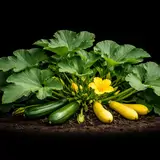
Varieties · 3
You pick one when you add Chayote to your garden. Its days to maturity set your harvest window.
Smooth green chayote 1 variety
Louisiana Heirloom Mirliton
Smooth, pale-to-medium green, pear-shaped fruit with a pronounced furrowed split at the blossom end.
smooth-greenheirloomhumid-adaptedgulf-coastNot a commercial cultivar but a group of Creole strains kept in New Orleans backyards for generations, selected without anyone meaning to for Gulf humidity, heat and hurricane-season resilience. Prized for flavor and for cropping earlier and more heavily along the Gulf than imported grocery fruit. Most of these strains were lost when saltwater from Katrina, Rita and Isaac flooded the gardens that held them, and the surviving lines circulate through Louisiana seed-saving networks rather than through catalogs. If you can get one, save fruit from it every year and pass it on.
Ivory / white chayote 1 variety
Chayote Blanco
Small, rounded, cream-to-ivory fruit with a smooth, lightly furrowed surface and white flesh.
ivory-whitetender-skinmildThe pale ivory market type, generally smaller and rounder than the standard green chayote, with thinner skin and softer, milder flesh. The best of the types for eating raw - shredded into slaw or sliced thin with lime and chile - and it needs no peeling at all when young. Sold as chayote blanco in Latin markets, usually in fall, and grown the same way as the green types though it tends to be a little less vigorous. Treat it as a market class rather than a named cultivar; strains vary.
Spiny chayote (erizo) 1 variety
Chayote Erizo
Dark green, bristled fruit, usually smaller than the smooth types, with firm pale flesh.
dense-fleshtraditionalThe spiny landrace group grown across southern Mexico and Central America, its dark green fruit covered in soft to genuinely sharp bristles. Denser and more strongly flavored than the smooth market types, it holds its shape well in stews and is a favorite where people have a choice. It is never sold in mainstream US groceries, so planting stock generally comes from a Latin market or from someone who brought fruit back. Pick and peel it with gloves; the spines are not decorative.
Grower tips
Notes from growers, tagged with the zone they grow in. A person reads every post before it appears.
Nobody has posted about Chayote yet. The first one usually saves someone a season.
Free account. Your post shows your grower name and zone, never your email.