
Add it to your home screen and it opens full screen: no browser bars, one tap away, and everything stays signed in. Free, nothing to download from an app store.
- Tap the Share button in your browser
- Scroll down and choose “Add to Home Screen”
- Open GrowSomeFood from your home screen
- Open your browser’s menu
- Choose “Add to Home screen” or “Install app”
- Open GrowSomeFood from your home screen

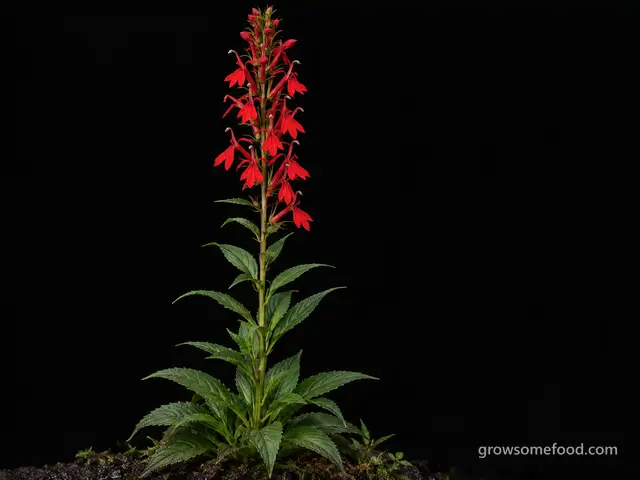
Cardinal Flower
The most brilliant red in the native garden and one of the best hummingbird plants there is - tall scarlet spikes for wet soil, rain gardens, and pond edges, where little else offers such color.
Safety notes Cardinal flower is TOXIC and must not be eaten - every part contains lobelia alkaloids (including lobeline, which acts somewhat like nicotine) that can cause nausea, vomiting, and in large amounts serious poisoning. It has a traditional but dangerous medicinal history; never ingest any part. The sap can irritate skin and eyes in sensitive people, so wash up after handling. Grow it for the hummingbirds, never for the table.
Overview
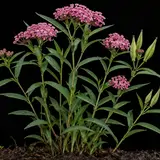
Cardinal flower (Lobelia cardinalis) offers a red so intense it stops you in your tracks - tall spikes of velvety scarlet tubular flowers rising 2-4 feet in late summer, named for the vivid robes of Catholic cardinals. That fiery color and tubular shape are aimed squarely at ruby-throated hummingbirds, which are its main pollinator, making cardinal flower one of the single best hummingbird plants you can grow.
The one thing to knowCardinal flower (Lobelia cardinalis) offers a red so intense it stops you in your tracks - tall spikes of velvety scarlet tubular flowers rising 2-4 feet in late summer, named for the vivid robes of Catholic cardinals.
Quick facts
- Sprouts in
- 21 daysRange: 14–30 days
- Soil temperature
- 70 °FRange: 65–75 °F
- Start indoors
- 10 weeks before transplantRange: 8–12 weeks
- Height
- 36 inRange: 24–48 in
- Spread
- 12 inRange: 9–18 in
- Cold
- Takes hard frostdamaged below -40°F
- Heat
- Struggles above 95°F
- Life cycle
- Perennial, lives about 4 years
- Save seeds
- About 110 days after plantingRange: 90–140 days
- Self-sows
- Yes, expect volunteers
- Soil
- Tolerates wet soil
- Water
- High
- Plant spacing
- 15 inRange: 12–24 in
When to plant
Fall sowing is open for 20 more days. Next: spring, Apr 10 to May 22.
- Direct sow Oct 11 – Nov 8 Open now · 20 days leftAbout 2 weeks before to 2 weeks after your first frost (Oct 25 here)Surface-sow the tiny seed in fall onto moist soil (it needs light and cold-stratification); it germinates in spring. Do not cover the seed - light is required.
- Transplant Sep 15 – Nov 1 Open now · 13 days leftIn mild-winter zones, plant in early fall into wet soil so it establishes a strong rosette before winter for stronger bloom the next year.
- Transplant Apr 10 – May 22 Opens in 173 daysAbout at to 6 weeks after your last frost (Apr 10 here)Set out transplants after last frost into consistently moist to wet, rich soil in full sun to part shade; they establish quickly with ample water and often bloom the first year.
Frost here: last around Apr 10 (Mar 27 to Apr 24 most years), first around Oct 25. Zone averages, your own yard may run a week or two either way.
Life stages
Establish, grow, repeat
Getting established and returning each season are different parts of the story.
Stage 1 of 4 · Getting established
Year 1 - rooting in
Day 0 to 60 after transplanting
Care at this stage
-
Never let it dry out
Cardinal flower is a streambank plant that demands constant moisture. Water a new plant frequently and never allow the soil to dry - it wilts and declines quickly in drought. It's ideal for rain gardens, pond edges, and boggy low spots.
-
Mulch to hold moisture (but keep the crown clear)
Mulch helps hold the moisture it craves - but keep mulch and fallen leaves OFF the basal rosette over winter, because the evergreen-ish rosette needs light and air to survive; smothering it is a common way to lose the plant.
Months are typical seasonal windows; climate, variety, and plant age can shift them.
Watch out for
3 to know. 2 are high-risk: Winter Rosette Rot / Smother, Drought Stress. None are active in October.
Winter Rosette Rot / SmotherSeverity High DisorderSeason: Nov–MarMissing or mushy rosettes in spring under matted leaves or thick mulch; heaved crowns lifted out of wet soil.
Missing or mushy rosettes in spring under matted leaves or thick mulch; heaved crowns lifted out of wet soil.
None once rotted - rely on self-sown seedlings and offsets; prevent by keeping the rosette clear each winter.
Rake fallen leaves and heavy mulch OFF the rosette; use only a light, airy mulch around (not over) the crown; ensure the site drains enough to avoid standing ice.
A leading cause of winter loss for short-lived lobelias: the overwintering basal rosette rots when smothered by fallen tree leaves or heavy mulch, which cut off the light and air it needs, and can also be lost to frost-heaving in bare wet soil.
Drought StressSeverity High DisorderSeason: Jun–SepWilting on hot afternoons, browning and crisping along leaf edges and tips, premature leaf drop, collapsed flower stems, and thin, stunted growth - showing up first on young plants and on the driest, most exposed side of the planting.
This is cardinal flower's greatest threat by a wide margin. It is a wetland plant that wilts, crisps and can die within days of the soil drying out, even briefly, during the growing season - it needs constantly moist to wet ground, not an ordinary border.
Wilting on hot afternoons, browning and crisping along leaf edges and tips, premature leaf drop, collapsed flower stems, and thin, stunted growth - showing up first on young plants and on the driest, most exposed side of the planting.
Water deeply and consistently, then mulch. Mild wilting reverses within a day or two, but a prolonged drought sets a plant back hard and can kill a young one outright. If a plant scorches every summer, the site is wrong - move it to damper ground rather than trying to water it through.
Match the site to the plant: put a moisture-loving species where the ground actually stays damp - a rain garden, pond edge, ditch, seep or low spot - rather than in an ordinary border you intend to keep watered. Mulch to hold moisture and keep the roots cool, water deeply through every dry spell while the plant is establishing, and avoid hot, windy, exposed positions.
Not a pest but a siting problem, and on a moisture-loving plant it is usually the thing that actually kills it. When the soil dries out, leaf edges brown and crisp, foliage wilts and drops early, flowering and fall color are cut short, and growth thins. Hot sun, wind and exposed positions make it worse by pulling water out faster than the roots can replace it. A plant that wants reliably moist or wet ground has no drought tolerance to fall back on, and young or recently planted ones have the least of all.
Slugs & SnailsSeverity Low PestSeason: Apr–JunIrregular ragged holes chewed out of the middle of leaves and along the edges - not the clean-edged cuts a caterpillar leaves.
They chew the tender basal rosette, which is the part the plant overwinters on, so keep debris and mulch clear of the crown rather than piling it up. Established plants outgrow light damage.
Irregular ragged holes chewed out of the middle of leaves and along the edges - not the clean-edged cuts a caterpillar leaves. Seedlings that vanish overnight, or that are cut off at soil level with nothing left behind. Silvery dried slime trails across leaves, soil, pots, and paving in the morning: this is the giveaway that tells you it was mollusks rather than an insect. Chewed pits in ripe fruit, especially where it rests on the ground. Damage that shows up on the lowest, dampest leaves first and gets worse after rain or evening watering. Turn over a board, an upturned pot, or a clump of dense mulch during the day and look for the animals themselves sheltering in the cool underneath.
Hand-picking works and costs nothing: go out an hour after dark with a headlamp, drop what you find into soapy water, and repeat nightly for a week or two - persistence is what wins, not any single product. Shallow beer traps sunk to soil level catch them too, but need emptying and refilling daily to be worth anything. Iron-phosphate bait is the standard control and is far lower-risk around pets and wildlife than the old metaldehyde products, but it is not harmless: many formulations include EDTA, and a dog that eats a quantity of pellets can develop iron toxicosis. Scatter it thinly per the label, never in piles, and keep dogs off a baited bed. Clear fallen foliage and debris in autumn, where the eggs are laid. In a wet climate this is a population you manage each season rather than one you eradicate - and on most established plants light grazing is cosmetic and needs nothing at all.
Take away the daytime shelter first: lift boards and upturned pots, clear piles of debris, keep dense mulch pulled back from crowns and stems, and give crowded plantings enough airflow to dry out. Water in the morning rather than the evening so the surface is dry by the time they come out. Copper tape around containers and raised beds gives them a shock they will not cross, and it is the one barrier that reliably works. Get plants past the vulnerable stage quickly - start seedlings in pots and set them out at a decent size rather than direct-sowing into a cold wet bed, since most plants stop being worth defending once the leaves toughen. Leave the ground beetles, frogs, toads, and ground-feeding birds alone, because they eat mollusks all night for free and broad-spectrum slug pellets kill them too. Where thick-leaved or resistant varieties exist for what you are growing, they take far less damage.
Slugs and snails are nocturnal mollusks that rasp ragged holes in soft leaves, shear off seedlings at ground level, and chew into ripe fruit that touches the soil. They feed at night and in the early morning and spend the day hidden under boards, pots, dense mulch, leaf litter, and low foliage, becoming active in exactly the cool, damp, shaded conditions that suit young plants. Damage is heaviest in wet spells and on tender spring growth: a single wet week can erase a row of seedlings while an established, tough-leaved plant of the same species is barely marked. They lay clusters of small pearly eggs in damp soil and under debris, so a garden with plenty of cover carries a resident population year after year rather than being invaded from outside.
Good & bad neighbors
Plant nearby
-
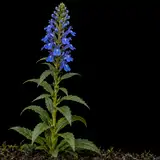
Its own blue-flowered sister species (L. siphilitica) - identical wet-soil needs, simultaneous bloom, and a stunning red-and-blue combination that serves both hummingbirds and bumblebees.
-
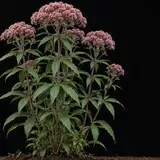
A classic wet-soil, late-summer native pairing: Joe-Pye weed's mauve butterfly domes behind cardinal flower's scarlet hummingbird spikes, both thriving in rain gardens and pond edges.
-
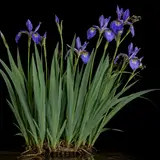
A native wetland iris for the same pond edges and wet soil, blooming earlier and contributing structure and vertical foliage to a wet-garden planting with cardinal flower.
-
FernsNative ferns share cardinal flower's moist, part-shade conditions and their fine texture sets off its bold scarlet spikes in a shadier wet garden.
-
Shares cardinal flower's love of wet soil and full to part sun and adds monarch support - a natural rain-garden trio with Joe-Pye weed.
Varieties · 3
You pick one when you add Cardinal Flower to your garden. Its days to maturity set your harvest window.
Cardinal Flower (Lobelia cardinalis)
The wild species: brilliant true-scarlet spikes 2-4 feet tall over green rosettes, the classic hummingbird plant for wet soil, rain gardens, and pond edges.
Variety details for Cardinal Flower (Lobelia cardinalis)
Tall spikes of vivid scarlet tubular flowers over basal rosettes of green leaves.
speciesnativescarlethummingbirdShort-lived but self-sowing.
Black Truffle
A striking selection with deep bronze-purple, nearly black foliage that sets off the brilliant scarlet flowers dramatically - the same moisture-loving hummingbird plant with a bold leaf color.
Variety details for Black Truffle
Scarlet flower spikes rising from dark bronze-purple, almost black, foliage.
dark-foliagescarlethummingbirdcontrastIt is a Lobelia x speciosa garden hybrid (cardinalis crossed with siphilitica and fulgens) rather than the straight species, which makes it less hardy and shorter-lived than wild cardinal flower - rated to about zone 4 and often treated as a two-year plant.
Fried Green Tomatoes
A vigorous selection with dark green-bronze foliage and rich red flowers, bred for sturdiness and strong performance in the garden.
Variety details for Fried Green Tomatoes
Rich red spikes over dark green-bronze leaves on strong plants.
dark-foliageredvigoroushummingbirdLike other dark-leaved selections it is a Lobelia x speciosa garden hybrid (cardinalis crossed with siphilitica and fulgens), not the straight species - noticeably less hardy and shorter-lived than wild cardinal flower, so treat it as a zone 4-and-warmer plant and expect to replace it.
Grower tips
Notes from growers, tagged with the zone they grow in. A person reads every post before it appears.
Nobody has posted about Cardinal Flower yet. The first one usually saves someone a season.
Free account. Your post shows your grower name and zone, never your email.