
Add it to your home screen and it opens full screen: no browser bars, one tap away, and everything stays signed in. Free, nothing to download from an app store.
- Tap the Share button in your browser
- Scroll down and choose “Add to Home Screen”
- Open GrowSomeFood from your home screen
- Open your browser’s menu
- Choose “Add to Home screen” or “Install app”
- Open GrowSomeFood from your home screen
Buttonbush
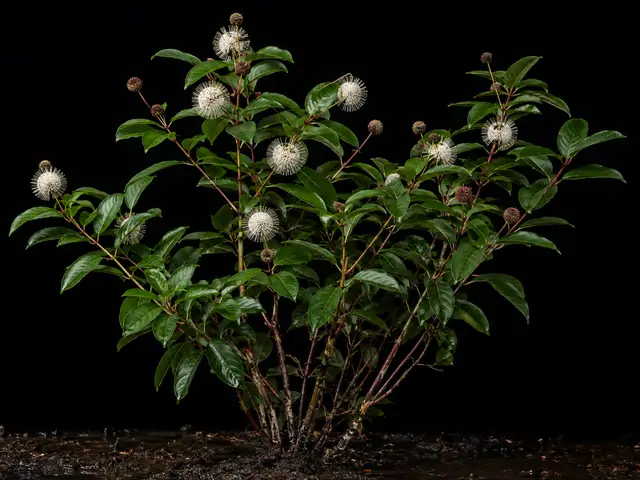
A tough native shrub for the wettest ground, covered in summer with creamy-white pincushion flower balls that swarm with butterflies, bees, and hummingbirds - and hard button seed heads that feed waterfowl into winter.
Safety notes Buttonbush is a native ornamental and wildlife shrub, not a food plant. Its leaves and bark contain compounds (including cephalanthin) that are toxic if eaten and can cause vomiting - keep it out of reach of grazing livestock and don't let children or pets chew it. The bark had a folk-medicine history but is not safe to self-administer. The seeds are eaten by waterfowl, not people. Otherwise it is safe to plant and handle.
Overview
Buttonbush (Cephalanthus occidentalis) is the shrub for the spot that's simply too wet for anything else. A native of pond edges, swamps, ditches, and stream banks, it thrives in constantly wet ground and even in standing water, where most shrubs would drown. In summer it earns its keep spectacularly: the whole plant is studded with perfect creamy-white flower balls, one-inch spheres bristling with tiny tubular flowers and pin-like styles, like fragrant white pincushions or bursting fireworks.
The one thing to knowA native of pond edges, swamps, ditches, and stream banks, it thrives in constantly wet ground and even in standing water, where most shrubs would drown.
Quick facts
- Height
- 8 ftRange: 5–12 ft
- Spread
- 7 ftRange: 4–10 ft
- Cold
- Takes hard frostdamaged below -30°F
- Heat
- Struggles above 100°F
- Life cycle
- Perennial, lives about 40 years
- Save seeds
- About 130 days after plantingRange: 100–160 days
- Self-sows
- Yes, expect volunteers
- Soil
- Tolerates wet soil
- Water
- High
- Plant spacing
- 6 ftRange: 4–8 ft
When to plant
Fall transplanting is open for 6 more days. Next: spring, Apr 10 to Jun 5.
- Transplant Sep 13 – Oct 25 Closes in 6 daysAbout 6 weeks before to at your first frost (Oct 25 here)Plant in early fall into wet ground so roots establish before winter, especially useful in milder zones for a strong spring start.
- Transplant Apr 10 – Jun 5 Opens in 173 daysAbout at to 8 weeks after your last frost (Apr 10 here)Set out a young shrub after last frost into constantly wet to flooded ground in full to part sun; keep it moist to establish. It leafs out and blooms in summer, often flowering by its second or third year.
Frost here: last around Apr 10 (Mar 27 to Apr 24 most years), first around Oct 25. Zone averages, your own yard may run a week or two either way.
Life stages
Establish, grow, repeat
Getting established and returning each season are different parts of the story.
Stage 1 of 4 · Getting established
Years 1-2 - rooting in
Day 0 to 180 after transplanting
Care at this stage
-
Keep it wet while it establishes
Buttonbush is a wet-site shrub that thrives in constantly moist to flooded ground. Water a new plant generously and never let it dry out; it tolerates standing water and heavy wet clay that would drown most shrubs, but a young plant still needs steady moisture to root in.
-
Mulch to hold moisture
A layer of mulch keeps the root zone cool and damp, helping the shrub settle in - though on a true pond edge or wet site the ground stays damp on its own.
Months are typical seasonal windows; climate, variety, and plant age can shift them.
Watch out for
3 to know. 1 is high-risk: Drought Stress. None are active in October.
Drought StressSeverity High DisorderSeason: Jun–SepWilting on hot afternoons, browning and crisping along leaf edges and tips, premature leaf drop, collapsed flower stems, and thin, stunted growth - showing up first on young plants and on the driest, most exposed side of the planting.
Drought is buttonbush's main threat. It is a wet-site shrub built for pond edges, ditches and standing water; an established plant rebounds once moisture returns, but a young one can be lost outright to a dry summer.
Wilting on hot afternoons, browning and crisping along leaf edges and tips, premature leaf drop, collapsed flower stems, and thin, stunted growth - showing up first on young plants and on the driest, most exposed side of the planting.
Water deeply and consistently, then mulch. Mild wilting reverses within a day or two, but a prolonged drought sets a plant back hard and can kill a young one outright. If a plant scorches every summer, the site is wrong - move it to damper ground rather than trying to water it through.
Match the site to the plant: put a moisture-loving species where the ground actually stays damp - a rain garden, pond edge, ditch, seep or low spot - rather than in an ordinary border you intend to keep watered. Mulch to hold moisture and keep the roots cool, water deeply through every dry spell while the plant is establishing, and avoid hot, windy, exposed positions.
Not a pest but a siting problem, and on a moisture-loving plant it is usually the thing that actually kills it. When the soil dries out, leaf edges brown and crisp, foliage wilts and drops early, flowering and fall color are cut short, and growth thins. Hot sun, wind and exposed positions make it worse by pulling water out faster than the roots can replace it. A plant that wants reliably moist or wet ground has no drought tolerance to fall back on, and young or recently planted ones have the least of all.
Deer (browse resistance)Severity Low WildlifeSeason: May–AugGrowth cleanly missing overnight, with the plant browsed back to a level line about as high as a deer can comfortably reach.
Buttonbush is fairly deer-tolerant: its toxicity makes it a less-preferred browse than most shrubs, so damage is usually light. Cage a young plant where pressure is severe until it is established, and established shrubs recover readily from light browsing.
Growth cleanly missing overnight, with the plant browsed back to a level line about as high as a deer can comfortably reach. Ragged, torn stem ends rather than the clean angled cut a rabbit leaves - the single most reliable identifier. Buds and flowers gone while the foliage below is untouched, since deer often take the best part first. Hoof prints and droppings in soft ground near the damage. Repeat visits, with fresh damage each morning once a planting has been found. On young trees, shredded and stripped bark and broken low branches in autumn - that is antler rubbing rather than feeding.
There is no chemical fix, only exclusion and recovery. Get physical protection up immediately after the first damage, because deer return to a known meal, and reinforce or rotate whatever you were relying on before. Most plants regrow from browsing if the crown and roots are intact - feed and water a grazed plant and protect the regrowth while it comes back. What does not recover in the same season is anything whose buds or flowers have been taken, and a young tree whose bark has been rubbed right around the trunk is usually lost. Where deer pressure is genuinely heavy, the honest answer is to fence properly or to grow the plants deer leave alone, rather than to keep replacing losses.
Fencing is the only thing that reliably works. Eight feet is the standard for excluding deer, or two parallel four-foot fences a few feet apart, which they will not jump because they cannot judge the landing. Short of that, cage individual plants: a sturdy wire cage or trunk guard around every young tree, left on until the trunk is thick and the canopy is above browse height, prevents both browsing and antler rubbing and is the single highest-value thing you can do for a young tree. Repellent sprays do help at moderate pressure, but they wash off and deer habituate, so reapply after rain and rotate between different types through the season. Motion-activated sprinklers, scent deterrents, and noise devices work for a while and then stop. Siting matters too: plants close to the house, in daily traffic, and screened behind other planting get browsed less than the same plant out at the boundary.
Deer are the largest garden problem across much of the country, and where pressure is high they set the limit on what you can grow at all. They browse at night and around dawn and dusk, taking tender shoots, leaves, buds, flowers, and fruit within about five feet of the ground, and they come back night after night to anything they have found and liked. Because they have no upper incisors they tear rather than cut, leaving ragged stem ends - that is how you tell deer damage from a rabbit's clean angled cut. In fall, bucks rub their antlers on young trunks and can strip the bark right around a stem, which kills a young tree outright. Palatability varies enormously between plants and between seasons: a herd short of food in late winter eats things it ignores in June, and no plant is truly deer-proof.
Leaf SpotSeverity Low DiseaseSeason: Jul–SepSmall brown, dark, reddish or purple-bordered spots and blotches on the leaves during prolonged humid, rainy spells, sometimes enlarging and merging, with premature yellowing or leaf drop on the worst-affected growth.
Buttonbush is naturally quite disease-resistant, tolerates spotting, and flushes clean growth. Keeping it properly wet matters far more here than anything you could spray.
Small brown, dark, reddish or purple-bordered spots and blotches on the leaves during prolonged humid, rainy spells, sometimes enlarging and merging, with premature yellowing or leaf drop on the worst-affected growth.
Remove badly affected leaves and improve airflow; that is normally the whole of it. The plant flushes clean new growth once the weather turns. Fungicide is seldom warranted for a cosmetic leaf spot on an established plant.
Give the plant airflow - space, thin or prune it rather than letting the growth mat together - avoid overhead watering, and water early in the day so the foliage dries. Rake up and remove fallen leaves, which is where these fungi overwinter, and keep the plant unstressed and properly watered.
A catch-all for the various fungal leaf-spot diseases that blotch foliage in warm, humid, wet weather. They spot and yellow the leaves and sometimes bring on early leaf drop, and they are worst on crowded, shaded or overhead-watered plants and on anything already stressed. On a healthy, well-sited plant they are a cosmetic nuisance that comes and goes with the weather rather than a real threat.
Good & bad neighbors
Plant nearby
-
A classic wet-site pollinator pairing: buttonbush's white flower balls above swamp milkweed's pink monarch flowers, both thriving in the same saturated ground and feeding butterflies together.
-
Cardinal flower's scarlet hummingbird spikes at the wet feet of a buttonbush add red and hummingbird appeal beneath the shrub's butterfly-covered flower balls.
-
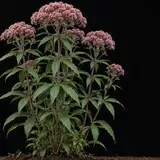
Two tall, late-summer, moisture-loving butterfly plants for the back of a rain garden - buttonbush's balls and Joe-Pye weed's mauve domes together are a pollinator powerhouse in wet ground.
-
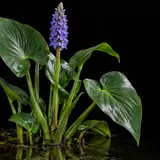
Buttonbush gives woody height and structure behind a stand of pickerelweed in the shallow water at a pond edge, the two drawing pollinators to different layers of the wet planting.
- Traditional pairings, thin evidence
-
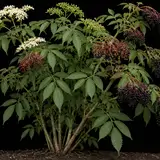
Another vigorous native shrub for moist ground; pairing buttonbush with elderberry builds a layered wet-site shrub thicket with strong pollinator and bird value.
Varieties · 3
You pick one when you add Buttonbush to your garden. Its days to maturity set your harvest window.
Common Buttonbush (Cephalanthus occidentalis)
The wild species: a tough 5-8 foot multi-stemmed shrub for wet ground, covered in summer with creamy-white pincushion flower balls that draw butterflies, bees, and hummingbirds, followed by button seed heads for waterfowl.
Variety details for Common Buttonbush (Cephalanthus occidentalis)
Rounded multi-stemmed shrub with glossy leaves and spherical creamy-white pincushion flowers.
speciesnativewhitepollinatorThe standard native shrub for pond edges and rain gardens.
Sugar Shack (Cephalanthus 'SMCOSS')
A compact selection about half the size of the species (3-4 feet), with glossy foliage, the same white pincushion flowers, and showy red-tinged button fruit - bred to fit buttonbush's pollinator value into a smaller rain garden or border.
Variety details for Sugar Shack (Cephalanthus 'SMCOSS')
Dense compact shrub with glossy leaves, white flower balls, and reddish button seed heads.
compactcultivarred-fruitglossy-foliageFiber Optics (Cephalanthus 'Bailoptics')
A tidier, denser, more compact buttonbush (4-5 feet) with abundant white pincushion blooms and a rounded habit, selected for smaller spaces while keeping the strong butterfly and bee appeal of the species.
Variety details for Fiber Optics (Cephalanthus 'Bailoptics')
Rounded dense shrub studded with white spherical flower heads in summer.
compactcultivardensepollinator
Grower tips
Notes from growers, tagged with the zone they grow in. A person reads every post before it appears.
Nobody has posted about Buttonbush yet. The first one usually saves someone a season.
Free account. Your post shows your grower name and zone, never your email.