Add it to your home screen and it opens full screen: no browser bars, one tap away, and everything stays signed in. Free, nothing to download from an app store.
- Tap the Share button in your browser
- Scroll down and choose “Add to Home Screen”
- Open GrowSomeFood from your home screen
- Open your browser’s menu
- Choose “Add to Home screen” or “Install app”
- Open GrowSomeFood from your home screen
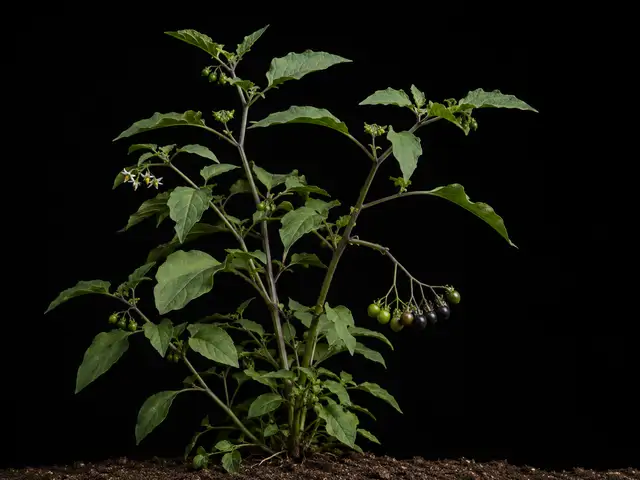
Black Nightshade
A garden weed in America and a staple vegetable across Africa and Asia - the same plant. Ripe black berries and boiled leaves are food; green berries and raw leaves are toxic. It also volunteers beside lamb's quarters, which is why knowing it matters even if you never eat it.
Green berries and raw leaves are TOXIC - they carry solanine-type glycoalkaloids, and levels vary widely between wild plants. Only fully ripe, uniformly dull-black, soft berries are eaten, and a cluster ripens unevenly, so never let a child pick from it. Leaves are eaten only cooked: boil and discard the water. If you intend to eat it, grow a named cultivated strain rather than a wild volunteer. US poison control treats any berry ingestion as a toxic exposure - call them.
Overview
The one thing to knowAcross East and West Africa, South India and the eastern Mediterranean it is a staple leafy vegetable with its own names, its own market stalls and its own cooking method, and its ripe berries are made into jam and pie.
Black nightshade is two plants at once, depending on where you are standing. In an American vegetable bed it is a weed - one of the more troublesome ones, with a seed bank that lasts years. Across East and West Africa, South India and the eastern Mediterranean it is a staple leafy vegetable with its own names, its own market stalls and its own cooking method, and its ripe berries are made into jam and pie.
Both things are true because the plant is food in one state and poison in another. Ripe berries - uniformly dull black, soft - and leaves that have been boiled with the water thrown away are eaten by millions of people daily. Green berries and raw leaves are toxic, carrying solanine-type glycoalkaloids at levels that vary a great deal between wild populations. And because a berry cluster ripens unevenly, the safe and the unsafe hang side by side on the same stalk.
That is why this entry is gated as a plant to grow deliberately. If you want to eat it, grow a named cultivated strain from seed in a marked row - garden huckleberry, wonderberry, or one of the African vegetable types - and follow the picking rules. The volunteer that came up beside your lamb's quarters is not that plant, and it is not dinner.
Even if you never eat it, it is worth knowing on sight. It comes up in the same warm, rich beds as lamb's quarters, at the same time, at the same size - and lamb's quarters is a plant people gather by the handful. Telling the two apart is the practical reason this file exists.
Quick facts
- Sprouts in
- 12 days7 to 21
- Soil to sprout
- 75 °F65 to 85
- Start indoors
- 5 weeks before transplant3 to 6
- Life cycle
- Annual
- Seed to save
- About 90 days after planting70 to 115
- Height
- 30 in12 to 48
- Spread
- 24 in12 to 36
- Cold
- Killed by frostdamaged below 32°F
- Heat
- Struggles above 95°F
- Self-sows
- Yes, expect volunteers
Full sun or part sun · medium water · well-drained soil · 18 in apart (12 to 24) · direct sow or transplant
When to plant
Nothing is open today. Spring sowing opens 7 months, Apr 17 to May 29.
- Direct sow Apr 17 – May 29 Opens in 208 daysAbout 7 days after to 7 weeks after your last frost (Apr 10 here)Sow into warm soil - above 65°F - two to four weeks after the last frost. It is a tender warm-season plant and gains nothing from an early start in cold ground.
Frost here: last around Apr 10 (Mar 27 to Apr 24 most years), first around Oct 25. Zone averages, your own yard may run a week or two either way.
Life stages
Five stages, about 6 weeks from sowing to the first pull. Windows are typical; your zone and weather move them.
Germination in warm soil
Day 0 to 12 from sowing- ProtectWait for warm soil - it will not start in the coldevery 2 daysSow a quarter inch deep once soil is reliably above 65°F, which is usually two to four weeks after your last frost. Cold ground gives slow, patchy germination. Indoors, start 4 to 6 weeks before setting out and keep the tray warm. Keep the surface evenly moist until seedlings appear.
- WeedSow in a marked row so you can tell crop from volunteerWild black nightshade volunteers in the same warm, rich beds, and once your sown plants are up you cannot tell them apart. Sow in a labelled row or block, and pull anything that comes up outside it. If you intend to eat this plant, that separation is the whole point - a named cultivated strain is what you meant to grow, and a chance volunteer is not.
Watch for- Patchy germination in soil that is still cold
- Volunteer seedlings appearing outside the sown row
Leafy growth (the cooked-greens stage)
Day 14 to 60 from sowing- WaterSteady moisture keeps the leaves tenderweeklyWater enough to keep the soil evenly damp. Plants that dry out go tough, bitter and straight to flowering, which cuts the leaf harvest short. An inch of water a week in dry spells is usually enough, and a mulch holds it.
- InspectCheck what you have - plain green leaves, no mealy coatingLeaves are alternate, oval and pointed, 1 to 3 inches, with wavy or shallowly toothed edges, thin and dull green, sometimes lightly hairy. There is NO white mealy or flour-dusted coating. That coating is the mark of lamb's quarters, the plant this one grows shoulder to shoulder with in the same beds. If a leaf looks dusted with flour, it is not this plant.
- FertilizeFeed lightly - it is a leaf crop, not a fruit crop, at this stageA single dressing of balanced fertilizer or a mulch of compost when plants are 6 inches tall is plenty. It grows fast in rich, warm ground; heavy nitrogen just makes soft growth that aphids find first.
Watch for- Any white mealy coating on the leaves (that is lamb's quarters, not this)
- Aphids and flea beetles on soft new growth
- Plants bolting to flower early after a dry spell
Small white star flowers
From day 50 from sowing- InspectWhite stars with a yellow beak - the positive IDFlowers are small, white, five-pointed stars with a protruding cone of bright yellow anthers, carried in little drooping clusters of three to ten that come off the stem BETWEEN the leaf joints. They look like miniature tomato flowers, because they are close relatives. Lamb's quarters never produces a petalled flower at all - just green mealy seed spikes. This is the moment the two become impossible to confuse.
- HarvestKeep picking leaves - flowering is not the end of the greensPinching out flowering tips keeps the plant producing tender leaves for several more weeks. If you want the berries as well, leave some clusters on and take leaves from elsewhere on the plant.
Watch for- Little drooping clusters of white star flowers with yellow centres
- Flower clusters emerging between the leaf joints rather than at them
Green to black berries (green means toxic)
From day 70 from sowing- ProtectGreen berries are the toxic ones - and they hang beside the ripe onesBerries start hard and green, then turn dull black over several weeks. The GREEN and part-coloured ones carry the highest glycoalkaloid load, and because a cluster ripens unevenly, every cluster holds some. This is the single fact that governs everything else about eating this plant: there is no stage at which you can strip a cluster into a bowl and trust the result.
- ProtectDo not let children graze it - pick for them, or fence it offA small black berry at knee height is exactly what a child will try, and children cannot judge ripe from unripe. If you are growing this and there are children in the garden, either pick the berries yourself and hand them over, or grow it somewhere they do not roam. Tell any visiting adult what the plant is, too.
Watch for- Green, part-coloured and black berries hanging in the same cluster
- Children or pets with unsupervised access to fruiting plants
- Birds stripping berries and seeding the plant across the garden
Picking: cooked leaves, and fully ripe berries only
Day 40 to the first pull from sowing, picking to about day 125- HarvestLeaves: young tips, and always cookedweeklyTake young leaves and growing tips from about 6 weeks on, cutting a few inches off each shoot rather than stripping a plant bare. Never eat them raw. Boil them and pour the water away - across East Africa and South India, where this is a staple green, one change of water is standard and two is common for a strong-tasting batch. Cooked, the flavour is mild and slightly bitter, like a firmer spinach.
- HarvestBerries: dull black, soft, and picked one by onePick only berries that are uniformly dull black all over and soft to a gentle squeeze - a berry with any green or olive shoulder goes back on the plant or in the bin. Pick individually rather than stripping a cluster, and go over the same plants every few days as more ripen. Ripe berries are mild and slightly tomato-like, and are usually cooked into jam or pie with sugar and lemon rather than eaten by the handful.
- ThinCut plants down before the last berries dropOne plant sets thousands of seeds and the seed bank stays alive in the soil for years. When you have finished picking, pull or cut the plants before the remaining berries fall, and bag the fruiting tops rather than composting them. Otherwise next season's bed comes up as a nightshade patch whether you wanted one or not.
Watch for- Berries with any green shoulder left in the picking bowl
- Fallen ripe berries seeding the bed for next year
- Leaves going tough and bitter once plants are old
Harvest
- Leaves: young tips from about 6 weeks on - and only ever eaten cooked, with the boiling water discarded
- Berries: uniformly dull black all over and soft to a gentle squeeze, picked one at a time
- Any green or part-coloured berry is not ready and is the most toxic part of the plant
- Leaves: young tips, and always cooked · weekly
- Berries: dull black, soft, and picked one by one
- Cut plants down before the last berries drop
Per plant 8 to 80 ozPicking pick as they ripen
Watch out for
5 to know. 1 is high-risk: Green Berry & Raw Leaf Poisoning. 5 are active in September.
Green Berry & Raw Leaf PoisoningSeverity High DisordernowAny berry eaten by a child, and any berry with a green or olive shoulder in a picking bowl.
Any berry eaten by a child, and any berry with a green or olive shoulder in a picking bowl. Raw leaves eaten in a salad. Symptoms usually within a few hours - vomiting, cramping abdominal pain and diarrhoea.
Call poison control for any ingestion of green berries or raw leaves, or for any berry eaten by a child, and do not wait for symptoms. Photograph the plant. For an animal, call a veterinarian and name the plant. Discard a doubtful picking rather than sorting it at the sink.
Pick berries individually and only when uniformly dull black and soft; never strip a cluster. Never eat leaves raw - boil them and discard the water. Do not let children pick from the plant. If you intend to eat it, grow a named cultivated strain rather than a wild volunteer of unknown parentage.
Unripe green berries and raw foliage carry solanine-type glycoalkaloids, and the content varies widely between wild populations, so no single number describes the plant. The berries are small, black and at knee height, and a cluster ripens unevenly - the toxic green ones hang beside the edible black ones, which is why a handful picked by a child is the classic case. Poisoning usually presents as nausea, vomiting, stomach pain and diarrhoea, sometimes with drowsiness or headache; serious cases are uncommon but are documented, particularly in children and grazing animals.
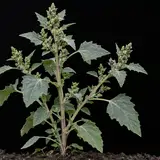
Confused with Lamb's Quarters & Deadly NightshadeSeverity Medium DisordernowBefore picking any wild green, check for the WHITE MEALY flour-like coating on leaf undersides and growing tips - lamb's quarters has it, black nightshade never does.
Before picking any wild green, check for the WHITE MEALY flour-like coating on leaf undersides and growing tips - lamb's quarters has it, black nightshade never does. Lamb's quarters leaves are diamond or goosefoot-shaped and it makes green mealy seed spikes, never petalled flowers or berries. Once either plant flowers it is settled: small white stars with a yellow beak are nightshade.
If you are unsure after picking, throw the whole gathering out rather than sorting it at the sink. If someone has eaten an unidentified green or berry, call poison control rather than waiting for symptoms.
Keep the two in separate parts of the garden instead of relying on identification with a full handful. Pick wild greens one plant at a time. Learn the pair together - the mealy coating is the single feature none of the look-alikes share.
Two confusions run in opposite directions. Black nightshade volunteers in the same warm rich beds as lamb's quarters, at the same time and the same size, and lamb's quarters is gathered by the handful as a cooked green - so a mixed grab from a weed patch is the realistic route to eating the wrong plant. In the other direction, its black berries get reported as deadly nightshade, which produces alarm out of all proportion and teaches people to discount berry warnings generally.
Reservoir for Tomato & Potato ProblemsSeverity Medium DiseasenowColorado potato beetle adults or larvae on nightshade weeds at the bed edge, blight lesions on its leaves in a wet season, and crop outbreaks in a garden where the rotation should have broken the cycle.
Colorado potato beetle adults or larvae on nightshade weeds at the bed edge, blight lesions on its leaves in a wet season, and crop outbreaks in a garden where the rotation should have broken the cycle.
Remove the plants and dispose of them in the trash rather than the compost. Treat the crop problem on its own terms, but expect it back each season while nightshade weeds remain in the bed.
Weed it out of and around beds growing tomatoes, potatoes, peppers and eggplant, and count any deliberately grown black nightshade as part of the same rotation group rather than as a separate leaf crop. Site it at the far end of the garden from the tomato bed.
As a wild relative of tomato and potato, black nightshade is a documented host for Colorado potato beetle, potato virus Y, late blight and root-knot nematode, and it hosts tomato spotted wilt where thrips are active. A stand of it in or beside a vegetable bed carries those problems between seasons and undoes the rotation you were relying on.
Prolific Seeding & Long-Lived Seed BankSeverity Medium DisordernowBerries dropping from plants left standing after the harvest, seedlings appearing across the bed the following spring, and a spread of new plants under fences and perches where birds sit.
Berries dropping from plants left standing after the harvest, seedlings appearing across the bed the following spring, and a spread of new plants under fences and perches where birds sit.
Hoe or pull volunteers while they are small; they come out easily in their first few weeks. Expect the seed bank to keep producing for several years, and simply keep on top of it - or harvest the volunteers as weeds rather than as food.
Pull or cut plants while the berries are still attached, before the last ones drop, and bag the fruiting tops for the trash - a home compost heap rarely runs hot enough to kill the seed. Grow it in one marked block rather than scattered through the garden.
One plant sets thousands of seeds inside berries that fall, get eaten by birds, or ride into the compost heap, and the seed stays viable in soil for years. This is what makes black nightshade one of the more persistent weeds of vegetable ground, and it is the main reason the catalog gates it as a plant to grow deliberately rather than casually - a season of letting berries drop commits you to several seasons of volunteers.
Berries Crushed into a Picked CropSeverity Low DisordernowNightshade plants growing up inside a bean or pea row, dark staining on picked pods, and stray black berries in the picking bowl.
Nightshade plants growing up inside a bean or pea row, dark staining on picked pods, and stray black berries in the picking bowl.
Wash and pick over any harvest taken from a bed with fruiting nightshade in it, and discard anything you are unsure about. Remove the plants before the next picking rather than working around them.
Weed nightshade out of bean, pea and leafy crop rows before it fruits, not after. Pick crops in good light, and check the bowl rather than tipping it straight into the pot.
Black nightshade grows up through bean, pea and leafy crops and fruits at the same height, so its berries end up picked or crushed into the harvest. This is a well-known problem in commercial green beans and peas, where berry juice stains and contaminates whole loads, and it happens in home gardens too - a dark berry in a bowl of beans is easy to miss.
Good & bad neighbors
First rule: keep Lamb's Quarters apart. An identification conflict, not a growing one - and the reason this file matters.
Keep apart
-
An identification conflict, not a growing one - and the reason this file matters. Both come up in the same warm rich beds at the same size, and lamb's quarters is gathered by the handful. The test is the WHITE MEALY coating: lamb's quarters has a flour-like dusting on leaf undersides and growing tips, and never makes a petalled flower or a berry. Black nightshade has plain green leaves, white star flowers and berries. Keep them in separate beds rather than sorting them by hand.
-
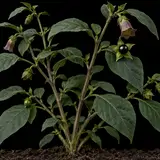
A naming problem rather than a planting one, and the source of most of the alarm about this plant. Atropa belladonna carries ONE glossy cherry-sized black berry at a time in a flat green five-pointed star, under a solitary nodding purple bell, on a stout 2-5 ft bush. Black nightshade carries pea-sized dull berries in clusters of three to ten under small white star flowers. Clusters versus singletons settles it - and belladonna is genuinely rare in North America.
-
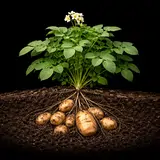
A genuine horticultural conflict. Black nightshade is a close relative and a documented host for Colorado potato beetle, potato virus Y, late blight and root-knot nematode, so a stand of it beside or before a potato crop hands those straight back. Keep it out of the potato bed, count it on the same rotation as your other nightshades, and weed volunteers out of potato ground rather than tolerating them.
-
Same reason as potato. It shares tomato's pests and diseases and acts as a green bridge between seasons, particularly for late blight in a wet year and for tomato spotted wilt where thrips are active. If you are growing it as a vegetable, put it at the far end of the garden from the tomato bed and rotate it with them rather than beside them.
Varieties · 4
You pick one when you add Black Nightshade to your garden. Its days to maturity set your harvest window.
Eastern Black Nightshade (Solanum ptychanthum)
Branching green annual with plain oval toothed leaves, drooping clusters of small white star flowers with yellow centres, and pea-sized berries ripening green to dull black.
speciesnativewildweedThe native black nightshade of eastern and central North America, and the plant that actually volunteers in American vegetable beds alongside lamb's quarters. Bushy annual to about 3 ft with plain green oval leaves, small white star flowers, and pea-sized berries ripening green to dull black. Glycoalkaloid content varies between populations, so a wild plant is not a food plant - know it in order to tell it from lamb's quarters, and grow a named strain if you want to eat one.
European Black Nightshade (Solanum nigrum)
Indistinguishable from eastern black nightshade in the garden; a bushy annual with white star flowers and clustered dull-black berries.
speciesintroducedwildweedThe Old World species, introduced and naturalized across North America and near-impossible to separate from the native eastern black nightshade in the field. This is the plant behind most of the European and Mediterranean food tradition - the Greek horta green and the Indian manathakkali - and equally the plant behind the European poisoning literature. Same rules apply: cooked leaves and fully ripe berries only.
Garden Huckleberry (Solanum scabrum)
Robust 2-3 ft plant with broad leaves and heavy clusters of large, glossy black berries.
cultivatedberry-typelarge-fruitedseed-catalogueThe cultivated berry nightshade sold in American seed catalogues since the nineteenth century - a stouter plant with larger, glossier black berries in bigger clusters, grown for pies, jam and preserves. Berries are bland raw and want sugar and lemon, or a sharper fruit alongside. In parts of West and Central Africa the same species is grown mainly for its leaves. This is what to plant if you want to eat this plant: a named strain, in a marked row.
Wonderberry / Sunberry (Solanum retroflexum)
Compact 1-2 ft plant fruiting early and heavily, with small dull-black berries in dense clusters.
cultivatedberry-typeheirloomburbankLuther Burbank's 1909 introduction, and the subject of a long public row over whether it was a genuine new fruit or the common weed renamed. It is a real cultivated berry nightshade: a compact, quick, heavy-fruiting plant with small sweet-mild black berries used for jam and pie. Quicker to ripen than garden huckleberry, which makes it the better choice in a short season - and, like all of these, eaten only fully ripe and cooked.
Grower tips
Notes from growers, tagged with the zone they grow in. A person reads every post before it appears.
Nobody has posted about Black Nightshade yet. The first one usually saves someone a season.
Free account. Your post shows your grower name and zone, never your email.