Add it to your home screen and it opens full screen: no browser bars, one tap away, and everything stays signed in. Free, nothing to download from an app store.
- Tap the Share button in your browser
- Scroll down and choose “Add to Home Screen”
- Open GrowSomeFood from your home screen
- Open your browser’s menu
- Choose “Add to Home screen” or “Install app”
- Open GrowSomeFood from your home screen
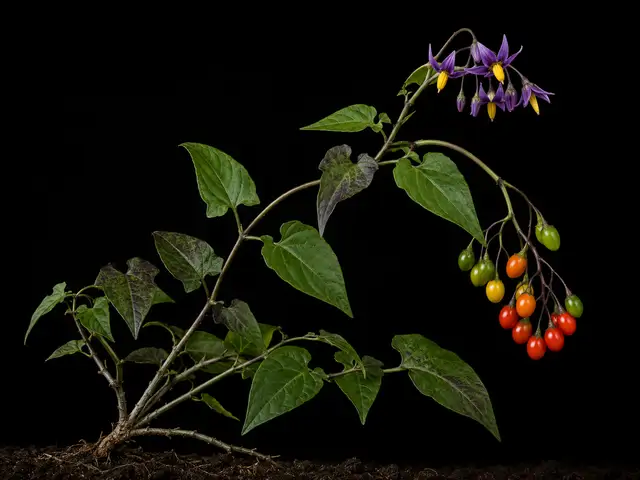
Bittersweet Nightshade
The red-berried vine that Americans actually find in their hedges and call deadly nightshade. It is toxic, it is invasive, it seeds itself everywhere by bird - and it is a different, far less dangerous plant than the one people fear.
TOXIC - never eat any part. Berries and foliage carry solanine-type glycoalkaloids, strongest in the GREEN unripe berries, and a cluster ripens unevenly so it always holds some. Most reported child poisonings cause vomiting and stomach pain rather than lasting harm, but every ingestion earns a poison-control call. Red berries stay on bare stems into winter, at toddler height. Toxic to dogs and to livestock in hay. It is NOT deadly nightshade, which carries ONE black berry in a green star.
Overview
Bittersweet nightshade (Solanum dulcamara) is the plant behind most of the “I found deadly nightshade” conversations in North America. It is a European vine, long since naturalized across the northern half of the continent, that scrambles through hedges, fences, shrubs and wetland edges and hangs drooping clusters of bright red, egg-shaped berries from midsummer into winter.
It is genuinely toxic - the berries and foliage carry solanine-type glycoalkaloids, concentrated in the green unripe fruit - and it is one of the commonest reasons American parents call a poison centre about a berry. It is also worth being straight about the scale of that risk: the modern poison-centre record is dominated by vomiting and stomach pain rather than serious harm, and it is not the killer its reputation suggests. Both halves of that sentence matter. Every ingestion still earns a call; nobody should be told this berry is harmless.
What it definitely is not is Atropa belladonna. Deadly nightshade is a stout bush carrying one glossy black berry at a time, seated in a flat green five-pointed star, under solitary nodding purple bells. Bittersweet climbs, its berries are red and clustered, and its flowers are flat purple stars with a yellow beak. Learning that pair is the single most useful berry distinction in the northern United States.
The catalog gates it as a plant not to grow. It spreads by bird-dropped seed and root fragments, it colonises damp ground and hedgerows, it puts poisonous fruit at exactly toddler height, and it shelters the pests and diseases of your tomatoes and potatoes. A variegated form is still sold as an ornamental; it should not be planted either.
Quick facts
For identification. Not a growing guide.
- Life cycle
- Perennial, lives about 8 years
- Where it grows
- Full sun · Part sun · Part shade · Shade, tolerates wet soil soil
- Height
- 8 ft3 to 15
- Spread
- 60 in24 to 120
- Cold
- Takes hard frostdamaged below -35°F
- Heat
- Struggles above 95°F
- Self-sows
- Yes. Never let it set seed.
Through the year
How to recognize it in each season.
Scrambling growth (look for the eared leaves)
Apr to Jun, every year- Leaves with two little ears at the base - the quickest IDLook along the whole plant, not at one leaf. Many bittersweet leaves carry one or two small, deeply cut lobes at the base, like a spearhead with a pair of ears; the rest are plain pointed ovals. No other red-berried plant you are likely to meet does this. Leaves are alternate, often purple-tinged, and the crushed foliage smells rank. Stems are woody and grey at the base, green and soft above.
- Pull it young, while the roots still come up wholeA first-year seedling pulls out of moist ground in one piece. An established crown does not - it snaps, and every fragment left behind resprouts. Deal with it the spring you first notice it, wearing gloves, and get the root rather than the top. Stems lying on damp ground also root at the joints, so trace runners back before you pull.
Key signs- Alternate leaves with one or two ear-like lobes at the base
- Stems rooting where they touch damp soil
- New seedlings under fences, hedges and bird perches
Purple star flowers with a yellow beak
May to Sep, every year- A tiny tomato flower - purple star, yellow coneFlowers come in loose drooping clusters from late spring right through summer: five sharply swept-back PURPLE petals, each with two small green spots at the base, around a protruding cone of bright YELLOW fused anthers. It is the shape of a tomato or potato flower, because it is a close relative. Deadly nightshade never does this - its flowers are solitary nodding purple-brown BELLS.
- Cut the flowering stems before they set fruitIf you cannot get the roots out this season, at least cut and bag the flowering stems. Every cluster left becomes a cluster of red berries at child height, and every berry a bird takes becomes a new plant somewhere else in the neighbourhood. Bag the cuttings for the trash - do not compost them and do not leave them in a heap, where they root.
Key signs- Drooping clusters of purple star flowers with a yellow centre cone
- Flowers appearing at the same time as ripe berries lower down the stem
Green to orange to bright red berries (all at once)
Jul to Oct, every year- One cluster, every colour - and the green ones are the worstBerries are egg-shaped, about a third of an inch, and ripen unevenly, so a single drooping cluster carries green, yellow, orange and glossy scarlet fruit together. The GREEN ones hold the most glycoalkaloid. That mix is exactly why a handful picked by a child is a poison-control call: there is no version of this plant where the berries are safe to graze.
- Strip the berries where children and dogs can reachBright red fruit at knee height, in a hedge or along a fence, is the classic setting for a childhood nightshade poisoning. Where you cannot remove the plant immediately, put on gloves and strip and bag every berry cluster. Tell the household and any dog walker what the plant is. Dogs are affected too, and berries fall where they browse.
Key signs- Mixed green, orange and red berries in one drooping cluster
- Fallen berries on paths, lawns and dog-walking routes
Bare stems, berries still hanging (the winter hazard)
Nov to Mar, every year- The berries outlast the leaves - and get more visibleLeaves drop in autumn but the scarlet berries hang on bare stems into winter, when there is nothing else coloured in the hedge. That is when small children notice them. Winter is also the easiest time to see how far a plant has travelled, so trace and mark the stems now, then dig the crown while the ground is soft and unfrozen.
- Dig the woody crown out in the dormant seasonThe plant regrows from its crown and from root fragments, so cutting the top achieves nothing lasting. Dig the whole woody base in gloves when soil is moist, follow the roots out, and bag everything for the trash. For an old crown grown into a fence line or shrub, a cut-stump herbicide treatment applied immediately after cutting is the usual practical answer.
Key signs- Red berries hanging on leafless stems in mid-winter
- Regrowth from a crown that was only cut, not dug
Watch out for
5 to know. 1 is high-risk: Berry & Foliage Poisoning. 5 are active in September.
Berry & Foliage PoisoningSeverity High DisordernowAny berry eaten by a child or a dog; onset usually within a few hours; burning mouth, vomiting, abdominal pain and diarrhoea.
Any berry eaten by a child or a dog; onset usually within a few hours; burning mouth, vomiting, abdominal pain and diarrhoea. Berries persist on bare stems into winter, so the risk window runs long after the leaves have gone.
Call poison control or your doctor for any ingestion, and do not wait for symptoms - the amount and the age of the person decide the response, and that is their call. Take a photograph of the plant. For an animal, call a vet and say which plant it was.
Remove the plant where children, pets or livestock reach it, stripping and bagging the berries before you disturb the vine. Do not plant it, including the variegated ornamental form. Tell the household what it is instead of relying on a rule nobody heard.
Berries and foliage contain solanine-type glycoalkaloids, most concentrated in the GREEN unripe berries - and because a cluster ripens unevenly, any handful contains some. The berries are bright, sweet-looking and sit at knee height in hedges, which makes children the usual patients. Reported poisonings are dominated by mouth and throat irritation, nausea, vomiting, stomach pain and diarrhoea, sometimes with drowsiness, weakness or dilated pupils; serious outcomes are rare and the plant does not deserve deadly nightshade's reputation, but it is a real toxin and nobody should be told the berries are harmless.
Bird-Spread Seed & Resprouting RootsSeverity Medium DisordernowSeedlings appearing along fence lines and under perches, stems rooted at the joints where they touch damp soil, and vigorous regrowth from a crown that was only cut back.
Seedlings appearing along fence lines and under perches, stems rooted at the joints where they touch damp soil, and vigorous regrowth from a crown that was only cut back.
Strip and bag the berries, dig the whole crown when soil is moist and follow the roots out; treat established woody crowns with a cut-stump herbicide application immediately after cutting, checking the rules first if the plant is near water. Re-check the ground each spring for two or three years.
Do not plant it, including the variegated form, whose seedlings revert to the plain wild plant. Cut and bag flowering stems before they fruit if you cannot remove the plant this season, and never compost the material or leave it in a heap, where it roots.
Bittersweet spreads three ways at once: birds eat the berries and drop viable seed along every fence, hedge and perch; stems root wherever they lie on damp ground; and the woody crown and root fragments resprout after cutting or incomplete digging. It colonises wetland margins, ditches, riverbanks and shaded boundaries, where it smothers low growth and is very hard to dig out of established shrubs.
Reservoir for Tomato & Potato ProblemsSeverity Medium DiseasenowColorado potato beetle adults or larvae feeding on a wild nightshade vine in the boundary, blight lesions on its leaves in a wet season, and repeated crop outbreaks in a garden where rotation should have broken the cycle.
Colorado potato beetle adults or larvae feeding on a wild nightshade vine in the boundary, blight lesions on its leaves in a wet season, and repeated crop outbreaks in a garden where rotation should have broken the cycle.
Remove the vine - crown and roots, not just the top - and dispose of the material in the trash rather than the compost. Treat the crop problem on its own terms, but expect it to return each year while the reservoir is still in the hedge.
Clear bittersweet from hedges, fence lines and field margins next to any bed growing tomatoes, potatoes, peppers or eggplant, and do it before planting rather than after the first outbreak. Check boundaries as part of the same walk you use to scout the crop.
As a wild member of the potato and tomato family, bittersweet acts as a year-to-year bridge for the problems of the vegetable garden. It is a documented host for Colorado potato beetle, potato virus Y, late blight and root-knot nematode, so a vine in the hedge beside a bed hands those back to the crop each season regardless of how well the beds themselves are rotated.
Livestock & Pet PoisoningSeverity Medium DisordernowBittersweet growing in ditches and hedge bottoms of fields that get mown for hay, vines within reach over a fence line, and fallen berries on dog-walking paths and yard edges.
Bittersweet growing in ditches and hedge bottoms of fields that get mown for hay, vines within reach over a fence line, and fallen berries on dog-walking paths and yard edges.
Call a veterinarian for any suspected ingestion and say which plant was involved. Remove the source rather than relying on animals to avoid it once it is in a bale.
Clear it from hay ground margins and paddock fence lines before mowing, and keep it out of yards and runs used by dogs. Animals generally avoid the fresh plant, so the real risk is dried material in cut forage.
Cattle, sheep, horses and goats are poisoned mainly when bittersweet is cut into hay from a damp field margin and eaten dried, where they cannot select against it. Dogs are affected by fallen berries along the routes they walk. Signs follow the same glycoalkaloid pattern as in people - salivation, colic, diarrhoea, weakness and, at higher doses, staggering and depression.
Confused with Deadly Nightshade & GojiSeverity Medium DisordernowRed egg-shaped berries in drooping clusters on a leaning, non-clinging vine, with purple star flowers and some leaves showing ear-like basal lobes.
Red egg-shaped berries in drooping clusters on a leaning, non-clinging vine, with purple star flowers and some leaves showing ear-like basal lobes. Deadly nightshade instead carries one glossy black berry in a flat green star under a solitary purple bell. Goji is a spiny self-supporting shrub with narrow plain-edged leaves and elongated berries borne singly.
If a berry has been eaten, call poison control whichever plant it was; all three warrant the call. Photograph the whole plant, including a leaf base and the flower, rather than the berry alone.
Learn the three plants as a set and settle it on structure - climbing versus standing, clustered versus solitary berries, star flowers versus bells, eared versus plain leaves - rather than on colour. Keep bittersweet cleared out of any fruiting shrub you actually pick from.
This plant sits at the centre of two opposite mistakes. It is routinely reported as deadly nightshade, producing alarm out of proportion to the actual hazard and teaching people that berry warnings are exaggerated. In the other direction it climbs into goji bushes and fruits inside them, and its flowers are near-identical to goji's, so a red berry picked off a goji shrub is not automatically a goji berry.
Good & bad neighbors
First rule: keep Deadly Nightshade apart. A naming problem rather than a planting one.
Keep apart
-
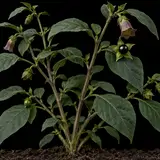
A naming problem rather than a planting one. This is the plant people mean when they report finding deadly nightshade. The distinction is easy: bittersweet climbs and carries RED berries in clusters under purple star flowers, while Atropa belladonna stands as a stout bush with ONE glossy BLACK berry at a time in a flat green five-pointed star, under a solitary nodding bell. Both warrant a poison-control call if a child eats a berry, so identification changes the outlook, not the response.
-
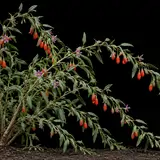
Not a growing conflict - an identification one. Both are nightshades with small purple star flowers and red berries, so judge on habit and leaf. Goji is a self-supporting arching shrub, usually spiny, with narrow plain-edged leaves and elongated berries borne singly. Bittersweet leans on other plants, has no spines, shows ear-like lobes at some leaf bases, and hangs round scarlet berries in clusters. Keep it out of a goji planting - it climbs inside the shrub and fruits there.
-
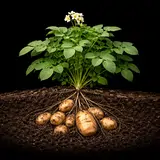
Same reason as tomato, and if anything stronger: bittersweet is a documented alternate host for potato virus Y and late blight and a food plant for Colorado potato beetle, so a patch of it on the boundary keeps handing the crop its own pests back. Remove it from field and garden edges before planting potatoes rather than after the first outbreak.
-
A genuine horticultural conflict. Bittersweet is a wild Solanaceae reservoir that harbours Colorado potato beetle, potato virus Y, late blight and root-knot nematode, and a vine in the fence line beside a tomato bed is a standing source of infection and infestation. Clearing it from hedges and boundaries next to the vegetable garden is worth doing for the crop alone, quite apart from the berries.
Grower tips
Notes from growers, tagged with the zone they grow in. A person reads every post before it appears.
Nobody has posted about Bittersweet Nightshade yet.
Free account. Your post shows your grower name and zone, never your email.