Add it to your home screen and it opens full screen: no browser bars, one tap away, and everything stays signed in. Free, nothing to download from an app store.
- Tap the Share button in your browser
- Scroll down and choose “Add to Home Screen”
- Open GrowSomeFood from your home screen
- Open your browser’s menu
- Choose “Add to Home screen” or “Install app”
- Open GrowSomeFood from your home screen
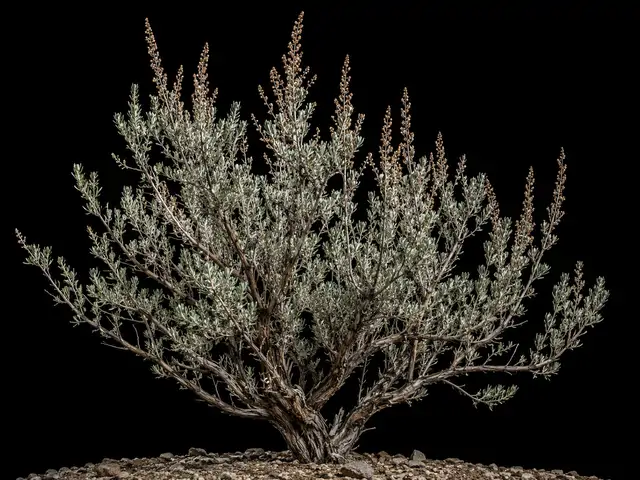
Big Sagebrush
The shrub that defines the American West: silver, evergreen, unmistakably fragrant after rain, and the keystone of the sagebrush sea. Greater sage-grouse cannot live without it, and roughly half of it is already gone.
This is not the sage you cook with. Big sagebrush is an Artemisia, not a culinary Salvia - bitter, camphorous, and never a kitchen herb; strong home teas of it can cause nausea, so keep it out of the pot. Handling the foliage is safe and it is not a poisonous plant. The real caution is pollen: its wind-borne late-summer flowers are one of the largest fall hay-fever allergens across the Intermountain West, so site it away from bedroom windows and patios if anyone in the house reacts.
Overview
Big sagebrush (Artemisia tridentata) is the plant most people picture when they picture the West - the silver-grey, evergreen shrub that runs to the horizon across the Great Basin and the Intermountain sagebrush steppe, and whose camphor-and-sage smell after a summer storm is the signature scent of the region. Its small wedge-shaped leaves end in the three teeth that give it its species name, and it holds them all winter, so it is silver when everything around it is bare.
What makes it worth planting is what it supports. Big sagebrush is the keystone of an entire ecosystem: greater sage-grouse depend on it absolutely, eating sagebrush leaves as nearly their whole winter diet and nesting under its canopy, and pronghorn, mule deer, and pygmy rabbits browse it through the cold months when nothing else is green. Sagebrush sparrows, Brewer's sparrows, and sage thrashers nest in nothing else. That whole community is in trouble - roughly half the historic sagebrush steppe is gone, and invasive cheatgrass and the fire cycle it drives are taking more of it every year.
In a garden it is a tough, characterful, evergreen backbone for a dry Western planting: silver all year, deer-resistant, needing no water and no feeding once established. It asks for exactly two things - full sun and dry summer ground - and it will not forgive an irrigation line. It is also, emphatically, not the sage you cook with.
Quick facts
- Sprouts in
- 21 days7 to 60
- Soil to sprout
- 55 °F40 to 70
- Life cycle
- Perennial, lives about 60 years
- Seed to save
- About 90 days after planting60 to 120
- Height
- 48 in24 to 120
- Spread
- 48 in24 to 96
- Cold
- Takes hard frostdamaged below -30°F
- Heat
- Struggles above 105°F
- Self-sows
- Yes, expect volunteers
Full sun · low water · well-drained soil · 5 ft apart (3 to 8) · direct sow or transplant
When to plant
Fall transplanting is open for 48 more days. Next: fall, Oct 25 to Dec 24.
- Transplant Aug 30 – Nov 8 Open now · 48 days leftAbout 8 weeks before to 2 weeks after your first frost (Oct 25 here)The best time by a wide margin. Set small container plants out in early to mid fall so winter and spring moisture root them in before their first hot summer. Water them in, then only occasionally through the following year.
- Direct sow Oct 25 – Dec 24 Opens in 34 daysAbout at to 9 weeks after your first frost (Oct 25 here)Scatter fresh seed on bare, firmed soil in late fall and do not cover it - sagebrush seed needs light to germinate and winter cold to break dormancy. Use seed from the current season; it does not keep well.
- Transplant Mar 27 – May 10 Opens in 187 daysAbout 2 weeks before to 4 weeks after your last frost (Apr 10 here)Workable where fall planting is not an option, but riskier: a spring-planted shrub meets its first summer with almost no root system. Plant as early as the ground allows, keep it small, and water it through that first season.
Frost here: last around Apr 10 (Mar 27 to Apr 24 most years), first around Oct 25. Zone averages, your own yard may run a week or two either way.
Life stages
One stage to settle in, then three that repeat each year. Windows are typical; your zone and weather move them.
Year 1 - roots down before the first summer
The first year after planting- WaterWater through the first year, then stop for goodevery 2 weeksA new plant needs occasional deep soakings through its first year while the root system spreads. After that, wean it off entirely. Big sagebrush is built for wet winters and bone-dry summers, and steady summer water is what kills garden plants - not drought.
- ProtectNever plant it inside an irrigated zoneThis is the single most important siting decision. Sagebrush set into a lawn, a drip-irrigated bed, or anywhere sprinklers reach will decline and rot out within a few years. Give it its own dry ground, full sun, and unamended native soil - no compost, no water-holding amendments, no moisture-retentive mulch piled at the base.
- ProtectPlant small, in fall - and never dig a wild oneSmall container plants set out in fall establish far better than large ones or spring plantings, because winter and spring moisture root them in before their first hot summer. Wild-dug shrubs almost never survive; the root system is wide, deep, and brittle, and most of it stays in the ground. Buy nursery-grown stock, ideally of a subspecies suited to your elevation.
Watch for- Slow first-year growth (normal - it is building roots)
- Decline in irrigated or amended ground
- A transplant that never flushes new growth (usually planted too large, or in spring)
Silver evergreen growth
Mar, Apr, May, Jun, Sep, Oct, every year- InspectTwo kinds of leaf, and the smell of the WestThe wedge-shaped, silver-grey leaves are tipped with three small teeth - the tridentata of the name. The plant carries larger ephemeral leaves through spring and sheds them as the soil dries, keeping smaller persistent ones through summer and winter, so it thins in drought without being deciduous. Brush the foliage after rain for the camphor-and-sage scent that most Westerners recognise instantly.
- PruneTip-prune only - it does not resprout from old woodBig sagebrush will not reliably regrow from bare old wood, so hard pruning or shearing leaves permanent holes. Remove dead branches, shorten a wayward tip into leafy growth if you must, and otherwise let it build its own open, irregular shape. If it has outgrown the spot, replace it rather than cutting it back hard.
Watch for- Larger spring leaves dropping as summer dries (normal, not stress)
- Silver-grey new growth extending at the branch tips
- Bare old wood where a plant was sheared (it will not fill back in)
Late-summer bloom & the pollen season
Aug to Oct, every year- InspectSmall yellowish flower spikes - and a real allergenFrom August the branch tips extend into narrow spikes of tiny yellowish flowers. They are wind-pollinated, not showy, and they shed a great deal of pollen - big sagebrush is a leading cause of fall hay fever across the Intermountain West. Enjoy the seed-head texture, and if someone in the house reacts, keep the shrub away from windows, doors, and where you sit outside.
- DoLet the seed ripen and dropTiny seeds ripen through late fall and are shed onto the soil surface, where they need light to germinate. If you want more plants, collect ripe seed heads in late fall and scatter the seed on bare ground nearby rather than burying it - and use it soon, because sagebrush seed loses viability quickly in storage.
Watch for- Narrow yellowish flower spikes from August
- Fall hay-fever symptoms in the household
- Seed shedding onto bare soil in late fall
Winter - the evergreen backbone
Nov to Feb, every year- ProtectNo winter water, no winter fussBig sagebrush holds its small silver leaves all winter and takes hard cold, wind, and snow load without help - this is the plant that carries mule deer and sage-grouse through a Great Basin winter. Give it nothing: no water beyond what falls, no fertilizer ever, and no wrapping. The only winter risk is soil that stays wet.
- InspectWatch who shows upWinter is when the shrub earns its keep. Sagebrush leaves are the overwhelming majority of a greater sage-grouse's winter diet, and mule deer and pronghorn browse it when nothing else is green. Even a garden plant gives cover to sagebrush sparrows, juncos, and rabbits - so leave it standing and unpruned.
Watch for- Silver foliage held through winter (evergreen - not dead)
- Browsing on the lower branches
- Wet, slow-draining soil around the base
Watch out for
4 to know. 2 are high-risk: Root Rot, Cheatgrass & the Fire Cycle. 3 are active in September.
Root RotSeverity High DiseasenowThe number one way a garden sagebrush dies, and it is nearly always summer irrigation rather than rain.
The plant is built for wet winters and bone-dry summers. Never plant it inside a lawn or drip zone or where sprinklers reach, do not amend the soil to hold moisture, keep mulch off the base, and stop watering entirely after the first year. Decline is slow - two or three years - so people rarely connect it to the water.
Wilting in the middle of the day on a plant whose soil is damp - the classic tell, and the reason people water a rotting plant and finish it off. Leaves yellowing from the bottom up, dull off-color foliage, and growth that stalls for no visible reason. Whole shoots, or one side of the plant, collapsing while the rest still looks fine. Soft, dark, or mushy tissue at the base of the stem or at the crown, sometimes with a sour smell. Lift a failing plant and look at the roots: healthy ones are firm and pale, rotted ones are brown or black and slimy, and the outer layer slips off between your fingers leaving a thread of core behind. Seedlings that topple over at soil level are the same problem, called damping-off.
There is no cure for tissue that has already rotted, so act on the conditions rather than looking for a spray. Stop watering at once and fix the drainage - open up compacted soil, or move the plant to a raised, sharply drained position or a container. Lift a badly affected plant, cut away every soft dark root and rotted section with a clean blade back to firm pale tissue, and replant only the healthy parts into fresh free-draining soil or mix. Often the better move is to give up on the plant and save its offspring instead: cuttings, offsets, or divisions taken from firm healthy growth root readily and give you a clean start. Bin the rotted material rather than composting it, and correct the drainage before you replant, because the rot comes straight back in the same wet spot.
Drainage is the whole defense. Match the plant to the site first - something that wants sharp drainage will not survive heavy clay or a low, water-collecting spot however well you tend it. Where the ground is heavy, plant on a raised bed, berm, or slope, or grow in a container. Set plants at the depth they were already growing, since burying the crown or the root flare is a common cause of rot, and keep mulch pulled back a few inches from the stem base instead of piled against it. Water the soil rather than the calendar: check that the top inch or two is dry before watering again, cut back hard in cool weather and winter dormancy, and never leave a pot standing in a full saucer. Do not plant or dig in soggy ground, and go easy on rich amendments for plants that want it lean. Rotate annual crops, and start with clean healthy plants and fresh mix.
Root rot is not one organism but a group of soil fungi and water molds - Pythium, Phytophthora, Fusarium, Rhizoctonia and others - that sit harmlessly in most soils and only turn destructive when the ground stays saturated. Waterlogged soil drives the air out, the roots suffocate, and the weakened tissue is invaded and goes soft, brown, and stringy. Because the damage is underground you usually see it first as something that looks like drought: wilting, yellowing, stunting, a plant that does not respond to being watered. Overwatering, heavy compacted ground, a low spot that collects runoff, a pot with no drainage or a saucer left standing full, and cold wet soil in winter are the usual causes. Once roots have actually rotted there is no cure - this is a problem you prevent rather than treat.
Cheatgrass & the Fire CycleSeverity High DisordernowRelevant to anyone gardening on the wildland edge in the Great Basin or Intermountain West, and the reason mature sagebrush already growing on your property is worth protecting rather than clearing: it cannot be replaced on a garden timescale.
Cheatgrass filling the gaps between shrubs - a fine, drooping, purplish annual grass that cures to straw by early summer. A continuous carpet of dry annual grass under and between plants by June where there used to be bare soil or bunchgrass. Burned sagebrush ground that greens up as grass and never comes back as shrubs.
There is no treating a burned sagebrush; it is dead, and the site has to be re-seeded. Sow sagebrush seed on the soil surface in late fall - it needs light to germinate and does not keep well in storage - using locally collected seed or the subspecies that belongs on that site, and control annual grass first and repeatedly, because seedlings cannot outrun it. Recovery of a burned stand to real shrub cover typically takes fifteen to thirty years and often much longer on the driest Wyoming big sagebrush sites, so prevention is the only fast option.
On the wildland edge, keep a defensible space of gravel, irrigated planting, or mown ground around structures, and treat cheatgrass in the gaps between shrubs while it is still green in early spring, before it sets seed. Do not disturb intact sagebrush ground - bare, broken soil is exactly what cheatgrass colonises - and re-seed any ground you do disturb with native bunchgrass promptly. Plant nursery-grown sagebrush rather than digging wild plants. Any herbicide you use must be one whose label lists the site you are treating, applied exactly as that label directs.
Big sagebrush does not resprout after fire. Unlike the grasses and many shrubs around it, a burned plant is simply killed, and the stand has to start over from seed - a recovery measured in decades. That was survivable when fire came through every few decades, but invasive annual cheatgrass has changed the arithmetic. Cheatgrass cures to a fine, continuous fuel by early summer, carries fire readily between shrubs that used to be separated by bare ground, and returns from seed the following spring, so burned ground can reburn every few years. Sagebrush cannot re-establish on that schedule. Millions of acres of sagebrush steppe have converted to cheatgrass-dominated annual grassland, taking sage-grouse, pronghorn, and pygmy rabbit habitat with them, and it is now the central conservation problem of the Intermountain West.
Fall Pollen AllergySeverity Medium DisordernowWorth knowing before someone plants one under a window.
In much of the Great Basin this is not merely a fall allergen shrub, it is the fall allergen shrub.
Hay-fever symptoms that begin in late summer and run until the first hard frost rather than peaking in spring. Narrow yellowish flower spikes extending from the branch tips from August onward.
Manage the symptoms rather than the shrub - the landscape-scale pollen load dwarfs anything one garden contributes. If a household member reacts badly, testing is worth discussing with a clinician, and a non-Artemisia silver shrub is a reasonable substitute in that particular spot.
Site the shrub well away from bedroom windows, doors, and where you sit outside, and downwind of the house if your site has a prevailing direction. There is no way to stop a wind-pollinated shrub flowering, and shearing it to prevent bloom ruins the plant permanently, since it does not resprout from bare wood.
A human health note rather than a plant problem. Big sagebrush is wind-pollinated, and its inconspicuous late-summer flowers release very large quantities of pollen from August into October. It is among the leading causes of fall hay fever across the Intermountain West and Great Basin. Because sagebrush covers whole landscapes there, one garden shrub is a rounding error against the regional pollen load - but a shrub directly outside a bedroom window is not. People sensitised to Artemisia pollen sometimes also react to related foods, the same cross-reactivity pattern seen with mugwort, which involves celery, carrot, and a handful of other plants in that group.
Transplant FailureSeverity Medium DisorderThe two rules that account for most successes and failures: small plant, fall planting.
Everything else is secondary.
A newly planted shrub that never flushes new growth, greys off, and snaps brittle by the end of its first summer. Wild-dug plants that leaf out weakly in spring and then die in July.
None once a transplant is clearly failing - replace it in fall with a smaller plant, sited drier. Where seed is an option, surface-sown seed in late fall often establishes better than a transplant does, because the seedling builds its own root system in place.
Plant small container stock in fall so winter and spring moisture establish it before its first hot summer. Do not dig wild plants. Set it where it will never receive lawn or drip irrigation once established, and water only through the first year, deeply and occasionally.
Big sagebrush establishes poorly from anything except small, young, container-grown stock planted at the right time of year. Wild-dug shrubs almost never survive: the root system is wide, deep, and brittle, and what comes up on a shovel is a fraction of it. Large containers sulk. Spring planting sends a new plant into its first summer with barely any root system, which is the usual way a garden sagebrush dies in its first year. Restoration crews meet the same problem at scale, and low seedling and transplant survival is a large part of why burned sagebrush ground stays bare for so long.
Good & bad neighbors
First rule: keep Lawn and irrigated beds apart. Not a plant but a placement: never site big sagebrush inside a lawn zone, a drip-irrigated bed, or sprinkler overspray.
Plant nearby
-
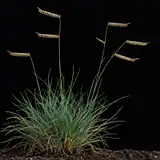
The real association: sagebrush shrubs standing above a matrix of native bunchgrass is what healthy sagebrush steppe looks like, and blue grama takes exactly the same full sun, lean soil, and dry summers. Grass between the shrubs also occupies the bare ground that invasive annual grass otherwise colonises.
-
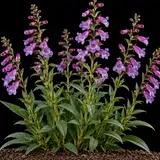
Western penstemons grow naturally through sagebrush country and give the planting its bloom and its hummingbirds while the shrub gives structure and winter cover. Identical needs - full sun, sharp drainage, no summer irrigation.
-
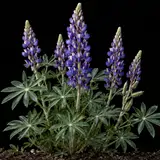
Western lupines are classic sagebrush-steppe companions, adding nitrogen and early bloom under and between the shrubs. Grow them dry alongside the sagebrush - both resent summer watering.
-
Rubber RabbitbrushThe other signature shrub of the steppe, and its natural partner: rabbitbrush flowers gold in late summer just as sagebrush is at its most silver and grey, on identical dry, sunny, unamended ground. Sold by most Western native-plant nurseries.
-
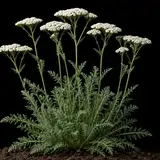
Native yarrow is a common associate in sagebrush steppe and one of the few pollinator perennials that genuinely thrives on the same lean, unwatered ground rather than merely surviving it.
Keep apart
-
Lawn and irrigated bedsNot a plant but a placement: never site big sagebrush inside a lawn zone, a drip-irrigated bed, or sprinkler overspray. Summer irrigation is the single most common cause of death in garden sagebrush, and the decline is slow enough that people rarely connect it to the water.
Varieties · 5
You pick one when you add Big Sagebrush to your garden. Its days to maturity set your harvest window.
Big Sagebrush (Artemisia tridentata)
Open silver-grey shrub of small three-toothed leaves on many upright branches, with narrow tan flower spikes in late summer.
speciesnativeevergreensilverThe species as a whole: an open, irregular, silver-grey evergreen shrub of the Intermountain West with three-toothed wedge leaves, narrow yellowish wind-pollinated flower spikes in late summer, and the camphor-and-sage scent of the region after rain. The keystone of the sagebrush steppe and the foundation of greater sage-grouse habitat. Three subspecies divide the range by soil and elevation; match one to your site rather than buying whatever is nearest.
Wyoming Big Sagebrush (subsp. wyomingensis)
Low, dense, grey shrub 1-3 feet tall with small crowded leaves, on shallow dry soils.
subspeciesdriest-siteslow-elevationshortestThe most widespread subspecies and the one on the driest, shallowest ground - lower, denser, and slower-growing than the others, typically 1 to 3 feet. It is the right choice for low-elevation gardens in the 8-to-12-inch rainfall belt, and it is also the hardest to re-establish after fire, which is why so much of the country it occupies has converted to annual grassland. If you already have mature Wyoming big sagebrush on your property, it is worth protecting rather than clearing.
Mountain Big Sagebrush (subsp. vaseyana)
Rounded, leafy grey-green shrub 2-4 feet tall, denser and greener than the low-desert subspecies.
subspecieshigh-elevationcoldestbest-for-gardensThe high-country subspecies, found above roughly 6,000 feet on deeper mountain soils with more moisture and snow. It is the hardiest and generally the most garden-adaptable of the three, forms a rounder, leafier shrub around 2 to 4 feet, and carries the greatest wildlife value in most studies. It is the first choice for mountain and foothill gardens and for anyone planting sagebrush in a colder, snowier place.
Basin Big Sagebrush (subsp. tridentata)
Tall, upright, open shrub 6-12 feet high with a woody trunk and long silver branch tips.
subspeciestallestdeep-soilvalley-bottomsThe giant of the three: on deep valley-bottom soils with good moisture it reaches 6 to 12 feet and occasionally more, with a distinct trunk and an almost tree-like presence. It is the subspecies the old accounts meant when they described riding through sagebrush taller than a horse. Plant it only where you have deep soil and real room - it is far too large for a small yard, and it will not tolerate irrigation any more than the others do.
Locally sourced seed and plants
Varies with subspecies and origin - height, leaf size, and density all shift across the range.
ecotypelocal-provenancerestorationNot a cultivar but the most useful buying advice: big sagebrush varies enormously across its range, and plants raised from seed collected near your elevation and rainfall establish far better than stock shipped from a different region. Ask a native-plant nursery or a state conservation district what subspecies and seed source they carry. For restoration work, local provenance is standard practice rather than a refinement.
Grower tips
Notes from growers, tagged with the zone they grow in. A person reads every post before it appears.
Nobody has posted about Big Sagebrush yet. The first one usually saves someone a season.
Free account. Your post shows your grower name and zone, never your email.