Add it to your home screen and it opens full screen: no browser bars, one tap away, and everything stays signed in. Free, nothing to download from an app store.
- Tap the Share button in your browser
- Scroll down and choose “Add to Home Screen”
- Open GrowSomeFood from your home screen
- Open your browser’s menu
- Choose “Add to Home screen” or “Install app”
- Open GrowSomeFood from your home screen
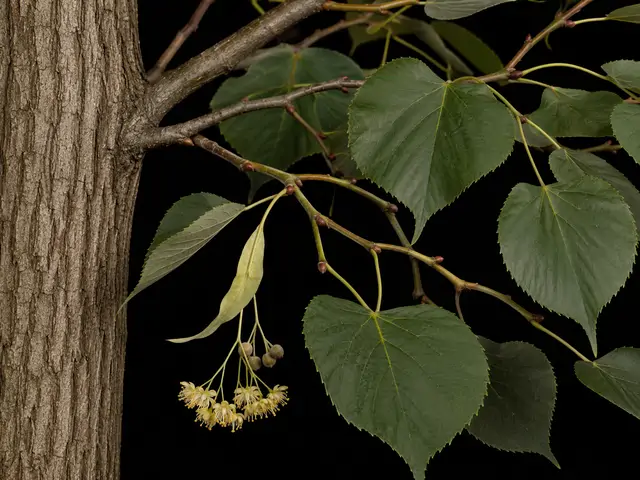
American Basswood
The bee tree: for two weeks each summer a basswood in bloom hums audibly and out-produces every other nectar source in the eastern woods. It also hosts well over a hundred caterpillar species, and its young leaves are the best wild salad green in North America.
Basswood is non-toxic and safe to handle. Its young spring leaves are among the best wild salad greens in North America - mild, tender, slightly mucilaginous - and the summer flowers make linden tea, a traditional calming brew. Two mild cautions: the tea is genuinely relaxing and can make you drowsy, so go easy before driving, and anyone with a heart condition or on heart medication should ask a doctor first. Pick only from unsprayed trees, and skip flowers coated in sticky aphid honeydew.
Overview
The one thing to knowAmerican basswood (Tilia americana) is the great nectar tree of the eastern woods.
American basswood (Tilia americana) is the great nectar tree of the eastern woods. For roughly two weeks in late June or early July it hangs thick with small, pale-yellow, intensely fragrant flowers, and a mature tree in bloom is audible from yards away - beekeepers call it the bee tree, and basswood honey is a named variety with its own pale color and sharp, minty bite. There is very little else a gardener can plant that delivers that much forage at once.
It is a host tree too, feeding well over a hundred species of native caterpillars and, through them, the songbirds that raise their young on caterpillars. And it is unusually generous to people: the young spring leaves are among the best wild salad greens on the continent - mild, tender, and slightly mucilaginous, with none of the bitterness of most tree leaves - and the flowers dry into linden tea, the tilleul drunk across Europe as a calming evening brew.
Beyond that it is simply a fine shade tree: a straight-trunked 60-90 foot native with huge lopsided heart-shaped leaves, clear yellow fall color, and a lifespan around 150 years. The soft, even-grained wood is the classic carver's timber, and the fibrous inner bark - the bast that gives the tree its name - was made into rope for thousands of years. Its two real demands: moist, fertile soil, and a cage against deer, which eat basswood before almost anything else.
Quick facts
- Sprouts in
- 365 days120 to 730
- Soil to sprout
- 60 °F50 to 70
- Life cycle
- Perennial, lives about 150 years
- Seed to save
- About 150 days after planting120 to 180
- Height
- 70 ft50 to 90
- Spread
- 45 ft30 to 60
- Cold
- Takes hard frostdamaged below -40°F
- Heat
- Struggles above 95°F
- Self-sows
- Yes, expect volunteers
Full sun or part sun or part shade · medium water · consistently moist soil · 40 ft apart (25 to 60) · direct sow or transplant
When to plant
Fall sowing is open for 48 more days. Next: spring, Mar 20 to May 22.
- Direct sow Sep 13 – Nov 8 Open now · 48 days leftAbout 6 weeks before to 2 weeks after your first frost (Oct 25 here)Basswood seed has a double dormancy - a hard coat plus a dormant embryo - and outdoor-sown seed usually sits for two winters before germinating. Sow it in a protected nursery bed in fall, screen it against rodents, and be patient; nursery stock is far quicker to a usable tree.
- Transplant Aug 16 – Sep 27 Closes in 6 daysAbout 10 weeks before to 4 weeks before your first frost (Oct 25 here)Fall planting works in milder zones if the roots get six weeks or so before the ground freezes. Water it in thoroughly and mulch a wide ring.
- Transplant Mar 20 – May 22 Opens in 180 daysAbout 3 weeks before to 6 weeks after your last frost (Apr 10 here)Plant container or balled-and-burlapped stock in early spring into deep, moist, fertile soil with plenty of room. Cage it against deer the same day it goes in.
Frost here: last around Apr 10 (Mar 27 to Apr 24 most years), first around Oct 25. Zone averages, your own yard may run a week or two either way.
Life stages
One stage to settle in, then three that repeat each year. Windows are typical; your zone and weather move them.
Years 1-3 - young tree
The first year after planting- WaterWater deeply while establishingweeklyBasswood is a rich, moist woodland tree, not a drought plant. Soak a young one weekly through its first three summers and again in any long dry spell after that. It will grow in most soils but rewards deep, moist, fertile ground more obviously than almost any other native shade tree.
- ProtectCage it - deer eat basswood before anything elseBasswood is one of the most preferred deer browse species in eastern North America; in overbrowsed woods it simply fails to regenerate. A sturdy wire cage on a young tree is not optional where there are deer, and it must stay on until the lowest branches are above browse height and the trunk is too thick to rub.
- MulchMulch wide, keep it off the trunkA broad mulch ring keeps the roots cool and moist, holds down competing turf, and keeps mowers and string trimmers away from the thin young bark. Leave a few bare inches at the trunk itself.
- PruneDecide early: one trunk or a clumpBasswood sprouts freely from the base. If you want a single-trunk shade tree, rub or cut the basal sprouts off each year while they are small. If you would rather have the natural multi-stemmed clump the species makes in the woods, leave three or four of the strongest and remove the rest.
Watch for- Deer browsing and autumn antler rubbing - the main cause of failure
- Basal sprouts crowding the trunk
- Leaf edges browning in dry weather - water deeply
Leaf-out & spring greens
Apr to Jun, every year- HarvestPick young leaves for salad while they are smallweeklyNewly opened basswood leaves are one of the best wild salad greens on the continent - mild, sweet, tender, and faintly mucilaginous, with no bitterness at all. Pick them in the first few weeks after leaf-out while they are pale and soft and no bigger than your palm. Older leaves turn tough and papery. Take them from unsprayed low branches or sprouts, never from a street tree.
- InspectExpect chewed leaves - it is a host treeBasswood feeds well over a hundred species of native caterpillars, so some ragged foliage is normal and is what feeds nesting birds. The looping green caterpillars you may find in spring are linden loopers. Never spray a host tree, and skip preventive systemic insecticides entirely - a tree this attractive to bees is the last one to treat.
- WaterWater through dry spellsweeklyBasswood's big soft leaves lose water fast and brown at the edges in drought. Soak the root zone deeply once a week through any long dry period, out over the whole spread of the canopy rather than at the trunk.
Watch for- Huge lopsided heart-shaped leaves - the easiest basswood ID
- Linden looper caterpillars and other host-tree chewing (welcome it)
- Aphids building up and honeydew starting to drip
Bloom & linden-flower harvest
Jun to Jul, every year- HarvestGather flowers for tea at peak bloomevery 3 daysThe bloom lasts only about two weeks. Pick on a dry morning once the pale-yellow flowers are fully open but before they brown, taking the whole cluster with its strap-shaped bract, which is traditionally dried along with the flowers. Take a modest amount from low branches and leave the rest - this is the best nectar tree in the woods and the bees are there first.
- InspectStand under it and listenA basswood in full bloom hums audibly from yards away. It is one of the heaviest nectar producers in North America, which is why beekeepers call it the bee tree and why basswood honey is its own named variety. Two weeks a year, this tree does more for pollinators than anything else you could plant.
- DoDo not pick honeydew-coated flowersIf aphids are working the tree, the flowers and leaves will be sticky and may be blackened with sooty mold. Sticky flowers are not worth drying - the honeydew stays gummy and the mold tastes foul. Pick from a cleaner branch, or wait for a year when the aphids are lighter.
Watch for- Roaring bee activity in the canopy at peak bloom
- A very short window - roughly two weeks, then it is over
- Japanese beetles arriving as the bloom ends
- Sticky honeydew making flowers unusable
Seed, fall color & winter
Sep to Mar, every year- PrunePrune in late winter, lightlyPrune while the tree is dormant in late winter. Take out dead, damaged, and crossing wood, clean up basal sprouts, and leave the rest - basswood needs very little shaping. Avoid heavy cuts, which only provoke more sprouting.
- InspectWatch the winged seed clusters flyBasswood seeds hang in small hard clusters below a papery strap-shaped bract that acts as a wing, spinning them well away from the tree through fall and winter. It is the tree's most distinctive feature and the surest way to identify a basswood at any season, since old bracts litter the ground beneath it.
Watch for- Nutlets on strap-shaped bracts spinning down through winter
- Clear yellow fall color, often dropping early in a dry year
- New sprouts ringing the base - remove or keep them by choice
Harvest
- Young leaves pale, soft, and no larger than your palm - the salad window, a few weeks after leaf-out
- Flowers fully open and fragrant, in late June or early July, with the tree audibly humming
- Flowers picked before they begin to brown, on a dry morning after the dew has gone
- Skip any flowers or leaves that feel sticky with aphid honeydew
- Gather flowers for tea at peak bloom · every 3 days
- Stand under it and listen
- Do not pick honeydew-coated flowers
Picking pick as they ripen
Watch out for
5 to know. 2 are high-risk: Deer (browse resistance), Japanese Beetles. 2 are active in September.
Deer (browse resistance)Severity High WildlifenowBasswood is among the most preferred deer browse in eastern North America - so preferred that in overbrowsed woodlands it stops regenerating altogether and the canopy trees are never replaced.
Treat a cage as part of planting the tree, not as an option, and leave it on until the lowest branches are above reach and the trunk is too thick to rub.
Growth cleanly missing overnight, with the plant browsed back to a level line about as high as a deer can comfortably reach. Ragged, torn stem ends rather than the clean angled cut a rabbit leaves - the single most reliable identifier. Buds and flowers gone while the foliage below is untouched, since deer often take the best part first. Hoof prints and droppings in soft ground near the damage. Repeat visits, with fresh damage each morning once a planting has been found. On young trees, shredded and stripped bark and broken low branches in autumn - that is antler rubbing rather than feeding.
There is no chemical fix, only exclusion and recovery. Get physical protection up immediately after the first damage, because deer return to a known meal, and reinforce or rotate whatever you were relying on before. Most plants regrow from browsing if the crown and roots are intact - feed and water a grazed plant and protect the regrowth while it comes back. What does not recover in the same season is anything whose buds or flowers have been taken, and a young tree whose bark has been rubbed right around the trunk is usually lost. Where deer pressure is genuinely heavy, the honest answer is to fence properly or to grow the plants deer leave alone, rather than to keep replacing losses.
Fencing is the only thing that reliably works. Eight feet is the standard for excluding deer, or two parallel four-foot fences a few feet apart, which they will not jump because they cannot judge the landing. Short of that, cage individual plants: a sturdy wire cage or trunk guard around every young tree, left on until the trunk is thick and the canopy is above browse height, prevents both browsing and antler rubbing and is the single highest-value thing you can do for a young tree. Repellent sprays do help at moderate pressure, but they wash off and deer habituate, so reapply after rain and rotate between different types through the season. Motion-activated sprinklers, scent deterrents, and noise devices work for a while and then stop. Siting matters too: plants close to the house, in daily traffic, and screened behind other planting get browsed less than the same plant out at the boundary.
Deer are the largest garden problem across much of the country, and where pressure is high they set the limit on what you can grow at all. They browse at night and around dawn and dusk, taking tender shoots, leaves, buds, flowers, and fruit within about five feet of the ground, and they come back night after night to anything they have found and liked. Because they have no upper incisors they tear rather than cut, leaving ragged stem ends - that is how you tell deer damage from a rabbit's clean angled cut. In fall, bucks rub their antlers on young trunks and can strip the bark right around a stem, which kills a young tree outright. Palatability varies enormously between plants and between seasons: a herd short of food in late winter eats things it ignores in June, and no plant is truly deer-proof.
Japanese BeetlesSeverity High PestLinden is one of the beetles' most preferred trees and the top of the crown is routinely laced by mid-July.
Ride it out on a mature tree - the damage is cosmetic and the leaves are already made. Do NOT use a soil-applied systemic here: basswood is one of the heaviest bee-forage trees there is, and a systemic ends up in the nectar. Hand-pick what you can reach on a young tree.
Clusters of shiny metallic beetles massed together on the upper, sunniest foliage and down inside open blooms, heaviest on warm sunny afternoons from around late June. Leaves reduced to lace, with the veins left intact and the tissue between them gone - unmistakable, and quite different from the ragged chewing of a caterpillar. Ragged, chewed petals and blooms that never open properly. Beetles that let go and drop straight to the ground when you disturb the plant. Feeding damage on ripening fruit, on the plants they also take fruit from. Whole branches going brown and lacy at the top of a plant while the shaded lower growth stays untouched.
Persistent morning hand-picking into soapy water is the most effective home control there is, and on a vigorous established plant the damage is usually cosmetic and needs nothing else. Neem deters feeding rather than killing, and has to be reapplied. For heavy pressure, spinosad or a targeted insecticide labeled for the plant will work - but time any spray away from bloom and apply it at dusk to protect bees, and observe the pre-harvest interval on anything you eat. On flowering plants, some gardeners simply shear the blooms off for a couple of weeks and let the plant rebloom once the wave has passed, which removes the lure as well as the damage. Young plants and young trees are the ones worth defending: a mature tree or an established vine tolerates several weeks of leaf loss without lasting harm.
Hand-picking is genuinely the main defense in a home garden. Go out in the cool of the morning while the beetles are sluggish, hold a tub of soapy water underneath, and knock them in - they drop when disturbed, so most fall straight into it. Do it daily through the flight: because the beetles call each other in, taking them off early stops a plant becoming a beacon. Do not put pheromone or lure traps anywhere near the garden - they demonstrably pull in far more beetles than they catch. And do not count on lawn grub control: milky spore has performed poorly and inconsistently in field trials across most of the US, and treating your own turf does not reduce the adults feeding on your plants, because they fly in from surrounding properties. Where it is practical, row cover or netting through the peak flight excludes them outright. Otherwise riding out the six-to-eight-week wave is a legitimate strategy, since most established plants absorb the damage.
Japanese beetles are metallic green-and-copper beetles about half an inch long that emerge in early summer and feed for six to eight weeks. They feed in aggregating masses - one beetle's feeding releases a scent that draws in more - so a plant goes from untouched to covered in a couple of days. They chew the soft tissue between the leaf veins and leave the veins standing, so the leaf ends up as a brown lace skeleton, and they shred open flowers and sometimes ripening fruit as well. They work the sunniest upper parts of a plant on warm afternoons. The white C-shaped grubs spend the rest of the year in turf and pasture soil eating grass roots, and the adults then fly in from wherever they hatched, which can be some distance away.
Leaf Scorch (sun & drought)Severity Medium DisordernowBasswood's huge soft leaves scorch readily, and browned margins with early August leaf drop are the standard sign of a tree on too dry or too exposed a site.
Widen the mulch ring, take the turf out from under the canopy, and soak the root zone deeply through dry spells. A basswood that scorches every year is telling you the site is wrong.
Browning that starts at the leaf edges and tips and spreads inward, with a fairly sharp line between the crisp brown tissue and the green that is still healthy. Leaves and fronds going dry, papery, and crisp rather than soft, yellow, or spotted - that is what separates this from a fungal problem. Damage worst on the side of the plant facing the sun or the prevailing wind and on the most exposed upper leaves, while the shaded interior stays fine. Symptoms appearing sharply after a heat wave, a dry spell, or a bright windy week in winter. Whole leaves or fronds shed early as the plant cuts its losses.
Water deeply, mulch, and improve the shade - that is the whole treatment, because there is nothing here to kill. Leaves that are already scorched will not recover, so trim off badly browned foliage or fronds for appearance if you want to; the crown and roots are usually unharmed and push out fresh growth once conditions improve. On a plant that scorches badly every year the answer is to move it rather than to keep watering harder, because the siting is what is wrong. Some plants respond well to being cut back hard, which brings a clean flush of new foliage. And on plants that naturally die back or brown off late in the season, scorching at the end of a dry summer is normal and needs nothing at all.
Site the plant where it actually wants to be. This is a placement problem far more often than a watering problem, and a shade plant in hot afternoon sun will scorch every summer however much you water it. Give shade and woodland plants part-to-full shade and shelter from hot afternoon sun and drying wind. Keep the root zone consistently moist and mulch it well with leaf litter or another organic mulch, which holds water and keeps the roots cool - the single most useful routine step. Water deeply and thoroughly during dry spells rather than little and often, so moisture reaches the whole root zone. Pay particular attention through the first year after planting, when the root system is small and cannot keep up with the leaves. On evergreens in cold regions, make sure the plant goes into winter well watered, and keep it out of bright, windy, exposed positions.
Leaf scorch is not a disease and there is nothing to spray for it. It is what happens when a leaf loses water faster than the roots can replace it: the tissue farthest from the veins - the margins and the tips - dries out first and turns brown and papery, and the browning works inward while the rest of the leaf stays green. Hot sun, dry soil, drying wind, heat reflected off paving or a wall, a small or damaged root system, and a plant sited somewhere sunnier or drier than it wants are the usual causes, singly or together. It also happens in winter on evergreens, when bright sun and wind pull water out of the leaves while the ground is frozen and the roots cannot resupply. Shade and woodland plants, shallow-rooted plants, and anything recently planted scorch most easily.
AphidsSeverity Medium PestThe linden aphid is the reason nobody parks under a linden.
It does the tree little harm but rains honeydew for weeks, glazing everything below and turning it sooty black, and it will spoil any flowers you meant to dry for tea. Nothing sprayed on a big tree fixes it and predators usually catch up by midsummer - so treat it as a siting rule, and pick your tea flowers from a clean branch or a clean year.
Dense clusters of tiny insects packed onto shoot tips, flower buds, and the undersides of young leaves. Curled, cupped, or distorted new growth that never opens properly. A sticky shine on the leaves - and on whatever sits under the plant - that later goes black with sooty mold. Tiny white cast skins left behind where a colony has been feeding. Ants running steadily up and down the stems, which is often the first thing you notice. Mottled, streaked, or misshapen leaves that do not grow out can mean a virus the aphids brought with them rather than the feeding itself.
Knock the colonies off with a hard jet of water and repeat every few days - on most plants that alone ends it. Pinch out or prune off the worst-infested tips rather than treating the whole plant. If colonies keep rebuilding, spray insecticidal soap or horticultural oil directly onto the insects, covering leaf undersides, and repeat weekly until they are gone; treat early or late in the day, and never spray a wilted or heat-stressed plant. Avoid broad-spectrum insecticides - they kill the ladybugs, lacewings, and parasitic wasps that were about to solve the problem for you, and aphid numbers usually come back worse afterward. Anything you spray must be labeled for the plant you are treating; follow that label and observe its pre-harvest interval. On anything you eat, wash leaves, heads, and buds well before use, since aphids hide down in crowns, folds, and tight growth.
Go easy on nitrogen: the soft, lush growth that heavy feeding produces is exactly what aphids breed on. Check new growth once a week through spring and early summer so you catch colonies while they are still small, and rub the first few out with your fingers. Leave flowering plants nearby and skip broad-spectrum sprays - ladybugs, lacewings, hoverflies, and parasitic wasps do most of this work for free, and they only stay if there is something for them to eat. Keep ants off the plant where you can, since they protect aphids from those predators. Water steadily so plants are not stressed, and check any new plant over before you bring it home or move it indoors, since aphids usually arrive on something else.
Aphids are small soft-bodied sap-suckers - green, black, gray, pink, or waxy white, and mostly wingless - that gather in dense colonies on the tenderest new growth: shoot tips, buds, and the undersides of young leaves. They breed extremely fast in mild weather, so a few can become hundreds inside a week. Their feeding curls and distorts soft growth, and the sticky honeydew they excrete coats everything below and turns black with sooty mold. Ants often farm and defend the colonies for that honeydew. A few aphids are normal on almost any plant and a healthy plant shrugs them off; only dense, persistent colonies do real damage, and some aphids also spread plant viruses as they feed.
Verticillium WiltSeverity Low DiseaseUncommon on basswood and rarely fatal - the tree usually walls the fungus off and carries on.
If a single limb wilts and dies in midsummer, prune it out well below the streaking, sterilize the saw, and concentrate on watering and mulching rather than on any treatment.
One branch, one limb or one side of a plant wilting, yellowing and browning in summer while the rest carries on normally - the lopsided pattern is the tell - and leaves that wilt and then hang on rather than dropping cleanly. Cut into affected wood and look for olive-green, grey or brown streaking along the grain; in a cut vegetable stem it shows as a ring of discolored dots. On vegetables, lower leaves yellow in a wedge from the margin inward, and the plant wilts at midday but recovers overnight in the early stages.
There is no cure and nothing to spray. On a tree or shrub the aim is to keep it alive long enough to compartmentalize the fungus, which many plants manage for years: prune out dead and wilting branches well below the discolored wood, sanitize the pruners between cuts, water deeply through dry spells, mulch, and feed lightly rather than pushing it with a heavy feed. On vegetables, pull and bin affected plants rather than composting them, and move that crop to clean ground or to containers of fresh mix. Do not replant the same species where one has died.
There is no way to sterilize garden soil of it, so prevention is plant choice and plant vigor. Do not replant a susceptible species where one has already died of it. Grasses, conifers, ginkgo, hawthorn, hornbeam, honeylocust, oak and beech do not get it, and many vegetable varieties carry bred-in resistance - the V in a VFN code on the seed packet. Rotate susceptible vegetables on a long cycle and keep them off ground where the disease has shown. Buy clean stock, avoid wounding roots with spades and machinery, and keep woody plants steadily watered, mulched and only lightly fed, because a vigorous plant walls the fungus off far better than a stressed one.
A soil fungus (Verticillium dahliae and relatives) that enters through the roots and grows upward inside the water-conducting tissue, plugging it from within. The plant is not being eaten or rotted, it is being cut off from its own water supply, which is why the signature symptom is one branch or one side wilting and browning while the rest looks perfectly healthy. Cut into affected wood or stem and the tissue is streaked olive-green, grey or brown. The host range is enormous - maples, redbud, olive, tomato, potato, pepper, eggplant, strawberry and many more - and the fungus survives in soil for years as tough resting structures, so infected ground stays infected. Grasses and conifers do not get it.
Good & bad neighbors
First rule: keep Patios, walkways and parking spots apart. Do not site a basswood or any linden over something you sit on or park under.
Plant nearby
-
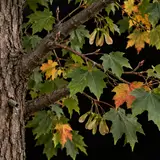
Basswood and sugar maple are the defining pair of the northern hardwood forest and want the same deep, moist, fertile soil. Planting them together recreates a real forest association rather than an arbitrary combination.
-
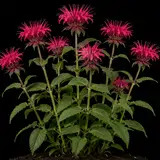
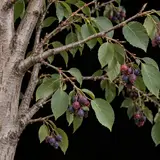
Basswood's enormous nectar flow lasts only about two weeks. Perennials like bee balm in the sunny ground nearby carry the pollinators through the rest of the summer, which matters more under a linden than under most trees.
-
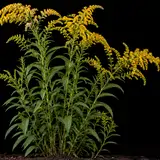
Blooms in late summer and fall, exactly when a linden's nectar has run out - the pairing that keeps bees fed after the bee tree finishes, and the most useful thing you can plant near a heavy-flowering linden.
-
A native understory tree that blooms in early spring, months before the basswood flow - useful for spreading nectar across the season and for the light shade beneath a big linden canopy.
-
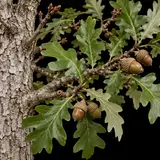
The two keystone canopy trees of the rich eastern hardwood forest - oak for caterpillars and acorns, basswood for nectar and cavities. Together they cover far more of the food web than either alone. Give each plenty of room.
Keep apart
-
Patios, walkways and parking spotsDo not site a basswood or any linden over something you sit on or park under. Aphid honeydew drips for weeks in summer and glazes everything below with a sticky film that turns black with sooty mold.
Varieties · 6
You pick one when you add American Basswood to your garden. Its days to maturity set your harvest window.
American Basswood (Tilia americana)
Tall straight gray trunk with a dense crown of huge asymmetric heart-shaped leaves; creamy flowers on strap-like bracts.
speciesnativenectar-treekeystoneThe wild species: a straight-trunked 60-90 foot native of rich, moist woods, with huge lopsided heart-shaped leaves, clear yellow fall color, and the heaviest nectar bloom of any eastern tree. Sprouts freely from the base into the multi-stemmed clumps and old trunk rings you see in the woods. The one to plant for bees, butterflies, and wildlife.
Redmond
Neatly pyramidal crown of large glossy leaves on a single straight trunk.
cultivarsingle-trunkpyramidalstreet-treeThe most widely planted American basswood selection: a dense, uniformly pyramidal single-trunk tree with large glossy leaves, chosen for street and lawn use where the wild species' basal sprouting and irregular form are unwanted. Same nectar value and the same deer palatability - cage it just as carefully.
American Sentry
Narrow upright crown with symmetrical branching and clean dark foliage.
cultivarnarrowuniformstreet-treeA narrower, more upright American basswood selection with an even branching habit and reported better tolerance of Japanese beetle feeding than most lindens. A good choice for a street, a drive, or a smaller lot where the wild species would be too wide.
Carolina Basswood (Tilia americana var. caroliniana)
Smaller heart-shaped leaves with a pale felted underside on a broad southern shade tree.
varietynativesouthernheat-tolerantThe southern form of American basswood, native from the Carolinas through the Gulf states and into Texas, with smaller leaves felted pale underneath and better tolerance of southern heat and humidity. The right basswood to plant in zones 7-9, where the northern form struggles.
Littleleaf Linden (Tilia cordata)
Dense, tidy, symmetrical crown of small dark heart-shaped leaves on a formal street tree.
non-nativestreet-treesmall-leafaphid-proneThe European linden that most American nurseries and city foresters actually plant - neat, dense, small-leaved, and tolerant of tough urban sites. It is a fine street tree and a good nectar tree, but it supports far fewer native caterpillars than American basswood, it is a magnet for Japanese beetles and honeydew-producing aphids, and it has begun naturalizing into woodlands in parts of the upper Midwest. Plant the native where you have the choice.
Silver Linden (Tilia tomentosa)
Broad crown of dark leaves with bright silvery-white undersides that flash when the wind turns them.
non-nativeheat-tolerantdrought-tolerantsilver-foliageA European and Asian species with striking silver-backed leaves that flash in the wind, and much better heat and drought tolerance than the native. It is also the linden beneath which people find dead bumblebees - a real phenomenon now attributed to late-season nectar exhaustion around an overwhelmingly attractive tree rather than to toxic nectar. If you plant one, plant late-summer flowers nearby.
Grower tips
Notes from growers, tagged with the zone they grow in. A person reads every post before it appears.
Nobody has posted about American Basswood yet. The first one usually saves someone a season.
Free account. Your post shows your grower name and zone, never your email.