Add it to your home screen and it opens full screen: no browser bars, one tap away, and everything stays signed in. Free, nothing to download from an app store.
- Tap the Share button in your browser
- Scroll down and choose “Add to Home Screen”
- Open GrowSomeFood from your home screen
- Open your browser’s menu
- Choose “Add to Home screen” or “Install app”
- Open GrowSomeFood from your home screen
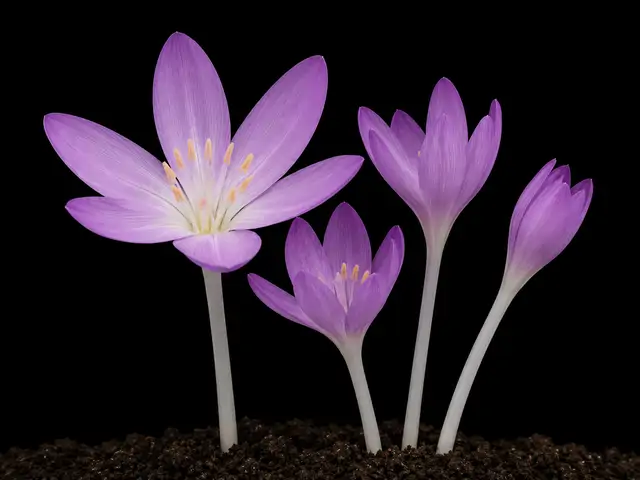
Autumn Crocus
The lilac autumn goblet sold as a garden bulb that is not a crocus at all - lethally poisonous with no antidote, delayed symptoms, and two documented fatal confusions: wild garlic in spring and saffron in autumn.
DEADLY POISON - never eat any part, never plant it. All parts contain colchicine, there is no antidote, and cooking or drying does not destroy it. Symptoms are DELAYED 2-12 hours, so feeling fine proves nothing. Two fatal confusions: spring leaves gathered as ramps or wild garlic - crush a leaf, no onion smell means do not eat it - and autumn flowers gathered as saffron, which is a THREE-stamened crocus with red threads where this has SIX and none. Suspected ingestion: call poison control now.
Overview
The one thing to knowEvery part contains colchicine, and there is no antidote.
Autumn crocus (Colchicum autumnale) is the large lilac-pink goblet that appears out of bare ground in September, with no leaf anywhere near it - hence its other name, naked ladies. It is sold as an easy autumn bulb, and it is not a crocus. It is not even in the same family: true crocus is an iris relative, and Colchicum belongs to the Colchicaceae. The shared name is the whole problem.
Every part contains colchicine, and there is no antidote. The corm and the seeds are the most concentrated, and colchicine is not destroyed by cooking, drying or hay-making. What makes it especially dangerous is the timing: symptoms are delayed by two to twelve hours, so someone who has eaten it feels perfectly well long past the point where the poisoning is under way, and the illness that follows unfolds over days.
Two confusions cause almost all the harm, and both are with plants this catalog already covers.
In spring, its broad glossy leaves are gathered in mistake for ramps and wild garlic. The test is the same absolute one as always: crush a leaf, and if there is no onion smell it is not a wild onion.
In autumn, its flowers are gathered as saffron. The test is countable: a true crocus has three stamens and, in saffron crocus, three long red threads. Colchicum has six stamens and no red threads at all.
Quick facts
For identification. Not a growing guide.
- Life cycle
- Perennial, lives about 20 years
- Where it grows
- Full sun · Part sun · Part shade, well-drained soil
- Height
- 8 in4 to 14
- Spread
- 10 in6 to 16
- Cold
- Takes hard frostdamaged below -20°F
- Heat
- Struggles above 90°F
- Self-sows
- Yes. Never let it set seed.
Through the year
How to recognize it in each season.
Broad spring leaves (the foraging hazard)
Feb to May, every year- Stalkless glossy strap leaves with NO onion smellMonths after the flowers, a tight rosette of broad, thick, glossy strap-shaped leaves pushes straight out of the ground, 8 to 12 inches long and up to 2 inches wide. This is the stage gathered in mistake for ramps and wild garlic. The rule is absolute: crush a leaf, and a true wild Allium reeks of onion or garlic. Colchicum has no smell at all. No onion smell means it is not a ramp, and you do not eat it.
- Look for a seed pod sitting in the middle of the rosetteThe best single tell, and one no Allium can produce: from mid-spring a fat green three-parted seed capsule often sits at ground level in the centre of the leaf rosette - last autumn's flower finally ripening its fruit. Note also how the leaves attach. Ramps leaves each rise on their own stalk, usually flushed reddish-purple at the base; Colchicum leaves are stalkless and sheathed together straight from the corm.
- Know where you are standingHabitat separates them almost as well as smell. Ramps grow in dense colonies on the rich shaded floor of deciduous woodland. Colchicum grows in open ground - damp meadow, rough grass, lawns, orchards and old garden borders. A broad-leaved plant in open grass is not a ramp, whatever it looks like.
Key signs- Broad strap leaves in open grass with no onion smell
- A green seed capsule sitting in the middle of a leaf rosette
- Any spring green gathered near a garden or an old meadow rather than in woodland
Seed capsule ripening
May to Jul, every year- The seeds are the most concentrated part - keep them out of hayThe capsule splits in early summer and sheds small dark seeds that carry colchicine at its highest concentration. In grassland this is how the plant spreads and how it reaches livestock: colchicine survives drying completely, so plants cut into hay stay poisonous all winter. Remove capsules before they open where the ground is grazed or mown for hay, wearing gloves, and bag them.
Key signs- Split capsules shedding seed into grass
- Colchicum growing in a field mown for hay or bedding
- Seed spread along mower paths
Summer rest (the corm underground)
Jul to Aug, every year- A dormant corm is not an onion, and does not smell like oneThe leaves yellow and vanish by midsummer, leaving a fat brown-tunicked corm underground that looks unnervingly like a shallot or a small onion. Corms are sold loose in late summer and get left in sheds and drawers. Never store them anywhere near food or seed potatoes, label them if they exist at all, and remember the same test: an onion smells of onion when cut, and this does not.
Key signs- Loose corms stored near food, onions or seed potatoes
- Bare ground in a lawn or border where the leaves have died away
Leafless autumn goblets (the saffron confusion)
Aug to Nov, every year- Count the stamens: SIX means Colchicum, THREE means crocusIn autumn, large lilac-pink goblets rise from completely bare ground on a long pale tube, with no leaf anywhere - which is where the name naked ladies comes from. This is the decisive check against saffron crocus. Every true crocus, saffron included, carries exactly THREE stamens. Colchicum carries SIX. Count them before anything else.
- No red threads, everSaffron crocus is identified by three long, deep-red, thread-like stigmas hanging out of the flower - those threads are the saffron. Colchicum has three styles that are white to pale yellow and it never produces red threads. Saffron crocus also pushes narrow grass-like leaves with a white midrib at or just after flowering; Colchicum flowers on entirely bare ground. If there are no red threads, there is no saffron.
- Do not cut it for the house or gather it for anythingThe flowers are as poisonous as the rest of the plant. Do not add them to arrangements, never near edible flowers or a kitchen, and keep them away from children, who find the bare pink goblets in short grass very inviting. Handle in gloves and wash afterwards.
Key signs- Lilac goblets appearing from bare ground with no leaves
- Six stamens rather than three
- Flowers picked as saffron, or picked by children in a lawn
Hazards
Colchicine Poisoning by Ingestion (deadly)Severity High DisordernowAny ingestion of leaf, flower, corm or seed.
Any ingestion of leaf, flower, corm or seed. Symptoms begin hours later with burning in the mouth and throat, then severe vomiting and diarrhoea, and can progress over days to effects on the blood, kidneys, liver and heart. An absence of symptoms in the first hours means nothing at all.
Suspected ingestion is an EMERGENCY - call poison control or emergency services immediately and do not wait for symptoms, because with colchicine the delay is the danger. There is no antidote; treatment is urgent, prolonged supportive hospital care. Name the plant and take a piece of it if you can.
Do not plant it, and never eat or taste any part. Keep corms out of sheds and away from food, onions and seed potatoes, remove seed capsules before they split, and never gather a wild green that does not smell of onion when crushed.
Every part contains colchicine, concentrated most heavily in the corm and the seeds, and cooking, drying and hay-making do not destroy it. There is no antidote. The defining feature is delay: symptoms typically begin two to twelve hours after ingestion, so a poisoned person appears completely well through the window in which help matters most, and the illness then unfolds over days.
Livestock Poisoning from Grass and HaySeverity High DisordernowColchicum growing in grazed pasture or in ground mown for hay; spring leaf rosettes in a paddock; unexplained scouring, weakness or collapse in stock some hours after turnout onto affected grass.
Colchicum growing in grazed pasture or in ground mown for hay; spring leaf rosettes in a paddock; unexplained scouring, weakness or collapse in stock some hours after turnout onto affected grass.
A veterinary emergency with no antidote - call a veterinarian immediately and name the plant. Remove all remaining animals from the source and withhold suspect hay.
Keep it out of pasture and hay ground entirely - dig corms out before the leaves are cut, and remove seed capsules before they split so it does not spread through the sward. Do not feed clippings or garden waste to any animal.
Colchicum is a recognised cause of cattle loss in European meadows, and the hazard does not end at the field gate. Colchicine survives drying completely, so plants cut into a hay crop stay poisonous through the winter, and the alkaloid can pass into milk. Grazing animals eat the spring leaves when little else is green.
Autumn Flowers Mistaken for Saffron CrocusSeverity High DisordernowAny lilac autumn flower harvested for saffron without being checked; flowers appearing from completely bare ground with no leaf, which is colchicum, since saffron crocus carries narrow grass-like leaves with a white midrib at flowering.
Any lilac autumn flower harvested for saffron without being checked; flowers appearing from completely bare ground with no leaf, which is colchicum, since saffron crocus carries narrow grass-like leaves with a white midrib at flowering.
Discard anything harvested from an unverified flower - drying and cooking do not reduce colchicine. If any has been eaten or used in food, call poison control immediately and do not wait for symptoms.
Count the stamens before anything else: every true crocus has THREE, colchicum has SIX. Then look for the threads - saffron is three long, deep-red, thread-like stigmas hanging clear of the flower, and colchicum has three pale white to yellow styles and never red ones.
The autumn half of the hazard, and the reason both plants are called autumn crocus. Colchicum and saffron crocus (Crocus sativus) flower in the same weeks in the same lilac-purple, and people have gathered colchicum styles as saffron. They are not related - colchicum is in the Colchicaceae, crocus in the iris family - and colchicum is lethal.
Spring Leaves Mistaken for Ramps or Wild GarlicSeverity High DisorderBroad strap-shaped leaves gathered from open grass, meadow, orchard or garden rather than shaded woodland; leaves that are stalkless and sheathed together rather than each on its own reddish-based stalk; a fat green three-parted seed capsule sitting at ground level in the middle of the rosette.
Broad strap-shaped leaves gathered from open grass, meadow, orchard or garden rather than shaded woodland; leaves that are stalkless and sheathed together rather than each on its own reddish-based stalk; a fat green three-parted seed capsule sitting at ground level in the middle of the rosette.
Discard the entire batch if one leaf is doubtful - do not taste to check, and do not try to sort it. If any has been eaten, call poison control immediately and do not wait for symptoms, which are delayed by hours.
Crush a leaf before gathering anything. A true wild Allium smells powerfully of onion or garlic; colchicum has no smell at all, and no smell means do not eat it. Gather ramps only from woodland colonies you know, and never from grass.
The documented fatal confusion of the spring. Colchicum leaves are broad, glossy and green at exactly the season foragers gather ramps and wild garlic, and the poisoning is not survivable in the casual way a stomach upset is. Every part of the leaf carries colchicine, and no preparation makes it safe.
Spread into Lawns and GrasslandSeverity Medium DisordernowAutumn flowers appearing further from the original planting each year, and new leaf rosettes scattered through a lawn in spring.
Autumn flowers appearing further from the original planting each year, and new leaf rosettes scattered through a lawn in spring.
Dig each corm out whole with a fork, 6 to 8 inches down, taking the offsets with it, in gloves, and bag everything rather than composting. Return the following spring for what was missed. Mowing removes leaves but never the corm, though repeated removal of the spring leaves will exhaust a colony over several years.
Do not plant it. Where it exists, remove seed capsules before they split, and dig new corms out while colonies are small.
A planted clump does not stay a clump. Colchicum multiplies by corm offsets and by seed shed from the spring capsule, and it colonises mown grass, orchards and rough meadow steadily - which puts a lethal plant into exactly the ground where children play, dogs dig and animals graze.
Good & bad neighbors
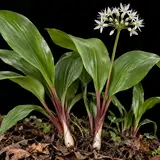
First rule: keep Ramps apart. Never let colchicum grow in or near ground where ramps are gathered, and never gather ramps from open grass where it might be.
Keep apart
-
Never let colchicum grow in or near ground where ramps are gathered, and never gather ramps from open grass where it might be. Their spring leaves look similar enough that people have been fatally poisoned. The test is smell: ramps reek of onion and garlic, colchicum has no smell at all. Ramps leaves also rise on individual reddish-based stalks, colchicum leaves stalkless in a sheathed rosette.
-
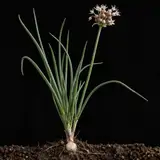
The same hazard, and the one behind the European poisonings. Wild garlic is gathered in exactly the open grassy places colchicum naturalises into. Crush a leaf before anything else: no onion smell means it is not wild garlic, and colchicum has none. A green seed capsule sitting in the middle of a leaf rosette is colchicum, never an Allium.
-
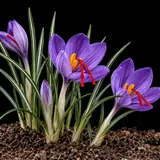
The autumn half of the confusion, and the reason both plants get called autumn crocus. Saffron crocus (Crocus sativus) flowers in the same weeks and the same colour, and its three deep-red threads are the saffron spice. Count the stamens: a true crocus has THREE, colchicum has SIX. Do not grow them in the same bed, and never harvest saffron from a flower you have not counted.
Grower tips
Notes from growers, tagged with the zone they grow in. A person reads every post before it appears.
Nobody has posted about Autumn Crocus yet.
Free account. Your post shows your grower name and zone, never your email.