Add it to your home screen and it opens full screen: no browser bars, one tap away, and everything stays signed in. Free, nothing to download from an app store.
- Tap the Share button in your browser
- Scroll down and choose “Add to Home Screen”
- Open GrowSomeFood from your home screen
- Open your browser’s menu
- Choose “Add to Home screen” or “Install app”
- Open GrowSomeFood from your home screen
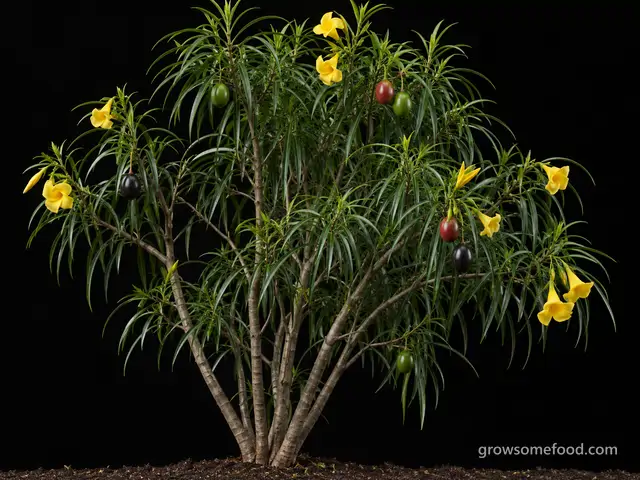
Yellow Oleander
Sold as oleander across the Sun Belt, and the deadlier of the two. Every part carries cardiac glycosides and its lucky-nut seeds cause most of the fatal oleander poisonings on record. Tell it by the yellow funnel flowers, the single spiralled leaves, and the fleshy fruit true oleander never makes.
DEADLY POISON - never eat, taste or plant it, and never burn it. Every part carries cardiac glycosides, and the SEEDS inside its fleshy fruit cause most of the fatal poisonings recorded worldwide as oleander. It is sold as oleander across FL, HI, TX and AZ but is a different plant: yellow funnel flowers, narrow leaves set singly rather than in whorls of three, and a fleshy green-to-black fruit true oleander never makes. Suspected ingestion is an emergency - call poison control immediately.
Overview
Yellow oleander (Cascabela thevetia, long catalogued as Thevetia peruviana) is a tough evergreen shrub or small tree with glossy narrow leaves and golden trumpet flowers, planted through Florida, Hawaii, south Texas, Arizona and southern California and across the tropics as a hedge, screen and street shrub. It is usually sold and spoken of simply as oleander.
It is not oleander. Nerium oleander and Cascabela thevetia are different plants in the same family, and the yellow one is the more dangerous of the two. Every part carries cardiac glycosides - thevetin, neriifolin and their relatives - and they are concentrated in the seeds, the hard stones inside its fleshy fruit that are known and traded as lucky nuts. A very small number of seeds can kill an adult. Yellow oleander seed poisoning fills hospital wards across South Asia every year, and worldwide the great majority of fatal poisonings recorded under the name “oleander” are actually this plant.
Because the name is shared, so is the safety advice - and that is the problem this page exists to fix. Learn to separate the two on sight: yellow funnel-shaped trumpets with twisted lobes rather than flat pink pinwheels; very narrow leaves attached one at a time in a spiral rather than in whorls of three; and above all a fleshy green-to-black fruit, where true oleander produces only a dry, slender, bean-like pod. Never eat any part, never burn it, and keep the seeds away from children.
Quick facts
For identification. Not a growing guide.
- Life cycle
- Perennial, lives about 25 years
- Where it grows
- Full sun · Part sun, well-drained soil
- Height
- 12 ft6 to 20
- Spread
- 9 ft5 to 15
- Cold
- Killed by frostdamaged below 30°F
- Heat
- Struggles above 110°F
- Self-sows
- Yes. Never let it set seed.
Through the year
How to recognize it in each season.
Evergreen shrub (identify and avoid)
year-round, every year- Narrow glossy leaves set singly - never in whorls of threeYellow oleander is an evergreen shrub or small tree, 6 to 20 feet, with very narrow, almost grass-like glossy leaves 3 to 6 inches long, each with a sunken central vein, crowded toward the branch tips. They are attached ONE AT A TIME in a spiral up the stem. True oleander (Nerium) carries its wider, leathery lance-shaped leaves in WHORLS OF THREE at each point on the stem. Count the leaves at one node and you have separated the two plants.
- Milky sap - gloves on, and never burn itCut or broken stems bleed a sticky white latex that irritates skin and eyes and carries the same cardiac glycosides as the rest of the plant. Wear gloves and long sleeves for any pruning, keep the sap away from your face, and wash up afterwards. Never add any part to a bonfire, brush pile or fireplace: like true oleander, the smoke is toxic to breathe. Bag prunings as ordinary yard waste, out of reach of animals.
Key signs- Very narrow glossy leaves attached singly in a spiral (not in threes)
- White milky sap from any cut stem
- Clippings near a fire, a paddock or a compost heap animals can reach
Yellow funnel flowers (most of the year in the tropics)
Mar to Nov, every year- Deep funnel-shaped trumpets with twisted lobesThe flowers are large golden-yellow funnels 2 to 3 inches long, lightly fragrant, their five lobes flaring from a long tube and set with a distinct spiral twist. Apricot and white-flowered forms are sold as well, and they are just as poisonous. True oleander's flowers are flat five-petalled pinwheels in pink, white, red or salmon, opening from a very short tube. A deep yellow trumpet is not Nerium.
- Keep cut flowers away from children, pets and foodThe flowers and nectar are toxic too. Do not cut them for the house or for a table arrangement, do not let a child suck the nectar from the tube, and keep the plant out of any vase water that could be drunk or tipped into a pet bowl. Do not use the stems as skewers, stirrers or plant labels in a vegetable bed.
Key signs- Deep yellow funnel-shaped trumpets with spirally twisted lobes
- Children handling or mouthing the flowers - the nectar is toxic
- Flowering nearly year-round in frost-free areas
The lucky nut (the part that kills)
Jun to Dec, every year- A fleshy fruit means it is NOT true oleanderYellow oleander sets a fleshy, angular fruit about 1½ to 2 inches across, glossy green ripening through red to black, holding one hard stone that contains two to four flat seeds. That stone is the lucky nut. True oleander never makes a fleshy fruit at all - it produces long, slender, dry bean-like pods that split to release fluffy wind-blown seeds. If there is a plum-like fruit under the shrub, you are looking at yellow oleander.
- Gather and bin every fallen fruit where children can reachThe seeds are the most concentrated part of the whole plant, and a very small number can kill a child or a pet. They are handled as good-luck charms in several countries and are sold as curios, which is exactly how they get into a pocket and then a mouth. Where a shrub overhangs a yard, path, playground or pet run, pick up the fallen fruit while wearing gloves, bag it in the trash, and never compost it. Teach children that this nut is not food.
Key signs- Glossy green to black plum-like fruits on the shrub or on the ground
- Hard triangular stones (the lucky nut) in a pocket, a curio bowl or a play area
- Seedlings coming up under the shrub from dropped fruit
Cool season (evergreen, still fully toxic)
Dec to Feb, every year- Toxic all year, including dried and frost-killed materialThe plant is evergreen in its warm range and stays fully poisonous through every season. Dried leaves, frost-burned stems and old prunings keep their cardiac glycosides, which is how horses and cattle are poisoned - by trimmings tossed over a fence or dried into hay. Keep every clipping away from livestock and pets, bag it as yard waste, and never burn it.
Key signs- Dried or frost-damaged material still poisonous
- Prunings tossed near a paddock, hay or a burn pile
Hazards
Lucky-Nut Seed Poisoning (deadly)Severity High HazardnowFallen fruit and hard stones under a shrub, on a path or in a play area; seeds kept as charms, souvenirs or jewellery; children mouthing flowers or nectar.
Fallen fruit and hard stones under a shrub, on a path or in a play area; seeds kept as charms, souvenirs or jewellery; children mouthing flowers or nectar. After ingestion: vomiting, abdominal pain, drowsiness, and a slow, fast or irregular heartbeat - symptoms can take hours to develop, and someone who seems well at first can deteriorate.
Suspected ingestion is an EMERGENCY - call poison control or emergency services immediately and do not wait for symptoms. Take the fruit, seed or a piece of the plant with you. Hospitals have specific treatments for cardiac-glycoside poisoning and they work best when started early; there is nothing safe to do at home.
Recognize the plant and keep it out of yards, playgrounds, pet runs and pastures. Gather and bin fallen fruit and stones where children or animals go, wearing gloves. Do not keep or carry lucky nuts, and teach children that this nut is not food. Never eat, taste or prepare any part.
The defining hazard. Every part contains cardiac glycosides (thevetin, neriifolin and relatives) that disturb the heart's rhythm, and they are most concentrated in the SEEDS - the flat kernels inside the hard stone of the fleshy fruit, traded as lucky nuts. A very small number of seeds can kill an adult, and less will kill a child or a pet. Worldwide, the great majority of fatal poisonings recorded as oleander involve this plant, and yellow oleander seed poisoning is one of the leading causes of plant-poisoning death in South Asia.
Sold and Treated as OleanderSeverity High DisordernowA yellow-flowered shrub called oleander; nursery labels reading simply oleander, be-still tree, lucky nut or Thevetia; safety instructions about clippings and burning that never mention seeds or fruit.
A yellow-flowered shrub called oleander; nursery labels reading simply oleander, be-still tree, lucky nut or Thevetia; safety instructions about clippings and burning that never mention seeds or fruit.
This is a knowledge problem, not a treatable one: identify the plant, tell the household and anyone who gardens or grazes animals there which one it is, and manage the seeds specifically. If ingestion has occurred, call poison control immediately.
Separate the two on sight before acting on any advice. Leaves at one node: three radiating leaves is Nerium, one leaf at a time spiralling up the stem is Cascabela. Flowers: flat pinwheel versus deep yellow funnel with twisted lobes. Fruit: a slender dry bean-like pod versus a fleshy green-to-black plum-like fruit - true oleander never makes a fleshy fruit at all.
A hazard created by naming rather than biology. Cascabela thevetia is sold, labelled and discussed as oleander across Florida, Hawaii, Texas, Arizona and the tropics, so people apply Nerium oleander advice to it - and that advice does not describe where this plant's danger sits. True oleander poisons through leaves and clippings; yellow oleander concentrates its poison in portable, nut-like seeds that get carried, pocketed and traded as charms. A property can be handled correctly on oleander terms and still have lethal seeds lying on the path.
Toxic Smoke & ClippingsSeverity High HazardnowPrunings added to a bonfire, brush pile or fireplace; trimmings tossed over a fence or into a paddock; dried leaves in hay or bedding; stems used as skewers, stirrers or plant labels; sap on hands or in eyes after pruning without gloves.
Prunings added to a bonfire, brush pile or fireplace; trimmings tossed over a fence or into a paddock; dried leaves in hay or bedding; stems used as skewers, stirrers or plant labels; sap on hands or in eyes after pruning without gloves.
For smoke inhalation or any suspected human poisoning, seek emergency medical care immediately. For an animal that has eaten clippings, call a veterinarian at once - small amounts are lethal and prevention is far more reliable than treatment.
NEVER burn any part of it. Wear gloves and long sleeves to prune, and wash afterwards. Bag prunings as ordinary yard waste going somewhere no animal will eat them, never compost it where stock or pets can reach, and fence grazing animals away from planted shrubs.
Like true oleander, this plant is dangerous beyond eating it. Burning it releases toxins in the SMOKE, which can poison anyone standing over the fire, and its leaves and stems stay poisonous when dried or frost-killed - so clippings, fallen leaves and material dried into hay kill horses, cattle, goats and pets. The milky sap also irritates skin and eyes.
Good & bad neighbors
First rule: keep Oleander apart. A naming conflict, not a growing one - and the most dangerous in the catalog.
Keep apart
-
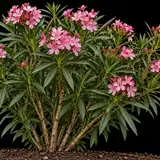
A naming conflict, not a growing one - and the most dangerous in the catalog. Both are sold under the same name and planted for the same jobs, but the yellow one carries its poison in portable nut-like seeds children pick up. Having both makes it harder to tell anyone which is which, and advice aimed at one does not cover the other. Check three things: leaves at a node, flower shape, and fleshy fruit versus dry pod.
Grower tips
Notes from growers, tagged with the zone they grow in. A person reads every post before it appears.
Nobody has posted about Yellow Oleander yet.
Free account. Your post shows your grower name and zone, never your email.