
Add it to your home screen and it opens full screen: no browser bars, one tap away, and everything stays signed in. Free, nothing to download from an app store.
- Tap the Share button in your browser
- Scroll down and choose “Add to Home Screen”
- Open GrowSomeFood from your home screen
- Open your browser’s menu
- Choose “Add to Home screen” or “Install app”
- Open GrowSomeFood from your home screen

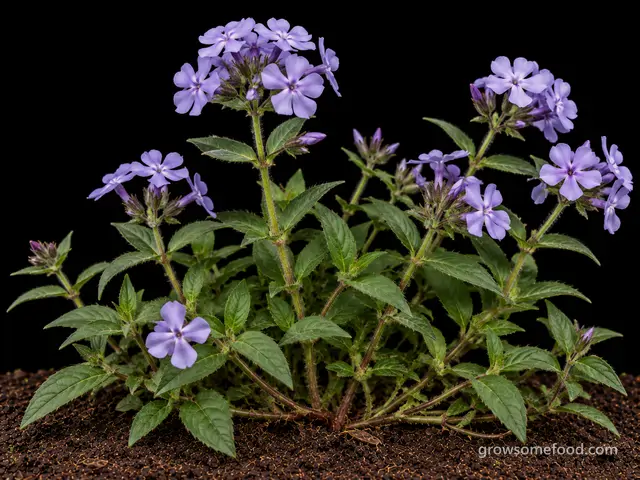
Woodland Phlox
A beloved native groundcover for shade - low mats topped in mid-spring with fragrant clouds of lavender-blue flowers that draw butterflies; easy, well-behaved, and one of the best woodland wildflowers.
Safety notes Woodland phlox is grown as an ornamental native wildflower and is not considered toxic to people or pets; it is not used as a food. (It is unrelated to any toxic plant despite the 'sweet William' folk name it shares with unrelated species.) Safe to grow and handle. Its only real weakness is a susceptibility to powdery mildew in humid, crowded conditions, which is a plant-health, not a safety, concern.
Overview
Woodland phlox (Phlox divaricata) is one of the loveliest and most useful native wildflowers for a shady garden. In mid-spring it covers itself in loose clusters of fragrant, five-petaled, lavender-blue flowers (with white and pink forms too), floating on short stems above low mats of foliage to make soft, sweetly scented drifts of color across the woodland floor. The fragrance - clean and sweet - is a signature, and it draws butterflies, moths, and long-tongued bees at a time when their nectar sources are still scarce.
Quick facts
- Sprouts in
- 35 daysRange: 21–60 days
- Soil temperature
- 65 °FRange: 55–72 °F
- Height
- 12 inRange: 8–15 in
- Spread
- 15 inRange: 10–20 in
- Cold
- Takes hard frostdamaged below -35°F
- Heat
- Struggles above 90°F
- Life cycle
- Perennial, lives about 8 years
- Save seeds
- About 80 days after plantingRange: 60–110 days
- Self-sows
- Yes, expect volunteers
- Soil
- Consistently moist
- Water
- Medium
- Plant spacing
- 12 inRange: 10–18 in
When to plant
Fall sowing is open for 19 more days. Next: spring, Mar 27 to May 22.
- Direct sow Oct 4 – Nov 8 Open now · 19 days leftAbout 3 weeks before to 2 weeks after your first frost (Oct 25 here)Fall-sow seed outdoors for winter stratification; seedlings appear in spring. It self-sows gently once established, so a first planting often perpetuates itself.
- Transplant Mar 27 – May 22 Opens in 158 daysAbout 2 weeks before to 6 weeks after your last frost (Apr 10 here)Set out plants or divisions in spring into rich, moist, humusy soil in part shade; they establish easily and knit into a spreading groundcover, often blooming the first year.
- Transplant Sep 6 – Oct 18 Opens in 321 daysAbout 7 weeks before to 7 days before your first frost (Oct 25 here)Divide and replant in early fall so roots settle before winter - the easiest way to make more plants and rejuvenate a mat.
Frost here: last around Apr 10 (Mar 27 to Apr 24 most years), first around Oct 25. Zone averages, your own yard may run a week or two either way.
Life stages
Establish, grow, repeat
Getting established and returning each season are different parts of the story.
Stage 1 of 4 · Getting established
Year 1 - rooting in
Day 0 to 60 after transplanting
Care at this stage
-
Keep evenly moist while establishing
Set out a plant or division into rich, moist, humusy soil in part shade and keep it evenly moist. Woodland phlox forms low, spreading mats from creeping stems that root as they go - space plants so they knit into a groundcover.
-
Mulch with leaf litter
A light woodland mulch of shredded leaves keeps the shallow roots cool and moist and mimics its native forest-floor home, helping it establish and spread.
Months are typical seasonal windows; climate, variety, and plant age can shift them.
Watch out for
3 to know. None are high-risk for Woodland Phlox. None are active in October.
Powdery MildewSeverity Medium DiseaseSeason: Jun–AugRound white powdery spots on the upper leaf surfaces that spread and merge until whole leaves look dusted.
Powdery mildew is woodland phlox's signature weakness and it can badly disfigure the foliage after bloom. Shearing plants back after flowering brings cleaner regrowth, keeping the soil evenly moist heads off the dry stress that makes it worse, and mildew-resistant selections such as 'May Breeze' and 'Blue Moon' are the durable answer.
Round white powdery spots on the upper leaf surfaces that spread and merge until whole leaves look dusted. It usually starts on the oldest, lowest, most shaded leaves and works upward, so check there first. Look at the undersides too, and at stems, buds, and flower stalks, which get coated as it advances. Leaves that yellow, brown, curl, or go crisp and drop early under the coating. New growth that opens small, crumpled, or twisted where the fungus has reached the shoot tips. On plants where it gets onto the fruit, a dull gray film, russeted or scarred skin, and cracking. Late in the season, tiny dark specks scattered through the white felt - that is the fungus setting up to overwinter on the debris.
Start early: sprays protect healthy tissue, they do not clean up leaves that are already coated. Pick off and bin the worst leaves as soon as you see them, and open the plant up by thinning or pruning so air moves through. On anything that regrows quickly, shearing the whole plant back forces a clean flush and beats spraying. If it keeps spreading, potassium bicarbonate, horticultural oil, or neem applied weekly will hold it - cover both leaf surfaces. Sulfur also works, but it burns the foliage of some plants, should never go on in heat, and must not be mixed with or applied close behind an oil spray. Whatever you use must be labeled for the plant you are treating: follow that label and observe its pre-harvest interval on anything you eat. Do not compost badly infected material. Late-season mildew on a plant that is finishing anyway is usually cosmetic; on a crop still filling out it is worth acting on.
Give plants room. Crowding and still air are the biggest single driver, so space at the full recommended distance, thin seedlings properly, and divide or prune out congested growth until air moves through the plant. Full sun and an open position help; deep shade and a still corner against a wall are where it always starts. Water at the base rather than overhead, and water early in the day so nothing stays damp overnight. Keep plants evenly watered - drought stress at the roots leaves them far more susceptible, even though the fungus itself likes dry air. Go easy on nitrogen, since soft lush growth is the most vulnerable. Where resistant varieties exist for what you are growing, choosing one is the single most effective thing you can do on a plant that mildews every year. Clear infected leaves and stems away at the end of the season rather than composting them.
Powdery mildew is a fungal disease that coats leaves - and often stems, buds, and fruit - in a white-to-gray powder that looks like spilled talcum. It is not one fungus but a large family of them, each fairly specialised to its own group of plants, which is why mildew on one crop rarely jumps to an unrelated one beside it. Unlike most leaf diseases it does not need wet leaves: it thrives on warm dry days followed by humid nights, and it takes hold fastest where plants stand crowded in still air or in shade. The coating blocks light, so heavily covered leaves yellow, brown, and drop early. On many plants that is mostly disfiguring and arrives late enough not to matter; where it strips away the leaves a crop still needed to finish, it costs you size, sweetness, and quality.
Deer & Rabbit BrowsingSeverity Low WildlifeSeason: Apr–JunFlowers and shoot tips cleanly bitten off in spring where deer or rabbits are active.
Flowers and shoot tips cleanly bitten off in spring where deer or rabbits are active.
The plant regrows after light browsing; protect during peak pressure and it recovers fine.
Repellents or light protection where browsing pressure is high; interplant with less-palatable natives.
Deer and rabbits will browse the tender foliage and flowers of woodland phlox in some areas, nipping off blooms and shoots, though it's not a preferred target and usually recovers.
Slugs & SnailsSeverity Low PestSeason: Apr–JunIrregular ragged holes chewed out of the middle of leaves and along the edges - not the clean-edged cuts a caterpillar leaves.
Usually cosmetic on an established mat in the cool, damp shade woodland phlox favors.
Irregular ragged holes chewed out of the middle of leaves and along the edges - not the clean-edged cuts a caterpillar leaves. Seedlings that vanish overnight, or that are cut off at soil level with nothing left behind. Silvery dried slime trails across leaves, soil, pots, and paving in the morning: this is the giveaway that tells you it was mollusks rather than an insect. Chewed pits in ripe fruit, especially where it rests on the ground. Damage that shows up on the lowest, dampest leaves first and gets worse after rain or evening watering. Turn over a board, an upturned pot, or a clump of dense mulch during the day and look for the animals themselves sheltering in the cool underneath.
Hand-picking works and costs nothing: go out an hour after dark with a headlamp, drop what you find into soapy water, and repeat nightly for a week or two - persistence is what wins, not any single product. Shallow beer traps sunk to soil level catch them too, but need emptying and refilling daily to be worth anything. Iron-phosphate bait is the standard control and is far lower-risk around pets and wildlife than the old metaldehyde products, but it is not harmless: many formulations include EDTA, and a dog that eats a quantity of pellets can develop iron toxicosis. Scatter it thinly per the label, never in piles, and keep dogs off a baited bed. Clear fallen foliage and debris in autumn, where the eggs are laid. In a wet climate this is a population you manage each season rather than one you eradicate - and on most established plants light grazing is cosmetic and needs nothing at all.
Take away the daytime shelter first: lift boards and upturned pots, clear piles of debris, keep dense mulch pulled back from crowns and stems, and give crowded plantings enough airflow to dry out. Water in the morning rather than the evening so the surface is dry by the time they come out. Copper tape around containers and raised beds gives them a shock they will not cross, and it is the one barrier that reliably works. Get plants past the vulnerable stage quickly - start seedlings in pots and set them out at a decent size rather than direct-sowing into a cold wet bed, since most plants stop being worth defending once the leaves toughen. Leave the ground beetles, frogs, toads, and ground-feeding birds alone, because they eat mollusks all night for free and broad-spectrum slug pellets kill them too. Where thick-leaved or resistant varieties exist for what you are growing, they take far less damage.
Slugs and snails are nocturnal mollusks that rasp ragged holes in soft leaves, shear off seedlings at ground level, and chew into ripe fruit that touches the soil. They feed at night and in the early morning and spend the day hidden under boards, pots, dense mulch, leaf litter, and low foliage, becoming active in exactly the cool, damp, shaded conditions that suit young plants. Damage is heaviest in wet spells and on tender spring growth: a single wet week can erase a row of seedlings while an established, tough-leaved plant of the same species is barely marked. They lay clusters of small pearly eggs in damp soil and under debris, so a garden with plenty of cover carries a resident population year after year rather than being invaded from outside.
Good & bad neighbors
Plant nearby
-
A native woodland groundcover with the same part-shade, moist-soil needs and overlapping spring bloom; foamflower's white spikes and phlox's blue clouds make a beautiful shade pairing.
-
An evergreen native fern whose fronds contrast the flat mat of woodland phlox and carry the shady bed's texture through summer after the phlox has bloomed.
-
Solomon's seal's arching stems rise above a low mat of woodland phlox, contrasting height and horizontal line while sharing the same shady, humus-rich conditions.
-
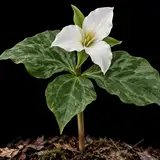
A classic woodland pairing - trilliums rise among a fragrant carpet of woodland phlox in the same rich, moist, part-shaded soil, blooming together in mid-spring.
-
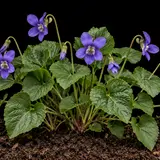
Two low, spring-blooming native groundcovers for moist part shade; violets and woodland phlox weave a fragrant, blue-and-purple spring carpet that feeds early pollinators together.
Varieties · 4
You pick one when you add Woodland Phlox to your garden. Its days to maturity set your harvest window.
Woodland Phlox (Phlox divaricata)
The wild native species: low mats of foliage topped in mid-spring with fragrant, five-petaled lavender-blue flowers that draw butterflies and moths.
Variety details for Woodland Phlox (Phlox divaricata)
Low foliage mats with loose clusters of fragrant lavender-blue five-petaled flowers on short stems.
speciesnativelavender-bluefragrantA gentle, well-behaved groundcover for rich, moist, part-shaded woodland soil, and one of the best fragrant native wildflowers for spring shade.
'Chattahoochee' (Phlox divaricata subsp. laphamii)
A celebrated selection with rich violet-blue flowers each marked by a deep reddish-purple eye, blooming long and heavily on tidy plants - the showiest woodland phlox and a long-time award-winner.
Variety details for 'Chattahoochee' (Phlox divaricata subsp. laphamii)
Violet-blue flowers with a striking dark reddish-purple central eye over low foliage.
cultivarviolet-bluedark-eyeshowyThe honest trade-off: garden trials (including Mt. Cuba Center's phlox evaluation) find it often short-lived and no better than the species on mildew, so plant it for the flower rather than for toughness.
'May Breeze'
A lovely near-white selection whose very pale icy-blue-to-white fragrant flowers light up shady corners and glow at dusk, with good mildew resistance.
Variety details for 'May Breeze'
Fragrant icy pale-blue to white flowers that brighten shade and glow in low light.
cultivaricy-whitefragrantmildew-resistantA cooling, brightening choice for the shade garden and a fine companion to blue and pink woodland flowers.
'Blue Moon'
A rich, deep blue-violet selection with full, rounded, overlapping petals giving an especially solid, saturated flower color, and a strong sweet fragrance.
Variety details for 'Blue Moon'
Deep blue-violet flowers with full, rounded, overlapping petals and a sweet scent.
cultivardeep-bluerounded-petalsfragrantSelected for its intense blue and fuller flower form, a standout for a fragrant blue spring drift in part shade - and one of the better performers in garden trials, including on mildew.
Grower tips
Notes from growers, tagged with the zone they grow in. A person reads every post before it appears.
Nobody has posted about Woodland Phlox yet. The first one usually saves someone a season.
Free account. Your post shows your grower name and zone, never your email.