Add it to your home screen and it opens full screen: no browser bars, one tap away, and everything stays signed in. Free, nothing to download from an app store.
- Tap the Share button in your browser
- Scroll down and choose “Add to Home Screen”
- Open GrowSomeFood from your home screen
- Open your browser’s menu
- Choose “Add to Home screen” or “Install app”
- Open GrowSomeFood from your home screen
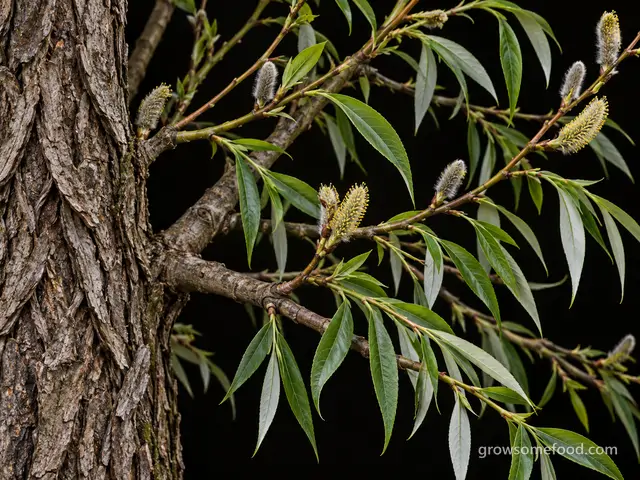
Willow
One of the two or three most important wildlife plants in North America: willow feeds several hundred species of native caterpillars, and its catkins are the first real food of the year for emerging bees. It also roots from a stick, and its roots find drains - so site it deliberately.
Willow is not a food plant and not a home remedy. Bark and leaves contain salicin, the compound aspirin was developed from, so bark tea is an unmeasured dose of an aspirin-like drug and carries aspirin's risks - stomach bleeding, interaction with blood thinners, and Reye's syndrome in children. Never give it to anyone under 18, and avoid it if you are aspirin-sensitive, pregnant, or on anticoagulants. The plant is safe to handle, prune and plant; the caution is about swallowing it.
Overview
The one thing to knowThe first is that it is a keystone host plant.
Willow (Salix) is a genus rather than a single plant - more than a hundred native species in North America, from creeping Arctic shrubs a few inches tall to the black willows that hold riverbanks together. This entry is written at the genus level, because the growing advice, the wildlife value, and the warnings are the same across nearly all of them; the varieties list below points you to the kinds people actually plant.
Two things make willow worth a place. The first is that it is a keystone host plant. Only oak and cherry feed more kinds of native caterpillar, and willow supports several hundred species - mourning cloak, viceroy, red-spotted purple, and the big cecropia and polyphemus silk moths among them. Those caterpillars are what almost every songbird feeds its chicks, so a willow is a bird nursery in a way an ornamental shrub can never be. The second is timing: willow catkins open in late winter, weeks before anything else, and they are the food that carries emerging queen bumblebees and specialist mining bees through the hungriest part of their year.
The catch is that willow is a big, thirsty, brittle, short-lived plant whose roots actively hunt water. It will find a drain line, a septic leach field, or an old sewer pipe, and it roots so readily from a cut stem that a discarded prunings pile can sprout. Plant it in open, damp, low ground, well away from anything buried, and it is one of the most generous plants you can grow.
Quick facts
- Life cycle
- Perennial, lives about 40 years
- Height
- 35 ft6 to 70
- Spread
- 35 ft5 to 70
- Cold
- Takes hard frostdamaged below -50°F
- Heat
- Struggles above 105°F
- Self-sows
- Yes, expect volunteers
Full sun or part sun · high water · tolerates wet soil soil · 20 ft apart (5 to 50) · transplant or cuttings
When to plant
Fall transplanting is open for 20 more days. Next: spring, Mar 6 to May 22.
- Transplant Aug 26 – Oct 11 Open now · 20 days leftAbout 9 weeks before to 2 weeks before your first frost (Oct 25 here)Fall planting works well in cold and temperate zones - the roots keep growing after the leaves drop. Water until the ground freezes and mulch the root zone.
- Transplant Mar 6 – May 22 Opens in 166 daysAbout 5 weeks before to 6 weeks after your last frost (Apr 10 here)Set out container or bare-root willow as soon as the ground is workable, and push dormant live stakes and hardwood cuttings straight into damp ground in the same window - late winter into early spring is when they root best. Check the distance to every buried pipe first.
Frost here: last around Apr 10 (Mar 27 to Apr 24 most years), first around Oct 25. Zone averages, your own yard may run a week or two either way.
Life stages
One stage to settle in, then three that repeat each year. Windows are typical; your zone and weather move them.
Years 1-2 - rooting in
The first year after planting- ProtectMeasure the distance to every buried pipe before you digThis is the decision you cannot undo. Willow roots follow moisture and will grow into drain lines, septic leach fields, old clay sewer pipe, and water lines, and they lift paving and creep under shallow foundations. Keep a shrub willow at least 50 feet from any of that, and a large or weeping willow further still - 75 to 100 feet is the usual advice. If your yard has no spot that far from the pipes, plant something else and enjoy willows somewhere wetter.
- WaterWater hard for the first two summersevery 5 daysWillow is a water plant. Even in damp ground, keep a new plant or live stake steadily wet through its first two seasons - it has no drought reserve and sulks or dies back the moment it dries out. Once rooted in a wet or low spot it needs nothing from you.
- MulchMulch wide, keep it off the barkA broad ring of wood chips holds moisture and keeps mowers and string trimmers away from the thin young bark, which damages very easily. Pull the mulch back a couple of inches from the stems.
Watch for- Buried drain, septic or water lines within 50 feet - resite the plant, not the pipe
- Drying out in the first summers (willow has no drought reserve)
- String-trimmer damage to thin young bark
- Rabbit and vole gnawing at the base over winter
Catkins - the first food of the year
Feb to Apr, every year- InspectWatch the catkins open before anything else bloomsWillow catkins open weeks before almost anything else, and that timing is the point. Emerging queen bumblebees, early mining bees, and the first butterflies of the year live on willow pollen and nectar when nothing else is flowering. Stand near a male willow on a warm March afternoon and you will hear it. Leave the catkins on the plant - cutting pussy willow stems for a vase takes food out of the hungriest week of the pollinator year.
- PruneDo not prune while the catkins are outIf you coppice or pollard a willow, do it in the dead of winter before the catkins swell, not in early spring. Cutting during bloom throws away the single most valuable thing the plant does.
Watch for- Queen bumblebees and mining bees working the catkins on the first warm days
- Male plants carrying showy pollen catkins; female plants carrying seed catkins
- Mourning cloak butterflies, which overwinter as adults and appear astonishingly early
Spring & summer canopy
Apr to Sep, every year- InspectA caterpillar nursery - leave the chewed leaves aloneWillow feeds more kinds of native caterpillars than almost any other plant in North America - several hundred species, including mourning cloak, viceroy, red-spotted purple, and the big silk moths - and those caterpillars are what nesting birds feed their young. Chewed, holed, and skeletonized leaves are the plant working, not the plant failing. Never spray a host tree.
- WaterKeep the roots wet in droughtWillow is the first thing in the yard to show drought - leaves yellow, brown at the edges, and drop from the inside out. In a dry spell soak the root zone deeply rather than sprinkling it. A willow planted in genuinely wet ground rarely needs this at all.
Watch for- Caterpillars and leaf damage (welcome - this is the point of the plant)
- Early leaf drop and yellowing in drought
- Black-spotted, blackened shoot tips in a cool wet spring (willow scab and black canker)
- Japanese beetles skeletonizing the upper leaves in early summer
Winter - coppicing & cuttings
Nov to Feb, every year- PruneCoppice or pollard in deep winter to control sizeThe traditional way to keep a willow is to cut it hard. Coppicing takes the whole plant back to a low stump every one to three years; pollarding cuts it back to the same knuckle on a short trunk. Either produces a thicket of straight one-year rods and permanently holds a plant that wants to be 50 feet at 8 or 10. Do it in deep winter, before the catkins swell, and expect vigorous regrowth - this is normal for willow, not damage.
- DoTake hardwood cuttings while you are cutting anywayWillow roots more easily than almost any woody plant. Cut pencil-thick, straight, one-year rods while the plant is dormant, trim them to 8-12 inches with a bud near the top, push them two-thirds deep into moist ground the right way up, and keep them wet. Most will root. Longer 2-3 foot stakes pushed into a damp streambank are how erosion projects are planted.
- InspectCheck the branch structure after stormsWillow wood is brittle and drops limbs, especially on fast, wet-grown trees. After winter storms, look for hanging or split limbs over anything you care about, and take out dead and crossing wood while the tree is bare.
Watch for- Split and hanging limbs after wind and ice - brittle wood is a willow trait
- Rods for cuttings, basketry, or living structures
- Vole and rabbit girdling at the snow line
Watch out for
6 to know. 1 is high-risk: Roots in Drains, Septic Lines and Paving. 3 are active in September.
Roots in Drains, Septic Lines and PavingSeverity High DisordernowEvery willow does this; weeping willow does it worst.
If you take one thing from this page, take the distance rule - it is the difference between the best wildlife plant in your yard and a five-figure plumbing bill.
Drains that run slowly, gurgle, or back up repeatedly, especially in dry weather when the roots are working hardest for water. A septic system that starts failing or pooling with no change in household use. Paving slabs, paths, or a driveway lifting or cracking along a line running toward a willow. Surface roots appearing in lawn well beyond the edge of the canopy. Grass staying greener directly over a buried line, which can mean it is leaking and feeding roots. A plumber's camera showing a fibrous white root mass filling a pipe joint - the definitive answer.
Once roots are inside a pipe, the plant side of this is over. Mechanical rodding or hydro-jetting clears the blockage, and foaming root treatments buy time, but roots regrow into the same joint within a season or two, so the only durable fixes are relining or replacing the run of pipe, or removing the tree - and usually both. A lifted drive or path can be relaid only after the roots under it are cut, which frequently destabilizes the tree. Cutting major roots to save paving often leaves a large brittle willow that is no longer safely anchored, so get an arborist involved before you cut anything structural. Realistically, if a willow is in the wrong place relative to buried infrastructure, removing it early is cheaper than everything else.
This is entirely a siting decision and it has to be made before planting. Find out where your drain, sewer, water, and irrigation lines and your septic tank and leach field actually run, and keep a shrub willow at least 50 feet clear and a tree or weeping willow 75 to 100 feet clear. Do not plant a willow between a house and a wet low spot, because the roots will run straight through. Treat root barriers as unreliable: they can deflect roots on a small plant for a while, but a determined willow goes under, around, or through in time. If your property has no location that meets the distance rule, grow a different genus and enjoy willow somewhere with room.
Willow roots are shallow, wide-spreading, and actively drawn to moisture, and they exploit the smallest opening. A hairline crack or a loose joint in a clay or concrete drain, an old sewer line, or a septic leach field leaks a little water, the roots find it, and they grow into the pipe and fill it with a dense fibrous mat that blocks flow entirely. The same root system lifts paving slabs, paths, and driveways, runs shallowly under lawns, and works into the footings of light structures. Roots commonly extend well beyond the width of the crown - two to three times the canopy spread is normal - so the damage frequently happens a long way from the trunk and is not obviously the tree's fault until a plumber runs a camera down the line. Weeping willow is the worst offender, but every willow does this to some degree.
Deer (browse resistance)Severity Medium WildlifenowWillow twigs are prime winter browse for deer, elk, and moose, and beavers cut willow harder than anything else - which is precisely why willow evolved to resprout so vigorously.
Cage or tube young plants and live stakes for the first few years; an established coppiced willow simply grows back thicker.
Growth cleanly missing overnight, with the plant browsed back to a level line about as high as a deer can comfortably reach. Ragged, torn stem ends rather than the clean angled cut a rabbit leaves - the single most reliable identifier. Buds and flowers gone while the foliage below is untouched, since deer often take the best part first. Hoof prints and droppings in soft ground near the damage. Repeat visits, with fresh damage each morning once a planting has been found. On young trees, shredded and stripped bark and broken low branches in autumn - that is antler rubbing rather than feeding.
There is no chemical fix, only exclusion and recovery. Get physical protection up immediately after the first damage, because deer return to a known meal, and reinforce or rotate whatever you were relying on before. Most plants regrow from browsing if the crown and roots are intact - feed and water a grazed plant and protect the regrowth while it comes back. What does not recover in the same season is anything whose buds or flowers have been taken, and a young tree whose bark has been rubbed right around the trunk is usually lost. Where deer pressure is genuinely heavy, the honest answer is to fence properly or to grow the plants deer leave alone, rather than to keep replacing losses.
Fencing is the only thing that reliably works. Eight feet is the standard for excluding deer, or two parallel four-foot fences a few feet apart, which they will not jump because they cannot judge the landing. Short of that, cage individual plants: a sturdy wire cage or trunk guard around every young tree, left on until the trunk is thick and the canopy is above browse height, prevents both browsing and antler rubbing and is the single highest-value thing you can do for a young tree. Repellent sprays do help at moderate pressure, but they wash off and deer habituate, so reapply after rain and rotate between different types through the season. Motion-activated sprinklers, scent deterrents, and noise devices work for a while and then stop. Siting matters too: plants close to the house, in daily traffic, and screened behind other planting get browsed less than the same plant out at the boundary.
Deer are the largest garden problem across much of the country, and where pressure is high they set the limit on what you can grow at all. They browse at night and around dawn and dusk, taking tender shoots, leaves, buds, flowers, and fruit within about five feet of the ground, and they come back night after night to anything they have found and liked. Because they have no upper incisors they tear rather than cut, leaving ragged stem ends - that is how you tell deer damage from a rabbit's clean angled cut. In fall, bucks rub their antlers on young trunks and can strip the bark right around a stem, which kills a young tree outright. Palatability varies enormously between plants and between seasons: a herd short of food in late winter eats things it ignores in June, and no plant is truly deer-proof.
Willow Scab & Black Canker (Willow Blight)Severity Medium DiseaseMost common in cool wet springs and worst on weeping willow.
A native willow in damp open ground rarely suffers badly - if yours does every year, look at crowding, airflow, and species choice before reaching for a spray.
Young leaves turning black or brown and dying within days of opening, still hanging on the twig rather than dropping cleanly - the classic sign, and it looks like frost damage or a late freeze. Olive-brown velvety spore growth on the underside of dead leaves along the midrib. Shoot tips wilting and bending over into a shepherd's crook, then blackening. Dark, sunken, sometimes cracked lesions on twigs and small branches, occasionally weeping. Repeated dieback of the outer canopy year after year on the same plant, with the tree progressively thinning from the tips inward.
Prune out affected shoots and cankered twigs in dry weather, cutting back into clearly healthy wood and sterilizing the blade between cuts, then bag or burn the material rather than composting it. Clear fallen leaves thoroughly. On an established willow that is otherwise healthy, that plus a dry summer is usually the end of it - the plant refoliates and recovers. Fungicides are used in nurseries but are not practical or worthwhile on a garden tree, and they will not rescue a plant that keeps getting hit because of its site. A willow that blights heavily several years running is telling you it is in the wrong place or the wrong climate; replacing it with a regional native species is the durable fix.
Airflow and dryness at the foliage are what limit it. Space plants generously rather than crowding a wet corner, thin a dense crown in winter so the canopy dries after rain, and avoid overhead watering. Rake and remove fallen leaves and prunings in autumn rather than leaving them under the plant, since the fungus overwinters in that debris and in infected twigs. Choose species suited to your region and site - a willow in ground that is too dry, or a weeping willow in a humid climate, is the one that suffers - and do not overfeed, since soft nitrogen-forced growth is more susceptible. Buy clean nursery stock and check new plants for blackened twigs before planting.
Two fungal diseases that often arrive together on willow and are usually described as one problem. Willow scab infects the young leaves as they open in a cool wet spring, killing them quickly and running down the leaf stalk into the shoot; black canker follows on the weakened wood, forming dark sunken lesions on twigs and small branches. Together they blacken and kill the current season's growth, and a badly affected tree can look scorched by early summer. Wet springs drive it; dry springs make it a non-event. Native willows in the ground they like usually shrug it off and refoliate, while weeping willows, crowded plantings, and stressed or overwatered nursery stock take it hardest and can be killed by repeated years of it.
Japanese BeetlesSeverity Medium PestWillow is one of the beetles' preferred trees and the top of the canopy can go brown and lacy in July.
On an established willow this is cosmetic and needs nothing - and spraying a plant grown to feed several hundred caterpillar species defeats the entire point of having it. Hand-pick on a small or newly planted willow only.
Clusters of shiny metallic beetles massed together on the upper, sunniest foliage and down inside open blooms, heaviest on warm sunny afternoons from around late June. Leaves reduced to lace, with the veins left intact and the tissue between them gone - unmistakable, and quite different from the ragged chewing of a caterpillar. Ragged, chewed petals and blooms that never open properly. Beetles that let go and drop straight to the ground when you disturb the plant. Feeding damage on ripening fruit, on the plants they also take fruit from. Whole branches going brown and lacy at the top of a plant while the shaded lower growth stays untouched.
Persistent morning hand-picking into soapy water is the most effective home control there is, and on a vigorous established plant the damage is usually cosmetic and needs nothing else. Neem deters feeding rather than killing, and has to be reapplied. For heavy pressure, spinosad or a targeted insecticide labeled for the plant will work - but time any spray away from bloom and apply it at dusk to protect bees, and observe the pre-harvest interval on anything you eat. On flowering plants, some gardeners simply shear the blooms off for a couple of weeks and let the plant rebloom once the wave has passed, which removes the lure as well as the damage. Young plants and young trees are the ones worth defending: a mature tree or an established vine tolerates several weeks of leaf loss without lasting harm.
Hand-picking is genuinely the main defense in a home garden. Go out in the cool of the morning while the beetles are sluggish, hold a tub of soapy water underneath, and knock them in - they drop when disturbed, so most fall straight into it. Do it daily through the flight: because the beetles call each other in, taking them off early stops a plant becoming a beacon. Do not put pheromone or lure traps anywhere near the garden - they demonstrably pull in far more beetles than they catch. And do not count on lawn grub control: milky spore has performed poorly and inconsistently in field trials across most of the US, and treating your own turf does not reduce the adults feeding on your plants, because they fly in from surrounding properties. Where it is practical, row cover or netting through the peak flight excludes them outright. Otherwise riding out the six-to-eight-week wave is a legitimate strategy, since most established plants absorb the damage.
Japanese beetles are metallic green-and-copper beetles about half an inch long that emerge in early summer and feed for six to eight weeks. They feed in aggregating masses - one beetle's feeding releases a scent that draws in more - so a plant goes from untouched to covered in a couple of days. They chew the soft tissue between the leaf veins and leave the veins standing, so the leaf ends up as a brown lace skeleton, and they shred open flowers and sometimes ripening fruit as well. They work the sunniest upper parts of a plant on warm afternoons. The white C-shaped grubs spend the rest of the year in turf and pasture soil eating grass roots, and the adults then fly in from wherever they hatched, which can be some distance away.
AphidsSeverity Low PestnowThe giant willow aphid is the one people notice - a large dark aphid that forms dense colonies on stems and rains honeydew, which then blackens with sooty mold.
It does little to the tree, but it is a strong argument against planting a willow over a patio, a path, or a parked car.
Dense clusters of tiny insects packed onto shoot tips, flower buds, and the undersides of young leaves. Curled, cupped, or distorted new growth that never opens properly. A sticky shine on the leaves - and on whatever sits under the plant - that later goes black with sooty mold. Tiny white cast skins left behind where a colony has been feeding. Ants running steadily up and down the stems, which is often the first thing you notice. Mottled, streaked, or misshapen leaves that do not grow out can mean a virus the aphids brought with them rather than the feeding itself.
Knock the colonies off with a hard jet of water and repeat every few days - on most plants that alone ends it. Pinch out or prune off the worst-infested tips rather than treating the whole plant. If colonies keep rebuilding, spray insecticidal soap or horticultural oil directly onto the insects, covering leaf undersides, and repeat weekly until they are gone; treat early or late in the day, and never spray a wilted or heat-stressed plant. Avoid broad-spectrum insecticides - they kill the ladybugs, lacewings, and parasitic wasps that were about to solve the problem for you, and aphid numbers usually come back worse afterward. Anything you spray must be labeled for the plant you are treating; follow that label and observe its pre-harvest interval. On anything you eat, wash leaves, heads, and buds well before use, since aphids hide down in crowns, folds, and tight growth.
Go easy on nitrogen: the soft, lush growth that heavy feeding produces is exactly what aphids breed on. Check new growth once a week through spring and early summer so you catch colonies while they are still small, and rub the first few out with your fingers. Leave flowering plants nearby and skip broad-spectrum sprays - ladybugs, lacewings, hoverflies, and parasitic wasps do most of this work for free, and they only stay if there is something for them to eat. Keep ants off the plant where you can, since they protect aphids from those predators. Water steadily so plants are not stressed, and check any new plant over before you bring it home or move it indoors, since aphids usually arrive on something else.
Aphids are small soft-bodied sap-suckers - green, black, gray, pink, or waxy white, and mostly wingless - that gather in dense colonies on the tenderest new growth: shoot tips, buds, and the undersides of young leaves. They breed extremely fast in mild weather, so a few can become hundreds inside a week. Their feeding curls and distorts soft growth, and the sticky honeydew they excrete coats everything below and turns black with sooty mold. Ants often farm and defend the colonies for that honeydew. A few aphids are normal on almost any plant and a healthy plant shrugs them off; only dense, persistent colonies do real damage, and some aphids also spread plant viruses as they feed.
Willow Leaf BeetleSeverity Low PestCommon and conspicuous, and almost never worth treating.
On a plant grown as a caterpillar host, chewed foliage is the plant working, not failing.
Leaves turning pale, lacy, and papery-brown from the surface down, with the fine veins left intact. Clusters of small dark slug-like larvae feeding side by side on the undersides of leaves. Tiny metallic blue-black beetles on the foliage, and small clusters of yellow eggs on leaf undersides in late spring. Damage concentrated on young growth and on small or recently planted trees, and often on the sunniest side. Whole shoots browning off in midsummer on a plant that then pushes clean new leaves.
On any established willow, do nothing: the tree refoliates and the damage is invisible by the following spring. On a small, young, or newly planted willow you can hand-pick beetles and larvae or rub the egg clusters and larval colonies off leaf undersides, which is usually enough. If a nursery-sized plant is being genuinely defoliated year after year, insecticidal soap or horticultural oil applied directly to the larvae on the leaf undersides works and spares most beneficial insects; anything you spray must be labeled for the plant you are treating. Avoid broad-spectrum insecticides on willow entirely - they wipe out the caterpillars and pollinators that are the reason to grow it.
Nothing much is needed on an established plant, and that is the honest answer. Keep the willow watered and unstressed, because a vigorous plant outgrows the damage while a drought-stressed one does not. Leave the predators alone - ladybugs, soldier beetles, predatory bugs, and birds all work these larvae hard - which means no broad-spectrum sprays on a plant whose whole purpose is to feed insects. On a coppiced shrub willow, the annual hard winter cut removes a great deal of overwintering habitat by itself.
Small metallic blue-black beetles, about an eighth of an inch long, whose adults and dark slug-like larvae both feed on willow foliage. The larvae graze the leaf surface and leave the veins and the opposite skin behind, so leaves go pale, papery, and skeletonized and then brown off; adults chew right through. There can be two or three generations in a season, and a small tree or a nursery plant can look badly scorched by midsummer. It is almost entirely a cosmetic problem on an established willow, which refoliates readily, and the beetles themselves are part of the enormous insect community that makes willow worth planting in the first place.
Good & bad neighbors
First rule: keep Septic leach fields, drains, sewer and water lines apart. Not a plant conflict but the most important siting rule on this page.
Plant nearby
-
The natural wetland-edge partner: buttonbush takes the same wet feet and full sun and flowers in midsummer, months after the willow catkins are finished, so the two together cover the pollinator season from late winter to August.
-
A pond-edge or rain-garden combination that supports two different guilds - willow feeds the caterpillars of several hundred moths and butterflies, swamp milkweed feeds monarchs specifically, and both want soil that stays damp.
-
Thrives in the damp, part-shaded ground at a willow's edge and adds hummingbird nectar to a planting that is otherwise mostly bee and caterpillar habitat.
-
Another fast, wet-tolerant native that builds a wildlife thicket alongside willow; both stabilize damp ground quickly and both regrow readily from hard cutting.
-
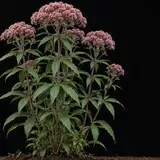
Tall late-summer nectar under a willow's light shade, in the same moist ground. Willow supplies the early-spring end of the season and joe pye weed the late-summer end.

Keep apart
-
Septic leach fields, drains, sewer and water linesNot a plant conflict but the most important siting rule on this page. Willow roots follow moisture into drain and septic lines and are among the most common causes of root-blocked pipes. Keep a shrub willow 50 feet clear and a tree or weeping willow 75-100 feet clear, and treat root barriers as unreliable rather than a solution.
-
Paving, foundations and drivewaysWide shallow roots lift slabs, paths, and drives, and brittle limbs come down on cars and roofs in storms. A willow needs open ground; if the only spot is beside the house, the honest answer is to plant a different genus.
Varieties · 6
You pick one when you add Willow to your garden. Its days to maturity set your harvest window.
Shrub willows (pussy willow and native thicket willows) 3 varieties
Pussy Willow (Salix discolor)
Multi-stemmed shrub with reddish stems and plump silvery-grey catkins on bare wood in late winter.
speciesnativeshowy-catkinscoppiceThe classic garden willow of eastern and northern North America, and the best choice for most yards. A 10-20 foot multi-stemmed shrub whose fat, silky grey catkins open on bare wood in late winter - the plant everyone knows from florists, and one of the single most valuable early pollen sources for emerging queen bumblebees. Male plants carry the showy catkins; a female plant makes seed instead. Coppice it every couple of years in deep winter and it stays a manageable 8-10 feet with strong young stems. Cut catkins for a vase sparingly, if at all - they are worth more to the bees than to you.
Coyote Willow / Sandbar Willow (Salix exigua)
Slender suckering thicket of upright stems with very narrow silvery-green leaves.
speciesnativewesternthicketThe willow of western washes, sandbars, and irrigation ditches, native across most of the continent and especially valuable in the arid West where the catalog is thin. A slender, suckering thicket-former 6-15 feet tall with narrow silvery leaves, spreading by root sprouts to hold loose sand and gravel. Excellent for a wet swale or streambank on a western property and a good regional alternative to eastern willows - but it runs, so give it room rather than a border.
Arroyo Willow (Salix lasiolepis)
Grey-barked shrub or small tree with dark green leaves, pale beneath, and early yellow-grey catkins.
speciesnativecaliforniawest-coastThe common willow of California and Southwest creeks and canyons, a 10-25 foot shrub or small tree that is one of the most important riparian plants on the West Coast. It is a major host for western butterflies including mourning cloak and Lorquin's admiral, and one of the earliest nectar sources in a California spring. For a Western gardener with a wet swale, seasonal creek, or rain-garden basin, this is usually the right willow to plant.
Tree willows (black willow and other large natives) 1 variety
Black Willow (Salix nigra)
Large multi-trunked tree along water, with rough dark furrowed bark and narrow bright green leaves.
speciesnativelarge-treeriparianThe largest native willow in North America and the backbone tree of eastern and central river systems - 40 to 70 feet, often multi-trunked, with dark furrowed bark and narrow bright green leaves. It is the standard plant for holding a streambank or a pond edge together, roots readily from live stakes, and carries the genus's full wildlife payload. It is also fast, brittle, short-lived, and wide-rooted, so it belongs on open, wet acreage rather than in a yard.
Weeping and ornamental willows 2 varieties
Weeping Willow (Salix babylonica and hybrids)
Broad domed tree with long trailing golden-green branches sweeping to the ground.
introducedornamentallarge-treeinvasive-rootsThe tree everyone pictures, and the one that causes nearly every willow horror story. Its trailing golden curtain is genuinely beautiful, but it is a Eurasian introduction rather than a native, it grows fast to 40-50 feet with an equally wide crown, its roots are the most aggressive in the genus at finding drains and septic lines, its brittle limbs shatter in storms, it drops litter continuously, and it is often finished at 30-50 years. Plant it only on open ground at least 100 feet from any building, drive, or buried pipe - and if the goal is wildlife rather than the silhouette, plant a native willow instead.
Dappled Willow (Salix integra 'Hakuro Nishiki')
Rounded small shrub or grafted standard with pink-flushed new shoots aging to white-mottled green.
introducedornamentalvariegatedcompactA compact Japanese ornamental grown for new growth that emerges shrimp-pink and matures to white-and-green variegation, usually sold as a small shrub or a grafted standard on a short trunk. It stays 4-6 feet if cut back hard each late winter, which is also what keeps the pink color coming. A reasonable choice for a small damp spot where a native willow will not fit, though it is an introduced ornamental and its wildlife value is a fraction of a native willow's.
Grower tips
Notes from growers, tagged with the zone they grow in. A person reads every post before it appears.
Nobody has posted about Willow yet. The first one usually saves someone a season.
Free account. Your post shows your grower name and zone, never your email.