Add it to your home screen and it opens full screen: no browser bars, one tap away, and everything stays signed in. Free, nothing to download from an app store.
- Tap the Share button in your browser
- Scroll down and choose “Add to Home Screen”
- Open GrowSomeFood from your home screen
- Open your browser’s menu
- Choose “Add to Home screen” or “Install app”
- Open GrowSomeFood from your home screen
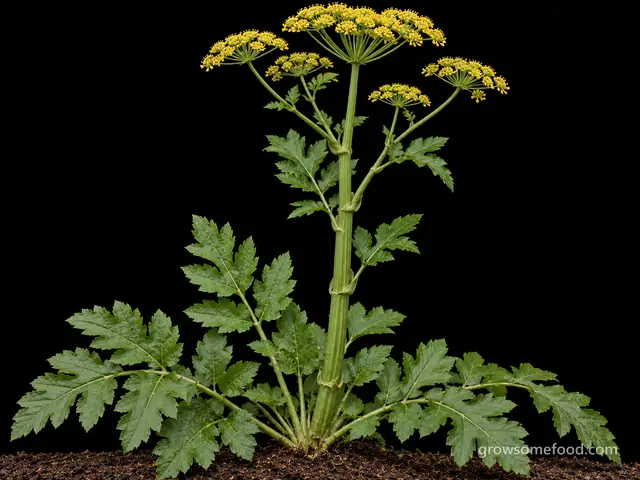
Wild Parsnip
The garden parsnip gone wild - a 4- to 5-foot roadside biennial with flat yellow umbels whose sap, in sunlight, burns skin badly enough to blister and scar. It is the reason parsnip growers wear sleeves, and it is not a foraging opportunity.
The hazard is the SAP, not eating it. Wild parsnip sap on skin plus sunlight causes phytophotodermatitis: a delayed chemical burn that reddens in about 24 hours, blisters by 48, and leaves brown stains that can last a year. Breaking a stem, string-trimming, or walking through a stand in shorts is enough. If sap touches you, get out of the sun, wash with soap and cool water at once, and keep the area covered from sunlight for at least 48 hours. Sap in the eye needs medical care.
Overview
Wild parsnip is not a different plant from the parsnip in your vegetable bed. It is Pastinaca sativa, the same species, escaped from cultivation and naturalized along roadsides, trails, ditches, pastures and old fields across almost all of North America. Feral plants make a coarse rosette in year one and a grooved 4- to 5-foot flowering stem in year two, topped with flat yellow umbels - and the yellow is what makes it easy to pick out of a roadside otherwise full of white lace.
The danger is entirely about skin, not eating. Every part of the plant carries furanocoumarins. When sap gets onto skin that is then exposed to sunlight, those compounds react with UV light and destroy the surface cells. The result is phytophotodermatitis: nothing at all for the first day, then redness, then a deep chemical burn that blisters, weeps and heals slowly, leaving brown discolouration that can last a year or more on skin that stays sun-sensitive for longer. Emergency departments across the upper Midwest and Northeast see it every summer, usually from string-trimming or from walking a trail in shorts.
This entry exists to be recognized and acted on, not grown. If you want parsnips, sow parsnip seed in a prepared bed - see the 'parsnip' entry, which carries the same gloves-and-sleeves rule for exactly the same chemistry.
Quick facts
For identification. Not a growing guide.
- Life cycle
- Biennial
- Where it grows
- Full sun · Part sun, well-drained soil
- Height
- 48 in24 to 60
- Spread
- 20 in12 to 36
- Cold
- Takes hard frostdamaged below -30°F
- Heat
- Struggles above 95°F
- Self-sows
- Yes. Never let it set seed.
Through the year
How to recognize it in each season.
Year 1 rosette (identify and remove)
Apr to Oct, every year- A flat rosette of broad, toothed, celery-like leafletsYear one is a ground rosette with pinnately compound leaves - a central stalk carrying 5 to 15 broad, coarsely toothed, mitten-shaped leaflets that look like a large flat-leaf celery. Crushed, it smells of parsnip. It does not yet look dangerous, and it still burns: the sap is fully phototoxic at this stage. Wear gloves before you touch it.
- Kill it now - a severed taproot cannot come backThe rosette year is the cheap year. Wearing gloves and long sleeves, on an overcast day or in the evening, cut the taproot with a spade an inch or two below the crown. It is a biennial, so a plant killed before it bolts never flowers and never seeds. Bag the crowns for the trash.
Key signs- Flat rosettes of broad toothed leaflets on sunny disturbed ground
- New rosettes appearing each spring from a seed bank about four years deep
- Rosettes along a mowed verge, trail edge or fence line
Year 2 - yellow umbels (June to August)
Jun to Aug, every year- Flat YELLOW umbels on a grooved 4-5 ft stemIn year two it bolts to 4 or 5 feet on a stout, hairless, deeply grooved and ridged stem, and flowers in flat-topped umbels of small yellow flowers 3 to 8 inches across. Yellow is the tell: Queen Anne's lace, poison hemlock, water hemlock and cow parsnip all flower white. No deadly North American carrot-family plant flowers yellow at this size.
- Never mow or string-trim it in daylightA string trimmer turns a stand into an aerosol of sap and puts it on your face, arms and neck at once - this is how the worst burns happen. Mowing does not kill it either; cut plants regrow and flower shorter. If a stand must be cut, do it covered head to foot, on an overcast day or after sundown.
- Cut the stems at full bloom, before seed setsThe control window is narrow: cut flowering stems at the base just after full bloom and before the seed hardens. Cut umbels left lying on the ground finish ripening their seed, so bag everything you cut for the trash. Do not compost it and do not burn it.
Key signs- Flat yellow umbels standing above roadside and trail vegetation
- Seed forming - flat, oval, papery discs turning tan
- Skin exposure while cutting, especially face and forearms
Seed drop and dead stalks (still phototoxic)
Sep to Mar, every year- Dead and dried stems still carry the burnThe plant dies after seeding, but furanocoumarins persist in dead and dried plant material, so clearing last year's brown stalks in spring sunshine can still burn you. Glove and sleeve up for winter and spring cleanup exactly as you would in July, and treat standing dead stalks as live hazard.
- Expect several seasons, not one afternoonSeed stays viable in soil for around four years, so a cleared site keeps producing rosettes. Walk the ground every spring and cut new rosettes before they bolt. Control means several consecutive seasons of stopping seed, and reseeding the bare ground with competitive grasses or natives so the seedlings have no open soil to take.
Key signs- Standing dead stalks that still burn on contact
- Fresh rosettes each spring from the surviving seed bank
- Bare disturbed soil where new seedlings can establish
Hazards
Carrot-family MisidentificationSeverity High DisordernowAny intention to dig a wild carrot-family root; low ferny glossy rosettes with a musty smell and purple-blotched hairless stems, which is poison hemlock; short 1-3 ft yellow umbels blooming in May and June with neat lance-shaped leaflets in threes, which is golden alexanders.
Any intention to dig a wild carrot-family root; low ferny glossy rosettes with a musty smell and purple-blotched hairless stems, which is poison hemlock; short 1-3 ft yellow umbels blooming in May and June with neat lance-shaped leaflets in threes, which is golden alexanders.
Suspected ingestion of any wild umbel plant is an EMERGENCY - call poison control or emergency services immediately and do not wait for symptoms. Take a piece of the plant or a photograph. There is no antidote for either hemlock; treatment is urgent supportive hospital care.
Do not forage the carrot family from roadsides and ditches at all. Separate wild parsnip from golden alexanders by height, bloom time and leaflet shape before removing anything, and wait for flowering if unsure.
Two failure modes, in opposite directions. Foragers who recognise wild parsnip as the familiar garden vegetable go digging in ditches that also grow poison hemlock, whose first-year rosette is another low carrot-family rosette in the same ground - and hemlock is lethal with no antidote. In the other direction, people destroy golden alexanders, a harmless native spring wildflower with yellow umbels, believing it is wild parsnip.
Sap Burn in Sunlight (phytophotodermatitis)Severity High DisordernowStreaky redness appearing a day after clearing work, following the lines where stems brushed skin; blistering on forearms, shins, neck and face; any sap contact at all, since there is nothing to see during the window when action still helps.
Streaky redness appearing a day after clearing work, following the lines where stems brushed skin; blistering on forearms, shins, neck and face; any sap contact at all, since there is nothing to see during the window when action still helps.
Get out of the sun at once, wash with soap and cool water, and keep the skin covered from sunlight for at least 48 hours - that shielding is what limits the burn. Do not break blisters. See a doctor for large areas, facial involvement or signs of infection; severe cases are treated as burns. Sap in the eye needs immediate medical care. Protect healed skin from sun for months.
Long sleeves, long trousers, closed boots, waterproof gloves over the cuff and eye protection for any contact. Work on overcast days or after sundown. Never string-trim or mow it in daylight. Wash skin, tools and clothing afterwards, separately.
The defining hazard. Sap from any part of the plant, on skin later exposed to sunlight, causes a delayed chemical burn: nothing for the first day, then redness at about 24 hours, blistering by 24 to 48, then weeping wounds that heal slowly and leave brown discolouration lasting months to a couple of years, on skin that stays sun-sensitive afterwards. String-trimming, mowing, pulling plants bare-handed and walking a stand in shorts are the usual routes. Dead and dried stalks remain phototoxic.
Roadside, Trail & Meadow InvasionSeverity High DisordernowYellow umbels standing above verge vegetation in midsummer; expanding patches along a mowed edge; new rosettes appearing each spring in ground you cleared last year.
Yellow umbels standing above verge vegetation in midsummer; expanding patches along a mowed edge; new rosettes appearing each spring in ground you cleared last year.
Sever the taproot an inch or two below the crown at rosette stage, or cut flowering stems at the base just after full bloom. Bag everything; do not compost or burn. Repeat for several consecutive seasons until new rosettes stop appearing.
Kill rosettes before they bolt, and never let a plant set seed. Time any verge mowing to full bloom, before seed forms, since mowing after seed set carries seed along the corridor on the deck. Keep bare ground covered - sow competitive grasses or natives into cleared patches.
A prolific biennial that colonises sunny disturbed corridors - verges, rail trails, fence lines, pasture edges, prairie restorations - and forms dense stands that shade out native forbs and put a burning plant along paths people walk. One plant sets hundreds to thousands of seeds and the seed bank stays viable about four years.
Livestock & Pet PhotosensitivitySeverity Medium DisorderBlistering, crusting or raw patches on muzzles, udders, teats and unpigmented skin in animals with access to a heavy stand; animals seeking shade unusually; a pet rubbing at its muzzle after a walk through a verge.
Blistering, crusting or raw patches on muzzles, udders, teats and unpigmented skin in animals with access to a heavy stand; animals seeking shade unusually; a pet rubbing at its muzzle after a walk through a verge.
Move animals into shade and off the stand, and call a veterinarian for blistering or raw skin. Keep affected animals out of direct sun until the skin has healed.
Fence stock away from heavy stands, control it in grazed pasture before it flowers, keep dogs on paths where verges are infested, and rinse an animal that has pushed through a stand.
Grazing animals that eat significant amounts of wild parsnip can develop photosensitivity, with blistering and sloughing on light-skinned or thin-haired areas - muzzles, udders, teats and around the eyes. Pets pushing through a stand can blister on the muzzle and belly. Fur and hide protect most of the body, which is why the injuries concentrate where they do.
Grower tips
Notes from growers, tagged with the zone they grow in. A person reads every post before it appears.
Nobody has posted about Wild Parsnip yet.
Free account. Your post shows your grower name and zone, never your email.