
Add it to your home screen and it opens full screen: no browser bars, one tap away, and everything stays signed in. Free, nothing to download from an app store.
- Tap the Share button in your browser
- Scroll down and choose “Add to Home Screen”
- Open GrowSomeFood from your home screen
- Open your browser’s menu
- Choose “Add to Home screen” or “Install app”
- Open GrowSomeFood from your home screen
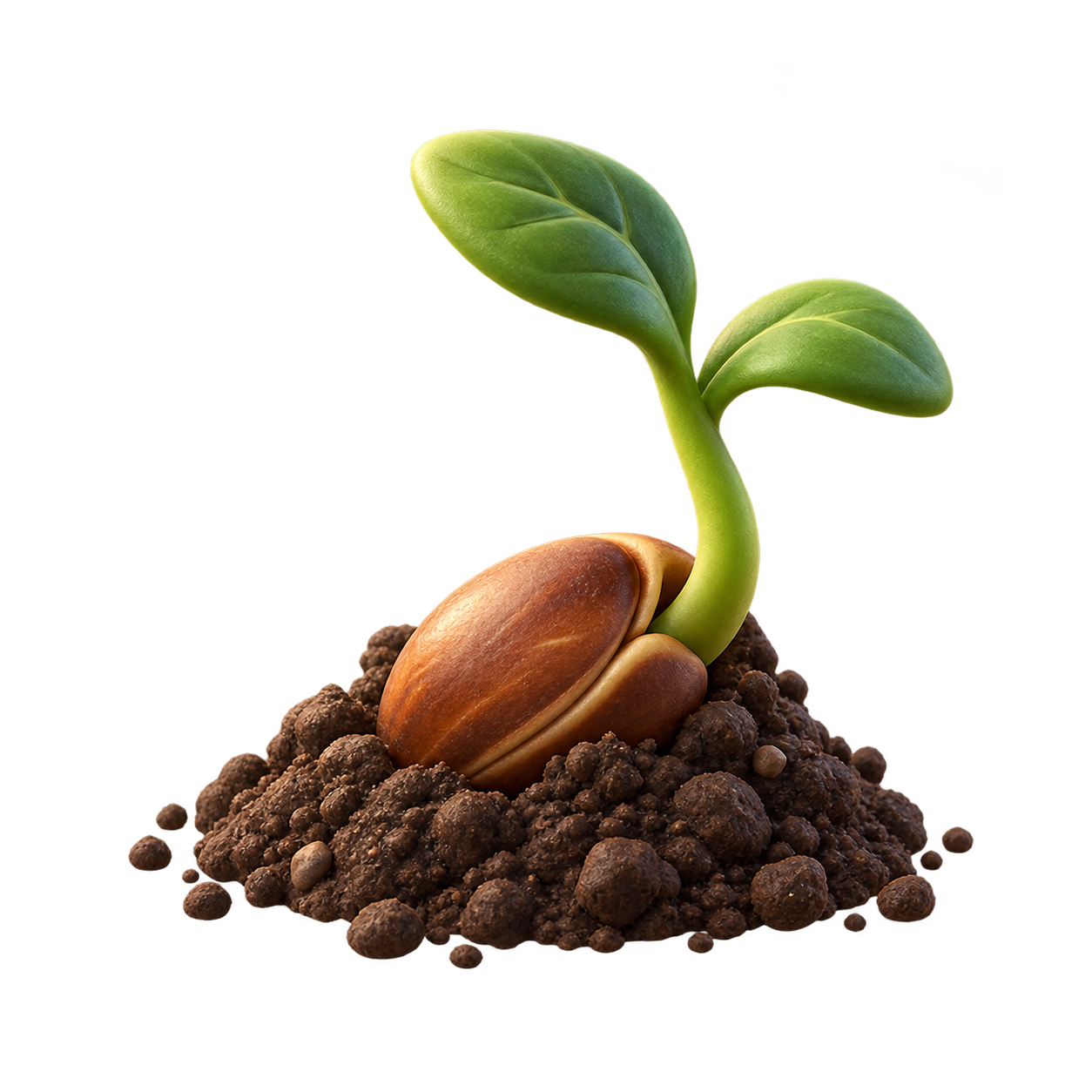
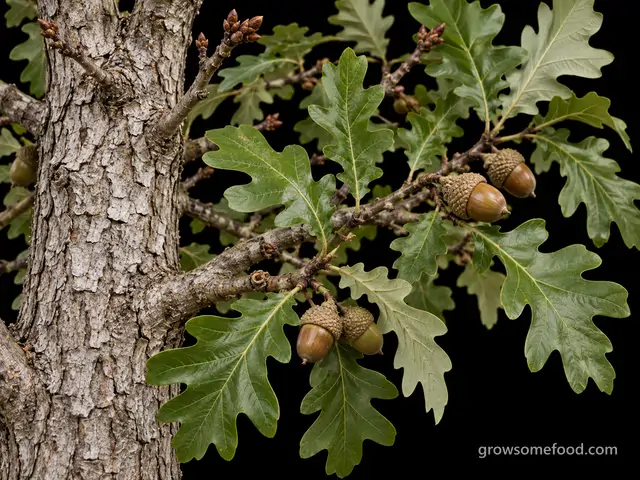
White Oak
The mighty, three-century native shade tree and the single most valuable wildlife plant you can grow - it feeds more caterpillars (and thus birds) than any other tree, and drops some of the sweetest acorns of any oak.
Safety notes White-oak acorns are among the sweetest and lowest-tannin acorns and a traditional food, but they are still bitter and must be leached with repeated changes of water before eating; never eat raw acorns in quantity. Acorns and oak leaves are also toxic to dogs (a common autumn poisoning, and an obstruction risk) and to livestock eaten in bulk - discourage dogs from eating acorns under the tree. The tree itself is safe to grow and handle, and is grown chiefly as a shade and wildlife tree.
Overview
The white oak (Quercus alba) is a monarch among trees - a broad, majestic native that can live 300 years or more, spread 80 feet wide, and anchor a landscape for generations. It's slow, stately, and long-term: a tree you plant not for yourself so much as for your grandchildren. Its lobed leaves turn wine-red to russet in fall, and young trees often hold their brown leaves through winter.
The one thing to knowThe white oak (Quercus alba) is a monarch among trees - a broad, majestic native that can live 300 years or more, spread 80 feet wide, and anchor a landscape for generations.
Quick facts
- Sprouts in
- 30 daysRange: 14–60 days
- Soil temperature
- 60 °FRange: 50–70 °F
- Height
- 80 ftRange: 50–100 ft
- Spread
- 75 ftRange: 50–90 ft
- Cold
- Takes hard frostdamaged below -40°F
- Heat
- Struggles above 100°F
- Life cycle
- Perennial, lives about 300 years
- Save seeds
- About 150 days after plantingRange: 120–180 days
- Self-sows
- Yes, expect volunteers
- Soil
- Well-drained
- Water
- Medium
- Plant spacing
- 50 ftRange: 30–80 ft
When to plant
Fall sowing is open for 20 more days. Next: spring, Mar 27 to May 22.
- Direct sow Sep 27 – Nov 8 Open now · 20 days leftAbout 4 weeks before to 2 weeks after your first frost (Oct 25 here)Plant a sound, sprouting white-oak acorn in fall right where you want the tree - white-oak acorns germinate immediately (no dormancy) and a direct-planted acorn grows into a stronger-rooted tree than a transplant. Protect from squirrels.
- Transplant Mar 27 – May 22 Opens in 159 daysAbout 2 weeks before to 6 weeks after your last frost (Apr 10 here)Plant a young container or B&B oak in early spring into deep, well-drained soil with lots of room; plant small, since the taproot resents disturbance.
Frost here: last around Apr 10 (Mar 27 to Apr 24 most years), first around Oct 25. Zone averages, your own yard may run a week or two either way.
Life stages
Establish, grow, repeat
Getting established and returning each season are different parts of the story.
Stage 1 of 4 · Getting established
Years 1-3 - young tree
About the first 3 years after planting
Care at this stage
-
Water deeply while establishing
Water a young oak deeply and regularly through its first 2-3 years, especially in drought. Plant it SMALL - oaks form a deep taproot and resent transplanting once established, so a young tree (or a planted acorn) outgrows and outlasts a big transplant.
-
Mulch wide, keep it off the trunk
A broad mulch ring protects the roots and trunk from mowers and holds moisture; keep it a few inches back from the bark.
-
Give it room - lots of it
White oak becomes a massive, wide-spreading tree (50-80+ feet tall and nearly as wide) that can live 300+ years. Site it far from buildings, pavement, and power lines, with room for a huge canopy and deep roots.
Months are typical seasonal windows; climate, variety, and plant age can shift them.
Harvest
- Mature tree (20-30+ years) - young oaks don't bear acorns
- Acorns fully brown and dropping in fall, heaviest in 'mast' years
- For food: acorns leached of tannins until no longer bitter
- Gather acorns (for wildlife, or leach for food) · every 3 days
- Watch the wildlife feast
Picking pick as they ripen
Watch out for
4 to know. 1 is high-risk: Oak Wilt. 1 is active in October.
Oak WiltSeverity High DiseaseSeason: Apr–JulWilting, yellowing or bronzing of leaves and rapid canopy dieback, often spreading outward tree-to-tree through a stand; veinal chlorosis on live-oak leaves.
Wilting, yellowing or bronzing of leaves and rapid canopy dieback, often spreading outward tree-to-tree through a stand; veinal chlorosis on live-oak leaves.
Consult a certified arborist - management may include trenching to break root grafts and fungicide injection of high-value trees; there is no simple cure once a tree is infected.
NEVER prune or wound oaks in the warm growing season - prune only in the cool dormant months and immediately paint any cuts or storm wounds; avoid moving oak firewood; sever root grafts between trees in known outbreak areas.
A deadly fungal disease that clogs the tree's water-conducting vessels, spread by sap-feeding beetles to fresh wounds and tree-to-tree through connected roots. Live oaks are highly susceptible in parts of their range (notably central Texas), where interconnected roots let it spread through whole groves.
Spongy MothSeverity Medium PestSeason: May–JulBuff, felt-like egg masses about the size of a quarter on the trunk, limbs, and nearby structures in fall and winter; hairy caterpillars with paired red and blue dots in late spring; and, the real signal, near-total leaf loss by early July rather than scattered chewing.
Buff, felt-like egg masses about the size of a quarter on the trunk, limbs, and nearby structures in fall and winter; hairy caterpillars with paired red and blue dots in late spring; and, the real signal, near-total leaf loss by early July rather than scattered chewing.
In a normal year, do nothing: chewed leaves are the point of a keystone tree, and never spray an oak on principle. Only in a genuine outbreak (near-total defoliation, or a second consecutive year) consider Btk timed to the small early-instar caterpillars, which spares most other insects, and water the tree deeply through the summer. Consult an arborist for a large or high-value tree.
Scrape egg masses off the trunk into soapy water over winter, and wrap a burlap band around the trunk in early summer to trap caterpillars that climb down by day. Keep the tree deeply watered through a defoliation summer - drought stress is what turns defoliation into death.
An introduced defoliating caterpillar (Lymantria dispar) of the Northeast, mid-Atlantic, and upper Midwest. In most years it is part of the ordinary caterpillar traffic an oak feeds; in outbreak years it strips white oaks bare by early July, and a second or third consecutive defoliation - especially in a drought summer - can kill a mature tree.
Acorn WeevilSeverity Low PestnowSeason: Sep–OctSmall round exit holes in fallen acorns and larvae inside; infested acorns float in a water test.
Small round exit holes in fallen acorns and larvae inside; infested acorns float in a water test.
Discard infested acorns; no treatment needed for the tree. If you are holding sound acorns for planting, hot-water treatment is the only safe option - about 120°F / 49°C for 30 minutes, then cool and sow promptly. Never dry or freeze white-oak acorns - they are recalcitrant and die; see Storage.
For food or planting, do a float test and discard the floaters; gather acorns promptly after they drop.
Long-snouted weevils whose larvae develop inside acorns, hollowing them out - a factor if you're gathering acorns for food or planting, but harmless to the tree itself.
Oak GallsSeverity Low PestSeason: May–AugRound balls, woolly patches, or bumps on leaves and twigs, each housing a developing insect; sometimes abundant but rarely harmful.
Round balls, woolly patches, or bumps on leaves and twigs, each housing a developing insect; sometimes abundant but rarely harmful.
None warranted; leave them. Heavily galled twigs can be pruned out in the cool season if you object to the look.
None needed - galls rarely harm the tree and support wildlife.
Tiny gall wasps and mites induce the tree to form bumps, balls, and woolly or spiky growths on leaves and twigs. Diverse and curious but essentially harmless, and part of the oak's rich insect community.
Good & bad neighbors
Plant nearby
-
A classic native understory tree that blooms beneath the high oak canopy, mirroring the natural composition of an eastern oak-hardwood forest.
-
Native woodland groundcovers and sedgesUnderplanting an oak with native sedges, woodland wildflowers, and a soft leaf-litter layer supports the ground-dwelling stages of the caterpillars the oak feeds - a 'soft landing' that completes its wildlife value.
-
A native understory small tree that flowers and fruits in the light shade at an oak's edge - a natural layered woodland structure and extra wildlife value.
-
Two keystone, long-lived native canopy trees of the eastern hardwood forest; together they anchor a woodland and support immense wildlife diversity - give each ample room.
Varieties · 3
You pick one when you add White Oak to your garden. Its days to maturity set your harvest window.
White Oak (Quercus alba)
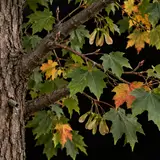
The wild species: a broad, majestic 50-80+ foot shade tree with rounded-lobed leaves turning wine-red to russet in fall, sweet wildlife acorns, and a lifespan of centuries.
Variety details for White Oak (Quercus alba)
Wide-spreading crown of rounded-lobed leaves, wine-red in fall; pale, shaggy-scaly bark.
speciesnativekeystoneacornThe premier keystone wildlife tree of eastern North America.
Swamp White Oak (Quercus bicolor)
A closely related native that tolerates wet, poorly drained, and urban soils far better than true white oak and grows somewhat faster - the go-to 'white oak' for rain gardens, clay, and tough sites, with the same great wildlife value.
Variety details for Swamp White Oak (Quercus bicolor)
Broad crown of glossy leaves, white-backed, with peeling bark; tolerant of wet ground.
speciesnativewet-tolerantfaster-growingBur Oak (Quercus macrocarpa)
A white-oak-group native of the prairies and Midwest, exceptionally tough and drought-, heat-, and cold-tolerant, with corky branches and the largest acorns of any oak.
Variety details for Bur Oak (Quercus macrocarpa)
Massive rugged tree with corky twigs and huge fringed-cap acorns.
speciesnativedrought-tolerantprairieIdeal for open, dry, or windy sites where other oaks struggle.
Grower tips
Notes from growers, tagged with the zone they grow in. A person reads every post before it appears.
Nobody has posted about White Oak yet. The first one usually saves someone a season.
Free account. Your post shows your grower name and zone, never your email.