Add it to your home screen and it opens full screen: no browser bars, one tap away, and everything stays signed in. Free, nothing to download from an app store.
- Tap the Share button in your browser
- Scroll down and choose “Add to Home Screen”
- Open GrowSomeFood from your home screen
- Open your browser’s menu
- Choose “Add to Home screen” or “Install app”
- Open GrowSomeFood from your home screen
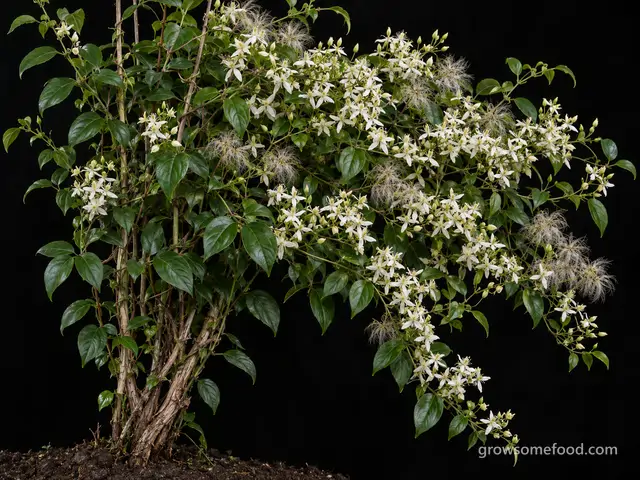
Sweet Autumn Clematis
Sweet autumn clematis is not food. Like other Clematis and its buttercup relatives it contains ranunculin, which turns to protoanemonin when leaves or stems are crushed - the sap raises a rash and blisters on sensitive skin, and chewing any part burns the mouth and causes vomiting and diarrhea. Wear gloves and long sleeves to cut it, and keep it away from grazing animals and chewing pets. Drying breaks the irritant down, so dried material in hay is not the concern; the fresh plant is.
Overview
The fragrant white vine that blankets fences every September - still sold in every garden center, and the reason woodland edges across the mid-Atlantic and Southeast are smothered in it. The native virgin's bower looks almost the same and belongs there.
Sweet autumn clematis (Clematis terniflora) is one of the easiest sells in the nursery trade: a fast, tough, undemanding vine that ends the summer under a solid blanket of small cream-white flowers with a powerful sweet almond scent, at a season when little else is doing anything. It is genuinely lovely. It is also, across the eastern United States, one of the most reliably escaped ornamental vines there is — because every one of those flowers becomes a seed with a feathery tail, a mature plant makes thousands of them, and the wind takes them wherever it likes.
Where it lands, it climbs 15 to 30 feet, blankets shrubs, saplings, fences and hedgerows, and shades out what is underneath. It resprouts hard from the crown when cut, so it is not a one-afternoon job. And there is a specific reason this plant earns its own entry: it is almost indistinguishable from the native virgin's bower (Clematis virginiana), which has the same white flowers, the same silvery plumes, the same habit and a real place in eastern woodlands. The two get confused constantly — people plant the invasive thinking it is native, and cut the native thinking it is the invasive. One check separates them, and this entry leads with it: look at the leaf edges.
At a glance
- Sun
- Full sun · Part sun · Part shade
- Water
- Medium
- Spacing
- 36–600 in (typ. 120)
- Mature height
- 120–360 in (typ. 240)
- Start by
- —
- Frost
- Hardy
- Spread
- 60–480 in (typ. 180)
- Soil
- Well-drained
- Temperature
- Damaged below -30°F · struggles above 100°F
- Self-sows
- Yes — expect volunteers
When to plant
No planting window on record for this zone.
Life stages
- Spring & summer growth (identify & control) Apr, May, Jun, Jul, Aug (yearly)
-
Recognize it: leaflets with SMOOTH edgesSweet autumn clematis is a fast twining vine to 15-30 feet with opposite, compound leaves of usually three (sometimes five) leaflets. One check settles it: this plant's leaflets are ENTIRE - smooth-edged, thick and glossy, often with a heart-shaped base. The native virgin's bower (Clematis virginiana) is nearly identical in flower and seed head, but its leaflets are coarsely TOOTHED or lobed. Toothed means native; smooth means the invasive.
-
Pull the seedlings now, while they still pullSeedlings come up by the dozen wherever last fall's seed landed - fencerows, shrub bases, mulch beds, the woodland edge - and they lift easily by hand while the root is still a slender taproot in moist soil. An hour pulling seedlings in early summer saves a day cutting mature vine later. Get them before they twine into a shrub, where separating them out becomes genuinely difficult.
Smooth-edged glossy leaflets in threes twining through shrubs and fencesSeedlings appearing wherever wind-borne seed landed last fallA vine blanketing the crown of a shrub or small tree -
Recognize it: leaflets with SMOOTH edges
- The late-summer white blanket Aug, Sep (yearly)
-
A solid sheet of small, fragrant, cream-white flowersIn August and September the vine covers itself in a dense blanket of small, four-parted, cream-white flowers with a strong sweet almond-and-vanilla scent. This is the display that sold it, and a blanket shading whatever it covers. The native virgin's bower blooms a little earlier and far more sparsely, and it is dioecious, so a native plant carries either stamens or pistils but not both. A solid white sheet on a roadside in September is almost always the invasive - check the leaf edges.
-
The last cheap chance to stop this year's seedFlowering is your warning that seed is about a month away. Cutting the vine back hard now, while it is in bloom, removes most of this year's seed crop before it forms. It will resprout from the crown - that is expected and it does not mean the work was wasted - but it will not seed, and seed is what puts this plant three fields away.
A solid fragrant white sheet over shrubs, fences and hedgerows in late summerThe same bloom on roadsides and woodland edges nearby - a sign it is already loose -
A solid sheet of small, fragrant, cream-white flowers
- Silvery plumed seed heads (cut them off) Sep, Oct, Nov (yearly)
-
Fluffy silver plumes - thousands of seeds per plantEvery flower becomes a seed carrying a long, feathery, silvery tail, and the vine finishes the season smothered in fluffy plumed heads. They are genuinely beautiful, and they are the entire problem: a mature plant releases thousands of seeds, and the plumes carry them a long way on the wind and float them down streams. This is why the vine turns up in woods where nobody planted anything.
-
Cut and bag the seed heads before they fluff openCut the seed heads off while they are still tight and green-brown, bag them, and bin them. Once the plumes open and dry, handling the vine simply launches them. This one job limits spread more than cutting stems does, because wind carries seed far further than the vine can ever crawl. Wear gloves - the sap raises a rash on many people.
Silvery feathery plumes covering the vinePlumes breaking loose on the wind or landing on waterA crop of new seedlings downwind and downstream the following spring -
Fluffy silver plumes - thousands of seeds per plant
- Winter - the cut-stump window Jan, Feb, Mar, Dec (yearly)
-
Old stems and leftover plumes give it away in winterThe leaves drop in winter across most of its range, though it stays semi-evergreen in the warm South, and the tangle of old stems plus the remnants of the plume clusters stays put - so a bare hedgerow shows you exactly how much vine is in it. Older stems are ridged and shreddy, and a long-established plant can have a woody base as thick as a wrist.
-
Cut low, treat the stump, and expect to come backSweet autumn clematis resprouts vigorously from the crown, so cutting on its own is a pruning rather than a control. The usual approach is to cut the stem close to the ground and treat the fresh cut surface immediately, or to dig small plants out root and all while the soil is moist. If you use a herbicide, choose a product whose LABEL lists the site you are treating and follow that label - it is legally binding, not advisory. Do not leave cut stems lying on soil; they can root at the nodes.
Thick woody stems at the base of a hedgerow or shrubLeftover plume clusters marking last year's seed cropVigorous resprouts from crowns cut the previous year -
Old stems and leftover plumes give it away in winter
Watch out for
Smothering of Shrubs & Hedgerows High
The core ecological hazard. The vine climbs 15 to 30 feet and blankets shrubs, saplings, hedgerows and fence lines, shading what it covers and eventually bending or breaking smaller plants under the weight of growth. It monopolizes woodland edges, roadsides, fencerows and floodplains, converting structurally varied edge habitat into a single draped canopy and displacing the native vines - virgin's bower among them - that support native insects.
Watch for: A vine blanketing the crown of a shrub or small tree; a fence line or hedgerow disappearing under one plant; a solid white sheet of bloom in September along roadsides and woodland edges; native vines thinning out of ground it has taken.
Prevent: Never plant it, under any of its trade names. Pull seedlings while they are small and the root is still a slender taproot. Watch the edges of your property, since wind-borne seed arrives from elsewhere and establishes on disturbed ground first.
Treat: Cut stems at the base to free a shrub and let the top growth die in place rather than tearing it down and stripping bark. Cut mature stems low and treat the fresh cut surface immediately, because the plant resprouts vigorously from the crown, or dig out crowns of smaller plants. Late summer to fall is the most effective timing. Use a product whose label lists the site being treated, and follow the label. Follow up for three or four years.
Wind-Borne Plumed Seed (why it escapes) High
Why containment is impossible and why this vine reaches places nobody planted it. Every flower on a mature plant sets a seed carrying a long feathery tail, producing thousands of wind-dispersed seeds per plant each fall; they also float, so a vine on a stream bank seeds the whole corridor below it. Seedlings establish readily on disturbed ground. Separately, cut stems left lying on soil can root at the nodes, so dumped trimmings start new plants.
Watch for: Silvery feathery plumes covering the vine in fall; plumes breaking loose on the wind or landing on water; a flush of seedlings the following spring along fencerows, shrub bases, mulch beds and woodland edges, often well downwind of any planting.
Prevent: Cut and bag the plumed seed heads every fall while they are still tight and green-brown - the highest-return single job on this plant. Cutting the vine back hard during bloom also removes most of that year's seed crop before it forms. Never dump trimmings; bag them.
Treat: Bag seed heads and trimmings for the trash, not the compost or brush pile. Pull the resulting seedlings while small and the taproot is slender. Expect fresh seed to keep blowing in from neighboring infestations, so plan on annual seedling patrols rather than a single clearance.
Clematis Sap (protoanemonin irritant) Medium
A direct hazard to people, pets and livestock, shared across the genus. Clematis, like other members of the buttercup family, contains ranunculin, which converts on crushing or chewing to protoanemonin - an acrid irritant. Contact with the sap causes stinging, redness and, in sensitive people, genuine blistering after prolonged handling, and chewing any part burns the mouth and causes drooling, vomiting and diarrhea. Drying breaks the compound down, so dried plant material is not the concern; fresh growth is.
Watch for: Itching, redness or blisters on hands and forearms after an afternoon of cutting or pulling; drooling, mouth pawing or vomiting in a pet that has chewed the vine; grazing animals with access to fresh growth along a fence line.
Prevent: Wear gloves and long sleeves for any cutting, pulling or pruning, and wash skin afterward. Keep fresh growth away from chewing pets and grazing animals, and do not leave fresh cuttings where livestock can reach them.
Treat: For skin contact, wash the area promptly with soap and water and treat as contact dermatitis; see a clinician for extensive blistering. If a person or pet has chewed or swallowed any part, rinse the mouth and call poison control or your veterinarian rather than waiting for symptoms.
Varieties · 3
Varies - virgin's bower looks much like sweet autumn clematis but with toothed leaflets and lighter bloom; leather flowers carry nodding urn-shaped purple or red bells.
Virgin's bower (Clematis virginiana) is the direct substitute: the same white late-summer froth and silvery plumes on an eastern native, distinguished by coarsely TOOTHED leaflets, and it hosts native insects this vine does not. Native leather flowers (Clematis viorna, C. crispa, C. pitcheri) give nodding bell-shaped flowers instead. For covering a fence or arbor, crossvine, trumpet honeysuckle (Lonicera sempervirens), Carolina jessamine and American wisteria all work without seeding the neighborhood. Ask a local native-plant nursery which suits your region.
Identical to the species - smooth-edged glossy leaflets in threes, a September sheet of fragrant white flowers, silvery plumed seed.
The same plant under its old and incorrect trade names. US nurseries have sold Clematis terniflora as C. paniculata for a century, and also as C. maximowicziana and C. dioscoreifolia. (The true C. paniculata is a New Zealand species barely grown here.) If a pot is labelled with any of these and the leaflets are smooth-edged, it is sweet autumn clematis. Read the leaf, not the label.
A solid white fragrant sheet over a fence or shrub in September, followed by fluffy silver plumes; leaflets in threes with entirely smooth edges.
The species: a fast twining vine to 15-30 feet with opposite compound leaves of three to five SMOOTH-EDGED, thick, glossy leaflets, smothered in small fragrant cream-white flowers in August and September and then in silvery plumed seed heads. Thousands of wind-borne seeds per plant, vigorous resprouting from the crown, and sap that blisters sensitive skin. Identify and control it; never plant it.
Grow
How to recognize it and how not to kill the native by mistake: smooth-edged leaflets mean the invasive Clematis terniflora, coarsely toothed leaflets mean the native virgin's bower - plus bloom timing, dioecy and leaf texture as backup checks.
You should not plant sweet autumn clematis, and the reason this page matters most is that its native twin is worth protecting. Get the discriminator right before you cut anything.
The check that settles it: leaf margins. Sweet autumn clematis has entire leaflets — smooth-edged, thick, glossy, often with a heart-shaped base. The native virgin's bower (Clematis virginiana) has coarsely toothed or lobed leaflets, thinner and duller in texture. Both carry opposite, compound leaves of three (sometimes five) leaflets on a twining vine, and both climb by wrapping their leaf stalks around whatever they meet. Toothed is native. Smooth is the invasive. Nothing else about the two plants is as reliable.
Backup checks. Bloom. The invasive flowers a little later and vastly more heavily — a solid unbroken white sheet in late August and September, versus the native's lighter, more scattered bloom from midsummer on. Flower structure. Virgin's bower is dioecious: a native plant carries either stamens or pistils, not both, so a close look at a few flowers on one vine will show all-male or all-female. Sweet autumn clematis has perfect flowers, with both. Winter. The native is fully deciduous; the invasive is semi-evergreen in the warm South. Scent. The invasive's almond-vanilla fragrance carries much further, which is part of why it was planted.
What both of them are not. Neither is the large-flowered garden clematis (Clematis hybrids with saucer-sized purple or pink flowers) — those are different plants entirely and not the subject of this warning. And a nursery pot labelled Clematis paniculata in the United States is, in practice, almost always C. terniflora: the trade has used paniculata, maximowicziana and dioscoreifolia for this species for a century, so the label on the pot will not save you. Read the leaf.
It grows in full sun to part shade in almost any soil, tolerates drought and neglect once established, and spreads into fencerows, roadsides, woodland edges, floodplains and riverbanks. There is no site where it stays a tidy garden vine.
Propagation & seed saving
Why it escapes: thousands of wind-borne plumed seeds per plant carried on the wind and floated by water, plus vigorous resprouting from the crown and rooting from cut stems left on the ground.
Sweet autumn clematis spreads by seed, and it does so at a scale that makes containment impossible. Every one of the thousands of flowers on a mature vine sets a seed carrying a long, feathery, silvery tail, and those plumes are built for wind dispersal. They also float, so a vine on a stream bank seeds the whole corridor below it. Germination is easy and seedlings establish readily in disturbed ground — roadsides, fencerows, mulched beds, the edge of a woodlot — which is why the vine turns up hundreds of yards from anything anyone planted. Cutting the seed heads off while still tight and green-brown is the single highest-value job on the plant, and it takes an afternoon.
It also holds on stubbornly once rooted. Cut it at the base and it resprouts vigorously from the crown, often more densely than before, so cutting alone is pruning rather than control; the standard method is to cut low and treat the fresh cut surface immediately, or to dig small plants out root and all in moist soil. Cut stems left lying on the ground can also root at the nodes, so trimmings need bagging rather than dumping at the back of the property.
There is no safe form of it. Nursery selections of C. terniflora are the same species, set the same fertile seed, and are frequently sold under the older names paniculata and maximowicziana.
Care
Control, not care: cut and bag the seed heads first, pull seedlings while they pull, cut mature stems low and treat the stump because it resprouts, bag every trimming, and replace it with the native virgin's bower.
For sweet autumn clematis, care means removal, and the order is chosen to get the most out of the least work.
Cut the seed heads first. Before anything else, go over the vine in early fall and cut off the plumed heads while they are still tight and green-brown, then bag them for the trash. Once the plumes open, handling the vine broadcasts them. Wind moves seed vastly further than the vine can crawl, so this is the job with the best return, and it is worth doing even in a year when you cannot get to the rest.
Pull the seedlings. Young plants lift easily by hand in moist soil while the root is still a slender taproot. Work fencerows, shrub bases and mulch beds in early summer, before they twine into anything.
Cut mature vines low and treat the stump. An established plant resprouts hard from the crown, so cut the stem close to the ground and treat the fresh cut surface immediately, or dig out the crown entirely on smaller plants. Free the shrub or tree it is on by cutting the stems at the base and letting the top growth die in place rather than tearing it down and stripping bark. If you use a herbicide, choose a product whose label lists the site you are treating and follow that label — it is legally binding, not advisory. Late summer to fall, when the plant is moving reserves down into the roots, is the most effective timing for a cut-stump treatment.
Protect yourself and dispose properly. Wear gloves and long sleeves: the sap raises a rash and blisters on sensitive skin. Bag trimmings rather than dumping them, because cut stems root at the nodes.
Then replant. The obvious substitute is the plant it imitates: virgin's bower (Clematis virginiana), which gives the same white late-summer froth and silvery plumes and belongs in eastern woodland edges. Native leather flowers (Clematis viorna, C. crispa, C. pitcheri) offer nodding bell flowers instead. Crossvine, trumpet honeysuckle, Carolina jessamine and American wisteria all cover a fence or arbor without seeding the neighborhood. Expect to follow up on resprouts and fresh seedlings for three or four years — the seed already in your soil, and the seed still blowing in from up the road, will keep arriving.
Nutrition
Not a food and an active skin irritant - Clematis sap carries protoanemonin, which blisters skin and burns the mouth. Ecologically it is a subtraction, replacing structurally useful native vines with a blanket that shades out what it covers.
Sweet autumn clematis is not eaten, and it is worth knowing why rather than just being told. Like its buttercup relatives — and like lesser celandine, another invasive in this family — Clematis contains ranunculin, which converts on crushing to protoanemonin, an acrid blistering irritant. In practice that means the sap raises contact dermatitis and, in sensitive people, genuine blisters after an afternoon of cutting, and that chewing any part burns the mouth and causes vomiting and diarrhea. Gloves and long sleeves are not optional for a serious removal session. Grazing animals and chewing pets should be kept away from the fresh plant; drying breaks the compound down, so dried material in hay is not the concern.
Ecologically its contribution is negative. The vine blankets shrubs, saplings and hedgerow trees and shades them, and a heavy load can bend and break the plant underneath. Its late flowers do draw bees and it is often defended on those grounds, but the comparison that matters is with what it displaces: the native virgin's bower flowers in the same season for the same pollinators and hosts native caterpillars, and native vines generally support insect life that this one does not. Swapping a wall of C. terniflora for a wall of C. virginiana loses you nothing at all and gives the food web back.
History
Introduced from Japan around 1877 as an ornamental and marketed for a century under three different Latin names, it escaped through the mid-Atlantic and Southeast while remaining, in most states, perfectly legal to buy.
Clematis terniflora reached the United States from Japan around 1877, in the same wave of Asian ornamental introductions that brought wintercreeper, Japanese honeysuckle and Callery pear. It sold on its own merits: fast, hardy from zone 4 to zone 9, indifferent to soil, and covered in fragrant white bloom in September when the rest of the garden has given up. It has been in continuous commerce ever since.
The naming has been a mess throughout, which matters because it still confuses buyers. The plant has been traded as Clematis paniculata, C. maximowicziana and C. dioscoreifolia as well as under its correct name; a pot labelled C. paniculata in a US garden center is, in practice, virtually always this species. That tangle helped it stay invisible in invasive assessments for a long time.
Escape followed the usual arc. By the late twentieth century it was established through the mid-Atlantic and Southeast, blanketing roadsides, fencerows, floodplains and woodland edges, and it now appears on the invasive-plant lists of many eastern states and regional invasive councils. Regulation, though, has lagged badly: unlike Callery pear or Japanese barberry, sweet autumn clematis is rarely covered by a sale ban, and in most of the country it remains perfectly legal to buy. Several states have been adding ornamental invasives to their restricted lists quickly, so check your own state — but understand that in most places the decision is simply yours, and the absence of a ban is not a recommendation.
Troubleshooting
Check the leaf edges before you cut anything (toothed is the native), cut and bag the seed heads first, pull seedlings, cut mature stems low and treat the stump because it resprouts, wear gloves, and plant virgin's bower instead.
Is this the invasive one or the native virgin's bower? Look at the leaflet edges. Smooth-edged, thick and glossy is the invasive Clematis terniflora; coarsely toothed or lobed is the native C. virginiana, which you should leave alone. Backup checks: the native blooms earlier and more sparsely, is dioecious (one plant carries either stamens or pistils, not both), and is fully deciduous. The pot said Clematis paniculata. In US nurseries that name has been used for this species for a century, along with maximowicziana and dioscoreifolia. Read the leaf, not the label. Is this my big purple garden clematis gone wild? No — the large-flowered hybrids are different plants and are not the subject of this warning. Where do I start? Cut off and bag the plumed seed heads while they are still tight and green-brown. Wind carries seed much further than the vine crawls, so this is the highest-return job on the plant. I cut it down and it came back thicker. Expected — it resprouts vigorously from the crown, so cutting alone is pruning. Cut low and treat the fresh cut surface immediately, or dig out the crown on smaller plants; late summer to fall is the most effective timing. Any herbicide must carry a label listing the site you are treating, and the label must be followed. It is all over a shrub. Cut the stems at the base and let the top growth die in place rather than pulling it down, which strips bark and breaks branches. Can I compost the trimmings? No — cut stems root at the nodes, and seed heads shed. Bag them. My hands are itching after a day of cutting. That is the sap: Clematis carries protoanemonin, which blisters sensitive skin. Wear gloves and long sleeves, and wash after handling. New seedlings keep appearing. Both the seed bank in your soil and fresh seed blowing in from up the road will keep them coming; pull them small and plan on three or four years. What should I plant instead? Virgin's bower for the same look, native leather flowers for nodding bells, or crossvine, trumpet honeysuckle, Carolina jessamine or American wisteria for a fence or arbor.
Growing across climates
Hardy roughly zones 4-9 and invasive through most of the East, worst in the mid-Atlantic and Southeast; it exploits disturbed edges - roadsides, fencerows, floodplains - and wind and water carry its seed far beyond any planting.
Sweet autumn clematis is hardy roughly zones 4-9 and naturalized through most of the eastern United States, with its heaviest impacts in the mid-Atlantic and Southeast. It is a classic exploiter of disturbed edges: roadsides, fencerows, powerline cuts, railway margins, woodland edges, floodplains and riverbanks, wherever there is enough light and something to climb. It tolerates a wide range of soils, sun to part shade, drought once established, and neglect.
Cold north (zones 4-5): it grows and flowers, but a shorter season and later bloom mean less reliable seed set, so infestations build more slowly. Mid-Atlantic (zones 6-7): the core of the problem — heavy bloom, heavy seed, and continuous disturbed edge habitat along every road. Southeast (zones 7-9): equally bad, and here it is semi-evergreen, holding leaves through mild winters and getting a longer growing season. Dry West: largely limited to irrigated landscapes, which is the one real climatic brake on it.
Wherever it grows, the same two rules apply. Cut the seed heads every single fall, because wind dispersal means the plant's reach has nothing to do with your property line — and check the leaf edges before you cut, because in most of this range the native virgin's bower is growing in the same hedgerows and deserves to stay.
No grower tips for Sweet Autumn Clematis yet — yours could be the first.
Sign in to share what works in your garden.